Specialist Building & Property Maintenance Services You Can Depend On.
Wall & Brick Crack Repair · Flintshire
Quirks Property Maintenance is based in Ewloe, Flintshire, and repairs cracks in walls and brickwork across the county — Deeside, Hawarden, Mold, Buckley, Flint, Holywell and the villages between. Crack stitching with stainless steel helical bars, lintel replacement, restraint ties and making good, once the cause has been established. Photographs are where we start: send them on WhatsApp or by email and we’ll come back to you — with a written quotation where they show enough, or to arrange a visit where they don’t.
Wall & Brick Crack Repair — Send Us Photographs
Why walls crack here
Flintshire has several things that can contribute to masonry movement, depending on the building and its history. Parts of Deeside — Sealand, Queensferry, Shotton and the lower parts of Connah’s Quay — sit on low-lying ground reclaimed from the estuary, where softer ground and a higher water table may make settlement more likely in some properties. Parts of the county sit over former coal workings (around Buckley, Mold, Leeswood, Northop and Bagillt) or old lead mines (Halkyn Mountain and around Holywell), and old workings and made ground can, in some places, move. In the hill villages, clay and shale soils can shrink in a dry summer and swell in a wet winter.
Add an exposed climate off the Dee, a good deal of rendered post-war housing in which cracking may not show until it is established, and lintels and wall ties in some houses now fifty or sixty years old, and cracked walls are one of the more common calls we get. None of this tells you what is happening in your wall — location and property age are not a diagnosis. It does mean the cause is worth establishing before anything is filled or stitched, which is how we work.
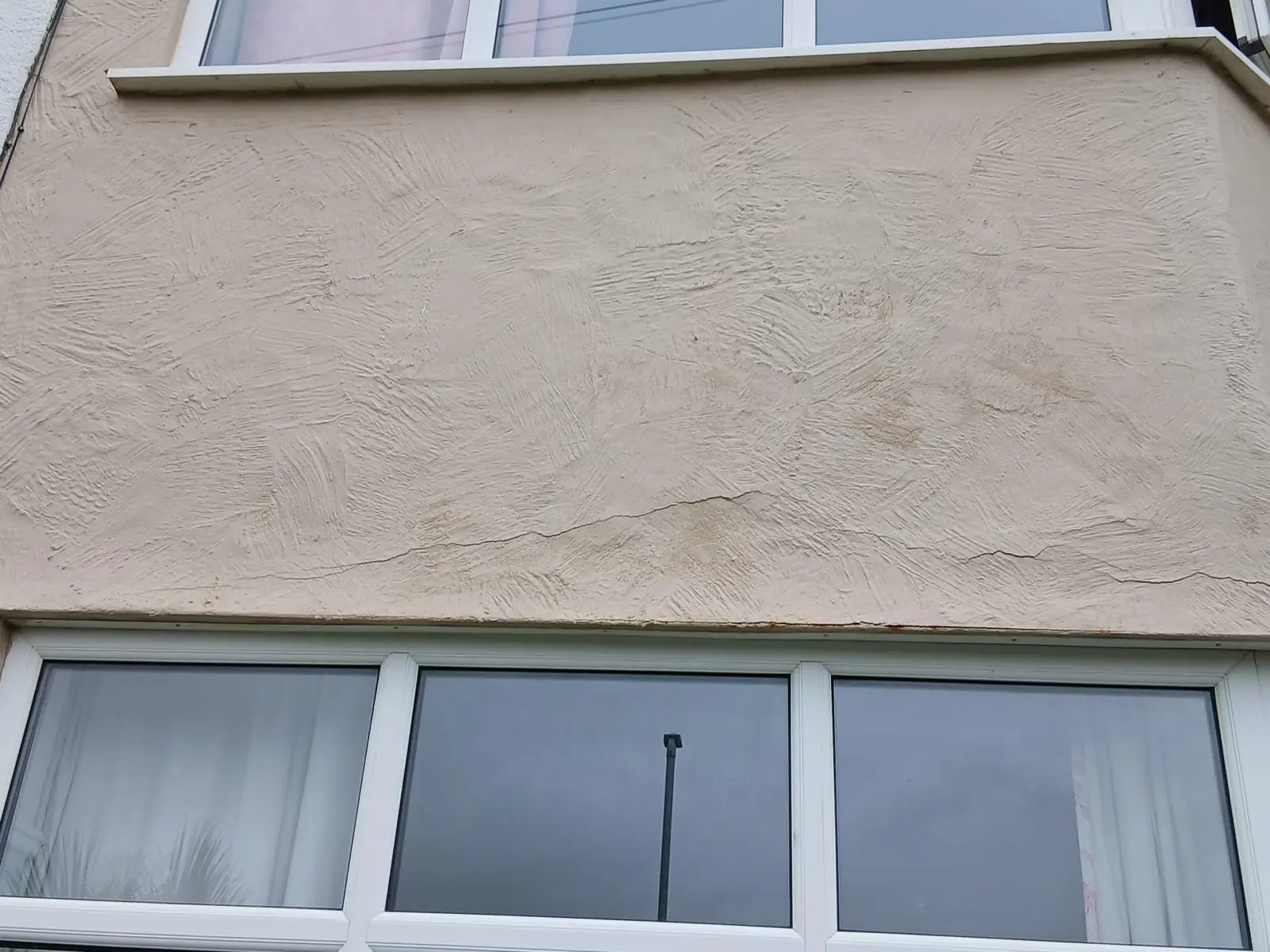
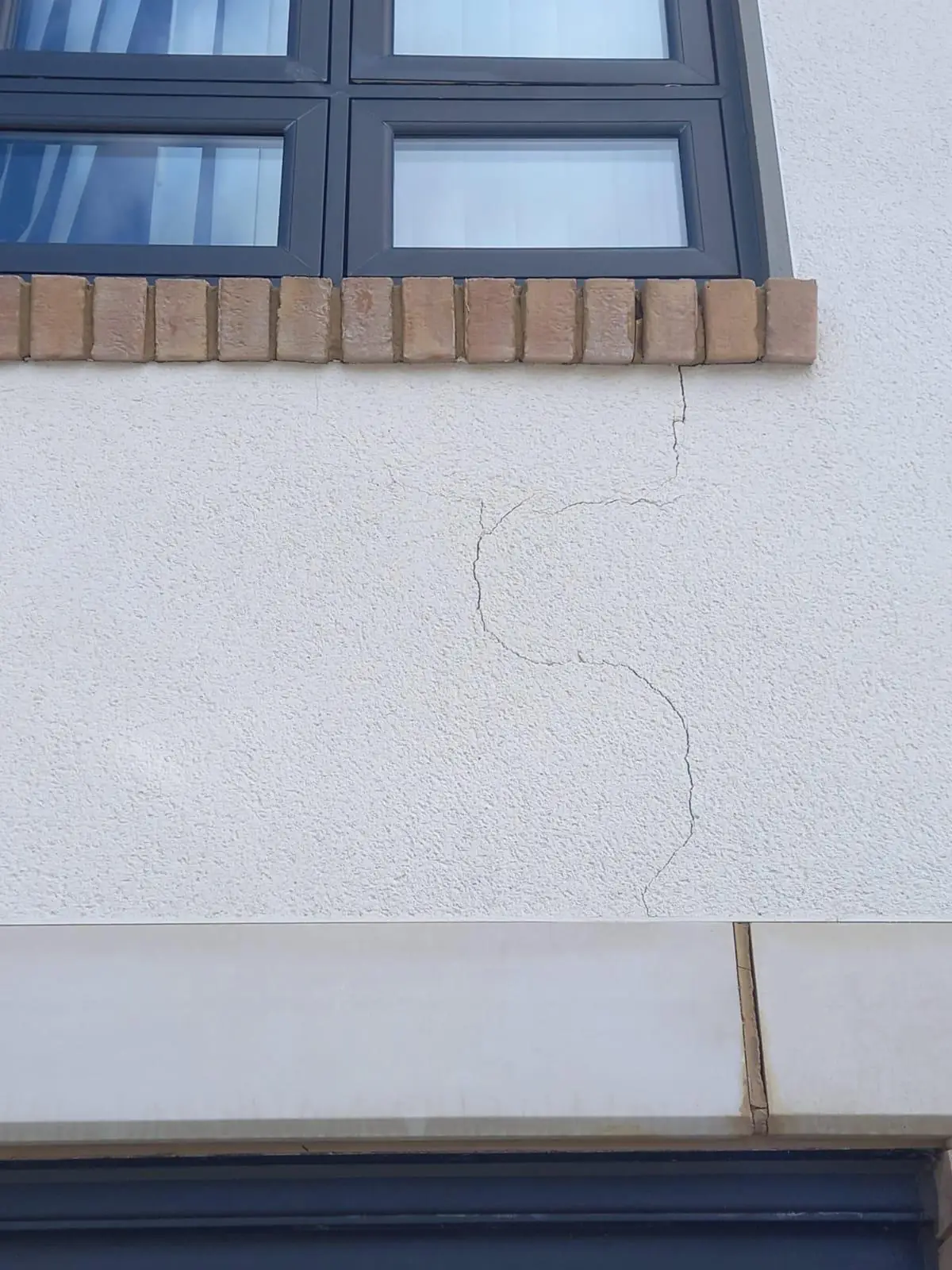
A horizontal crack and rust staining in the render just above a window.
Our office is in Ewloe, in the middle of the county. Every part of Flintshire is close.
Deeside enquiries come to this page — Deeside is in Flintshire and our office sits in the middle of it. We also work in Hope and Caergwrle (LL12), Flintshire villages with Wrexham postcodes, and across the border into Chester.
We’re never far away when you need us.
FLINTSHIRE — INTERNAL MASONRY WALL
A house in Flintshire where a crack in an internal masonry wall kept coming back through the plaster and decoration, however many times it was filled. The owner asked us to look at it rather than fill it again.
The crack had been filled and decorated over more than once and had reopened each time — the sign of a wall that is moving, not of a bad filler. We inspected and advised that a structural engineer should establish the cause before any repair was done.
The customer instructed an engineer. The report attributed the cracking to thermal and seasonal movement in the wall and specified crack stitching as the repair.
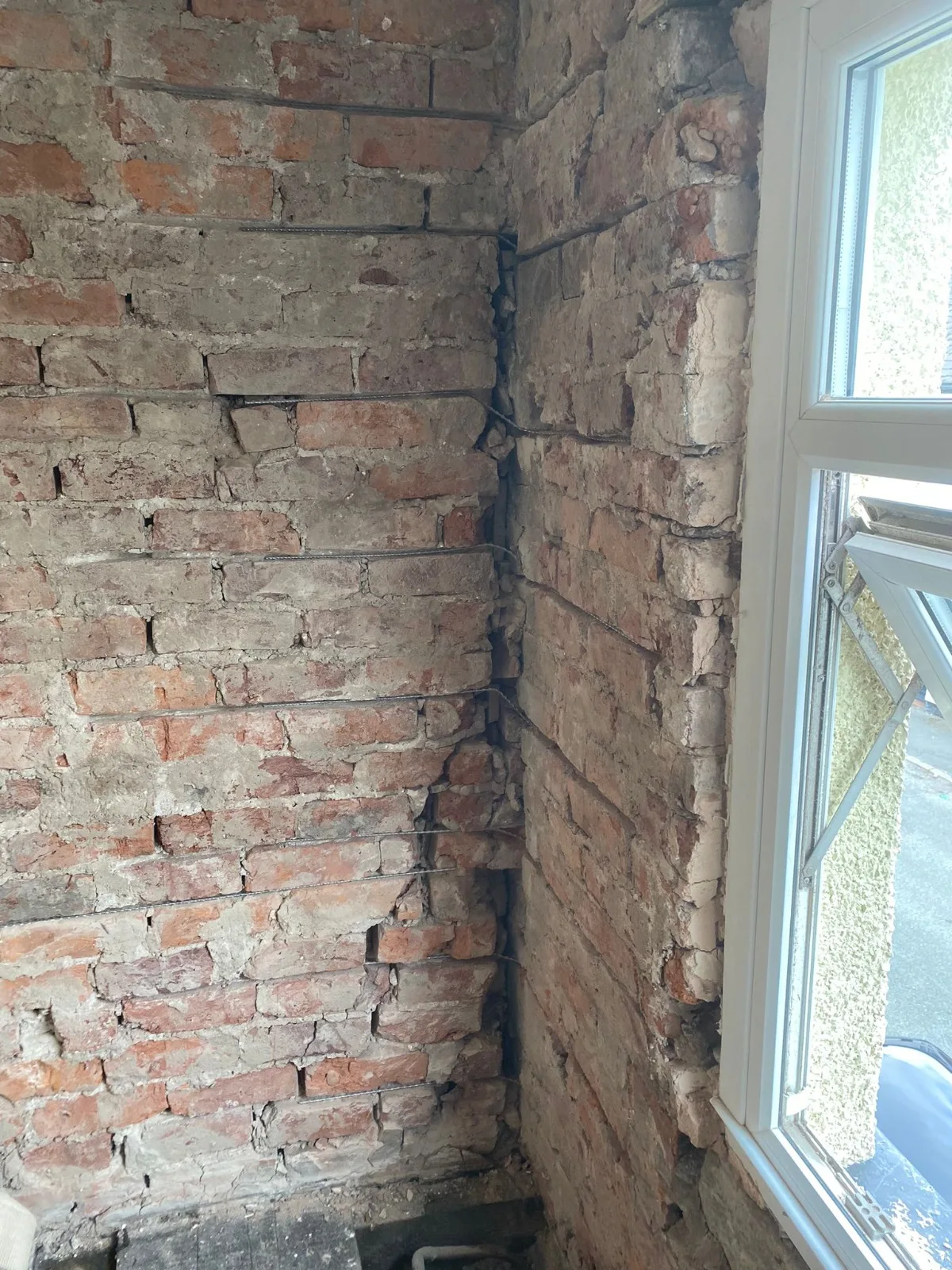
With the plaster stripped back to the brickwork, we cut slots into the mortar joints across the line of the crack, cleaned them out and bedded stainless steel helical bars into them in resin, then repointed the slots. The bars tie the masonry on either side of the crack together so that the movement is carried along the wall rather than opening the crack.
The stitching was carried out to the engineer’s specification.
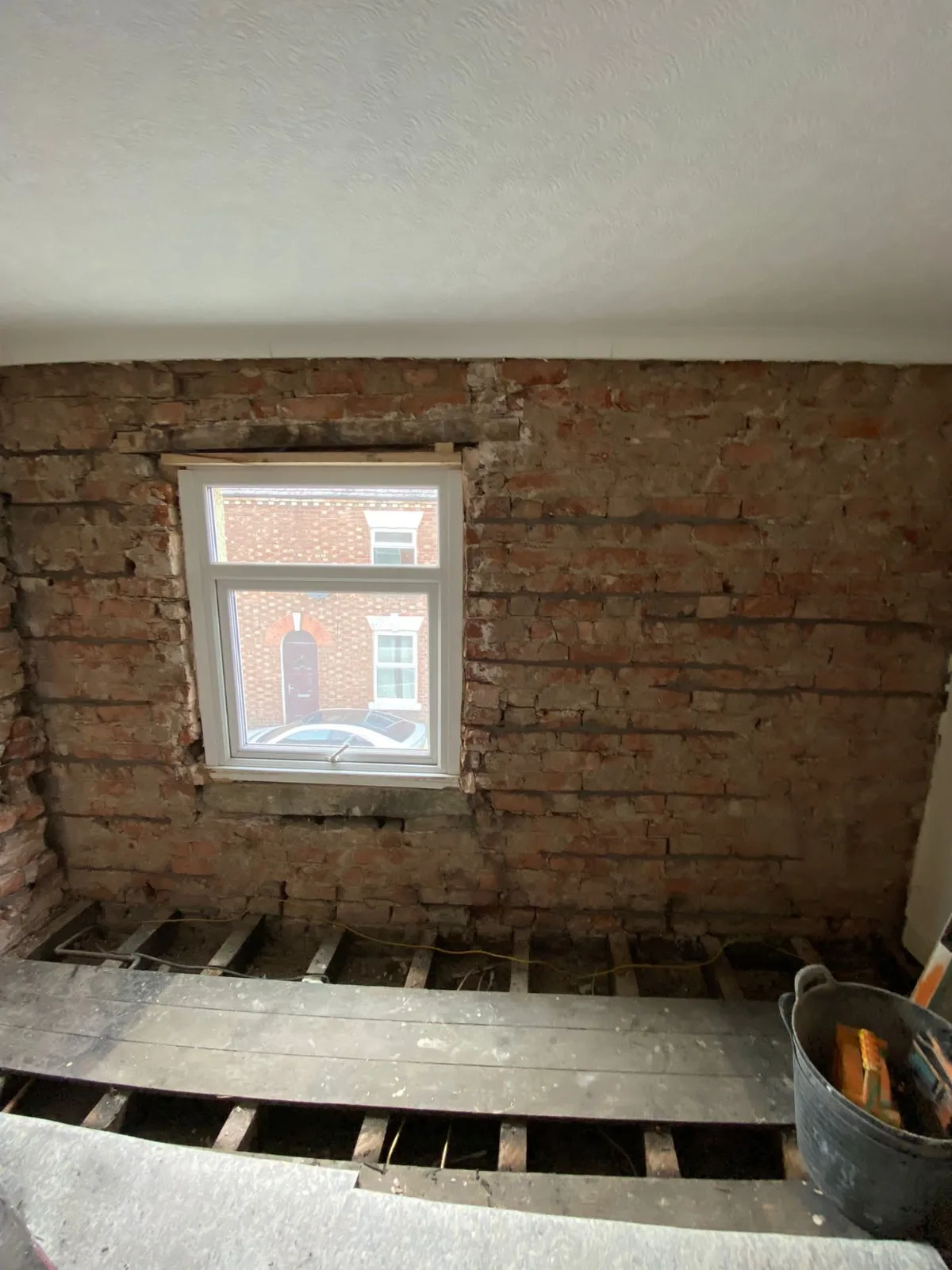
The wall was replastered, new skirting fitted and the room decorated. Building Control inspected and signed the works off.
The repair is not visible once plastered.
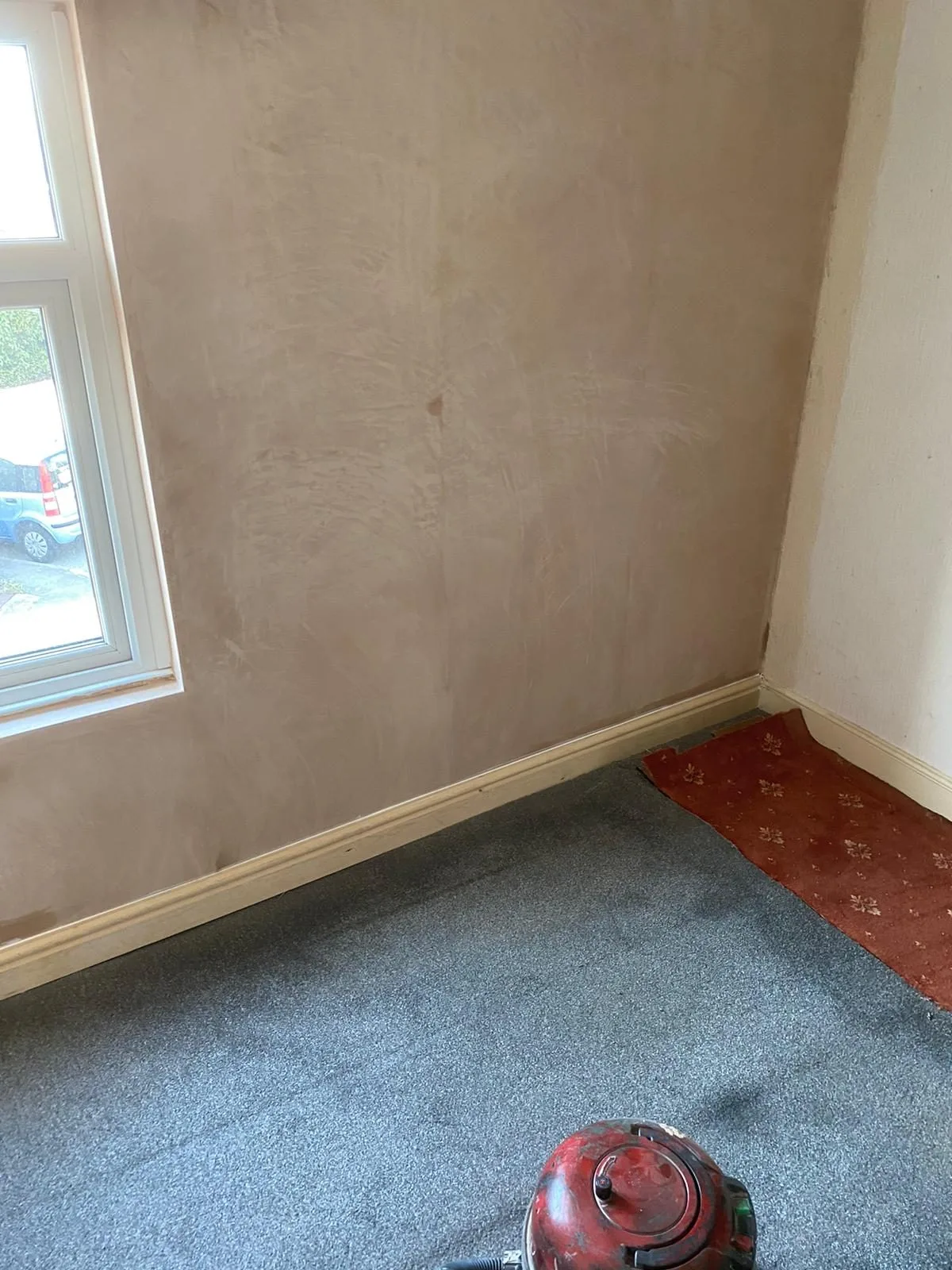
This is what a straightforward crack stitching repair looks like when the cause has been established first: an engineer’s report, bars to the specification, and making good so nothing shows. We do not claim the wall will never move again — that is not what stitching does — but the repair was made for the cause that was found.
| Location | Flintshire |
| Property | House — internal masonry wall |
| Cause (engineer’s report) | Thermal and seasonal movement |
| Works | Helical bar crack stitching, replaster, skirting |
| Sign-off | Building Control |
What crack stitching is
Most of the cracked walls we stitch in Flintshire — rendered or bare, estate house or stone cottage — are repaired the same way once the cause is known. Slots are cut into the horizontal mortar joints at intervals across the crack, cleaned out, and stainless steel helical bars are bedded into them in resin. The bars tie the masonry on either side of the crack back together and spread the load along the wall, and the slots are repointed so the repair is largely invisible once finished. It is used on brick, block and stone walls, inside and out.
What it is not is a cure for whatever caused the crack. A wall that is still moving because a lintel has failed, because it is not tied to the floors, or because the ground beneath it is moving, will crack again — stitched or not. So we do not quote stitching until the likely cause is clear. Where the movement is significant or the cause is unclear, we say so and recommend a structural engineer, whose report we then work to. The main structural cracks page explains the causes and the repair options in full.
How helical bar crack stitching is carried out — manufacturer’s demonstration.
Flintshire is where we are based, and it is where we see more cracked walls than anywhere else — our office in Ewloe puts most of the county within a short drive.
Whatever the house, the approach is the same: look at the crack properly, establish what is causing it, and only then repair it. Where the movement is significant or the cause is unclear we recommend a structural engineer and carry out the works to the report — the Flintshire job on this page ran that way.
What we find across the county
What comes up most often in Flintshire houses:
A crack running through render — the first question is whether it is in the render or in the wall behind.
When to ask us to look
Most cracks in a house are cosmetic — hairline lines in plaster or render that come from drying out and normal seasonal movement. Some are not, and a description alone will not tell us which yours is. These are the cracks worth photographing and sending to us:
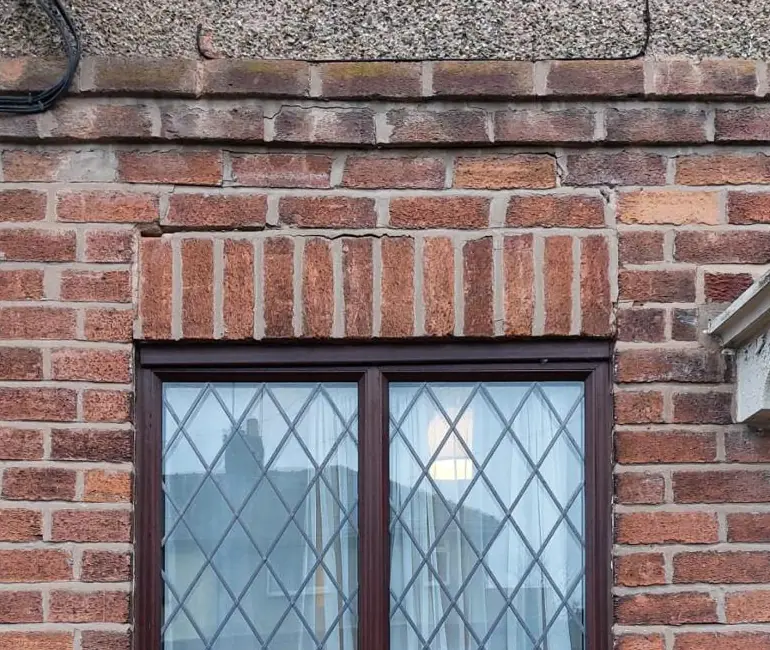
Cracking in the brickwork just above a window head.
A crack that has appeared recently, is getting wider, or comes back after it has been filled and decorated.
A diagonal crack that follows the mortar joints in a staircase pattern — or, on a rendered Deeside house, a longer clean diagonal line showing through the render rather than a fine random one.
Cracks running from the top corners of windows and doors, or brickwork dropping above an opening.
A crack you can see inside and outside at the same point.
Doors and windows that have started to stick, gaps opening at skirtings or ceilings, sloping floors.
Cracking that followed a drainage problem, a leak, tree work, an extension or excavation next door, an alteration inside the house — or, in the old mining villages, nothing obvious at all.
Damp patches, white salt deposits or bricks blowing or flaking near the crack — signs that water has been getting in for a while.
A wall that is no longer flat or plumb, a gable that has moved, or gaps opening between sections of wall.
None of these is a diagnosis. They are reasons to have the wall looked at properly, so that whatever is done next is the right thing.
Five steps, one contractor
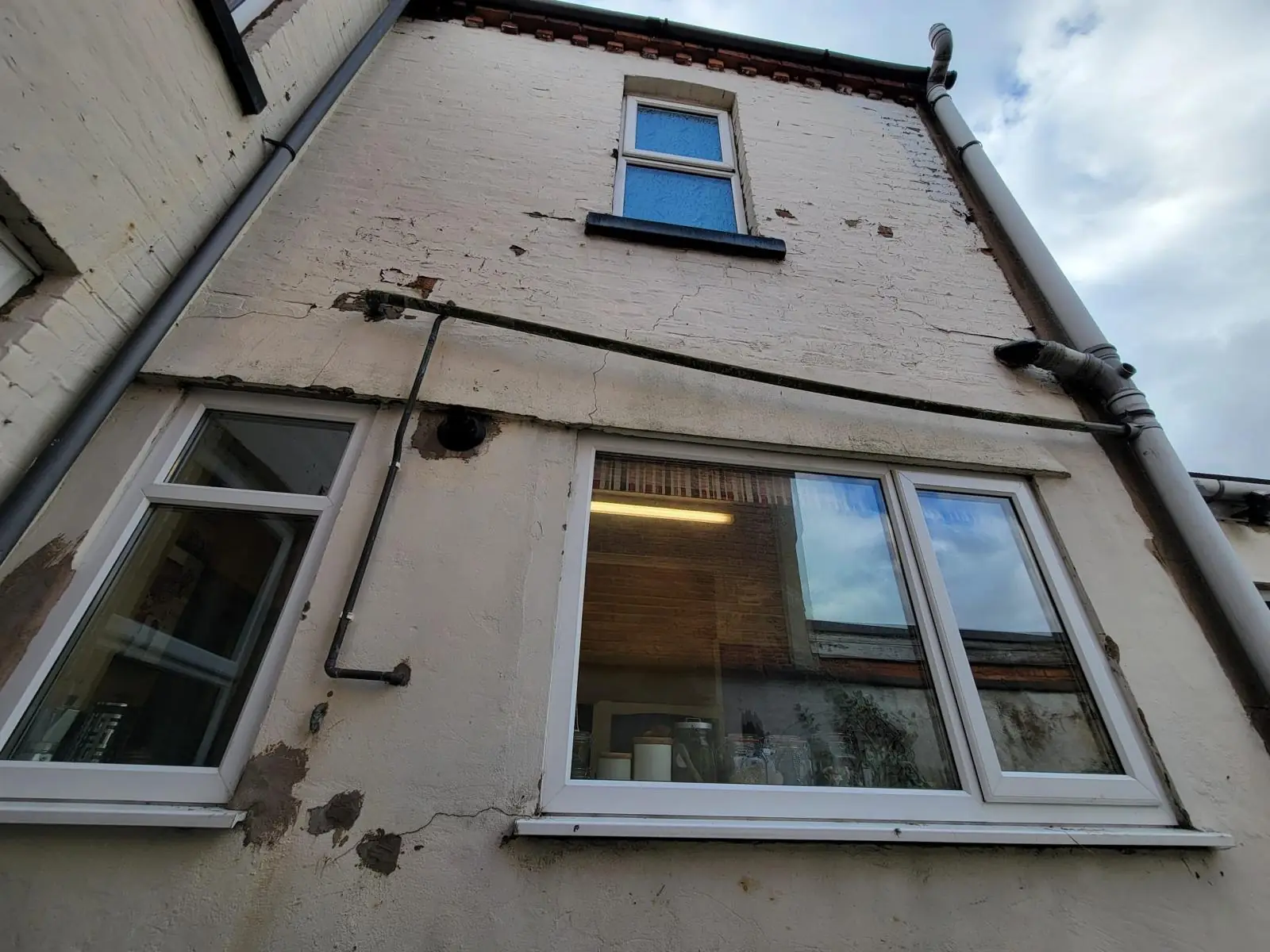
Cracking across a rear wall, around the window openings and the pipework — we look at the whole wall, not just the crack.
What drives the price
We do not publish prices for crack repair, because the same-looking crack can be a half-day of stitching or a lintel replacement with scaffold. What decides the figure:
Every quotation sets out the scope of work in writing — the stitching, any other structural work and the making good — with one total price for the job.
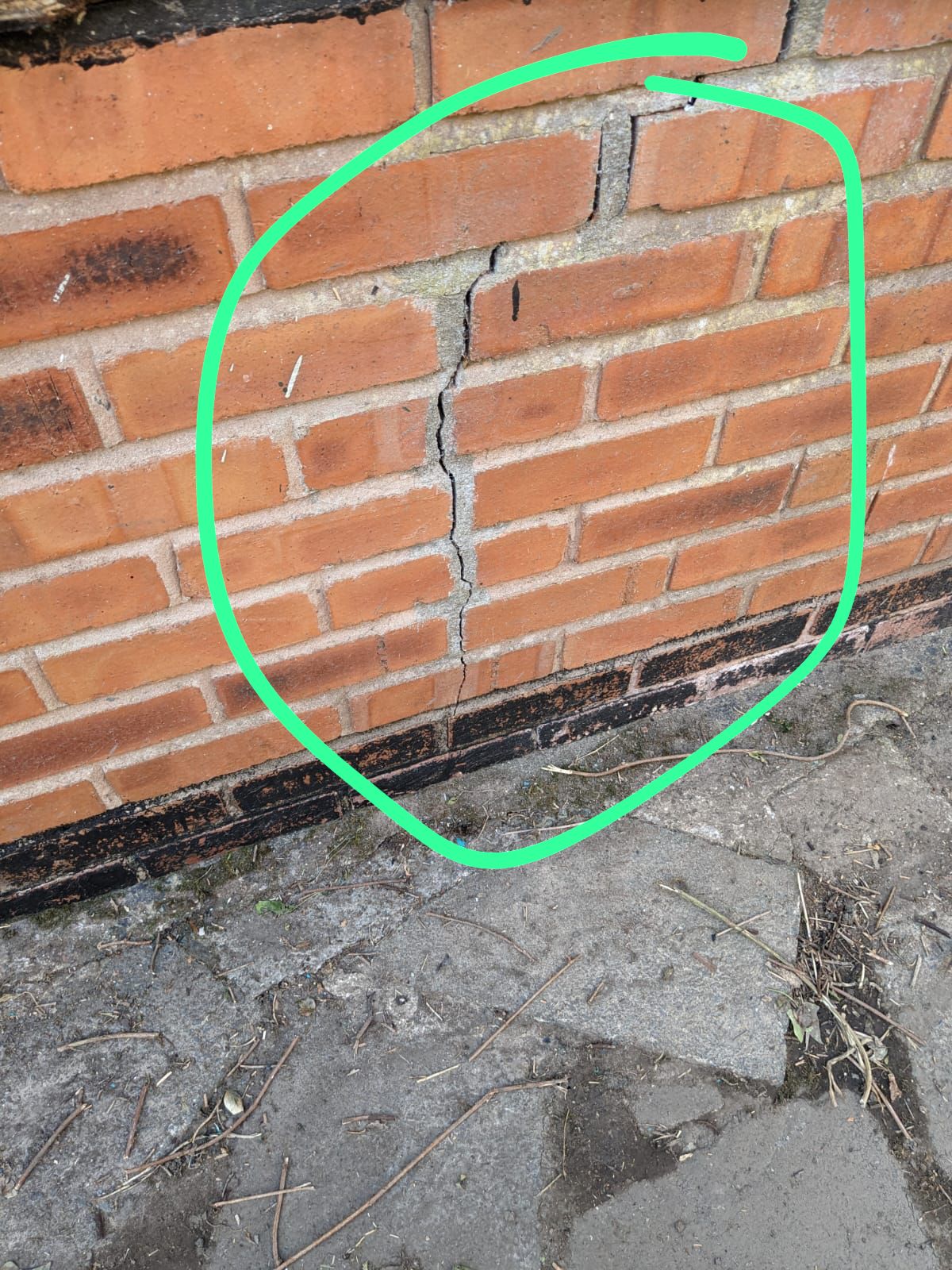
Stepped cracking through brickwork — the cause is assessed before the repair is priced.
What else the repair may need
Crack stitching is often part of the answer rather than the whole of it. Depending on what is causing the crack — and, where one is needed, what the engineer’s report finds — the repair may also involve:
Lintel repair or replacement
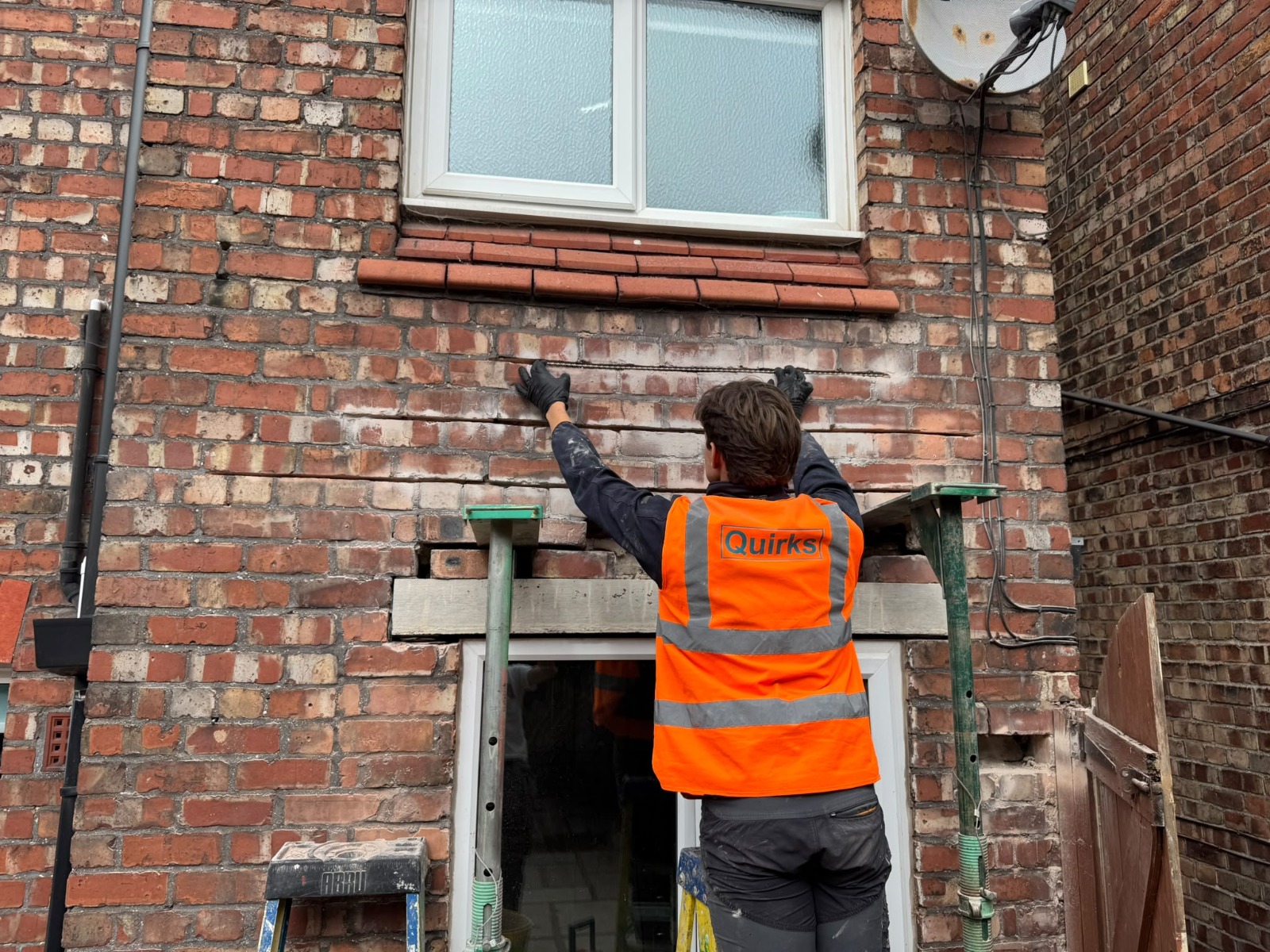
A failed or corroded lintel over a window or door is one of the most common causes of cracking above openings. The masonry is propped, the lintel replaced, the brickwork rebuilt and then stitched — lintel repair and replacement in Flintshire.
Brick crack repair and replacement
Cracked, spalled or frost-damaged bricks are cut out and replaced with matching units before the wall is stitched — brick repair in Flintshire.
Repointing
Failed or hard cement pointing lets water in and stops the wall moving as it should; repointing in the right mortar is often done alongside the stitching — repointing in Flintshire.
Lateral restraint
Where a wall is not adequately tied to the floors or roof, restraint ties or straps are installed to the engineer’s design as well as stitching the crack.
Damp and water management
Where water ingress or a drainage fault has contributed to the deterioration, the source is dealt with so the repair lasts — damp proofing in Flintshire.
Structural alterations
Where a previous alteration left the structure under-supported, the support is put right first — structural alterations in Flintshire.
Wall ties
On cavity walls, horizontal cracking along the bed joints can point to corroded ties. Where that is the finding, we replace the failed ties alongside the stitching.
Internal cracks
Cracks in internal walls are dealt with the same way. Cosmetic ones are filled, bonded and redecorated; structural ones are stitched, then replastered and finished so nothing shows.
Where a repair involves replacement lintels, new supports or other work that may be notifiable, our Building Regulations guidance explains the overview.
The questions we’re asked most

We find out why the wall has cracked first, so the repair deals with the cause, not just the crack.
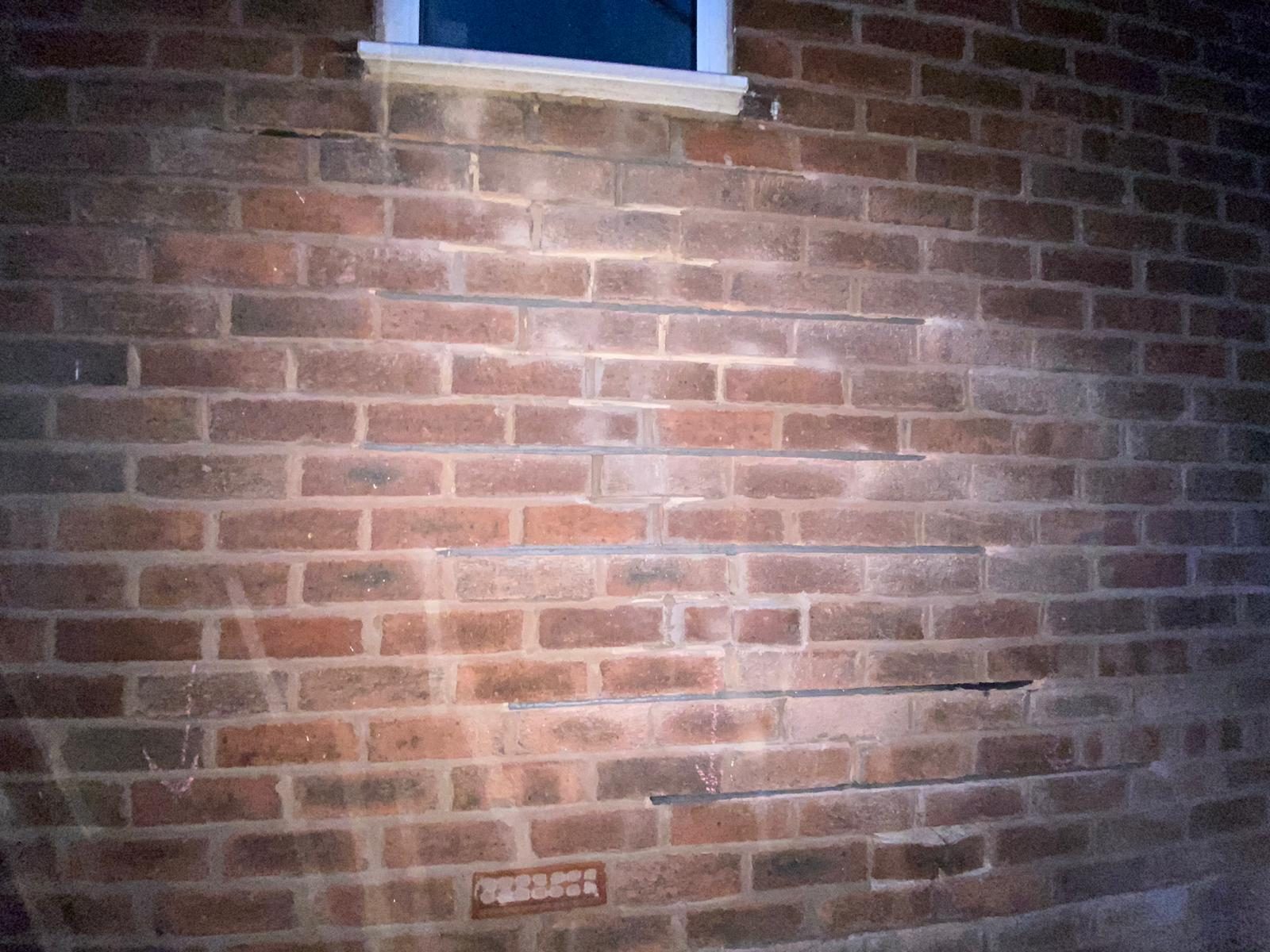
Stainless steel helical bars, bedded in resin across the crack, tie the brickwork back together without taking the wall down.
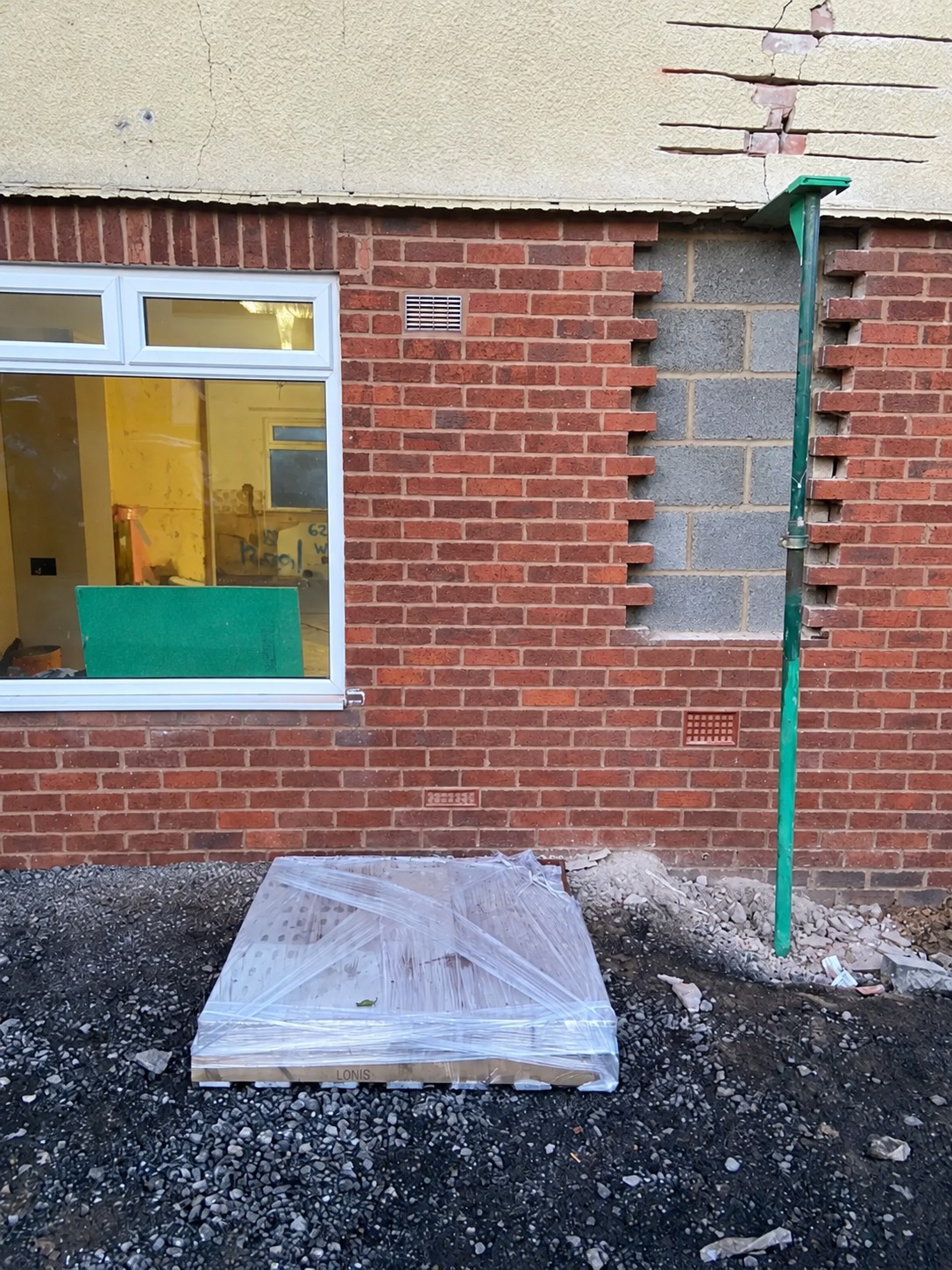
Where bricks have broken or moved, we cut out the damaged section and rebuild it, toothed into the existing wall.
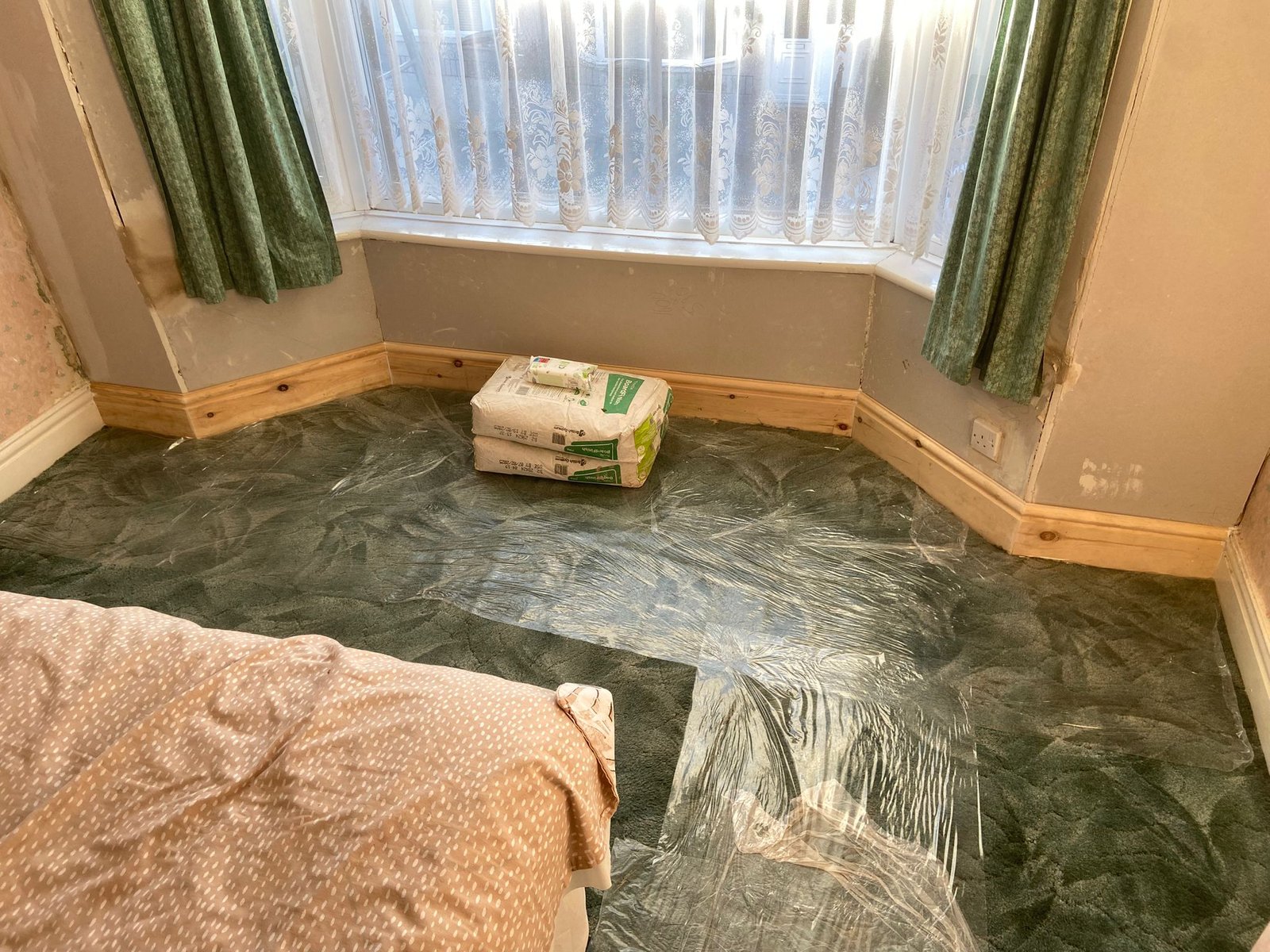
Once the structural work is done, we replaster, refit skirting and make good, ready for you to decorate.
Memberships and certifications










Support and openings put right where a previous alteration left the structure short.
Learn more →Where estuary weather and water ingress have played a part in the deterioration.
Learn more →Failed lintels over windows and doors on the post-war estates.
Learn more →Repointing in the right mortar, lime where the wall is lime, alongside the stitching.
Learn more →When work may need Building Control involvement, as it applies in Wales.
Learn more →Send us photos for a written quotation — Deeside, Hawarden, Mold, Buckley, Flint, Holywell and across Flintshire.
Photographs may not be enough to diagnose every problem and a site visit may still be needed — we’ll say so when we reply.
Structural crack repair by area