


🧱 Lintel Repair & Replacement in Flintshire
In short: Cracking above a window or door in Flintshire usually means a failed lintel. We repair and replace timber, steel, brick and concrete lintels across Mold, Buckley, Flint, Holywell, Connah’s Quay and Deeside.
At Quirks Property Maintenance Ltd, we repair and replace failed lintels across Flintshire and Deeside. The county’s housing is a real mix – Victorian and ex-industrial terraces around Flint, Connah’s Quay and Bagillt, stone cottages towards Mold and Holywell, and newer estates in Buckley, Mynydd Isa and Broughton. Whatever the property, a failing lintel shows the same way: cracking in the brickwork just above an opening.
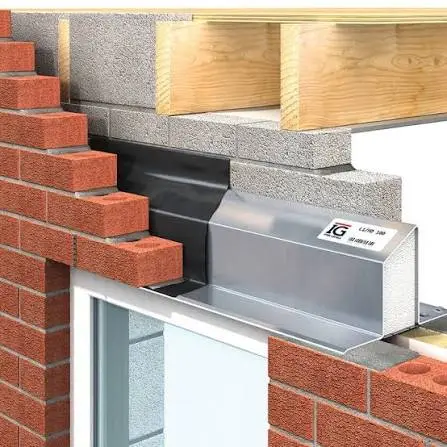
🔍 What Is a Lintel?
The lintel is the beam bridging the top of a window or door and carrying the wall above into the masonry either side. Older Flintshire homes often have timber or local stone lintels; properties from the mid-20th century onward usually have steel or pre-cast concrete.
🔧 The Repairs We Carry Out
- Timber lintels – decayed timber replaced and support reinstated with concealed helical bars
- Steel lintels – treated and protected, or cut out and replaced with a new galvanised lintel
- Brick and brick-arch lintels – reinforced with helical bars in anchor grout, keeping the original look
- Concrete lintels – replaced where the reinforcement has rusted and spalled the concrete
⚠️ Common Signs of a Failed Lintel
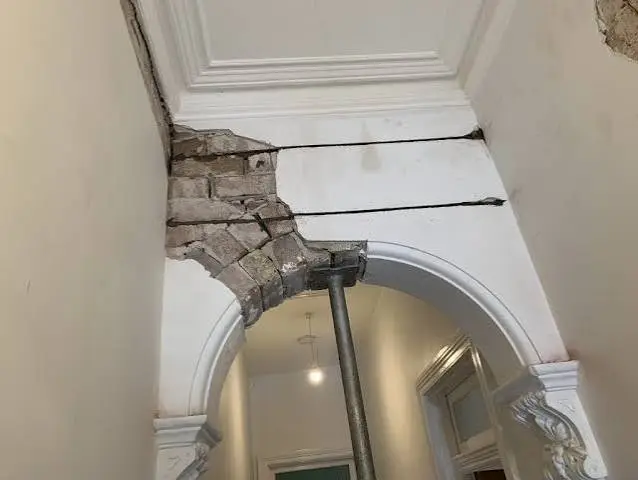
- Vertical or stepped cracking above a window or door
- A sagging or bowed line above an opening
- Sticking windows and doors
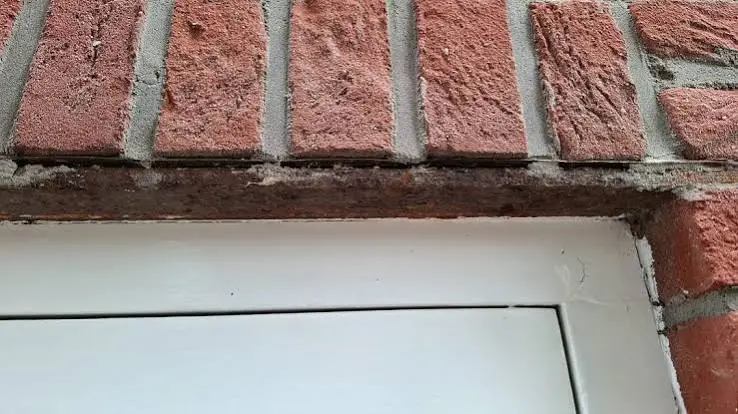
- Crumbling mortar around the opening head
- Rust staining or spalling on steel and concrete lintels
⚠️ Why Not to Leave It
Lintel problems only get bigger:
Caught early the repair is quick and contained; left alone, the load redistributes into masonry that then needs rebuilding. Acting promptly is almost always the cheaper route.
🔍 Why Lintels Fail in Flintshire
Estuary and weather exposure: properties along the Dee, from Connah’s Quay to Greenfield, take a lot of wind-driven rain, and persistent damp is hard on every lintel material.
Timber decay: in older homes, embedded timber lintels suffer wet rot, dry rot and woodworm once moisture gets in.
Removed or absent lintels: where original frames carried the load and were swapped for non-structural uPVC, the wall above starts to crack.
🔗 Related Structural Services
💷 What Affects the Cost
Every Flintshire property is different, so each job is priced on what it needs. The main factors are:
- The lintel type and repair method – reinforcing a brick or timber lintel costs less than cutting out and replacing corroded steel or spalled concrete
- The span and number of openings – a single small window is quicker than a wide opening or several together
- Access – ground-floor openings are simpler than upper floors or awkward access
- Making good – matching brickwork, pointing, render or plaster on a period property takes more care
We give a firm, no-obligation quote after assessing the actual opening, so you know the cost before any work begins.
🛡️ Preventing Lintel Problems in Flintshire
In an exposed, often damp county like Flintshire, keeping water off the wall is the best protection:
- Keep gutters, downpipes and flashing clear, especially on estuary-facing elevations
- Repair weathered pointing promptly – common on older Flint, Holywell and Mold properties
- Before replacing windows on a period home, check whether the original frame carries load
📚 Case Study – Corroded Steel Lintel Replacement
A homeowner contacted Quirks Property Maintenance Ltd after noticing stepped cracking above a first-floor bedroom window and difficulty opening the window. Inspection identified a heavily corroded steel lintel – a defective gutter had allowed water to continually saturate the wall, causing the steel to rust and expand behind the brickwork. The opening was carefully supported before the failed lintel was removed and replaced with a new galvanised steel lintel; the damaged brickwork was rebuilt and repointed to match the property, and the gutter defect rectified. Outcome: structural support restored, cracking stabilised, the water ingress resolved, and long-term protection provided through galvanised replacement.
Frequently Asked Questions
Can you tell if it’s the lintel before any work starts?
Yes – we assess the opening first and confirm whether it’s the lintel or wider movement before recommending anything.
Will the repair match my brickwork?
Yes. We match brick, mortar and pointing so the finished repair blends in rather than standing out.
Do you cover all of Flintshire?
Yes – Mold, Buckley, Connah’s Quay, Shotton, Flint, Hawarden, Holywell, Mynydd Isa, Broughton, Queensferry, Saltney and the surrounding villages.
✅ Why Choose Quirks
- Over 20 years’ experience in structural, masonry and building repairs
- Fully insured and accredited, with a workmanship guarantee
- All trades under one roof – assessment, repair and making-good by one team
- Free, no-obligation quotes and straight, honest advice
Quirks Property Maintenance Ltd is a trusted local contractor with a strong reputation across the region and zero reportable accidents – safety and quality come first.
⭐ What Customers Say About Us
Flintshire homeowners choose Quirks Property Maintenance Ltd for cracking above openings and failed lintels. We are frequently praised for clear advice, tidy work and matching brickwork.
Common Flintshire Property Types & Lintel Problems
Flintshire contains a diverse range of property styles, each presenting different lintel repair challenges. Understanding how these buildings were constructed helps identify common causes of cracking above windows and doors.
Victorian & Industrial Terraces
Large areas of Connah’s Quay, Shotton, Queensferry, Flint and Holywell contain Victorian and former industrial housing. These properties frequently feature:
- Timber lintels
- Brick arch lintels
- Solid wall construction
- Traditional lime mortars
- Original timber windows
Common problems include timber decay, movement above openings and cracking associated with historic alterations.
Traditional Stone Properties
Older cottages and rural properties around Mold, Northop, Cilcain and surrounding villages often contain stone lintels and solid masonry construction. Common issues include:
- Weathering of stone
- Cracking above openings
- Mortar deterioration
- Water penetration
- Structural movement caused by age-related deterioration
Post-War Housing
Many homes throughout Buckley, Hawarden, Broughton and surrounding areas were constructed using steel and concrete lintels. Common defects include:
- Steel corrosion
- Concrete spalling
- Water ingress
- Cracking associated with reinforcement deterioration
Modern Housing Developments
Newer developments throughout Flintshire generally contain modern galvanised steel lintels and cavity wall construction. Although newer homes experience fewer structural issues, defects can still occur where moisture enters the construction or workmanship defects exist.
Why Lintels Fail in Flintshire
Flintshire properties are exposed to some challenging environmental conditions which can accelerate deterioration.
Dee Estuary Exposure
Properties around Connah’s Quay, Shotton, Queensferry and Flint experience significant exposure to moisture carried from the Dee Estuary. This can contribute to:
- Increased masonry saturation
- Corrosion of steel lintels
- Timber decay
- Mortar deterioration
Driving Rain
Flintshire’s exposed position means many elevations experience persistent wind-driven rain. Where pointing, render or flashings fail, water can penetrate deep into the wall construction and begin affecting hidden lintels.
Historic Housing Stock
Many properties throughout Flintshire are now over 100 years old. While these buildings remain structurally sound, original lintels naturally deteriorate over time and often require repair or replacement.
Building Regulations & Structural Engineer Guidance
Many Flintshire homeowners are unsure whether Building Control approval is required when repairing or replacing a lintel. In many cases, straightforward repairs and like-for-like replacements can be completed without submitting a Building Notice. Building Regulations become more likely where:
- New openings are being created
- Existing openings are widened
- Load-bearing walls are altered
- Significant structural changes are proposed
- Structural calculations are required
Where engineer involvement is necessary, we regularly work alongside structural engineers and Building Control departments to ensure compliance.
Flintshire Case Study – Mold Victorian Terrace
A homeowner in Mold contacted Quirks Property Maintenance Ltd after noticing stepped cracking above a front bedroom window. Inspection revealed a heavily corroded steel lintel concealed within the external masonry. Long-term moisture penetration through defective pointing had caused corrosion and expansion of the steel section. The opening was temporarily supported while the failed lintel was removed and replaced with a new galvanised steel lintel. Damaged brickwork was rebuilt and repointed to match the original property.
Outcome
- Structural support restored
- Cracking stabilised
- Brickwork successfully matched
- Long-term protection provided through galvanised replacement
Flintshire Case Study – Buckley Bay Window Movement
A homeowner in Buckley contacted us after noticing cracking above a bay window shortly after replacement windows had been installed. Investigation identified that the original timber frames had previously contributed to supporting the masonry above the opening. Following replacement with non-structural uPVC windows, movement began to occur. A new structural lintel was installed and localised masonry repairs completed.
Outcome
- Movement stabilised
- Bay window support restored
- Cracking repaired
- Property appearance maintained
❓ More Frequently Asked Questions
How do I know if my lintel has failed?
Common signs include stepped cracking above windows and doors, sagging brickwork, sticking windows, rust staining and movement around openings.
Can you match my existing brickwork?
Yes. We always aim to match existing brickwork, mortar and pointing as closely as possible.
Do you cover all of Flintshire?
Yes. We regularly work throughout Mold, Buckley, Hawarden, Connah’s Quay, Shotton, Queensferry, Flint, Holywell, Northop, Broughton, Saltney and surrounding villages.
Do I need a structural engineer?
Not always. Many straightforward lintel repairs can be completed without structural calculations. We will advise if engineer involvement is recommended.
How long does a lintel replacement take?
Many single-opening repairs can be completed within a day, although larger openings and more complex projects may require additional time.
📍Lintel Repair Areas We Cover in Flintshire
Our team regularly undertakes lintel repairs and replacements throughout Flintshire including:
- Mold
- Buckley
- Hawarden
- Connah's Quay
- Shotton
- Queensferry
- Flint
- Holywell
- Saltney
- Northop
- Broughton
- Mynydd Isa
- Ewloe
- Penyffordd
- Bagillt
Projects range from small domestic repairs through to larger structural replacement schemes involving multiple openings and extensive masonry repairs.
Get in Touch
Noticed cracking above a window or door in Flintshire? Call Quirks Property Maintenance Ltd on: 📞01244 638219 📧, email: info@quirksonline.co.uk or message us on WhatsApp on WhatsApp 07719 535523 for a fast reply and a free, no-obligation assessment.
Our Commitment
Long-lasting, professional solutions using proven industry methods

📍 Areas We Cover in Flintshire
Mold and Buckley (CH7), Connah’s Quay, Shotton, Queensferry and Hawarden (CH5), Flint and Flint Mountain (CH6), Holywell and Greenfield (CH8), plus Ewloe, Penyffordd, Broughton, Bretton, Sandycroft, Mancot, Bagillt, Northop, Mynydd Isa and the surrounding villages.