Specialist Building & Property Maintenance Services You Can Depend On.


- Home
- About
- Building Services
- Property Maintenance
- Structural Services
- Damp Services
- Fire Safety
- Emergency Repairs
- Trades
- Contact
Repointing & Brick Pointing
Repointing & Brick Pointing Across North Wales & Cheshire
Brickwork & Masonry Repointing Services
At Quirks Property Maintenance Ltd, we carry out professional repointing and brick pointing services across Flintshire, Chester, Cheshire, Wrexham, Ellesmere Port, the Wirral & North Wales.
We restore and protect brickwork using correct materials and proven methods, ensuring long-term durability and protection against ongoing weather damage.
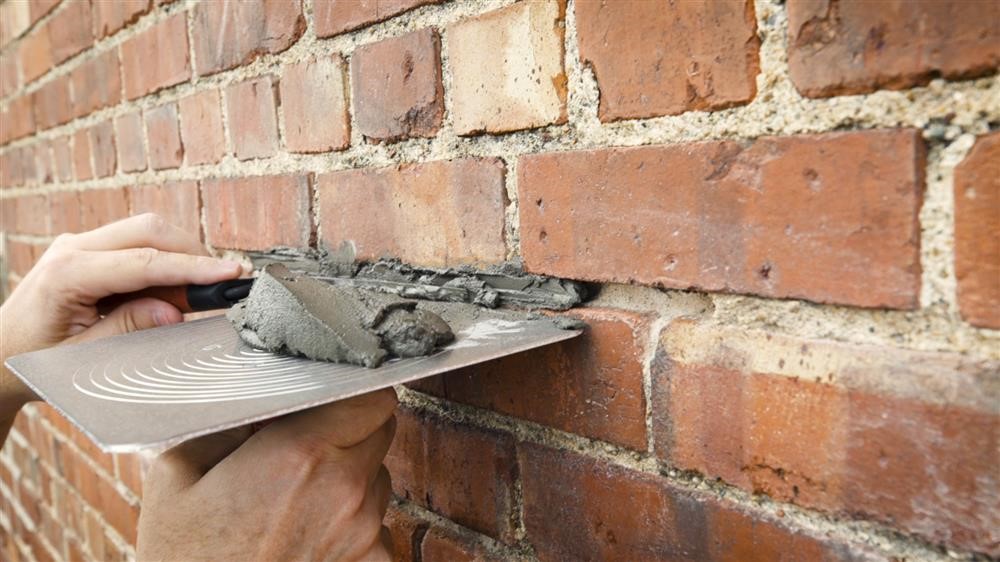
We focus on long-term solutions using correct materials—not short-term cosmetic fixes.
All works are carried out correctly, safely, and in full compliance with current standards, ensuring a long-lasting and professional finish.
Brickwork issues are commonly found across Chester, Flintshire, Cheshire and North Wales, and if left untreated, they will continue to deteriorate.
What Is Pointing?
Pointing refers to the mortar joints between bricks or stone that hold the structure together.
Its purpose is to:
• Prevent water penetration
• Allow the building to breathe
• Maintain structural integrity
• Protect masonry from weather damage
Over time, mortar breaks down and requires replacement—this process is known as repointing.
Our Repointing Services
We carry out works ranging from small repairs to full property repointing across Chester, Flintshire, Cheshire, Wrexham, Ellesmere Port, the Wirral & North Wales.
This includes:
• Garden walls and boundary walls
• Chimney stacks and ridge tiles
• Full house repointing
• Commercial properties
• Localised repair works
• Grinding out and preparation works
Commercial & Landlord Repointing
Repointing is not just a domestic trade. We carry out commercial repointing across Chester, Flintshire, Wirral and North Wales — offices and retail units, schools and public buildings, industrial units, and tenanted blocks for landlords and property managers. Commercial work runs to commercial disciplines: agreed programmes, method statements and risk assessments in line with CDM duties, safe access planning, and itemised quotations that finance departments and managing agents can approve without translation. Failed pointing on a commercial building is a maintenance item until the water gets in — then it is a repair bill. Planned repointing keeps it in the first category.
Signs You May Need Repointing
• Crumbling or missing mortar
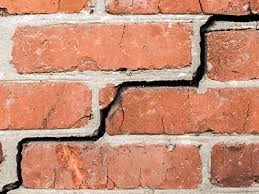
• Cracks within mortar joints
• Damp patches internally
• Loose or unstable bricks
• Gaps forming between brickwork
If mortar joints are failing, moisture will begin to penetrate the structure.
Types of Pointing Finishes
We carry out a range of finishes to suit properties across Chester, Wrexham, the Wirral and surrounding areas:
• Flush pointing
• Recessed pointing
• Bucket handle pointing
• Weather struck pointing
• Tuck pointing
Lime Mortar Pointing & Restoration
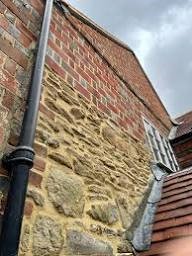
We carry out lime mortar pointing and traditional brickwork restoration across Chester, Flintshire, Cheshire, Wrexham, Ellesmere Port, the Wirral & North Wales, particularly on older and period properties.
Lime mortar allows buildings to breathe and move naturally, reducing the risk of damp and long-term damage.
Using incorrect cement mortar on older properties can accelerate brick damage and lead to costly repairs.
Why Lime Mortar Matters
• Prevents trapped moisture
• Allows natural movement
• Protects original brickwork
• Reduces cracking and spalling
Lime mortar acts as a sacrificial material, protecting surrounding masonry during movement.
Where cracking has opened through the bricks themselves rather than the mortar joints, that points to movement — our wall crack repair service covers it.
Why Repointing Is Important
Repointing protects your property by:
• Preventing penetrating damp
• Maintaining structural stability
• Extending the life of brickwork
• Improving external appearance
• Reducing long-term repair costs
When carried out correctly using appropriate materials, repointing can last 20–50+ years depending on exposure and property type.
Our Repointing Process
• Inspection of existing mortar
• Identification of moisture issues
• Careful removal of defective joints
• Mechanical or hand grinding out of mortar
• Application of appropriate mortar
• Finishing to match existing profile
• Final inspection
All works are carried out safely and in line with current standards.
How we rake out matters as much as what goes back in. We use dust-extracted mechanical raking where the joints and masonry suit it, and hand tools on soft or period brickwork where a disc would cause damage. Mortars are matched to the wall — from natural hydraulic limes (NHL) on older and exposed masonry to modern mixes on recent brickwork. Where a job calls for it we can also clean the masonry before repointing and apply a breathable rain-repellent treatment afterwards.
Case Study – Traditional Lime Repointing to a Solid-Wall Property in Bebington, Wirral
The owner of a two-storey solid-wall brick property in Bebington had noticed damp and cold patches on internal walls, and asked Quirks Property Maintenance Ltd to look at the condition of the external brickwork. We inspected the front and gable elevations and quoted for repointing works in January 2026. The works were completed in March 2026.
What we found on the two elevations
The mortar joints across both elevations had weathered back well behind the face of the brickwork. On the front elevation the joints were open and inconsistent in depth, with lichen and moss established in the wider ones — joints in that condition hold water at the wall rather than shedding it. Several areas had been patched at some point in the past with cement, including a band of hard, dark mortar across the stone lintel above the front door, which sat proud of the surrounding brickwork and bore no relation to the original joint profile.
The gable took the worst of it. An exposed gable carries the full weight of driving rain with no shelter from adjoining property, and the erosion there ran across the whole elevation rather than being confined to patches, with the same cement repairs visible through it.
On a solid wall the mortar joint is not simply the gap between the bricks — it is part of how the wall takes up moisture and releases it again. Where the joints have eroded and been made good with cement, which is harder and denser than the original mortar, water is held at the face and driven into the brick instead of evaporating from the joint. Over time that damages the brick rather than the mortar, and brick is far more expensive to put right.
We were asked to inspect and price the external masonry, and that is what this case study covers. Where damp is being reported inside a property, we would always say it should be assessed on its own terms rather than assumed to have a single external cause — that is a separate piece of work, and we carry it out as a damp survey.
The recommendation — lime, not cement
We recommended complete repointing of the front and gable elevations in traditional NHL 3.5 hydraulic lime mortar, rather than a cement-based mix.
The reasoning matters on a building of this construction. A cement-rich mortar is harder than the brick around it, so when the wall moves or weathers, the brick face gives way before the joint does. It also holds moisture, forcing evaporation out through the brick rather than through the joint. A hydraulic lime mortar is softer than the brick and stays breathable, so the joint takes the wear and the moisture, which is what a joint is there to do. NHL 3.5 was selected as a moderately hydraulic lime with enough set for an exposed gable while remaining considerably softer than the surrounding brick.
We also recommended the works be carried out from scaffolding rather than ladders, and programmed around suitable weather where reasonably practicable, because lime mortar needs controlled conditions while it cures. Only the areas marked on the survey photographs were included in the quotation, so the scope was fixed and the customer was not pricing an open-ended job.
The works carried out to the front and gable
Scaffolding and access equipment were supplied, erected, maintained and dismantled by Quirks, with reasonable precautions taken to control dust and debris during the removal of the old mortar.
The accessible brickwork within the marked areas was inspected before repointing began. Loose, failed and defective joints were raked out to approximately 25mm, or deeper where necessary to reach a sound mortar base. Raking out was carried out using hand tools and controlled low-vibration methods — on brickwork of this age the arrises are soft, and a heavy-handed approach takes the edge off the brick as well as the mortar. The prepared joints were then brushed and cleaned of loose material, and the masonry dampened where required to control suction and stop the wall drawing the water out of the fresh lime mortar before it had chance to set.
The elevations were repointed in NHL 3.5 hydraulic lime mortar mixed with suitably graded sharp sand, with the colour and texture selected to sit alongside the existing masonry as closely as reasonably practicable. The mortar was compacted firmly into the prepared joints and finished with a traditional brushed joint appropriate to the age and character of the property.
The new work was protected during the initial curing period from heavy rain, frost, strong winds, direct sunlight and excessive rapid drying, with temporary coverings provided where required and the mortar lightly dampened where necessary to support controlled curing.
On completion the repointing was inspected, the affected brickwork cleaned down, loose mortar residue and waste removed from site, and the scaffolding and temporary coverings struck.
Outcome
Both elevations were left fully repointed in a breathable lime mortar, with consistent, well-filled joints and a brushed finish in keeping with the age of the brickwork. The hard cement patches were removed and replaced with a mortar the wall can work with, so the joints now take the weather rather than the brick faces.
Project Information
| Issue | Eroded mortar joints and earlier cement patch repairs to the front and gable elevations |
| Service | Traditional lime mortar repointing |
| Property | Two-storey solid-wall brick property with an exposed gable |
| Findings | Joints weathered back behind the brick face, organic growth in the open joints, hard cement repairs sitting proud of the original joint profile |
| Recommendation | Complete repointing of both elevations in NHL 3.5 hydraulic lime mortar |
| Works | Scaffolded access; joints raked out to approximately 25mm; repointed in NHL 3.5 lime mortar with a traditional brushed finish; protected throughout curing |
| Location | Bebington, Wirral |
| Completed | March 2026 |
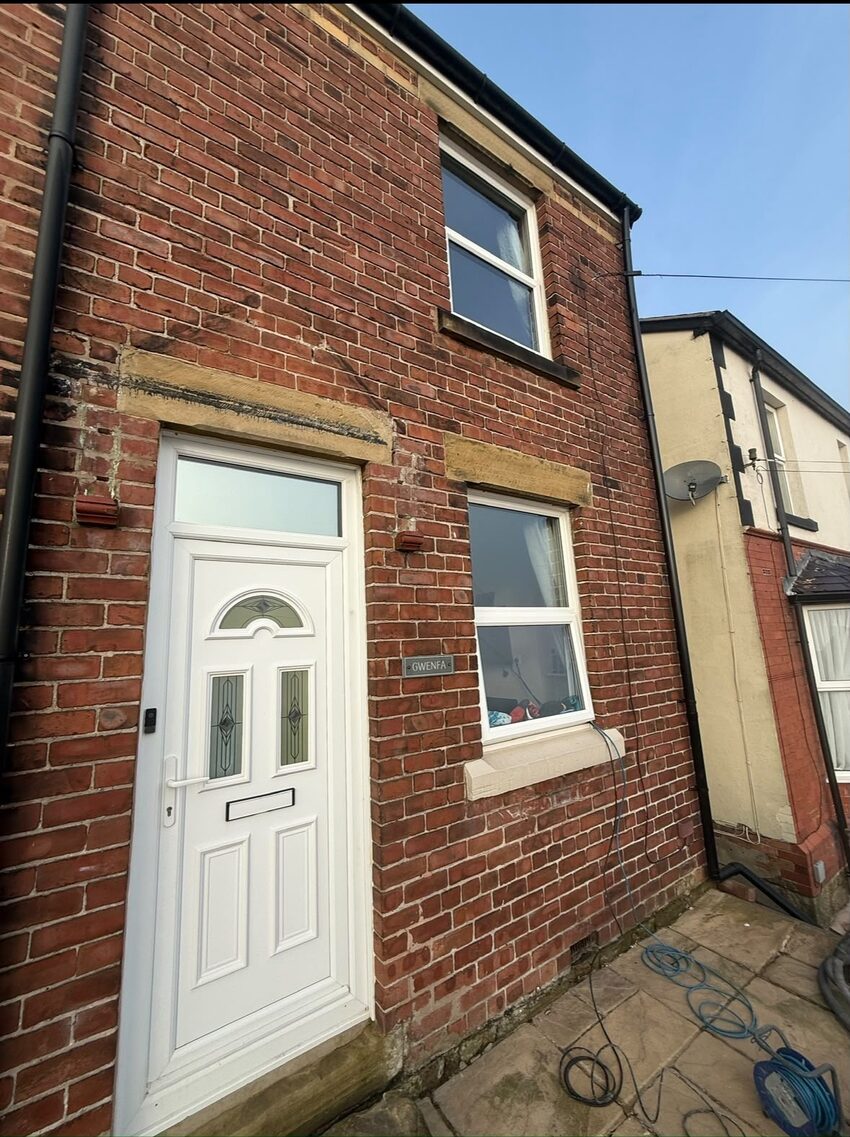
Front elevation of a Bebington property before repointing, showing worn mortar joints and earlier cement patch repairs above the door
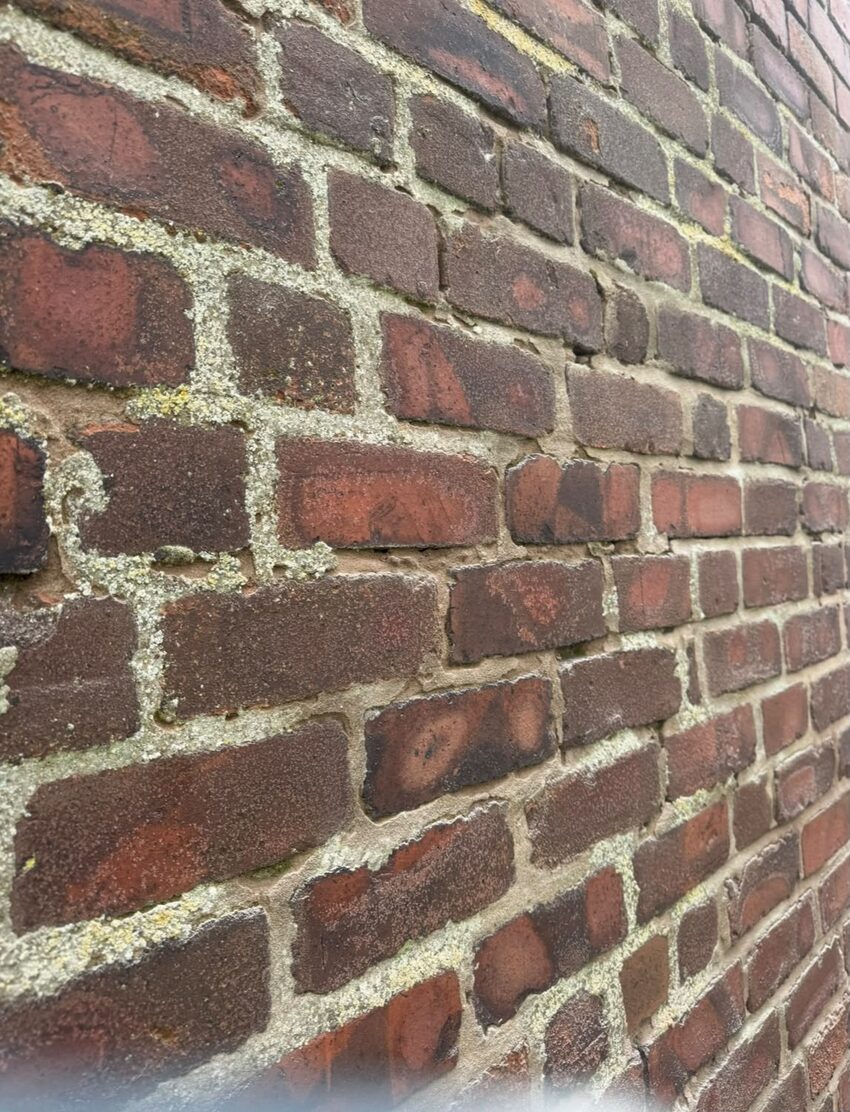
Joints weathered back behind the brick face, with organic growth established in the open mortar
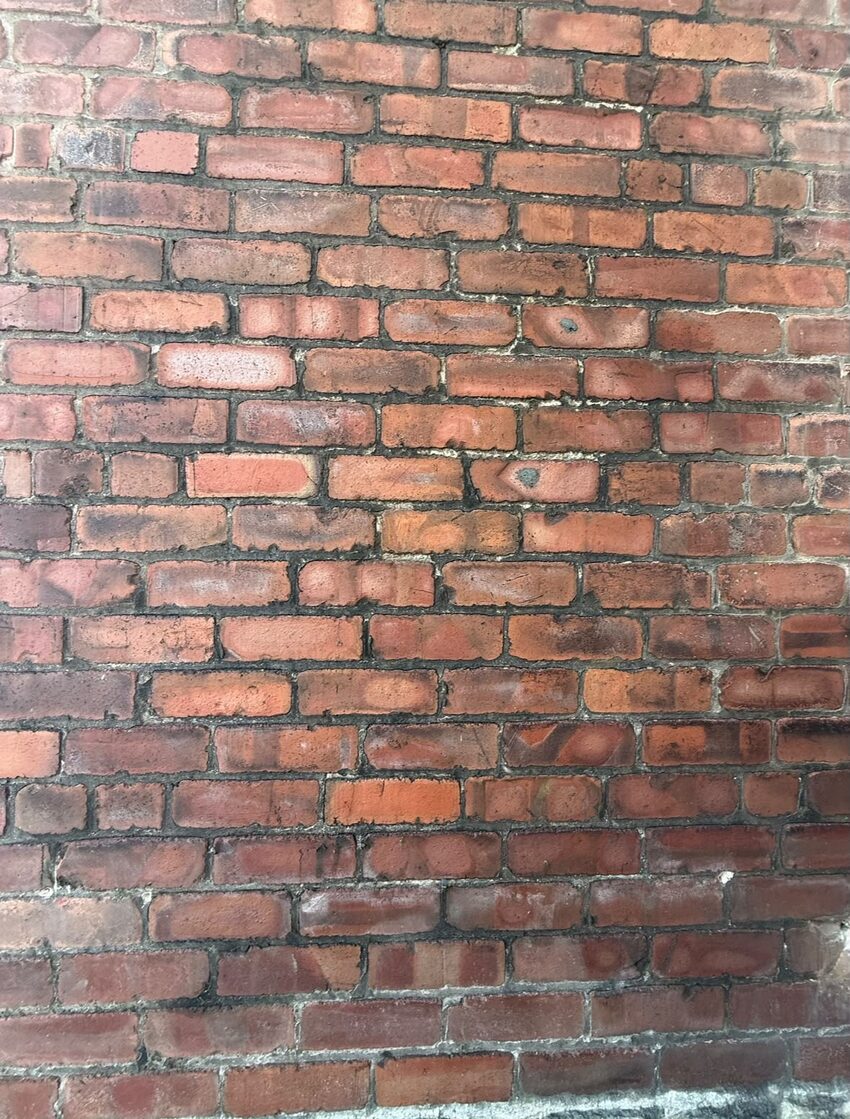
The same pattern of erosion repeated across the elevation
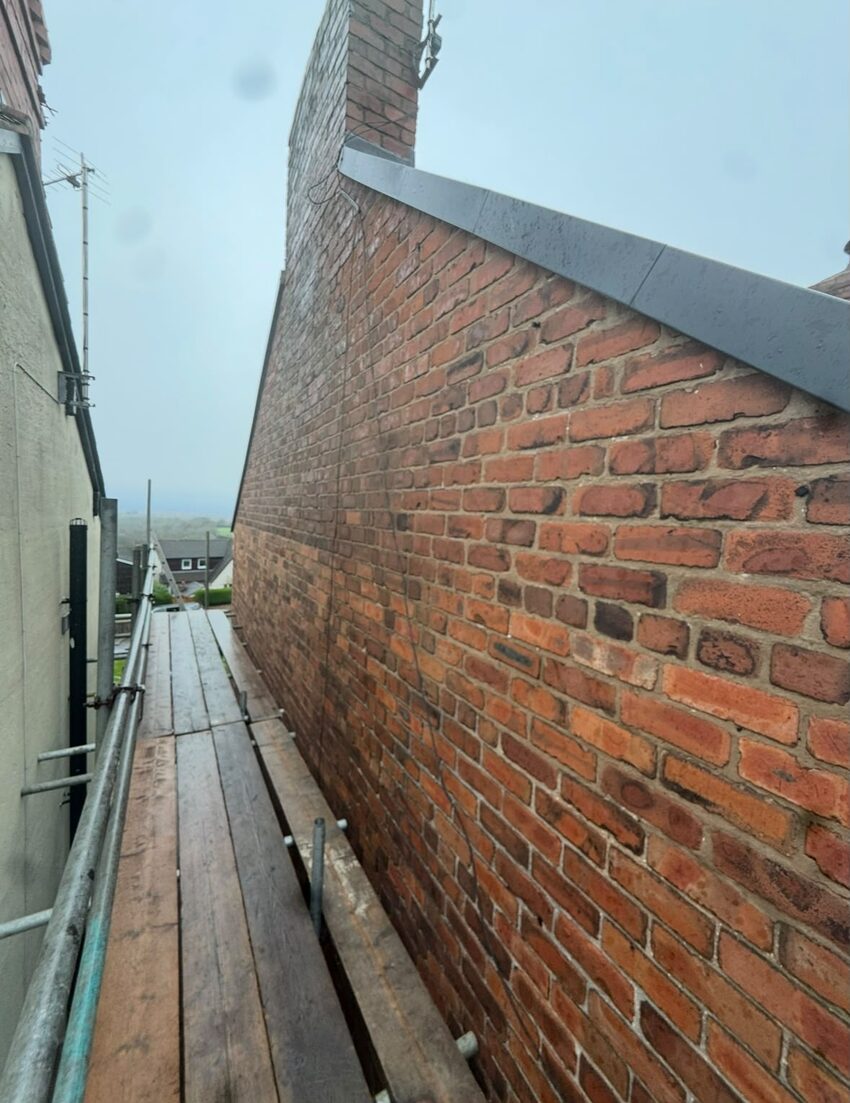
The gable before works — the exposed elevation had weathered most heavily
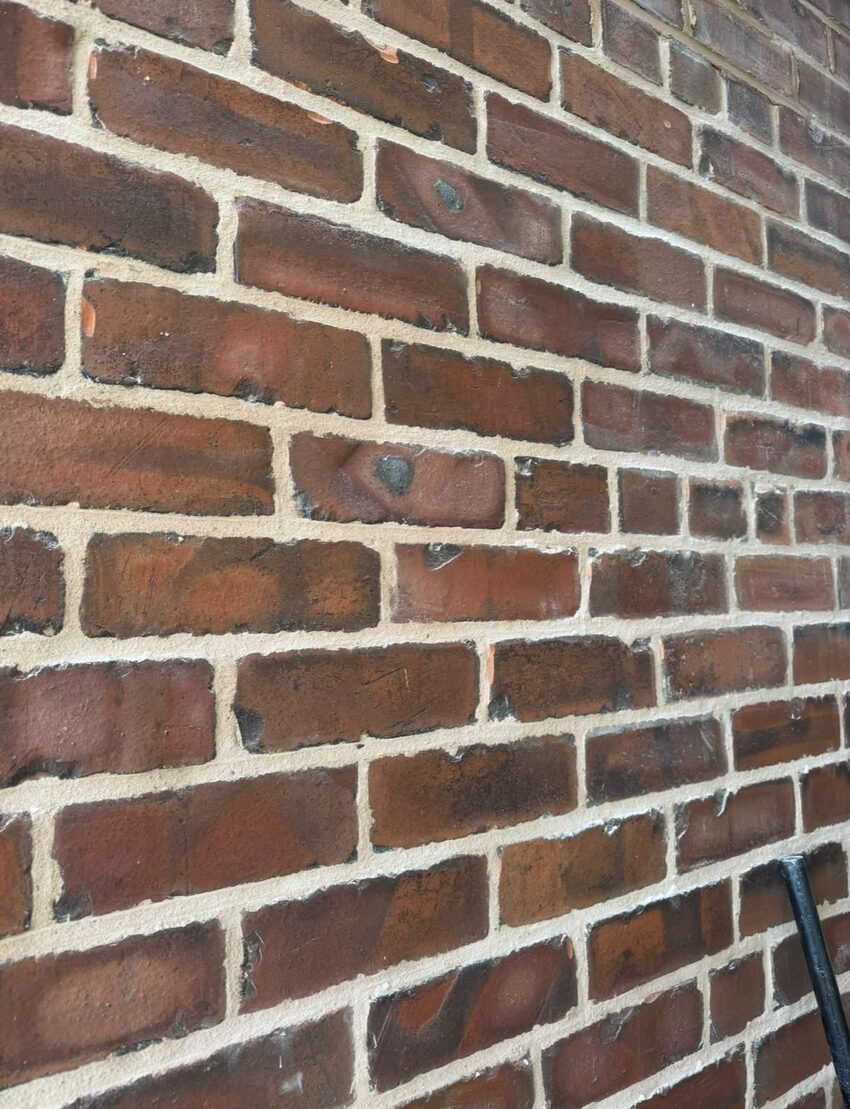
Newly repointed brickwork in NHL 3.5 lime mortar, finished with a traditional brushed joint
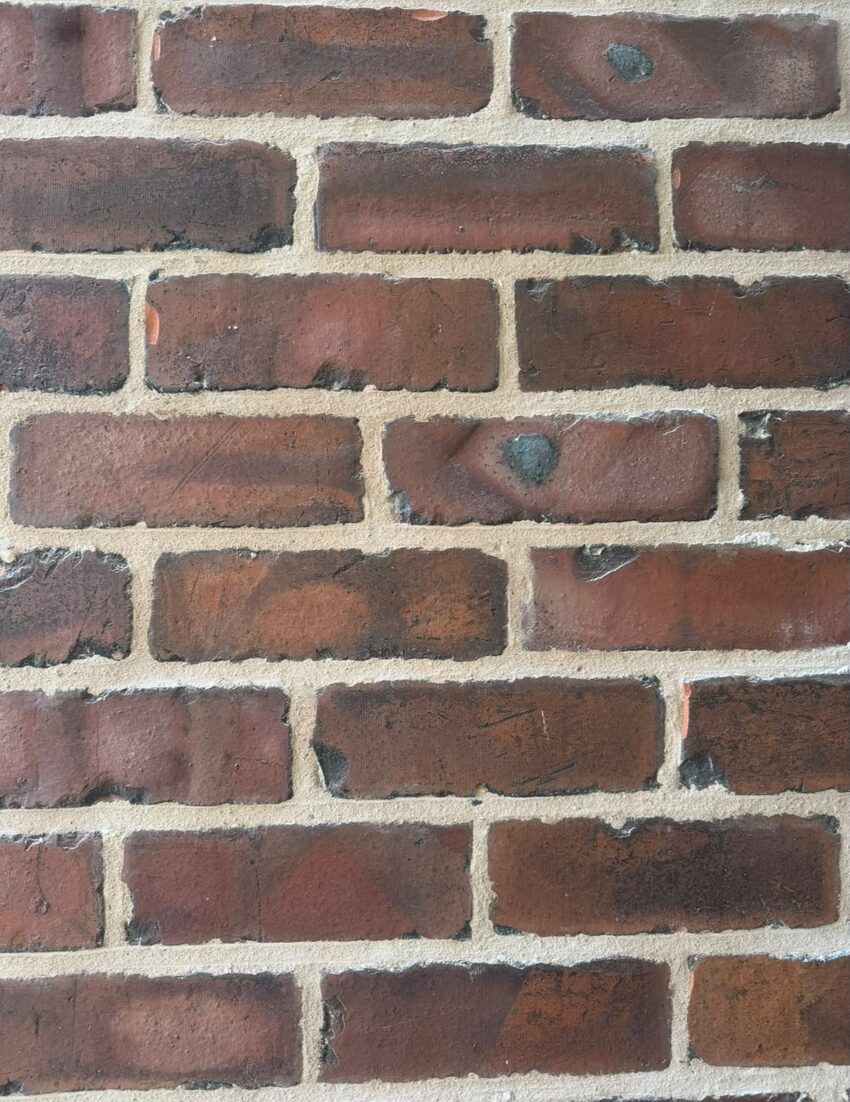
Joints raked back to a sound base and firmly compacted with the new lime mortar
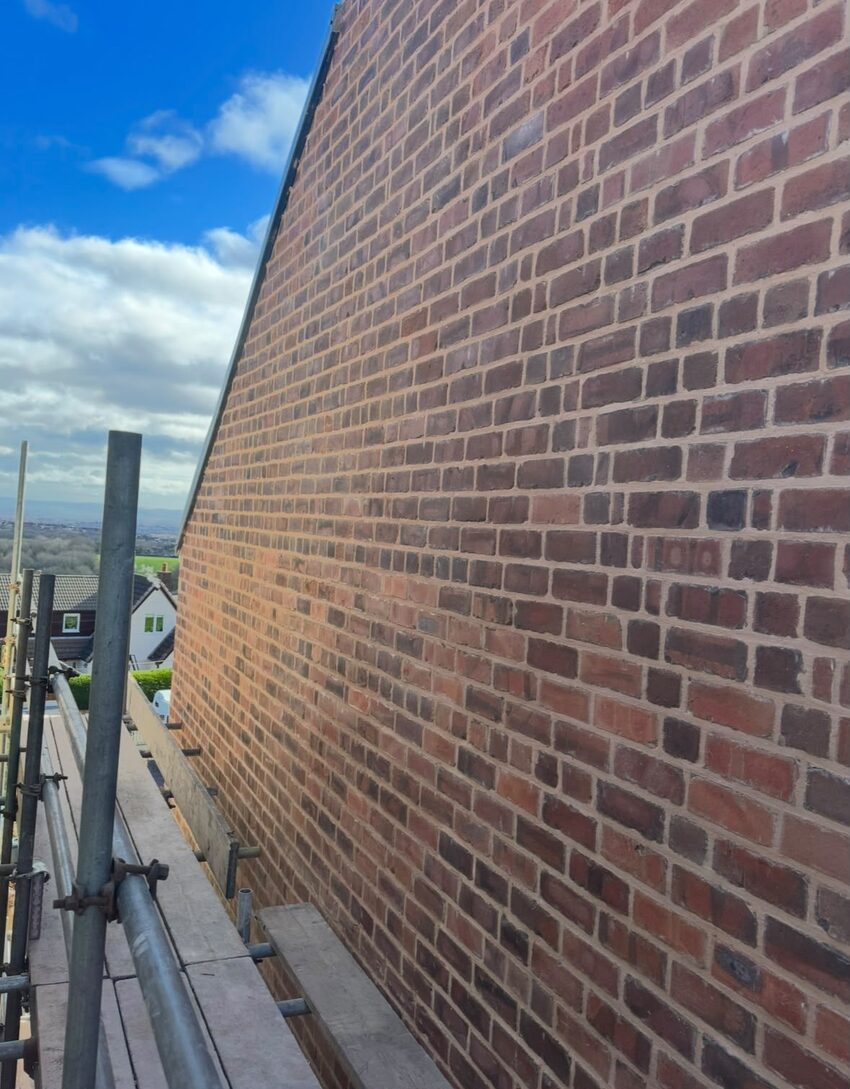
The completed gable, repointed across the full elevation
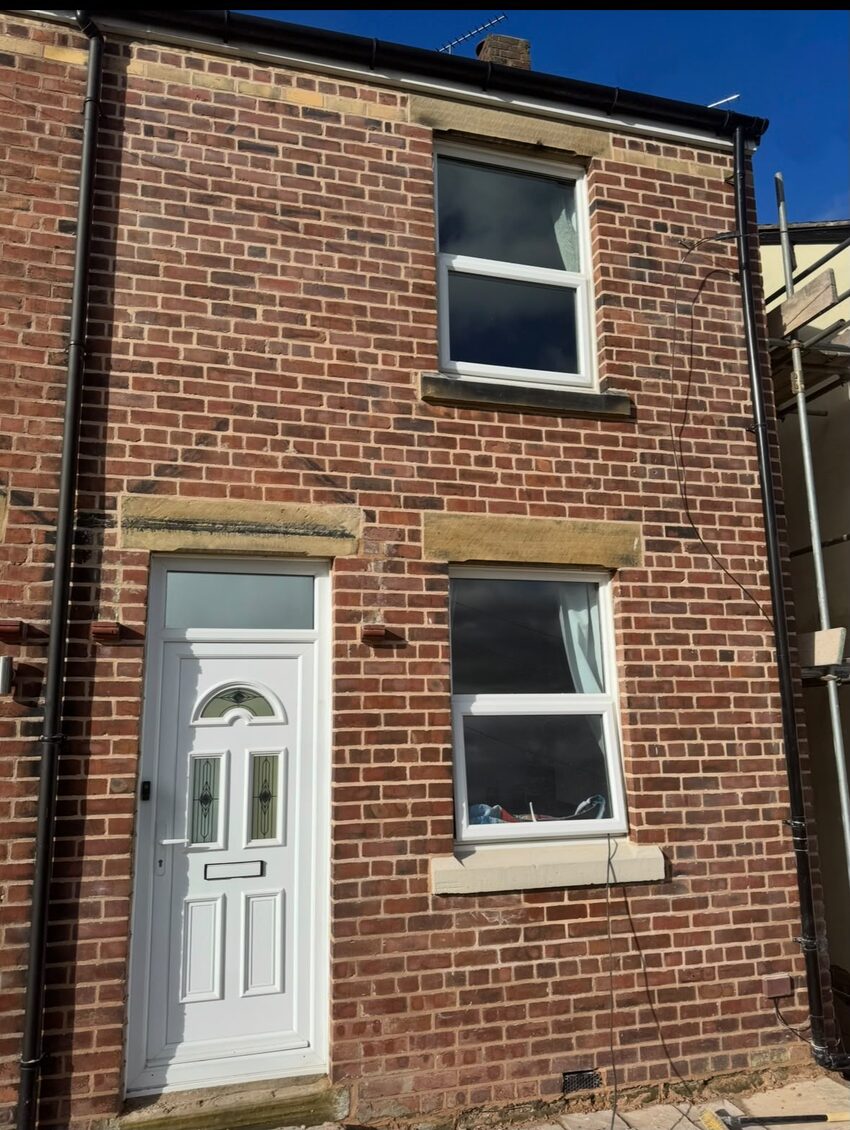
The front elevation on completion, before the scaffold was struck
Related Services
If your mortar is failing, you may also require:
• Our brick repair and replacement services to address spalling or damaged brickwork
• Our Damp proofing services to resolve internal moisture issues caused by failed mortar
• Our Crack stitching and structural repair services for movement-related cracks
• Our Chimney repair services for exposed or deteriorating masonry
• Our Gutter and roofline services to prevent water damage to brickwork
Where We Carry Out Repointing
We carry out repointing services across:
Chester, Flintshire, Cheshire, Wrexham, Ellesmere Port, the Wirral & North Wales
FAQs – Repointing (Chester, Flintshire, Cheshire & North Wales)
How much does repointing cost in Chester, Flintshire or Wrexham?
Do you cover Cheshire, the Wirral and North Wales?
Yes — our repointing teams work across Chester, Flintshire, Wrexham, Ellesmere Port, the Wirral, Cheshire and North Wales. See the area pages linked above for your nearest coverage, or call 01244 638219 and we will confirm straight away.
Can repointing stop damp problems?
Often, yes — failed mortar joints are one of the most common routes for penetrating damp, and sound new pointing closes that route. What repointing cannot fix is damp from another source: rising damp, condensation, or a roof or gutter leak. That is why our inspection identifies where the moisture is actually coming from before we recommend repointing as the cure.
How long does repointing last?
Correctly specified and applied, 20–50+ years depending on exposure, orientation and the mortar used — wind-driven rain and frost are what set the pace. Badly matched mortar or skimped raking-out can fail within a handful of winters, which is why we do neither.
Do older properties need lime mortar?
Buildings from before the early twentieth century were usually built with lime, and the correct mortar for your wall is confirmed at inspection before any work starts. Lime joints breathe and move with the building; hard cement in those joints traps moisture and pushes the damage into the brick faces instead. On a modern property, a modern mix is the right answer — not lime for its own sake.
Get in Touch
Send Photos via WhatsApp for a quick assessment.
Our Commitment
Long-lasting, professional solutions using proven industry methods
