Specialist Building & Property Maintenance Services You Can Depend On.

Home › Services › Condensation & Black Mould
CONDENSATION & BLACK MOULD

Condensation and black mould,
the cause found and fixed

Condensation is water from the air inside your home settling on cold surfaces, and black mould is what grows where it stays. We find out whether it really is condensation — or a leak, rain getting in or rising damp — then fix the cause, fit extractor fans and clean off and make good, across North Wales, Cheshire and Wirral.
Damp survey with a written report — condensation, or something else
Extractor fans fitted in kitchens and bathrooms
Black mould removal, and the room made good
 
 
WhatsApp or email gets the quickest reply. We come back to you as soon as we can.
Google5.0★★★★★Based on 150+ Google reviews
Trading since2008
£5 millionpublic liability insurance in place
Workmanship guarantee on completed works
One contractorAll trades under one roof

In short: Wiping mould off treats what you can see. To stop it coming back you have to deal with the moisture, the cold surface it settles on, or both — and first make sure it is not water getting in from somewhere else.

One contractor for the cause, the fix and the finish

Mould on a wall is usually more than one trade. We do all of them, under one quotation.

Find the cause

Photographs or a damp survey with a written report: condensation, a leak, rain getting in or rising damp.

Stop water getting in

Gutters, roofs, pointing, leaking pipes and damp courses repaired where water is coming in from outside or below.

Get the moisture out

Extractor fans fitted in kitchens and bathrooms, ducted to the outside.

Clean off and make good

Mould washed off, stained areas sealed and the room redecorated.

What condensation is

The air in a home carries water. Cooking, showers, baths, boiling kettles, drying washing and breathing all add to it, and an ordinary household puts several litres a day into the air. Paraffin and bottled-gas heaters add a lot more.

When that warm, moist air reaches a surface colder than itself — a window, an outside wall, a ceiling under a cold loft — it cools, and the water comes back out as droplets on that surface.

Moisture

Cooking, washing, bathing and drying clothes put water into the air.

Condensation

The air meets a cold surface and the water settles on it.

Mould

Where the surface stays damp, mould grows.

Why cold surfaces get wet

Air can only hold so much water, and the colder it gets the less it can hold. The temperature at which it has to let go is its dew point. When moist air touches a surface below its dew point, the water settles on that surface.

Glass shows it first because it is usually the coldest thing in the room. Walls show it later, and in much the same places: corners, behind wardrobes and beds, behind curtains, on ceilings along the outside walls and around window reveals. It is worse in winter, worse in rooms that are kept cold, and worse where the air does not move.

Diagram: warm, moist room air meets a cold window or wall, and water droplets form on the room side

Signs of condensation and black mould

  • Water running down the inside of windows in the morning, and wet sills
  • Black spots of mould in corners, around window reveals and on ceilings along the outside walls
  • Mould on the backs of furniture, on curtains and on clothes in wardrobes against outside walls
  • Water on tiles, toilet cisterns and cold pipes
  • Paint flaking and wallpaper lifting in bathrooms and kitchens
  • A musty smell in rooms that are kept closed

Mould is usually black, but it can be grey or green. Condensation tends to come and go with the weather and with how a room is used — worse on cold mornings, after showers and when washing is drying indoors. Left alone, it stains plaster and decoration, spoils furniture and clothes, and in time can rot window frames, sills and skirtings.
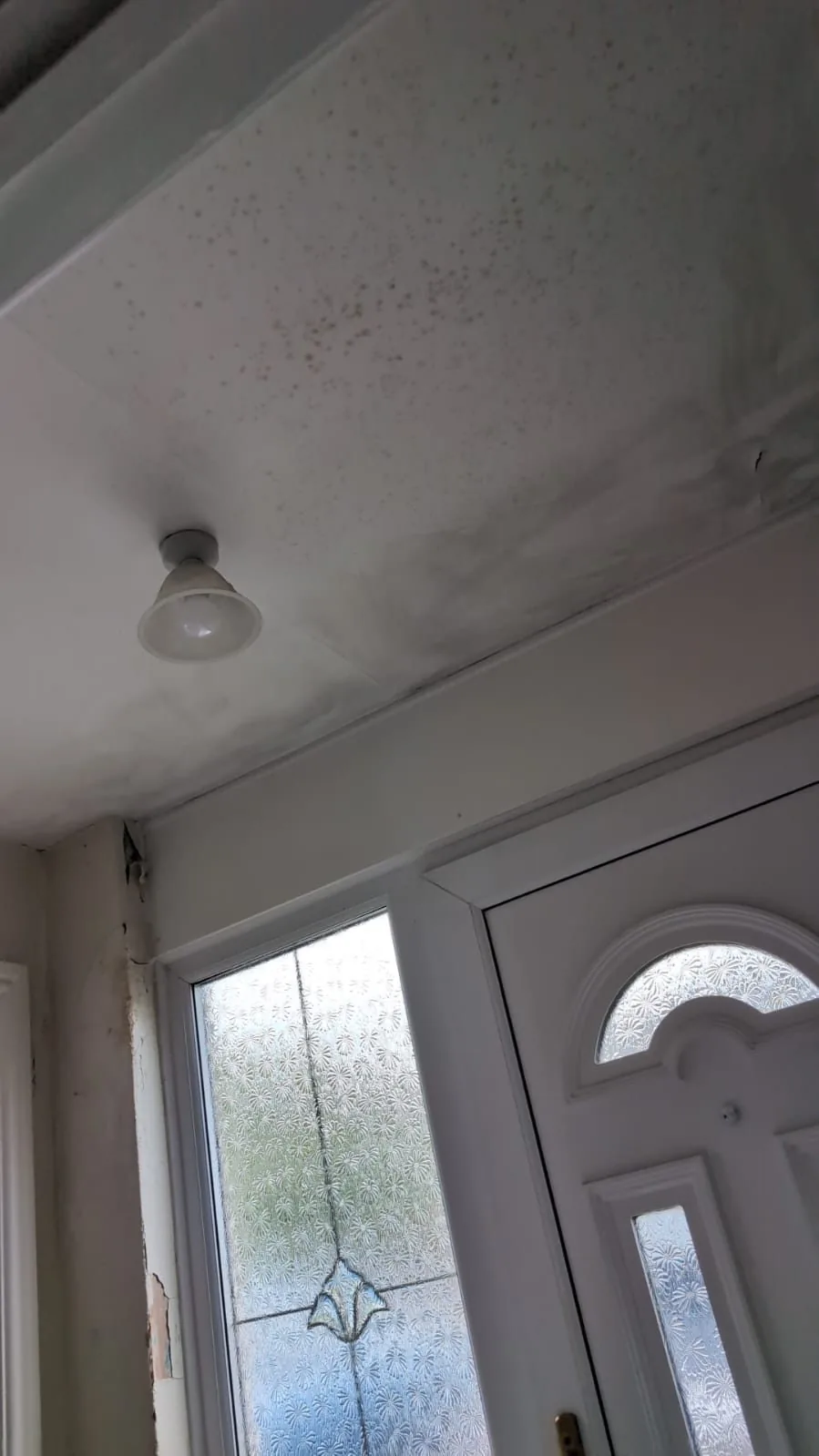
Black mould spots across a hallway ceiling above a front door and side window
Black mould spotting on a cold hallway ceiling, a typical condensation pattern.
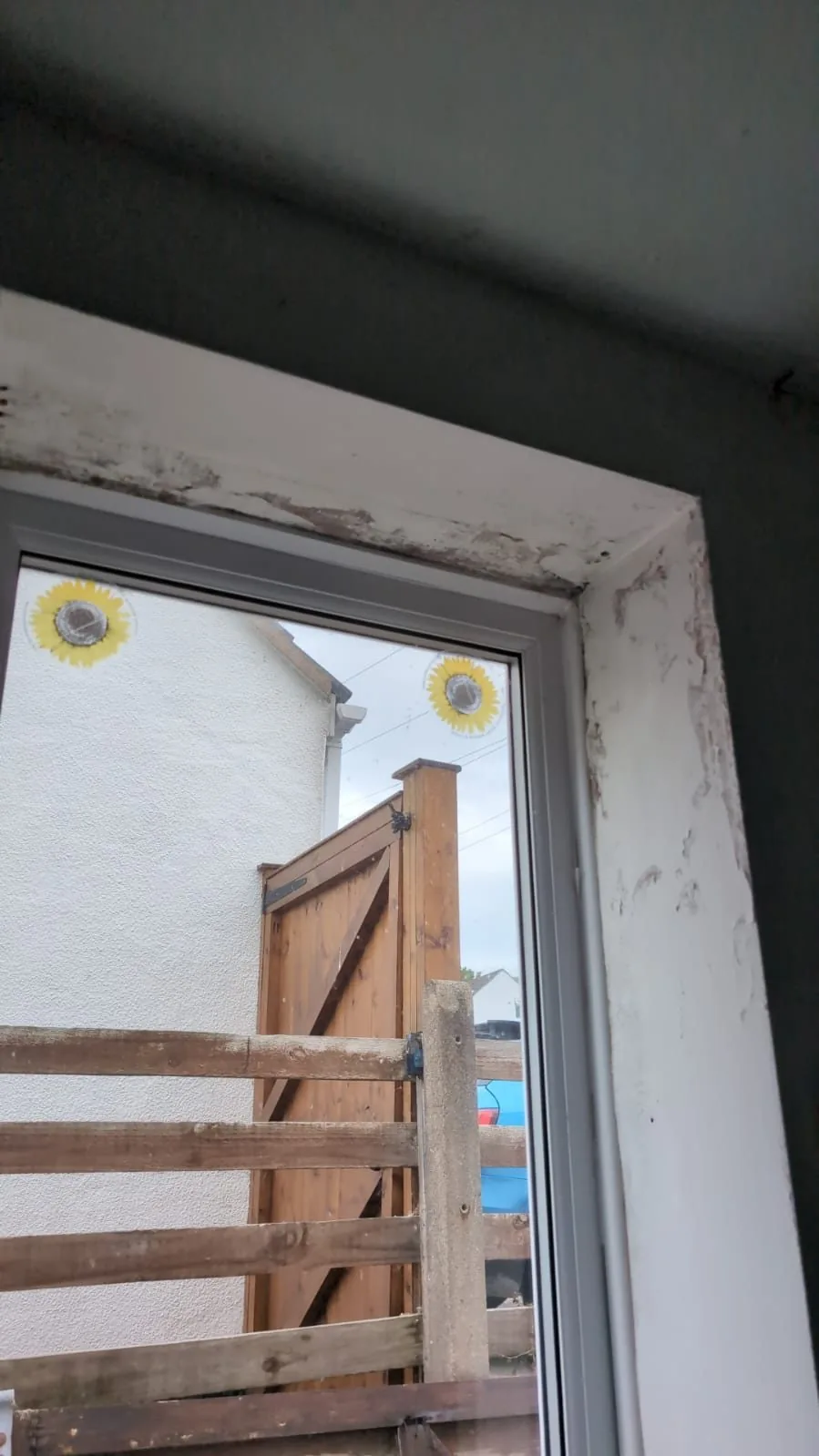
Mould and stained paint on the plaster reveal around a uPVC window frame
Mould round the window reveal, where the wall beside the frame stays cold.

Where the cold spots are

Some parts of a building can stay colder than the wall around them. These are cold bridges, and condensation tends to find them first:

  1. 1Lintels over windows and doors
  2. 2Ceiling edges where the walls meet the roof, especially where loft insulation stops short of the wall
  3. 3External corners, which have more outside face to lose heat through
  4. 4Window reveals — the wall around the frame
  5. 5Bathrooms and kitchens, where the most moisture is made

Mould that comes back in the same place every winter usually points to a cold spot. A survey report says where it is and what would help — including where that is work we do not do ourselves.
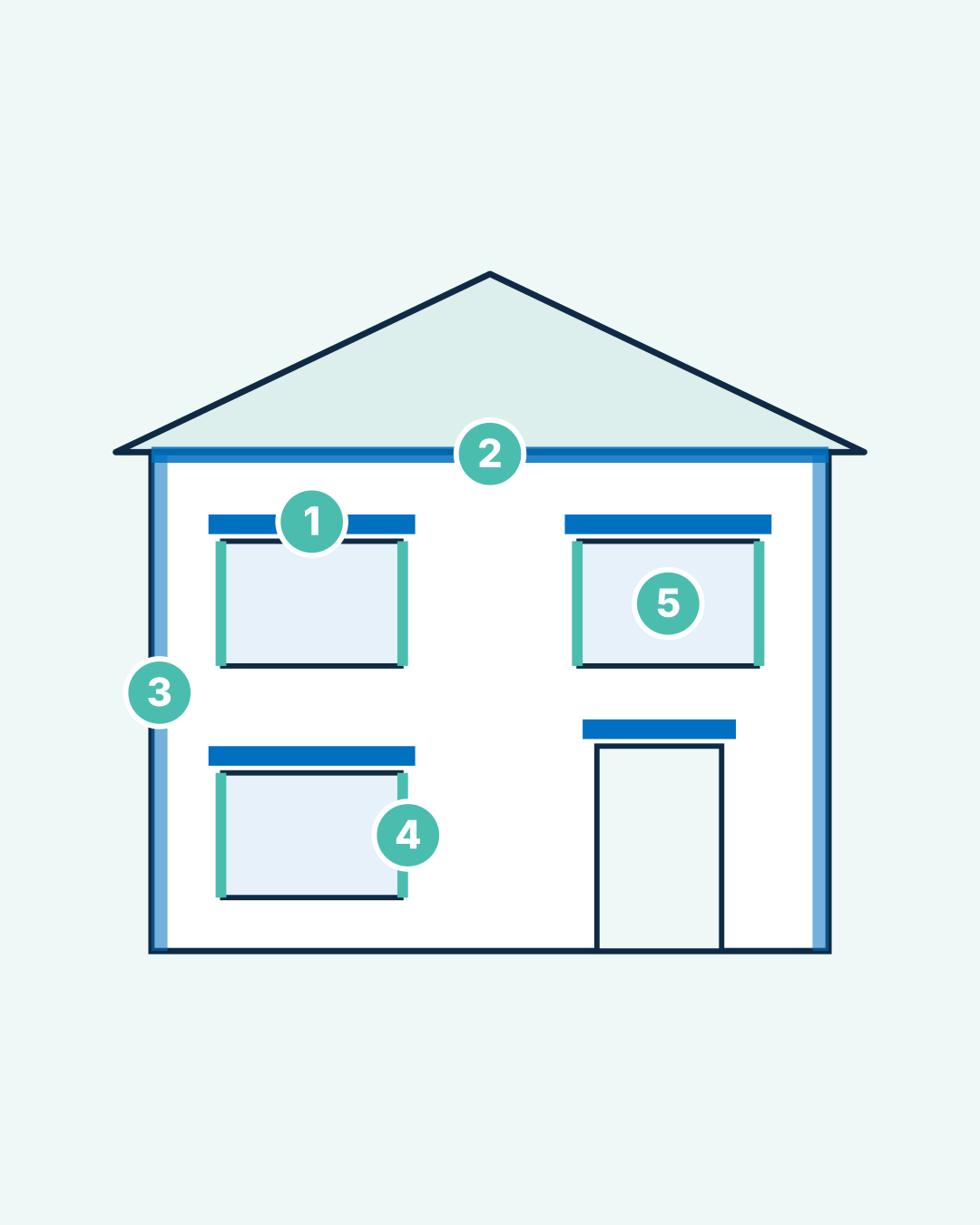
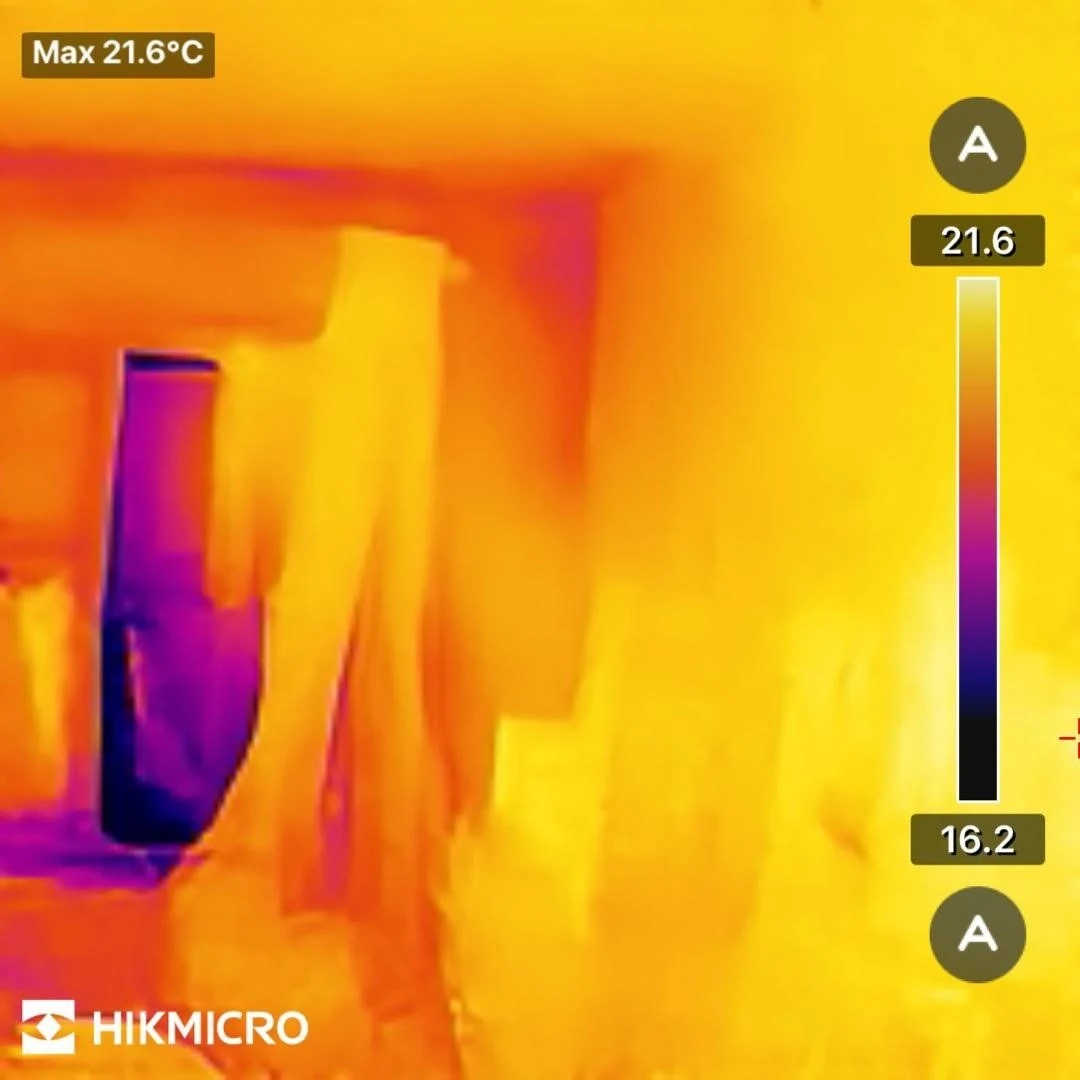
Diagram of a house with five numbered cold spots: lintels, the wall-to-roof junction, an external corner, a window reveal and a bathroom
The five cold spots, numbered as in the list.
Thermal camera image of a bedroom window reveal, with a cold strip showing dark beside the window frame
A thermal image of a bedroom window reveal — cold spot 4. The dark strip beside the frame is colder than the wall around it, the kind of spot where condensation tends to settle.

Is it condensation, or something else?

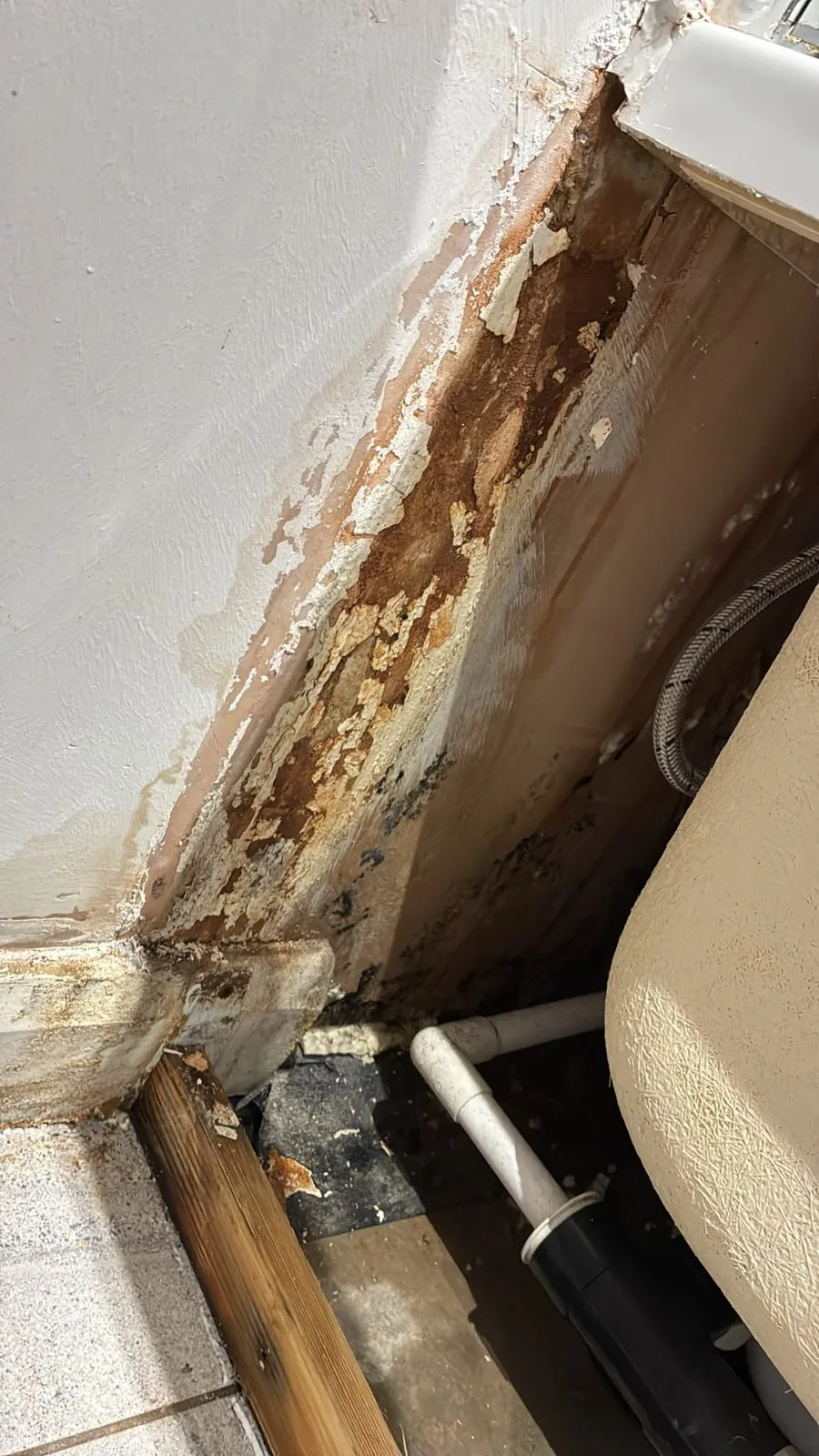
Not every damp patch or patch of mould is condensation. Water getting in from outside, a leak, or a problem at the base of a wall can look much the same. If you are not sure, send us a photo. A damp survey sets out which it is.
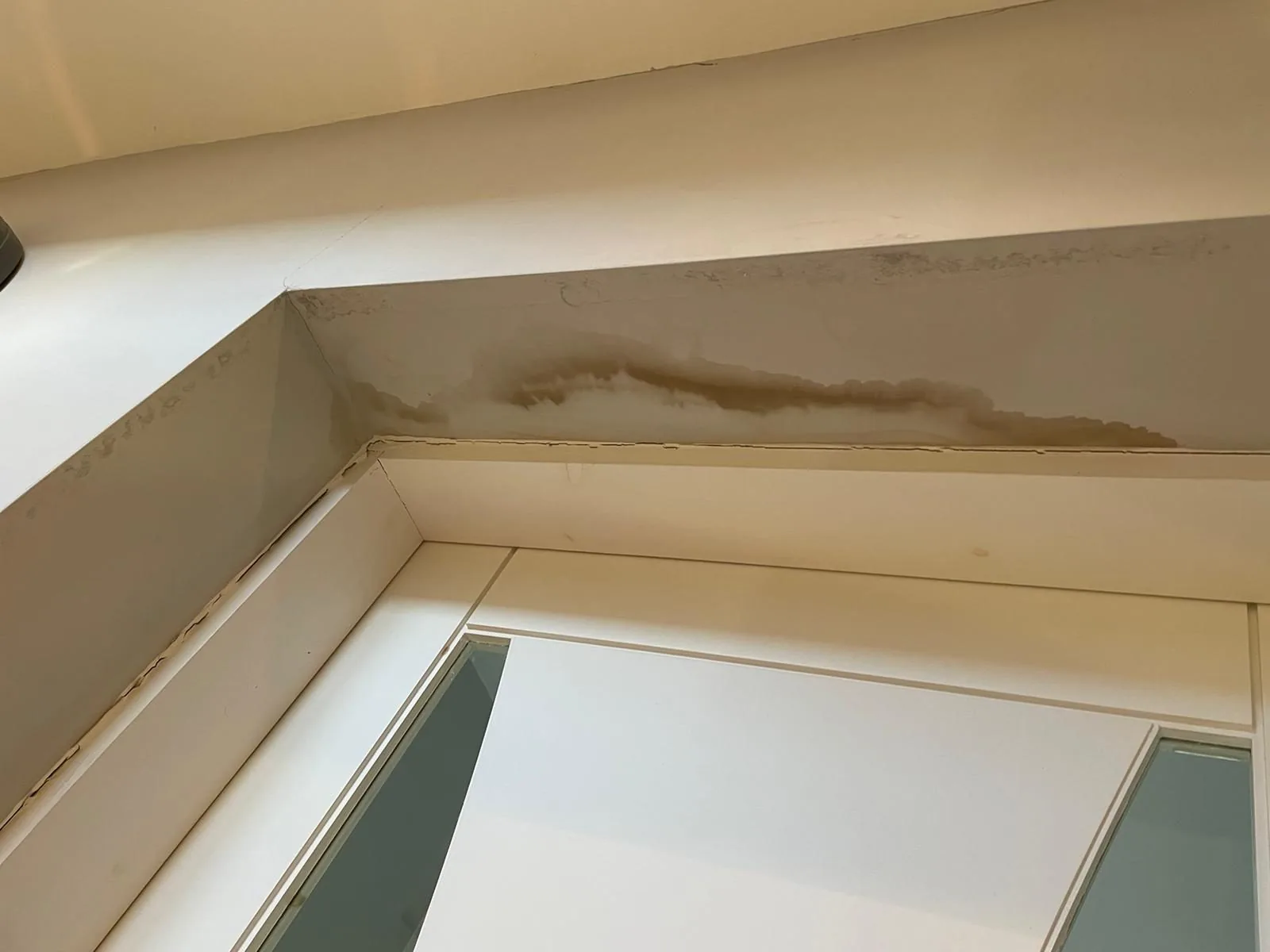
Brown tide-mark staining on the plaster above a glazed door frame
Brown staining on the plaster above a door frame.
Badly stained and flaking wall beside a bath panel and pipework, with a damaged skirting board
Stained, flaking plaster and a damaged skirting board beside a bath panel.

How we find the cause

Most jobs start with your photographs — a few of the mould, a wider shot of the room and one of the outside wall behind it. Where that is not enough to be sure, we carry out a damp survey. On a survey we use a moisture meter and a thermal camera alongside a visual check of the room and the outside wall. A damp survey is a charged service; the fee is confirmed when you book. Our damp surveys page explains what it covers and what the written report includes.
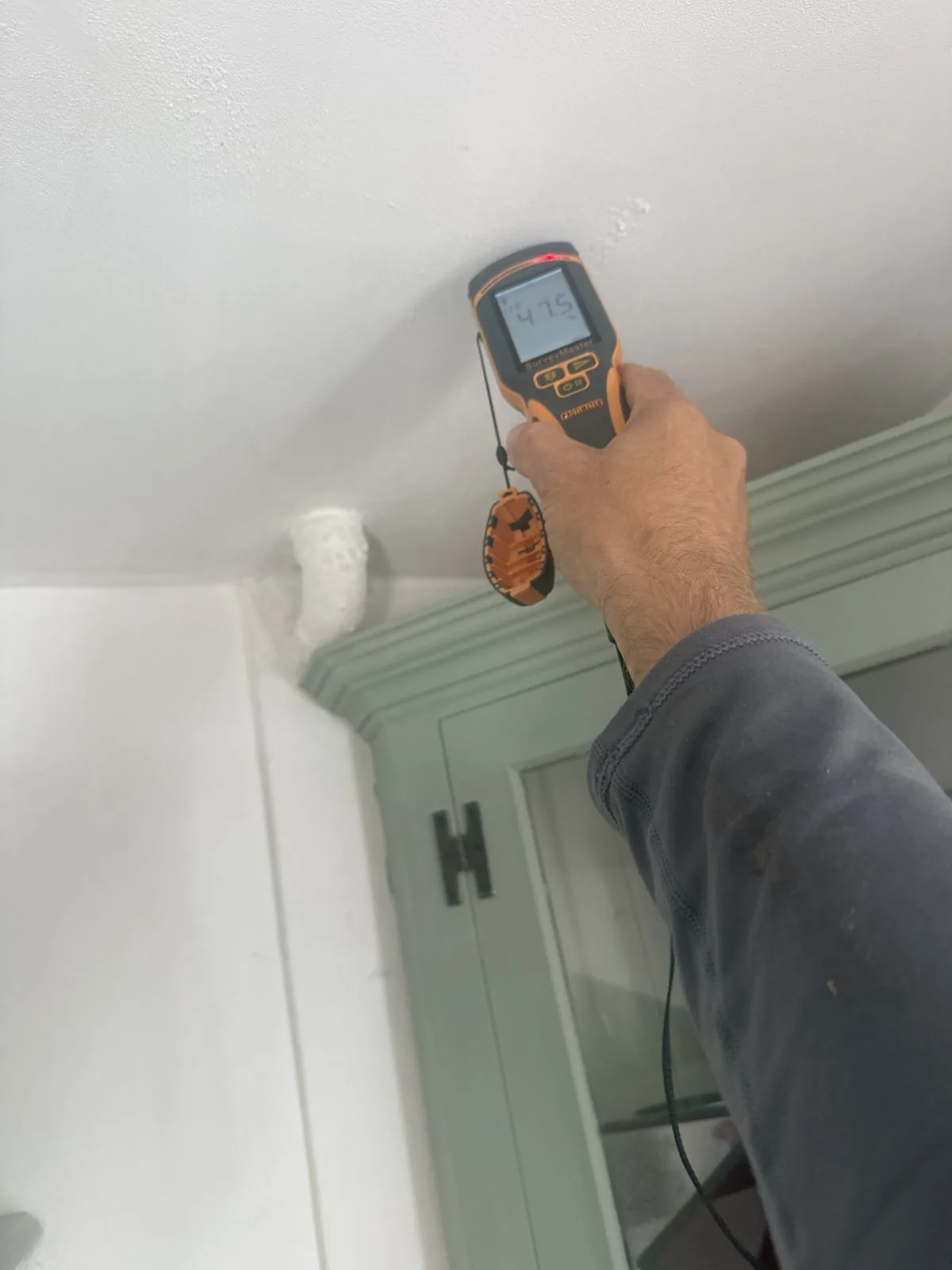
Moisture meter held against the junction of a wall and ceiling
A moisture meter reading at a wall-to-ceiling junction. On its own, a reading is evidence, not a diagnosis.

How we put it right

What we do depends on what the photographs or the survey show. No single fix suits every house:

  • Extractor fans fitted in kitchens and bathrooms, or old ones replaced, ducted to the outside — including humidity-controlled fans that switch on when the air gets damp, and continuous low-running fans
  • Leaks, gutters, roofs and pointing repaired where water is getting in from outside
  • Damp proofing where the wall is wet from below and a survey confirms it
  • Black mould removal: mould washed off, stained areas sealed and the room redecorated

Electrical work is carried out by NAPIT-registered engineers.

We set out what we recommend, and why, in a written quotation.
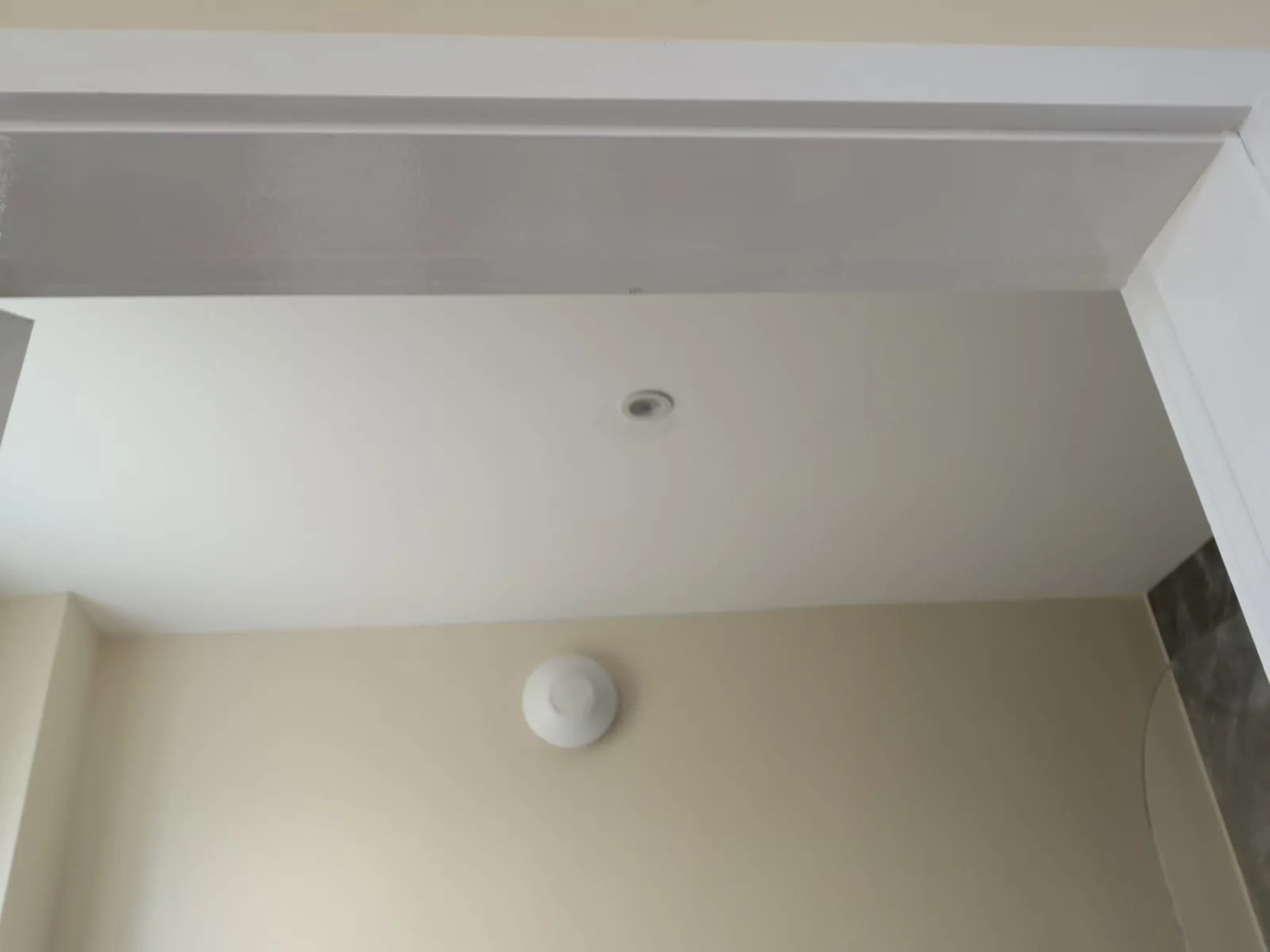
Round extractor fan fitted high on a bathroom wall, just below the ceiling
An extractor fan fitted high in a bathroom, where warm, moist air collects.
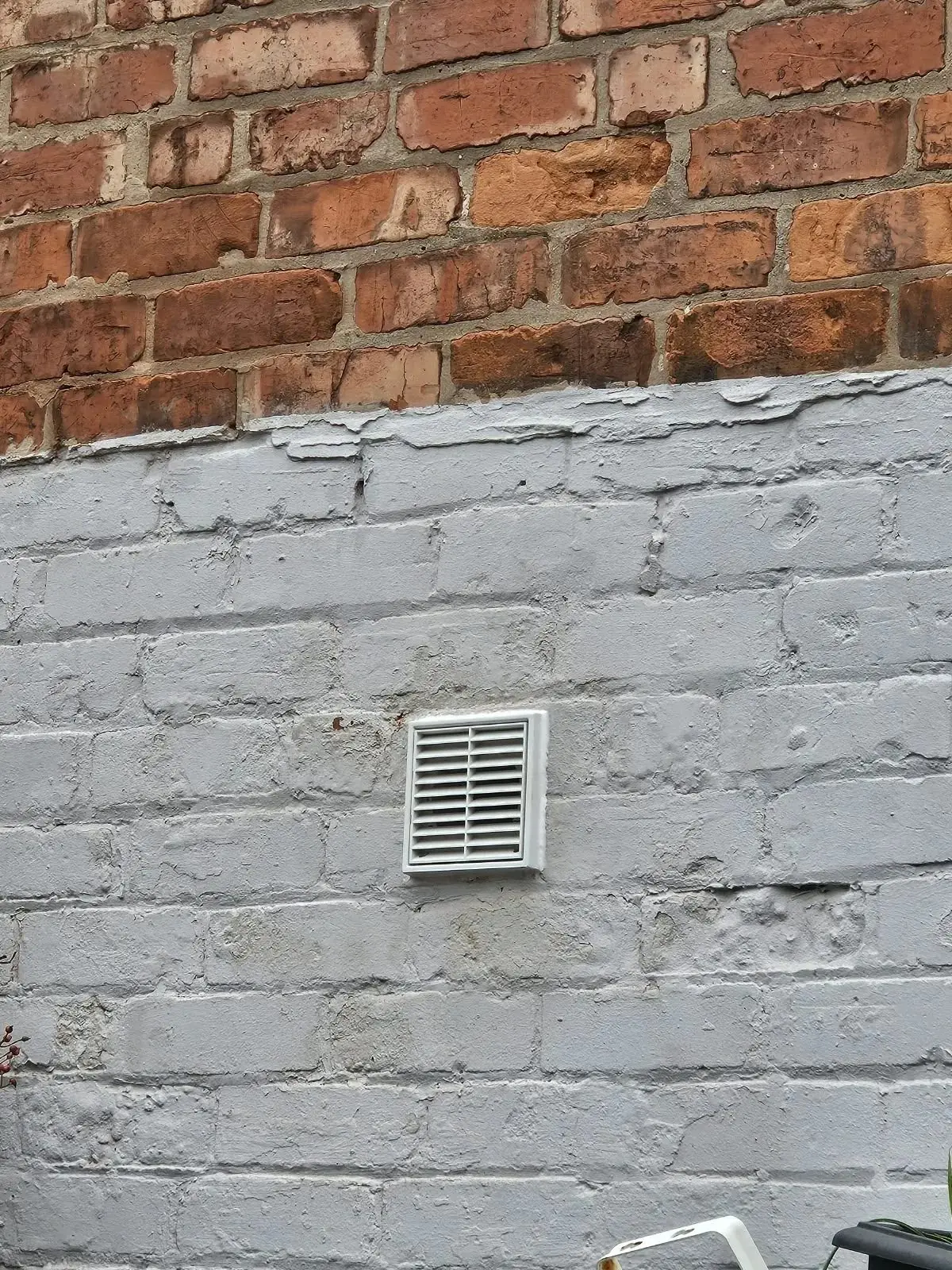
White louvred vent grille on a painted brick outside wall
The grille on the outside wall, where the fan takes the moist air out.

What you can do at home

How much moisture goes into the air, and how quickly it gets out again, makes a difference in most homes:
Lids on pans and the extractor on while cooking
Fan on and the door shut for showers and baths
Washing dried outside when you can
A tumble dryer vented to the outside
A window open for a few minutes each morning
Water wiped off windows and sills
Furniture kept a little way off outside walls
Trickle vents and air vents left open and clear
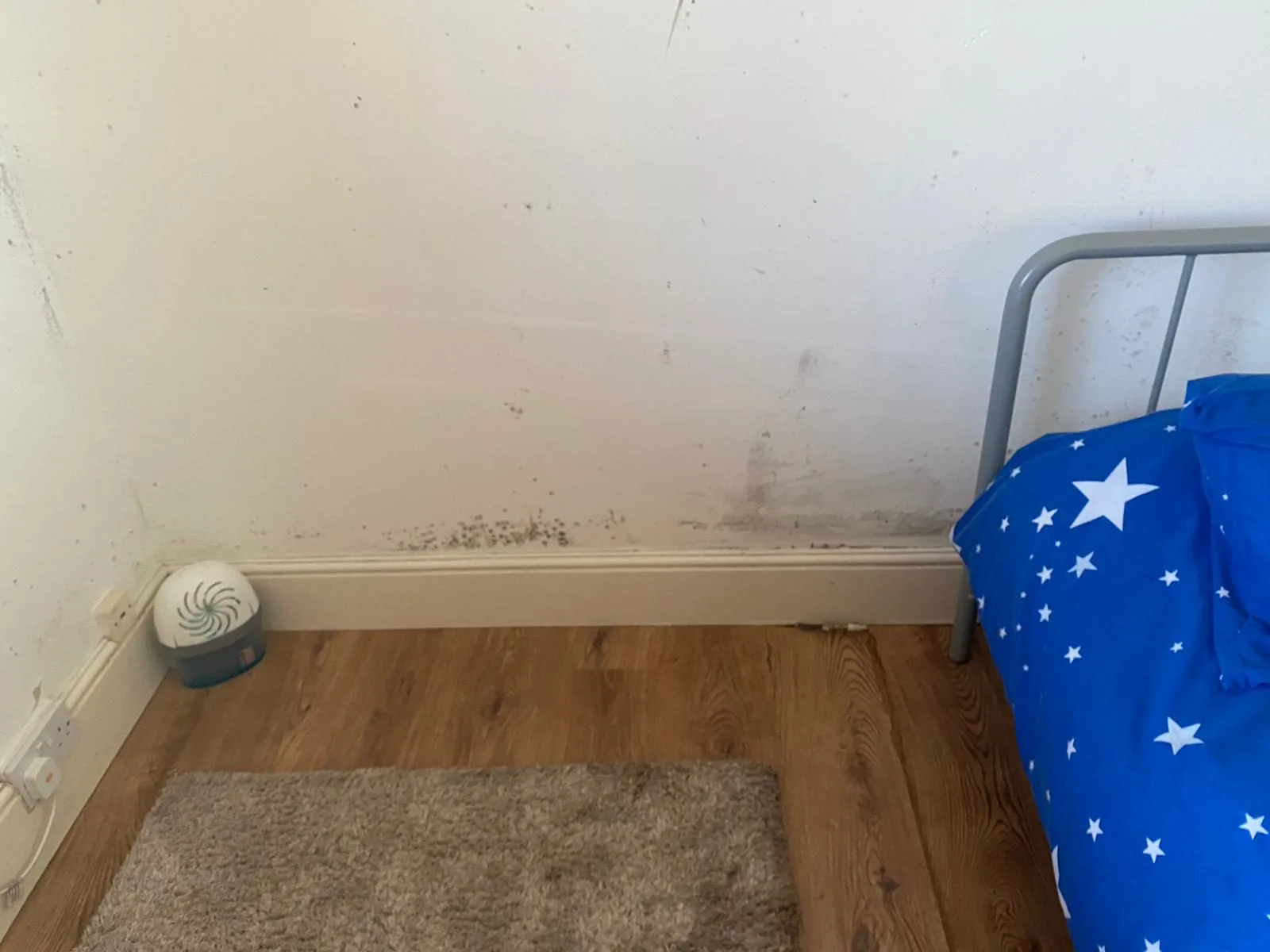
Black mould spots on a bedroom wall above the skirting, behind where a bed stands against an outside wall
Mould behind a bed against an outside wall. Air doesn’t move there, so the wall stays cold and damp.

A steady background heat usually helps more than short blasts: rooms kept cold have cold walls, and cold walls are where the water settles. A dehumidifier can help in a room that stays damp, but it treats the air, not the cause. If the mould keeps coming back after all of this, it may not be condensation — send us a photo.
Landlords and letting agents

A written survey report sets out what was found and what was recommended, so the landlord, the agent and the tenant work from the same facts. If you rent and see damp or mould, tell your landlord in writing early.

In England, Awaab’s Law sets timescales for social landlords to deal with damp and mould; in Wales, rented homes must be fit for human habitation under the Renting Homes (Wales) Act 2016. Our Awaab’s Law page explains where the rules stand, and our landlord maintenance service looks after rented properties.

Where we work

We deal with condensation and mould across North Wales, Cheshire and Wirral . The houses vary across the area, and so do the places mould tends to appear. Flintshire, Deeside and Wrexham have many solid-walled terraces and cottages, where outside walls and window reveals can run cold. Chester, Ellesmere Port and the Wirral add Victorian and Edwardian terraces with bays and cold back additions, and plenty of post-war homes where concrete lintels and ceilings at the eaves are the cold spots. In flats and newer, well-sealed houses it is often moist air with nowhere to go. None of that is a diagnosis — your photographs tell us where to look.

Areas we cover

Flintshire and Deeside

Mold, Buckley, Connah’s Quay, Shotton, Flint, Holywell

CH5, CH6, CH7 and CH8

Chester and Ellesmere Port

Hoole, Upton, Blacon, Handbridge, Ellesmere Port, Little Sutton

CH1 to CH4, CH65 and CH66

Wirral

Birkenhead, Wallasey, Bebington, Heswall, West Kirby, Neston

CH41 to CH49 and CH60 to CH64

Wrexham

Wrexham, Gresford, Rhosllanerchrugog, Ruabon, Brymbo

LL11 to LL14

Denbighshire and Conwy

Rhyl, Prestatyn, Denbigh, Ruthin, Abergele, Colwyn Bay, Llandudno

LL15 to LL32

NORTH WALESFlintshireFLINTSHIREWrexhamWREXHAMChesterCHESTERWirralWIRRALEllesmere PortELLESMERE PORTCHESHIREA55M53M56A483A494Boundaries © OpenStreetMap contributors

What customers say

5.0 · 150+ Google reviews

★★★★★

Fantastic service and a company we would highly recommend. We used Quirks to resolve a long standing damp problem in our old Victorian house. We have had a new roof, replaced guttering and soil pipes but the wall remained wet. They resolved the problem by repointing the outside wall. The team arrived just after 7 each morning and worked until dark. They cleaned up each day and were always friendly and helpful. We’ll definitely use their services again

SB CB

★★★★★

Great job. Efficient, polite, tidy workers. Very happy with the damp proofing and plastering. Highly recommend!

Andrew Jaworski

★★★★★

Michael and his team are worth more than 5 stars! We had a full living room, hallway, landing & stairs renovation (Damp proofing, electrics, plumbing, plastering and joinery). From start to finish they were fantastic! Everything was organised and ran like clockwork which took a massive stress off me and my wife. His employees are a credit to the company too, always polite, non stop working from the start of the day to the end and had a lot of pride in their work. Will definitely use Quirks again in a heartbeat! Jordan + Anastasia Wrexham

Jordan Owen

Read all our reviews on Google

Related services

Damp proofing

where the wall is wet from below, not from the air in the room.

Penetrating damp

where rain is getting through a wall, a roof or around a window.

Leak detection

where a hidden plumbing leak is the water behind the mould.

Gutter repairs

overflowing gutters soak a wall and make the inside face cold and damp.

Dry rot and wet rot treatment

where long-standing damp has reached the timber.

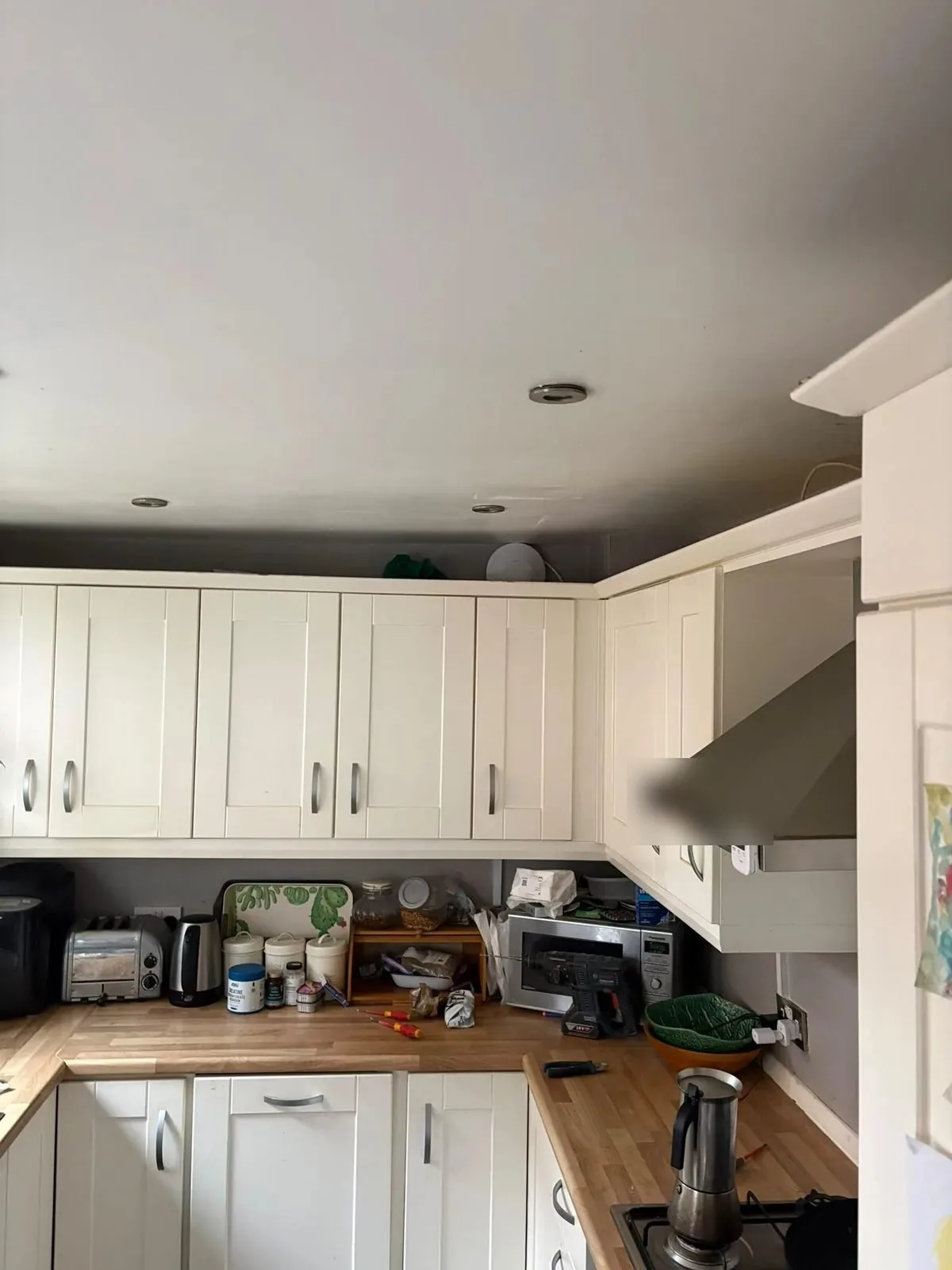
Kitchen with a round extractor fan fitted on the wall above the wall cupboards
Extractor fan fitted above the kitchen wall units, close to the ceiling.

Frequently asked questions

What causes condensation?

Moisture in the air meeting a cold surface. The moisture comes from everyday living — cooking, washing, bathing, drying clothes — and the cold surface is usually a window, an outside wall or a ceiling under a cold loft. Too little ventilation lets the moisture build up; too little heat keeps the surfaces cold.

Is black mould dangerous?

Mould can trigger allergies and breathing problems, and the risk is higher for babies and children, older people and anyone with asthma or a lung condition. If someone in the home is unwell, speak to your GP. On the building side, deal with the moisture and the mould together, or the mould comes back.

Will a dehumidifier fix condensation?

It takes water out of the air in the room it is in, which helps while it is running. It does not deal with a cold spot, a missing or failed extractor fan or water getting in from outside, so on its own it rarely ends the problem.

Can I just paint over the mould?

Not on its own. Paint over mould without cleaning it off and dealing with the moisture, and it comes back through. We wash the mould off, seal the stain and redecorate once the cause has been dealt with.

Which areas do you cover?

North Wales, Cheshire and Wirral: Flintshire and Deeside, Chester and Ellesmere Port, the Wirral, Wrexham, and Denbighshire and Conwy. The area cards above list the towns and postcodes.

How much does it cost to fix condensation and mould?

It depends on what is causing it, how many rooms are affected, whether a fan is new or a replacement and how far its duct has to run, how much mould and damaged decoration there is, and whether a survey is needed first. Most jobs we can price from photographs — send yours on WhatsApp or by email and we’ll come back with a written quotation.

Written and reviewed by Michael Quirk, Director.
How it works

Send us a photo, we’ll take it from there

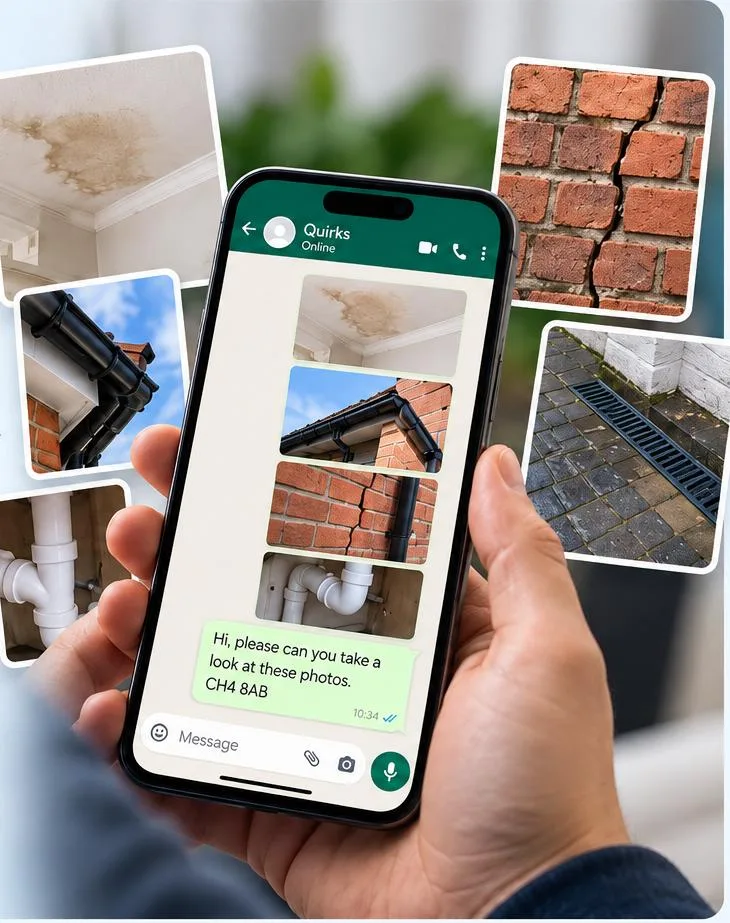
You don’t need to describe the problem down the phone. A photo tells us most of what we need.

  1. 1WhatsApp or email us photos.A couple of pictures of the problem and your postcode.
  2. 2We reply with what it looks like and what happens next.Where the photos show enough, that’s a price. If not, we’ll tell you what else we need.
  3. 3You get a written quotation.A clear scope of works, so you know what is included.
  4. 4We do the work and leave it clean.
Send Photos on WhatsApp
Customer sending Quirks photos of damp, gutters, cracked brickwork and a leaking pipe on WhatsApp

Request a written quotation

Attach two or three photographs of the mould, a wider shot of the room and one of the outside wall behind it. We reply by WhatsApp or email.

    So we can confirm we cover your area.


    JPG, JPEG, PNG, HEIC, WEBP or PDF, up to 4MB each. One photograph per box.

    We use your details and photographs to deal with your enquiry — our privacy policy explains how.

    Prefer to send photos? Message us on WhatsApp

    CONDENSATION & BLACK MOULD — SEND US PHOTOGRAPHS

    Worried about condensation or mould? Send us a photo.

    Scan the code
    Powered by Joinchat