Specialist Building & Property Maintenance Services You Can Depend On.
Dry rot & wet rot treatment
Dry rot and wet rot are both timber decay caused by damp, and both end the same way: the water stopped, the decayed joists, rafters, plates and frames cut back to sound wood and renewed in treated timber, and what remains treated. We do the whole job — the water, the treatment and the structural timber — as one contractor across North Wales, Cheshire and Wirral, and we start from your photographs.

In short: Dry rot and wet rot both need damp timber to live. Wet rot stays where the water is; dry rot can spread beyond it, through brickwork and plaster, to find more timber. Fix the water, remove the decayed wood, treat and replace — and the rot has nothing to live on. We survey, treat and repair as one contractor.
One contractor
Most rot jobs are three trades. We do all three, under one quotation.
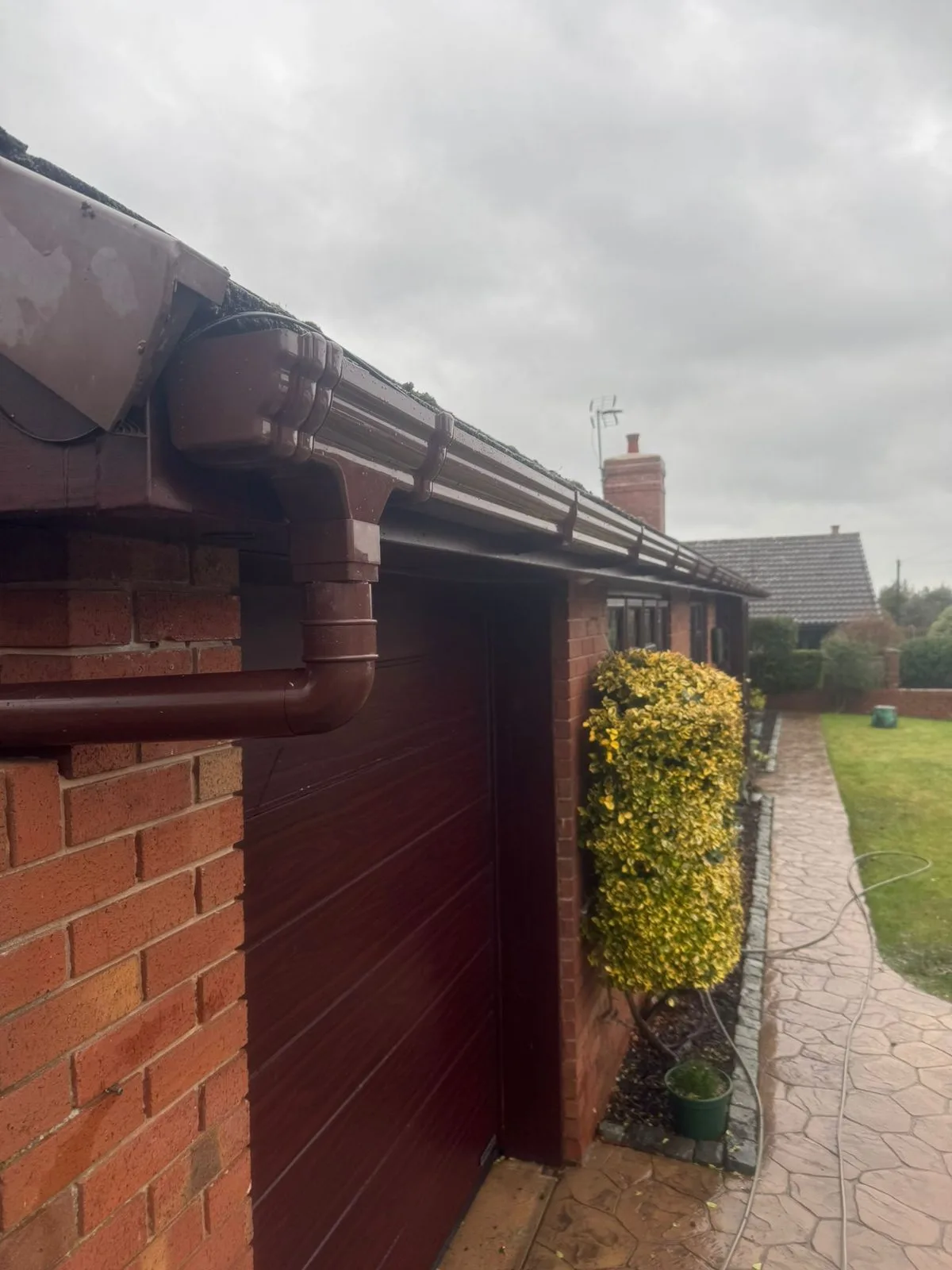
Find and stop the water — Leaking gutters, roof leaks, high ground, a failed damp course or a wet sub-floor. The rot does not stop until the water does. Emergency gutter repairs
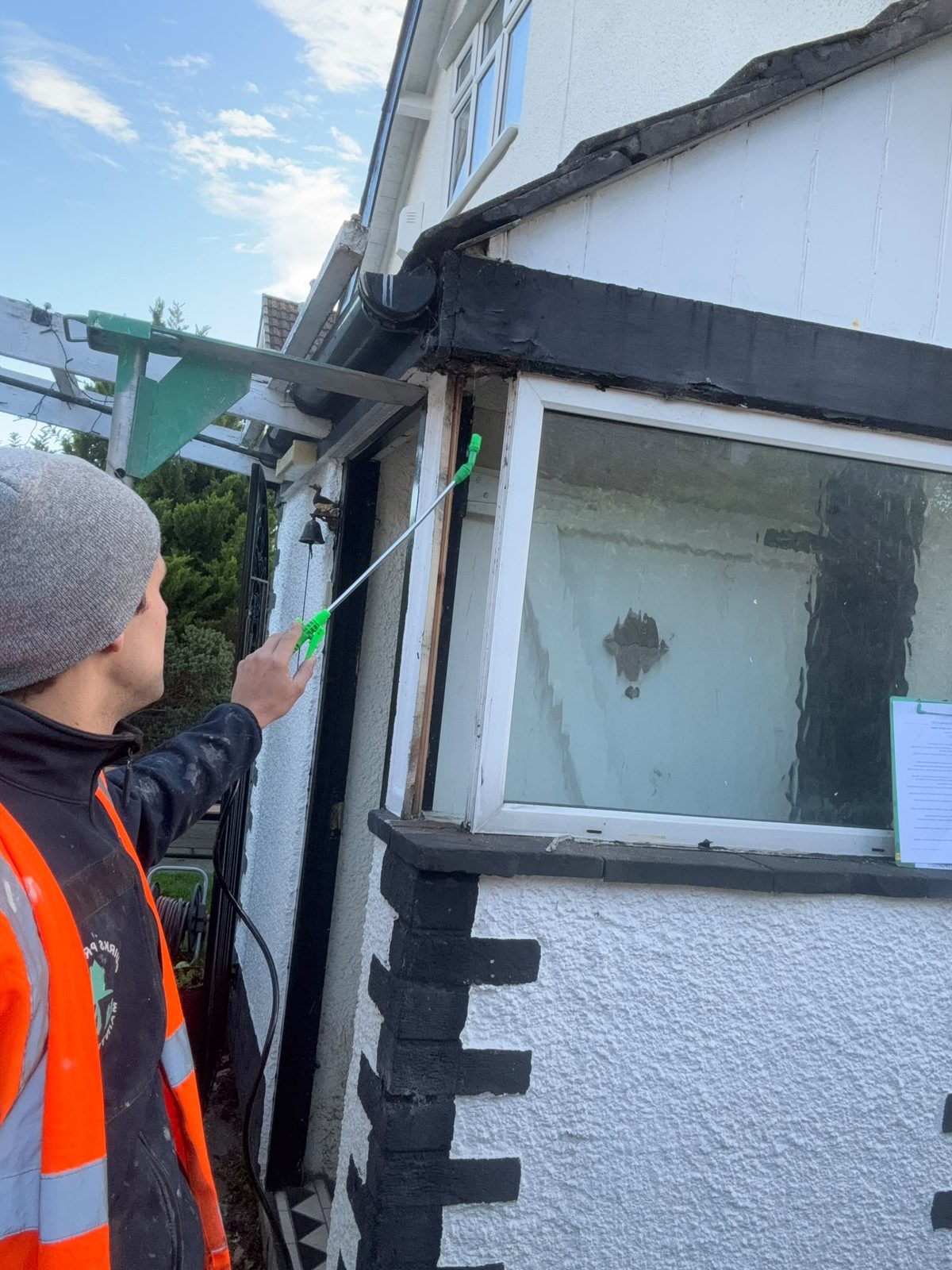
Treat the rot — Decayed timber cut back to sound wood, the surrounding timber and masonry treated to the specification the survey sets.
Repair or replace the timber — Joists, rafter feet, wall plates, frames and boards spliced or replaced in treated timber, isolated from damp masonry.
Make good — New timber primed and painted to match, any plaster, flooring or decoration we disturbed put back, and the area left clean.
Rot rarely announces itself. It is found when a skirting board gives under a thumb, a floorboard sinks at the edge of a room, a window sill goes soft under the paint, or a cupboard that backs onto an outside wall starts to smell of mushrooms. By the time it is obvious, it has usually been growing for a while.
What you can see depends on which rot it is:
None of these is a diagnosis on its own. A photograph will often tell us which it is likely to be; a survey confirms it.
Wet rot is the common one. It is a group of fungi that need timber to stay wet — a leaking gutter, a dripping overflow, a sill that holds water, a sub-floor with no ventilation. It stays where the water is. Fix the leak and replace the decayed timber and, in most cases, that is the job.
Dry rot is one particular fungus and it is the one to take seriously. It still starts in damp timber, but once it has a hold it can grow across brickwork, behind plaster and through the gap between a floor and a wall to reach timber a long way from where it began, carrying its own moisture with it. That is why a dry rot job is usually bigger than the damage you can see, and why the treatment extends beyond the visibly decayed timber into the surrounding timber and masonry.
The two are often confused with each other, and with woodworm, and the difference changes the specification. That is what the survey is for.
A damp and timber survey is a charged service; the fee is confirmed when you book. It is a visual inspection with a moisture meter — we do not drill or open up as part of the survey unless you ask us to — and you receive a written report. The report sets out what we found, where the moisture is coming from, which rot it appears to be and how far it appears to extend, what we recommend, and where further opening up would be needed before the full extent is known. We say what was measured and what was seen; we do not promise more than that.
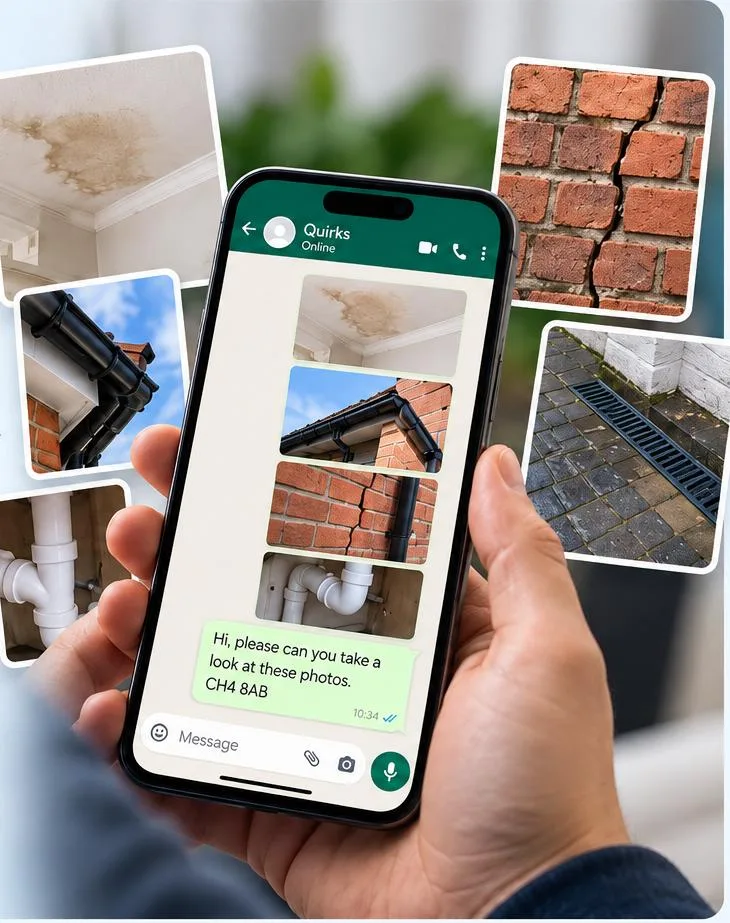
If you would rather start with photographs, send them on WhatsApp. For a lot of jobs — a rotten sill, a bargeboard, rafter feet under a gutter — the pictures show us enough to quote from. Where they do not, we say so.
The specification follows what the survey finds, so no two jobs are identical. The stages are the same:
We explain what we found and what we recommend, and set out the repair in a written quotation. We do not describe any repair as permanent — a building that is kept dry and ventilated is what keeps rot away.
Almost every rot we see has a plain cause. Blocked or leaking gutters and downpipes soaking a wall; a slipped tile or failed flashing letting water onto rafter feet and wall plates; a bay window roof or sill holding water; a dripping overflow or a slow plumbing leak behind a bath panel or under a sink; ground levels built up above the damp course by a patio or a path; a sub-floor with its air bricks blocked or buried.
Fixing these is part of the job, not a separate trade — rainwater goods, roof repairs, leak finding and damp proofing are all ours.
Rot in a joist end, a rafter foot, a wall plate or a beam is a structural repair as well as a treatment. We repair these as part of the job — see structural timber repairs for what that involves.
Where a beam or a large section of floor is affected, a structural engineer’s design may be needed before the timber is cut, and we will say so. Whether Building Regulations or Building Control involvement is required depends on the scope of work. We will explain the position for your proposed repair and, where agreed, coordinate the process with the relevant parties.
Rot is normally treated by insurers as gradual deterioration and is not usually covered, although damage from a sudden escape of water sometimes is.
Where required, we can provide photographs, reports and quotations to support an insurance claim. If you are buying a property and the survey has mentioned rot, our damp surveys page explains how we look at it before you exchange.
We treat dry rot and wet rot across Flintshire and Deeside, Chester, the Wirral, Wrexham, Denbighshire, Conwy and Ellesmere Port. The three areas below have a page of their own, with the local building types we see most, the areas and postcodes we cover there, and a recent job where we have one.
We also cover Wrexham, Denbighshire, Conwy and Ellesmere Port from the same team. Dry rot and wet rot work in those areas is handled from this page — send us photographs and we will tell you what we think it is.

Chester — detached house
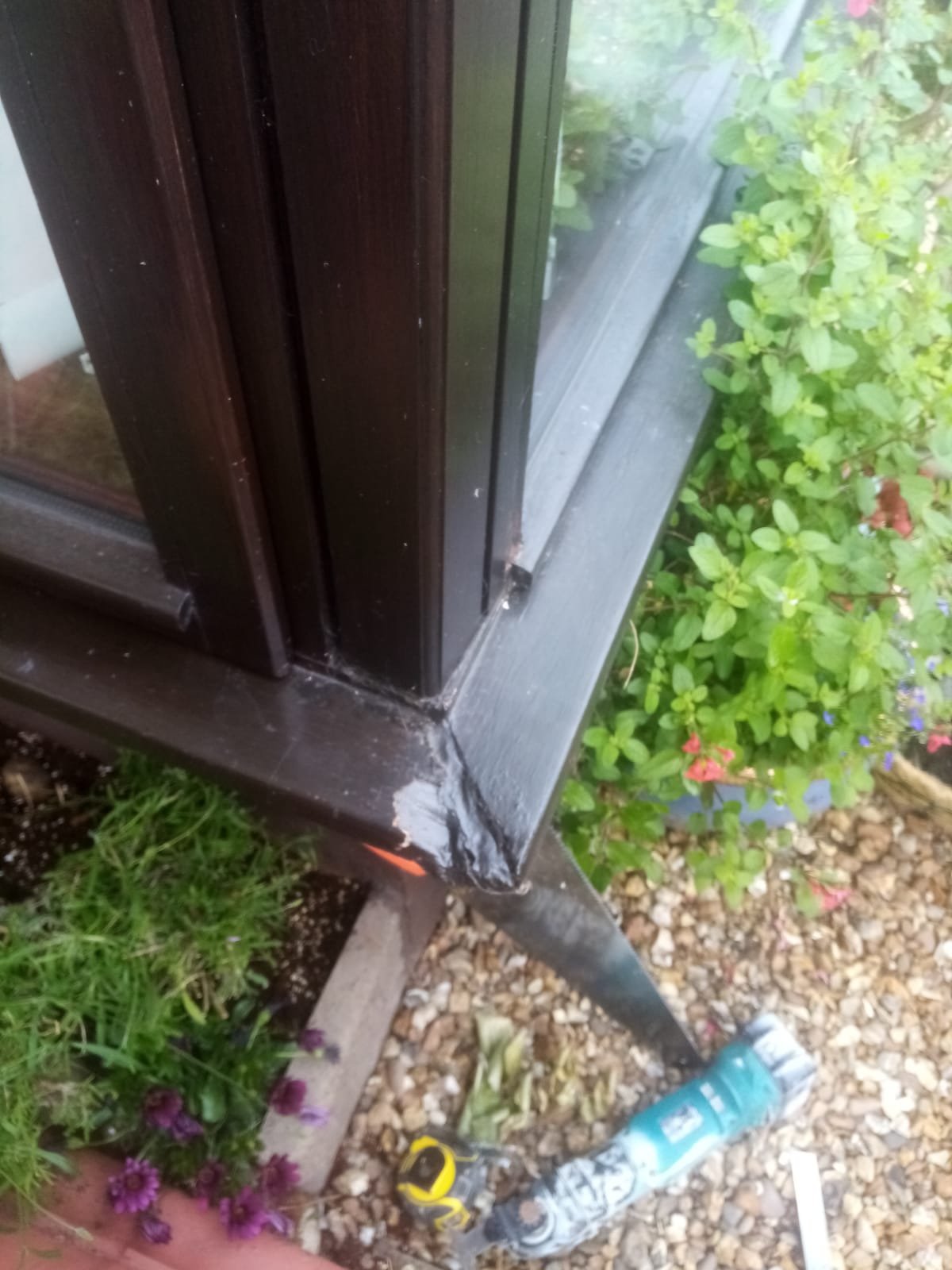
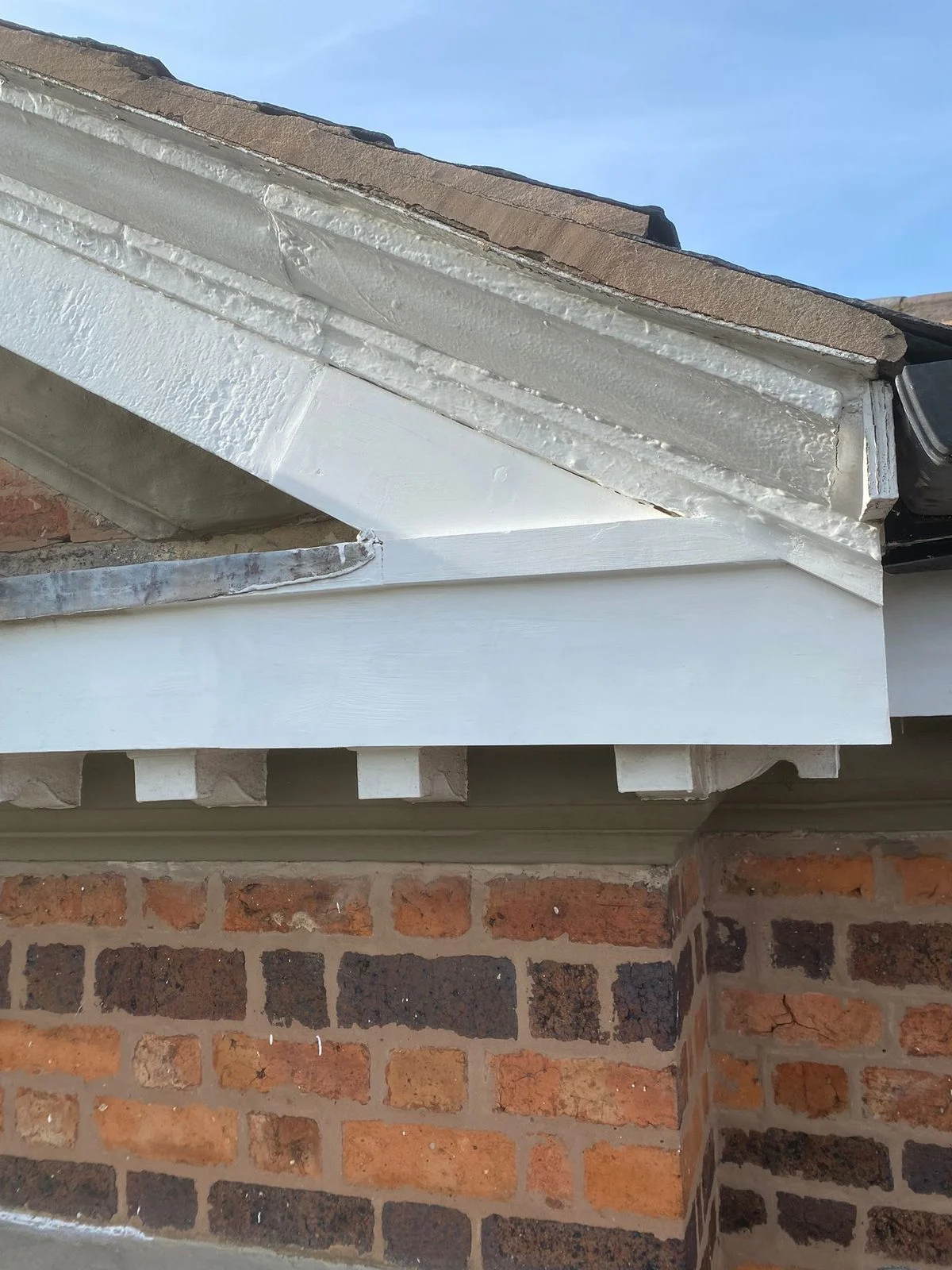
One corner of a bay window sill, soft under the paint and decayed through to the brick: cut back to sound wood and a new section spliced in and primed.
See the Chester sill job
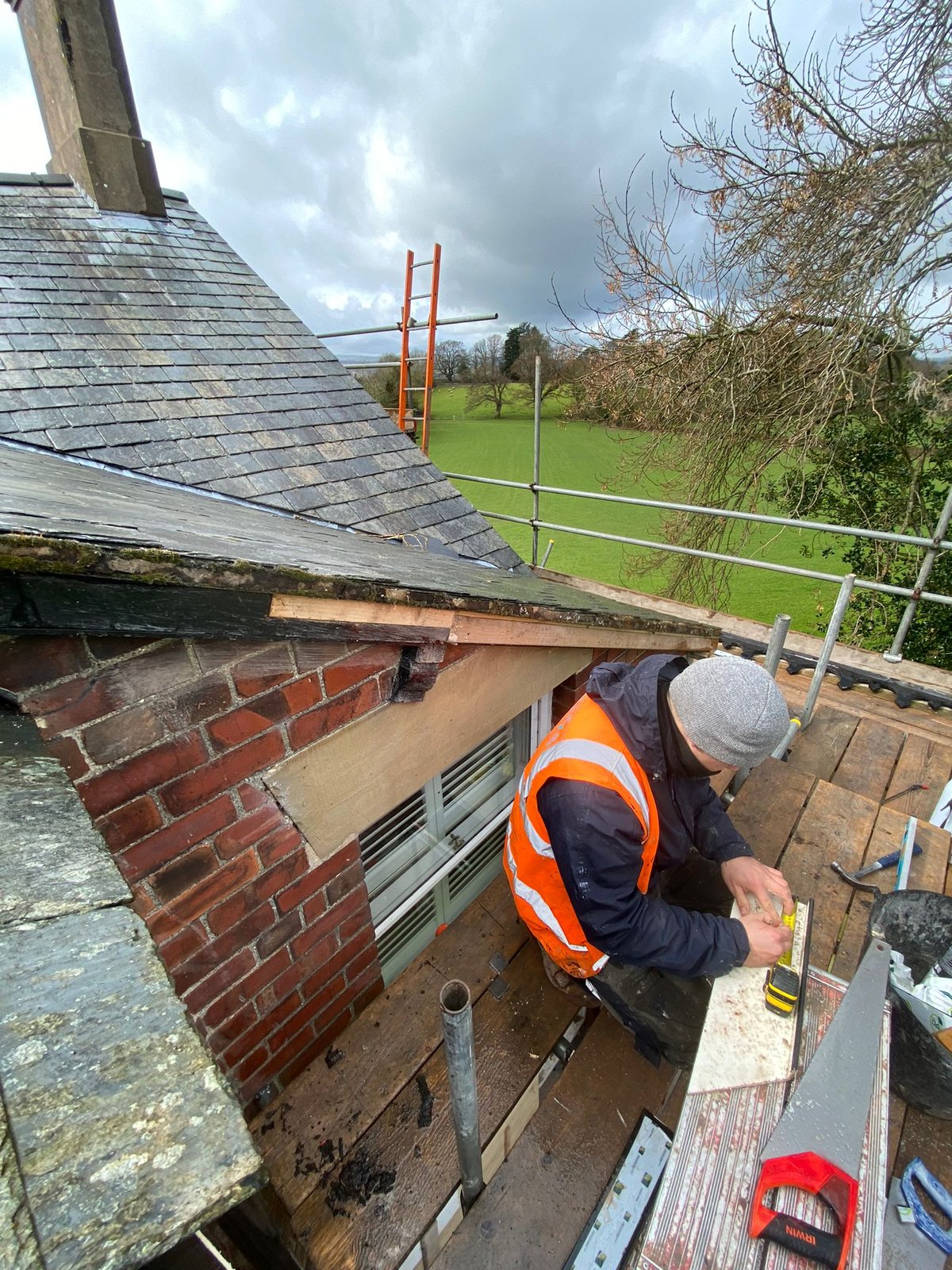
Flintshire — former school
Wet rot in the wall plate and rafter feet at the eaves, with fascia and fretwork bargeboards cut back and renewed in treated timber.
See the Flintshire job
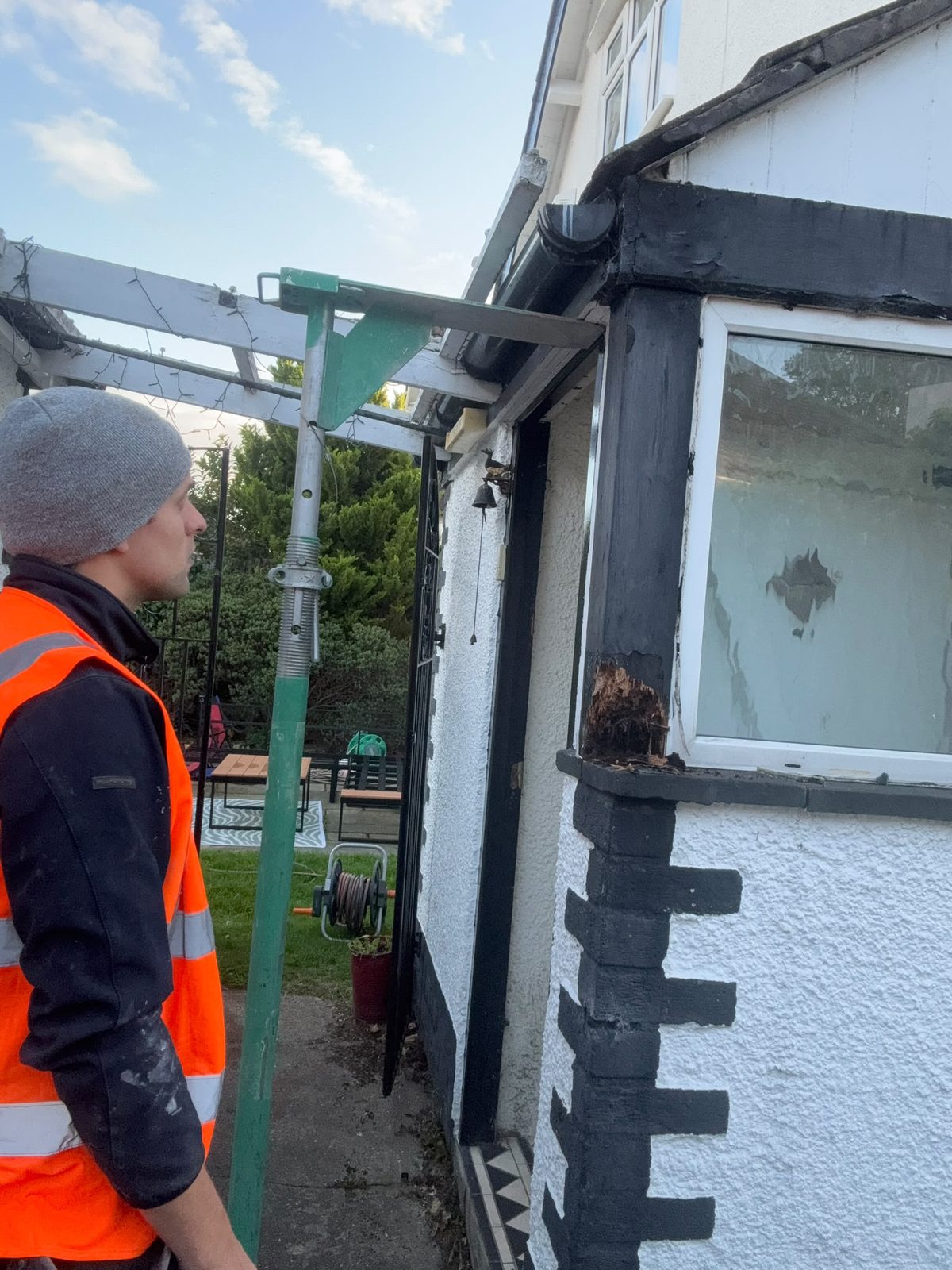
Neston, Wirral — detached house
A timber post carrying the beam over a window, rotted at its foot — propped first, then the whole post replaced rather than spliced.
See the Neston job
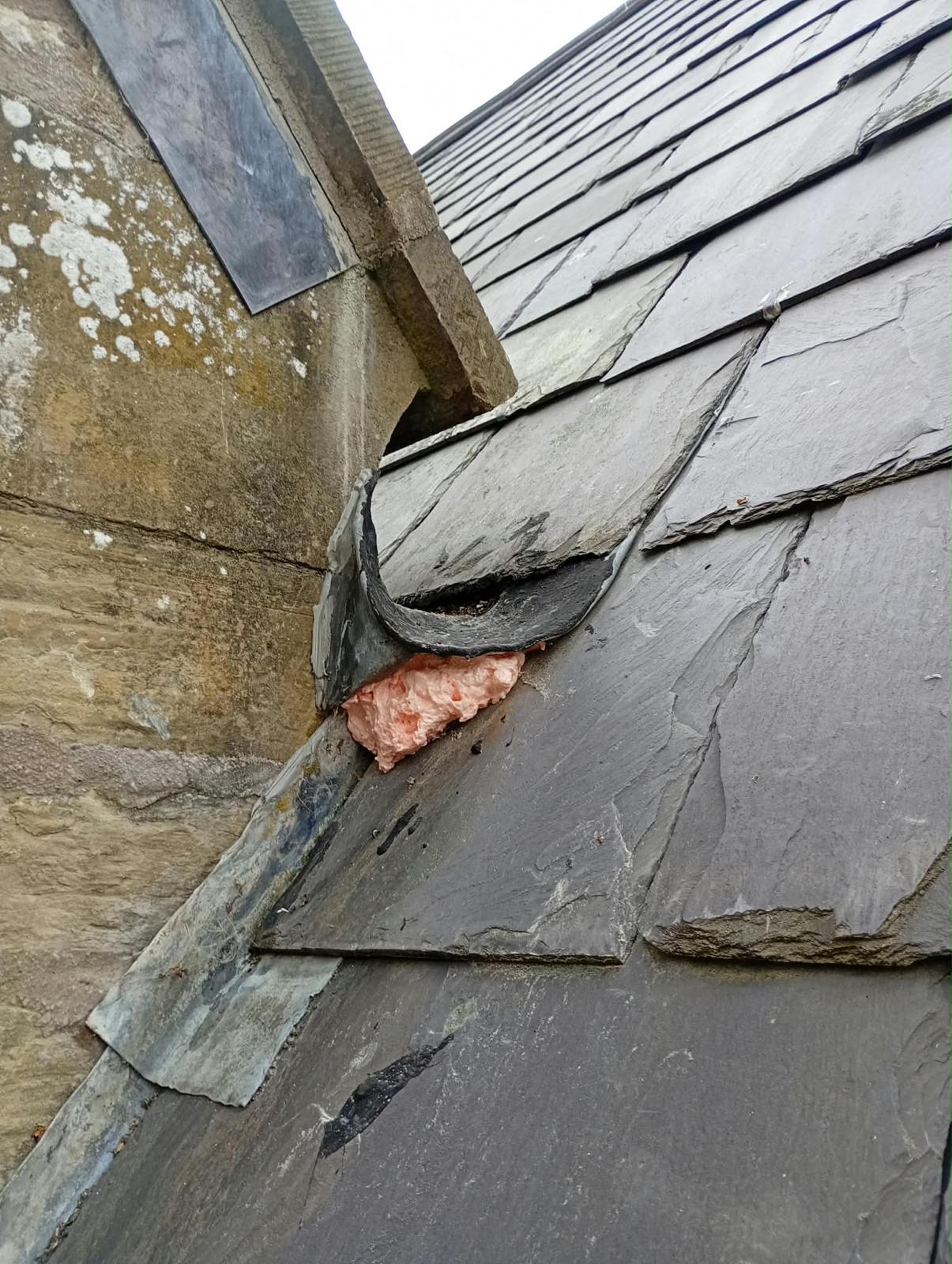
Flintshire — 1850s community hall
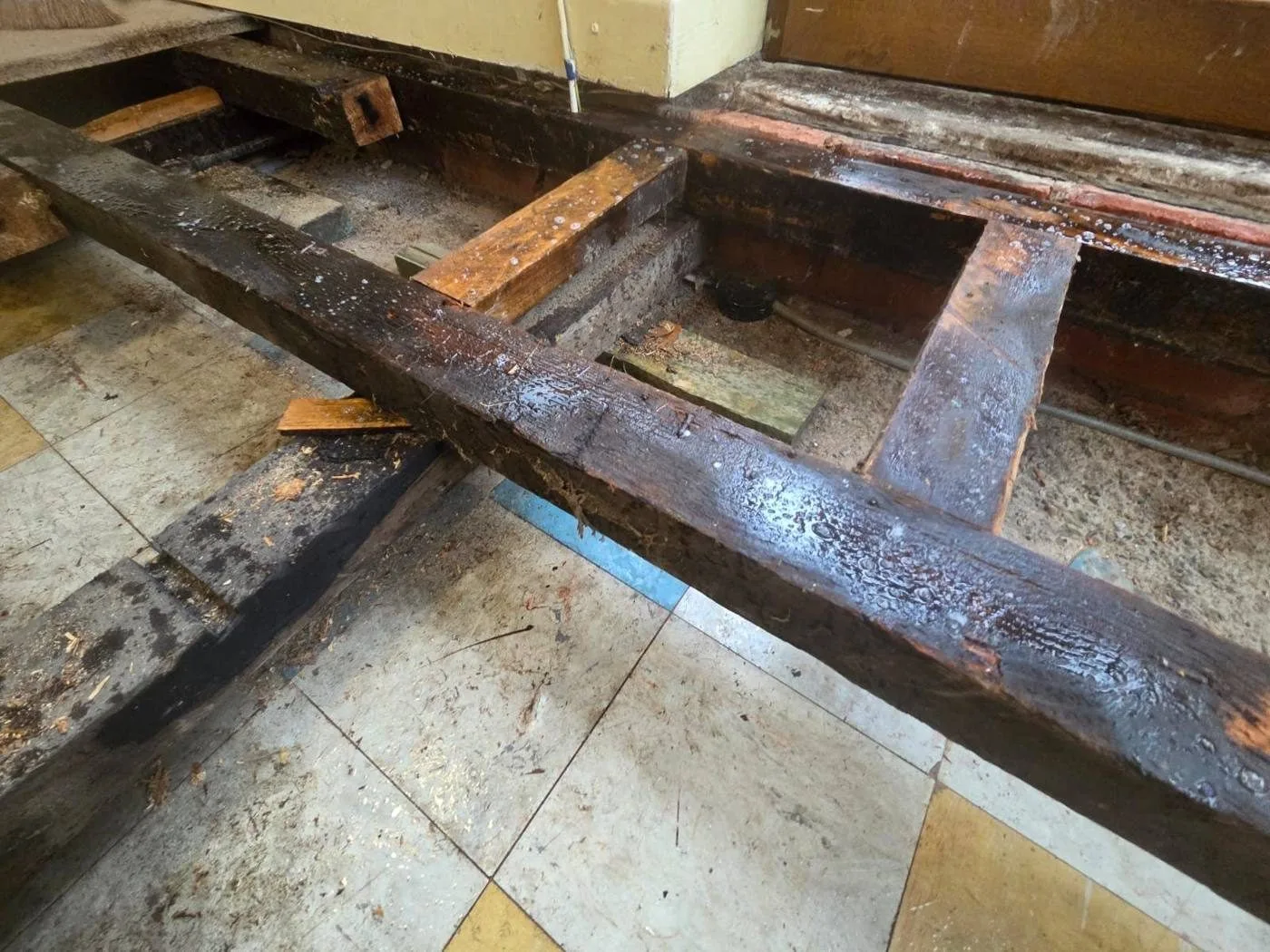
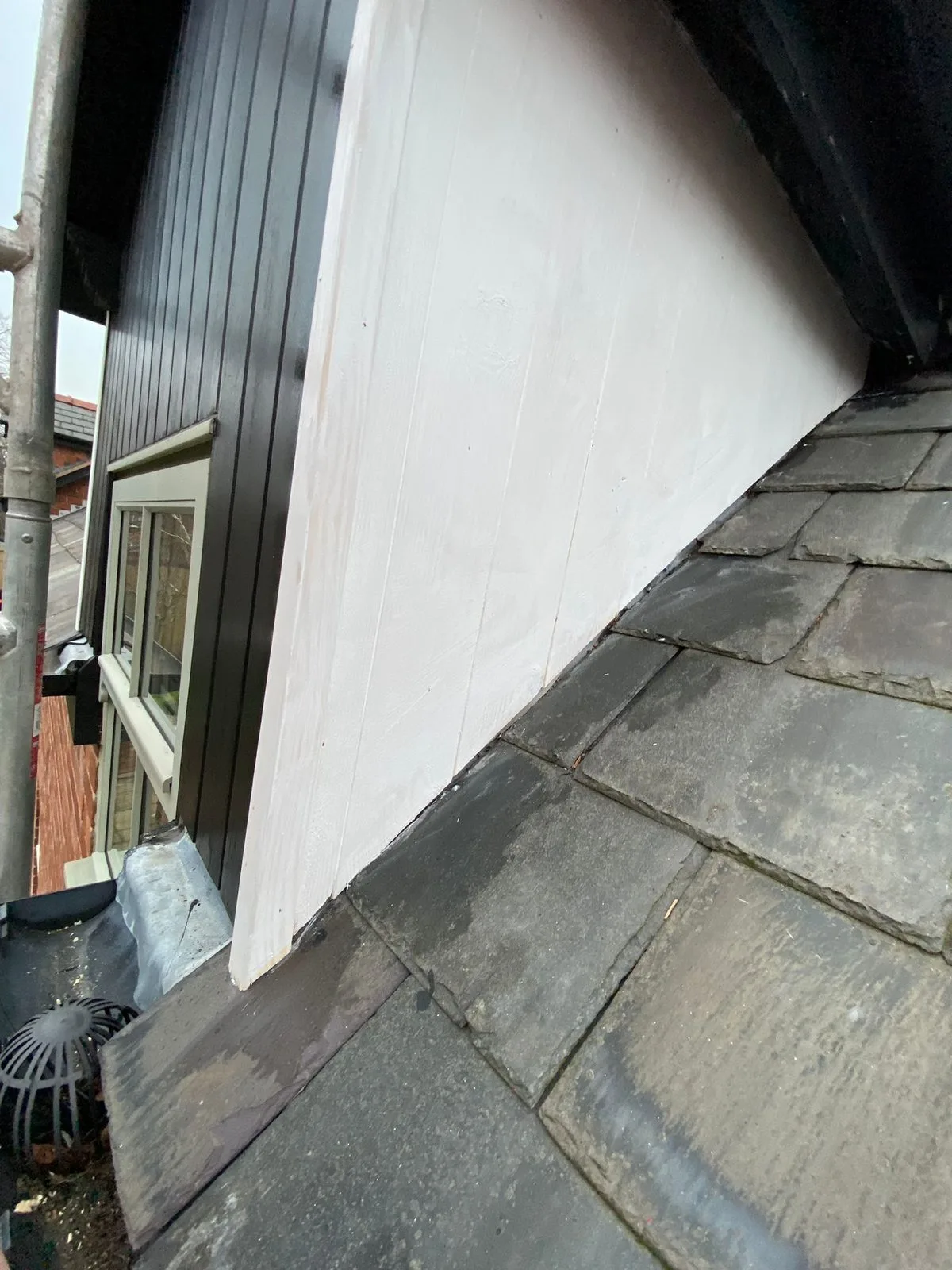
Perished timber under a roof-to-wall abutment cut out and renewed, with new lead and the slates re-laid.
See the community hall job★★★★★ 5.0 · 150+ Google reviews
“Repairs to roof structure and removal of ageing lath and plasterwork was carried out to specifications and timeframe. Great response to an urgent call out. Connor, Luke and Ethan were all professional, polite and friendly. Would recommend.”
David Brown
“Very happy with the structural work they did to my front bay window, as per the structural engineers plans. Showed up on time, easy to have around the house and left the place tidy. They’ll be back soon for more work”
Jonathan Umney
“I recently had structural works carried out by Quirks Property Maintenance. Michael was knowledgeable and professional. He was very organised, always turned up when he said he would. He offered advice and guidance on the building regulations process which so many builders don’t. He always listened to and answered my questions. His staff were well mannered, hard working and very approachable. The standard of work is excellent, even the neighbours gave positive comments on the results and how well the work site was run. I would definitely recommend this firm and would use them again should the need arise.”
Maria Zorzi
Your questions
Look at the timber. Wet rot is dark, soft and wet, cracking along the grain, and stays near the water source. Dry rot timber is dry, shrunk and broken into cube-shaped blocks, and may have white or grey growth and red-brown dust nearby. Send us photographs and we will give you a first view; a survey confirms it, and it matters, because dry rot treatment goes further than the damage you can see.
Not to your health in the way mould can be, but it is dangerous to the building. It can take the strength out of joists, rafters and beams, and it spreads. Left alone it does not stop. If you suspect dry rot, keep the area dry and ventilated and get it looked at.
Sometimes. Timber that is only lightly affected on the surface can be treated and kept. Timber that has lost its strength is cut out and replaced — there is no treatment that puts strength back into decayed wood. The survey tells you which applies.
Yes, and we would not treat the rot without it. Gutters, roof repairs, plumbing leaks, ground levels, damp proofing and sub-floor ventilation are all our work. One contractor, one quotation.
Yes — tell us. Rot that has come back usually means the water was never fully stopped, or the extent was never fully found. We will want to see what was done last time.
For most rot in sills, frames, boards and single joist ends, no. Where a beam, a run of joists or a roof timber is affected, an engineer’s design may be needed before anything is cut, and we will tell you if that is the case.
Usually not — most policies treat rot as gradual deterioration. Damage from a sudden escape of water is sometimes covered. Where required, we can provide photographs, reports and quotations to support an insurance claim.
It depends on which rot it is, how far it has spread, how much timber has to come out and be replaced, what has to be opened up and made good afterwards, access, and what it takes to stop the water. Dry rot jobs are usually bigger than wet rot jobs for the same visible damage. Most jobs we can price from photographs — send yours on WhatsApp or by email and we’ll come back with a written quotation.

The figure for your property comes in a written quotation after we have looked.
Written and reviewed by Michael Quirk, Director.
How it works
You don’t need to describe the problem down the phone. A photo tells us most of what we need.

Attach two or three photographs of the affected timber and a wider shot of the area. We reply by WhatsApp or email.