


Damp Surveys
Professional Damp Surveys for Homes & Businesses Across Chester, Cheshire, the Wirral, Flintshire and North Wales
Damp issues can cause more than musty smells and peeling paint. Left unresolved, damp can lead to structural decay, mould growth, timber damage and costly building repairs. The most important step is not guessing the cause — it is diagnosing it accurately through a professional damp survey.
At Quirks, we carry out detailed, evidence-based damp surveys for homeowners, landlords, letting agents and commercial clients across Chester, Cheshire, the Wirral, Flintshire, Wrexham, Denbighshire, Conwy and North Wales. You receive a clear written damp report with photographic evidence, moisture readings and recommended next steps — and, where treatment is needed, an optional fixed-price remedial quotation. You might be investigating a suspected damp problem, buying or selling a property, or in need of a written report you can share with a landlord, letting agent, insurer or lender — in each case we provide the clarity you need to act with confidence.
Quirks Property Maintenance Ltd is rated 5 stars on Google from over 100 customer reviews. We invite you to read our reviews on our Google Business Profile and compare our workmanship, communication and reliability with confidence.
📞 Book your damp survey: call 01244 638219 or WhatsApp WhatsApp 07719 535523 — or send photos of the problem and we’ll advise on the right survey.
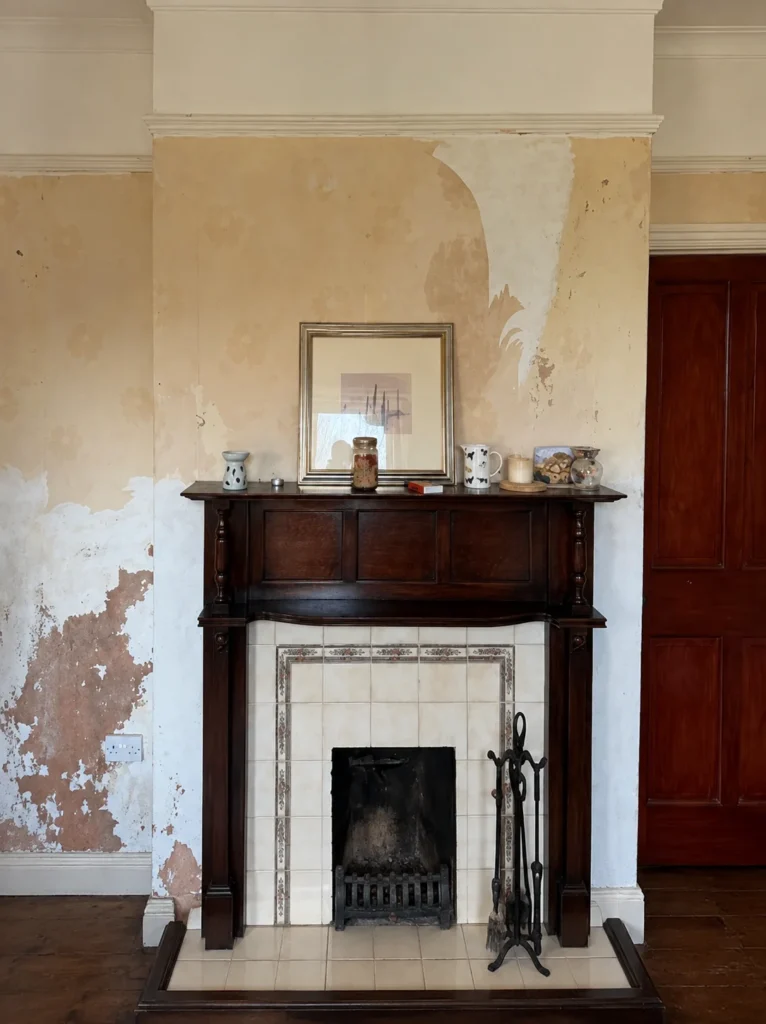
Damp affected chimney breast before treatment
Why Choose Quirks for Your Damp Survey?
Choosing the right surveyor matters. Misdiagnosis leads to wasted money, unnecessary treatments and damp that returns. Customers choose Quirks because we offer:
• Local damp surveyors with specialist knowledge of Cheshire, the Wirral and North Wales housing stock
• Surveys undertaken by Federation of Damp (FOD) Certified Surveyors (FODCS)
• Clear written damp reports you can share with landlords, letting agents, insurers and lenders
• Moisture readings and photographic evidence as standard
• No pushy sales or unnecessary treatments — factual reporting only
• Fast appointments and professional communication
• An optional remedial quotation when treatment is genuinely required
• Work carried out by trained, vetted and fully insured professionals
Where remedial work is approved, guarantees can be provided on appropriate systems.
Diagnosis first — and one firm to fix it, if you want us to. Some damp surveyors only diagnose, leaving you to find a builder and hope the two agree. Quirks does both: the survey is diagnostic first and stands on its own — take the report anywhere — but when treatment is genuinely required, the same firm that found the cause can carry out the repair, with guarantees available on appropriate systems. One point of responsibility from diagnosis to done.
What Is a Damp Survey and Why Does It Matter?
Properties across our region face a mix of damp risks: wind-driven rain on coastal and estuary-facing elevations of the Wirral and Deeside, high ground moisture close to the Dee and Mersey, and a large stock of older solid-wall stone and brick buildings that behave very differently from modern cavity construction. Add modern living patterns — sealed windows, internal drying, intermittent heating — and condensation is common even in newer homes. Not sure what you are looking at? Our guide to
the signs and causes of damp shows what each type looks like before you book anything.
A professional damp survey helps you:
• Identify the exact cause and type of damp — not just the visible symptom
• Understand the extent of moisture within the property
• Choose the correct remedial or damp proofing approach first time
• Avoid paying for the wrong treatment
• Protect property value and meet legal and insurance obligations
Left untreated, damp can lead to black mould and poor indoor air quality, timber decay and structural weakness, plaster and decorative damage, higher heating costs, and potential health risks for occupants — the government’s guidance on the health risks of damp and mould explains why mould in the home should never be ignored.
What Happens on the Day of Your Damp Survey
Knowing what to expect makes the visit easier — and helps you get the most from it. A typical Quirks damp survey runs like this:
• We start outside. Ground levels, pointing, render, rainwater goods, DPC position and the condition of weather-facing elevations — most damp starts on the outside of the building, so that is where the evidence starts.
• Then room by room inside. We inspect the affected areas and the rooms around them, taking pin and non-invasive moisture readings and mapping how the moisture is distributed — the pattern is often more revealing than any single reading.
• Accessible timbers are checked. Floor joists, floorboards, staircases and roof timbers are inspected wherever they are safely accessible, for signs of dry rot, wet rot and wood-boring insect activity such as woodworm.
• Thermal imaging where beneficial. Used to trace cold bridging, hidden moisture and missing insulation — particularly useful in solid-wall properties.
• We talk you through it before we leave. You will know our initial view on the day; the full written report with photographs follows within 3 working days.
Access and what we won’t disturb. Our surveys are as non-destructive as a correct diagnosis allows. We do not lift fitted carpets or fixed floorboards, and lofts are inspected only where safe access exists. Where a diagnosis genuinely needs opening up — checking a floor void or an embedded timber, for example — we explain why and agree it with you before anything is touched. It
helps if affected walls are reachable on the day, so move furniture back where you can and leave the damp exactly as it is: we learn more from the problem as it actually presents.
Types of Damp and Timber Problems We Identify
• Rising damp — moisture rising through masonry where a damp proof course has failed or is absent; typically tide marks, salt deposits and crumbling plaster to ground-floor walls
• Penetrating damp / water ingress — moisture entering through brickwork, roofing, chimneys, gutters, cracks or failed render, at any level of the building
• Condensation and black mould — high humidity, cold bridging or poor ventilation causing surface moisture and mould growth
• Basement and cellar moisture — below-ground water ingress and hydrostatic pressure affecting storage or living spaces
• Dry rot and wet rot — fungal decay affecting joists, floors and roof timbers, usually triggered by a persistent moisture source
• Timber infestation — wood-boring insects such as woodworm, which can cause extensive damage to structural timber

Which Damp Survey Do I Need?
Not every damp problem needs the same investigation. All of our surveys are carried out by an FOD Certified Surveyor and end in a written report with photographs and moisture readings within 3 working days — the difference is the focus of the inspection. If you are not sure which applies, send us photos on WhatsApp and we will tell you before you book.
| Survey | Best for | What it focuses on |
|---|---|---|
| Standard Damp Survey | Homeowners and landlords with damp patches, staining, musty smells or an unclear cause | Full internal and external inspection, moisture profiling, diagnosis of the cause, room-by-room mapping and the correct remedy — including where the fix is simple maintenance |
| Damp & Mould Survey (rental and condensation focus) | Landlords, letting agents and tenants with recurring black mould or condensation complaints | Humidity and ventilation assessment, cold-spot identification, separation of condensation from rising or penetrating damp, and a report written for the tenancy file |
| Pre-Purchase Damp Survey | Buyers whose valuation or RICS survey flagged damp, or who spotted staining or smells at viewings | Cause and likely repair cost before you exchange — evidence you can use to renegotiate or proceed with confidence |
| Commercial & Facilities Damp Inspection | Commercial premises, blocks and facilities managers | Scoped to the building and its use — moisture mapping, cause diagnosis and prioritised recommendations across larger or multi-tenanted buildings |
Why Rising Damp Is So Often Misdiagnosed
In our survey work, rising damp is the problem we most often find has been wrongly diagnosed — and it is an expensive misdiagnosis to get wrong. A tide mark or damp patch at the bottom of a wall has at least six possible causes, and only one of them is a failed damp proof course:
• Bridging — raised flowerbeds, paths or render carrying moisture over a perfectly good DPC
• Penetrating damp at low level — failed pointing, leaking gullies or splashback from hard surfaces
• Condensation — cold skirting-level surfaces in poorly ventilated rooms, especially behind furniture
• Hygroscopic salts — plaster contaminated by historic damp that keeps drawing moisture from the air long after the original problem is fixed
• Damp solid floors — ground moisture rising through an old floor with no membrane, which no wall treatment will ever fix
• Plumbing and drainage leaks — slow leaks that mimic rising damp patterns
A standard electrical moisture meter cannot tell these apart — it reads high on salts, on stone and on some plasters even when the wall itself is dry. That is how so many homes end up with an injected chemical DPC they never needed, while the real cause carries on untreated.
Our surveys work the other way round. We start outside — ground levels, pointing, render, rainwater goods — then profile moisture inside at depth, map the pattern against the construction of the wall, and only name the cause when the evidence supports it. Where rising damp is genuinely present, we say so and specify the right remedy. Where it is not, the report says that too — including when the fix is as simple as lowering a flowerbed or clearing a gully. Across low-lying parts of our region near the Dee and Mersey, ground moisture and floor construction are mistaken for rising damp more often than any other fault we see.
Benefits of a Professional Damp Survey
• Stop damp at its source and prevent repeat problems
• Strengthen your position in a property sale, purchase or rental negotiation
• Reduce long-term maintenance and energy costs
• Improve indoor comfort, air quality and living conditions
• Provide documentation to support insurance claims and tenancy disputes
Related Damp Services
• Damp Proofing & Remedial Works
• Penetrating Damp Investigation & Repairs
• Condensation & Mould Treatment
• Pre-Purchase Home Buyer’s Quote Service
• Dry Rot Treatment
• Wet Rot Treatment
Case Study – Damp Survey and Structural Defect Investigation in Hope, Flintshire
Quirks Property Maintenance Ltd carried out a damp survey and structural defect investigation at a property in Hope, Flintshire, which was showing both damp to the internal walls and cracking — two problems that are often treated as one. The survey recorded elevated moisture readings up to 1.8 metres on the affected walls and identified more than one cause acting together: render bridging the damp-proof course at the front of the property, mortar and plaster bridging at the chimney, and structural cracking that needed repair to a structural engineer’s details.
What the survey found
High readings on their own do not diagnose damp. Our inspection uses an electronic conductivity meter as an aid — the readings measure conductive material in the wall, not moisture directly, and can read false. The visual inspection forms the bulk of the investigation, which is how the separate causes here were told apart rather than treated as one problem.
The recommendation — staged, not everything at once
Dealing with damp is often a staged process. Our written recommendation to the customer was to address the bridging first, allow time for monitoring and natural evaporation, and reassess before proceeding with further treatment — rather than carrying out every possible treatment in one visit.
The works carried out from the survey, staged across two visits
Structural crack stitching with helical bars internally and externally to the engineer’s details; roof timber strengthening with collar ties, purlin ties and rafter brackets; removal of the bridged render; damp treatment to the affected walls with a liquid damp-proof membrane and mesh tanking membrane, drylined, skimmed and reinstated with new skirting; loft insulation upgraded to current regulations; then — as the second stage — the chimneys repointed, lead flashing resealed, slates replaced and the bridging plaster removed at roof level, finished with a BBA-approved masonry water-repellent applied to the newly pointed brickwork once the mortar had cured.
During our survey, we identified:
- Elevated moisture readings
- DPC/render bridging
- Structural cracking
Because of the cracking, we recommended that the customer appoint a structural engineer for further assessment before structural repairs were carried out.
Project Information
| Issue | Damp readings to approximately 1.8m, DPC bridging and structural cracking |
| Service | Damp survey, defect investigation and written remedial recommendations |
| Further assessment | Structural engineer recommended by Quirks Property Maintenance Ltd |
| Location | Hope, Flintshire |
Survey content reviewed by Michael Quirk, Director and FOD Certified Damp Surveyor
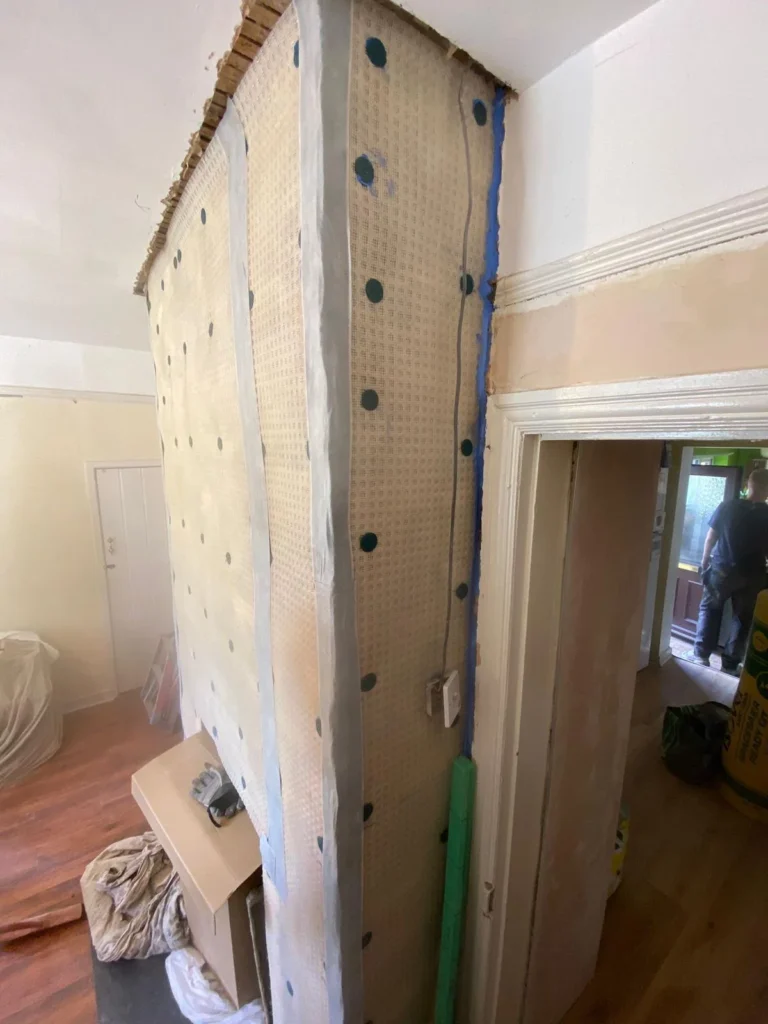
Salt-resistant membrane installed to internal wall
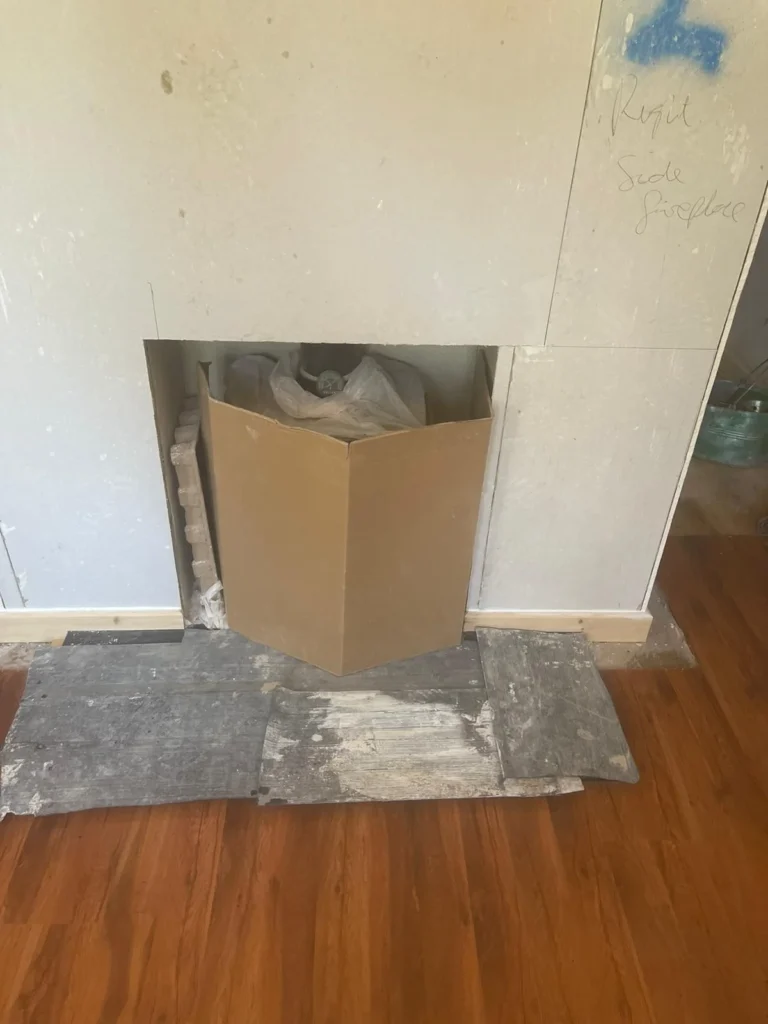
Plasterboard fixed following damp treatment
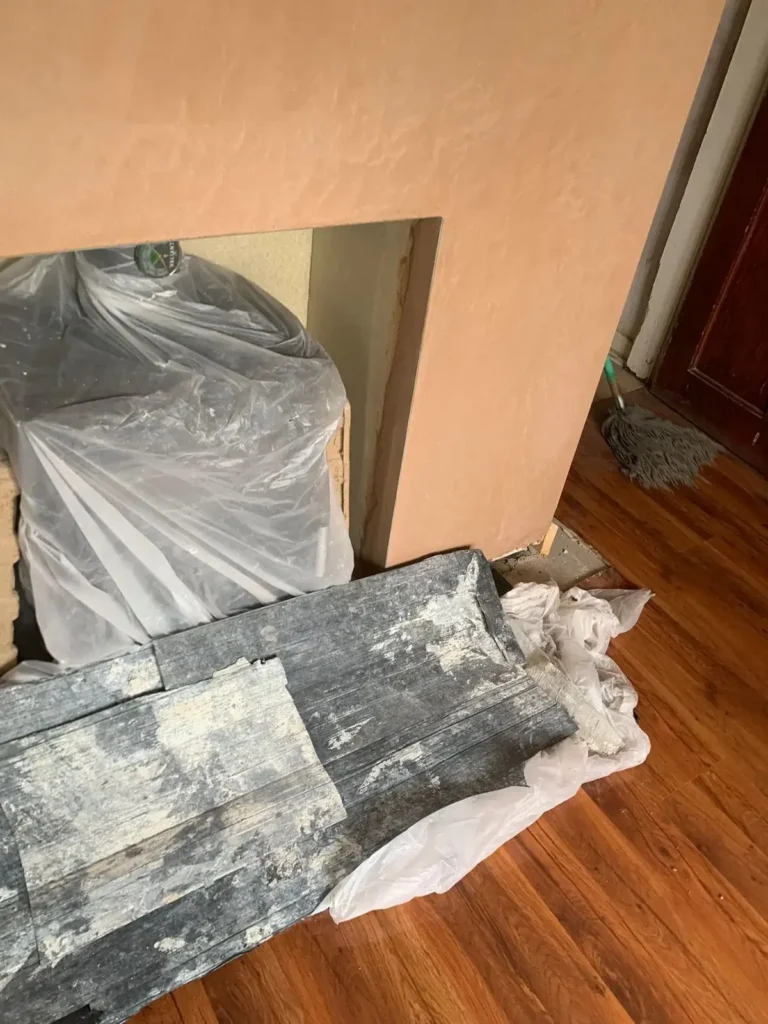
Wall plastered and ready for decoration
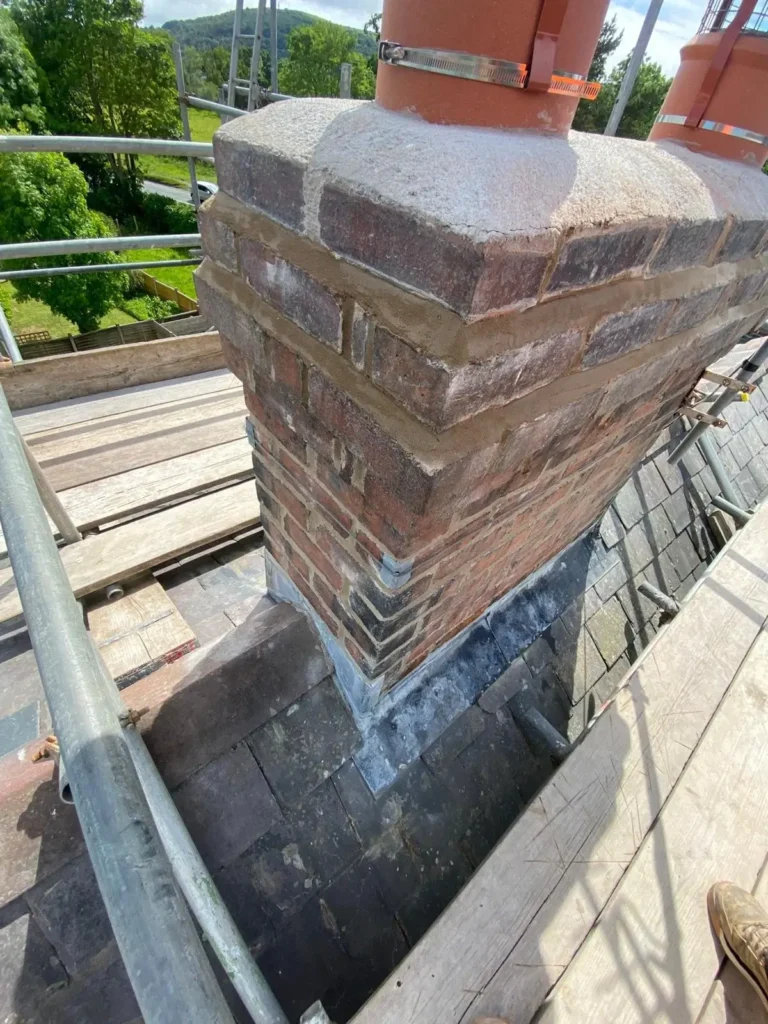
Chimney repointed and crown repaired
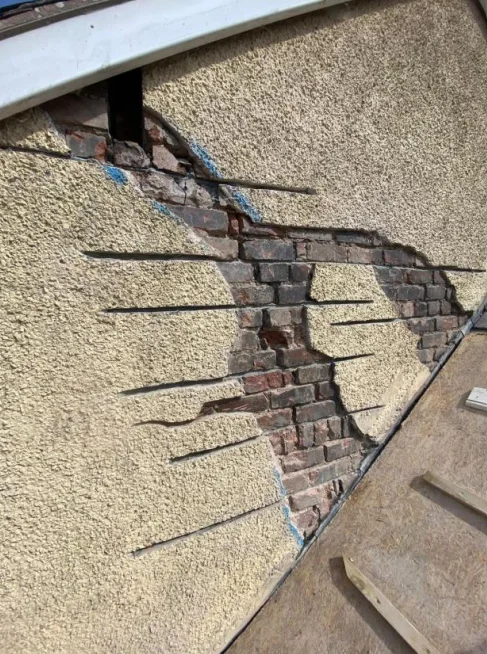
Helical bar crack stitching installed to the external wall
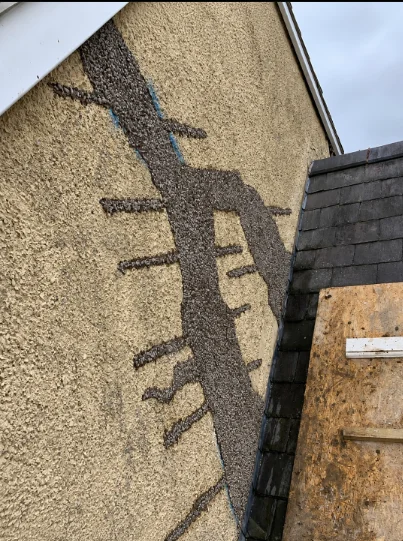
Render and crack repairs completed, prior to painting
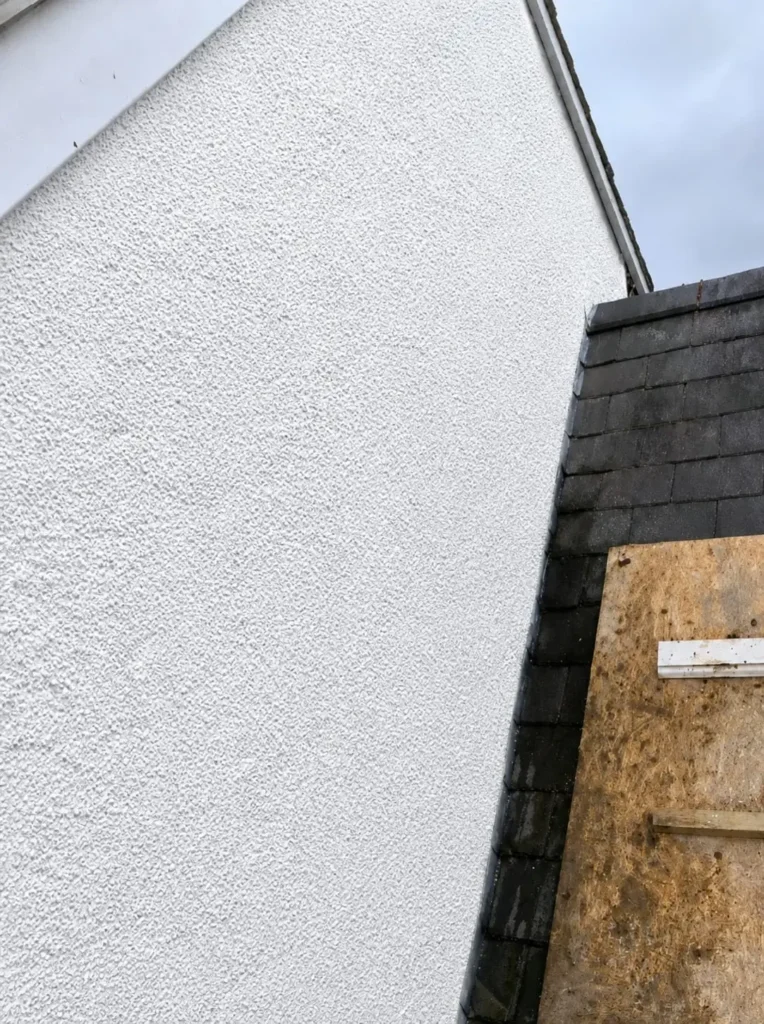
Completed external rendered wall
What Our Damp Surveys Include
• Full visual assessment of the affected areas
• External condition review to identify moisture entry points
• Moisture meter readings (pin and non-invasive)
• Thermal imaging where beneficial
• Mapping of damp spread and its likely cause
• Inspection of accessible timbers — floors, joists, staircases and roof timbers — for rot and
woodworm
• Written damp survey report with photographs, delivered within 3 working days
• Fixed-price remedial recommendations, if treatment is required
How to Book Your Damp Survey
• Step 1: Call 01244 638219 or WhatsApp 07719 535523 with your details and, if possible, photos
or video of the problem
• Step 2: We arrange a convenient survey appointment
• Step 3: Your survey is completed by an FOD Certified damp specialist
• Step 4: You receive your written damp report within 3 working days
• Step 5: An optional quotation is provided if remedial work is required
What a Proper Damp Report Should Include
If you are comparing damp surveyors, judge them by the report — that is what you are paying for. A proper damp survey report should give you:
• A diagnosed cause, not a list of symptoms — naming the type of damp and the specific defect behind it
• Moisture readings with context — where they were taken, by what method, and what they mean for your construction type
• Photographic evidence — of the damp, the defect causing it and the areas inspected
• Room-by-room mapping — so you can see the extent of the problem, not just one wall
• External findings — pointing, render, ground levels, rainwater goods and roofline defects that drive most damp from outside
• A proportionate remedy — the correct fix, sequenced sensibly, including anything that needs no treatment at all
• Clear next steps and costs — an optional fixed-price quotation where remedial work is genuinely required
That is the standard every Quirks report is written to — in plain English, delivered within 3 working days, and usable as evidence with landlords, letting agents, insurers and lenders, or to obtain comparative quotes from any contractor you choose.
Professional, Certified Damp Surveys
Our damp surveys identify the true cause of moisture problems rather than treating visible symptoms. As proud members of the Federation of Damp (FOD), all surveys are undertaken by FOD Certified Surveyors (FODCS) — a certification that is independently City & Guilds Assured — and carried out in line with recognised industry standards and best-practice guidance. Each survey considers the construction of the property, ventilation, heating patterns and external influences, so the diagnosis reflects how your building actually behaves.
Frequently Asked Questions
How much does a damp survey cost?
Cost depends on the size and type of the property and the survey required. Contact us with your postcode and a brief description of the problem and we will confirm a fixed price before booking — there is no obligation, and the fee is confirmed in writing.
How long does a damp survey take?
Most domestic surveys take between one and two hours on site, depending on the size of the property and the extent of the problem. Larger or commercial properties take longer. Your written report follows within 3 working days.
What does the written damp report include?
Your report sets out what we found, where, and why — with photographs, moisture readings, the diagnosed cause of the damp, and clear recommended next steps. Where remedial work is needed, we can include a fixed-price quotation. The report is written so it can be shared with landlords, letting agents, insurers and lenders.
Are your surveyors independent, or will you just try to sell me damp proofing?
Our surveys are diagnostic first. We report the facts — including where no treatment is needed, or where the fix is simple maintenance such as clearing gutters or improving ventilation. A remedial quotation is optional and only offered where treatment is genuinely required.
Do I need a damp survey before buying a house?
If a mortgage valuation or RICS survey has flagged damp — or you have noticed staining, musty smells or mould during viewings — a specialist damp survey identifies the cause and likely cost of putting it right before you commit. Buyers regularly use our reports to renegotiate or to plan works. See our pre-purchase home buyers service.
I’m a tenant with damp or mould in my home — should I book a survey myself?
Your landlord or letting agent is normally responsible for investigating and fixing damp and mould in a rented home, so report it to them first, in writing, with photographs. Landlords and agents can instruct us directly on 01244 638219, and our reports are written in a format suitable for tenancy files — tenants are welcome to pass them our details.
Which areas do you cover?
We carry out damp surveys across Chester, Cheshire, Ellesmere Port, the Wirral, Flintshire, Deeside, Wrexham, Denbighshire, Conwy and North Wales. Dedicated local pages: Damp Surveys Flintshire, Damp Surveys Chester and Damp Surveys Wirral.
Is it rising damp or condensation — how can I tell?
As a rough guide: condensation favours cold surfaces, corners, window reveals and rooms where moisture is generated — and often comes with black mould. Rising damp shows as a consistent band low on ground-floor walls, often with tide marks or salt deposits, and rarely appears above about a metre. But the visual pattern alone is not proof either way — several causes mimic each other, which is why we confirm the diagnosis with moisture profiling before recommending any treatment.
Do you check timbers for woodworm and rot during a damp survey?
Yes. Damp and timber problems usually travel together — persistent moisture is what triggers dry rot, wet rot and many wood-boring insect infestations. Every Quirks damp survey includes inspection of accessible timbers such as floor joists, floorboards, staircases and roof timbers, and your report identifies any decay or infestation found alongside its moisture source. Where treatment is needed, see our dry rot and wet rot treatment services.
Do you carry out invasive testing?
Most of our survey work is non-destructive — pin readings leave only pinprick marks, and non invasive scanning leaves none. Where a diagnosis genuinely needs more — for example checking embedded timbers or a suspended floor void — we explain what opening-up is required and agree it with you before anything is done.
Can I use your report to get quotes from other contractors?
Yes. The report is yours, and it is written so any competent contractor can price the remedy from it. There is no obligation to use Quirks for remedial work — though if you do, the same firm that diagnosed the problem carries out the fix, and guarantees can be provided on appropriate systems.
How should I prepare for the survey?
Where possible, clear access to the affected walls — move furniture and stored items away from them, and don’t redecorate or dry the area out beforehand: we learn more from the damp as it actually is. If you rent the property out, tell the tenant we are coming and ask them to note when and where the problem appears at its worst.
Do you survey commercial properties?
Yes — offices, retail units, blocks and industrial premises across Chester, Cheshire, the Wirral, Flintshire and North Wales, with reporting scoped to the building and its use. Facilities managers and landlords receive prioritised recommendations they can plan and budget against.
Get Your Damp Survey Booked
Damp problem? Purchase survey or landlord report anywhere from Chester to the North Wales coast? ☎ 01244 638219 or ✉ info@quirksonline.co.uk, and we’ll book your FOD-certified damp survey.
Send Photos via WhatsApp for a quick assessment.