Specialist Building & Property Maintenance Services You Can Depend On.

Wall & Brick Crack Repair · Wirral

Wall Crack & Brick Crack Repair on the Wirral — Bay Windows, Rendered Coastal Houses and Victorian Terraces

Quirks Property Maintenance repairs cracks in walls and brickwork across the Wirral — Heswall, Bebington, Prenton, Wallasey, Birkenhead, West Kirby, Upton and the villages between. Crack stitching with stainless steel helical bars, lintel replacement, restraint ties, rebuilt brickwork and making good, once the cause has been established. Photographs are where we start: send them on WhatsApp or by email and we’ll come back to you — with a written quotation where they show enough, or to arrange a visit where they don’t.

Wirral bays, boulder clay and coastal exposure
Structural engineer’s report where the crack needs one
WhatsApp us photos, written quotation follows
 
 
Trusted by customers across the Wirral and North Wales
Google5.0★★★★★100+ Google reviews
20+years trading
£5 millionpublic liability insurance in place
Workmanship guarantee on completed works
One contractor · all trades under one roof
Why walls crack here

Why walls crack on the Wirral

Much of the Wirral sits on boulder clay over sandstone, and clay can move: it may shrink in a dry summer, particularly near large trees, and swell again when the rain returns. Houses built on shallower footings — which can include many of the peninsula’s inter-war semis and their bay windows — may feel that movement first, and a crack where the bay meets the main wall is a common result, though not the only possible cause of one. On the coast, Hoylake, Meols, Leasowe, Wallasey and New Brighton take driving rain off the Irish Sea, so failed pointing and cracked render can let water into a wall for some time before anyone notices.

Then there is the age of the stock. Birkenhead, Tranmere and Rock Ferry are largely Victorian solid-wall terraces with timber lintels and, in many cases, a long history of alterations; the post-war estates at Upton, Greasby, Moreton and Pensby are mostly cavity walls whose original ties may now be old enough to corrode. Each of these can crack differently and need a different repair, and none of it can be read from the street — so we establish which you have before we quote anything.

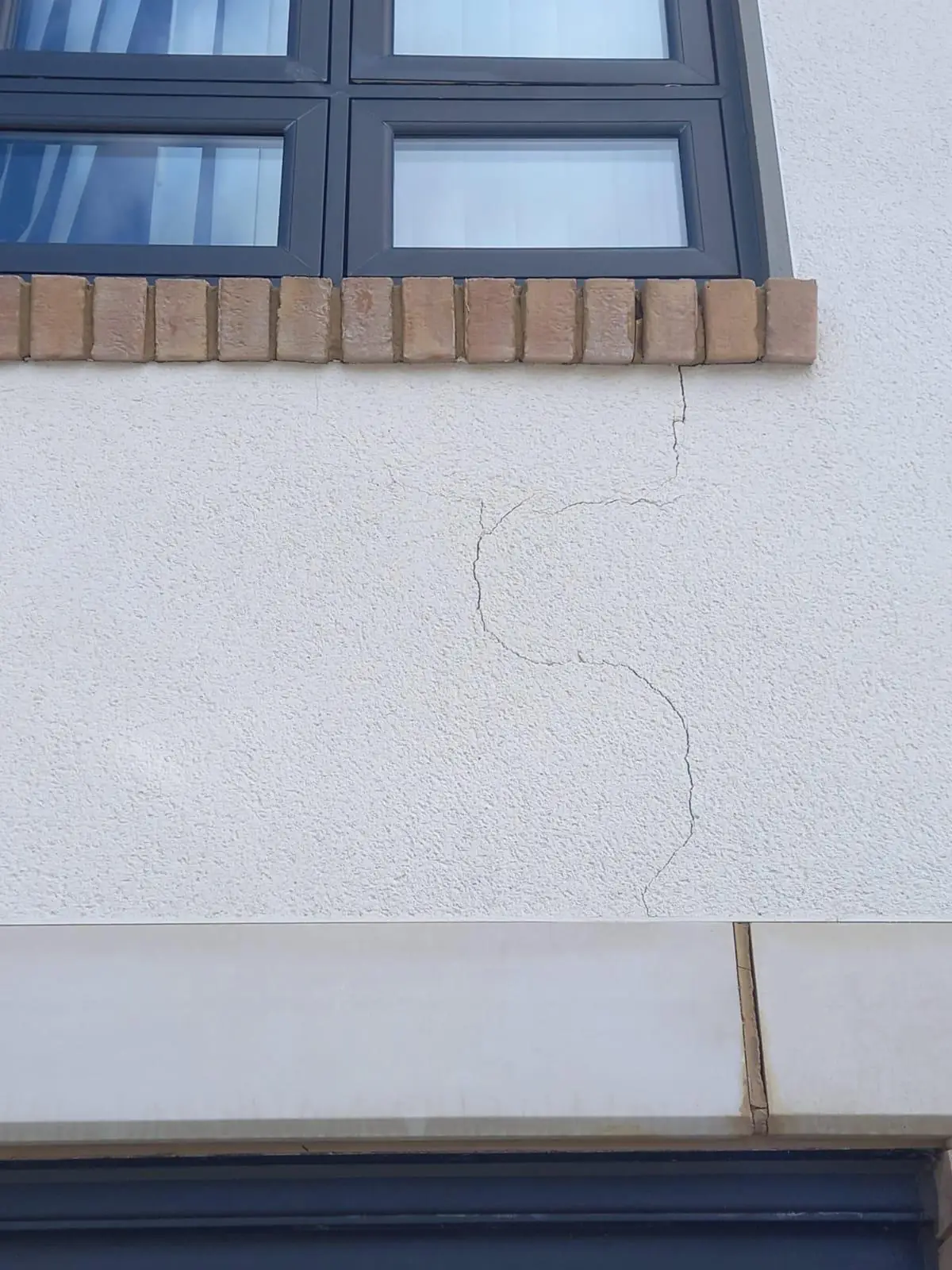
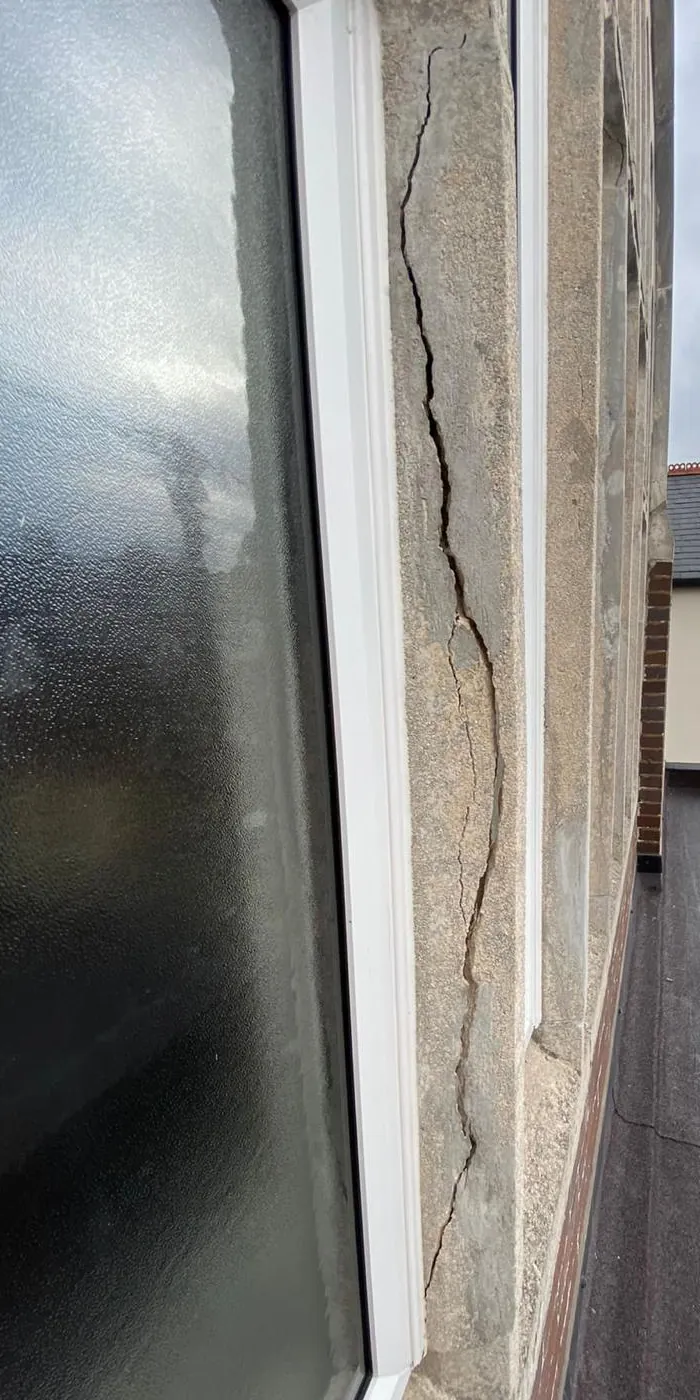
Crack running down the render beside a first-floor window

A crack running down the render beside a first-floor window.

Where we repair cracked walls and brickwork on the Wirral

We work across the whole peninsula.

CH41, CH42Birkenhead, Tranmere and Rock Ferry
CH43Prenton, Oxton and Noctorum
CH44, CH45Wallasey, Liscard, Seacombe and New Brighton
CH46Moreton, Leasowe and Saughall Massie
CH47Hoylake and Meols
CH48West Kirby and Caldy
CH49Upton, Greasby, Woodchurch and Frankby
CH60Heswall and Gayton
North WalesNORTH WALESFLINTSHIREWrexhamWREXHAMChesterCHESTERWirralWIRRALEllesmere PortELLESMERE PORTConwyCONWYDenbighshireDENBIGHSHIRECheshireCHESHIREA55M53M56A483A494Boundaries © OpenStreetMap contributors
Local team.

Based in Ewloe, Flintshire.

CH61Pensby, Thingwall, Irby and Barnston
CH62Bromborough, Eastham, New Ferry and Port Sunlight
CH63Bebington, Higher Bebington, Spital and Thornton Hough

We also cover Neston, Parkgate and Willaston (CH64) on the Cheshire side of the peninsula. We are based in Ewloe, Flintshire, and travel to the Wirral for the work; we do not have an office on the Wirral itself.

WIRRAL — RENDERED TERRACE, TWO-STOREY BAY

Recent wall crack repair project

A rendered terrace on the Wirral with movement to its two-storey bay. A bay carries a good deal of load on a narrow footprint and is tied back to the main house rather than being part of it, so movement there is worth understanding properly before anyone starts filling and painting. We attended and advised that the movement should be assessed by a structural engineer before any repair was priced or carried out; the customer instructed one, and the works below were carried out to that engineer’s specification, which covered both the crack stitching and the restraint.

DURING

Stitching the bay

Scaffold went up across the front elevation so the bay could be reached at both levels, and the render was removed from the bay to expose the brickwork along its full run.

Slots were cut into the horizontal mortar bed joints, cleaned and flushed of dust, and stainless steel helical bars bedded into them in resin and carried around the corners of the bay, so the reinforcement runs into sound masonry either side rather than stopping short at the return.
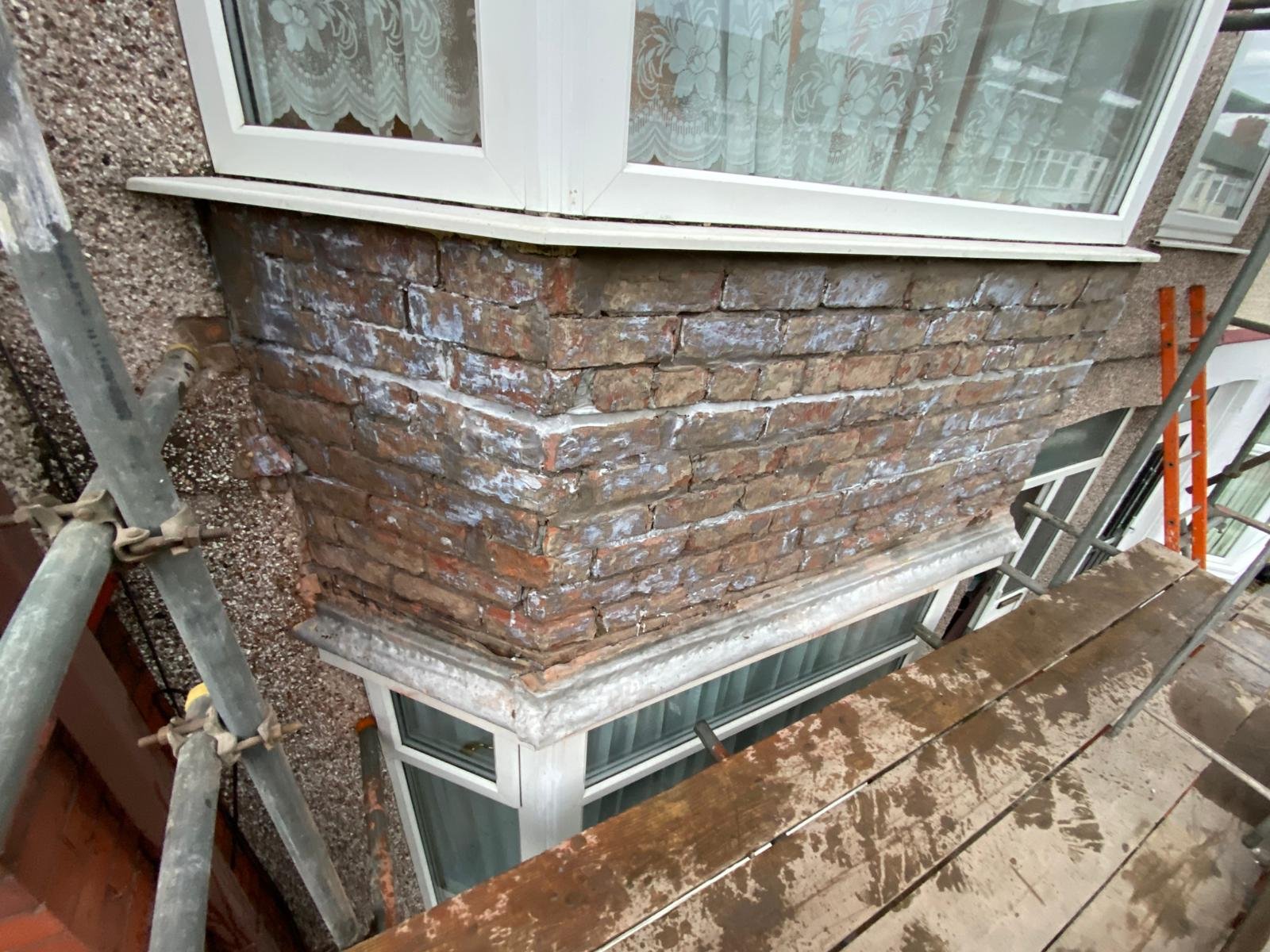
Bay window brickwork with the render removed, showing stainless steel helical bars bedded in resin along the mortar bed joints and around the corner of the bay
The bay stripped back to brickwork, with helical bars bedded across the bed joints and carried around the corners
DURING

Tying the bay back

The restraint work is the part that does not show once a room is finished. Internally, the floorboards were lifted at the bay to work at joist level, and bow ties installed at floor level.

Stitching puts cracked masonry back together; tying the bay is what deals with the way it was moving.
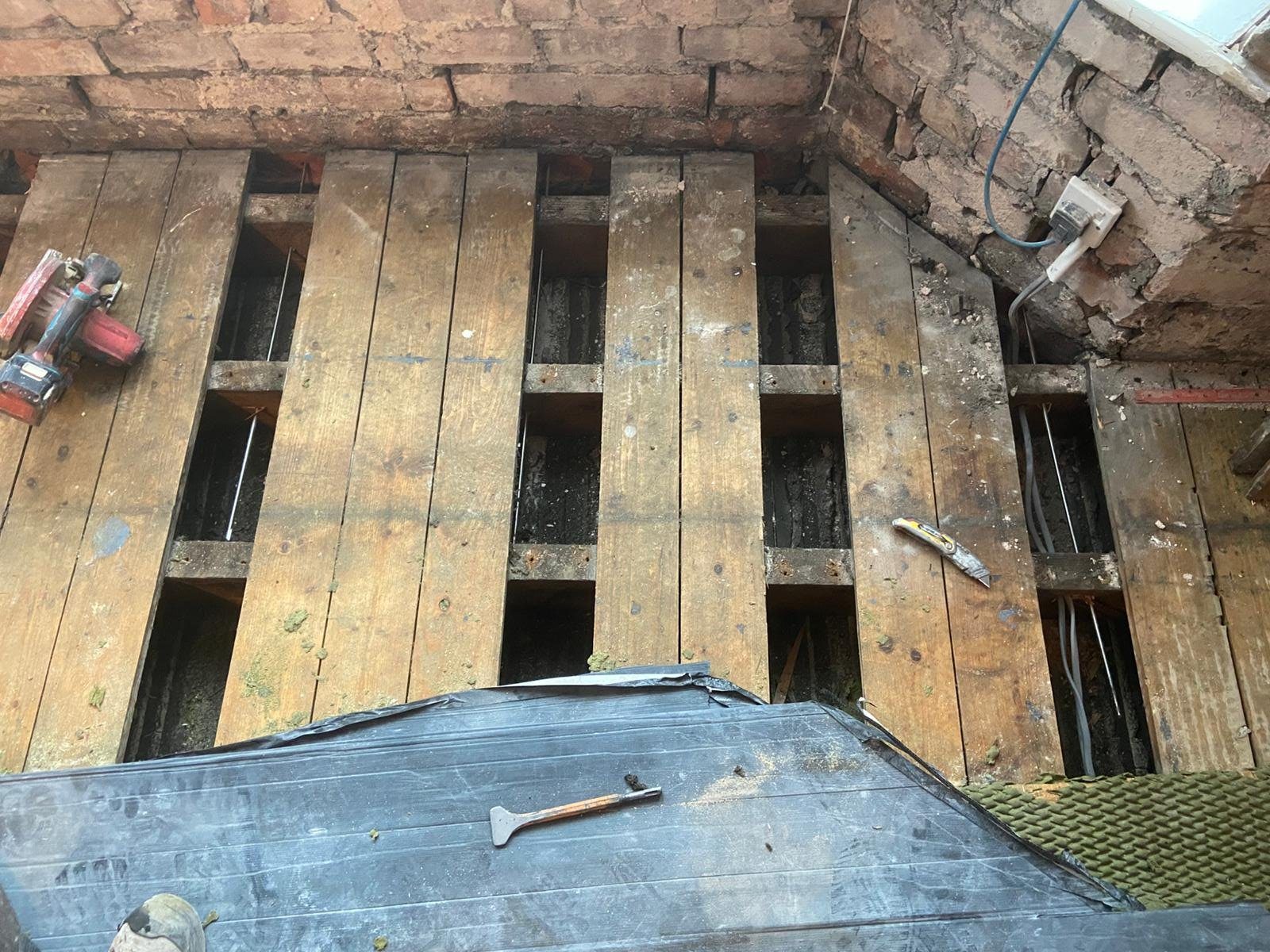
Floorboards lifted in strips beside the bay wall, showing steel bow ties fixed between the floor joists
Floorboards lifted at the bay, with the bow ties in place between the joists at floor level
AFTER

Reinstatement inside and out

With the stitching and restraint complete, the bay was re-rendered and finished to match the rest of the elevation. Internally the wall was replastered, new skirting fitted and the room left to dry out before decoration.

The works were signed off by the structural engineer who specified them.
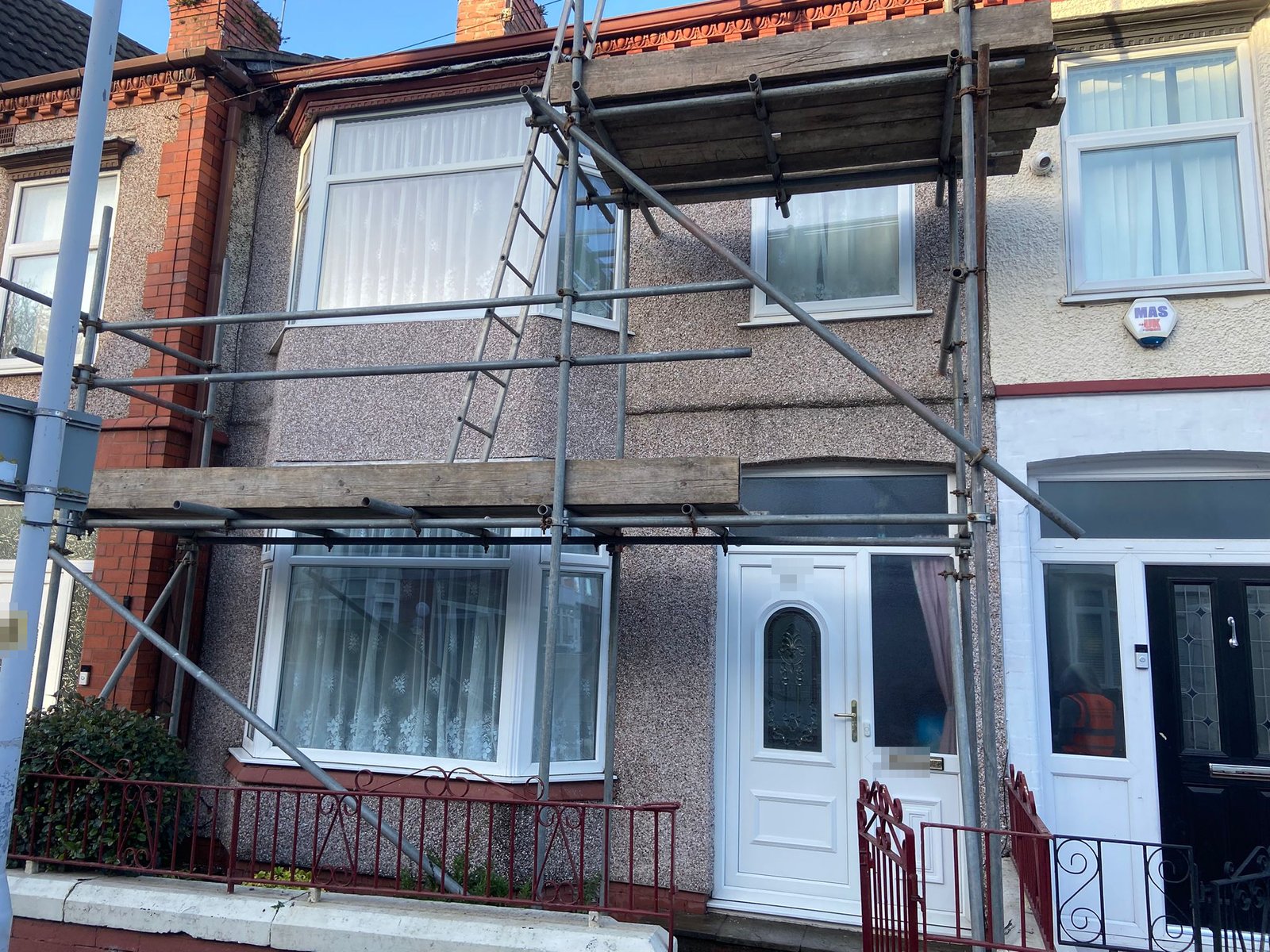
Rendered terraced house with a two-storey bay, re-rendered to match the front elevation, with the scaffold still up
The front elevation with the bay re-rendered to match, the scaffold still up

What the owner has at the end of this is not just a repaired bay but a documented one: assessed by an engineer, repaired to that engineer’s specification, and signed off by them on completion. This case study covers the stitching, the bow ties, the render and the internal reinstatement — the structural assessment and the specification were the engineer’s, not ours. We do not claim the bay will never move again; the repair was made to the specification that came out of the assessment.

  • Attendance and inspection of movement to the two-storey bay; structural engineer assessment advised before any repair was priced
  • Scaffold to the front elevation; render removed from the bay to expose the brickwork
  • Bed joints slotted and cleaned; stainless steel helical bars bedded in resin around the bay, to the engineer’s specification
  • Floorboards lifted internally and bow ties installed at floor level
  • Bay re-rendered to match the elevation; internal wall replastered and new skirting fitted
  • Works signed off by the structural engineer
LocationWirral
PropertyRendered terrace with a two-storey bay
Specified byStructural engineer instructed by the customer
WorksHelical bar crack stitching to the bay masonry, bow ties at floor level, re-render, internal replastering and skirting
Sign-offStructural engineer
ResidentialBay windowCrack stitchingEngineer-specified

What crack stitching is

Crack stitching — how we repair cracks in walls and brickwork

Crack stitching is the repair for a cracked brick, block or stone wall once it has stopped moving — and on the Wirral that usually means a bay, a rendered coastal house or a terrace lintel. Slots are cut into the horizontal mortar joints at intervals across the crack, cleaned out, and stainless steel helical bars are bedded into them in a polymer grout. The bars tie the masonry on either side of the crack back together and spread the load along the wall, and the slots are repointed so the repair is largely invisible once finished. It is used on brick, block and stone walls, inside and out.

What it is not is a cure for whatever caused the crack. A wall that is still moving because a lintel has failed, because it is not tied to the floors, or because the ground beneath it is moving, will crack again — stitched or not. So we do not quote stitching until the likely cause is clear. Where the movement is significant or the cause is unclear, we say so and recommend a structural engineer, whose report we then work to. The main structural cracks page explains the causes and the repair options in full.

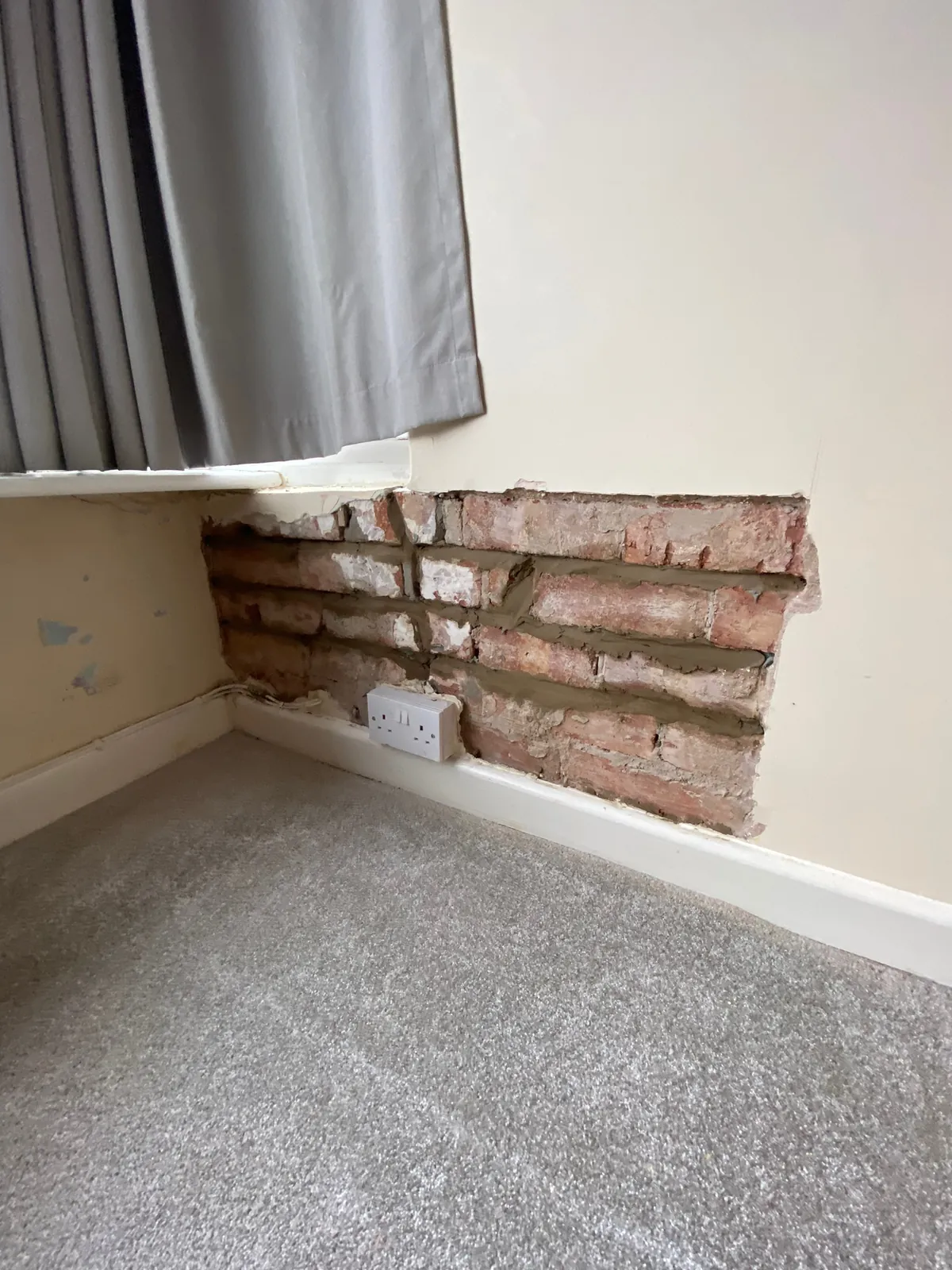
Helical bars bedded into the mortar joints of an internal brick wall below a window, with the plaster taken off

Internal brickwork exposed beneath a bay window, showing crack stitching repairs prior to replastering.

How helical bar crack stitching is carried out — manufacturer’s demonstration.

Wall crack and brick crack repair on the Wirral

The Wirral’s housing has three distinct generations and each cracks in its own way. The Victorian terraces of Birkenhead, Tranmere, Rock Ferry, Seacombe and New Ferry are solid-wall brick with timber lintels and a lot of hard cement repointing done since; the vast inter-war suburbs — Prenton, Oxton, Bebington, Wallasey, Heswall, West Kirby — are 1930s semis with bay windows, the single most common source of cracking on the peninsula; and the post-war estates of Upton, Greasby, Moreton, Pensby and Leasowe are cavity-wall houses now old enough for their wall ties to be failing. Over all of it sits the weather: Hoylake, Meols, Leasowe, New Brighton and the Dee side take driving rain that finds every failed joint.

We establish the cause before anything is quoted, recommend a structural engineer where the movement is significant or the cause is unclear, and carry out the works to the report. We are based in Ewloe, Flintshire, and work across the Wirral regularly. The main structural cracks page covers the causes and the repair options in full; this page covers what we see on the Wirral.

What we find on the peninsula

Wirral property and masonry considerations

Five patterns account for most of the cracked walls we are asked to look at on the Wirral.

  • Bay windows on 1930s semis — The inter-war semi’s bay was often built on a shallower footing than the main house, with lighter brickwork and its own small roof. Decades on, the bay and the main wall can move differently, and a crack may open where the two meet — vertical at the junction, or diagonal from the corners of the bay window. Sometimes it is stable and old; sometimes the bay is still moving or its lintel has failed. Establishing which comes first, and the repair ranges from stitching the junction to a new lintel and, where the movement is significant, an engineer’s specification.
  • Rendered and pebble-dashed coastal houses — Wallasey, New Brighton, Moreton, Leasowe, Hoylake and Meols have a great deal of rendered and dashed housing facing the sea. Render cracks on its own in that exposure, and it also hides masonry cracking until water has been getting in for some time. The first question is whether the crack is in the finish or the wall; the second is where the water has been going. Where it has caused damp, that is treated through our Wirral damp proofing service as part of the repair.
  • Victorian terraces and their lintels — Birkenhead, Tranmere, Rock Ferry, Seacombe and New Ferry have street after street of solid-wall Victorian terraces. Cracking above the openings here is usually a rotted timber lintel or a spread brick arch; cracking across the face can be a chimney breast removed without support. The repair is propping, a new lintel, rebuilt brickwork and stitching — see lintel repair and replacement on the Wirral — with the support put right first where an alteration is the cause, through structural alterations on the Wirral.
  • Cavity walls and wall ties — Upton, Greasby, Woodchurch, Moreton, Pensby, Irby and Thingwall are largely post-war cavity-wall housing, and horizontal cracking along the bed joints at regular courses on these houses often points to corroded wall ties, though the ties have to be checked to confirm it. Where that is the finding, we replace the failed ties alongside the stitching.
  • Weather, pointing and brick — On the exposed sides of the peninsula, failed pointing and frost-damaged brick weaken the fabric and let water in. Cut-out and replacement of damaged bricks and repointing in the right mortar are often part of a crack repair here — see repointing on the Wirral.
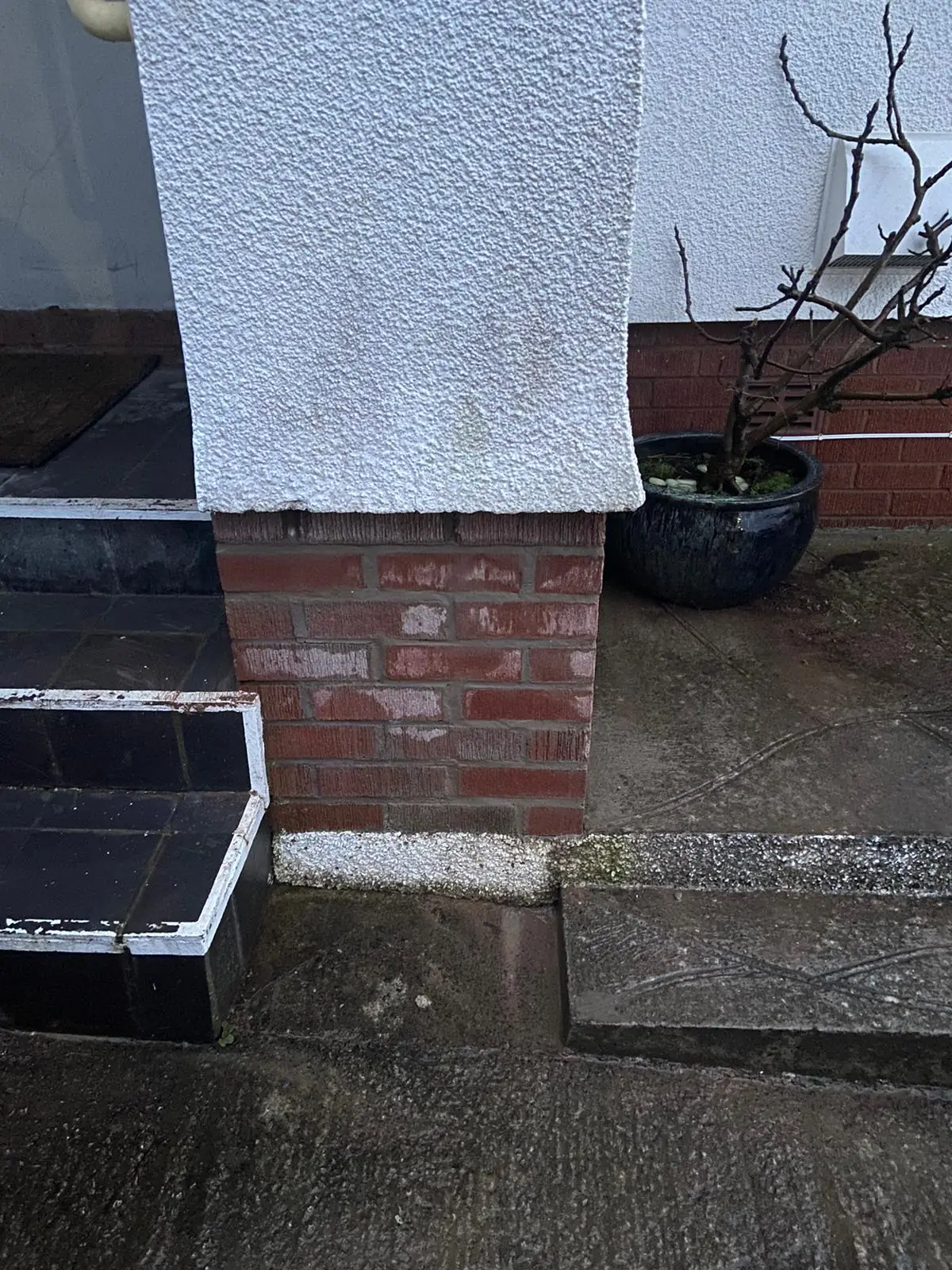
Salt deposits on the brick base of a rendered pier beside a front step

Salt deposits on the brick base of a rendered pier by a front step — a sign that water has been getting in.

When to ask us to look

Cracks in walls worth sending us photos of

Most cracks in a house are cosmetic — hairline lines in plaster or render that come from drying out and normal seasonal movement. Some are not, and a description alone will not tell us which yours is. These are the cracks worth photographing and sending to us:

Crack running down through white render below a brick sill course

A crack running down through render below a brick sill course.

New, widening or recurring

A crack that has appeared recently, is getting wider, or comes back after it has been filled and decorated.

Stepped through the brickwork

A diagonal crack that follows the mortar joints in a staircase pattern — on the Wirral, often beside the bay window of a 1930s semi.

At the corners of openings

Cracks running from the top corners of windows and doors, or brickwork dropping above an opening.

On both faces of a wall

A crack you can see inside and outside at the same point.

With other symptoms

Doors and windows that have started to stick, gaps opening at skirtings or ceilings, sloping floors.

After a change nearby

Cracking that followed a drainage problem, a leak, tree work, an extension or excavation next door, or an alteration inside the house.

Damp, salts or spalled bricks around it

Damp patches, white salt deposits or bricks blowing or flaking near the crack — common on the weather side of a coastal house in Wallasey, Hoylake or New Brighton.

Bulging or leaning

A wall that is no longer flat or plumb, a gable that has moved, or gaps opening between sections of wall.

None of these is a diagnosis. They are reasons to have the wall looked at properly, so that whatever is done next is the right thing.

Five steps, one contractor

How a crack repair runs with Quirks

  1. 1Get in touch — Send photographs on WhatsApp, email us, use the form or call 01244 638219.
  2. 2Photos and written quotation — Send us photos on WhatsApp or by email. We look at them and send a written quotation. If the photos can’t show enough, we’ll arrange a visit. Where the movement is significant or the cause is unclear, we recommend a structural engineer and you instruct one.
  3. 3Repair works — Propping where needed, lintels or restraint if specified, cutting out and replacing damaged masonry, then the crack stitching itself.
  4. 4Making good — Repointing, re-rendering, replastering, skirtings or decoration — whatever the agreed scope includes.
  5. 5Sign-off and next steps — Building Control sign-off where its involvement was required, a before-and-after photographic record of the repair, and a plain-English note of what, if anything, to keep an eye on.
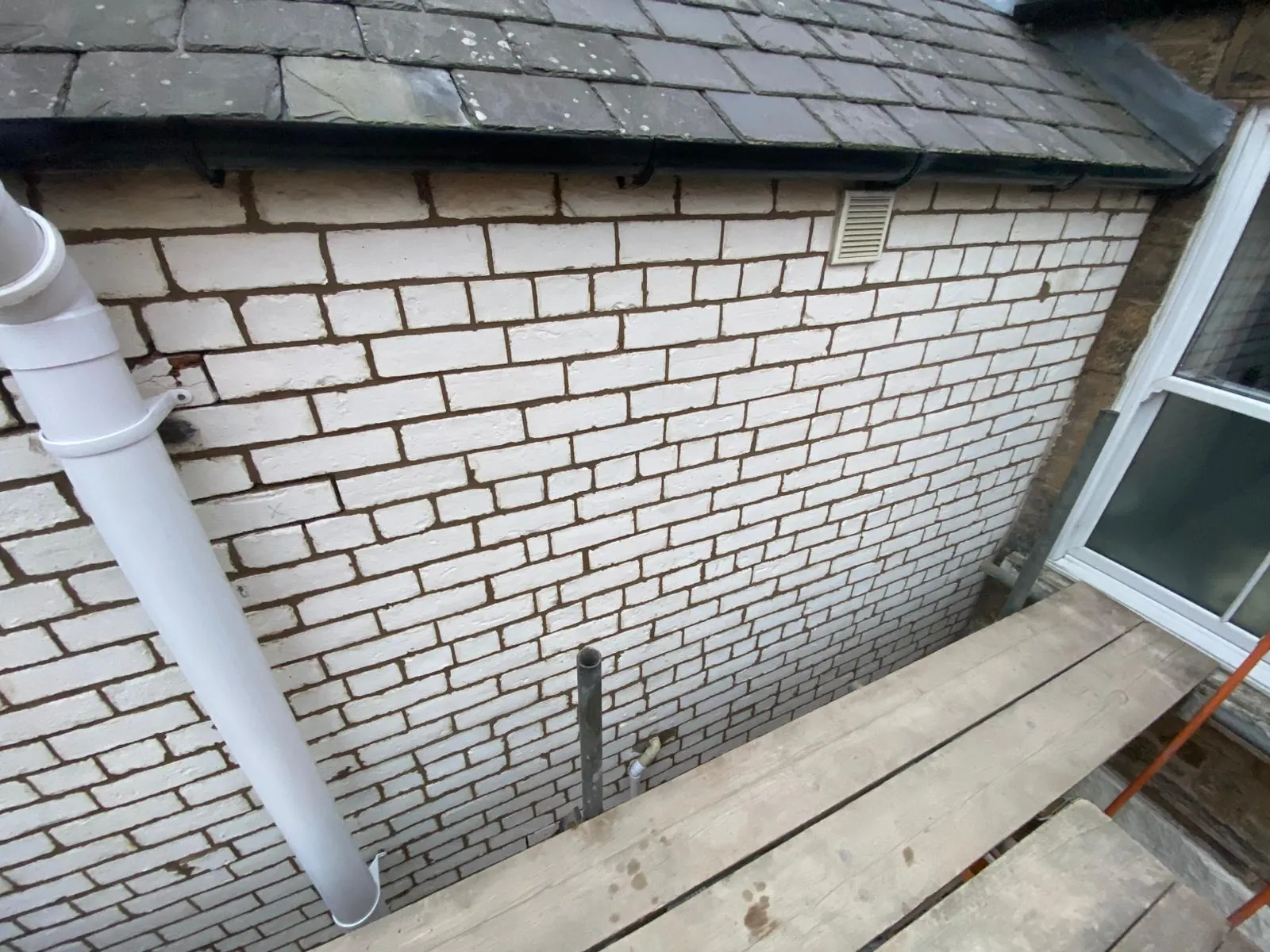
Painted brick wall under a slate roof, seen from the scaffold, with cracked brickwork beside the downpipe

Helical bar crack stitching bedded into the mortar joints.

  1. 1Get in touch
  2. 2Photos and quotation
  3. 3Repair works
  4. 4Making good
  5. 5Sign-off

What drives the price

What wall crack and brick crack repair costs

We do not publish prices for crack repair, because the same-looking crack can be a half-day of stitching or a lintel replacement with scaffold. What decides the figure:

  • Number and length of the cracks
  • Wall type — brick, block, stone, rendered
  • Access — ground level, ladder or scaffold
  • Whether the cause needs its own work: lintels, restraint ties, drainage
  • The extent of making good: pointing, render, plaster, decoration
  • A structural engineer’s report, where one is needed, is instructed by you and priced separately

Every quotation sets out the scope of work in writing — the stitching, any other structural work and the making good — with one total price for the job.

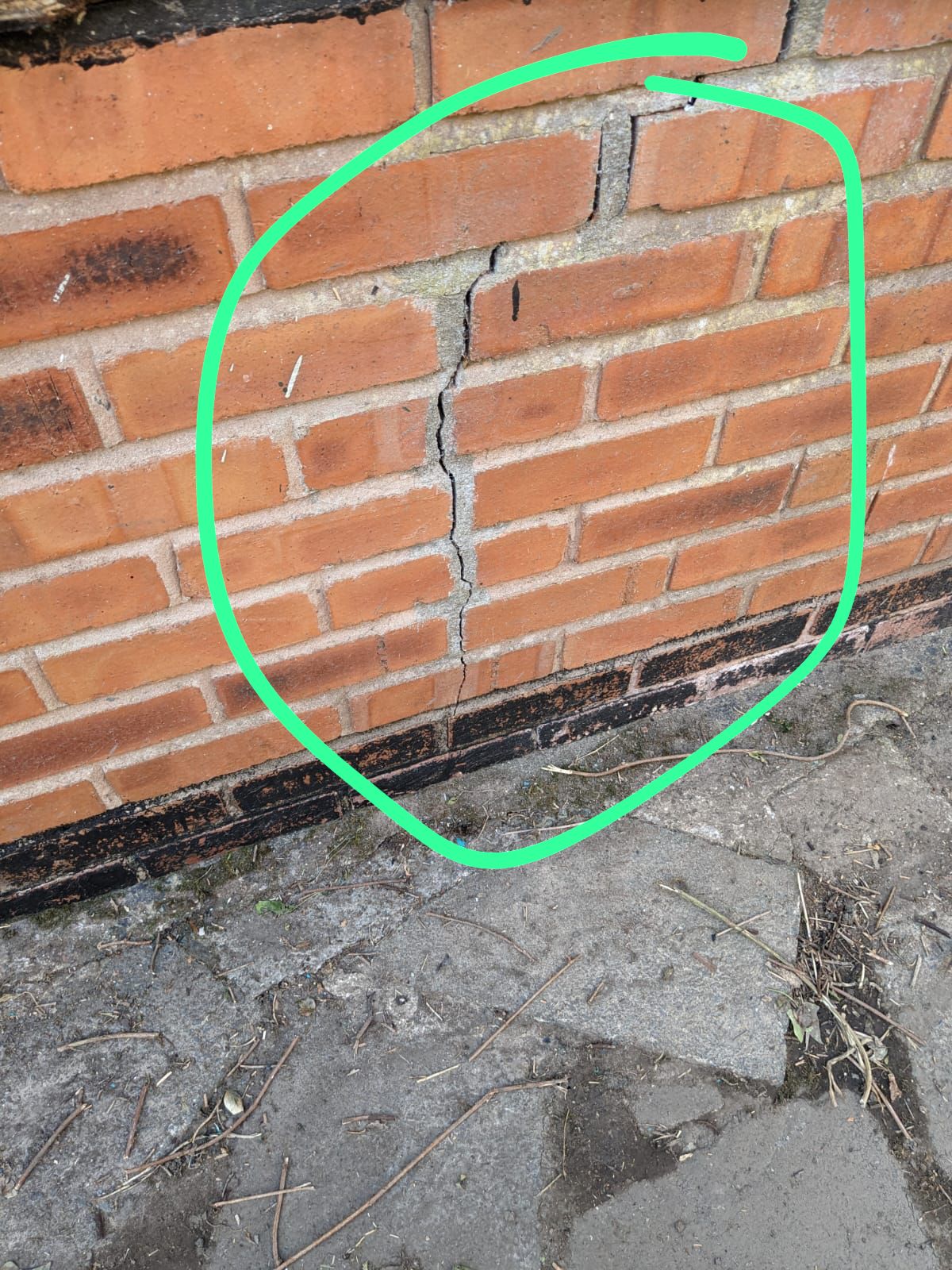
Vertical crack running down through the brickwork of an external wall above a concrete path

Stepped cracking through brickwork — the cause is assessed before the repair is priced.

Request a quotation

Six details and we’ll come back to you. For anything urgent, call 01244 638219.

    So we can confirm we cover your area.


    JPG, PNG or HEIC. One photograph per box.

    We’ll only use your details to deal with this enquiry.

    Prefer to send photos? Message us on WhatsApp

    What else the repair may need

    Related work that can come with a crack repair

    Crack stitching is often part of the answer rather than the whole of it. Depending on what is causing the crack — and, where one is needed, what the engineer’s report finds — the repair may also involve:

    Lintel repair or replacement

    A failed or corroded lintel over a window or door is one of the most common causes of cracking above openings. The masonry is propped, the lintel replaced, the brickwork rebuilt and then stitched — lintel repair and replacement on the Wirral.

    Brick crack repair and replacement

    Cracked, spalled or frost-damaged bricks are cut out and replaced with matching units before the wall is stitched — brick repair on the Wirral.

    Repointing

    Failed or hard cement pointing lets water in and stops the wall moving as it should; repointing in the right mortar is often done alongside the stitching — repointing on the Wirral.

    Lateral restraint

    Where a wall is not adequately tied to the floors or roof, restraint ties or straps are installed to the engineer’s design as well as stitching the crack.

    Damp and water management

    Where water ingress or a drainage fault has contributed to the deterioration, the source is dealt with so the repair lasts — damp proofing on the Wirral.

    Structural alterations

    Where a previous alteration left the structure under-supported, the support is put right first — structural alterations on the Wirral.

    Wall ties

    On cavity walls, horizontal cracking along the bed joints can point to corroded ties. Where that is the finding, we replace the failed ties alongside the stitching.

    Internal cracks

    Cracks in internal walls are dealt with the same way. Cosmetic ones are filled, bonded and redecorated; structural ones are stitched, then replastered and finished so nothing shows.

    Whether Building Regulations or Building Control involvement is required depends on the scope of work. We will explain the position for your proposed repair and, where agreed, coordinate the process with the relevant parties. Where a repair involves replacement lintels, new supports or other work that may be notifiable, our Building Regulations guidance explains the overview.

    The questions we’re asked most

    Frequently asked questions

    There is a crack where my bay window meets the house — is that serious?
    It is one of the most common cracks we are asked about on the Wirral and it ranges from cosmetic to significant, which is why we look at it properly rather than guess — photographs of the bay and the wall either side are the place to start. A bay on a 1930s semi may sit on a shallower footing than the main house, so a small amount of differential movement over decades is not unusual and a stable old crack at the junction may need nothing more than pointing. A crack that is widening, that runs diagonally from the corners of the bay window, or that comes with the bay’s lintel dropping is a different matter. Establishing which you have comes first; where the movement is significant we recommend a structural engineer.
    My rendered house faces the sea and has cracks — render or wall?
    On the coast it is often both, and the render frequently hides the wall for years. Fine, random cracking confined to the render is weathering; a longer, cleaner, often diagonal line that reopens after patching is the wall showing through. We check the line of the crack, whether it goes through at openings and corners and whether it shows inside, and where needed expose a small area of render. Where water has been getting in, the source is put right and any damp treated as part of the repair.
    Cracks above the windows on a Birkenhead terrace — what is the likely cause?
    On a Victorian solid-wall terrace, cracking from the top corners of an opening with the brickwork above dropped is most often a rotted timber lintel or a brick arch that has spread. It can also come from movement elsewhere in the wall, so we establish the cause rather than assume it. Where the lintel has failed, the repair is propping, a new steel lintel, rebuilt brickwork and stitching.
    Do you have examples of crack repairs on the Wirral?
    Yes — the case study on this page is a bay window on a rendered Wirral terrace, stitched with helical bars and tied back with bow ties to a structural engineer’s specification. We photograph every repair at each stage and can send you the before-and-after record of comparable work. The case studies on our Flintshire and Chester pages show two others — an internal wall stitched to an engineer’s specification, and lintel replacement with rebuilt brickwork.
    Can you tell from photographs whether my crack is serious?
    Often they tell us a good deal. A few photographs show us where the crack is, roughly how wide it is, what kind of wall it is in and what is around it — send the crack close up with something for scale, the whole wall, and the openings and ground nearby. If they show enough, we can quote in writing from them. If they don’t, or the movement looks significant, we’ll say so — and arrange a visit or recommend a structural engineer.
    How much does crack stitching cost?
    It depends on the number and length of the cracks, the wall type, access, whether the cause needs its own repair — a lintel, restraint ties, drainage — and how much making good is involved. A short run of stitching at ground level is a modest job; a lintel replacement with scaffold and re-rendering is not. We do not publish prices, but every quotation sets out the scope of work in writing, so you can see exactly what is included. Most jobs we can price from photographs — send yours on WhatsApp or by email and we’ll come back with a written quotation.
    Do you repair cracks in brickwork as well as in render and plaster?
    Yes — most of what we do is brick crack repair. A crack in render or plaster is often only in the finish and is filled once the cause is ruled out; a crack in the brickwork itself is repaired by crack stitching across the mortar joints, with any cracked or spalled bricks cut out and replaced and the joints repointed to match. Block and stone walls are repaired the same way. What we do not do is stitch a wall that is still moving — the cause comes first.

    One Contractor. Complete Structural Repair Solutions.

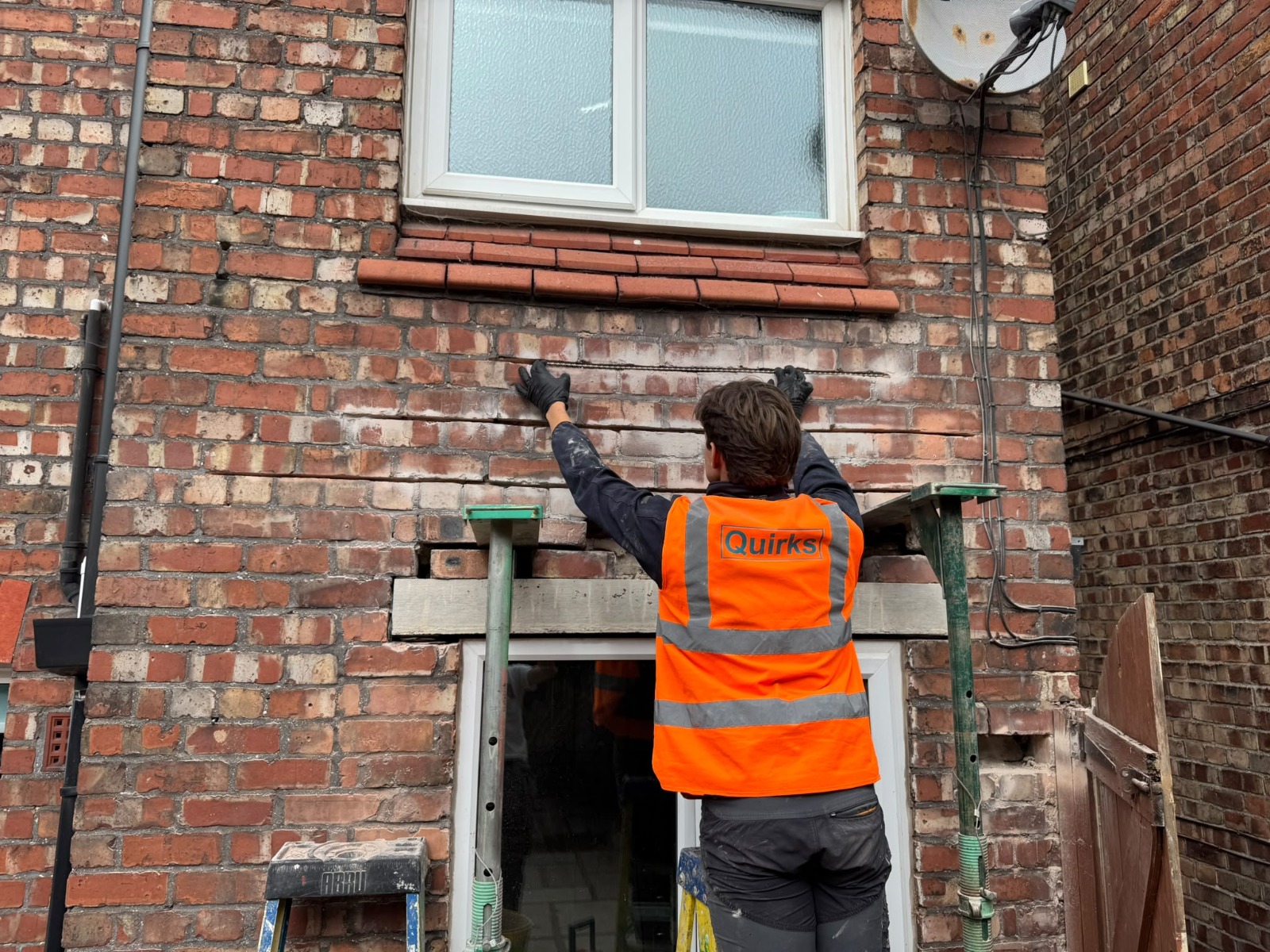
    Quirks Property Maintenance operative installing helical crack stitching bars into brickwork as part of a structural wall repair.

    Structural Crack Repairs

    We find out why the wall has cracked first, so the repair deals with the cause, not just the crack.
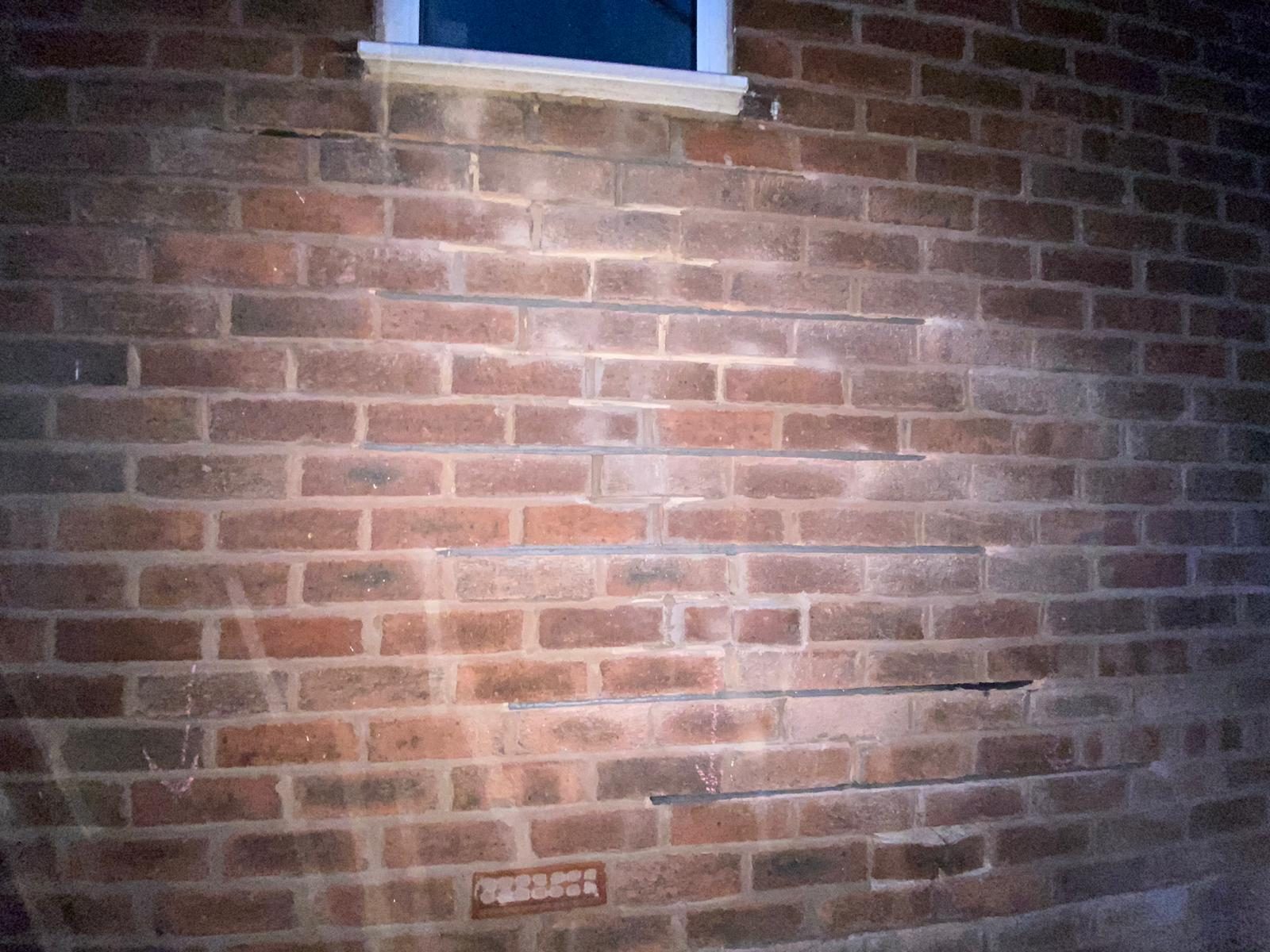
    Stainless steel helical bars bedded in resin across the mortar bed joints of an external brick wall below a window

    Helical Crack Stitching

    Stainless steel helical bars, bedded in resin across the crack, tie the brickwork back together without taking the wall down.
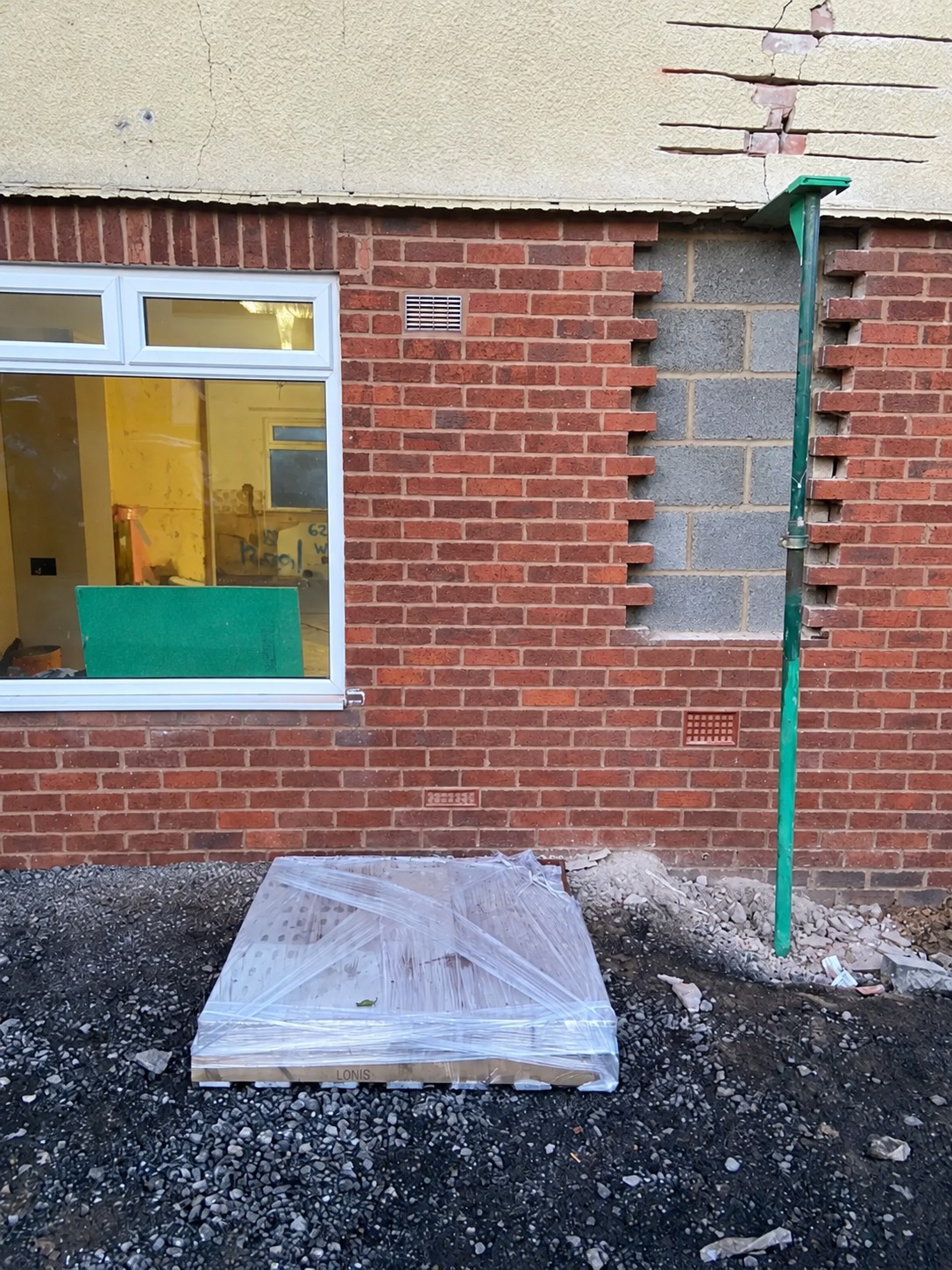
    External brick wall during repair works, showing a neatly rebuilt section of grey concrete blockwork, stepped brickwork edges, a white uPVC window and green downpipe.

    Brickwork & Masonry Repairs

    Where bricks have broken or moved, we cut out the damaged section and rebuild it, toothed into the existing wall.
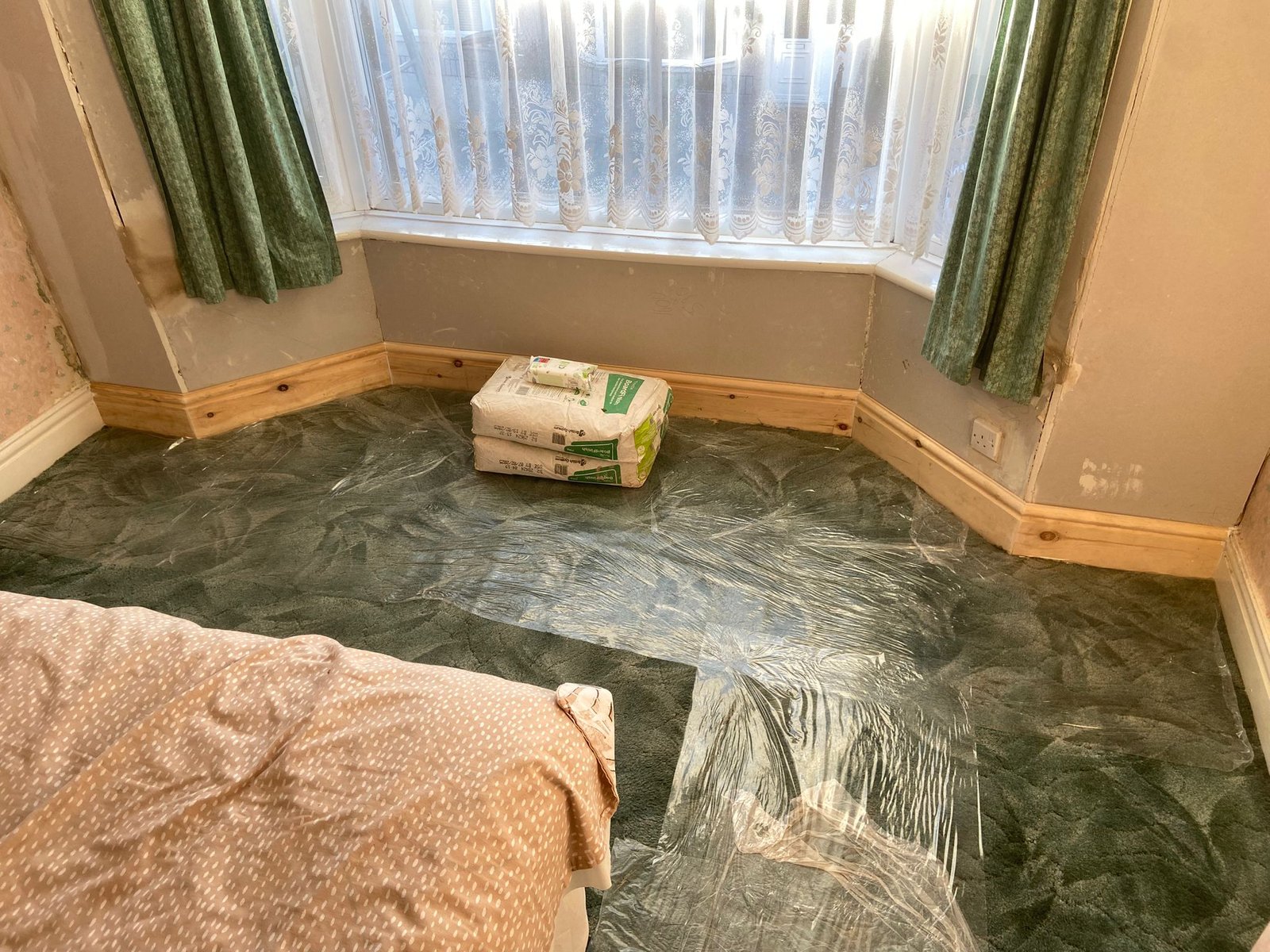
    Bay window room replastered below the window with new skirting board fitted after crack stitching and restraint works

    Complete Repair & Reinstatement

    Once the structural work is done, we replaster, refit skirting and make good, ready for you to decorate.

    • Photos and quotation
    • ›
    • Crack stitching
    • ›
    • Brickwork repairs
    • ›
    • Making good and finishing
    Accredited, approved & trained

    Memberships and certifications

    Construction Skills Certification Scheme CSCS logoCITB logoBritish Woodworking Federation logoSiteRight, part of NOCN Group, logoFireQual logoPAM Ties Limited approved contractor logoAESC logoEnvironment Agency logoSafeguard logoFederation of Damp approved member logo

    Related services for wall and brick crack repair on the Wirral

    Lintel repair and replacement on the Wirral

    Timber lintels over the openings of Birkenhead and Wallasey terraces.

    Learn more →

    Damp proofing on the Wirral

    Where driving rain off the Irish Sea has been getting into the wall.

    Learn more →

    Repointing on the Wirral

    Repointing exposed elevations in the right mortar alongside the stitching.

    Learn more →

    Brick repair on the Wirral

    Replacing frost-damaged and spalled bricks on the weather side.

    Learn more →

    Structural alterations on the Wirral

    Support put right where an alteration left the structure short.

    Learn more →

    Building Regulations

    When replacement lintels or restraint may need Building Control involvement.

    Learn more →

    A crack on the Wirral you are not sure about? Send us photos

    Send us photos for a written quotation — Heswall, Bebington, Prenton, Wallasey, Birkenhead, West Kirby, Upton and across the peninsula.

    Photographs may not be enough to diagnose every problem and a site visit may still be needed — we’ll say so when we reply.

    Structural crack repair by area

    Wall crack and brick crack repair across Flintshire, Chester and the Wirral

    Scan the code
    Powered by Joinchat