
A Fast, Efficient and Friendly Building and Maintenance Service You Can Depend On.

Damp Proofing Services

💧 Damp Proofing in Flintshire — Survey-Led Damp Control on Our Own Doorstep

In short: Flintshire is where we are based, so a survey here is a local call-out rather than a regional one. The county mixes estuary-side Victorian terraces, upland stone cottages laid in lime mortar, and inter-war and post-war semis — and each fails differently. We survey first, find the actual cause, and only then recommend treatment, which is often a repair rather than a chemical damp-proof course.

We cover Deeside, Connah’s Quay, Shotton, Queensferry, Flint, Holywell, Mold, Buckley, Hawarden, Broughton and the surrounding villages. FOD Certified Surveyors, PAM Ties and Safeguard Europe approved, all trades in-house. Remedial work here falls under Welsh Building Regulations, and we work to them as a matter of course.

Last reviewed: August 2026

🔑 Key Takeaways

  • We are based in Flintshire — fastest survey response in the county.
  • Estuary-side terraces, upland lime-mortar cottages and inter-war semis each fail in different ways.
  • Stone and lime-built property needs breathable repair, not cement render or a blanket chemical fix.
  • We survey before we recommend, and we will tell you if you do not need a DPC.
  • Welsh Building Regulations apply to remedial work here.

📞 Book a damp survey in Flintshire: call 01244 638219, WhatsApp 07719 535523, or email info@quirksonline.co.uk.

🧭 Why Correct Diagnosis Matters in Flintshire

The county’s building stock is varied enough that the same symptom has different causes street to street. A tide mark on a Connah’s Quay terrace is usually a bridged damp-proof course or a failed gutter. The same mark on an upland stone cottage is more often rainwater crossing a solid wall through eroded lime pointing. Injecting either one without checking wastes the money and leaves the damp where it was.

Historic England, RICS and the Property Care Association have published a joint position on investigating moisture in traditional buildings, warning that money is wasted when the cause of damp is not properly diagnosed — and that the wrong remedial work can make the problem worse. That is why we survey before we recommend. Start with an FOD-certified damp survey and you get a written report before anything is quoted.

💧 The Damp We Find Most Often in Flintshire

Telling the types apart is the whole job — see the signs and causes of damp for the full picture.

Rising damp

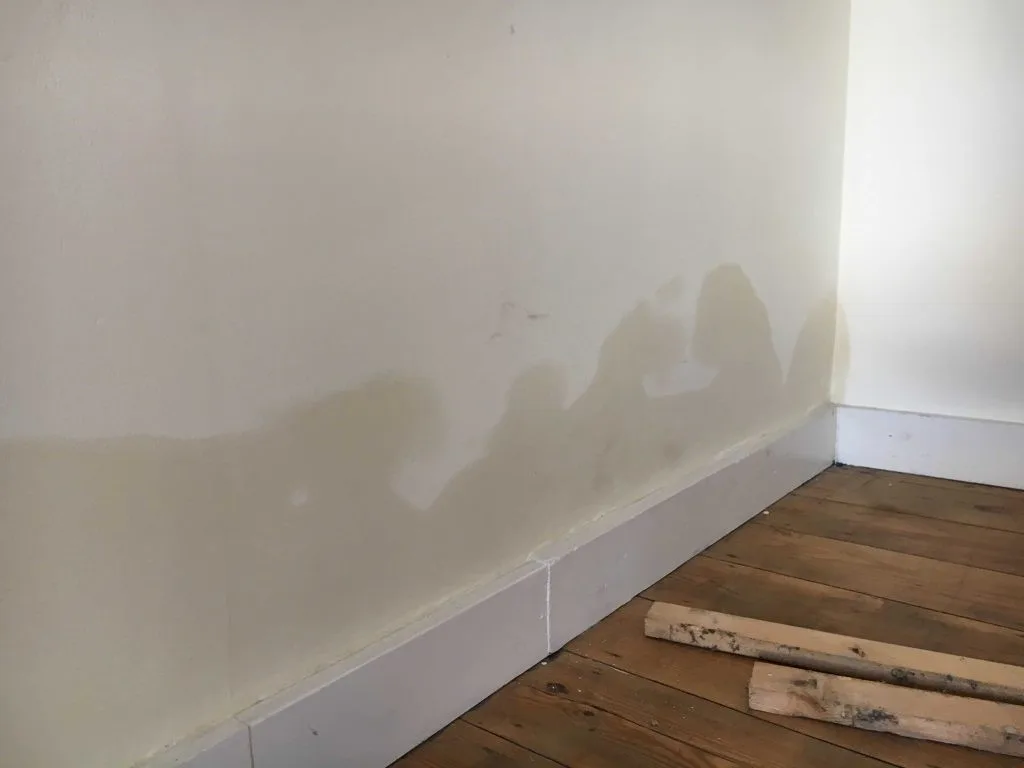
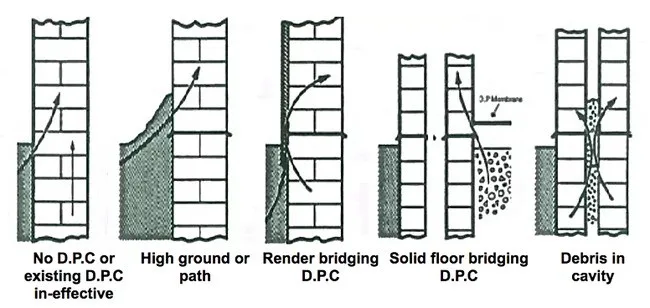
Ground moisture drawn up through porous masonry where a damp-proof course has failed, been bridged or was never fitted — a real possibility in the county’s pre-1875 terraces and older stone cottages, which predate DPC requirements. The signs are a tide mark up to about a metre, white salt deposits and rotting skirting. Still less common than it is diagnosed. Where confirmed, the fix is a remedial DPC with salt-contaminated plaster removed and renovating plaster applied.

Tide mark of rising damp low on an internal wall above a wooden floor
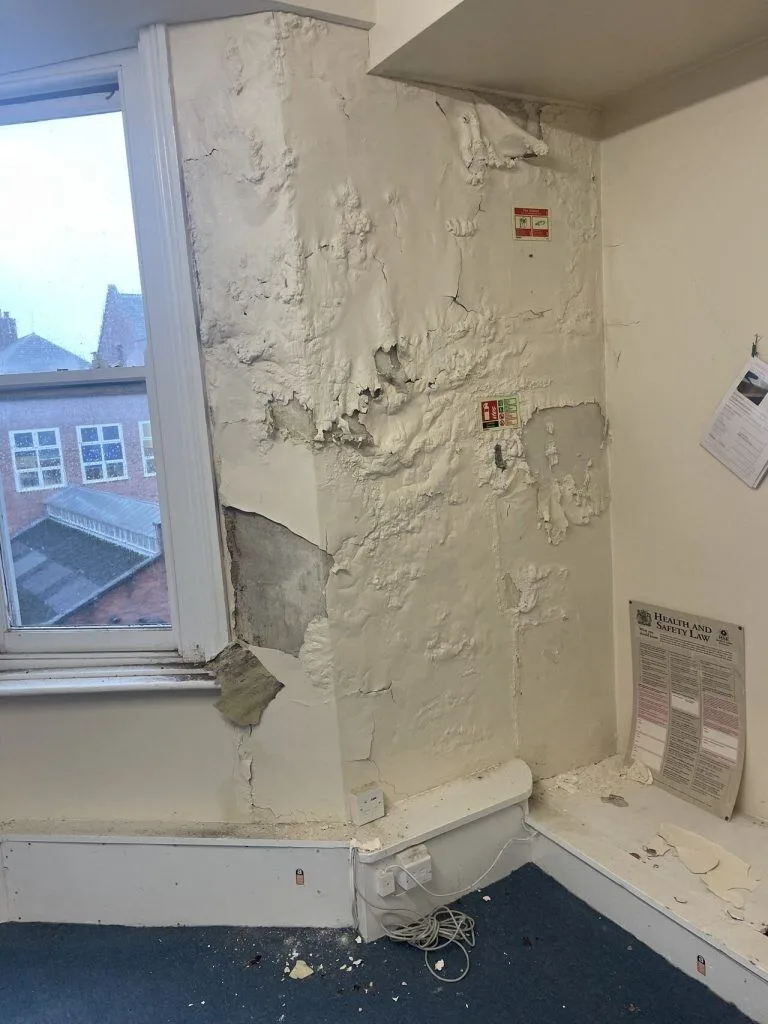
Plaster damaged by penetrating damp on an internal wall beside a window
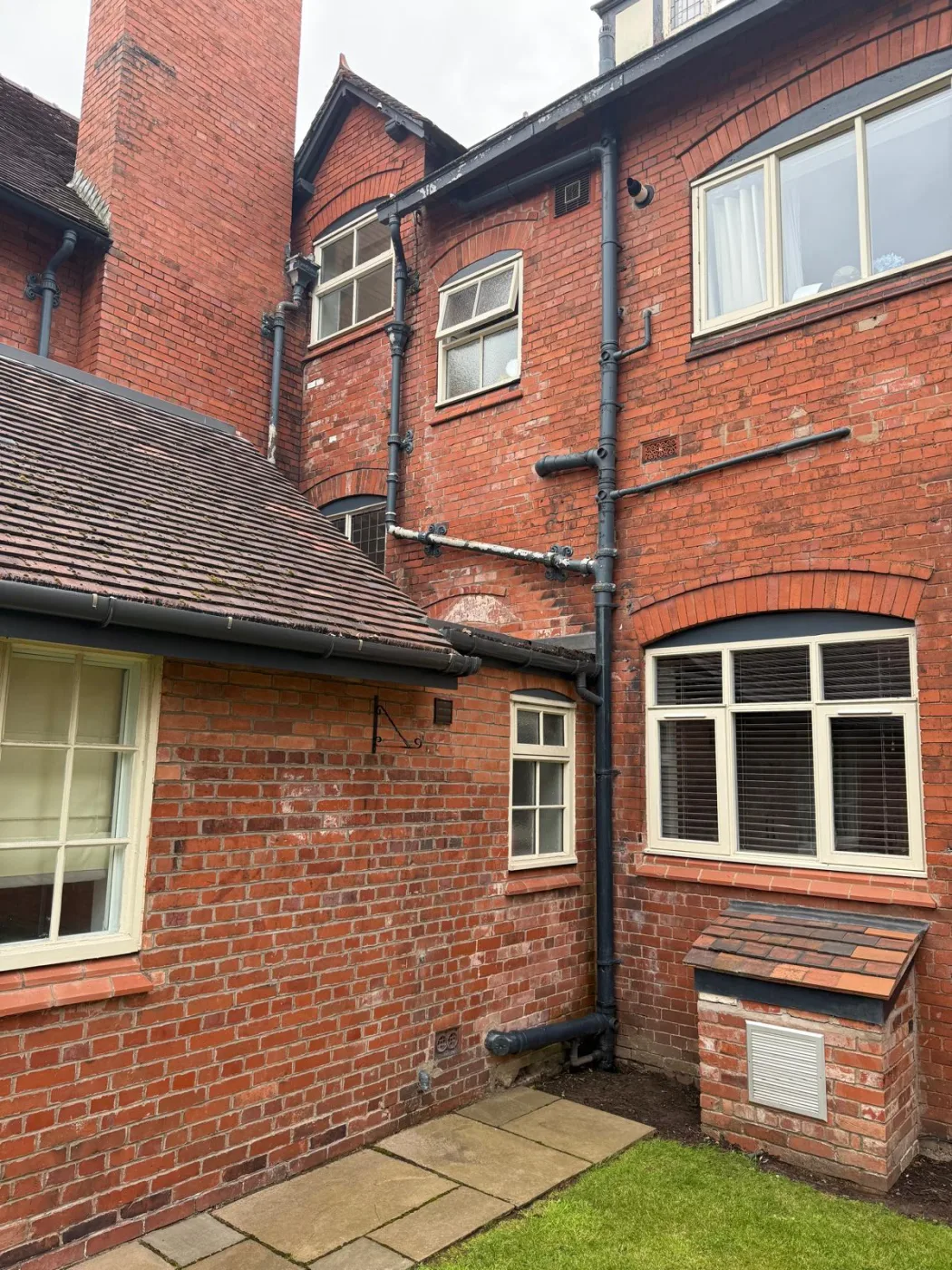
Rear elevation brickwork and rainwater goods on a property affected by penetrating damp
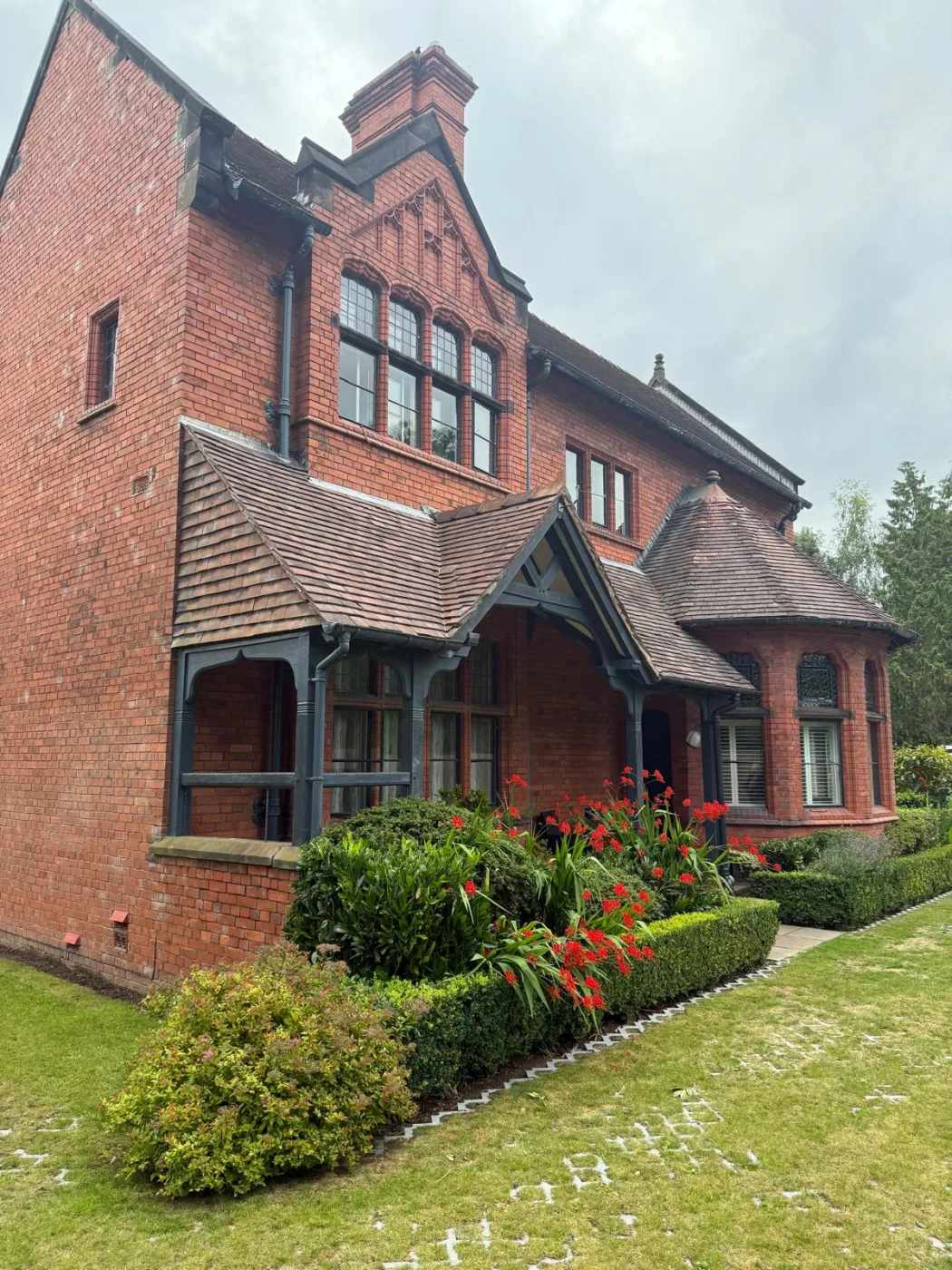
Front elevation of a brick property of the type prone to penetrating damp

Penetrating damp

Penetrating damp is the most common cause we find across the county. Rainwater enters through a defect in the building envelope — eroded lime pointing, spalled stone or brick, cracked render, a roof or chimney damp fault, or blocked gutters. On the solid stone walls common in the uplands around Holywell and Mold there is no cavity to stop it, and driving rain off the hills is relentless. Repair the external defect first; only then does internal making-good last.

Condensation and black mould

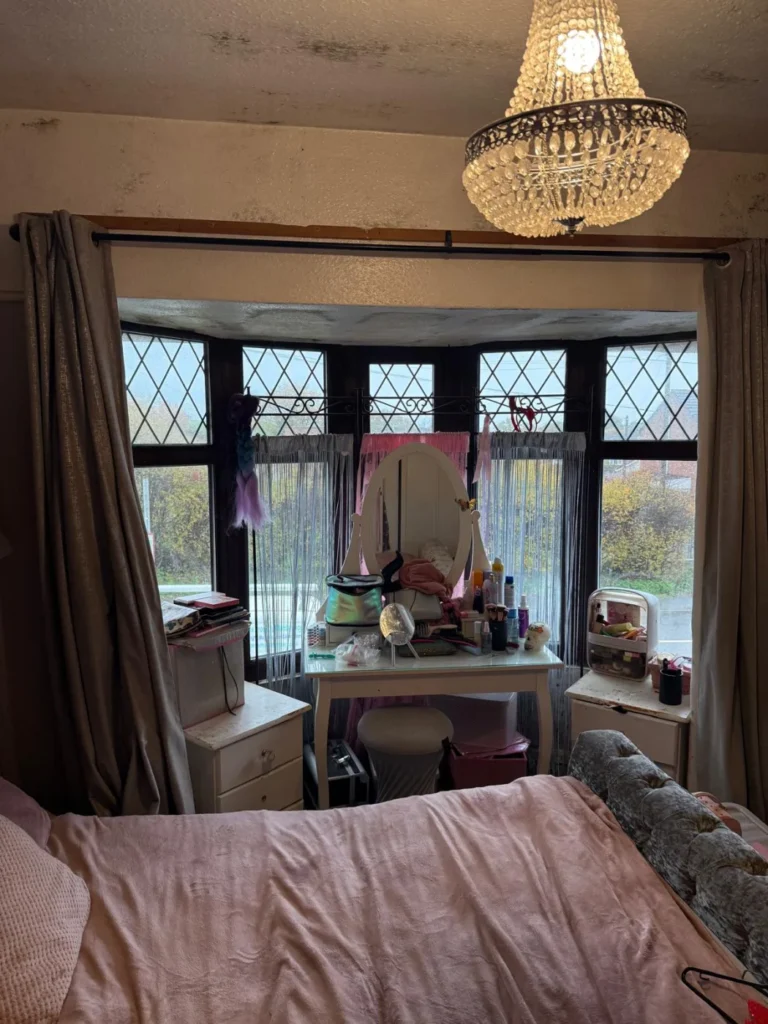
The most common form of damp in any property: warm, moisture-laden air meeting cold surfaces and forming water droplets, then black mould around windows and in corners. Solid stone and 9-inch brick walls run colder than insulated cavity walls, so much of Flintshire’s older stock is prone to it. It is a ventilation-and-warmth problem, not an injection problem — see condensation and mould control.

Condensation mould staining on the ceiling above a bay window in a bedroom
Illustration of a damp survey being carried out by two surveyors

🏔️ Getting the Diagnosis Right in Flintshire Properties

Flintshire’s housing runs from estuary-side Victorian terraces to upland stone cottages laid in lime mortar, and the same damp symptom can have a different cause in each. Cement pointing, impermeable coatings, raised external ground levels and defective rainwater goods all produce staining that is easily mistaken for rising damp.

The joint guidance published by Historic England, RICS and the Property Care Association supports establishing the source of moisture before remedial work is specified. Our FOD-certified damp surveys in Flintshire include internal and external inspections, moisture readings, photographic evidence and a written report before any remedial quotation is prepared — and because we are based in the county, a survey here is a local call-out.

Damp floors

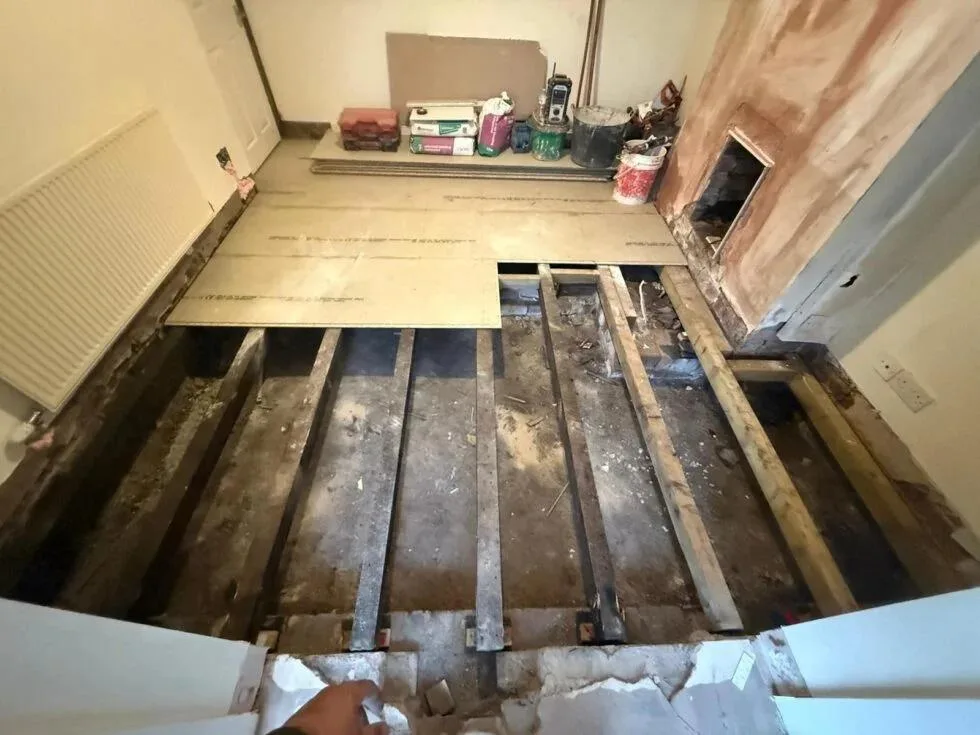
Solid concrete floors are porous and let ground moisture rise where the damp-proof membrane has failed or was never fitted — damaging carpets, vinyl, laminate and timber. Depending on the slab and the moisture readings the fix is a new membrane, a surface damp-proof system or an epoxy resin coating, chosen after the floor is tested rather than guessed. See damp floor treatments.

Diagram showing how a damp proof course can be bridged or fail
Studded damp proof membrane fitted to a wall beside a doorway
Studded damp proof membrane fitted to a wall behind a radiator

Timber decay that follows damp

Where damp has been present for a while, timber suffers. We treat both wet rot and dry rot, and carry out the structural timber repair afterwards — joists, lintels and floor structure — rather than treating the fungus and leaving someone else to rebuild.

🔍 Signs of Damp in a Flintshire Property

Tide marks or salt staining low on a wall, patches that darken after rain, black mould around windows and in corners, peeling paper, rotting skirting, a musty smell, or cold damp plaster. On solid stone and 9-inch brick walls these show sooner than on cavity-wall property, because there is no gap to slow the moisture.

🫁 Why Damp and Mould Matter for Your Health

Damp and black mould affect health, not just decoration. Mould releases spores that can trigger or worsen asthma, allergies, coughing and skin irritation, and the risk is highest for children, older people and anyone with a respiratory condition. Official health guidance advises treating damp and mould promptly rather than living with it — which is why we treat the cause rather than repaint the surface.

🛡️ Our Accreditations — Why They Matter

  • Federation of Damp (FOD) members — work carried out to recognised industry standards.
  • FOD Certified Surveyors — diagnosis by qualified surveyors, not a sales script.
  • PAM Ties & Safeguard Europe approved contractors — trained to install manufacturer systems correctly, which is what makes a guarantee worth having.
  • BBA-approved products where chemical DPC or membrane systems are genuinely required.
  • 20+ years, fully insured, all trades under one roof — and we make good afterwards.

🔧 Our Damp Services in Flintshire

📋 What to Expect — Survey, Report, Treatment, Guarantee

  • Survey. An FOD Certified Surveyor inspects the property and identifies the true cause.
  • Written report & quote. Clear findings and an honest recommendation — including telling you if no treatment is needed.
  • Cause fixed first. External or structural defects repaired before internal treatment, so the fix lasts.
  • Treatment & making-good. Approved systems installed, then plastering and decoration — in-house.
  • Guarantee. Product and workmanship guarantees where applicable, with the documentation provided on completion.

🏘️ Flintshire Property — What We Actually Find

  • Deeside, Connah’s Quay, Shotton and Queensferry — estuary-side Victorian and inter-war terraces. Bridged damp-proof courses from raised paths and borders, and failed gutters and downpipes, are the usual causes. Ground conditions near the estuary keep moisture levels high.
  • Holywell, Mold and the uplands — natural stone cottages laid in lime mortar, solid-walled with no cavity. Eroded pointing and cement render trapping moisture are the recurring problems. These need breathable, lime-compatible repair.
  • Flint and Buckley — a mix of Victorian terraces and post-war housing, where the split is roughly between bridged DPCs in the older stock and condensation in the newer.
  • Hawarden, Broughton and the newer estates — inter-war and modern semis where raised ground levels and poor ventilation account for most of what we see, rather than anything structural.

Work in Flintshire falls under Welsh Building Regulations, and listed or conservation-area property may need consent. We advise on that before starting rather than after.

💬 Damp Surveys in Flintshire

If a homebuyer survey has flagged damp, or a lender has applied a retention pending a specialist report, we provide independent FOD-certified damp surveys with the written report buyers, sellers, solicitors and lenders need. We set out whether work is genuinely required and what it costs — and tell you honestly when a flagged issue is minor or misdiagnosed, so a sale is not derailed unnecessarily. See our pre-purchase damp survey.

📍 Areas We Cover in Flintshire

Deeside · Connah’s Quay · Shotton · Queensferry · Flint · Holywell · Mold · Buckley · Hawarden · Broughton · Bagillt · Greenfield · Caerwys. CH5–CH8.

We also cover damp proofing across Cheshire, the Wirral and North Wales, damp proofing in Chester and damp proofing on the Wirral.

During and After – Damp Proofing in Flintshire

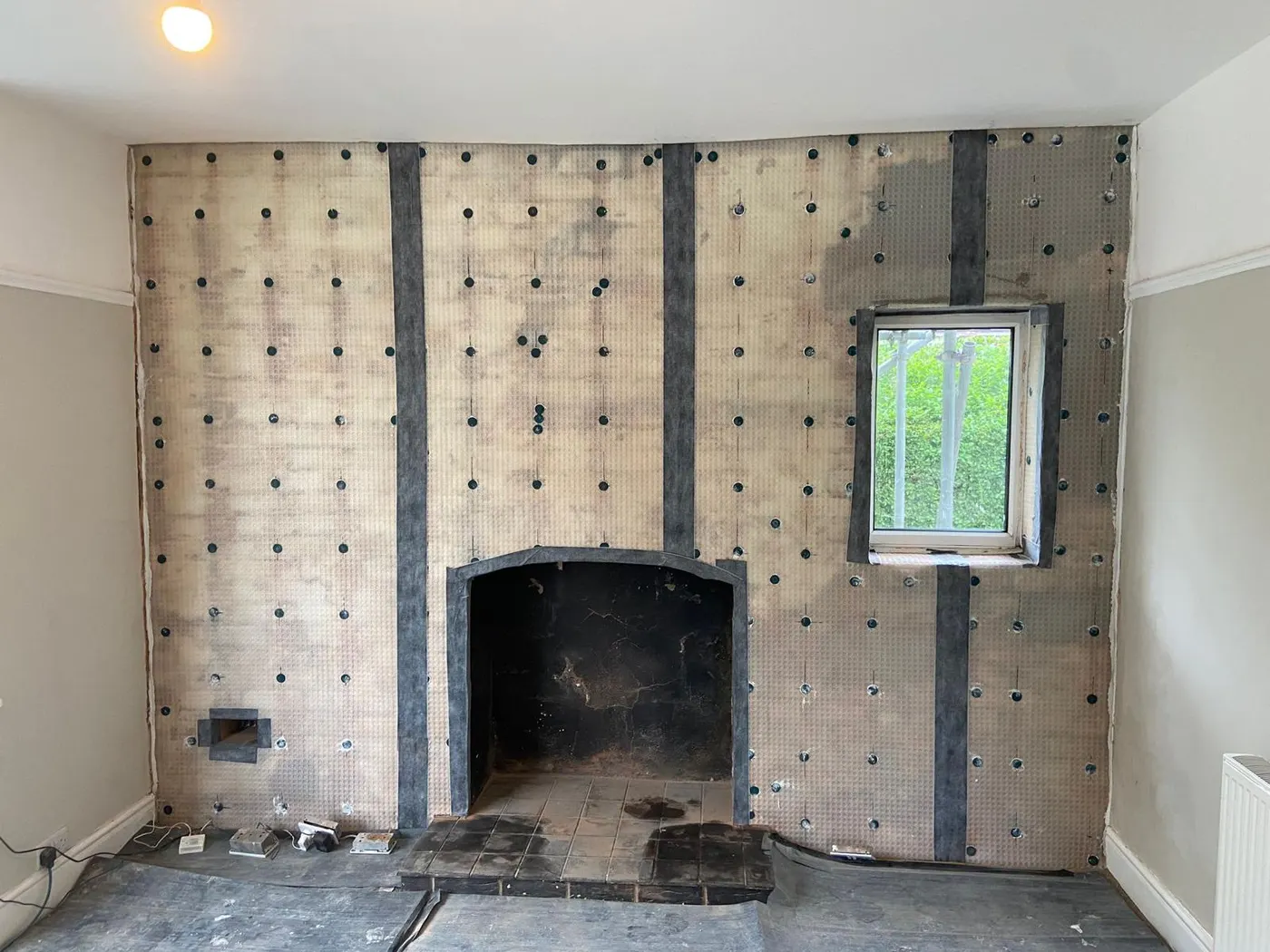
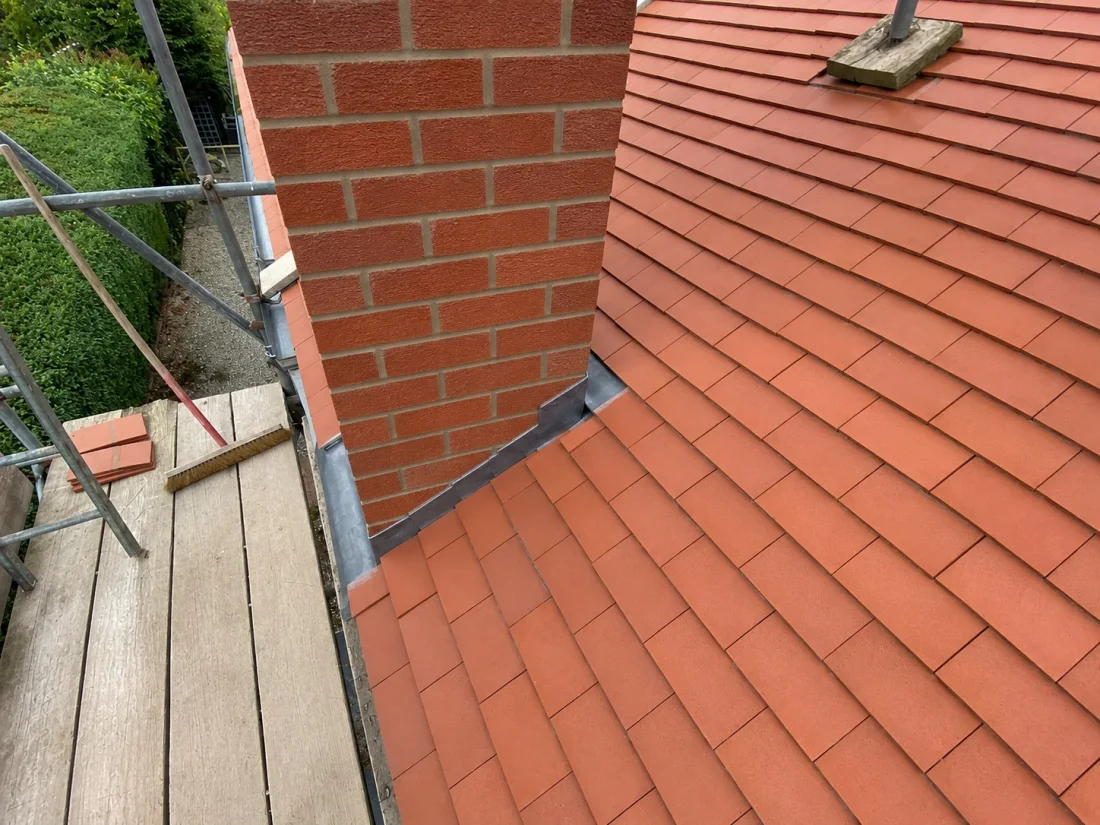
A homeowner in Flintshire (CH7) came to Quirks with a damp problem at the chimney breast that had troubled the house for years. A significant contributing factor was identified externally: weathered pointing on the chimney was letting rain soak into the masonry. Our team repointed the chimney first, and while doing it found broken bricks that also needed replacing — we flagged them to the customer, and carried out the extra work only once they were happy to go ahead. Inside, the damp-affected plaster was stripped from the chimney breast back to brick, a studded damp-proof membrane fitted with sealed detailing around the fireplace and window, and the wall reboarded, replastered and finished with new skirting. We left the chimney breast reinstated, sound and ready for the customer’s HETAS-registered installer to fit their new log burner.

Why the work was needed

Damp around a chimney breast is very often an outside problem showing up indoors. Pointing is the mortar between the bricks: when it weathers and cracks, rain soaks a little further into the masonry with every downpour, and the wall inside struggles to dry — no amount of redecorating fixes it. At this Flintshire property, where the damp had been a long-standing problem, weathered pointing on the chimney was identified as a significant contributing factor. The repair started there — sound pointing and sound bricks — before the chimney breast inside was stripped, membraned and reinstated. Treating the internal finishes alone would not have addressed the external factor contributing to the moisture problem.

During – Chimney Breast Stripped Back
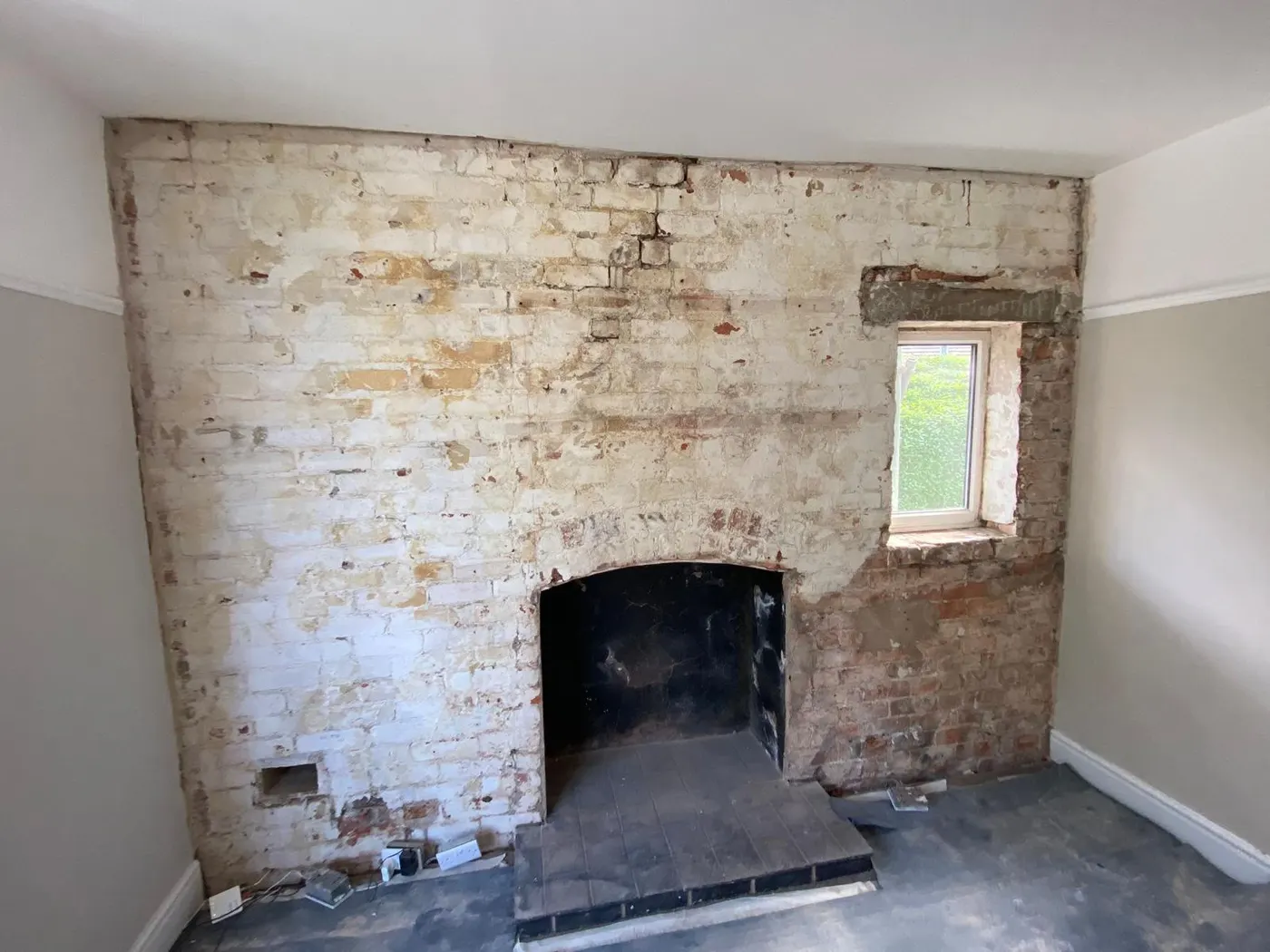
Chimney breast stripped back to brick during damp proofing in Flintshire
The chimney breast stripped back to brick with the fireplace opening exposed, ready for treatment.

During – Damp-Proof Membrane Fitted

Damp-proof membrane fixed to the chimney breast during damp proofing in Flintshire
A studded damp-proof membrane fixed across the chimney breast, isolating the salt-contaminated masonry from the new plaster.

After – Replastered and Ready for Decoration
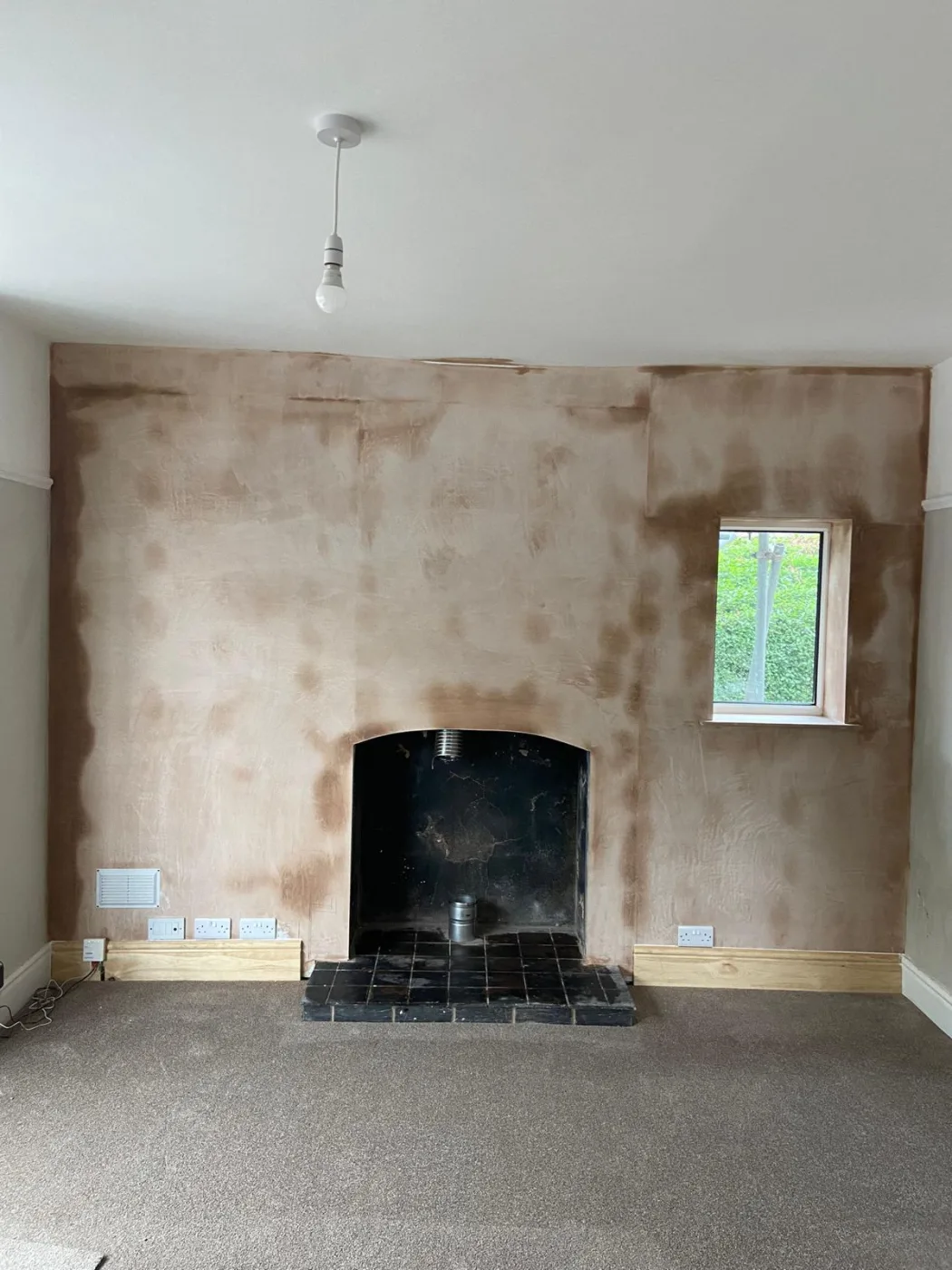
Chimney breast replastered after damp proofing in Flintshire
The chimney breast replastered and reinstated, ready for decoration — photographed before decorating.
Roof and chimney repairs from scaffolding in Flintshire
The work started outside — the chimney repointed and its lead weathering detail renewed before any internal work began.

Works Carried Out

  • Identified weathered pointing on the chimney as a significant contributing factor to the long-standing damp at the chimney breast
  • Repointed the chimney
  • Identified broken bricks during the work, flagged them to the customer, and replaced them once approved
  • Renewed the lead flashing and weathering detail at the chimney
  • Protected floors and furnishings throughout the internal works
  • Stripped the damp-affected plaster from the chimney breast back to brick
  • Fitted a studded damp-proof membrane with sealed detailing around the fireplace opening and window
  • Reboarded and replastered the chimney breast, and fitted new timber skirting boards
  • Fitted a new wall vent to improve ventilation
  • Left the chimney breast reinstated, sound and ready for the customer’s HETAS-registered installer to fit the new log burner
  • Cleaned up at the end of every working day; site left immaculate on completion

Project Information

LocationFlintshire (CH7)
Property typePrivate house
IssueLong-standing damp at the chimney breast; weathered chimney pointing identified as a significant contributing factor
ServiceChimney repointing, brick replacement and damp proofing — membrane and full reinstatement
OutcomeExternal contributing factor addressed, chimney breast replastered and ready for the HETAS log burner installation; verified 10/10 customer review

What our customer said

“The team arrived just after 7 each morning and worked until dark. They cleaned up each day, leaving the site immaculate and were always friendly. We were pleased with the original quote and really appreciate a company which shows up exactly when they say they will. While on the job they identified some broken bricks which would need to be replaced. While we ultimately asked them to carry out the additional work, we never felt pressured.”

Checkatrade verified review — “Resolved a long standing damp problem by repointing”, job location CH7, 18 February 2025 — rated 10/10

Frequently Asked Questions – Damp Proofing

Do you cover the whole of Flintshire?

Yes — Deeside, Connah’s Quay, Shotton, Queensferry, Flint, Holywell, Mold, Buckley, Hawarden, Broughton and the surrounding villages, CH5 to CH8. We are based in the county, so a survey here is a local call-out rather than a regional one.

Yes. Remedial work in Flintshire falls under Welsh Building Regulations rather than the English equivalent, and listed or conservation-area property may also need consent. We are experienced with both and advise on what applies before starting, not after.

Yes, but not with cement render or an impermeable coating. Solid stone walls laid in lime need to breathe; sealing the outside traps moisture inside and makes things worse. The right approach is breathable, lime-compatible repair — repointing in lime, replacing cement render where it has been applied, and internal finishes that let the wall dry.

Where genuine rising damp is treated, salt-contaminated plaster usually has to come off and be replaced with a renovating plaster, because the old plaster holds the salts that keep drawing moisture. Where the cause is penetrating damp or condensation, often no replastering is needed at all.

Roughly 25mm of wall thickness per month. A 9-inch solid brick wall is around 225mm and a stone wall can be thicker still, so several months to dry fully before final decoration. We advise on realistic timescales and the right breathable finishes for the drying period.

Product and workmanship guarantees are provided where applicable, depending on the system installed and manufacturer terms. Where a guarantee applies, we provide the paperwork your solicitor will ask for.

⭐ Why Choose Quirks in Flintshire

Based in Flintshire · survey-led diagnosis · FOD Certified Surveyors · PAM Ties & Safeguard approved · 20+ years across every building trade · experienced with stone, lime and listed property · Welsh Building Regulations as standard · all trades under one roof · guarantees where applicable · fully insured.

Get in Touch

📞 Book a damp survey in Flintshire. Call 01244 638219, WhatsApp 07719 535523, or email info@quirksonline.co.uk for honest advice and a no-obligation quotation.

Send Photos via WhatsApp for a quick assessment.

Our Commitment

Long-lasting, professional solutions using proven industry methods.
Accreditation logos including CSCS, Checkatrade, FireQual, Environment Agency and Federation of Damp
Scan the code
Powered by Joinchat