Specialist Building & Property Maintenance Services You Can Depend On.


 5.0★★★★★Based on 100+ Google reviews
 20+years trading
 £5 millionpublic liability insurance in place
 Workmanship guarantee on completed worksOne contractorAll trades under one roof

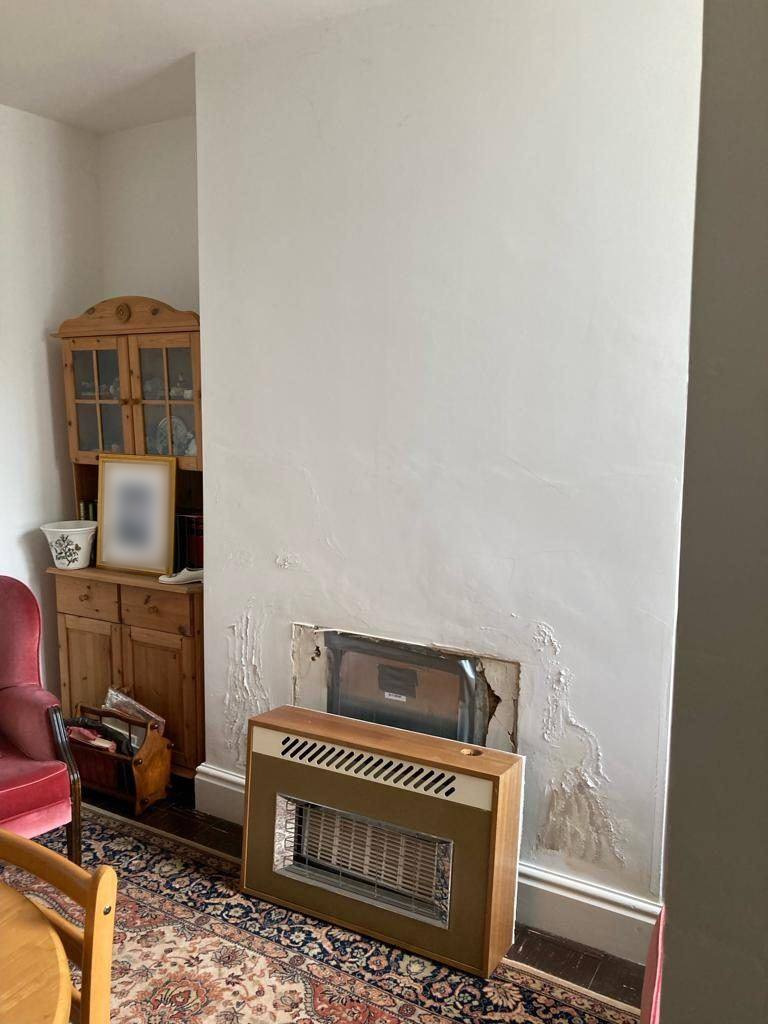
A chimney does not stop being part of the house when the fire goes out. Rain still falls on the pot, damp air from the room still finds its way into the flue, and the soot left inside holds salts that draw moisture out of the air. While the fireplace is open, the air moving up the flue carries that moisture away.
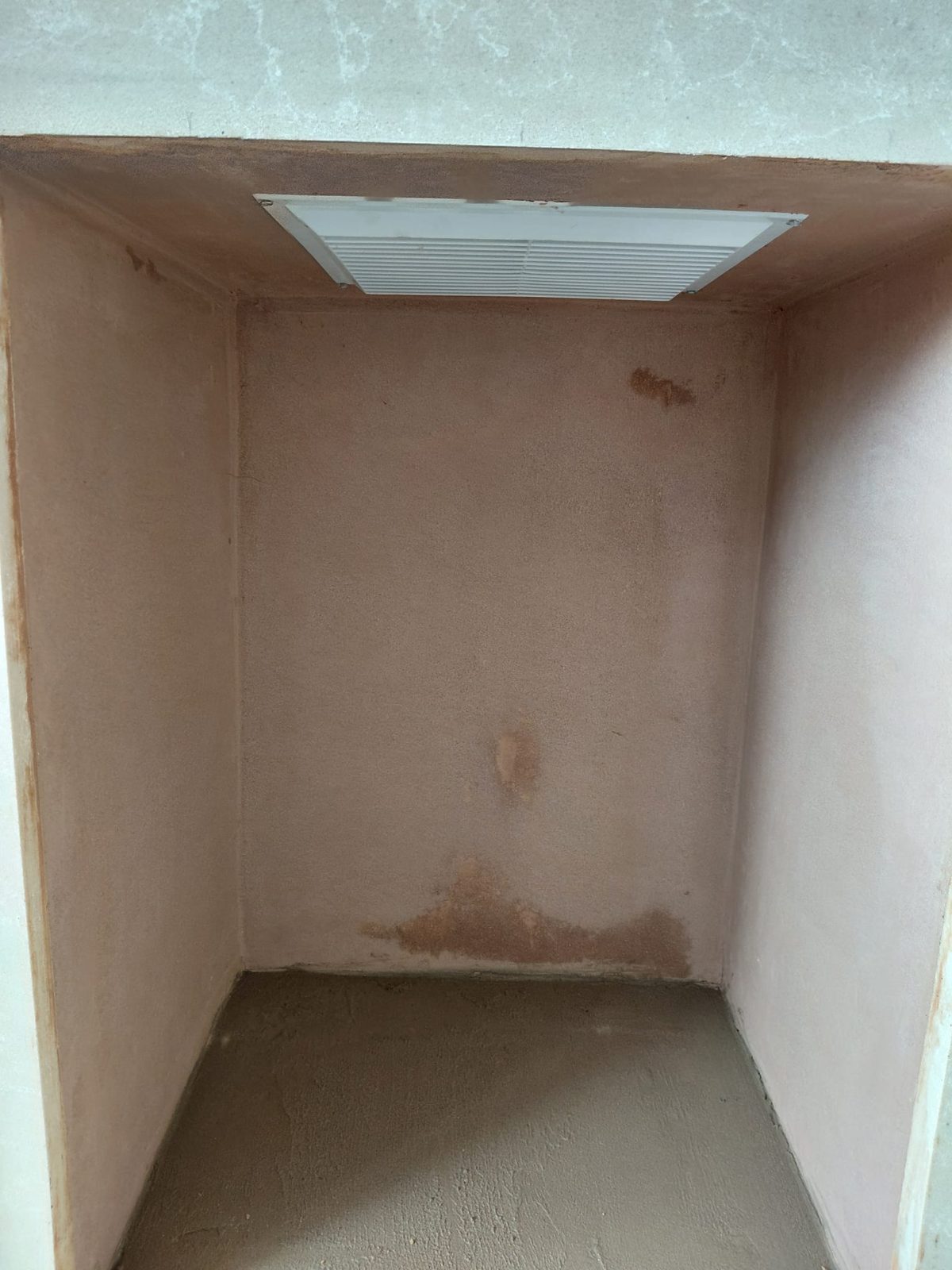
Close the opening tight and the air stops moving. Months later the moisture can show as a damp patch or a brown stain on the chimney breast — a common fault where a fireplace was blocked up in the past with no vent. So a fireplace we close is given air:
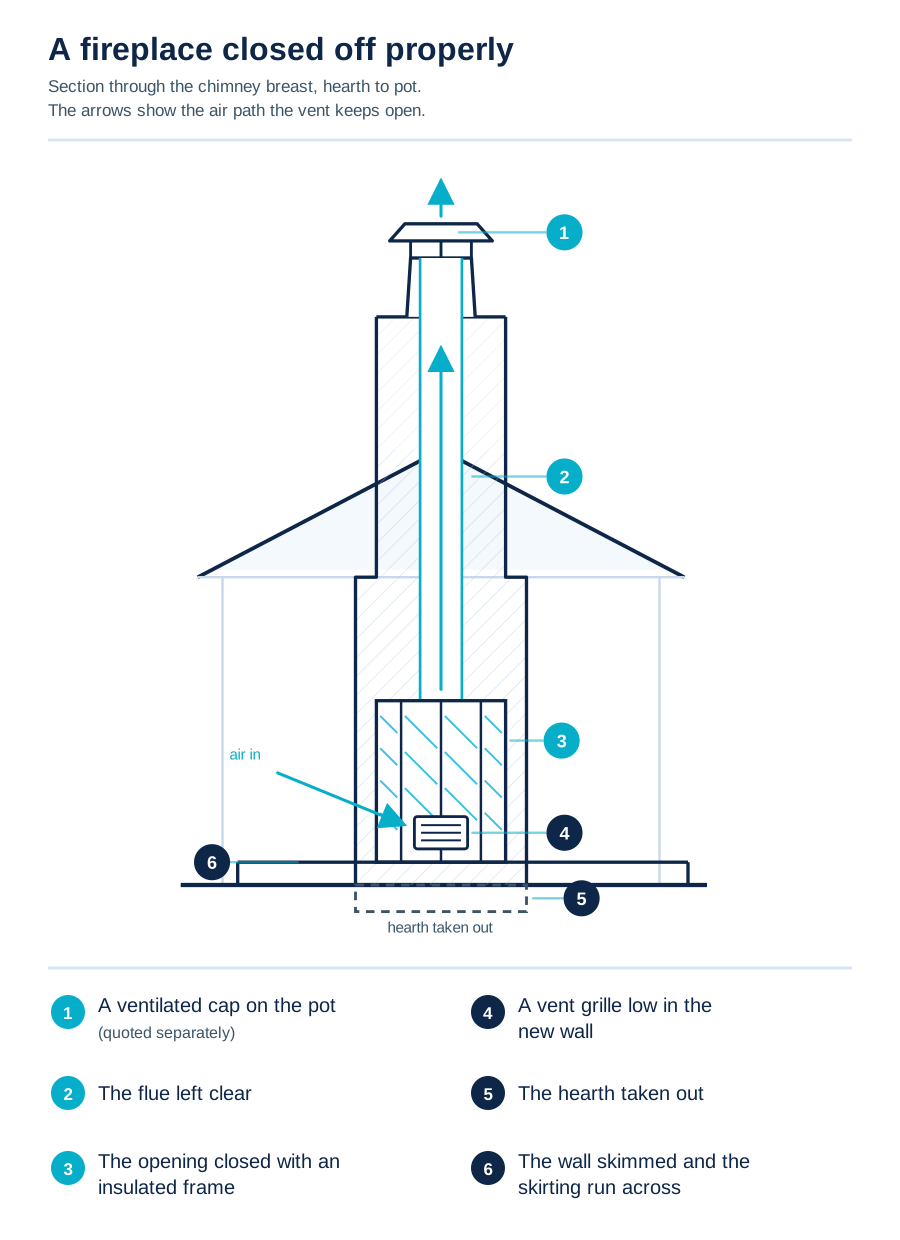
At the bottom. A grille low in the new wall — or, where the chimney is built on an outside wall, air bricks outside, with nothing to see in the room.
At the top. The pot should carry a cap or cowl that keeps rain and birds out but lets air through — never sealed solid. That is roof-level work, priced in the quotation where you want it done: see chimney repairs.
A flue that still serves a boiler, a stove or a fire in another room has to stay open. And if a chimney breast that was blocked up years ago is already showing damp, the cause needs finding first: see chimney damp.
Fireplace removal, blocking up and opening up
Inset gas fire in a green wall above a marble hearth, marked with a green cross
Fireplaces removed
Gas, electric and solid-fuel fires, surrounds, inserts and hearths dismantled and taken away.
Fireplace opening in a green wall closed with plasterboard and fitted with a white vent grille, above a marble hearth slab
Openings closed and vented
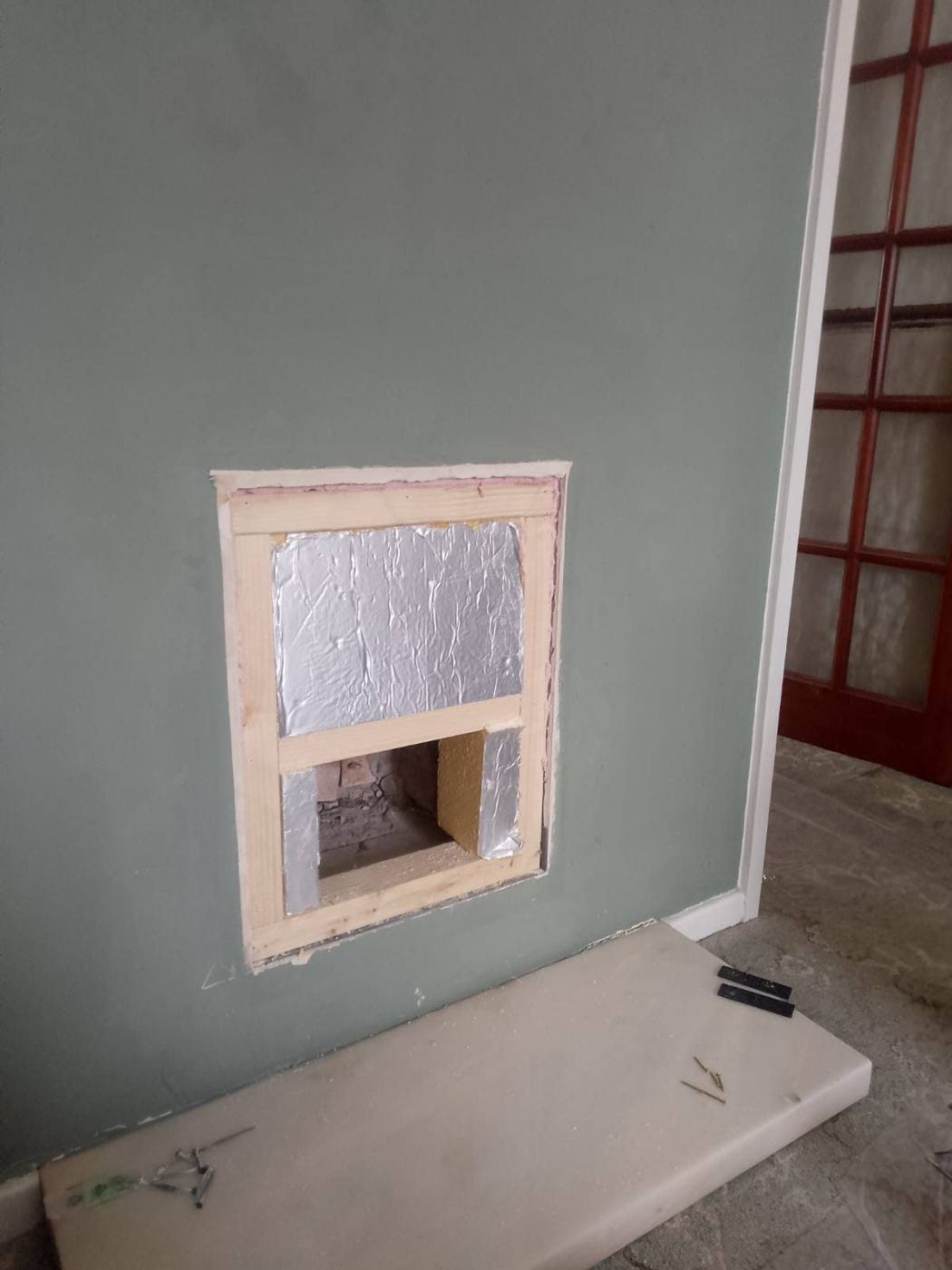
The opening framed, insulated and boarded, with a vent so that the chimney can still breathe.
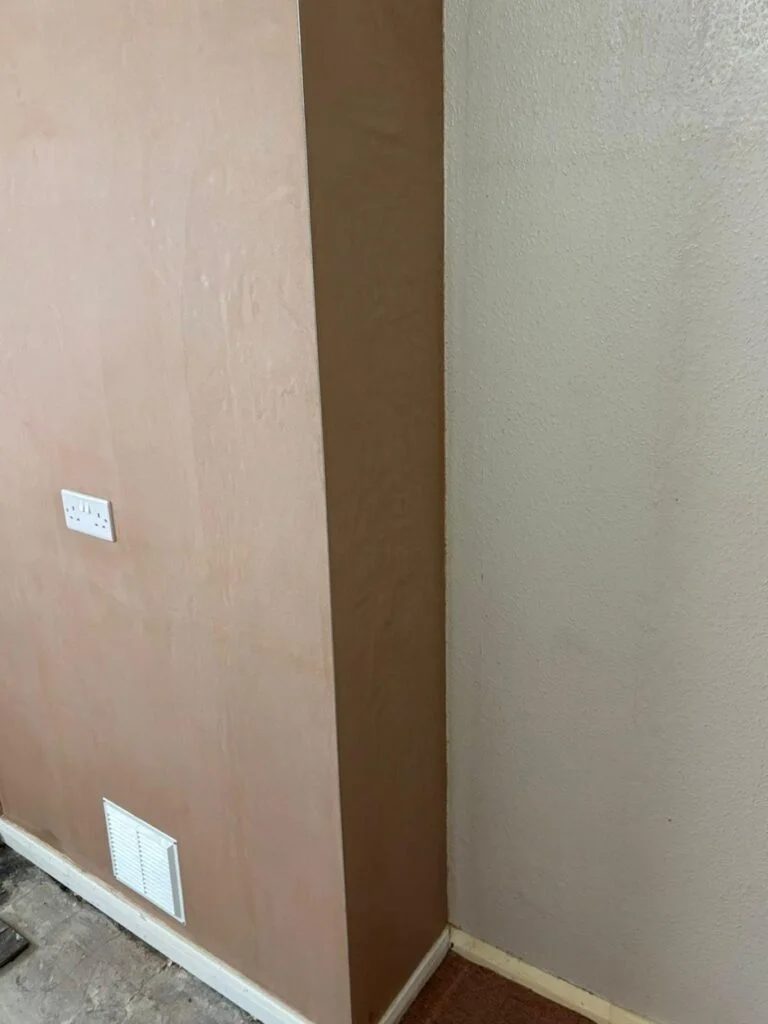
Chimney breast with a skimmed patch where a fireplace was closed, a white vent grille and new skirting, on bare floorboards
Walls skimmed
The closure, the chimney breast or the whole wall plastered, and the skirting run across to match as closely as possible.
Fireplace opening in a white chimney breast with a concrete lintel set in fresh mortar over the brick recess
Fireplaces opened up
Old closures and infill taken out and the opening made good, for your installer or as an open recess.
Recent fireplace work
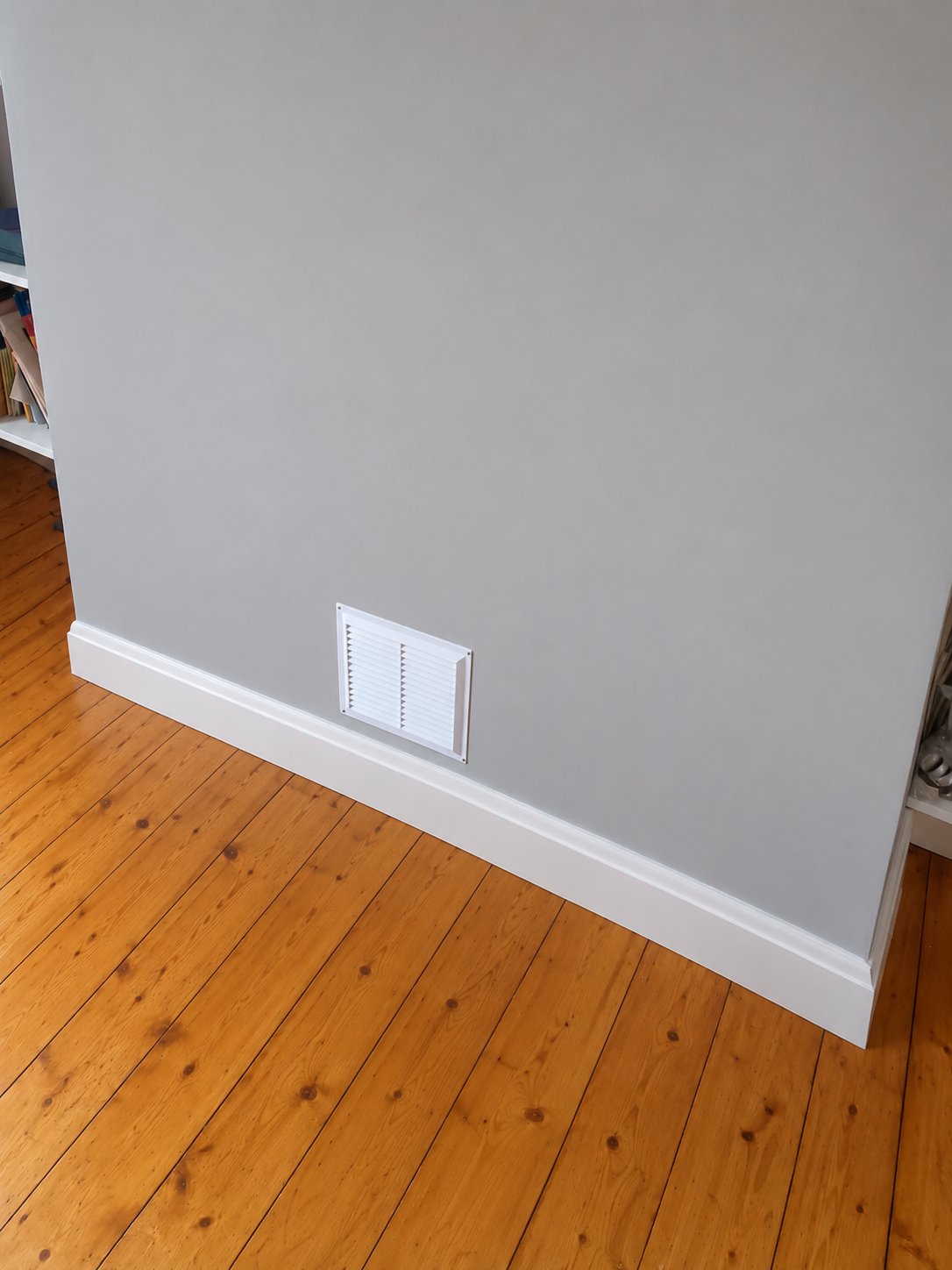
Chester: a timber surround and slate hearth taken out from between fitted shelves, the opening closed with an insulated frame and a vent grille, and the wall skimmed. Decoration by others.
Read the project →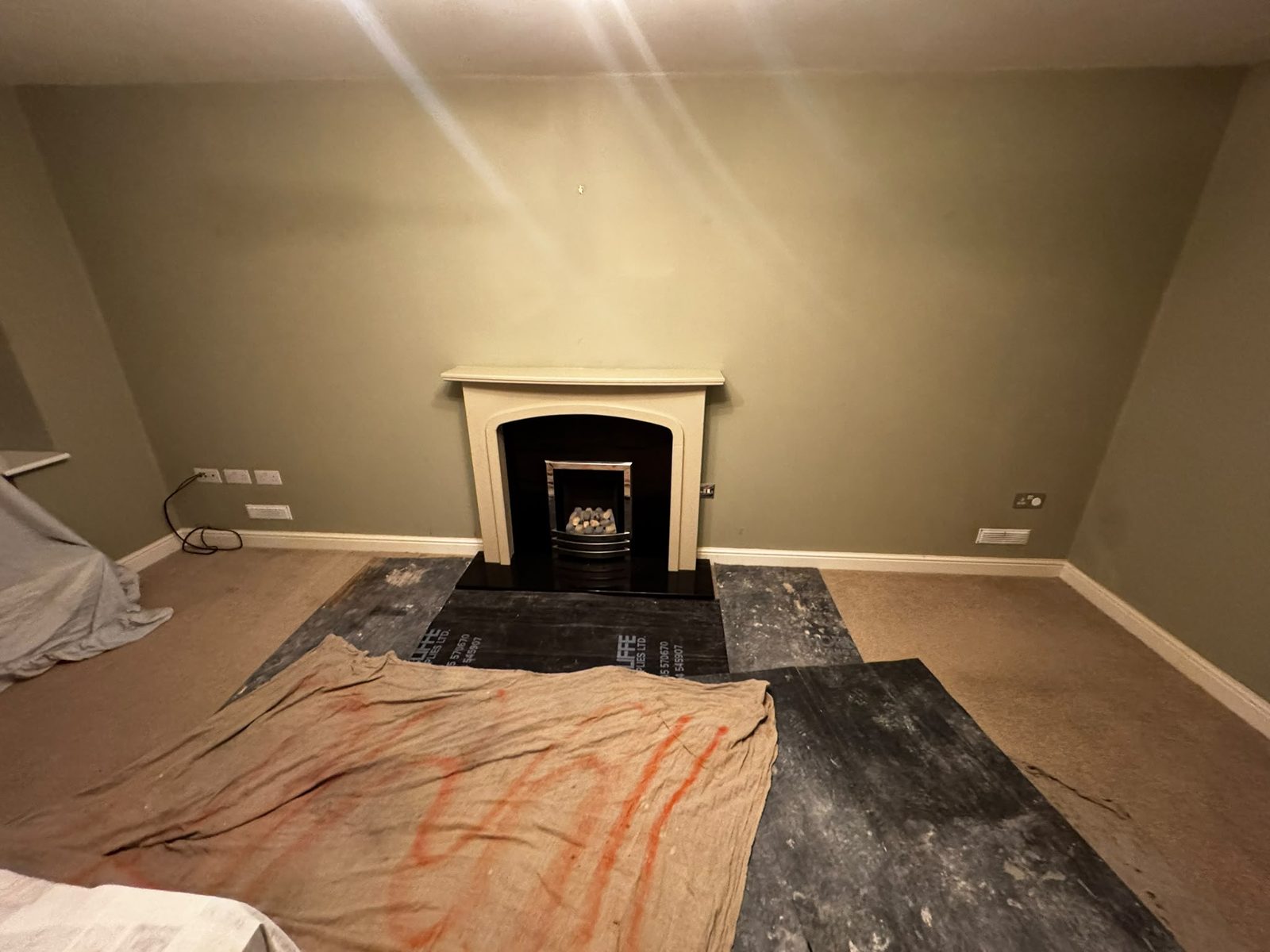
Flintshire: a stone fireplace and inset fire taken out of a flat wall, the opening closed with an insulated stud wall, vented and skimmed.
Read the project →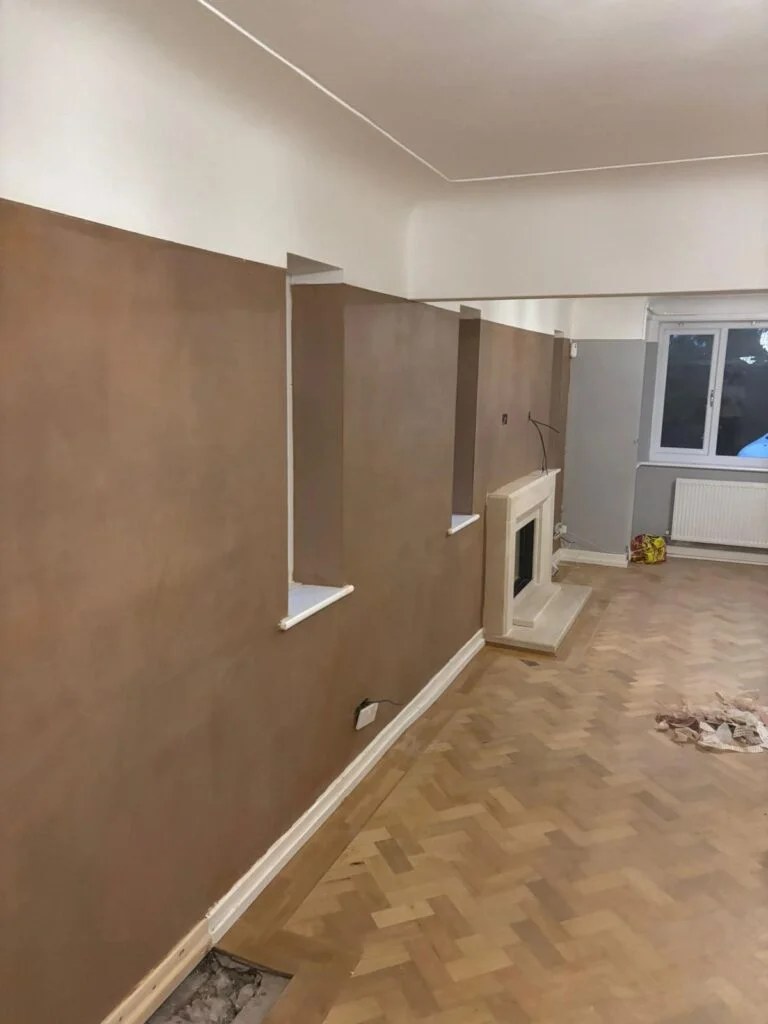
Wirral: one of two fireplaces taken off an outside wall, the whole wall skimmed and not just the patch, and the chimney vented through two air bricks outside.
Read the project →
What customers say about our fireplace work
Three of the reviews our fireplace customers have left on Google.
★★★★★“Recently had some work done where we asked for old electric fireplace to be removed, chimney breast stabilised and plastered up. Communication beforehand was excellent. Lads that did the work were polite and cleaned up after themselves and always turned up at expected times. Wouldn’t hesitate to go with this company again.”
★★★★★“Excellent, efficient work from Quirks! Made removing our old gas fireplace and replacing it with a neat plastered cubby and absolute breeze. Really friendly personable people who I’d recommend in a heartbeat.”
★★★★★“This company were very responsive, competitive pricing and brilliant work. Turned up exactly when agreed, completed the work to a very high standard and very professional throughout. Would highly recommend.”
The method
How we close a fireplace opening
- Protection first. Floors are covered and dust sheets go down before anything comes out. Soot travels.
- Fire, surround and hearth out. They are taken apart and carried out, and the loose soot and rubble behind them are cleared away.
- Framed, insulated and boarded. A timber stud frame goes into the opening, standing on a damp-proof course; insulation is fitted between the studs and the face is closed with plasterboard. Where a solid closure suits the wall better, the opening is bricked up instead.
- Vented. A grille low in the new wall, or air bricks outside.
- Skimmed and skirted. The joints are taped, the wall is skimmed, and new skirting is run across in the closest match to the old profile that we can get.
- Left clean. The waste goes with us, and the wall is left in fresh plaster, ready to decorate once it has dried. Decorating is not part of the job unless the quotation says so.
Plastering
How much of the wall needs plastering?
What you live with afterwards is the plaster, and there are three ways to finish it.
- The closure only. The least work, and often enough on a wall that will be papered or have furniture against it — but under paint the outline of the old fireplace can show.
- The chimney breast. The whole face of the breast is plastered from corner to corner, so the new plaster ends at the corners, not in the middle of the wall.
- The whole wall. Where the fireplace sat in a flat wall with no breast, or the old plaster round it is poor.
We tell you which we would do when we have seen your photographs, and the quotation says which one it covers. If more of the room needs plastering at the same time, see plastering.
Skimmed corner to corner
Vent grille and new skirting fitted
Hearth and floor
What happens to the hearth and the floor
The hearth you can see — tiles, slate, stone or marble — usually lifts out with the fireplace. What is underneath decides the rest.
- Floorboards. Sometimes the boards carry on under the hearth and nothing more is needed.
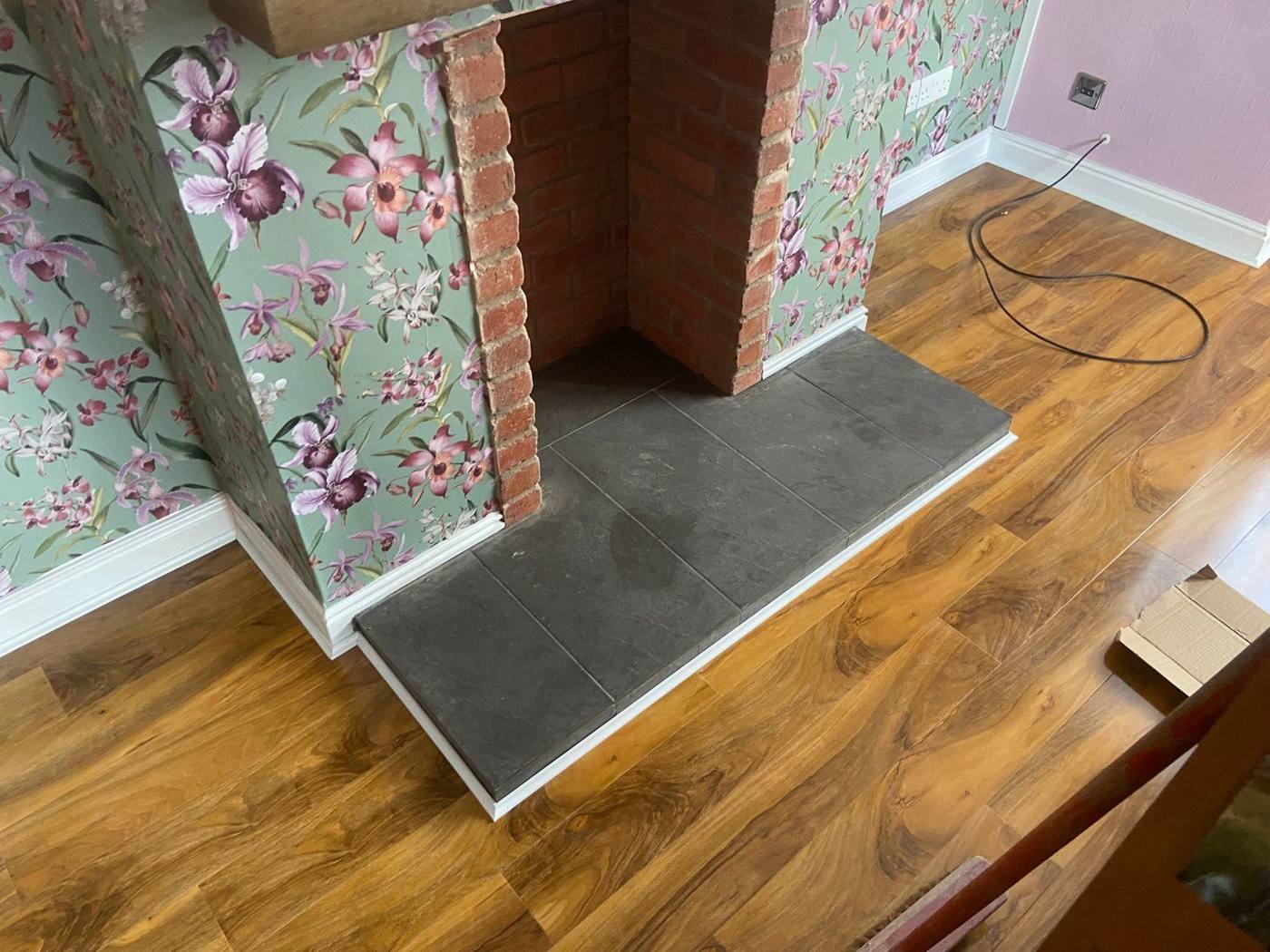
- A concrete slab in a timber floor. Older houses usually have a concrete hearth cast into the floor. It can stay, ready for your floor covering, or be broken out and the floor boarded across. If the fireplace might ever be opened up again, it is worth keeping.
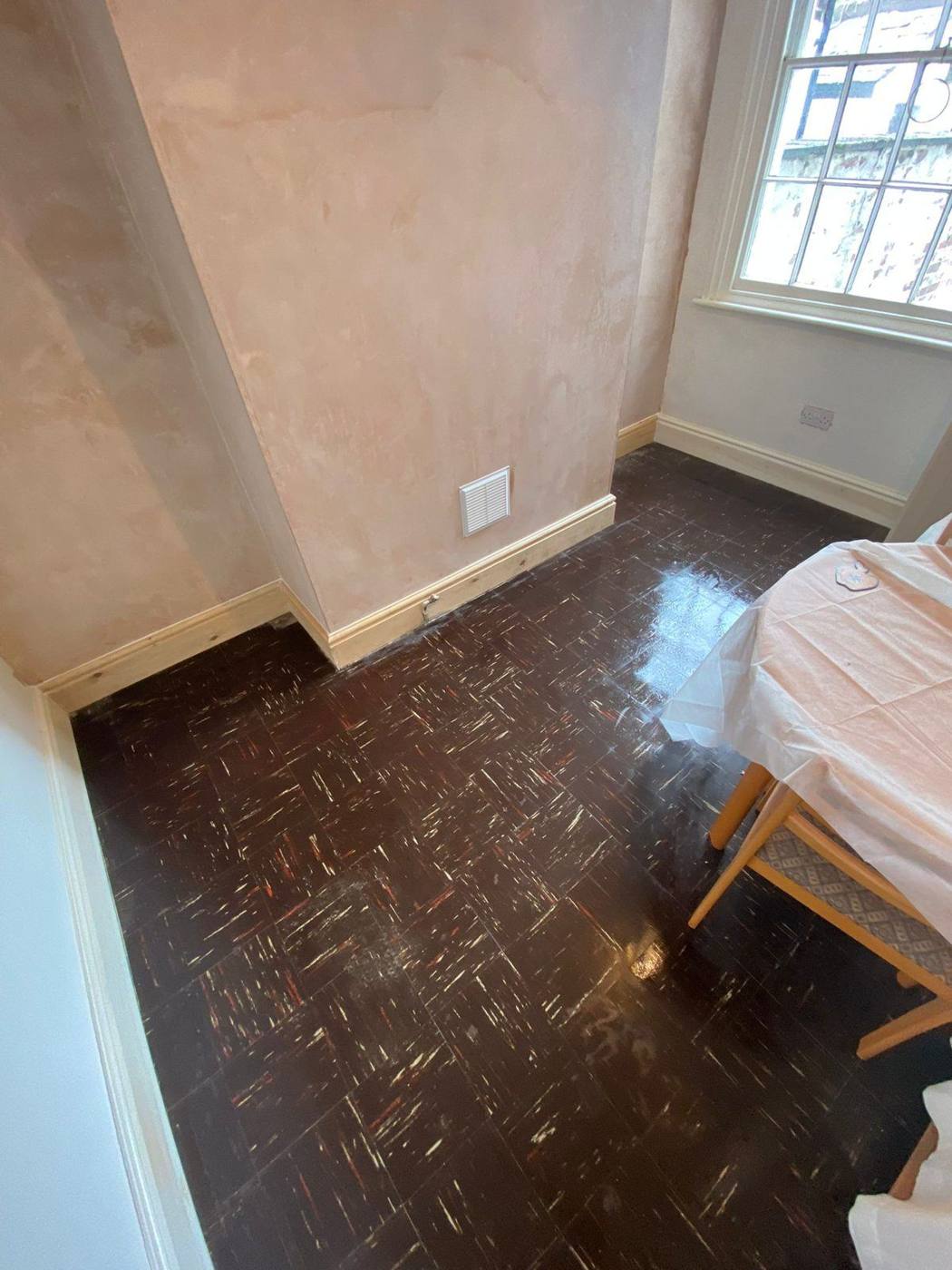
- A solid floor. Lifting the hearth can leave a shallow area to be levelled.
The quotation says in writing whether the floor is made good by us or left ready for your floor fitter. Carpet, laminate and other floor finishes are not part of the job unless the quotation says so.
Opening up
Opening up a fireplace
Many fireplaces were boarded or bricked up when central heating went in, and are still there behind the wall. Opening one up is building work, and it is the part we do:
- The board, brickwork or infill taken out, and the opening cleared back to the original brickwork
- The lintel or arch over the opening checked
- The brickwork inside repaired and repointed, or re-faced in brick
- A hearth formed or re-laid
- A timber beam or a plastered finish round the opening, and the wall made good
What we do not do is supply or fit the stove, the fire or the flue liner. A stove has to be fitted by an installer registered to sign off their own work — HETAS is the usual scheme — or be approved through Building Control. A gas fire has to be fitted by a Gas Safe registered engineer. They also check whether the chimney needs sweeping, testing or lining — until they have, an opened-up fireplace is a recess, and nothing should be lit in it. Ask your installer for the opening and hearth sizes, and how far a timber beam has to be kept from the stove, before we start, and we build to them.
Where the lintel has failed, or the opening is to be made wider or taller than it was built, the chimney breast above has to be carried on a new lintel. That is structural work: see lintel repair and replacement.
Can any fireplace be blocked up?
Nearly always, as long as nothing still uses the flue. If a boiler, a stove or another fire vents into it, that flue cannot be closed. A gas fire is disconnected by a Gas Safe registered engineer before we take it out, and the chimney breast itself stays where it is.
Does a blocked-up fireplace need a vent?
Yes — at the bottom, and ideally the pot is capped with a ventilated cowl as well. Without air moving through it, a closed flue can leave a stain or a damp patch on the plaster. Every fireplace we close gets its vent.
Will I be able to see where the fireplace was?
It depends on where the new plaster stops. Skim only the patch and its outline can show through paint; skim the full chimney breast, or the full wall, and it should not. The quotation says which you are getting.
Do I need a Gas Safe engineer to remove a gas fire?
A Gas Safe registered engineer, every time. The supply is capped before we touch the fireplace. We can arrange the engineer, or you can use your own and we come in afterwards.
There is a back boiler behind the fire — can that come out too?
Yes, but it is more than a fireplace job. Where it is a gas back boiler, the gas is disconnected by a Gas Safe registered engineer, and the heating pipework is drained and capped. If the back boiler still heats the house, a replacement has to be arranged before it goes. Tell us what you have and we will say what is involved.
Could my old fire contain asbestos?
It could, if it was fitted before 2000. Some older fires have asbestos board behind or around them, and you cannot tell by looking. If anything looks suspect we stop and say so; you have it tested, and the work carries on once it is cleared.
Can I remove a fireplace myself?
You can take out a surround and a hearth yourself, and plenty of people do. Four things catch people out. A gas fire has to be disconnected and the supply capped by a Gas Safe registered engineer before it moves. Fires fitted before 2000 sometimes have asbestos board behind or around them, and it cannot be told by eye — if a board looks suspect, leave it where it is and have it tested. Before anything comes off the wall, look at what is holding up the brickwork above the opening: a lintel or arch that is cracked or missing is a structural job, not a weekend one. And the vent is the part that gets forgotten — a fireplace closed with no air through it can show as damp on the chimney breast months later.
Can you open up a fireplace for a wood burner?
Yes — the building work is ours: the old infill out, the brickwork made good and the hearth formed to your installer’s sizes. The stove and its flue liner are fitted and signed off by your registered installer.
Do I need Building Regulations approval?
Whether Building Regulations or Building Control involvement is required depends on the scope of work. We will explain the position for your proposed work and, where agreed, coordinate the process with the relevant parties. Making an opening wider on a new lintel and taking out a chimney breast do come under the regulations, and so does fitting a stove — that last part is your installer’s.
My house is listed — can the fireplace come out?
You may need listed building consent before a fireplace is removed or altered — inside the house as well as out. That is the council’s decision, not ours, so ask its conservation officer before work starts. Where consent is given, we work to what it specifies.
How long does fireplace removal take?
It depends on the fireplace, what is under the hearth and how much of the wall is plastered, so we do not publish a figure — it would be wrong for most of the people reading it. The written quotation says how long we expect your job to take.
How much does fireplace removal cost?