Specialist Building & Property Maintenance Services You Can Depend On.


- Home
- About
- Building Services
- Property Maintenance
- Structural Services
- Damp Services
- Fire Safety
- Emergency Repairs
- Trades
- Contact
Repointing & Brick Pointing
Repointing & Brick Pointing in Flintshire
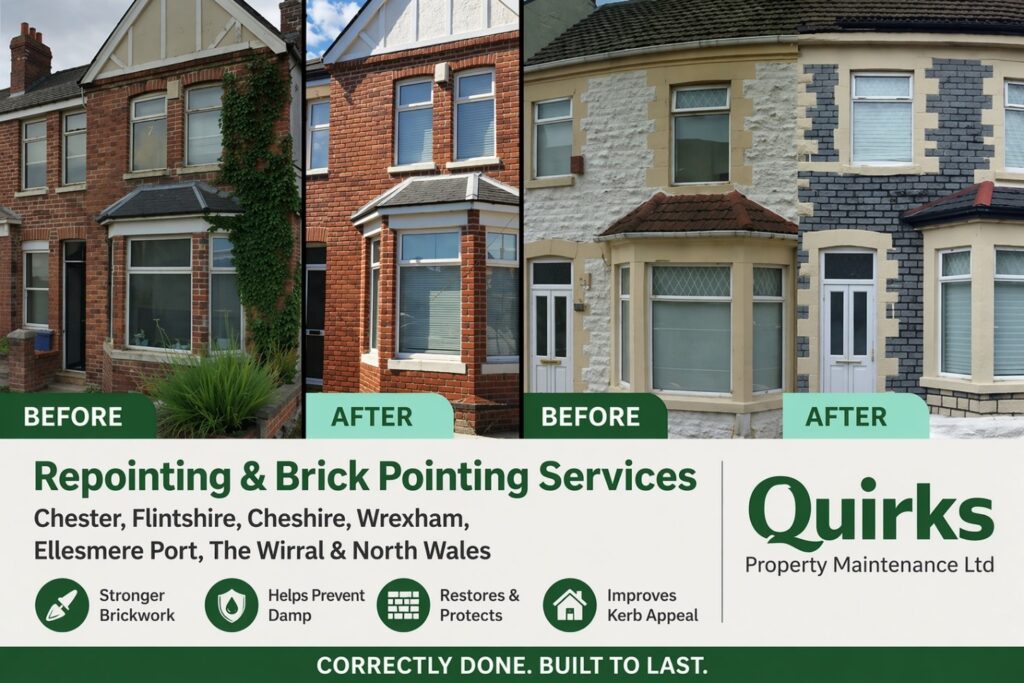
Mortar is the part of a wall that is designed to wear out — and in Flintshire it earns its living. Driving rain off the Irish Sea and the Dee estuary, winter freeze-thaw and decades of weather work the joints loose long before the brick or stone around them fails. Quirks Property Maintenance provides professional repointing across Flintshire: raking out failed mortar, matching the right mix — lime or cement — and repointing to a neat, weather-tight finish that lasts. Send photographs and your property location by WhatsApp for an initial assessment and quotation, or call 01244 638219.
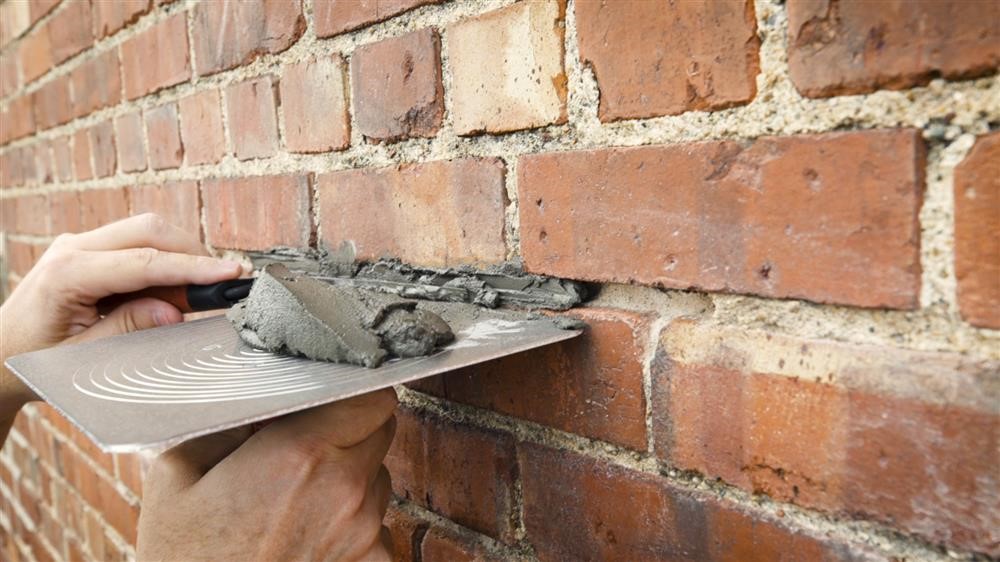
Why mortar joints fail faster in Flintshire
Much of the county faces the weather head-on. West- and north-facing elevations take wind-driven rain for weeks at a time; saturated joints then freeze, expand and crumble — the sandy, recessed lines you can scrape out with a key. The housing stock matters too: the industrial-era brick terraces around Shotton, Connah’s Quay and Queensferry are now a century or more old, and the older stone cottages and farmhouses inland around Holywell, Halkyn and the Clwydian fringe were built with soft lime mortars that cement patch-repairs slowly damage. Both need repointing done properly, with the right mortar — not just filled.
What we do
- Raking out — removing failed and hollow mortar to a sound depth by hand or with dust-controlled tools, without widening or chipping the joints.
- Mortar matching — mix, colour and joint profile matched to the existing wall, whether that is a lime mortar for older stone and brick or a suitable cement mix for modern work.
- Repointing — full elevations, gables, garden walls and chimneys, finished to the existing joint style.
- Brick and stone repairs — replacing spalled bricks and rebedding loose masonry alongside the pointing, with our brickwork repairs team.
- Weather-proofing the details — the copings, sills and chimney flaunchings where water actually gets in.
We also take on commercial repointing across Flintshire — Deeside’s industrial units, schools, offices and tenanted blocks — programmed, CDM-aware and quoted item by item.
Lime or cement? It depends on the wall
Flintshire’s older solid-wall buildings were built with lime mortar, which stays softer than the masonry and lets moisture escape through the joints. Repoint them in hard cement and the moisture escapes through the brick or stone face instead — which is why you see spalled brick and blown stone faces on cement-patched older walls. We use lime where the building needs lime — including natural hydraulic limes (NHL) on exposed work — and modern mixes where they belong, and we will tell you plainly which yours needs and why. On hard-weathered elevations we can also clean the masonry first and finish with a breathable rain-repellent treatment where the exposure justifies it. These treatments shed wind-driven rain while still letting water vapour out of the wall — they are not a sealant, and we would never use one that traps moisture inside the masonry. The Welsh Government’s heritage body Cadw publishes good plain-English guidance on this.
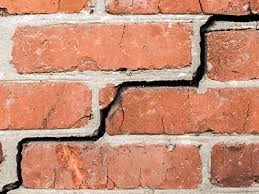
Signs your Flintshire property needs repointing
Crumbling or sandy joints you can rake out by hand; recessed lines where mortar has washed away; green algae tracks or persistent damp patches inside on exposed walls; loose bricks or stones; gaps around windows and sills. Failed pointing lets water into the wall itself — left alone it feeds penetrating damp and frost damage that costs far more than the repointing would have.
Our repointing process
- Assessment — we inspect the joints, the masonry and the causes (weathering, failed copings, leaking gutters) and confirm the right mortar.
- Free itemised quotation — from your WhatsApp photographs or our inspection, with the area, access and finish stated clearly. No pricing surprises.
- Raking out — to a sound depth, joints cleaned and dampened ready for the new mortar.
- Repointing — matched mortar, matched profile, worked in weather that lets it cure properly.
- Finishing — joints tooled to match the wall, site left clean, and the details (copings, flaunchings) checked before we leave.
Related Services
Failed pointing is often the visible end of a wider problem. We also handle brickwork and masonry repairs, chimney repairs and penetrating damp across the county — see our main repointing and brick pointing page for the full service.
Where We Carry Out Repointing
Mold, Buckley, Connah’s Quay, Shotton, Queensferry, Deeside, Hawarden, Ewloe, Broughton, Saltney, Flint, Holywell, Bagillt, Mostyn, Caergwrle, Hope and the surrounding villages. WhatsApp photographs of your wall with your location for an initial assessment and quotation, or call 01244 638219.
Case Study – Chimney Rebuild and Repointing in Holywell, Flintshire
Quirks Property Maintenance Ltd was asked to look at the condition of a chimney stack on a property in Holywell. We quoted for repointing the stack, repairing the crown and maintaining the lead flashings around it. The works were completed in July 2026.
What we found once the scaffold was up
A chimney can only be judged properly from close access, which is why the inspection was carried out once the scaffold was in place rather than from the ground.
The crown had broken down. What should be a solid, weather-shedding cap over the head of the stack had gone to loose, crumbling material sitting in and around the pots, with open gaps between it and the brickwork beneath. The mortar joints in the top courses had gone the same way — soft, hollow and in places washed out altogether, with individual bricks loose in the wall.
The top of a stack takes more weather than any other part of a building. It stands clear of the roof with no shelter on any side, it is wetted from above as well as from the face, and it goes through more heating and cooling than the walls below it. When the crown lets go, water gets into the head of the stack and the courses immediately beneath are the first to suffer.
The brickwork lower down the stack, below the projecting oversail courses, was in sounder condition — weathered joints, but a stack still standing true and worth repointing rather than rebuilding.
Why the scope changed
The stack was quoted as a repointing and crown repair. Once the scaffold was up and the crown was taken off, the top courses proved to be past repair — the brickwork had lost too much of its bedding to be repointed and left in place.
We went back to the owner rather than pressing on. Rebuilding the top few courses was the honest answer: repointing brickwork that is already loose puts new mortar into a wall that cannot hold it, and the stack would have been back on the list within a couple of years.
With the top coming off, it made sense to deal with the pots at the same time. They were already down for the rebuild and the crown was being formed new around them, so fitting new pots then rather than later avoided disturbing finished work.
The works carried out
The stack was worked from a full scaffold, with a close-access inspection of the stack, crown, lead flashings, adjoining roof coverings and guttering carried out before any repairs began.
The top few courses were taken down to sound brickwork and rebuilt. A new crown was formed over the head of the stack in a 3:1 sand and cement mortar, with falls worked into it so rainwater runs away from the flues and off the brickwork rather than standing on top of the stack. New pots were bedded into the new crown.
A chimney stack head is the one place on a building where cement mortar is the right answer. It stands clear of the roof with weather on every side, it is wetted from above as well as from the face, and it goes through more heating and cooling than any wall beneath it — so the mortar at the head needs a strength the softer lime mixes used on the elevations below cannot give it.
The defective joints to the stack below were raked out to a consistent depth, brushed clean of loose material and the masonry dampened before pointing, so the brickwork did not pull the water out of the fresh mortar. They were repointed in a 4:1 sand and cement mortar with a BBA-approved repointing additive, compacted fully into the joints and tooled to suit the existing brickwork.
The lead flashings around the stack were inspected, cleaned and maintained, with a lead-compatible mastic sealant applied to the joints and flashing details that needed it.
New mortar on a stack of this exposure needs protecting while it cures, so the weather was watched and the completed work covered against rain, frost and rapid drying before the scaffold came down.
Outcome
The stack was left rebuilt at the head, repointed below, capped with a newly formed crown shaped to shed water, and fitted with new pots. The lead flashings were maintained and resealed where required, and the roof coverings and gutters cleared of mortar and debris before the scaffold was struck.
Project Information
| Issue | Deteriorated chimney crown and failed mortar joints to the head of the stack |
| Service | Chimney repointing, crown repair and lead flashing maintenance |
| Findings | Crown broken down, joints to the top courses soft and washed out, bricks loose in the top courses; brickwork lower down sound and suitable for repointing |
| Scope Change | Top few courses found past repair once opened up; rebuilt with the owner’s agreement, and new pots fitted while the crown was being reformed |
| Works | Full scaffold and close-access inspection; top courses rebuilt; new crown formed in 3:1 sand and cement with falls; new pots bedded; stack repointed in 4:1 sand and cement with a BBA-approved repointing additive; lead flashings maintained and resealed |
| Location | Holywell, Flintshire |
| Completed | July 2026 |
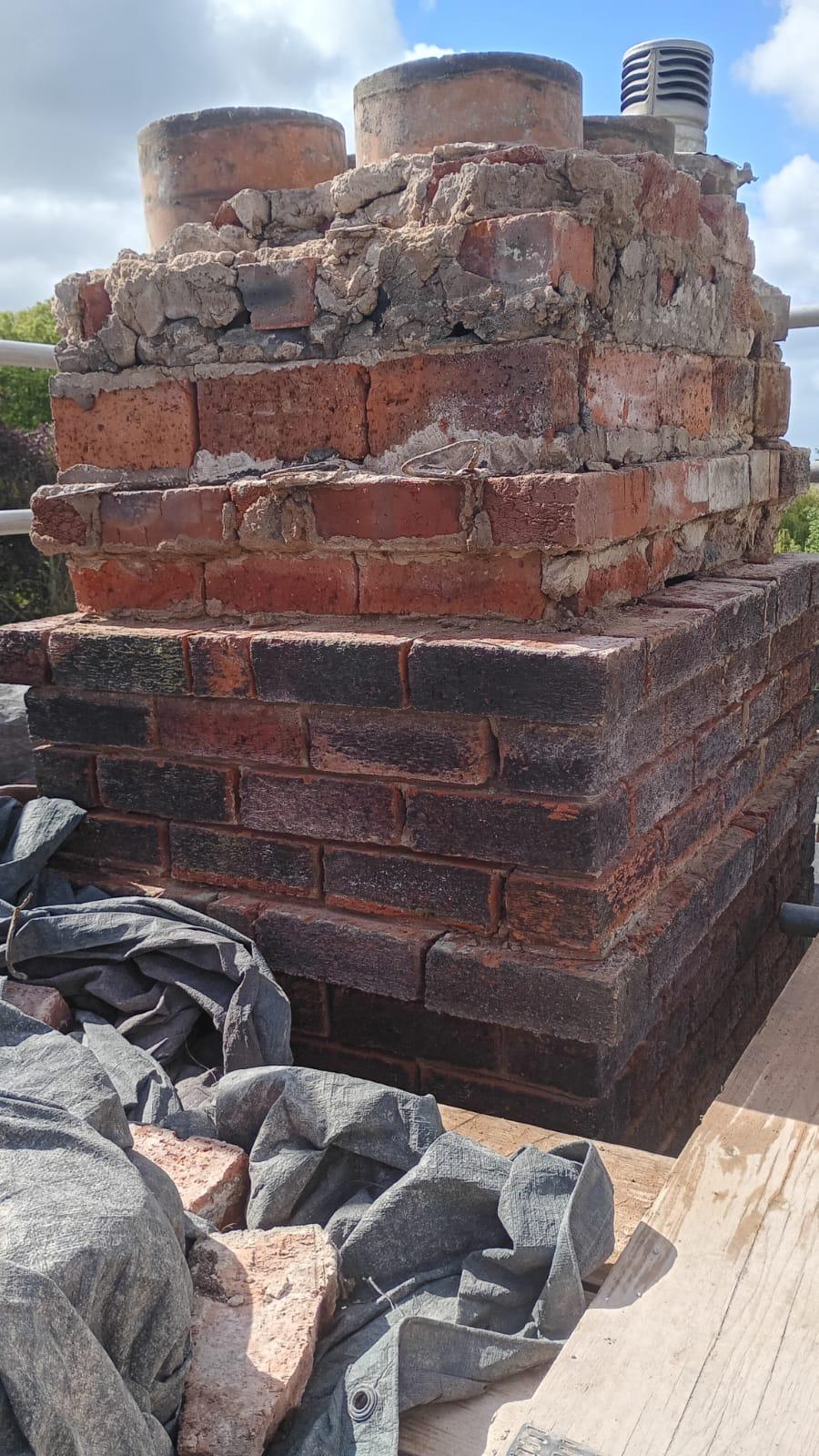
Chimney stack reduced down to sound brickwork as part of the chimney repair works.
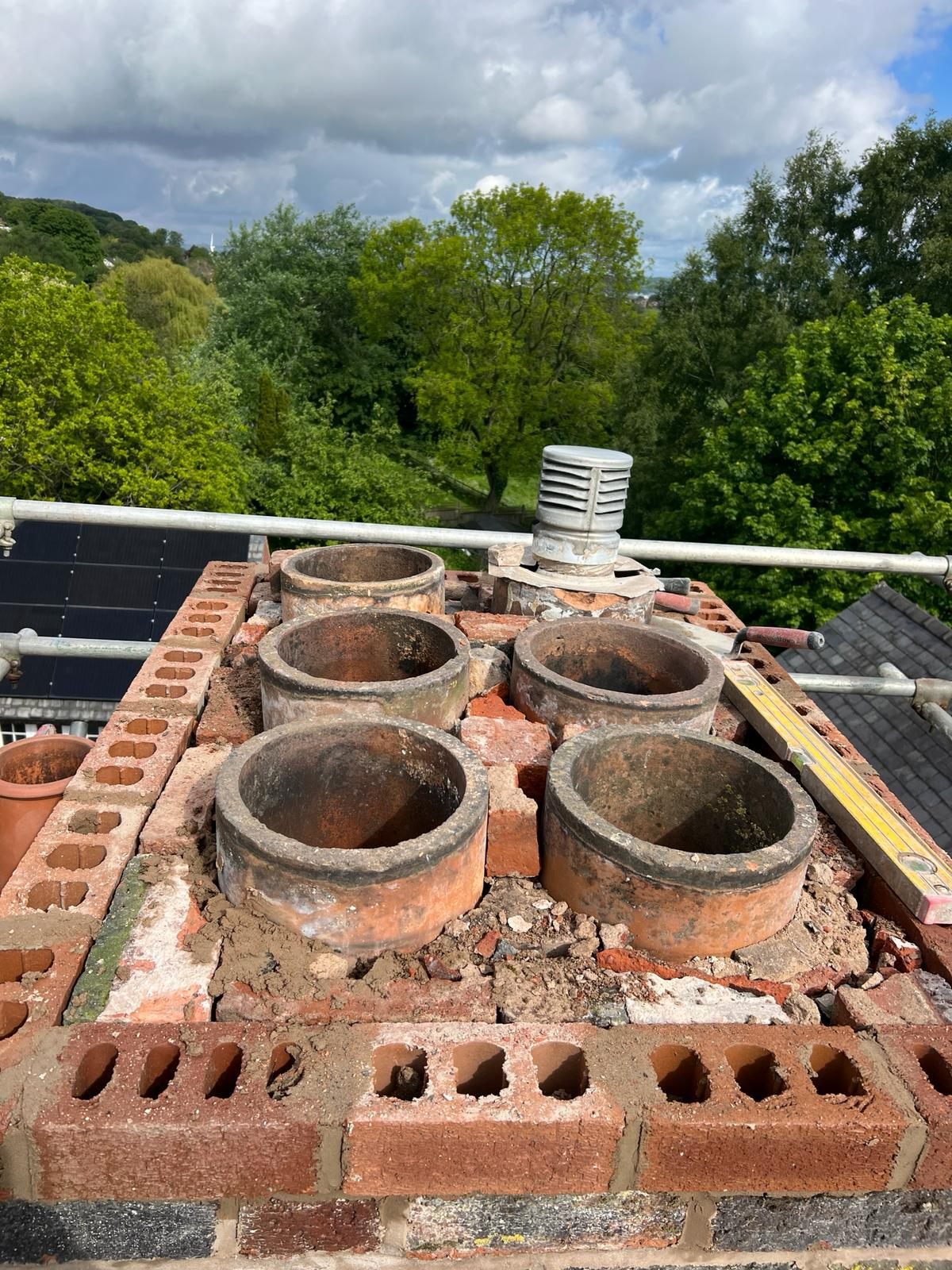
Chimney stack rebuilt up to the existing chimney liners, ready for the remaining chimney repair works.
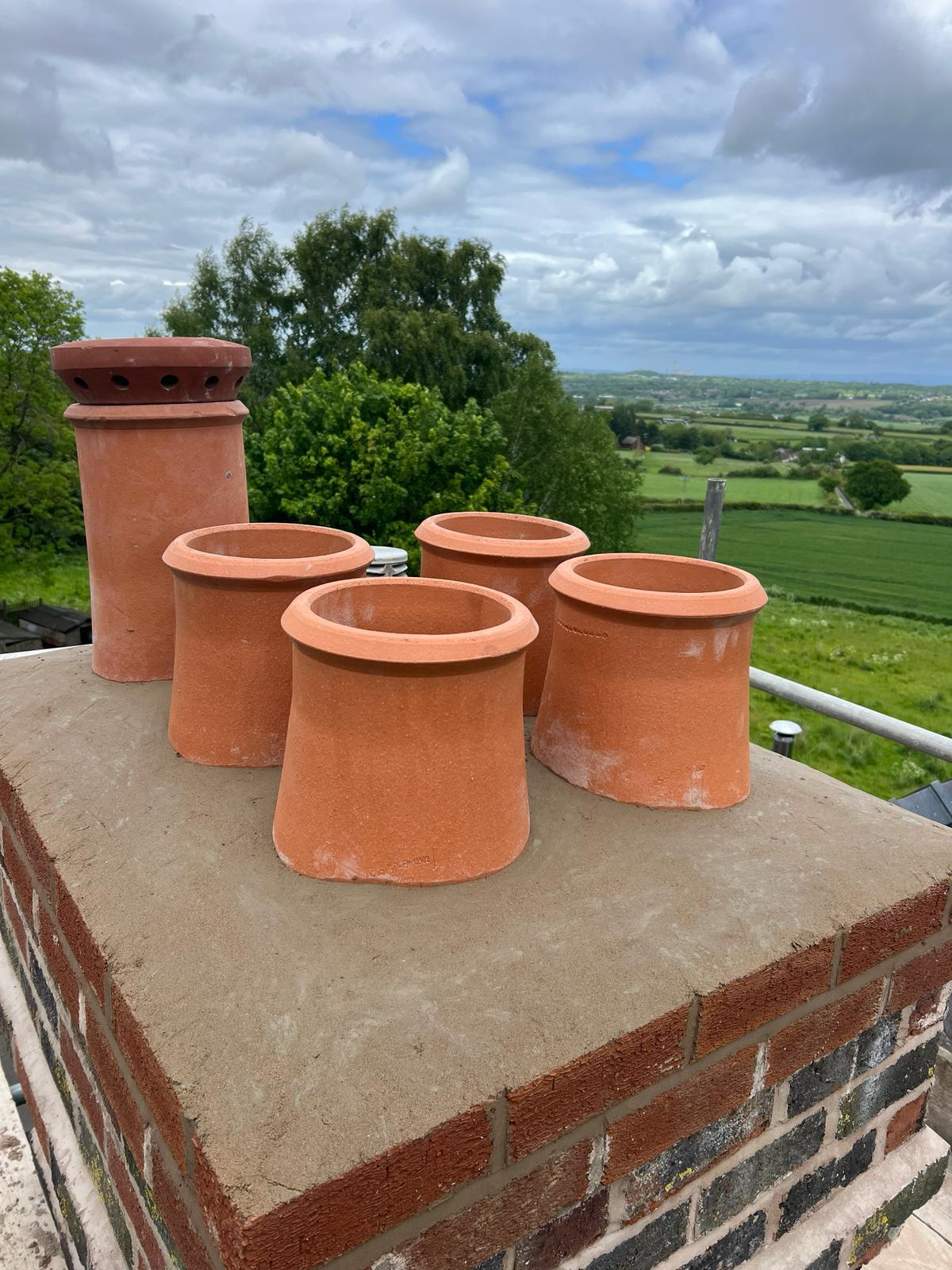
Chimney stack rebuilt with the chimney pots reinstated and a new chimney crown formed.
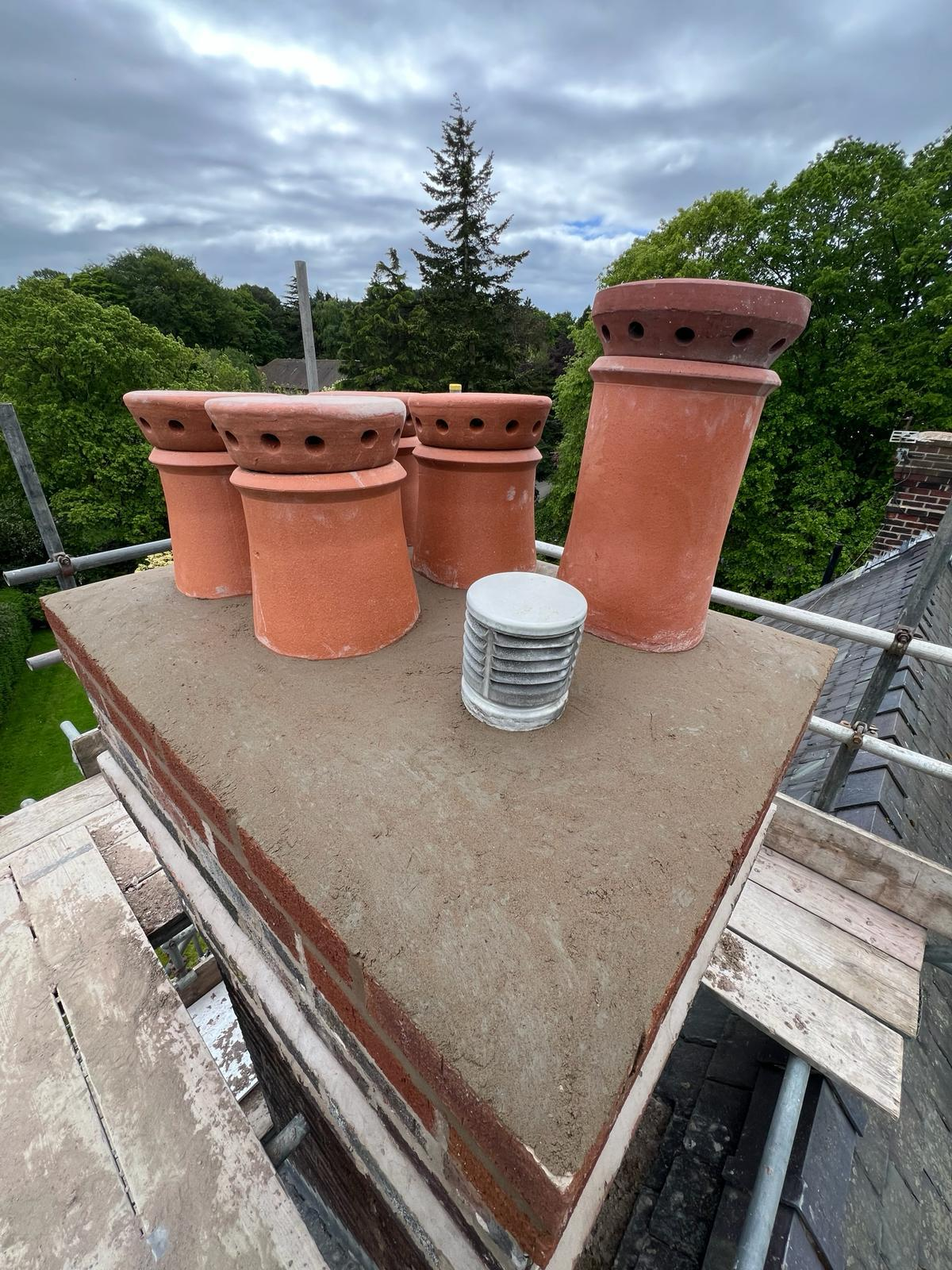
New chimney crown completed with suitable falls to direct rainwater away from the chimney stack.
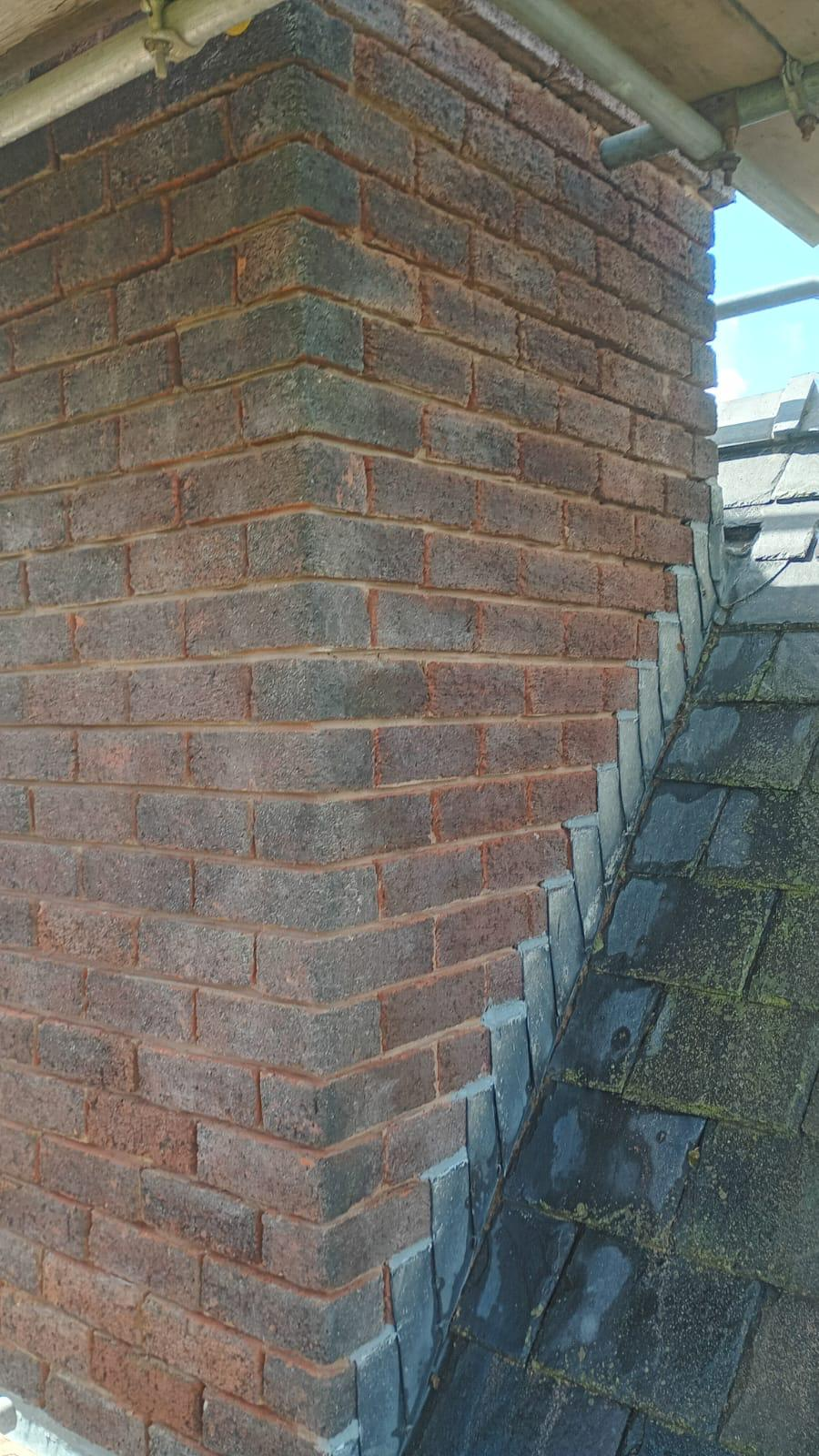
Chimney brickwork joints raked out to a sound depth, ready for repointing.
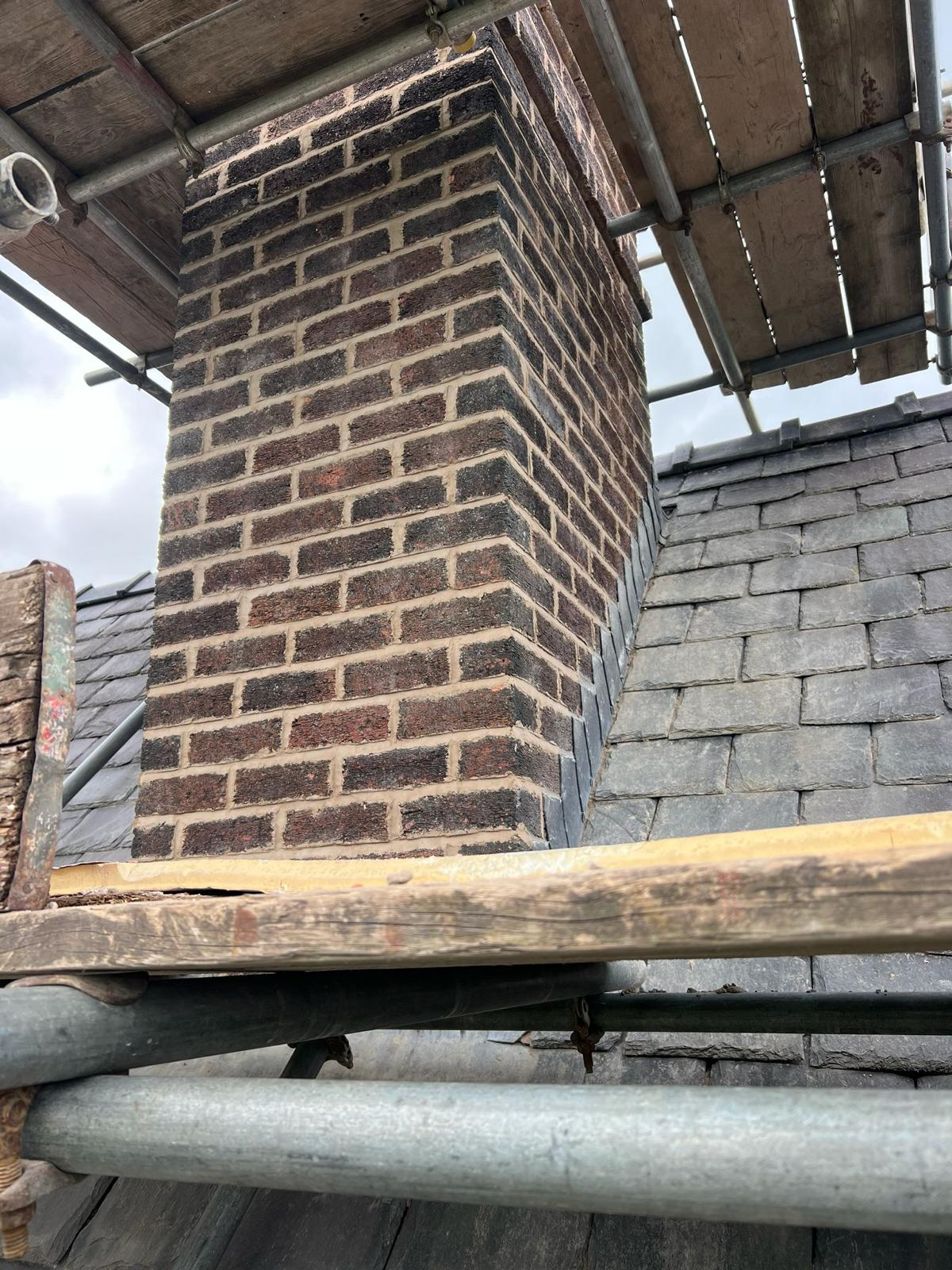
Completed chimney stack following rebuilding, brickwork repairs and full repointing.
FAQs – Repointing Flintshire
How long does repointing last on an exposed wall?
Done properly with the right mortar, decades — even on weather-facing Flintshire elevations. What shortens its life is the wrong mix, poor raking out, or pointing over the top of failed joints, which is why we do none of those.
My cottage is stone with old soft mortar — cement or lime?
Usually lime — and we confirm it from the wall itself before work starts. Soft lime mortar is what older walls were built to work with; hard cement traps moisture in the stone and makes the wall’s problems worse. We carry out lime repointing as standard on older properties.
Can you match the mortar colour to the rest of the wall?
Yes — colour and joint profile are matched so the repointed areas blend in rather than announcing themselves. On partial repoints this matters as much as the mix.
Do you repoint chimneys as well?
Yes, and in Flintshire’s weather the chimney is often where pointing fails first. We repoint stacks, renew flaunchings and deal with the copings and details at the same visit where needed.
What does repointing cost?
It depends on the area of wall, the access (ground level or scaffold), the condition of the joints and the mortar required. Send photographs of the wall and your location by WhatsApp and we give you an initial assessment and itemised quotation — no day rates, no surprises.
Get in Touch
📞 Joints crumbling? Send photographs and your property location by WhatsApp for an initial assessment and quotation — or call 01244 638219.
Our Commitment
Long-lasting, professional solutions using proven industry methods
