Specialist Building & Property Maintenance Services You Can Depend On.

Garage Conversions · Flintshire

Garage Conversions in Flintshire — Full Conversions from Our Own Doorstep in Ewloe

Quirks Property Maintenance is based in Ewloe, Flintshire, and converts garages across the county — Deeside, Hawarden, Mold, Buckley, Flint, Holywell and the villages between — into warm, Building Regulations-compliant rooms. One contractor from survey to Building Control sign-off, with the Building Control liaison and inspections with Flintshire County Council arranged for you.

Photos help us give you a first view. They may not be enough to judge everything, and a site visit may still be needed.


Garage Conversions in Flintshire — Send Us Photographs

Photos help us give you a first view. They may not be enough to judge everything, and a site visit may still be needed.

Trusted by customers across Cheshire, the Wirral and North Wales
Google5.0★★★★★Based on 100+ Google reviews
20+years’ experience
£5 millionpublic liability insurance in place
Workmanship guarantee on completed works
One contractor · all trades under one roof

Garage conversions in Flintshire

Flintshire is home ground. Our office is in Ewloe, so Connah’s Quay, Shotton, Hawarden, Buckley and Mold are close by and the rest of the county is a short drive. That matters for a garage conversion because the job runs over several weeks and involves several trades: a contractor who is nearby turns up when the programme says, and is close at hand if something needs looking at.

Flintshire’s garages are as varied as its housing. The big Deeside estates built from the 1950s to the 1980s have attached and integral garages by the hundred; Mold, Buckley, Mynydd Isa and Northop mix older stone and brick houses with post-war estates; Flint, Bagillt, Holywell and Greenfield along the estuary have terraces without garages alongside later estates with them; and the newer developments at Broughton, Penyffordd, Hawarden and Saltney have integral garages too small for a car. Whatever you have, we survey it, tell you what it can become, deal with Flintshire County Council Building Control, and build the room with all trades under one roof. The main garage conversions page covers the service in full; our guide to the types of garages we convert shows what each one involves.

The door between the house and the converted garage is usually required to be an FD30 fire door — see fire doors in Flintshire.

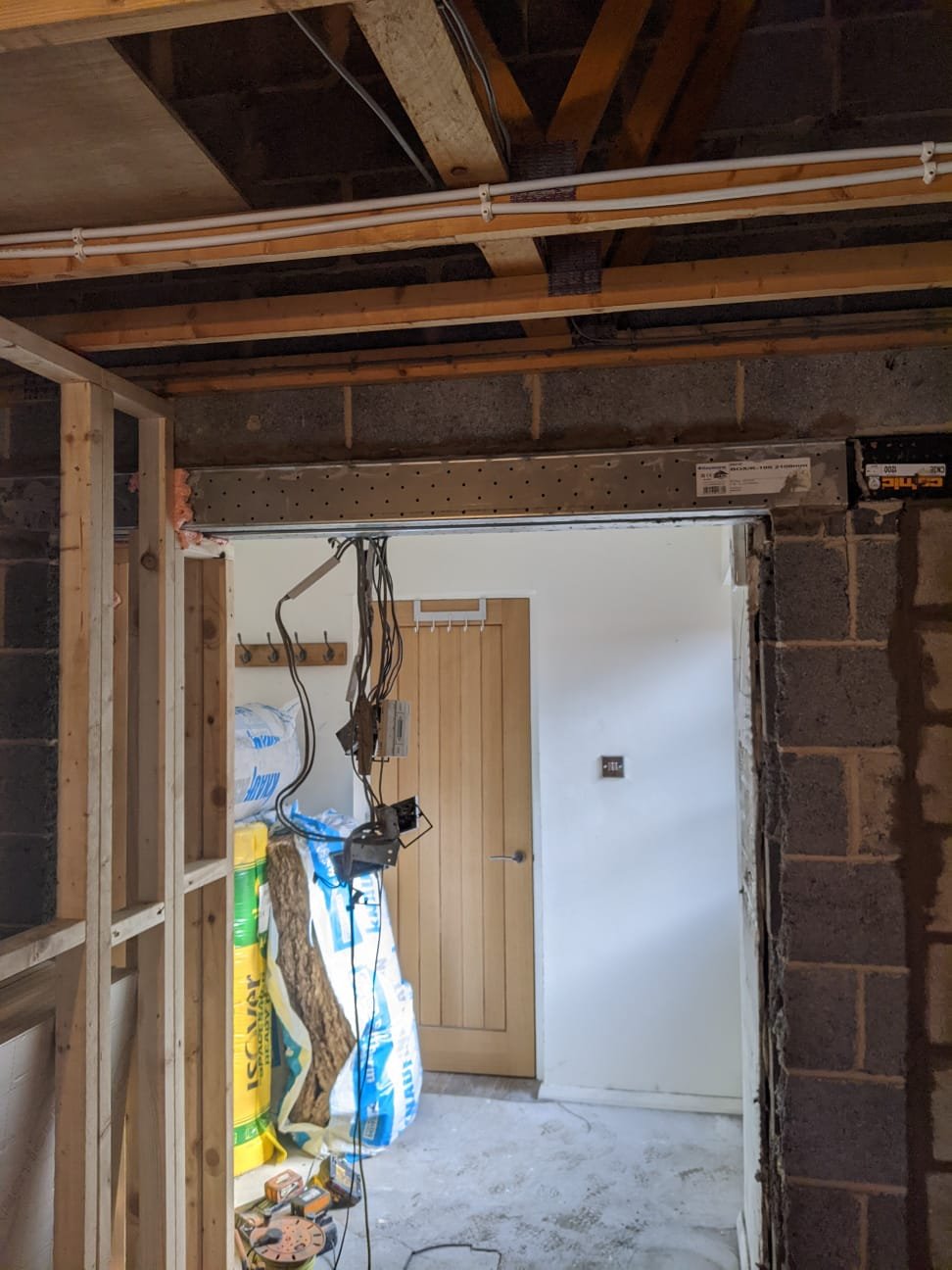
New steel beam installed over a structural opening formed between a garage and the hallway of a house
A steel beam over the new opening into the house.
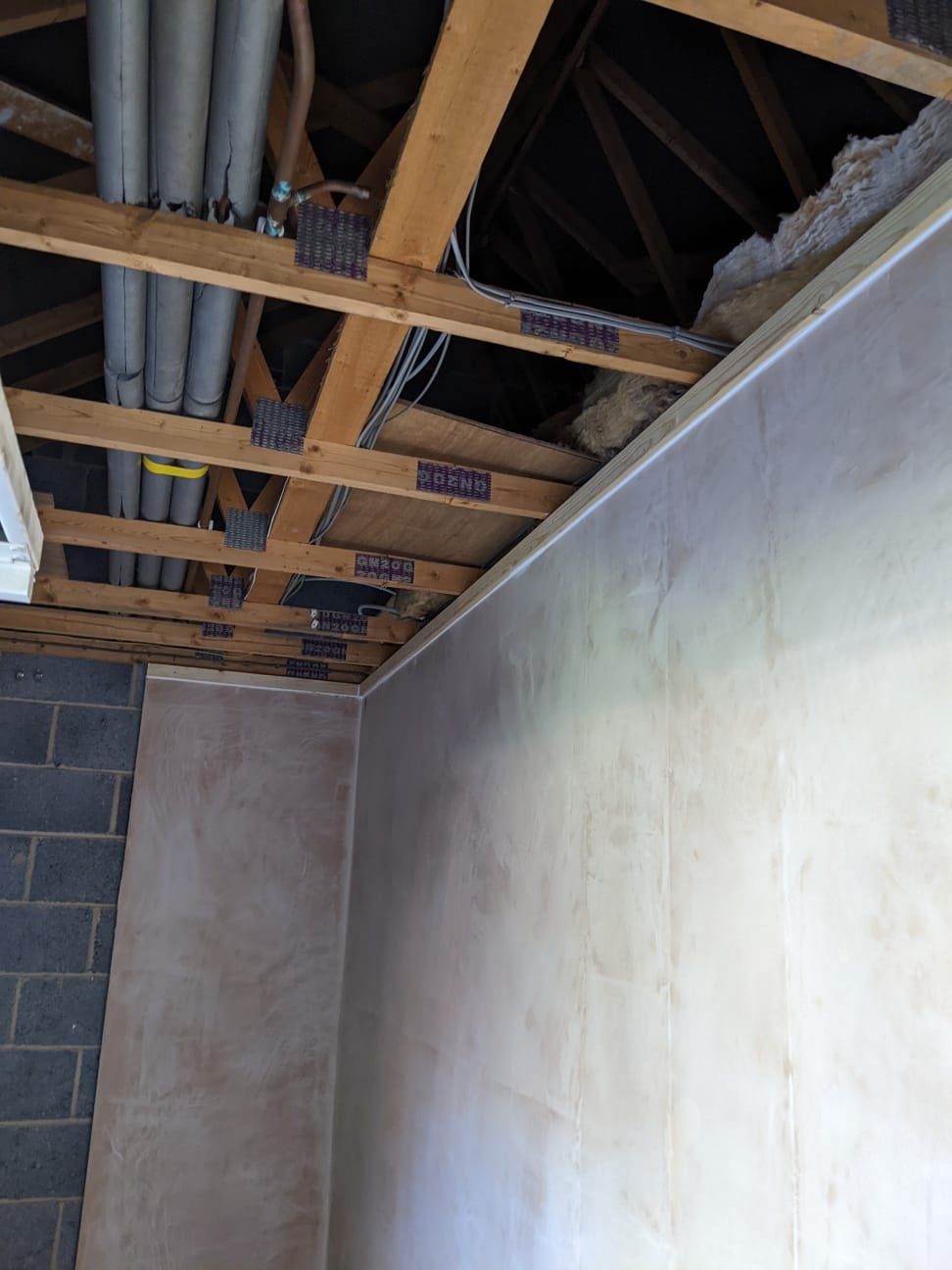
Freshly plastered walls and ceiling in a converted garage, with pipework and roof trusses visible above the finished ceiling line
Plastered through, ready for decorating.

What we find across the county

What Flintshire garages are like to convert

The county splits into four kinds of garage, and we see all of them every month.

  • Deeside estate garages — Connah’s Quay, Shotton, Queensferry, Mancot, Sandycroft, Hawarden and Ewloe were built up quickly in the decades after the war, and most of that housing came with a garage — attached beside the kitchen or integral under a bedroom. These are the bread-and-butter conversions: a single-skin garage with a concrete slab, no insulation and a metal up-and-over door, turned into an insulated room that joins the house. Where the plan is to knock the garage through into the kitchen, a steel beam goes in to an engineer’s design; our structural alterations team in Flintshire does that work within the same contract.
  • Mold, Buckley and the hill villages — Around Mold, Buckley, Mynydd Isa, Sychdyn, Northop and Gwernymynydd the mix is wider — older stone and brick houses with detached garages or outbuildings, and 1970s–90s estates with attached garages. Detached garages make good stand-alone rooms for a business run from home, a gym or a studio; the survey checks the roof, the slab and how power and, if needed, drainage can reach it.
  • The estuary towns — Flint, Bagillt, Oakenholt, Holywell, Greenfield and Mostyn face the Dee estuary, and older garages there often show damp at low level on the weather side. We measure moisture before pricing the insulation, and where an existing damp problem needs treating first our damp proofing service in Flintshire deals with it.
  • Newer developments — Broughton, Penyffordd, Hawarden, Northop Hall and Saltney have seen a lot of building since the 1990s, and the integral garages on those estates are frequently too narrow for the car and never used for one. They convert cleanly into a study, a utility room with a WC, or a playroom.
  • Floors — Many Flintshire garage slabs sit well below the house floor and fall towards the door. The floor is levelled, insulated and brought up to house level as part of every conversion; a cracked or sunken slab is repaired first through our floor repair service in Flintshire.
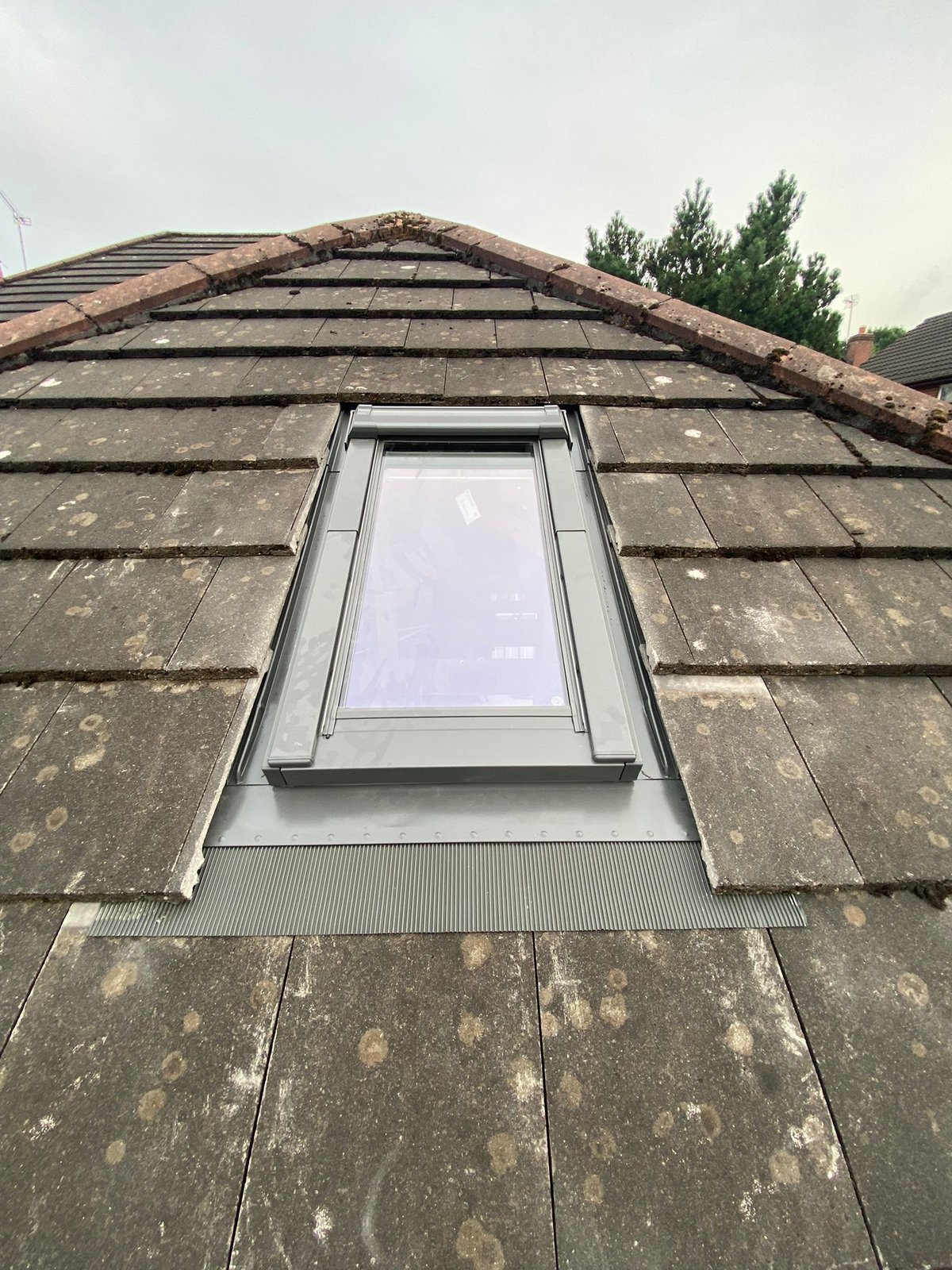
New roof light installed into a tiled roof slope with grey flashing kit

Garage Conversion Flintshire. New rooflight installed.

Where we convert garages in Flintshire

Our office is in Ewloe, in the middle of the county. Every part of Flintshire is close.

CH5Ewloe, Hawarden, Mancot, Sandycroft and Sealand
CH5Connah’s Quay, Shotton and Queensferry
CH6Flint, Bagillt and Oakenholt
CH7Mold, Buckley, Mynydd Isa, Northop and Sychdyn
CH8Holywell, Greenfield, Mostyn, Carmel and Caerwys
CH4Broughton, Saltney, Penyffordd and Higher Kinnerton
North WalesNORTH WALESFLINTSHIREWrexhamWREXHAMChesterCHESTERWirralWIRRALEllesmere PortELLESMERE PORTConwyCONWYDenbighshireDENBIGHSHIRECheshireCHESHIREA55M53M56A483A494Boundaries © OpenStreetMap contributors

Deeside enquiries come to this page — Deeside is in Flintshire and our office sits in the middle of it. We also work in Hope and Caergwrle (LL12), Flintshire villages with Wrexham postcodes, and across the border into Chester.

FLINTSHIRE — INTEGRAL GARAGE, PART CONVERSION

Recent garage conversion project

Part of an integral garage in Flintshire converted to extend the kitchen and add a utility room — with the remainder kept as a working garage behind a fire-rated dividing wall. Not every conversion has to take the whole space, and this one shows what it takes to do half of it properly.

BEFORE

Half a garage, and a wall that had to come out

The brief was to gain kitchen and utility space without losing the garage altogether. That is a more demanding job than converting the lot, because it puts a boundary through the middle of the building: on one side habitable rooms that have to be insulated, heated and finished; on the other a garage that still has to behave like a garage, with the fire separation between them built to suit.

The bigger piece of work was joining the new space to the house. Rather than reaching the rooms through a doorway, a structural opening was formed in the wall between the house and the garage so the kitchen could genuinely extend into it. The opening was propped with Acrow props and strongboys while it was cut, and concrete padstones and steelwork were installed to a structural engineer’s details and instructions. We arranged and managed the Building Control visits through the job.
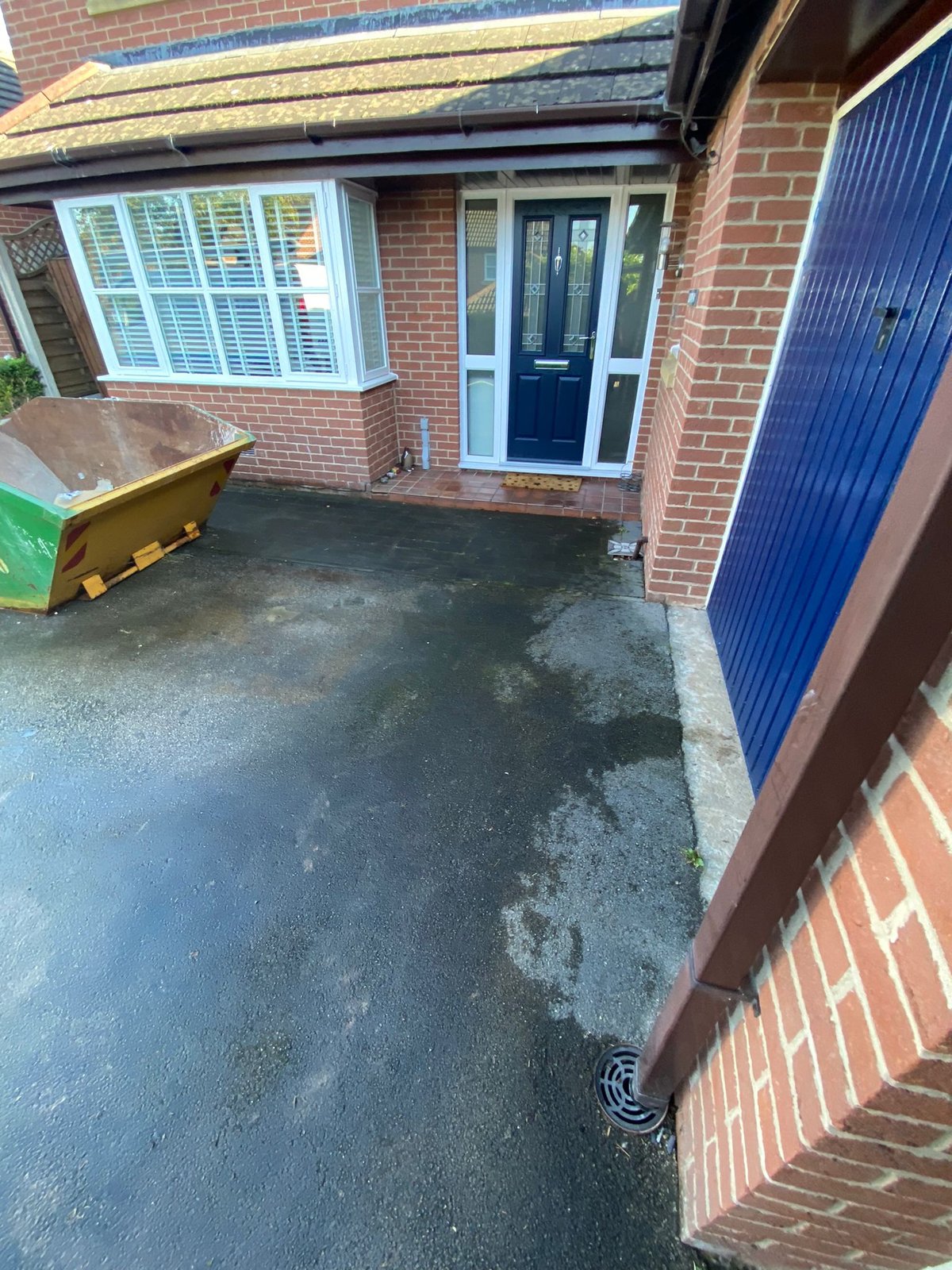
Front of a brick house with the original up-and-over garage door in place at the start of a partial garage conversion
The garage door as found. It stays — only part of the garage was being converted.
DURING

Steel in, then two rooms and a garage inside one shell

With the steel and padstones in and the opening formed, two courses of brick were built up to the front of the garage and an existing external door was bricked up in closely matched brick. The floor was built up over the cleaned slab: a sand blinding, a 1200-gauge damp-proof membrane jointed into the existing damp-proof course, 100 mm rigid insulation, a second membrane and 18 mm tongue-and-groove boarding.

The walls came next, and they are not all the same wall. The external walls were studded in C16 timber at 600 mm centres, set 25 mm clear of the masonry, with a breathable membrane behind, insulation between the studs, an insulation board over and a vapour barrier before plasterboard. The dividing wall between the new rooms and the retained garage was framed at closer 400 mm centres and finished in fire-line plasterboard on the garage side — that board is the reason the two halves can sit in one building. A second dividing wall separates the two new rooms. A window went into the brickwork and a roof light into the roof slope, which is what stops a room at the back of a garage feeling like one.
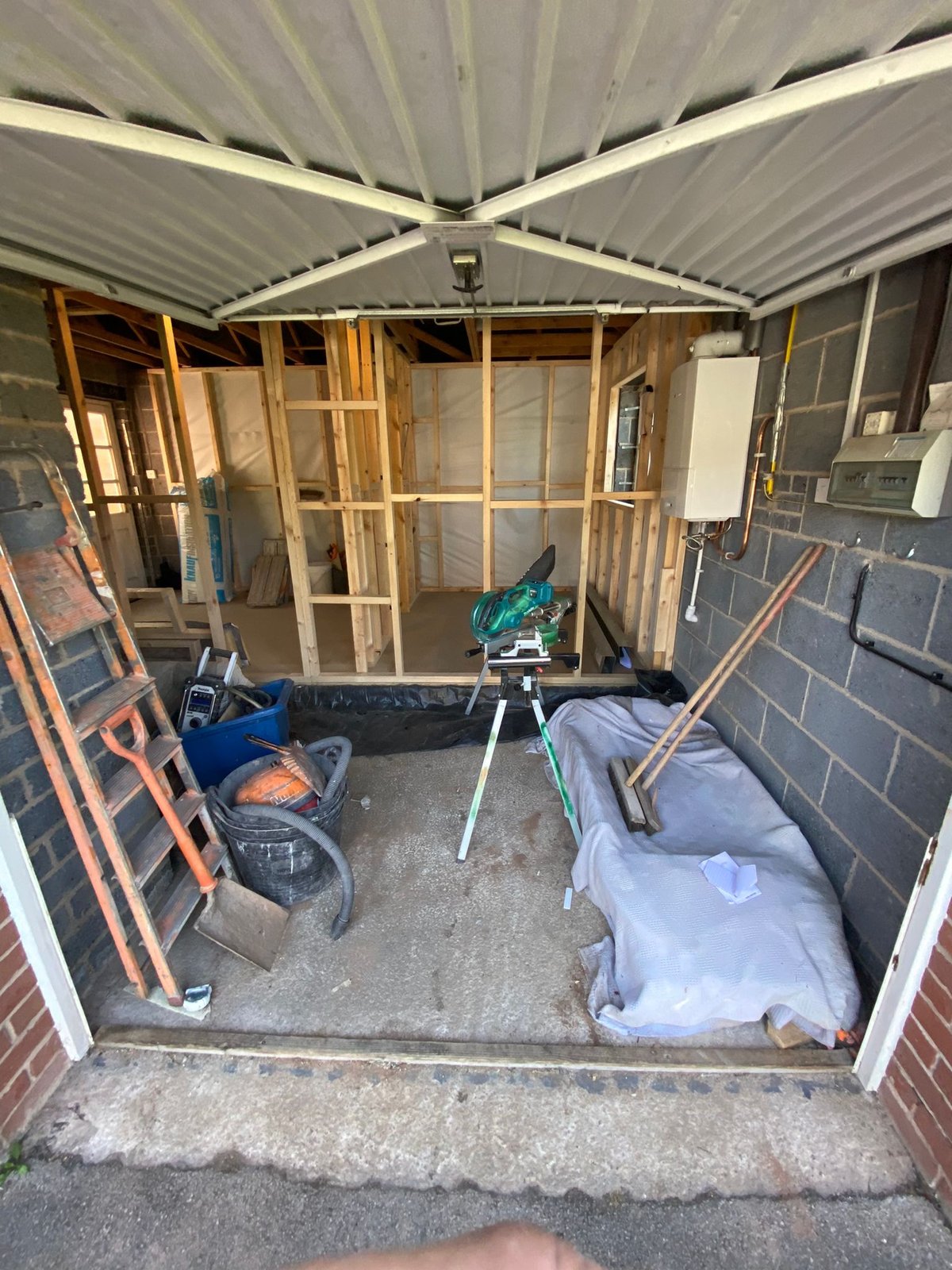
Timber stud walls built inside a garage during a partial conversion, with the up-and-over garage door still in place at the front
The clearest shot of what a part conversion looks like: new rooms framed inside, garage still open at the front.
AFTER

Plastered, serviced and joined to the kitchen

Ceilings were boarded and insulated over, everything was skimmed, and the services went in: plumbing for the sink, the washing machine and two radiators on thermostatic valves, and an electrical installation by NAPIT registered electricians, with sockets, downlights to both rooms, a mains smoke alarm and an extractor fan, issued with a certificate and registered under Part P. The joinery finished it — a door lining and door, skirting and architrave, the boiler boxed in MDF with soft-closing hinges, and the original kitchen units and worktop, which had been taken out carefully at the start, re-installed in the new space.

The result is a kitchen that runs into what used to be a garage, a separate utility beside it, and a garage still there behind the dividing wall. The works were signed off by Building Control and a completion certificate issued.
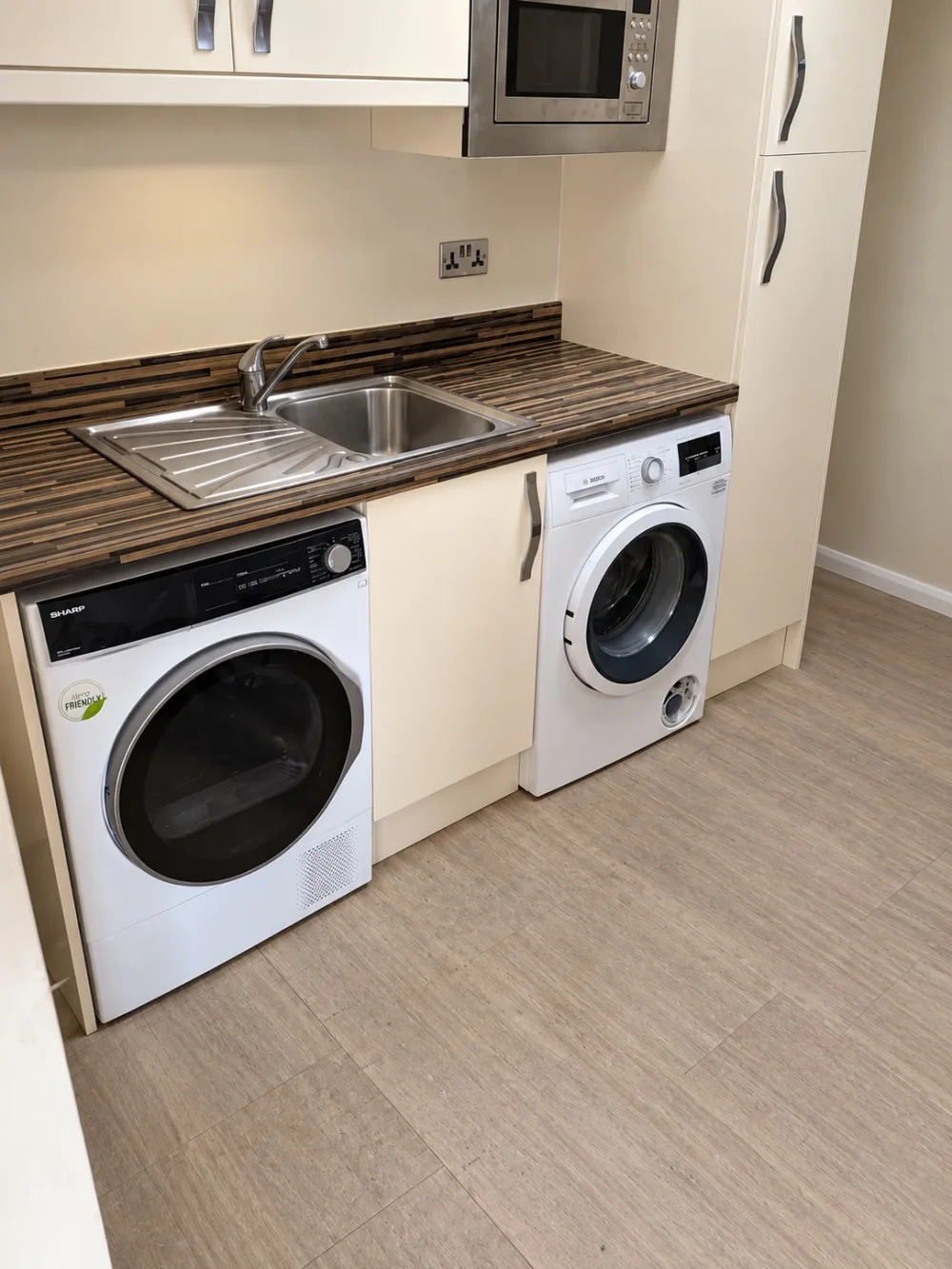
Finished utility area in a converted garage with sink, worktop, washing machine, tumble dryer and re-installed kitchen units
The finished space, with the original units and worktop back in and the appliances plumbed.

The interesting part of this one is the boundary. A full conversion has a single job to do; a part conversion has to satisfy two sets of requirements at once, in the same building, either side of a wall — and get the fire separation right where they meet. Add a structural opening so the house and the new space read as one room rather than two, and it stops being a lining job and becomes a proper alteration. The structural design was the engineer’s; Quirks carried out the steelwork, the brickwork, the floor, the walls, the roof light, the plumbing, the electrics, the plastering and the joinery.

  • Existing kitchen units and worktop carefully removed and set aside for re-use
  • Structural opening formed between the house and the garage, propped with Acrow props and strongboys while cut
  • Concrete padstones and steelwork installed to a structural engineer’s details and instructions
  • Two courses of brick built to the front of the garage, and an existing external door bricked up in closely matched brick
  • Floor built up over the cleaned slab: sand blinding, 1200-gauge DPM jointed to the existing DPC, 100 mm rigid insulation, second membrane and 18 mm tongue-and-groove boarding
  • External walls studded in C16 timber at 600 mm centres set 25 mm clear of the masonry, with breathable membrane, insulation between the studs, insulation board, vapour barrier and plasterboard
  • Fire-rated dividing wall built between the new rooms and the retained garage, framed at 400 mm centres with fire-line plasterboard to the garage side
  • Second dividing wall built to separate the two new rooms
  • Ceiling boarded and insulated over to current regulations, and all new plasterboard skimmed
  • New UPVC window installed, and a roof light installed with the reveal boarded and skimmed
  • Plumbing for sink, washing machine and two radiators on thermostatic valves
  • Electrical installation by NAPIT registered electricians — sockets, downlights to both rooms, mains smoke alarm and extractor fan, issued with a certificate and registered under Part P
  • Door lining and door, skirting and architrave, and the boiler boxed in MDF with soft-closing hinges
  • Original kitchen units and worktop re-installed
  • Building Control visits arranged and managed by Quirks, the works signed off and a completion certificate issued
LocationFlintshire
PropertyIntegral garage
BriefConvert part of the garage to extend the kitchen and add a utility room, keeping the remainder as a garage
Key detailFire-rated dividing wall between the new rooms and the retained garage, and a structural opening joining the new space to the house
Structural designStructural engineer’s details and instructions for the padstones and steelwork
ScopeSteelwork and brickwork, insulated floor and walls, fire separation, window and roof light, plumbing, certified electrics, plastering and joinery
CertificationElectrical Installation Certificate and Part P registration
Sign-offBuilding Control; completion certificate issued
Garage conversionPart conversionStructural openingBuilding Control sign-off

From survey to sign-off

What a Quirks garage conversion includes

A garage conversion is four jobs in one: the design and approvals, the structural work, the internal build and the finishing. We run all four under one contract, so you deal with one company and one programme rather than a builder, an electrician, a plumber and a plasterer who each need chasing.

Design and planning

Site survey and suitability check. Layout and design for the room you actually want. Advice on whether Planning Permission applies. Liaison with Building Control on your behalf, with the inspections booked.

Structural work

Removing the garage door and building the new front wall with a window or doors. New openings into the house, with steel beams where the structure needs them. Floor slab upgrade with damp-proof membrane and insulation. Roof checks and repairs.

Internal build

Stud walls and partitions. Wall, floor and ceiling insulation. Plasterboard and plaster. First-fix electrics and plumbing. Heating. New windows and doors.

Finishing

Flooring, decoration, lighting, sockets and ventilation. Fitted storage or joinery where wanted. Final clean, Building Control completion inspection and handover.

The bits that decide whether a conversion lasts

Structure, insulation, floors, electrics and plumbing — done in the right order

A garage was built to keep a car dry, not to keep people warm. Turning it into a habitable room means dealing with the fabric first — the slab, the single-skin walls, the roof — and only then the finishes. These are the elements we assess on every survey and price into every quotation.

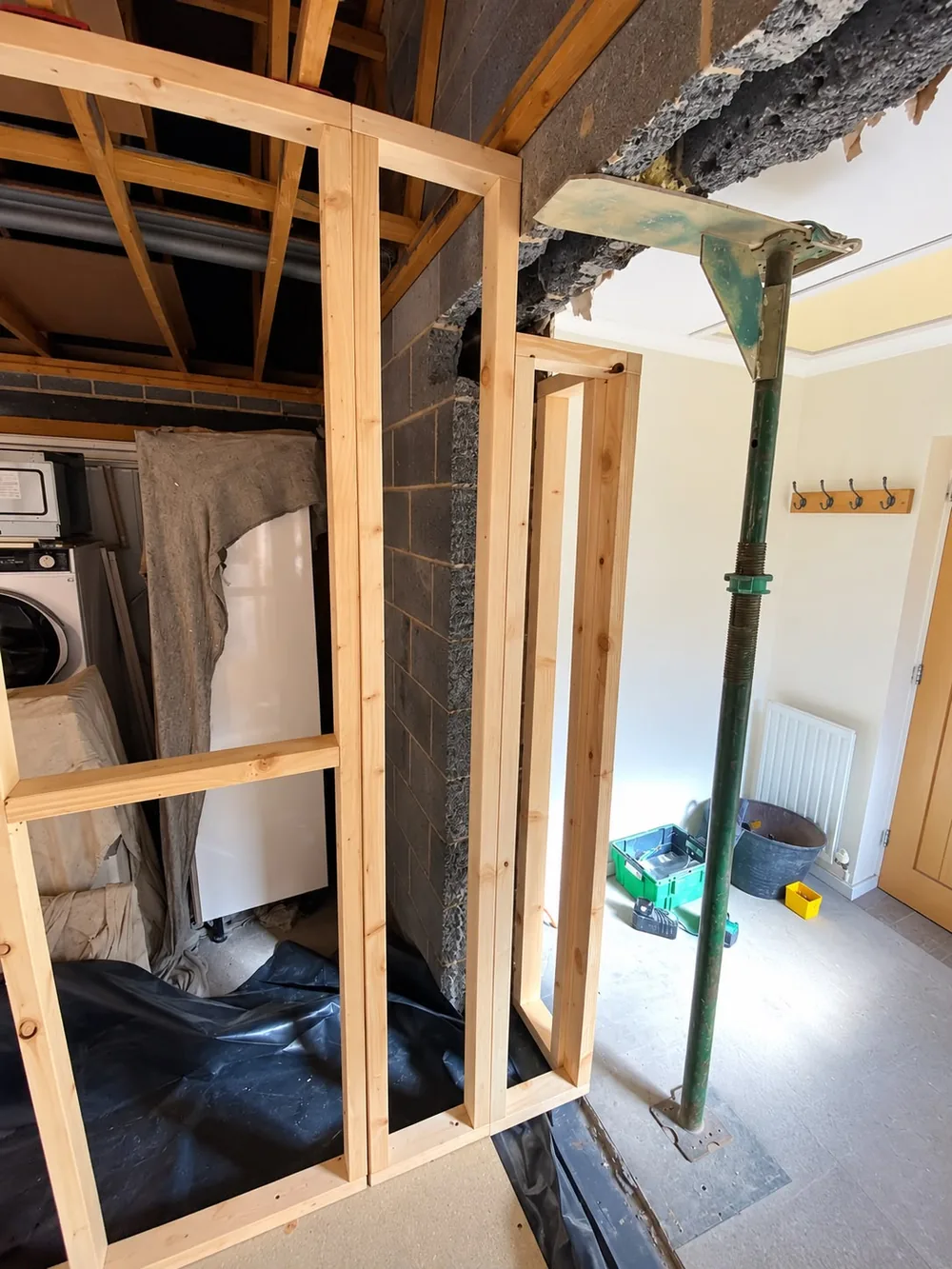
New opening formed from the garage into the house, timber studwork in place and an adjustable prop supporting the structure above

Garage Conversion Flintshire. New opening formed into the house.

Structural openings and steel

Widening the doorway into the house or removing the wall between garage and kitchen usually needs a steel beam (RSJ) designed to an engineer’s calculation — installed by our Flintshire structural alterations team.

Wall insulation

Most garages have single-skin brick or block walls. We build an insulated internal lining that meets the thermal standard Building Control expects for a habitable room.

Floor build-up and levelling

Garage slabs sit lower than the house floor and often slope towards the door. The floor is levelled, insulated and finished to match the house — floor levelling and slab repair in Flintshire.

Damp and moisture control

A damp-proof membrane in the new floor, a check of the wall DPC and any existing damp, and ventilation so condensation never becomes the room’s first problem — our Flintshire damp proofing service.

Electrics, lighting and sockets

New circuits, lighting and sockets for how the room will be used — a home office needs more than a spare bedroom — carried out by our electricians, who are NAPIT registered.

Plumbing and drainage

A utility room, WC or shower room needs water and waste connections; whether the foul drain is reachable decides how simple that is — our Flintshire plumbing team makes the connections.

Windows, doors and the old garage opening

The garage door comes out and a new wall with a window or French doors goes in, matched to the house so the front elevation looks as though it was always that way.

Fire safety and escape

Where a garage connects to the house, Building Regulations cover fire separation and a means of escape from the new room. We build these in rather than bolt them on.

Roof condition matters too. A flat felt roof at the end of its life is replaced or repaired before we insulate beneath it, not after.

Two different things

Planning Permission and Building Regulations for a garage conversion in Flintshire

Planning Permission is about whether a development is allowed at all. Building Regulations are about how the work is designed and built — structure, insulation, fire safety, ventilation, drainage and electrics. A garage conversion can need one, both or, on the planning side, neither.

Most garage conversions that keep the existing structure and do not enlarge the building fall within permitted development, so no planning application is needed. There are exceptions: listed buildings, conservation areas, homes where permitted development rights were removed when the estate was built, and conversions that create a separate dwelling. We check for these at the survey and tell you before you commit.

Building Regulations are a different matter. Many garage conversions require Building Regulations approval, because converting a garage into a habitable room involves the fabric of the building — insulation, ventilation, fire safety, drainage, electrics and often structural alterations. What is required depends on the work involved. We liaise with Building Control on your behalf and book the inspections at each stage — the council’s own fee is paid by you directly to the council, and we tell you what it will be; the completion certificate Building Control issues at the end is the document a buyer’s solicitor will ask for when you sell. Flintshire is in Wales, so the Welsh Government’s Building Regulations guidance and Welsh permitted development rules apply — they differ from England’s in places. Applications and inspections go through Flintshire County Council Building Control.

For a fuller explanation of what applies and how approval works, see our Building Regulations guidance page.

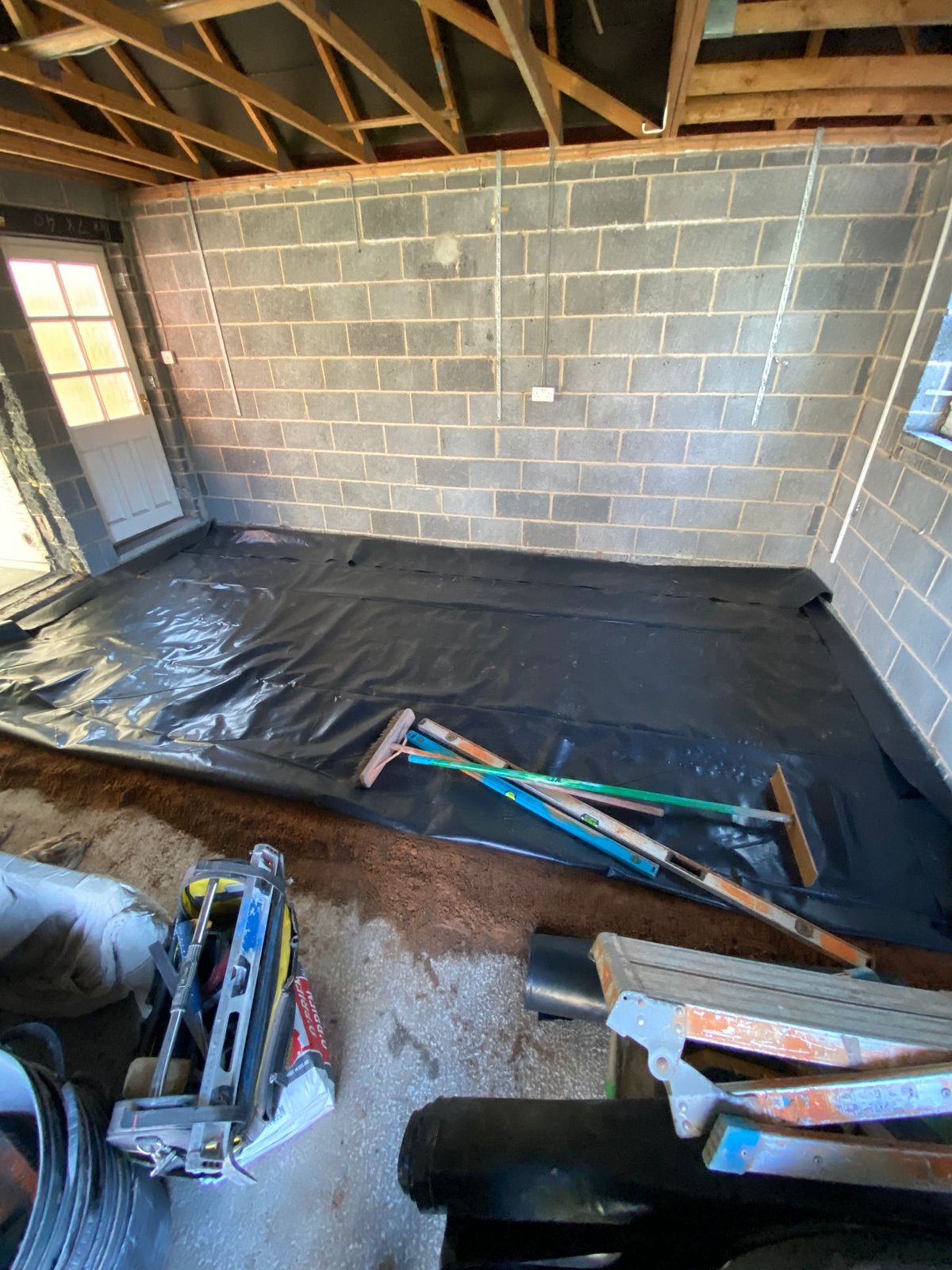
Damp-proof membrane laid over a sand blinding across a garage floor slab, with bare blockwork walls and exposed roof trusses
Damp-proof membrane over the sand blinding, before the insulation goes down.

Straight answers on price

What a garage conversion costs in Flintshire

Most jobs fall between

£6,000 – £20,000

+ VAT

Where yours lands depends on the garage and the room you want, not on the town. The figure for your property comes in a written quotation after we have looked.

  • Single or double garage
  • Integral, attached or detached
  • Whether a new opening into the house needs steel
  • How much the floor needs building up
  • Plumbing and drainage for a WC, shower or utility room
  • Level of finish, windows and doors

Survey, design and approvals

Survey, design and the Building Control liaison.

Structure and fabric

Structural work, floor, insulation and damp protection.

Services and finishes

Electrics, plumbing, plastering and decoration.

Through to completion

Building Control inspection stages through to completion (the council’s own fee is paid by you directly).

Book a free site survey — send photos on WhatsApp, email us, or use the form below. Photos may not show everything; a site visit may still be needed.

Request a quotation

A few details and we’ll come back to you. Photos help — attach them here or send them on WhatsApp. They may not show everything, and a site visit may still be needed.

    So we can confirm we cover your area.


    JPG, PNG or HEIC. One photograph per box.

    We use your details and photographs to deal with your enquiry — our privacy policy explains how.

    Prefer to send photos? Message us on WhatsApp

    What people ask us for

    Garage conversion ideas

    The uses we are asked about most. There are more, with photographs and layout notes, on our garage conversion ideas page.

    Home office

    A quiet room with its own door, proper insulation and enough sockets and data points to work from all day.

    Extra bedroom or guest room

    Often the conversion that adds most when you sell, provided it meets the Building Regulations for a habitable room.

    Utility room and downstairs WC

    The practical choice for an integral garage next to the kitchen: washer, dryer, sink, WC and storage.

    Playroom or family room

    Ground-floor space where noise and mess belong, with the door into the house fire-rated as the regulations require.

    Home gym

    A robust floor, ventilation and heating that copes with the room being used hard.

    Snug, cinema or games room

    Insulation and a solid door make a garage the quietest room in the house.

    Annexe for a relative

    A bedroom with an en-suite, or a self-contained space. A separate dwelling can need Planning Permission — we tell you early.

    The questions we’re asked most

    Frequently asked questions

    Do Welsh rules apply to a garage conversion in Flintshire?
    Yes. Flintshire is in Wales, so the Welsh Government’s versions of the Building Regulations guidance (the Approved Documents for Wales) and Welsh permitted development rules apply rather than the English ones. They are similar but not identical, which is why advice written for England does not always transfer. Most conversions that keep the existing structure still fall within permitted development; Building Regulations approval is usually needed and goes through Flintshire County Council Building Control; we liaise with them for you and book the inspections.
    Do you survey in Deeside, Mold and Buckley?
    Yes — our office is in Ewloe, so most of Flintshire is a short drive. Send photos on WhatsApp or email us and we will book a survey at a time that suits you; photos help us give a first view, but they may not show everything, and the survey is where we check the slab, walls and roof. Because we are nearby, the same applies during the job: if something needs looking at, we are close at hand.
    My Deeside house has a single-skin integral garage — how do you make it warm?
    By treating it as a new room, not a lined garage. The slab gets a damp-proof membrane, insulation and a new floor at house level; the walls get an insulated lining with a vapour control layer; the ceiling under the bedroom is insulated and fire-rated; the up-and-over door is replaced by an insulated wall with a window; and heating and ventilation are added. Each element is inspected by Building Control at the right stage. The result meets the thermal standard for a habitable room and feels like the rest of the house.
    Can a Flintshire garage become a utility room or downstairs WC?
    It is one of the most popular conversions on the Deeside estates, because the garage is usually next to the kitchen and close to the drains. Washing machine, dryer, sink and a WC fit comfortably in a single garage, and the remaining space can still be a store or a boot room. Water and waste connections are made by our plumbing team in Flintshire; if there is no gravity route to the foul drain we assess a macerator at the survey and tell you what it means for cost.
    How much does a garage conversion cost in Flintshire?
    Most of the garage conversions we quote fall between £6,000 and £20,000 + VAT. A single integral garage converted into a home office or bedroom sits towards the lower end; a double garage, a new structural opening, or a shower room with drainage work moves it up. Your written quotation shows what drives the figure.
    How long does a garage conversion take?
    Two to six weeks on site is typical. A straightforward single-garage conversion with no structural opening is at the shorter end; steelwork, a new bathroom or roof repairs add time. You get a programme with the quotation and we tell you before anything changes it. Building Regulations approval is applied for before work starts, so it rarely delays the job.

    Related services for a garage conversion in Flintshire

    Most conversions draw on several of these. They are part of the same contract, not separate jobs.

    Structural alterations in Flintshire

    RSJs, load-bearing walls and new openings between the garage and the house.

    Learn more →

    Damp proofing in Flintshire

    Moisture assessment and damp treatment before anything is insulated.

    Learn more →

    Floor repairs in Flintshire

    Slab repair, levelling and insulated floor build-ups.

    Learn more →

    Plumbing in Flintshire

    Water and waste for utility rooms, WCs and shower rooms.

    Learn more →

    Electrical services

    New circuits, lighting and sockets for the new room.

    Learn more →

    Building Regulations

    What applies to a garage conversion and how approval works.

    Learn more →

    Six stages, one contractor

    How a garage conversion runs with Quirks

    1. 1Enquiry and site survey — WhatsApp, email or use the form. We visit, measure the garage, check the slab, walls, roof and drainage, and talk through what you want the room to do.
    2. 2Written quotation and scope — A written quotation showing exactly what is included, from structural work to decoration, so you can compare like with like.
    3. 3Approvals — We advise on Planning Permission, liaise with Building Control on your behalf and book the inspections.
    4. 4Structural work and first fix — Garage door out, new wall in, steel where needed, floor and insulation, then electrics and plumbing before anything is closed up.
    5. 5Second fix and finishing — Plastering, windows and doors, heating, flooring, sockets, lighting and decoration.
    6. 6Inspections, completion and handover — Building Control’s final inspection, the completion certificate, a clean site and a room ready to use.

    Most conversions take two to six weeks on site, depending on the scope. You get a programme with the quotation and we tell you before anything changes it.

    1. 1Enquiry and survey
    2. 2Written quotation
    3. 3Approvals
    4. 4Structure and first fix
    5. 5Second fix and finishing
    6. 6Completion and handover

    Ready to convert your garage in Flintshire?

    Garage conversions — send us photographs

    Free site survey and written quotation — Deeside, Hawarden, Mold, Buckley, Flint, Holywell and across Flintshire

    Tell us what you want the room to do and we will tell you what your garage can become.

    WhatsApp or email gets the quickest reply — send photographs first and we will give you a first view from your pictures.

    Photos help us give you a first view. They may not be enough to judge everything, and a site visit may still be needed.

    Written and reviewed by Michael Quirk, Director.

    Garage conversions by area

    Garage conversions across Cheshire, the Wirral and North Wales

    Each area has its own page with local detail. The main page covers the service in full.

    Scan the code
    Powered by Joinchat