Specialist Building & Property Maintenance Services You Can Depend On.
DAMP PROOFING — WIRRAL
We survey first and only then recommend treatment. Quirks Property Maintenance Ltd covers the whole peninsula: Heswall, West Kirby, Hoylake, Bebington, Birkenhead, Wallasey, New Brighton, Neston and Bromborough. FOD Certified Surveyors, PAM Ties and Safeguard Europe approved, all trades under one roof.
Federation of Damp


In short: the Wirral is a peninsula, and that shapes the damp we find. Salt-laden air off the Irish Sea and the Dee estuary erodes pointing and corrodes lintels faster than inland, and much of the housing stock is pre-war solid wall with no cavity to stop water crossing. The result is that penetrating damp dominates here — far more than rising damp, which is diagnosed more often than it occurs.
We survey first and only then recommend treatment. Quirks Property Maintenance Ltd covers the whole peninsula: Heswall, West Kirby, Hoylake, Bebington, Birkenhead, Wallasey, New Brighton, Neston and Bromborough. FOD Certified Surveyors, PAM Ties and Safeguard Europe approved, all trades under one roof.
Key Takeaways
Send us photos on WhatsApp or by email and we’ll advise the next steps. Where photographs aren't enough, we'll tell you what else we need.
What we find
Telling the types apart is the whole job — see the signs and causes of damp for the full picture.
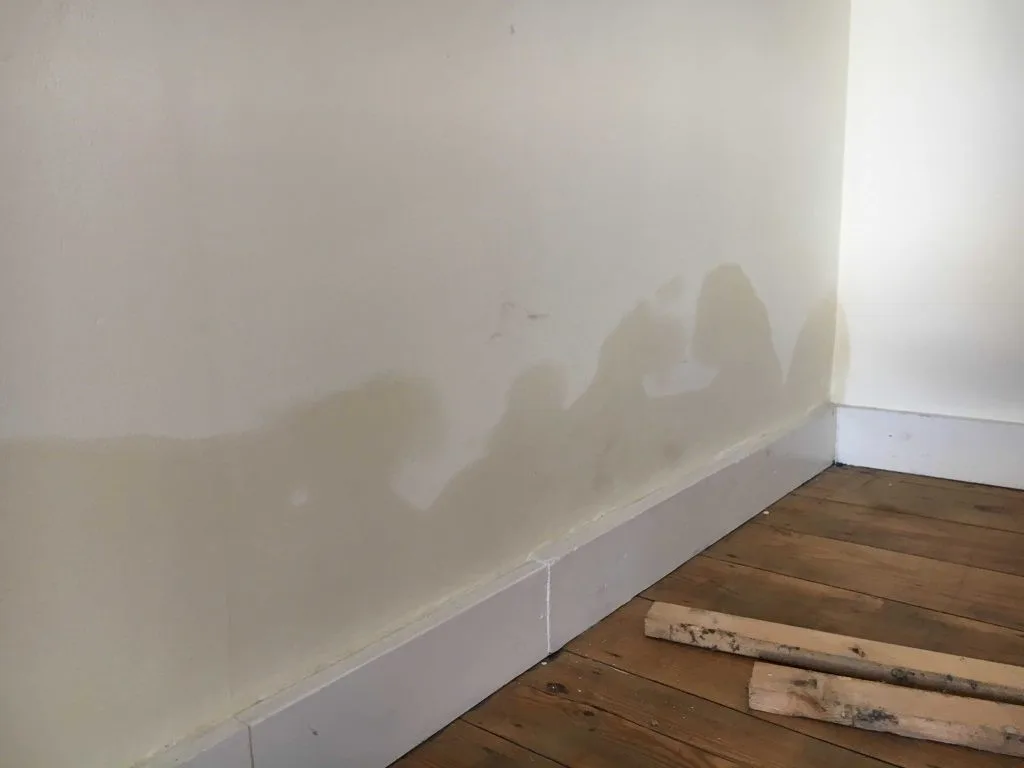
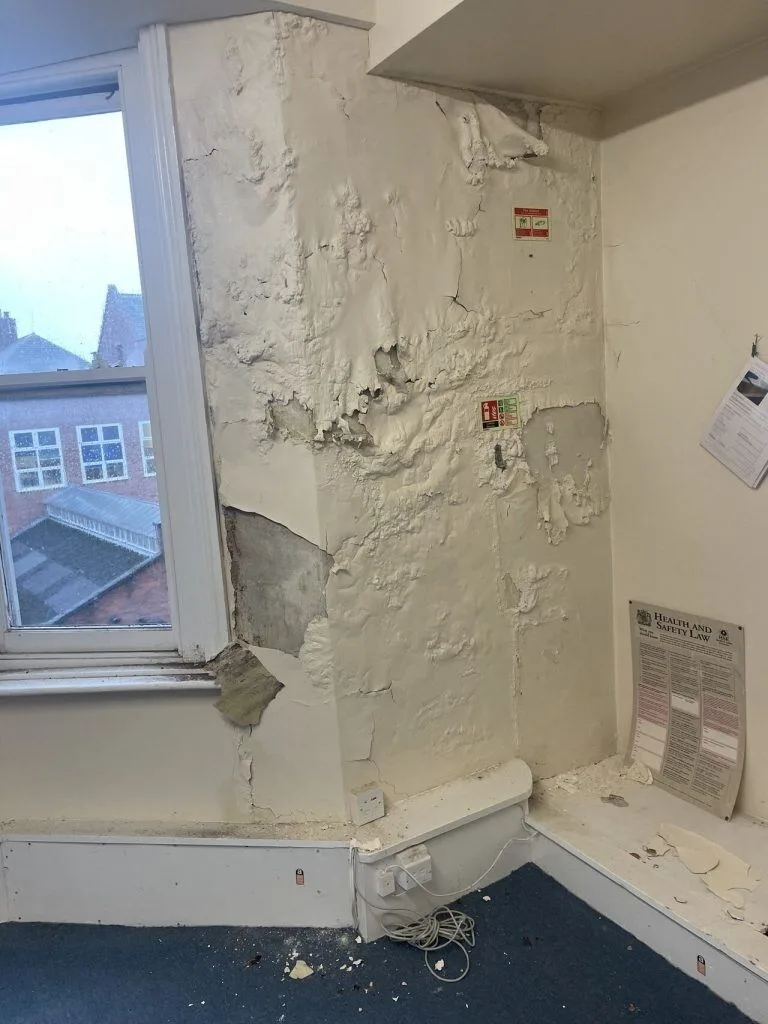
Ground moisture drawn up through porous masonry where a damp-proof course has failed, been bridged or was never fitted. The signs are a tide mark up to about a metre, white salt deposits and rotting skirting. On the Wirral it is genuinely less common than it is diagnosed — a coastal wall showing damp is far more often taking water in from outside than drawing it up from below. Where it is confirmed, the fix is a remedial DPC with salt-contaminated plaster removed and renovating plaster applied.

Penetrating damp is what we see most here, and the peninsula is the reason. Salt-laden air off the Irish Sea and the Dee accelerates erosion of lime pointing and corrosion of steel lintels, and exposed western and northern elevations at West Kirby, Hoylake and New Brighton take wind-driven rain directly. On a solid wall with no cavity, a defect in the pointing, render, roof or chimney shows inside within a season. The cure is always the same: repair the external defect first, then make good internally.

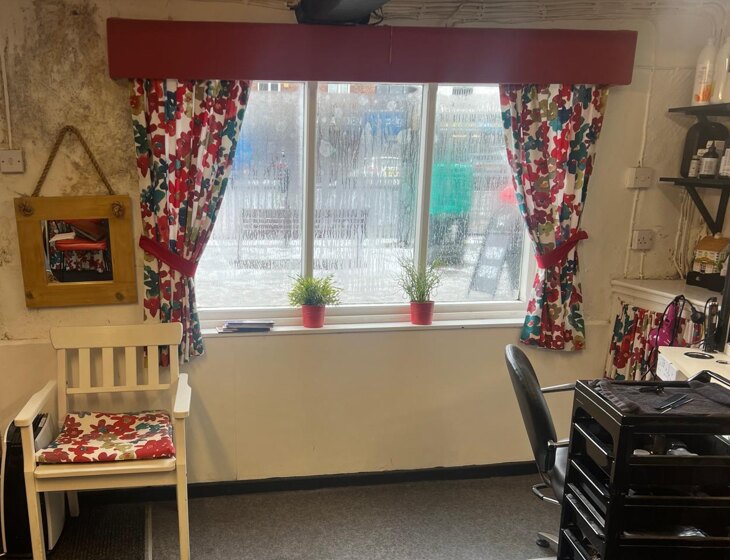
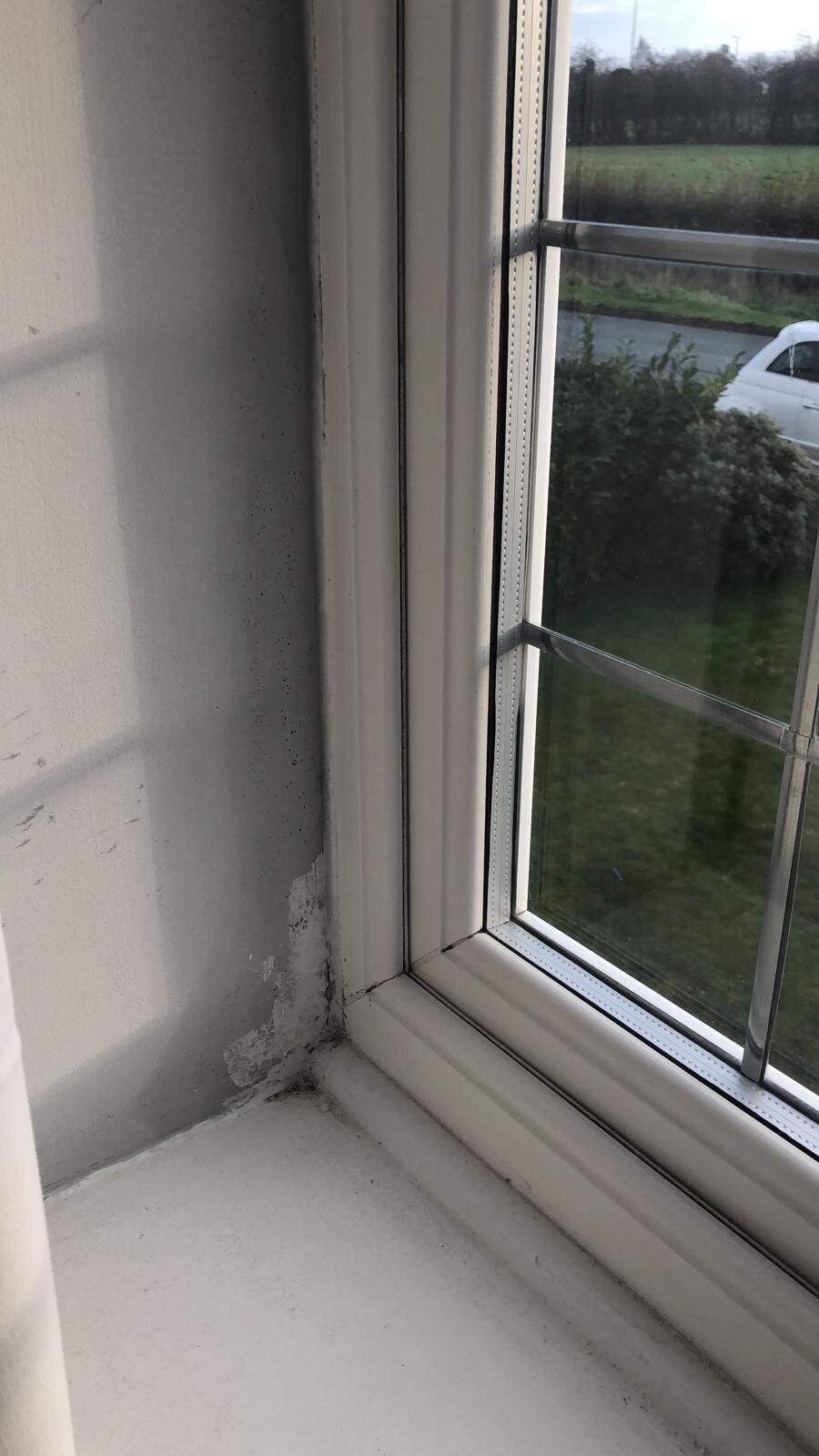
The most common form of damp in any property: warm, moisture-laden air meeting cold surfaces and forming water droplets, then black mould around windows, in corners and behind furniture. Solid walls run colder than insulated cavity walls, which makes condensation more likely across much of the Wirral’s pre-war stock. It is a ventilation-and-warmth problem, not an injection problem — see condensation and mould control.
Survey first
Treating the wrong problem wastes money and leaves the damp where it was. A chemical damp-proof course injected into a wall that is actually taking water through failed pointing does nothing at all — and on the Wirral, failed pointing is the more likely answer.
That is why we survey before we recommend. Book an FOD-certified damp survey and you get a written report before anything is quoted.
Properties across the Wirral are regularly exposed to wind-driven rain and coastal weather. Defective pointing, cracked render, chimney defects, failed gutters and damaged roof coverings can all allow moisture to enter a building and produce internal staining that may be incorrectly diagnosed as rising damp.
Our FOD-certified damp surveys in Wirral include internal and external inspections, moisture readings, photographic evidence and a written report. This allows us to recommend repairs that address the source of the problem instead of applying unnecessary treatment.

Coast and climate
How we treat it

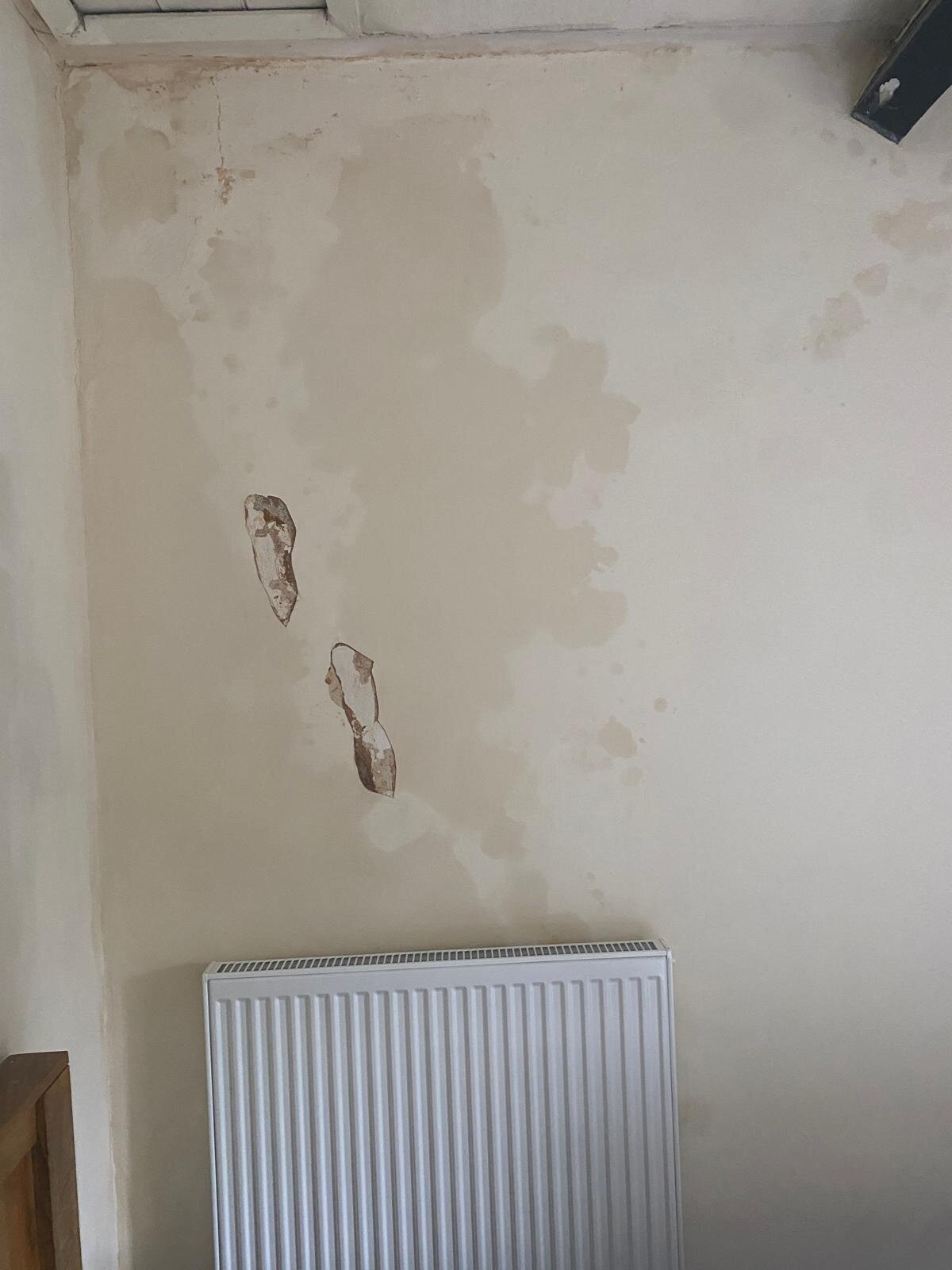
Tide marks or salt staining low on a wall, patches that darken after rain and dry back afterwards, black mould around windows and in corners, peeling paper, rotting skirting, a musty smell, or cold damp plaster. On the Wirral, a patch that appears on the weather-facing elevation after a storm is penetrating damp until proven otherwise.
Damp and black mould affect health, not just decoration. Mould releases spores that can trigger or worsen asthma, allergies, coughing and skin irritation, and the risk is highest for children, older people and anyone with a respiratory condition. Official health guidance advises treating damp and mould promptly rather than living with it — which is why we treat the cause rather than repaint the surface.
What we do
Diagnosis & survey — book a damp survey with a written report and an honest recommendation.
Penetrating damp — repointing, render repair, water-repellent cream, roof, chimney and gutter repair. The main job on this peninsula.
Rising damp — remedial DPC, salt-contaminated plaster removed, renovating plaster, full skim.
Condensation & mould — extractor fans and mould treatment.
Cellars & below ground — tanking and cavity-drain systems, sump and pump.
Damp floors — membrane renewal, surface DPM and epoxy systems after moisture testing.
Timber — wet rot and dry rot treatment plus structural repair.
Local building stock
The common thread across the peninsula is salt-laden air. It shortens the life of pointing, render and embedded steel, so maintenance intervals that would be fine inland are not enough here.
Damp does not stay still. Left alone it spreads, and the repair gets larger and more expensive. Plaster blows and has to come off. Skirting, joists and lintels rot. Decoration spoils repeatedly. Black mould takes hold. On a coastal property, a small pointing defect that lets water in will keep letting it in every time the wind turns — and each cycle takes more of the wall with it. Dealing with the cause early is almost always the cheaper option.
If a homebuyer survey has flagged damp, or a lender has applied a retention pending a specialist report, we provide FOD-certified damp surveys with the written report buyers, sellers, solicitors and lenders need. We set out whether work is genuinely required and what it costs — and tell you honestly when a flagged issue is minor or misdiagnosed, so a sale is not derailed unnecessarily. See our pre-purchase damp survey.
Heswall · West Kirby · Hoylake · Bebington · Birkenhead · Wallasey · New Brighton · Neston · Bromborough · Eastham · Gayton · Greasby · Irby · Pensby · Prenton. CH41–CH49 and CH60–CH64.
We also cover damp proofing across Cheshire, the Wirral and North Wales and damp proofing in Chester and damp proofing in Flintshire.
We cover North Wales, Cheshire and Wirral from the Deeside and Chester districts out to mid-Cheshire.
★★★★★ 5.0 · 150+ Google reviews
“Fantastic service and a company we would highly recommend. We used Quirks to resolve a long standing damp problem in our old Victorian house. We have had a new roof, replaced guttering and soil pipes but the wall remained wet. They resolved the problem by repointing the outside wall. The team arrived just after 7 each morning and worked until dark. They cleaned up each day and were always friendly and helpful. We’ll definitely use their services again”
SB CB
“Great job. Efficient, polite, tidy workers. Very happy with the damp proofing and plastering. Highly recommend!”
Andrew Jaworski
“Michael and his team are worth more than 5 stars! We had a full living room, hallway, landing & stairs renovation (Damp proofing, electrics, plumbing, plastering and joinery). From start to finish they were fantastic! Everything was organised and ran like clockwork which took a massive stress off me and my wife. His employees are a credit to the company too, always polite, non stop working from the start of the day to the end and had a lot of pride in their work. Will definitely use Quirks again in a heartbeat! Jordan + Anastasia Wrexham”
Jordan Owen
Your questions
Less often than it is diagnosed. On a peninsula with this much exposure, a damp patch is far more likely to be water coming in through eroded pointing, a corroded lintel or a failed gutter than moisture rising from the ground. A survey tells you which, and the fix is often a repair rather than a chemical DPC.
It changes what fails and how fast. Salt-laden air accelerates erosion of lime pointing and corrosion of embedded steel lintels and wall ties, and exposed western elevations take wind-driven rain directly. Maintenance intervals that are fine inland are not enough here — pointing and render need checking more often.
Where genuine rising damp is treated, salt-contaminated plaster usually has to come off and be replaced with a renovating plaster, because the old plaster holds the salts that keep drawing moisture. Where the cause is penetrating damp or condensation — which is most of what we find here — often no replastering is needed at all.
Roughly 25mm of wall thickness per month. A 9-inch solid wall is around 225mm, so several months to dry fully before final decoration. We advise on realistic timescales and the right breathable finishes to use in the meantime.
Product and workmanship guarantees are provided where applicable, depending on the system installed and manufacturer terms. Where a guarantee applies, we provide the paperwork your solicitor will ask for.
Yes. We provide FOD-certified damp surveys with the written report lenders and solicitors need, turned around promptly. If a flagged issue turns out to be minor or misdiagnosed, the report says so.
It depends on what is causing the damp, how much wall is affected, how much plaster has to come off and go back, and what needs repairing outside first. Treating a single wall is a very different job from a whole ground floor.
Damp proofing work is quoted after a damp survey, which is a paid service. Send your photos on WhatsApp or by email and we’ll advise the next steps.
Written and reviewed by Michael Quirk, Director.
How it works
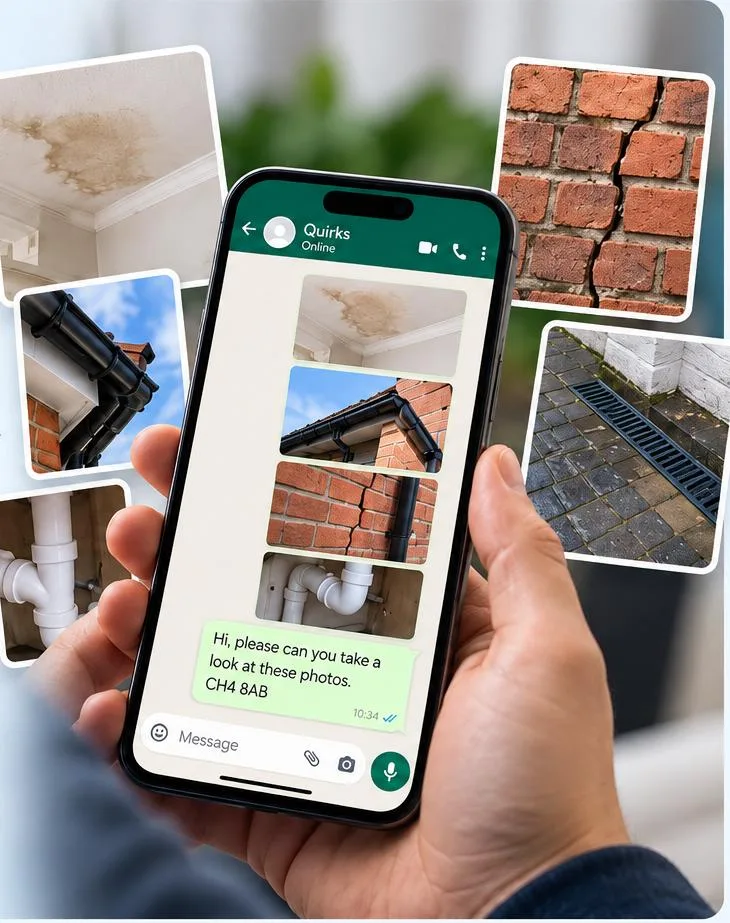
Send us photos on WhatsApp or by email and we’ll advise the next steps. Take them from the ground — never from a ladder. The damp patch close up, the whole wall it is on, and the same wall from outside, with any surveyor’s or mortgage valuer’s comments.
Photograph the damp close up, the whole wall, and the outside of the same wall
Send them on WhatsApp or by email with your postcode, and any surveyor’s or engineer’s report. If they don’t show enough, we’ll tell you what else we need
We look at what you have sent and what it points to
We advise the next step — usually a damp survey — and what it costs
Once you accept, we agree a start date

Send us your photographs and a few details and we’ll advise the next steps.