Specialist Building & Property Maintenance Services You Can Depend On.


- Home
- About
- Building Services
- Property Maintenance
- Structural Services
- Damp Services
- Fire Safety
- Emergency Repairs
- Trades
- Contact
Repointing & Brick Pointing
Repointing & Brick Pointing in Wrexham
Wrexham’s walls were built by industry — and its weather has been testing them ever since. The brick terraces that housed the area’s colliery and steelworks generations, the semis that followed them, and the stone farmhouses out in the villages all rely on their mortar joints to keep the weather out, and after a century or more many of those joints are ready for renewal. Quirks Property Maintenance provides repointing and brick pointing across Wrexham and its villages: the right mortar, matched joints and a finish that lasts. Send photographs and your property location by WhatsApp for an initial assessment and quotation, or call 01244 638219.
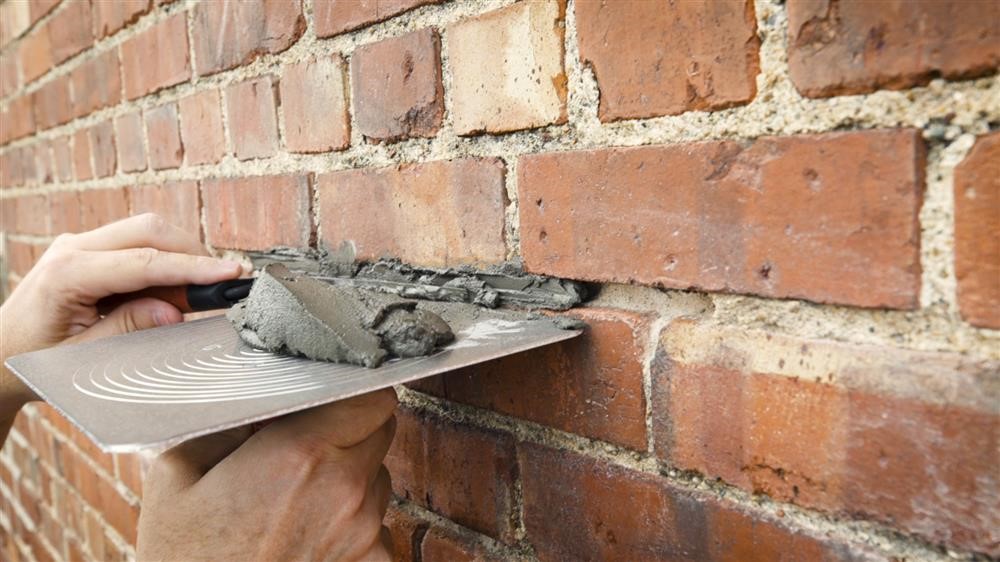
Brickwork repointing in progress
Why Wrexham joints wear out
Two things age pointing here. The first is altitude and aspect: villages on the high ground west of the city — Brymbo, Coedpoeth, Bwlchgwyn — sit exposed to weather the lowland towns never see, and freeze-thaw works saturated joints apart every winter. The second is age and origin: much of the borough’s housing went up quickly for the collieries and the steelworks, in mortars that have now done well over a hundred years of service. Neither is a fault — it is simply when repointing falls due. What matters is doing it with the right mortar rather than the nearest bag of cement.
What we do across Wrexham
- House and terrace repointing — single elevations to whole properties, matched mix and joint profile.
- Chimneys and gables — the highest, most exposed masonry on the house, repointed and flaunched in one visit.
- Stone and rural properties — farmhouses, cottages and boundary walls in lime mortars that suit the stone.
- Brick repairs — spalled and frost-damaged bricks replaced alongside the pointing with our brickwork team.
- Commercial and landlord work — terraced portfolios, commercial frontages and industrial units, run to programmes with method statements and itemised quotations.
The right mortar for the building
Pre-war walls in Wrexham were generally built with softer, breathable mortars; post-war brickwork suits modern mixes. Repointing an older wall in hard cement traps moisture and pushes the damage into the brick and stone faces — the correct mortar, lime or cement, is confirmed from the wall itself before any work starts, and named in your quotation. Cadw’s guidance on older walls covers why this matters.
How the job runs
- Photographs first — WhatsApp us pictures of the wall and your location for an initial assessment; we visit where the job warrants it.
- Free itemised quotation — extent, access, mortar and finish in writing.
- Raking out — to sound depth, by hand or dust-extracted tools as the masonry dictates.
- Repointing — matched mortar and profile, worked around weather the mortar can cure in.
- Finish and check — joints tooled to match, site cleaned, exposed details checked.
Patch repoint or whole elevation?
An honest answer, wall by wall. Where failure is confined — a gable top, a chimney, the courses around a bay — patch repointing in a matched mortar is the right job and we will say so. Where the weather side of a terrace has failed generally, patching every spring costs more over five years than doing the elevation once, properly. Your photographs usually tell us which case you are in before we visit.
Signs Wrexham walls give you
Sandy joints that rake out by hand; washed-out mortar lines on weather-facing gables; damp patches inside on exposed walls; frost-popped brick faces near old cement patches; loose copings on garden walls. Open joints let water into the wall itself — and from there it becomes penetrating damp and frost damage that can cost far more than repointing.
Related Services
Failed joints rarely travel alone in older stock: see our brickwork and masonry repairs, chimney repairs and penetrating damp services, or the full picture on our main repointing and brick pointing page.
Where We Carry Out Repointing
Wrexham city and the whole borough: Rhosddu, Hightown, Acton, Borras, Gwersyllt, Llay, Gresford, Rossett, Brymbo, Coedpoeth, Bwlchgwyn, Rhostyllen, Johnstown, Ruabon, Cefn Mawr, Chirk, Marchwiel, Overton, Bangor-on-Dee and the Maelor villages — 01244 638219.
Case Study – Lime Repointing to a Rear Elevation in Hightown, Wrexham
The owner of a mid-terrace in Hightown had noticed the pointing to the rear of the house crumbling away and asked Quirks Property Maintenance Ltd to look at it. We inspected the rear elevation and carried out the repointing in the summer of 2025.
What we found on the rear elevation
Mortar had gone from the joints — not thinned or weathered back, but loose and in places missing altogether, with open joints running across the elevation.
Rear elevations tend to reach that state before front ones do, and not because they are built any differently. Nobody stands in a back yard and looks up. A frontage gets noticed every time the owner comes home, and by the neighbours, and by anyone walking past; the back of a terrace is seen from a small yard at an angle that hides most of it. By the time the pointing is obvious enough from down there to prompt a phone call, it has usually been going for a while.
An elevation with joints in that condition is not shedding water — it is holding it. Rain sits in the open joint instead of running off the face of the wall, and stays in the wall rather than drying out of it.
Our recommendation
We recommended repointing the whole rear elevation in NHL 3.5 hydraulic lime mortar, and matching the finished joint to the profile already on the wall rather than imposing a different one.
That second point matters more than it sounds. A repointed elevation looks wrong when the new joint is a different shape to the original — it reads as a repair rather than as the wall it belongs to, and on a terrace it stops the elevation sitting properly alongside next door. Matching the existing profile takes longer at the tooling stage and is the difference between work that disappears into the building and work that announces itself.
Lime was the right mortar for brickwork of this kind. A joint softer than the brick around it takes up weathering and movement itself, and lets the wall dry through the joint rather than through the face of the brick.
Working over a terraced yard
The elevation was worked from a full scaffold erected over the rear yard.
Scaffolding the back of a terrace is a different proposition to a clear frontage. The yard is small, it is bounded by neighbouring walls, and the single-storey rear outrigger sits in the middle of the elevation, so the scaffold has to get past a roof rather than run straight up. The yard is also the only way in and out of the back of the house, so it has to stay usable while the work is on.
The works carried out
The failed joints were raked out to a sound mortar base, brushed clean of loose material and the brickwork dampened before pointing, so the wall did not draw the water out of the fresh mortar.
The elevation was repointed in NHL 3.5 hydraulic lime mortar and the joints tooled to match the profile already on the wall. We control the drying on every lime job. Fresh joints are shaded and kept damp rather than allowed to dry out quickly, because mortar that loses its water too fast ends up soft and powdery instead of hardening properly.
A new downpipe was fitted to the elevation on completion.
Outcome
The rear elevation was left fully repointed in a breathable lime mortar, with consistent, well-filled joints finished to match the original profile, and a new downpipe in place.
Project Information
| Issue | Mortar loose and missing from the joints to the rear elevation |
| Service | Lime mortar repointing |
| Findings | Open joints across the rear elevation with mortar loose or missing altogether |
| Recommendation | Repoint the full rear elevation in NHL 3.5 hydraulic lime mortar, matching the existing joint profile |
| Access | Full scaffold erected over the rear yard, past the single-storey outrigger |
| Works | Joints raked out to a sound base, brushed and dampened; repointed in NHL 3.5 hydraulic lime; joints tooled to match the existing profile; new work protected while curing; new downpipe fitted |
| Location | Hightown, Wrexham |
| Completed | Summer 2025 |
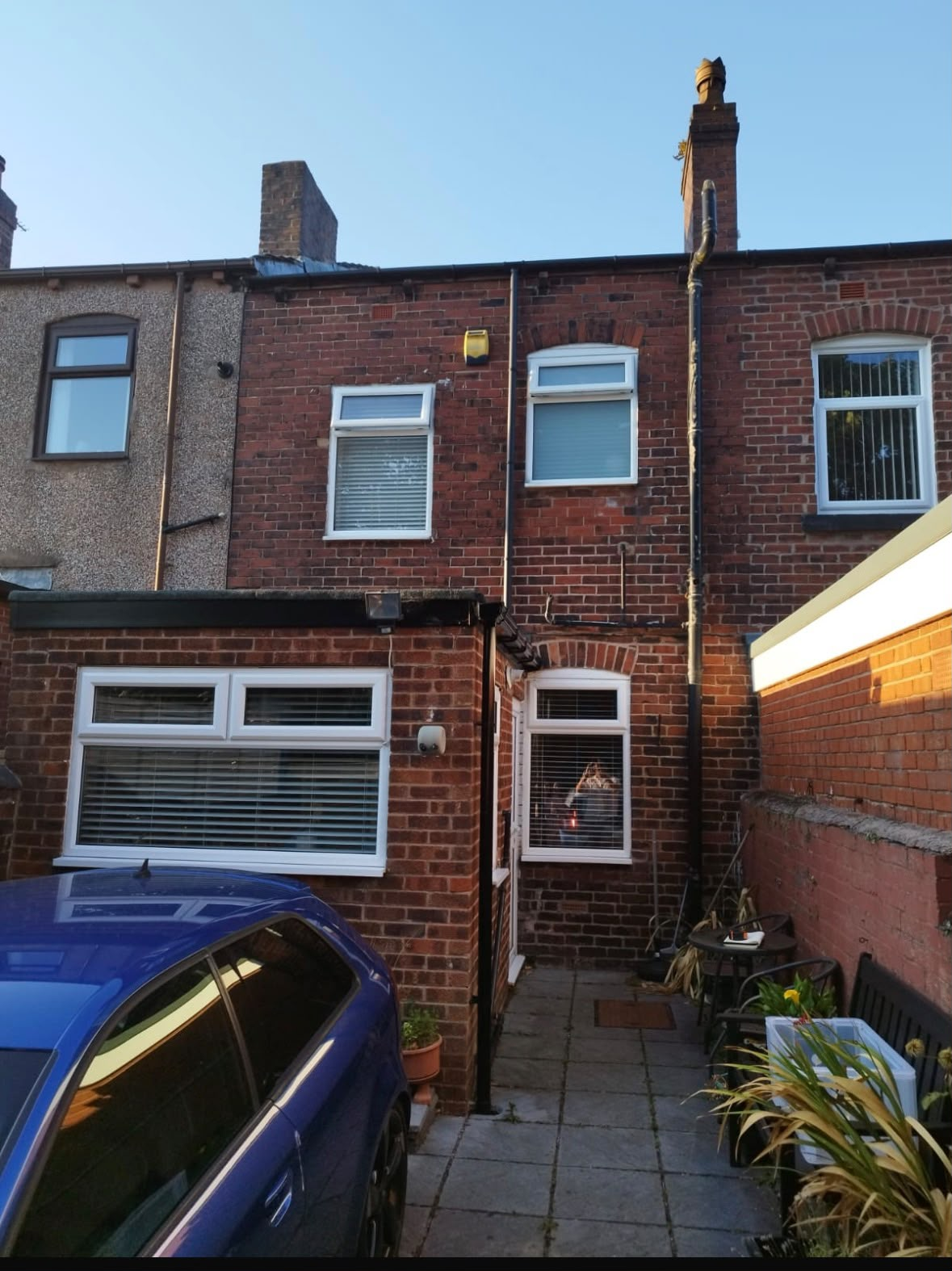
Before: the rear elevation as we found it, with mortar loose and missing from the joints.
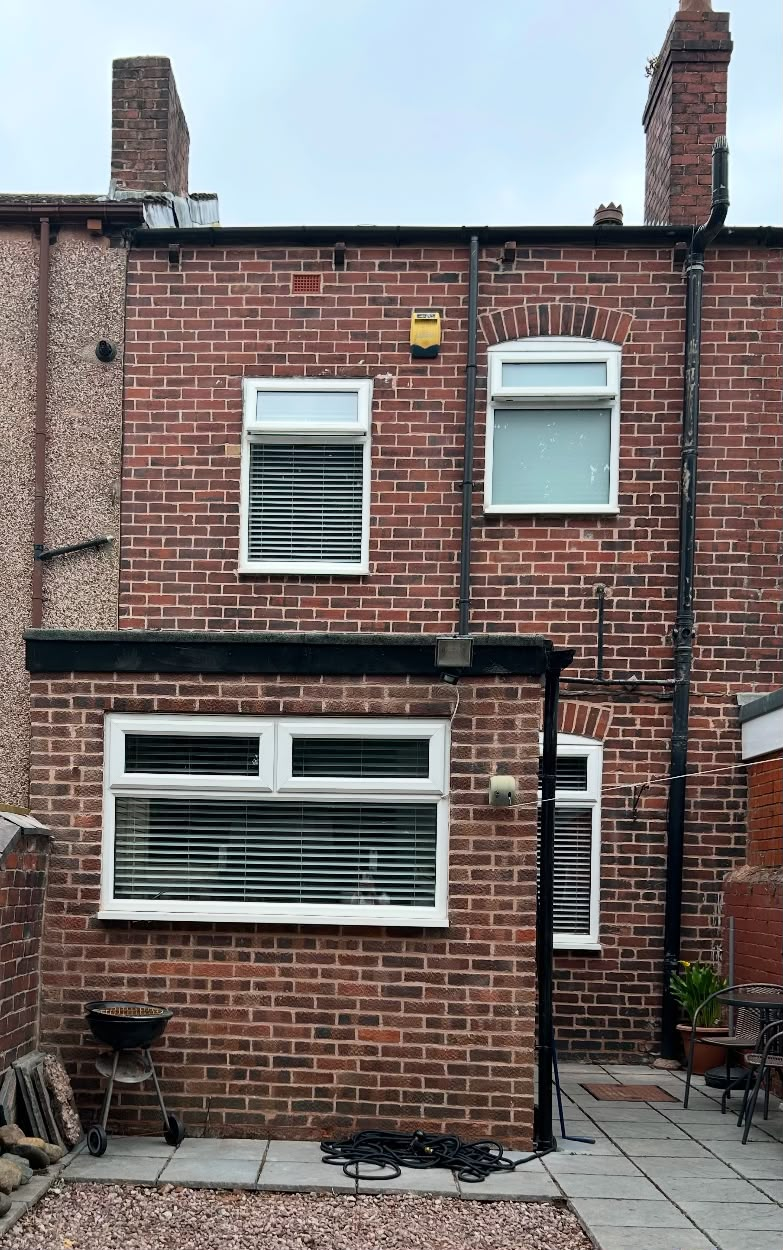
After: the elevation repointed in NHL 3.5 hydraulic lime mortar, the joints finished to match the original profile.
FAQs – Repointing Wrexham
Our terrace was built for the colliery — what mortar does it need?
Almost every wall of that era tells you itself: the existing bedding mortar, the brick and the exposure decide, and we confirm the correct mix before work starts rather than guessing from the kerb.
We're up in the hills — does the exposure change the job?
It changes the specification and the timing. High, weather-facing walls get a mortar chosen for the exposure and we work around conditions the mortar can cure in — fresh pointing that freezes its first night is wasted money.
Can you just repoint the gable end?
Yes — single elevations, chimneys and even localised patches are normal jobs. Send photographs by WhatsApp and we will tell you honestly whether the rest of the wall can wait.
Do you handle bigger jobs — whole terraces or commercial buildings?
Yes; portfolio and commercial repointing runs to a programme with method statements, risk assessments and an itemised quotation your agent or finance team can approve as-is.
How do we get a price?
Photograph the wall, send it with your location on WhatsApp, and you get an initial assessment and an itemised quotation — access, extent and mortar all stated. A site visit follows where the job needs one.
Get in Touch
Joints gone sandy? Send photographs and your property location by WhatsApp for an initial assessment and quotation — or call 01244 638219.
Our Commitment
Long-lasting, professional solutions using proven industry methods
