Specialist Building & Property Maintenance Services You Can Depend On.


- Home
- About
- Building Services
- Property Maintenance
- Structural Services
- Damp Services
- Fire Safety
- Emergency Repairs
- Trades
- Contact
Repointing & Brick Pointing
Repointing & Brick Pointing in Chester
Chester’s brickwork is old enough to deserve better than a hard cement patch. From Georgian townhouses to Victorian terraces in Hoole and Handbridge, most of the city’s older walls were built with lime mortar — and repointing them correctly is the difference between a repair that protects the brick and one that quietly destroys it. Quirks Property Maintenance provides repointing and brick pointing across Chester: lime mortar for the period stock, modern mixes where they belong, and joint profiles matched to the building. Send photographs and your property location by WhatsApp for an initial assessment and quotation, or call 01244 638219.
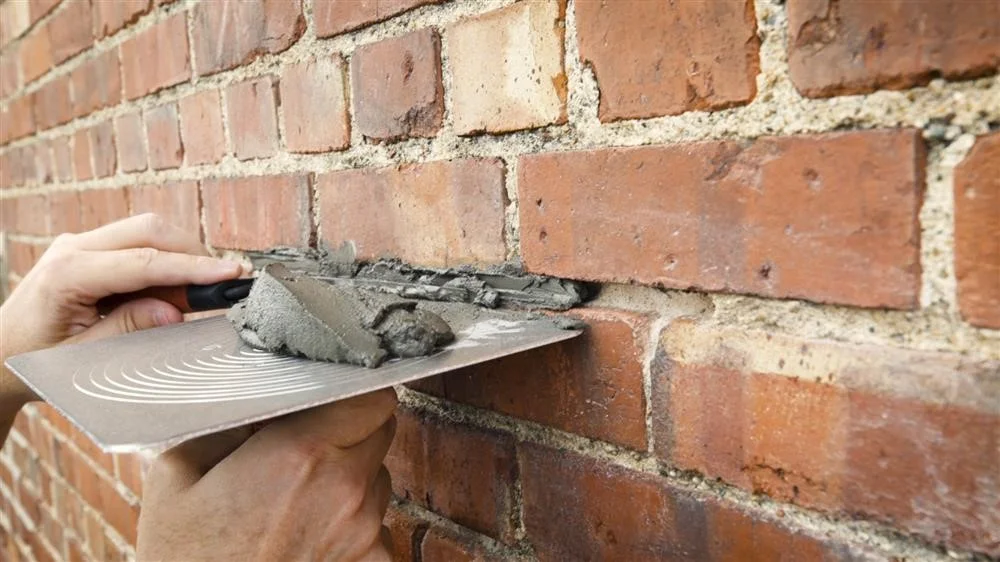
Period brickwork needs the right mortar
Walls built before the early twentieth century were very often built with lime mortar — and we confirm what your wall actually has, and needs, before any work starts. Lime joints are sacrificial: softer than the brick, breathable, and easy to renew. Repoint them in dense cement and the moisture that used to escape through the joints is forced out through the brick faces — which then spall and powder, particularly on Chester’s soft older bricks. Once the brick face is lost, the damage is permanent; mortar can be renewed forever. That is the whole argument for doing this properly, and it is why Historic England’s best-practice guidance on repointing says what it says. We repoint period brickwork in appropriate lime mortars — normally a natural hydraulic lime (NHL), with the grade chosen for the wall’s softness and exposure and named in your quotation rather than left vague — matched for colour, texture and joint profile.
What we do across Chester
- Lime mortar repointing — period houses, garden and boundary walls, cellars and solid-wall brickwork.
- Modern repointing — cement-mortared post-war and modern brickwork, matched mix and finish.
- Raking out done properly — by hand or dust-controlled tools, protecting brick arrises on soft period brick.
- Brick repairs — replacing spalled and frost-damaged bricks with matched reclaims alongside the pointing, with our brickwork team.
- Chimneys and details — stacks, flaunchings, copings and sills.
How a Chester repoint runs
- Look properly first — joints, bricks, previous repairs and the cause of the failure, then a recommendation on mortar and extent: patch repoint or full elevation.
- Free itemised quotation — area, access, mortar and finish in writing.
- Rake out — to sound depth without widening joints or damaging arrises.
- Repoint — matched mortar, correct joint profile, protected while it cures.
- Leave it right — tooled, brushed, cleaned down, and the surrounding details checked.
Conservation areas and listed buildings
Much of central Chester sits in conservation areas, and the city has a large stock of listed buildings. We work sympathetically on the city’s older stock. Where a building is listed or sits in a conservation area, we confirm the correct mortar before work starts and tell you what consents are likely to be needed — applying for them remains the property owner’s responsibility. The finished joints will look like they belong to the building.
Commercial buildings get the same care: we repoint offices, retail frontages, schools and managed blocks across the city, working to method statements and programmes that suit occupied premises.
Signs to look for on Chester brickwork
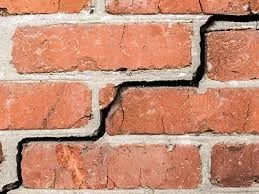
Powdering or ‘blown’ brick faces near cement-patched joints; sandy, raked-out mortar lines; damp patches on internal walls of solid-wall houses; white salt staining after rain; loose bricks over openings. On period brick, spalling around hard grey pointing is the classic signature of a previous cement repoint doing damage — the earlier it is corrected in lime, the more brick survives. Persistent damp through a wall may also need our penetrating damp service.
Related Services
Repointing often uncovers neighbouring problems: spalled bricks, tired chimneys, damp coming through solid walls. We fix all of it — brickwork and masonry repairs, chimney repairs, penetrating damp — and the full picture is on our main repointing and brick pointing page.
Where We Carry Out Repointing
The city centre, Hoole, Handbridge, Boughton, Newton, Blacon, Curzon Park, Westminster Park, Vicars Cross, Great Boughton, Christleton, Huntington, Lache and the surrounding villages — 01244 638219
Case Study – Lime Repointing to a Victorian Terrace in Hoole, Chester
The owner of a bay-fronted Victorian terrace in Hoole contacted Quirks Property Maintenance Ltd after the condition of the front elevation pointing was raised in a property survey. We inspected the elevation and quoted for repointing works in January 2026.
What we found on the front elevation
Mortar had been lost from the joints across the elevation — in places worn back, in others missing altogether. A survey will usually record that as “pointing in poor condition”, which is accurate as far as it goes, but it does not say what has been happening to the wall behind it.
Two things told us it had been going on for some time. The first was earlier cement pointing in patches, where sections had been made good at some point with a mortar harder and denser than the original. The second was isolated spalled brick faces — frost damage, where water held in the wall over winter has taken the face off the brick rather than the joint. Both were confined to parts of the elevation rather than covering it, but they are the point at which a pointing job stops being cosmetic. Once brick faces start going, the cost of putting the elevation right rises considerably.
We also found the stone sills and lintels in poor condition. That was outside the repointing we had been asked to price, and we reported it separately rather than absorbing it into the quotation.
Our recommendation
We recommended repointing the full front elevation in NHL 3.5 hydraulic lime mortar.
On brickwork of this age the joint is meant to be the sacrificial part of the wall — softer than the brick, so that weathering and movement are taken up by mortar that can be replaced rather than by brick faces that cannot. The cement patches on this elevation were doing the opposite, and the spalled faces alongside them were the result. A hydraulic lime mortar restores that balance and lets the wall dry through the joint.
We recommended the whole elevation rather than patch repairs. Repointing only the worst sections would have left new work butting against failing joints and cement patches, and the elevation would have needed revisiting within a few years.
The sill and lintel repairs were quoted and carried out separately, so the customer could see what each piece of work involved.
The works carried out
The elevation was worked from a full scaffold, erected, maintained and dismantled by Quirks.
Failed and defective joints were raked out to a sound mortar base and the earlier cement patches removed. On brickwork of this age the arrises are soft, so raking out was carried out with care to take out the mortar without taking the edges off the brick. The prepared joints were brushed clean of loose material and the masonry dampened where needed, so the wall did not draw the water out of the fresh mortar before it had chance to set.
The elevation was repointed in NHL 3.5 hydraulic lime mortar and finished with a traditional brushed joint, in keeping with the age of the brickwork. Lime needs controlled conditions while it cures, so the programme was worked around the weather and the new work protected while it took up.
The sill and lintel repairs
Under a separate order, the stone sills and lintels identified during the repointing were repaired, made good and painted. Keeping this separate from the repointing quotation meant the customer decided on it as a piece of work in its own right, with its own price, rather than finding it added to a bill afterwards.
Outcome
The front elevation was left fully repointed in a breathable lime mortar, with consistent, well-filled joints and a brushed finish appropriate to the brickwork. The cement patches were taken out and replaced with a mortar the wall can work with, and the sills and lintels were put right under the separate order.
Project Information
| Issue | Mortar lost from the joints to the front elevation, raised in a property survey |
| Service | Lime mortar repointing |
| Property | Bay-fronted Victorian terrace |
| Findings | Worn and missing mortar across the elevation, earlier cement patch repairs, isolated spalled brick faces, sills and lintels in poor condition |
| Recommendation | Repoint the full front elevation in NHL 3.5 hydraulic lime mortar; sills and lintels addressed separately |
| Works | Full scaffold; joints raked out to a sound base and cement patches removed; repointed in NHL 3.5 lime mortar with a traditional brushed finish; work programmed around the weather for curing |
| Location | Hoole, Chester |
| Completed | January 2026 |
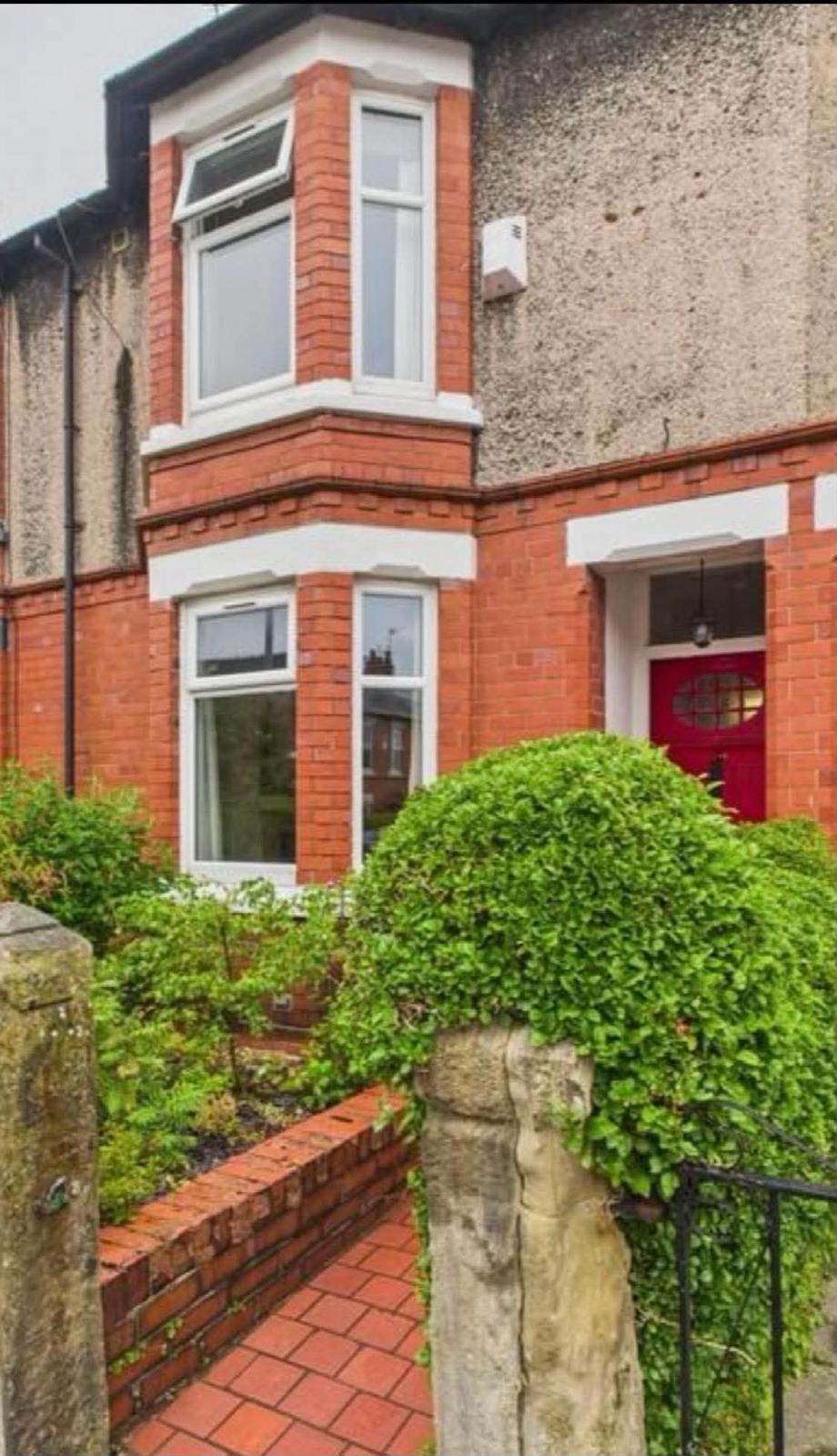
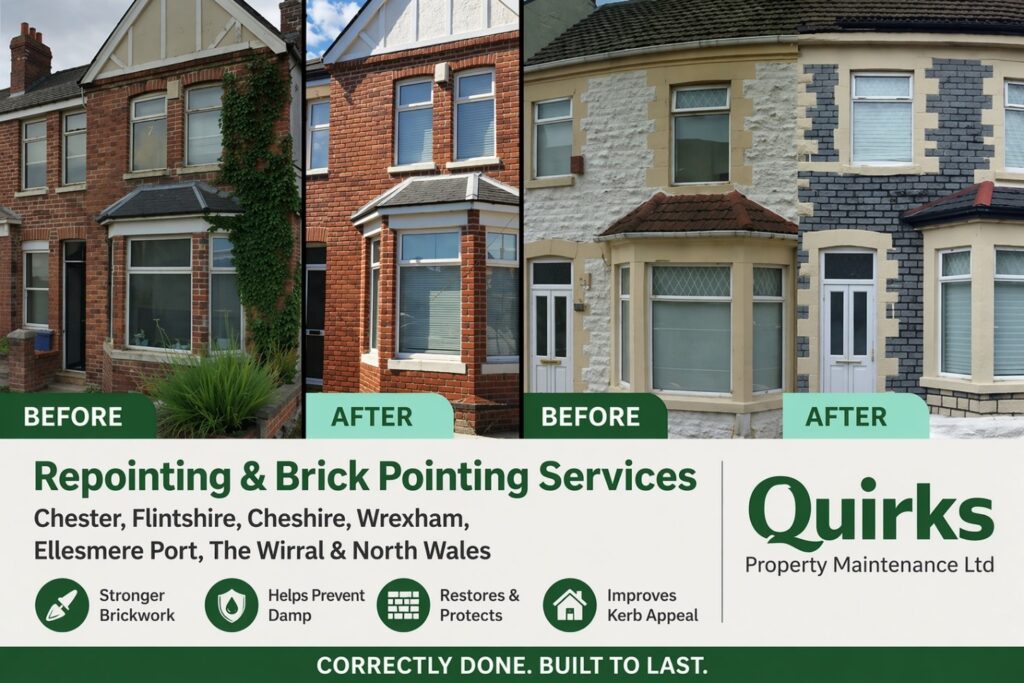
Before – Front elevation of a Chester property showing weathered and missing mortar joints prior to lime mortar repointing.
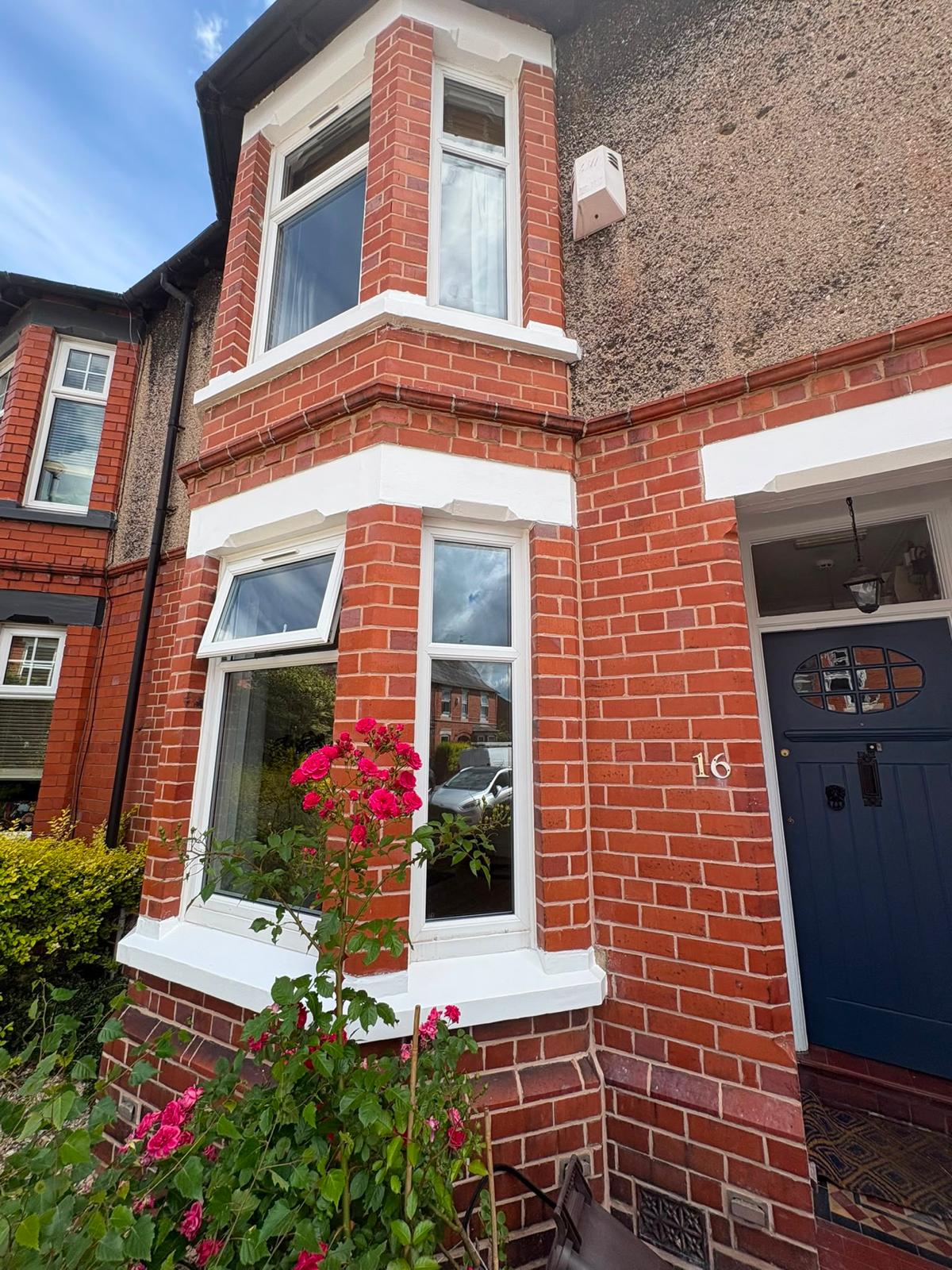
After – Front elevation following lime mortar repointing, with deteriorated joints raked out and repointed to restore the brickwork.
FAQs – Repointing Chester
My house is Victorian — does it need lime mortar?
That is exactly what the inspection confirms: age, brick type and the existing bedding mortar tell us, and the correct mortar is confirmed before work starts. Where lime is right, cement is not a cheaper substitute — it is a slower way to lose brick faces.
Is my building listed or in a conservation area — can you still repoint it?
Yes — we confirm the right mortar and tell you what consents are likely before work starts; applying for them stays with the owner.
How do you get the old mortar out without damaging the brick?
Carefully, and mostly by hand on soft brick — sharp chisels and restraint, or dust-extracted power raking only where the joints and brick can take it. Widened, chipped joints are the mark of a rushed job; ours don’t leave that signature.
Will the new pointing stand out from the rest of the wall?
Fresh mortar always reads slightly new, but matched colour, texture and joint profile mean it weathers in within seasons rather than staying a patchwork forever.
What decides the cost?
Wall area, access, how much raking out the joints need, and the mortar specification. WhatsApp us photographs of the wall with your location for an initial assessment and itemised quotation — and honest advice on whether you need a full repoint or just the failed areas.
Get in Touch
📞 Period brick deserves the right mortar. Send photographs and your location by WhatsApp for an initial assessment and quotation — or call 01244 638219.
Our Commitment
Long-lasting, professional solutions using proven industry methods
