Specialist Building & Property Maintenance Services You Can Depend On.

Home › Chimney repairs

Chimney repairs, rebuilds and removal

Chimney repairs, rebuilds and removal
North Wales, Cheshire and Wirral

Leaning, leaking and storm-damaged chimney stacks repaired, rebuilt or taken down. Repointing, flaunching, pots and leadwork put right by one contractor, across North Wales, Cheshire and Wirral.

  • Stacks rebuilt, repaired or taken down
  • Leadwork, flaunching and pots renewed
  • Priced from your photographs
 
 
WhatsApp or email gets the quickest reply. We come back to you as soon as we can.
Google5.0★★★★★Based on 150+ Google reviews
Trading since2008
£5 millionpublic liability insurance in place
Workmanship guarantee on completed works
One contractorAll trades under one roof

In short: we repair, repoint, rebuild and take down chimney stacks, and renew the flaunching, pots, cowls and leadwork that keep them dry. Most chimney work can be priced from photographs taken from the ground. Damp showing indoors on the chimney breast has its own page, chimney damp, and so does taking out a fireplace or chimney breast on our fireplace removal page.

One contractor

One contractor for the stack, the roof and the room below
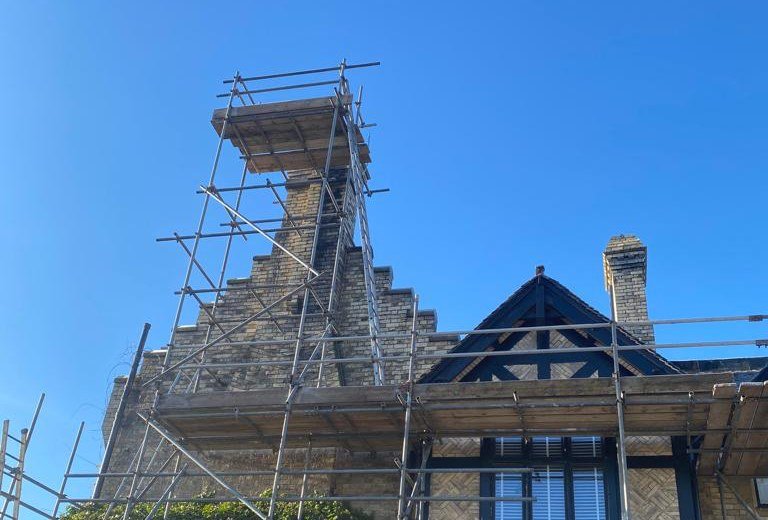
  • Scaffold built up round a tall brick chimney stack on a period house, against a blue sky

    Brickwork

    Stacks repaired, repointed and rebuilt.
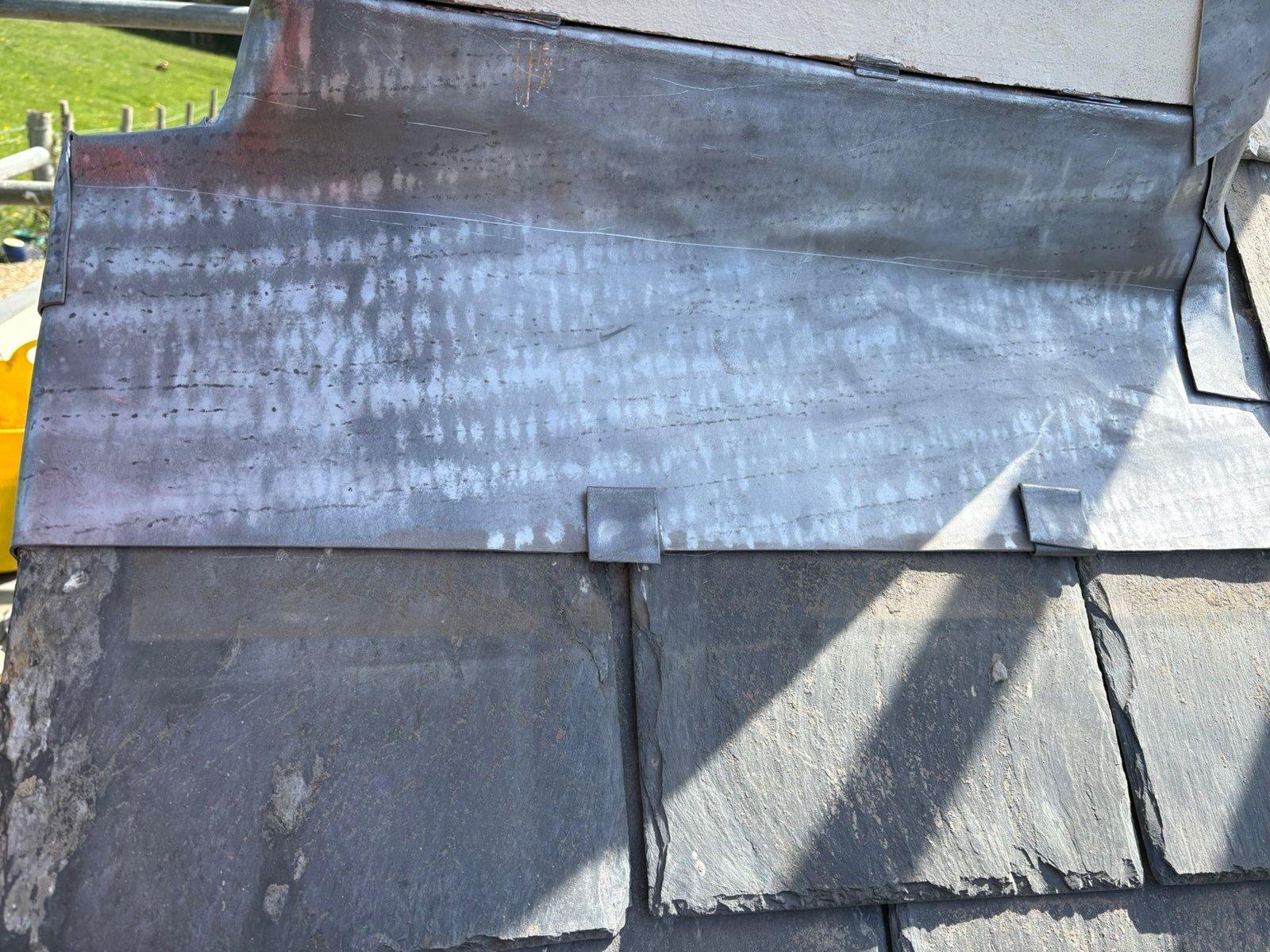
  • New lead flashing dressed over slates at the base of a rendered chimney stack, held with lead clips

    Roofing and leadwork

    The roof made good and the junction weathered in lead.
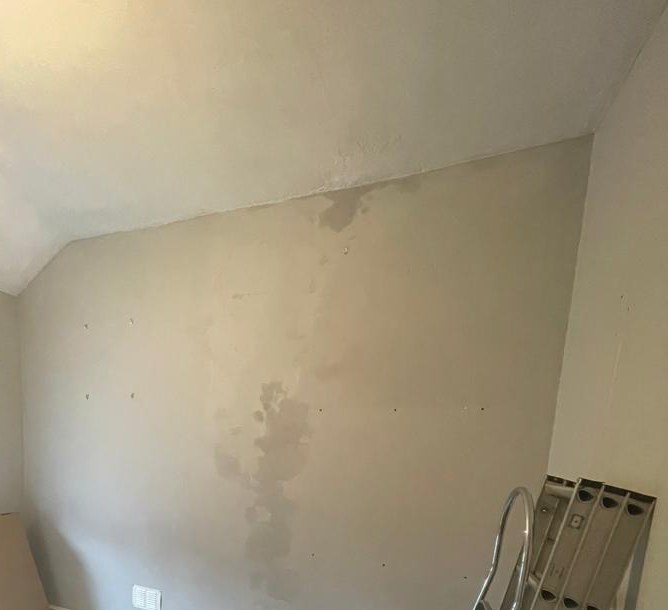
  • Damp stain running down a painted bedroom wall from the ceiling line, below a chimney

    Damp

    The stains and damp patches a chimney leaves indoors.
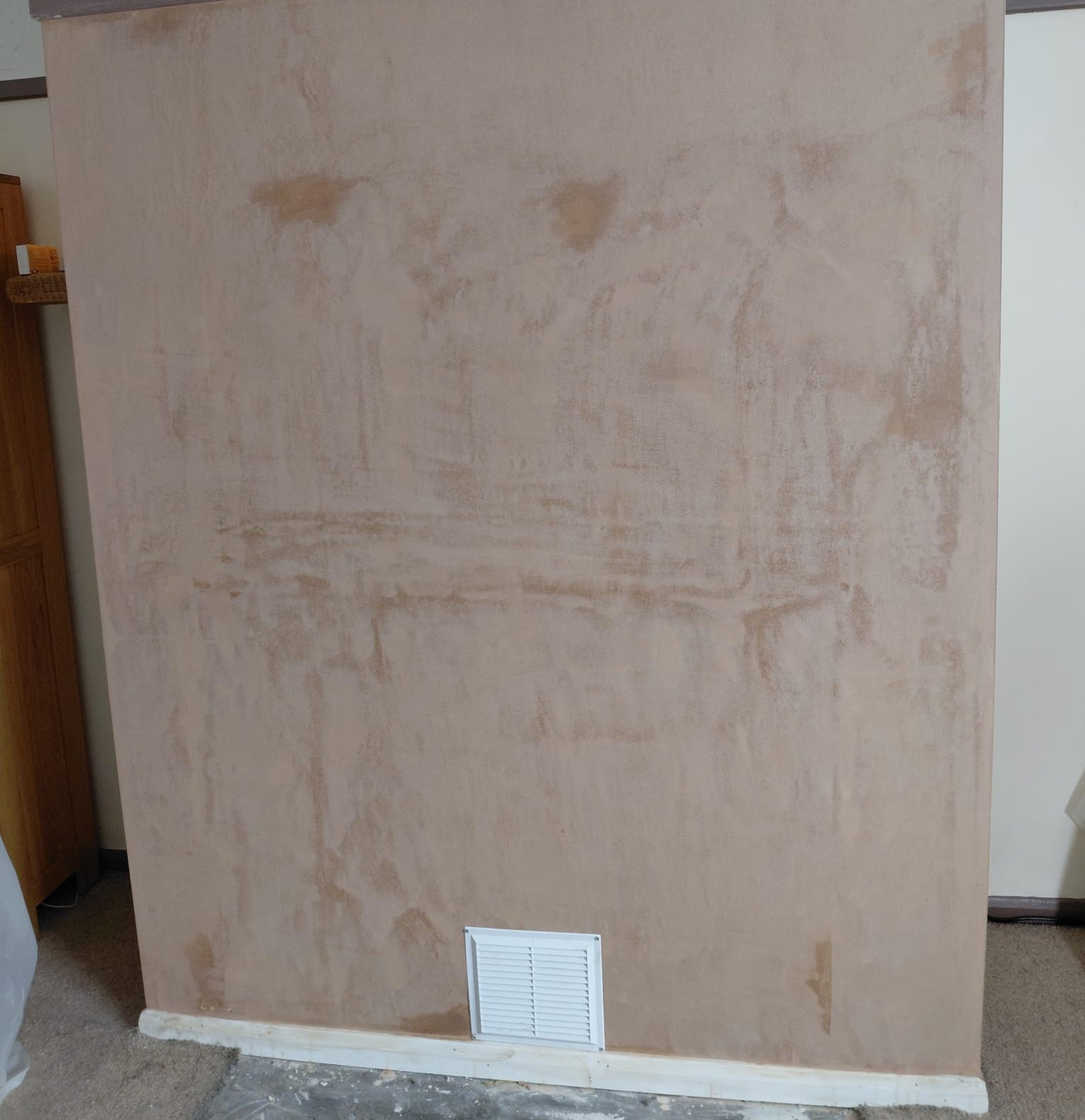
  • Chimney breast freshly plastered with an air vent fitted at the base

    Plastering

    Ceilings and chimney breasts made good indoors.

What the weather does

Chimney repairs: why the stack is the first part of a house to fail

A chimney stack stands clear of the roof with nothing to shelter it. It takes the wind and rain on every side, it is wetted from the top as well as the face, and it goes through more heat, frost and drying than any wall below it. That is why mortar that is still sound on the house can be soft and open on the stack, and why a chimney often needs attention years before anything else does.

Most chimney problems start small. A joint opens, the flaunching round the pots cracks, a length of lead lifts. Water gets in, frost widens the gap, and what was a morning’s repair becomes loose brickwork, a leak into the loft or a stack that has started to lean. The work on this page runs from that first repair to a full rebuild, and to taking a stack down where it is no longer wanted.

Chimney condition

Signs your chimney needs attention

Most of these can be seen from the ground or an upstairs window

  • Mortar joints that look dark, open or washed out, or mortar and grit in the gutter
  • Cracked or missing flaunching round the base of the pots
  • A pot that is cracked, loose or leaning
  • Lead that has lifted, split or gone, or tape and cement where lead should be
  • Bricks with their faces breaking away
  • Plants growing out of the stack
  • A stack that is no longer upright, or a crack running through it
  • Brick, mortar or pieces of pot on the roof, in the garden or in the fireplace
  • Damp patches or staining on the chimney breast, or on a ceiling close to the stack
  • Water in the loft around the chimney after rain

One sign on its own is usually a repair. Several together, or a lean, mean the stack should be looked at properly before winter.

The usual causes

What causes chimney problems

  • Weather

    Wind-driven rain soaks the stack and frost breaks down wet mortar and brick. Stacks on exposed sides of a house, and on coastal and hillside properties, go first.

  • Mortar that has reached the end of its life

    Once joints open, water runs into the stack instead of off it, and each winter takes a little more.

  • Failed flaunching

    The flaunching is the mortar bed that holds the pots and sheds water off the top of the stack. When it cracks, water goes straight into the head of the stack.

  • Leadwork that has failed or was never fitted

    Where the stack meets the roof, lead flashing and soakers keep the junction dry. Lead that has lifted lets water in; a junction sealed with tape or a cement fillet in place of lead will crack and let go.

  • Flues left open or sealed wrong

    A pot with nothing over it lets rain straight down the flue. A flue that is no longer used and has been sealed with no ventilation traps moisture inside, and it shows as damp on the chimney breast.

  • Storms

    A gale finds whatever was already weak: a loose pot, a cracked cap, a stack whose mortar had gone on the weather side.

Chimney work we carry out

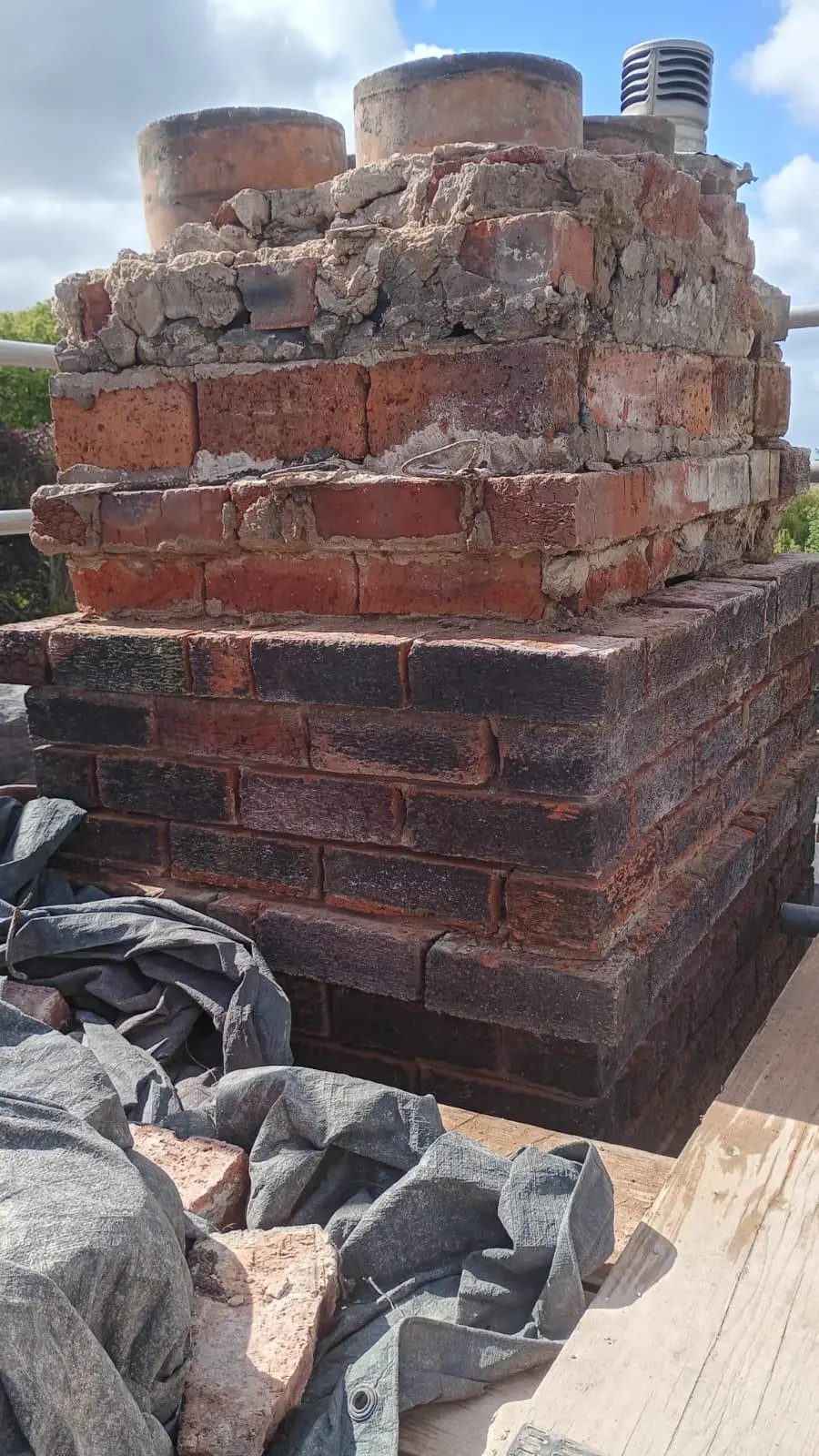
  • Top of a brick chimney stack with the old flaunching broken away and the top courses loose, pots standing free, before the head of the stack was rebuilt

    Chimney rebuilds — partial and full

    Where the brickwork has lost its bedding, repointing will not hold it. We take the stack down to sound brickwork and rebuild it: the top few courses, from the roof line up, or the whole stack, with new flaunching, pots and leadwork to finish.
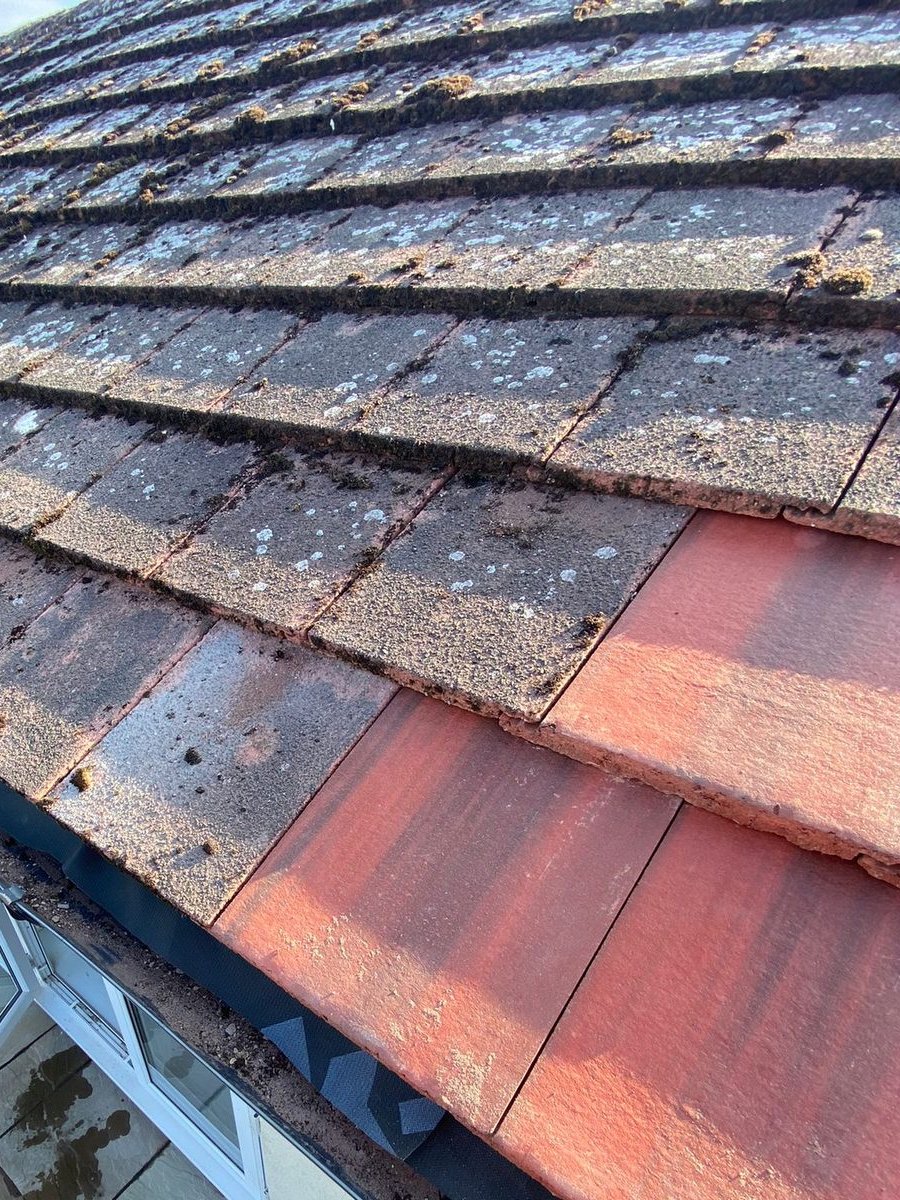
  • Close view of a roof slope after a chimney stack was taken down, with new red tiles laid in beside the weathered originals

    Chimney removal and taking stacks down

    Unsafe and redundant stacks taken down from proper access. Down below the roof line with the roof made good over the top, or reduced in height and capped. What is left below is set out in the quotation before we start.
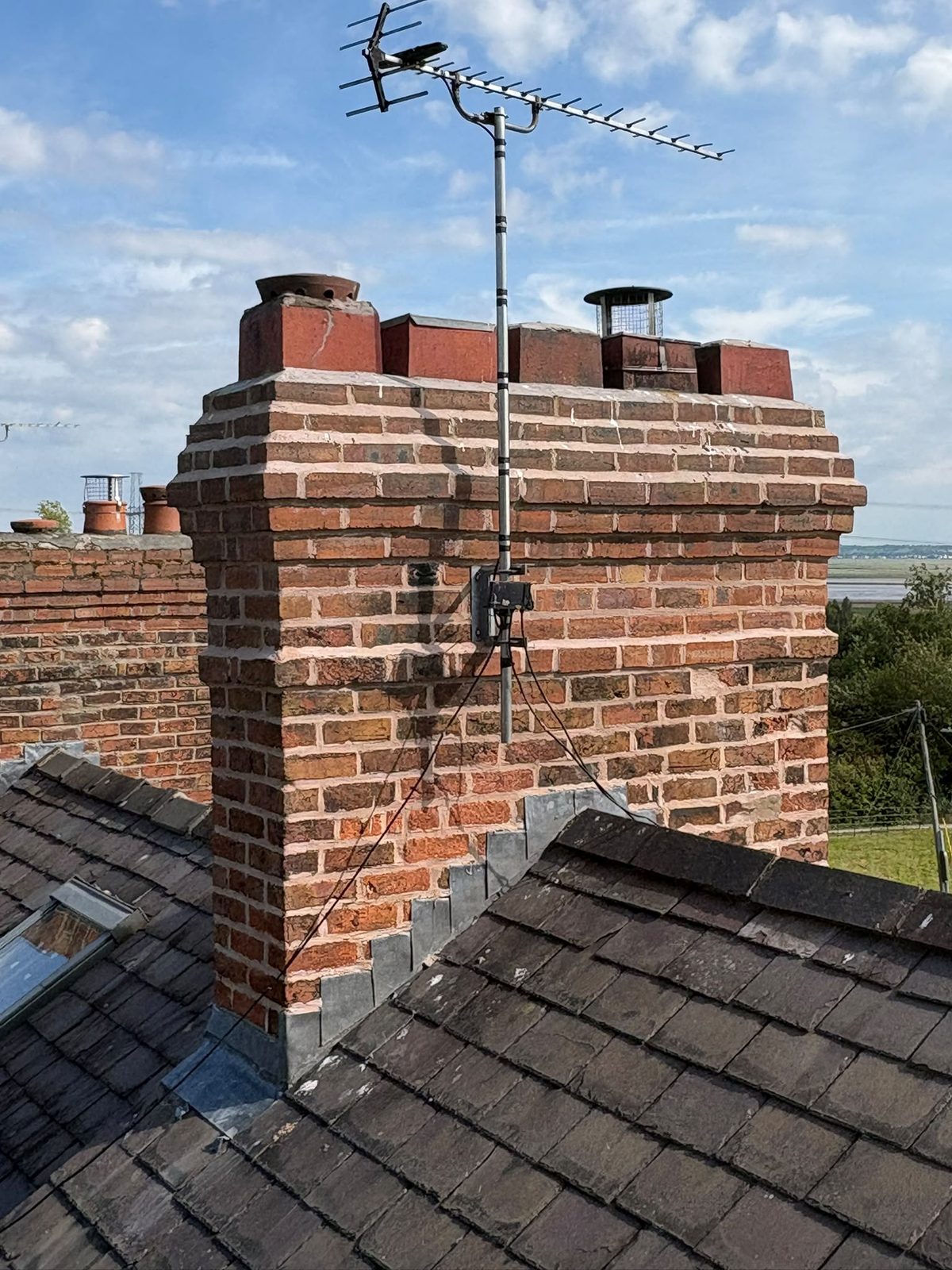
  • Red brick chimney stack with projecting brick bands, freshly repointed, above a slate roof

    Chimney repointing

    Failed joints raked out and repointed to shed water again. Older stacks built in soft brick or stone are repointed in lime mortar where the building calls for it; a hard cement joint on soft brick holds water in and the faces start to break away. For house walls, see repointing.
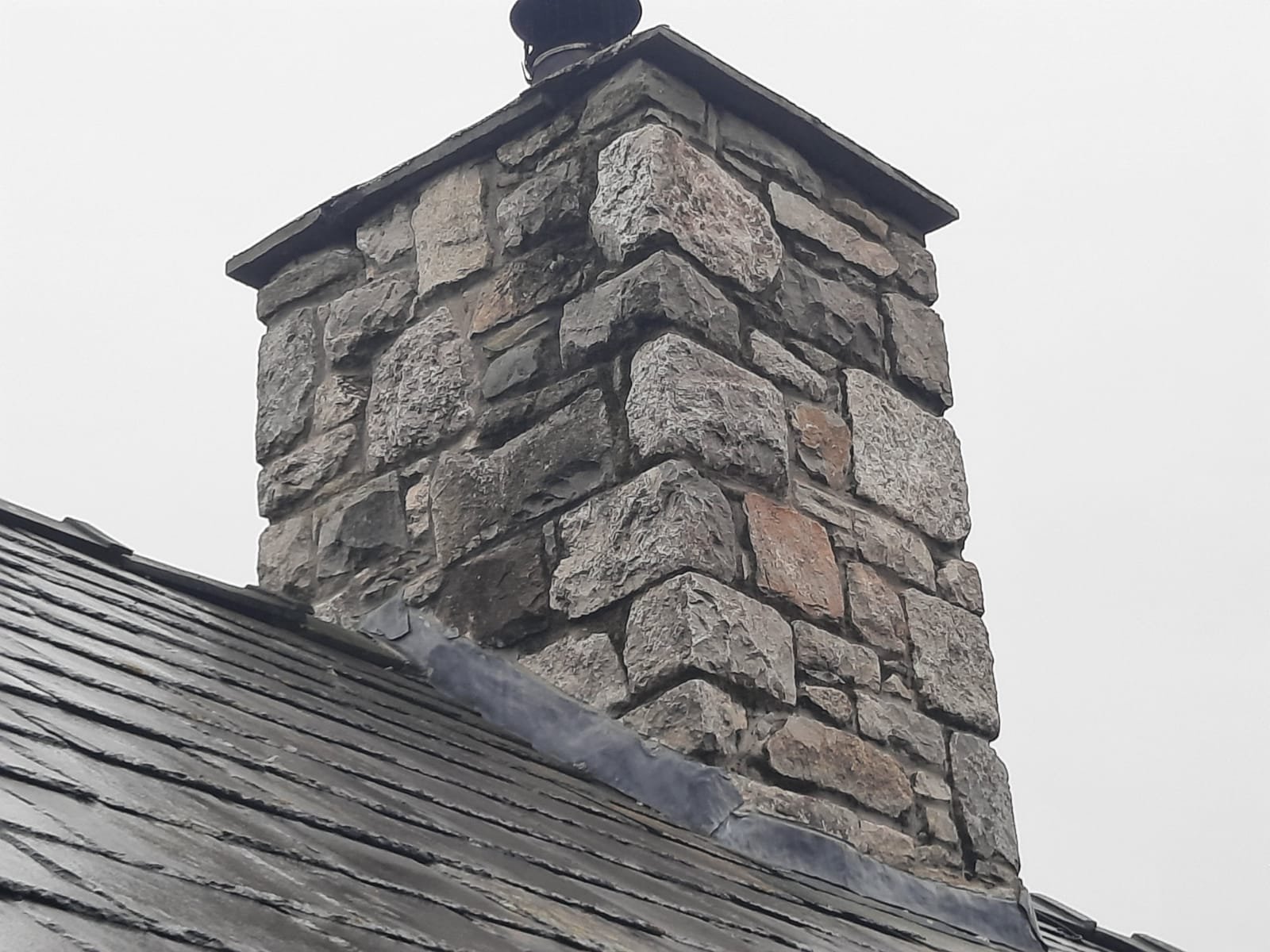
  • Stone chimney stack on a slate roof with new lead flashing dressed round its base

    Lead flashing and soakers

    Lifted, split and missing leadwork repaired or renewed where the stack meets the roof — flashings, soakers, aprons and back gutters — so the junction is weathered in lead, not tape or mortar.
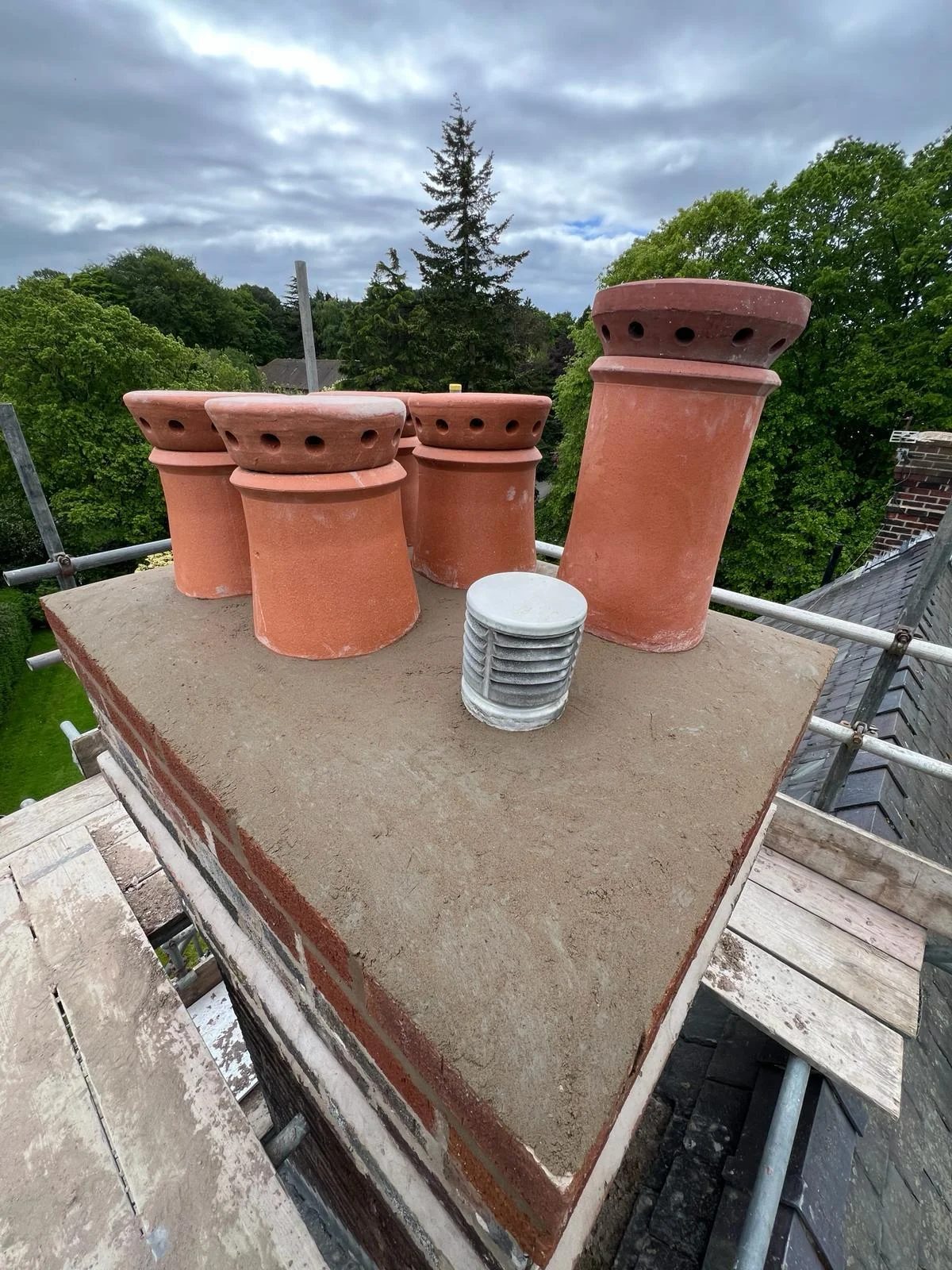
  • New flaunching on top of a chimney stack with five new clay pots bedded in and a vent cap on the sixth flue

    Flaunching, pots, caps and cowls

    Cracked flaunching broken out and renewed. Cracked and loose pots replaced and bedded in. Cowls fitted to flues in use, and ventilated caps to flues that are not, so rain is kept out and air can still move. A flue that still serves a fire, stove or boiler is never capped.
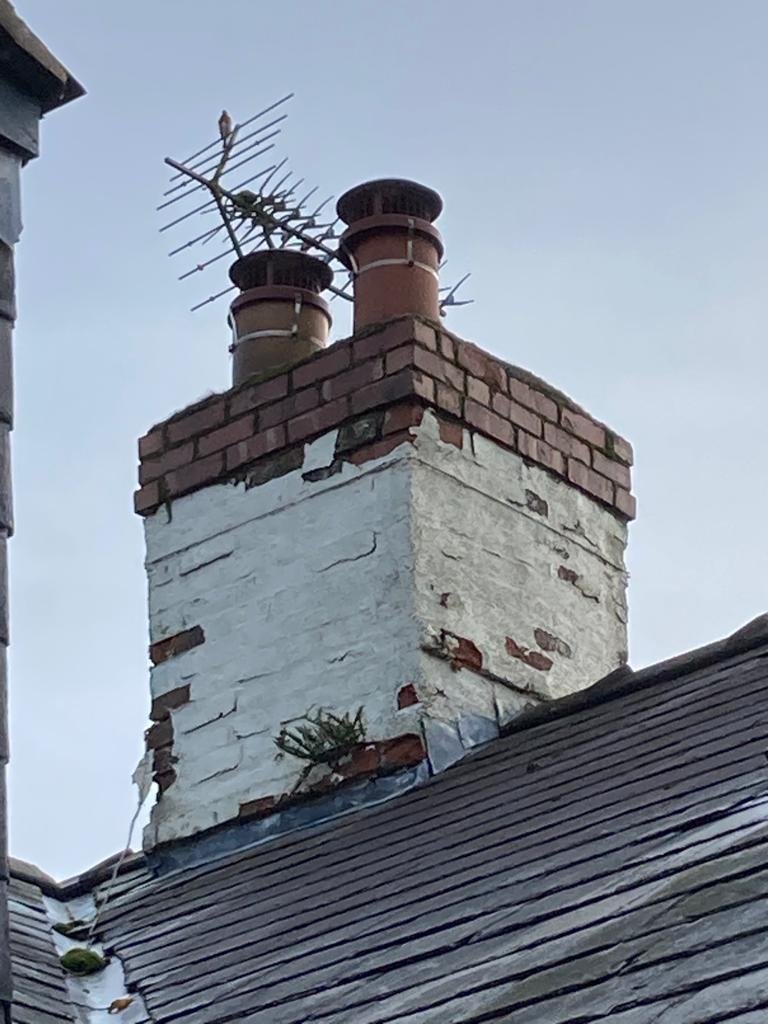
  • Painted brick chimney stack with the paint flaking away, brick faces breaking off and plants growing at its base

    Chimney brickwork repairs

    Loose bricks re-bedded, and damaged and spalling bricks cut out and replaced with bricks chosen to match. Rendered stacks repaired or re-rendered. Brickwork on the rest of the house is on our brick repairs page.

Where the water gets in

Chimney leaks: working out where the water gets in
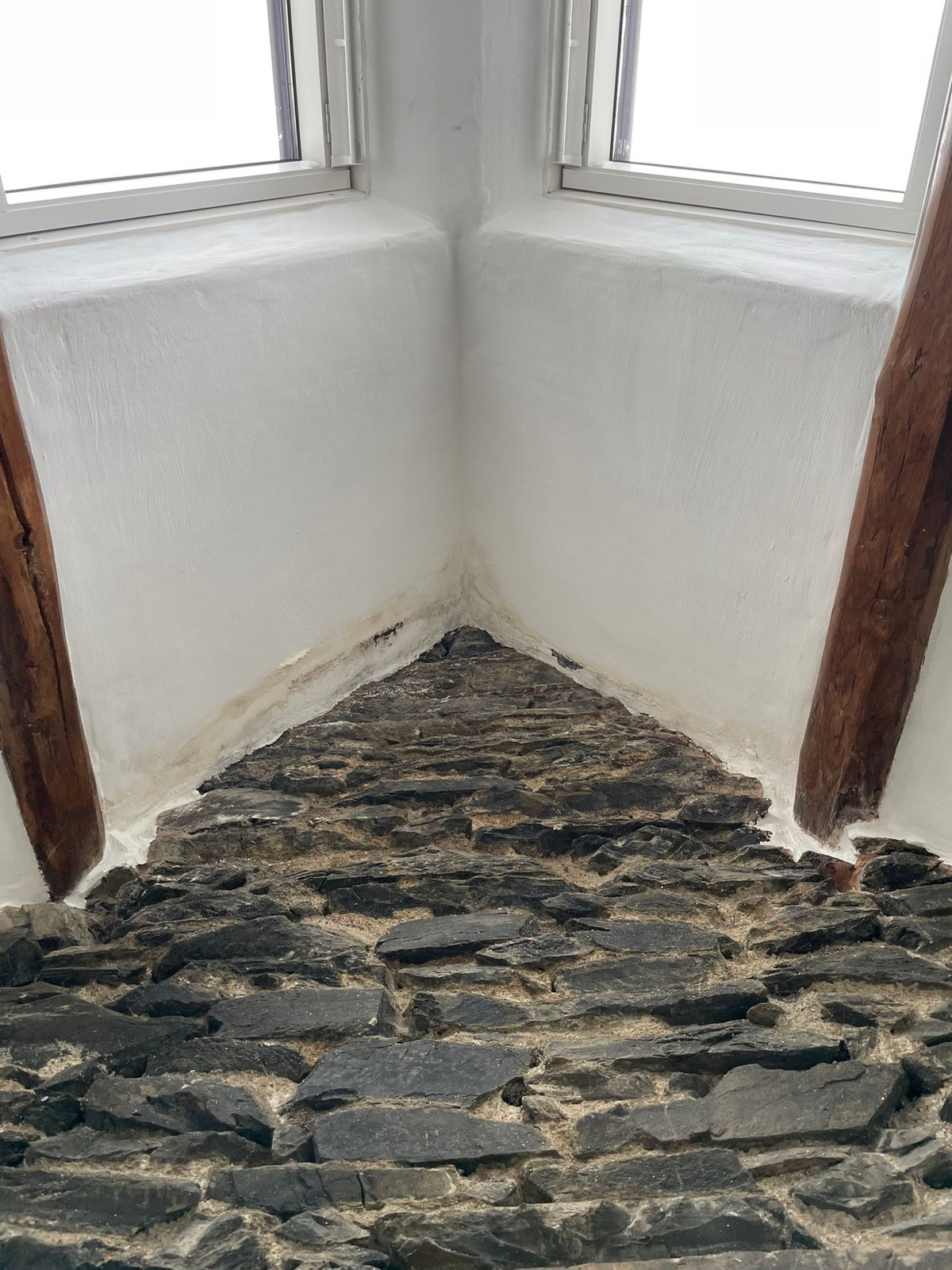
Stone chimney breast between two rooflights, with staining on the white plaster where it meets the stonework
A stain shows where the water comes out, not where it gets in.

A damp patch on a chimney breast, a stain on the bedroom ceiling beside it, or water in the loft after heavy rain all point at the chimney, but they do not say which part of it. Water coming in at the top of a stack can show a floor or two below, and some way from where it got in.

There are only so many ways in:

  • the flaunching and pots at the top
  • the joints in the brickwork
  • the lead where the stack meets the roof
  • the flues themselves where they are open to the sky

A stain does not say which of them has failed, so a lot of chimney leaks come down to a process of elimination: we put right the most likely part first, and if water still gets in, the next part is the one to look at.

Not all chimney damp is a leak. Salts left in the brickwork by years of fires draw moisture out of the air, and a sealed flue with no ventilation sweats inside. Those show as damp on the chimney breast with nothing wrong at roof level, and they are dealt with differently. Our chimney damp page covers them; where the water is coming through a wall and not the stack, see penetrating damp.

After a storm

Cracked, leaning and storm-damaged chimneys

A stack that has started to lean, has a crack running through it, or has lost pots or bricks in a storm should not be left for the next gale. If anything is loose and could fall, keep people away from the ground below it and see our emergency roof repairs page.

Once it is safe to work on, there are three answers. Where the damage is at the top, the head of the stack is rebuilt. Where the mortar has gone through the height of the stack, it is rebuilt from the roof line. Where the stack is not needed, it comes down and the roof is made good. Photographs taken from the ground show us what can be seen from there. They cannot show whether a stack is stable, so which answer applies to a leaning or cracked stack is settled from close access. It may need a structural engineer’s view first; where you have no engineer, we arrange one we use regularly.

Where required, we can provide photographs, reports and quotations to support an insurance claim. Storm damage that has gone further than the chimney — ceilings down, water through the house — is covered on our storm damage page.

Which answer

Repair, rebuild or remove?

  • Repair

    where the stack is upright and the brickwork is sound: repointing, new flaunching, a pot, a length of lead. This is most chimney work.

  • Rebuild

    where the bricks are loose in the wall. Putting new mortar into brickwork that cannot hold it only delays the job. A partial rebuild takes the top courses down to sound work; a full rebuild starts at the roof line.

  • Remove

    where the chimney is no longer used and is costing money to keep. Taking a stack down below the roof line removes the part that takes the weather. What stays below — the chimney breast in the rooms and the loft — has to be left supported, capped and ventilated, and that is agreed before work starts.

Two things can change the answer. A stack shared with the house next door may carry your neighbour’s flues as well as your own. Taking it down or rebuilding it needs their agreement, and may need formal written notice to them before work starts. And on a listed building or in a conservation area, a chimney is part of what is protected, so check with the council before any decision to remove or alter one.

Fireplaces and chimney breasts

Work at the top of a chimney and work at the bottom affect each other. A fireplace that has been closed up needs a vent, and the flue above it needs a ventilated cap, or the chimney breast turns damp. We cap and ventilate the flue at the top as chimney work.

Taking out a fireplace, blocking one up, or removing the chimney breast itself is a different job, and removing a chimney breast is structural: whatever is left above has to be held up. Those are covered on our fireplace removal and blocking up page, and the structural side under structural alterations. If a flue serves a gas fire or a boiler, work on the appliance is carried out by Gas Safe registered engineers.

Looking after a chimney

A chimney does not need much, but it does need looking at.

  • Look at the stack from the ground once a year and after any big storm. Binoculars or a phone camera zoomed in will show open joints, a cracked pot or lifted lead.
  • Check the gutters. Mortar and grit in the gutter below a stack is the joints coming out.
  • Deal with small things while they are small. Repointing a sound stack costs far less than rebuilding one that has been left.
  • Keep rain out of flues: a cowl on a flue that is in use, a ventilated cap on one that is not. Never cap a flue that still serves a fire, stove or boiler.
  • Do not seal a leaking junction with tape or mastic. It hides the problem for a season and makes the proper repair harder.
  • If anything is growing in the stack, send us a photograph. Do not pull at it: the roots may be all that is holding loose brickwork in place.

When we work on a chimney we photograph the finished work, because you cannot see the top of your own stack. The photographs are available on request.

Recent work

Recent chimney projects

Flintshire — bungalow

Recent chimney rebuild project in Flintshire

The chimney stack on this bungalow in Flintshire had been taken down by a previous owner, leaving nothing above the roof where it used to stand. The owner sent us their own photograph with the position marked on it, and we priced the whole job from their photographs.

BEFORE

Where the stack used to be

The owner’s photograph shows the side of the bungalow with no stack above the eaves. They drew round the spot where it had stood, which told us exactly where the rebuild had to go.

A stack is more than brickwork. Where it passes through the roof is a junction that has to be weathered properly, so putting it back meant new brickwork, a new crown and pot, and new lead where it meets the roof covering.
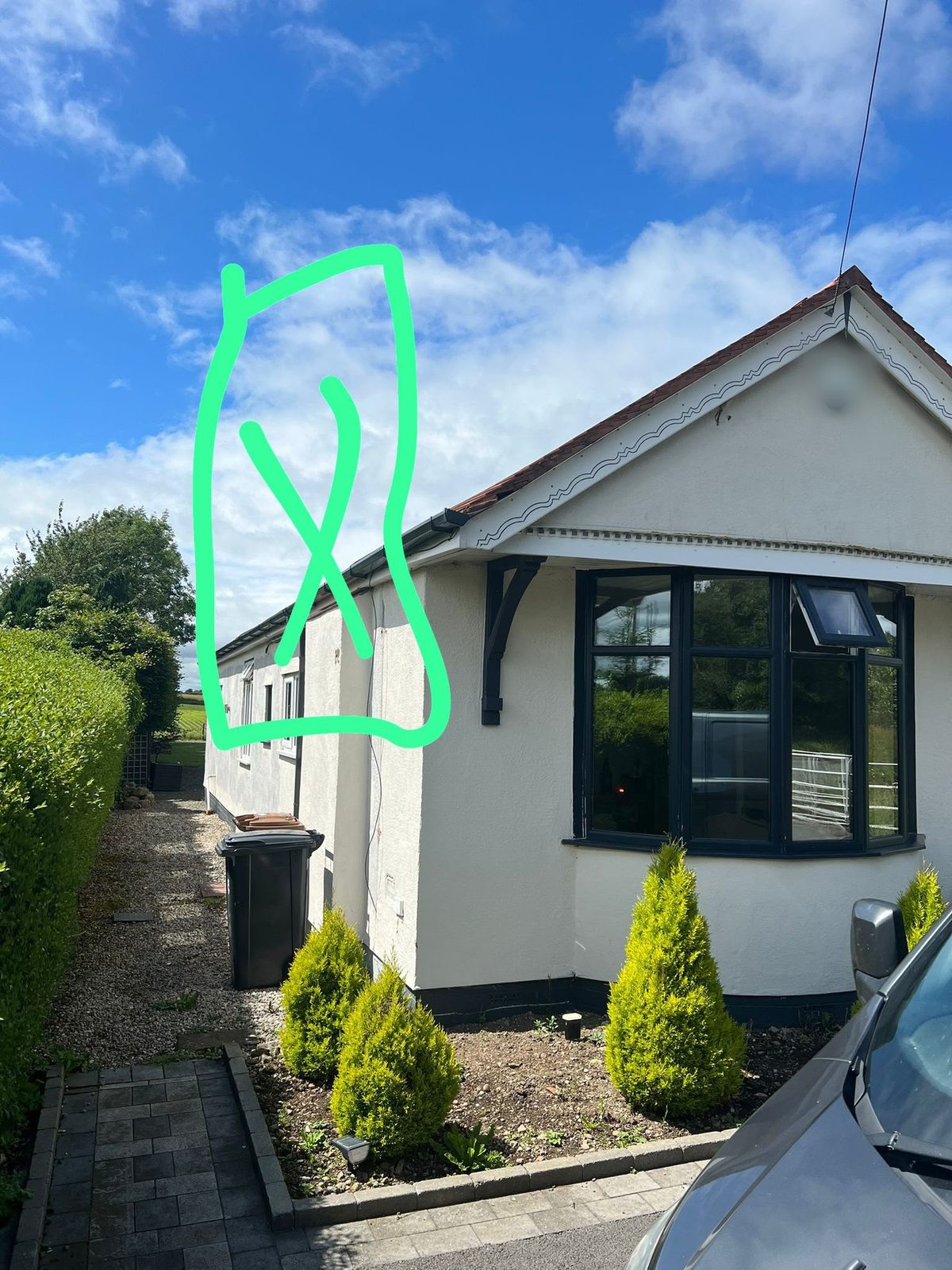
Side elevation of a rendered bungalow with no chimney above the roof, the stack position marked in green on the owner’s photograph
The owner’s own photograph, marked up to show where the stack had been. We priced the job from their photographs.

DURING

Building the stack back up

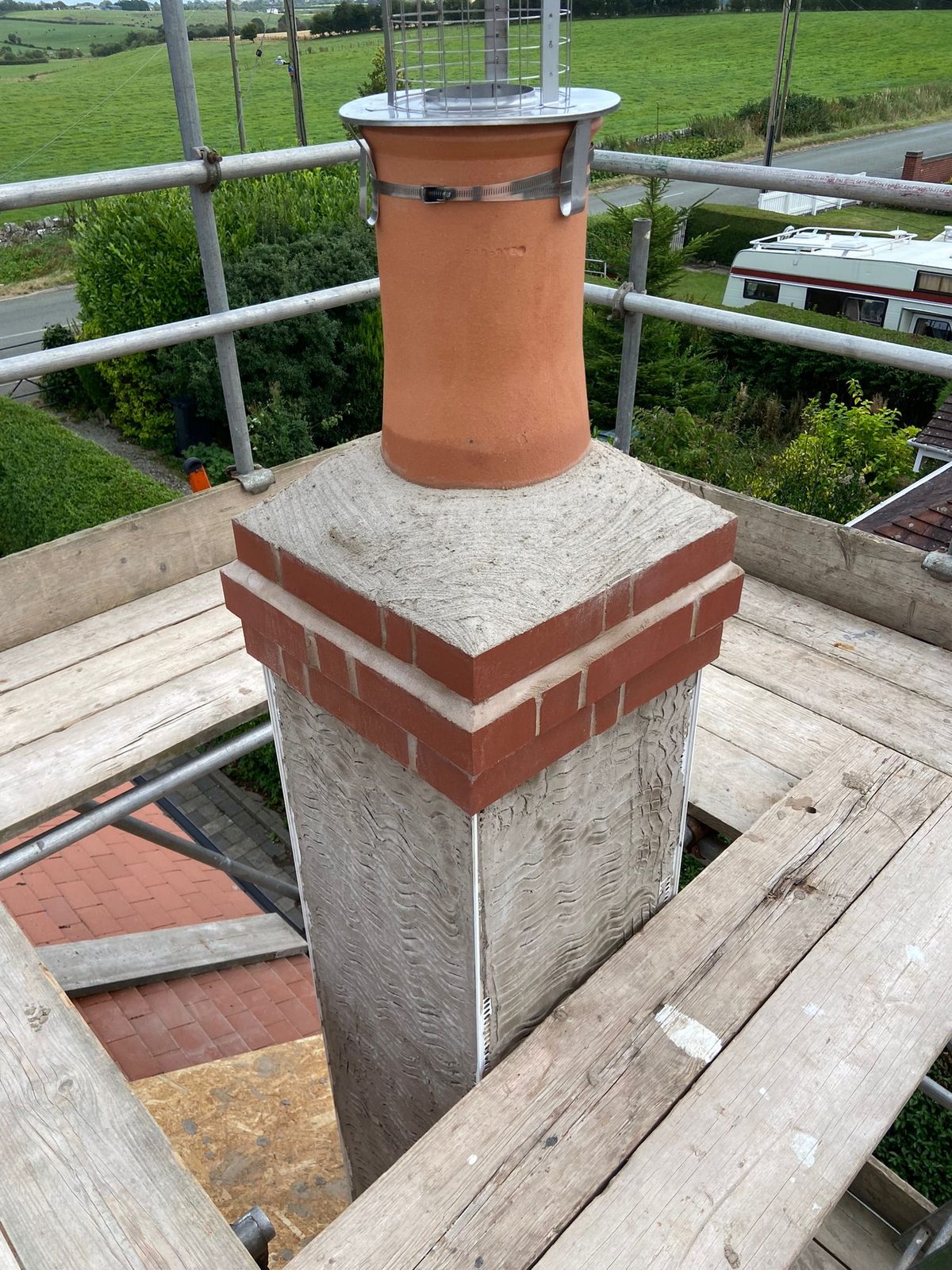
With scaffold up along the side of the bungalow, the roof was opened up around the stack position and the stack built back up in brick from the roof line. A projecting brick band was formed near the top, under a new crown, and a new clay pot bedded in.

The stack was then rendered, starting with a scratch coat to take the finish coat, with beads on the corners to keep the edges straight.
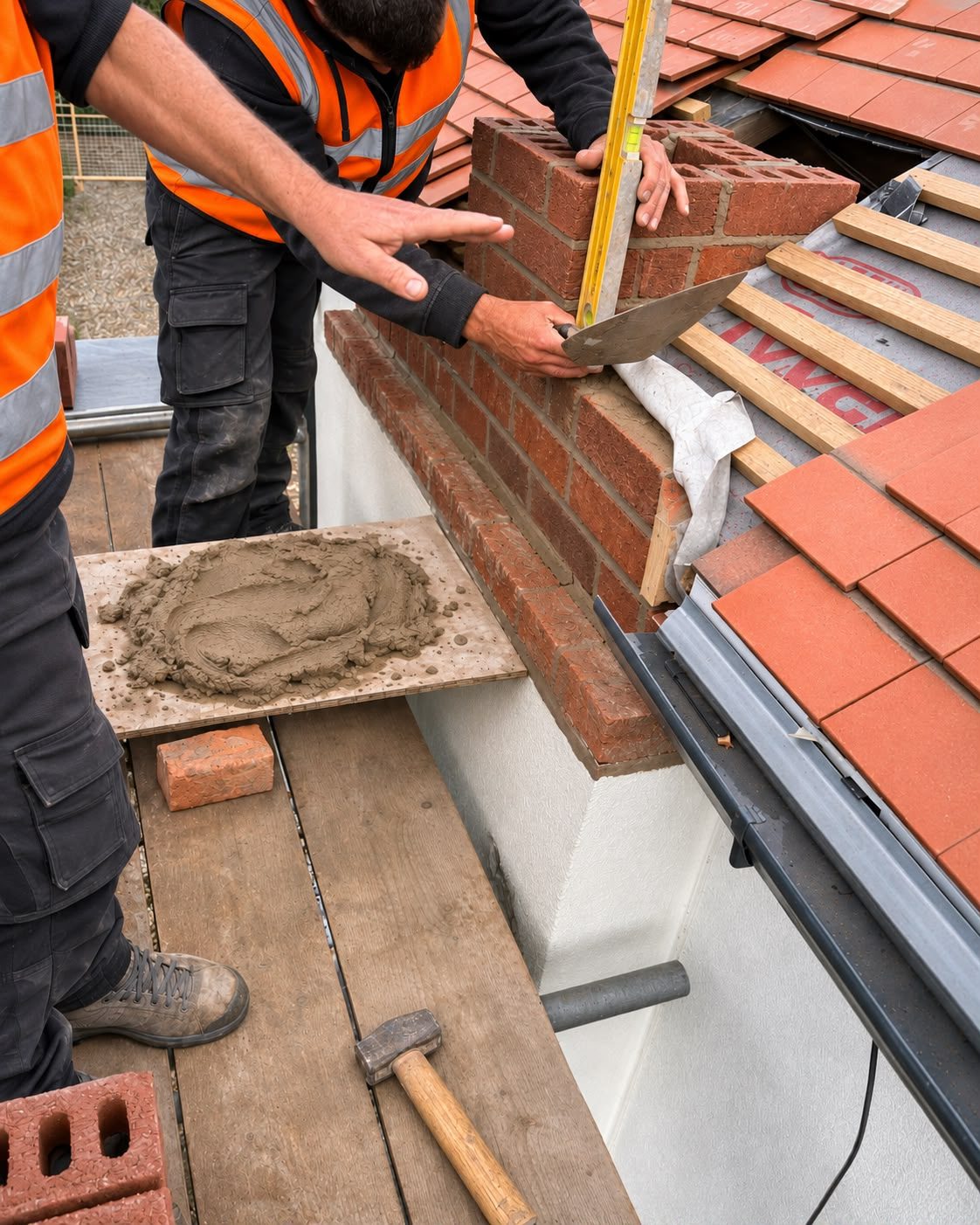
Two operatives laying new brickwork for a chimney stack at the roof line, with the roof tiles and battens opened up around it
The new brickwork going up at the roof line, with the roof opened up around the stack.
New clay chimney pot bedded in a new crown above a projecting red brick band, the stack below in a scratch-coat render
The new crown and pot in place, with the scratch coat on the stack ready for the finish coat.

AFTER

Rendered and weathered in lead

The finished stack carries a smooth finish render over the scratch coat, with new lead flashing round its base where it passes through the roof.

It stands back where the owner marked it on their photograph — the same photograph the job was priced from.
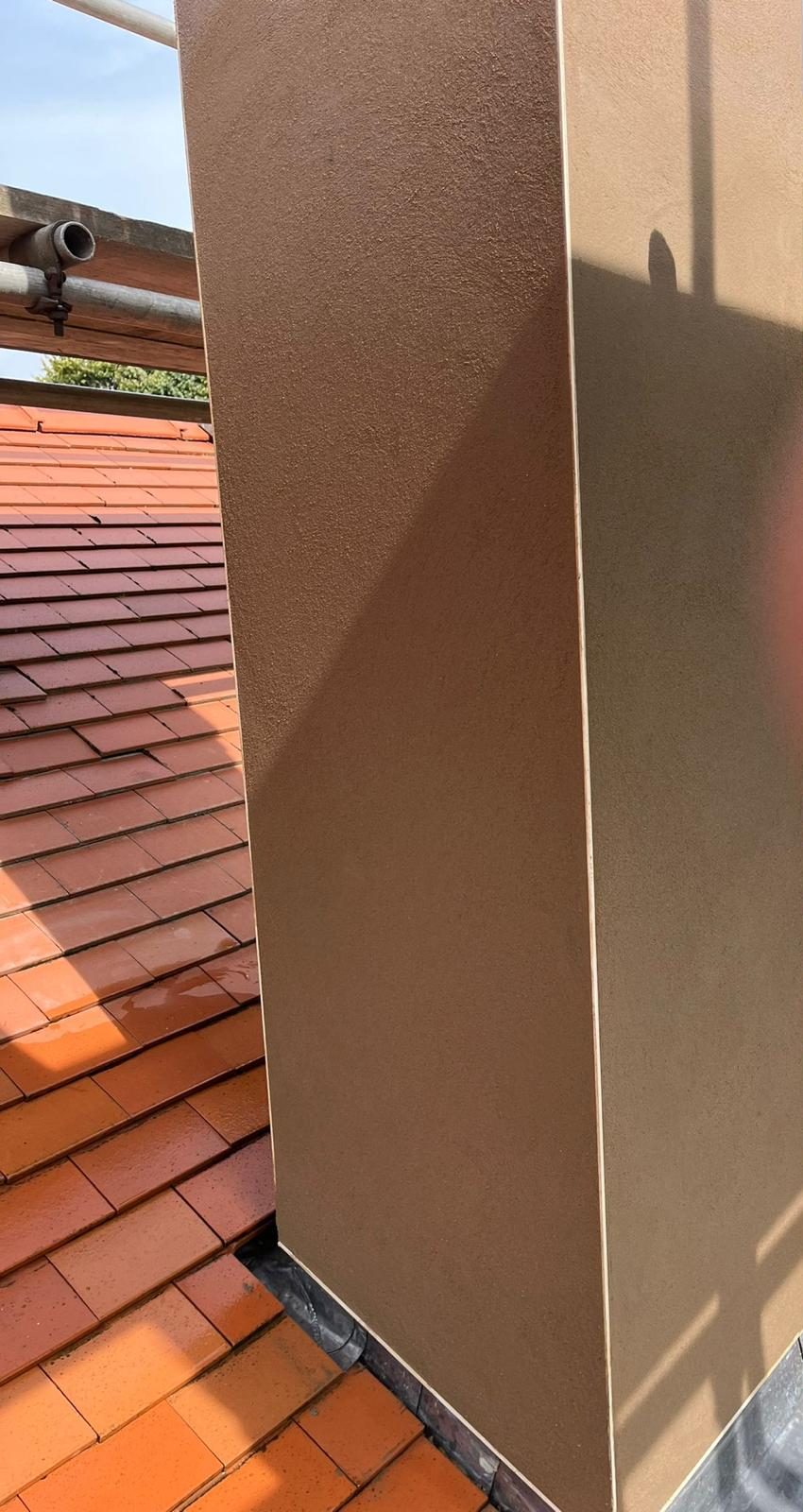
Rebuilt chimney stack in a smooth buff finish render with lead flashing at its base on a red tiled roof
The rebuilt stack with its finish render, and the new lead at the base where it meets the roof.

This study covers the chimney stack itself: the brickwork, the crown and pot, the render and the lead flashing at the roof.

Scope

  • Job priced from the owner’s own photographs
  • Scaffold to the side elevation
  • Chimney stack built back up in brick from the roof line
  • Projecting brick band formed below a new crown
  • New clay chimney pot bedded in
  • Stack rendered — scratch coat and finish coat, with corner beads
  • New lead flashing where the stack meets the roof

Project information

PropertyBungalow
LocationFlintshire
IssueChimney stack taken down by a previous owner
ServiceChimney rebuild
WorksStack rebuilt in brick, new crown and pot, rendered, new lead flashing
PricedFrom the owner’s photographs
AccessScaffold
  • Chimney rebuild
  • Flintshire
  • Bungalow
  • Priced from photos

While the team was on site, the owner asked us to look at damp on the chimney breast inside; that job is written up on our damp proofing in Flintshire page.

Wirral — shop with flat above

Recent chimney storm repair project in the Wirral

On this shop with a flat above, storm water was getting in where the side of the chimney steps in against the wall. The slates on that sloping shoulder had broken and slipped in a storm, but the reason it let water in was older: there had never been any lead on it.

BEFORE

Loose slates and no lead at the junction

From the scaffold, the slates on the shoulder were broken and sitting loose. Where the slating meets the brickwork of the stack and the rendered wall, the joint had only ever been sealed with flashing tape and a cement fillet, and both had cracked and lifted.

Tape and cement are a short-term answer on a junction like this. Brick, render and slate move differently with the weather, the fillet cracks, the tape lets go, and once a storm has lifted the slates there is nothing left to keep water out.

DURING

Re-slated and lead fitted

The broken slating was taken off the shoulder and the slope re-slated.

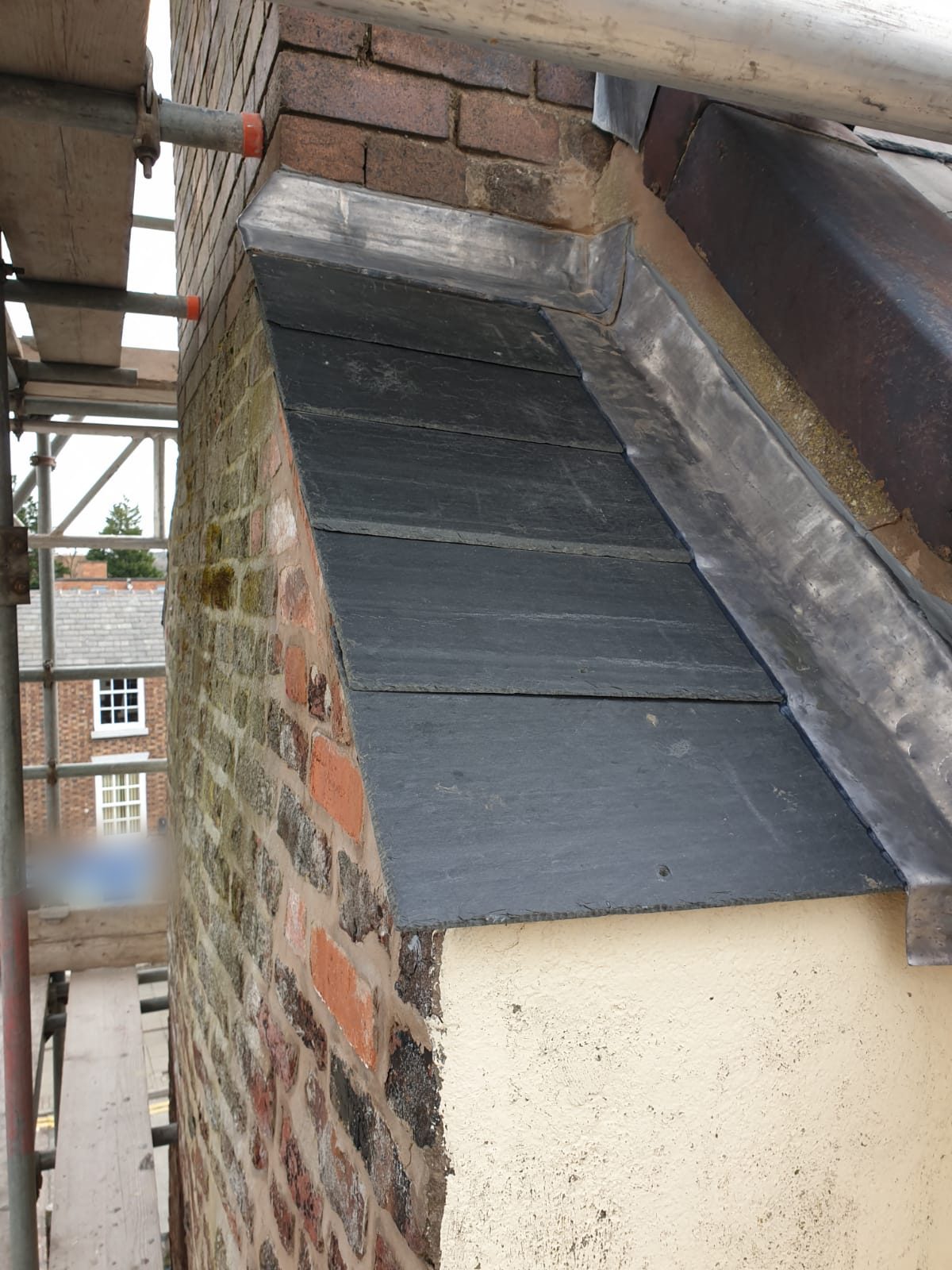
Lead flashing was then fitted along the top of the slating and against the stack, so the junction is weathered in lead rather than tape and cement.

AFTER

The detail it should always have had

The shoulder now has a full run of slates with new lead dressed over the top edge and turned up against the brickwork of the stack.

Nothing about the shape of the chimney changed. What changed is that the junction which had relied on tape is now weathered in lead.
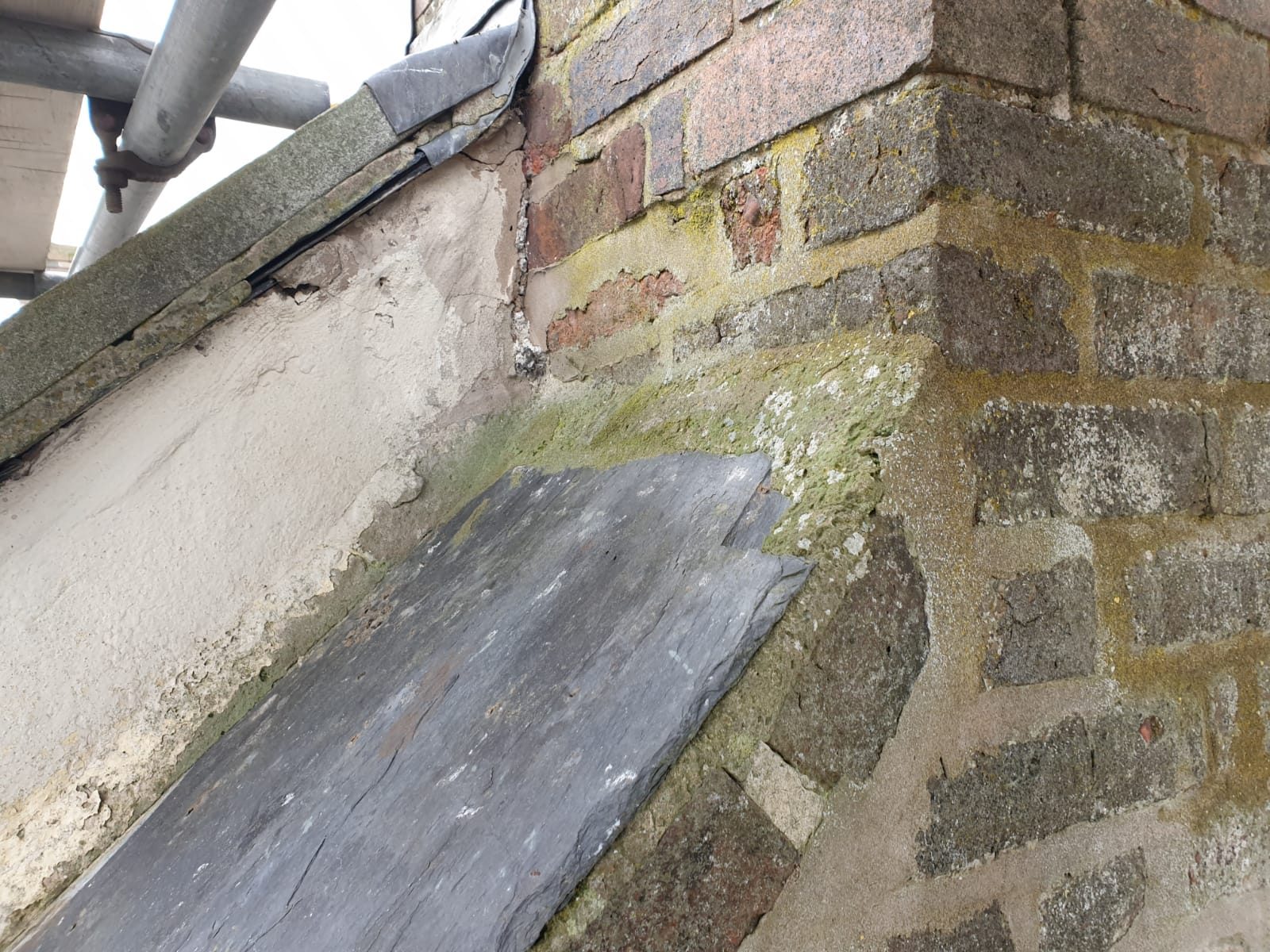
Broken and slipped slates on a sloping chimney shoulder, with lifted flashing tape and a cracked cement fillet against brick and render
The shoulder as we found it: slates broken and slipped, and old tape and a cracked cement fillet where lead should have been.
Chimney shoulder re-slated in natural slate with new lead flashing dressed along the top and against the brick stack
The shoulder re-slated, with new lead flashing where there had been none before.

This study covers the slating and leadwork to the chimney shoulder only.

Scope

  • Worked from scaffold
  • Broken and slipped slates taken off the chimney shoulder
  • Chimney shoulder re-slated
  • New lead flashing fitted where there had been only tape and a cement fillet

Project information

PropertyShop with flat above
LocationWirral
IssueSlates broken and slipped on the chimney shoulder; no lead at the junction
CauseLeadwork never fitted, finished off by a storm
WorksShoulder re-slated; new lead flashing fitted
AccessScaffold
  • Storm repair
  • Wirral
  • Leadwork
  • Slating

Wrexham — bungalow

Recent chimney removal project in Wrexham

The chimney stack on this bungalow in Wrexham was taken down below the roof line and the roof tiled over where it had come through, leaving nothing above the tiles to maintain.

BEFORE

The stack as it stood

The brick stack rose through the roof slope at the edge of the bungalow, beside the conservatory, and we set up a tower scaffold next to it for access.

The part of a stack above the roof is the part that takes the weather — the pots, the crown and the junction with the roof. Taking it down below the roof line takes all of that away.

DURING

Taken down and tiled over

The stack was taken down to below the roof line, with the brickwork beneath left in place.

The roof was then tiled over where the stack had come through, so the slope runs through unbroken.

AFTER

The roof tiled through

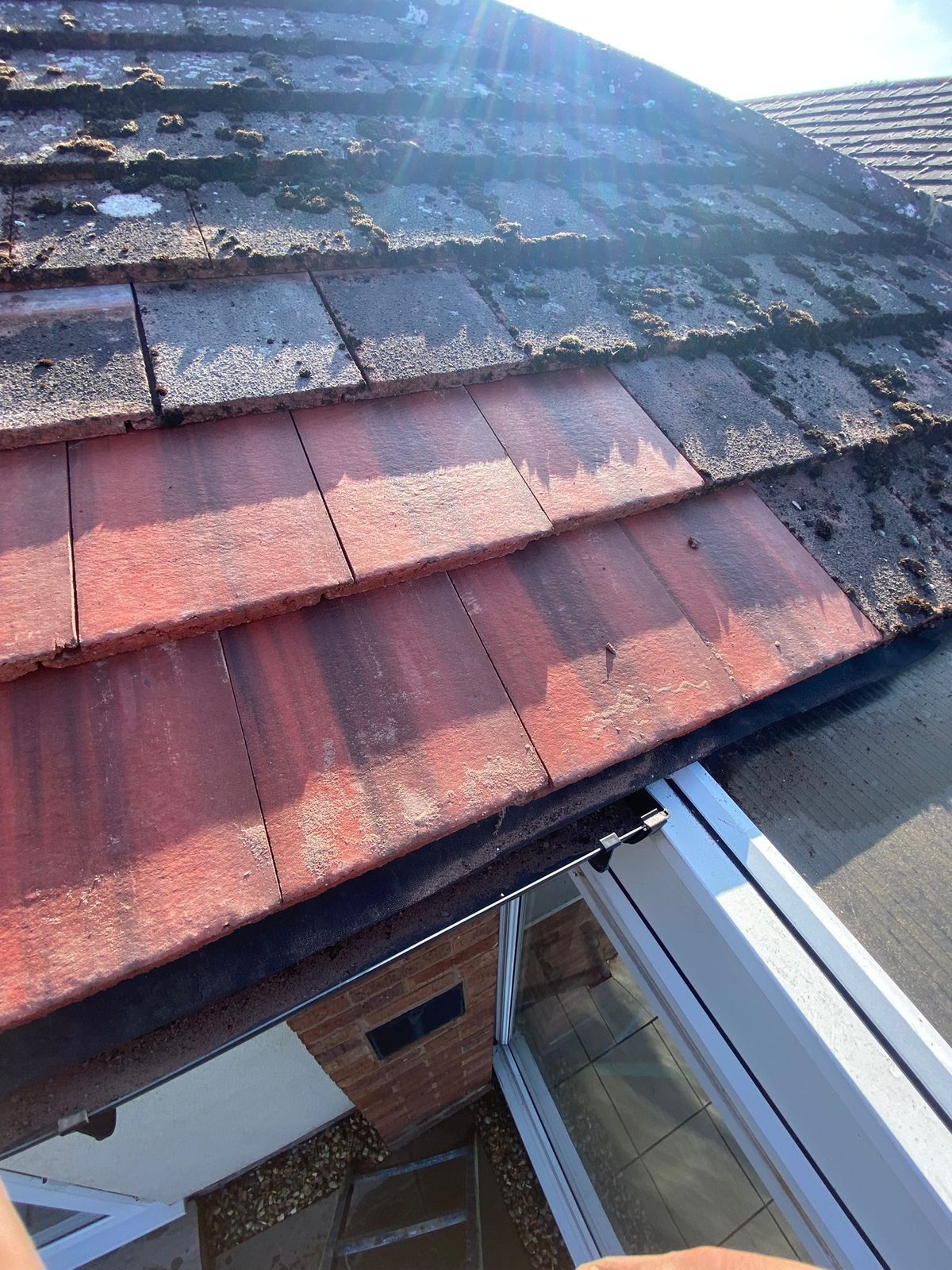
The new tiles are red to match the roof as it was laid. The existing tiles were red too and have weathered grey over the years, so the difference in colour is age, not a mismatch.

Below the eaves, the lower part of the stack remains in place.
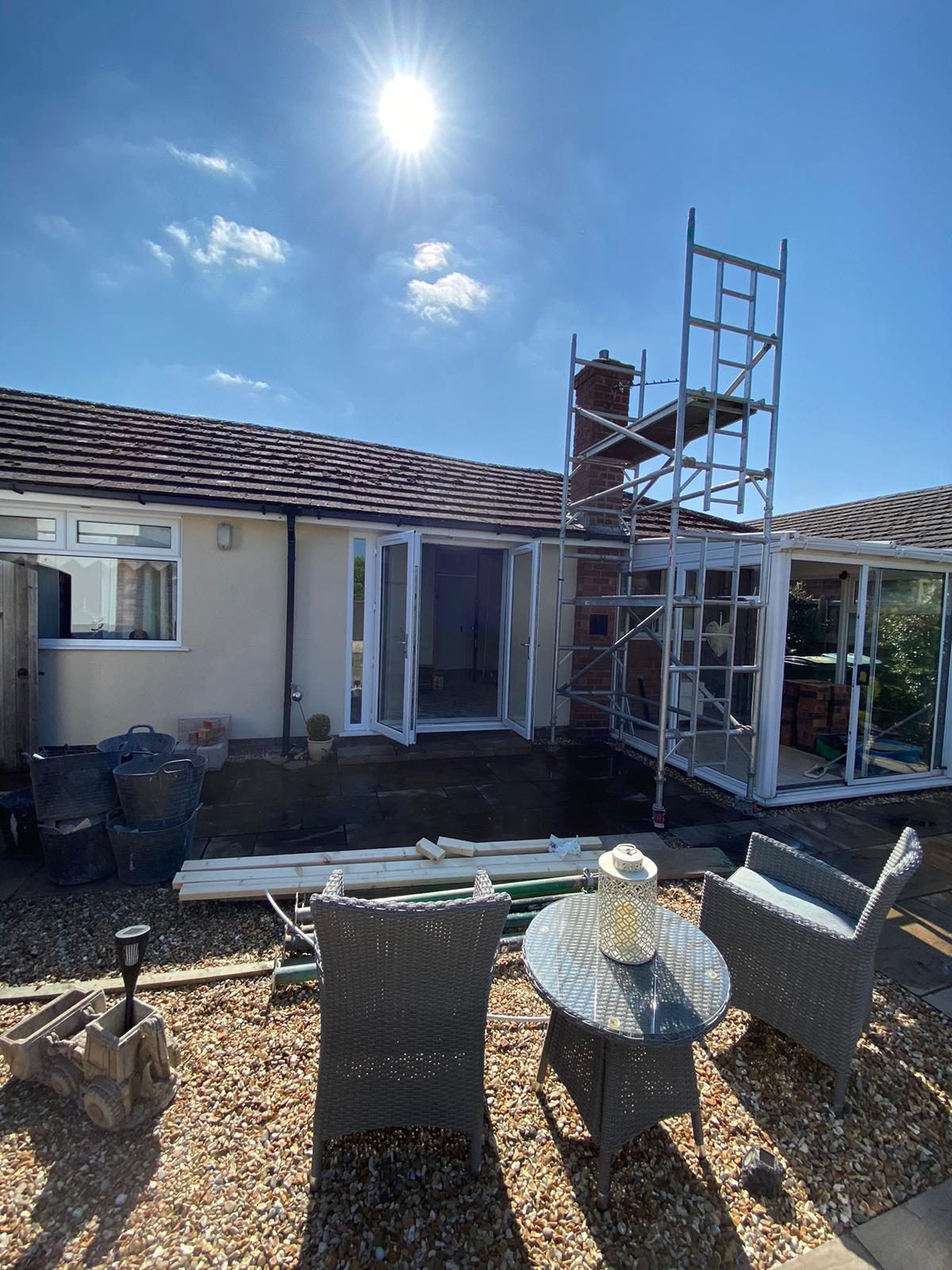
Brick chimney stack on a bungalow roof beside a conservatory, with a tower scaffold set up next to it
The stack before work started, with the tower scaffold up beside it.
New red roof tiles laid where a chimney stack has been removed, among older weathered tiles at the eaves
The roof tiled over where the stack came through. The old tiles were red too and have weathered grey.

This study covers taking the stack down below the roof line and tiling over the roof.

Scope

  • Tower scaffold for access
  • Chimney stack taken down below the roof line
  • Brickwork below the roof line left in place
  • Roof tiled over where the stack came through, in red tiles to match the original colour

Project information

PropertyBungalow
LocationWrexham
ServiceChimney removal
WorksStack taken down below the roof line; roof tiled over
AccessTower scaffold
  • Chimney removal
  • Wrexham
  • Bungalow
  • Roof made good

Where we work

Chester and Ellesmere Port

Chester’s Victorian and Edwardian terraces in Hoole, Handbridge and Boughton carry tall brick stacks, often shared between two houses, and many are well over a century old. Parts of the city are conservation areas and a good number of buildings are listed, which matters before a chimney is altered or removed. Ellesmere Port and Great Sutton have more inter-war and post-war housing, where the usual jobs are flaunching, pots and leadwork.

Wirral

The Wirral has open water on three sides. Stacks in Hoylake, West Kirby, Wallasey and New Brighton face the wind off Liverpool Bay and the Dee, and exposed chimneys there weather faster than the same stack would inland. Birkenhead, Bebington and Heswall have long runs of older terraces and semis where shared stacks and failed leadwork are the common jobs.

Flintshire and Deeside

Along the Dee estuary, in Flint, Connah’s Quay, Shotton and Queensferry, chimneys take the weather straight off the water. Inland, Buckley and Mold have brick terraces and bungalows, and the higher ground towards Holywell and Halkyn has older stone-built houses with stone stacks, where lime mortar is often the right repair.

Wrexham

Wrexham and the villages around it — Rhosllanerchrugog, Ruabon, Gresford — were built largely in hard red brick from the local works, in long terraces with a stack to every house or pair. Many of these chimneys no longer serve a fire, so the work is as often capping, reducing or removing a stack as repairing one.

Denbighshire and Conwy

On the coast, Rhyl, Prestatyn, Colwyn Bay and Llandudno have streets of tall Victorian houses, many with several flues to a stack and all of them facing sea weather. Inland, Ruthin, Denbigh and St Asaph have older stone and brick buildings where a chimney repair has to suit the building it is on.

North WalesNORTH WALESFLINTSHIREWrexhamWREXHAMChesterCHESTERWirralWIRRALEllesmere PortELLESMERE PORTConwyCONWYDenbighshireDENBIGHSHIRECheshireCHESHIREA55M53M56A483A494Boundaries © OpenStreetMap contributors

We cover North Wales, Cheshire and Wirral from the Deeside and Chester districts out to mid-Cheshire.

Areas we cover

  • Chester and Ellesmere Port — Chester, Hoole, Handbridge, Boughton, Ellesmere Port, Great SuttonCH1 to CH4, CH65 and CH66
  • Wirral — Birkenhead, Wallasey, Hoylake, West Kirby, Heswall, BebingtonCH41 to CH49, CH60 to CH63
  • Flintshire and Deeside — Deeside, Connah’s Quay, Flint, Buckley, Mold, HolywellCH5 to CH8
  • Wrexham — Wrexham, Gresford, Rhosllanerchrugog, RuabonLL11 to LL14
  • Denbighshire and Conwy — Rhyl, Prestatyn, Ruthin, Denbigh, St Asaph, Colwyn Bay, LlandudnoLL15 to LL19, LL28 to LL30

We carry out chimney repairs, rebuilds and removal across North Wales, Cheshire and Wirral. Send your photographs and your postcode and we will tell you whether we cover you.

What customers say

★★★★★ 5.0 · 150+ Google reviews

  • ★★★★★

    “I’m very satisfied with the work carried out by Quirks Property Maintenance Ltd. They replaced the concrete lintel on the first floor and completed essential maintenance on the chimney stack to a high standard. Communication was always timely, clear, and detailed throughout both jobs. I would happily recommend them to others looking for reliable property maintenance work.”

    Andris Jankevics

  • ★★★★★

    “We’ve used Mike Quirks property maintenance to carry out a number of jobs now from painting, roofing and brickwork all carried out to a high standard, Mike and his team all work well in sometimes not ideal conditions. I would recommend Quirks property maintenance to anyone thinking about getting work done, he’s the 1st number I ring when getting quotes for jobs.”

    russell smith

  • ★★★★★

    “Fantastic service and a company we would highly recommend. We used Quirks to resolve a long standing damp problem in our old Victorian house. We have had a new roof, replaced guttering and soil pipes but the wall remained wet. They resolved the problem by repointing the outside wall. The team arrived just after 7 each morning and worked until dark. They cleaned up each day and were always friendly and helpful. We’ll definitely use their services again”

    SB CB

Read all our reviews on Google

Your questions

Chimney repairs: common questions

How much do chimney repairs cost?

There is no standard figure, because the price follows the stack and how we reach it. What moves it most is the height of the chimney and the access it needs, how much of it has failed, how many flues and pots it carries, whether the bricks and mortar have to be matched to an older building, and whether the roof needs making good around it. Repointing a sound stack is a different job from rebuilding one from the roof line.

Most jobs we can price from photographs — send yours on WhatsApp or by email and we’ll come back with a written quotation.

How much does it cost to remove a chimney stack?

The same applies: the price follows the job. It depends on the size of the stack and how it is built, whether it comes down below the roof line or is only reduced, how the roof is made good where it stood, what is being left below, and how we get the rubble down and away. A stack shared with next door, or a listed building, adds steps before any work starts. Send photographs of the stack from the front and the back and we will come back with a written quotation.

Why is my chimney leaking?

Usually for one of four reasons: cracked flaunching at the top, open mortar joints in the brickwork, lead that has lifted or failed where the stack meets the roof, or an open pot letting rain down the flue. The stain indoors rarely shows which, because water travels before it appears. It often comes down to a process of elimination: we put right the most likely part first, and if water still gets in, the next part is the one to look at.

What causes a damp patch on a chimney breast?

Either water getting in at the stack, or moisture from inside the chimney itself — salts left in the brickwork by old fires, or a closed-off flue with no ventilation. They look alike on the wall and need different repairs. This page covers the stack; our chimney damp page covers the rest.

Can my chimney be repaired, or does it need rebuilding?

If the stack is upright and the bricks are firm, it can almost always be repaired. If the bricks are loose, the mortar has gone through the stack, or it has started to lean, a rebuild of the affected part is the honest answer. Photographs from the ground often show which. Where they do not, we’ll tell you what else we need.

Do chimney repairs need scaffolding?

Chimney work needs proper access, which normally means a scaffold or a tower. Which one depends on the height of the stack, where it sits on the roof and how long the work will take. The access is set out in the quotation so there are no surprises.

Can you take the chimney stack down and leave the chimney breast?

Yes. The stack can come down below the roof line and the roof be made good over it, with the chimney breast left in the rooms below. What is left has to be capped and ventilated so it stays dry. Removing the chimney breast as well is structural work — see fireplace removal and blocking up.

Do I need Building Regulations approval or planning permission to remove a chimney?

Removing a chimney breast, or any part of the chimney that holds up what is above it, is structural work and needs Building Regulations approval. The application and fee are yours; we arrange the inspections at each stage of the work. Taking a stack down, in part or in full, can also need an application, because of what it does to the structure left below, to keeping the weather out and to any flue still in use. Ask your building control body before work is planned. A chimney on a listed building or in a conservation area may also need consent from the council’s planning department. Flintshire, Wrexham, Conwy and Denbighshire come under the Regulations as they apply in Wales; Chester, Cheshire and Wirral under the Regulations as they apply in England. Our Building Regulations page has more.

My chimney is shared with next door. Can it still be repaired?

Yes. Repairs to your side of a shared stack can often be done on their own, though it is better, and cheaper for both houses, to do the whole stack at once. Taking a shared stack down or rebuilding it needs your neighbour’s agreement, and may need formal written notice to them, so speak to them before anything is planned. Your deeds set out who owns which part. A shared stack can also carry flues that next door still uses.

Should an unused chimney be capped?

Yes, but not sealed, and only once it is certain the flue is unused. A flue that serves a fire, stove or boiler must stay open, and on a shared stack some of the flues belong to next door. A flue that is no longer used should have a ventilated cap at the top and a vent at the bottom, so rain stays out and air can still move through it. A flue sealed at both ends traps moisture and the chimney breast turns damp.

Do you repoint chimneys in lime mortar?

Where the building calls for it. Older stacks in soft brick or stone were built in lime and should be repointed in it. Stacks built in cement mortar are repointed to match. We say which applies in the quotation.

Is storm damage to a chimney covered by insurance?

That is between you and your insurer and depends on your policy. If you are claiming, tell us when you send the photographs and we will set the quotation out so it can go to your insurer.

Written and reviewed by Michael Quirk, Director.

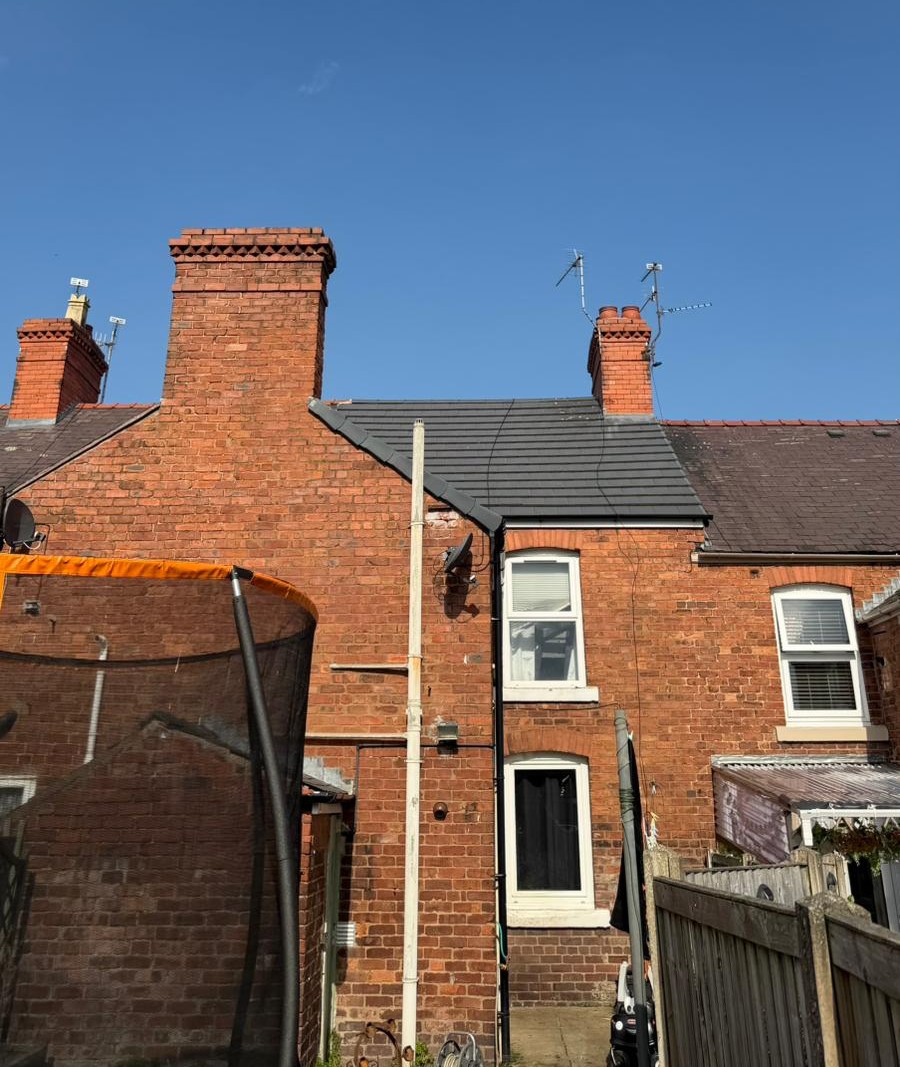
Rear of a red brick terrace with three chimney stacks above the roofline

How it works

Send us a photo of your chimney

Send us photos on WhatsApp or by email for a free, no-obligation quotation. Take them from the ground — do not go up a ladder. A zoomed-in phone photo from the garden or an upstairs window shows more than you would think.

  1. 1Photograph the stack from the front and the back, and any damp patch indoors
  2. 2Send them on WhatsApp or by email with your postcode. If they don’t show enough, we’ll tell you what else we need
  3. 3We look at what you have sent and work out what has failed
  4. 4You receive a written quotation setting out the work and the access it needs
  5. 5Once you accept, we agree a start date
Send Photos on WhatsApp
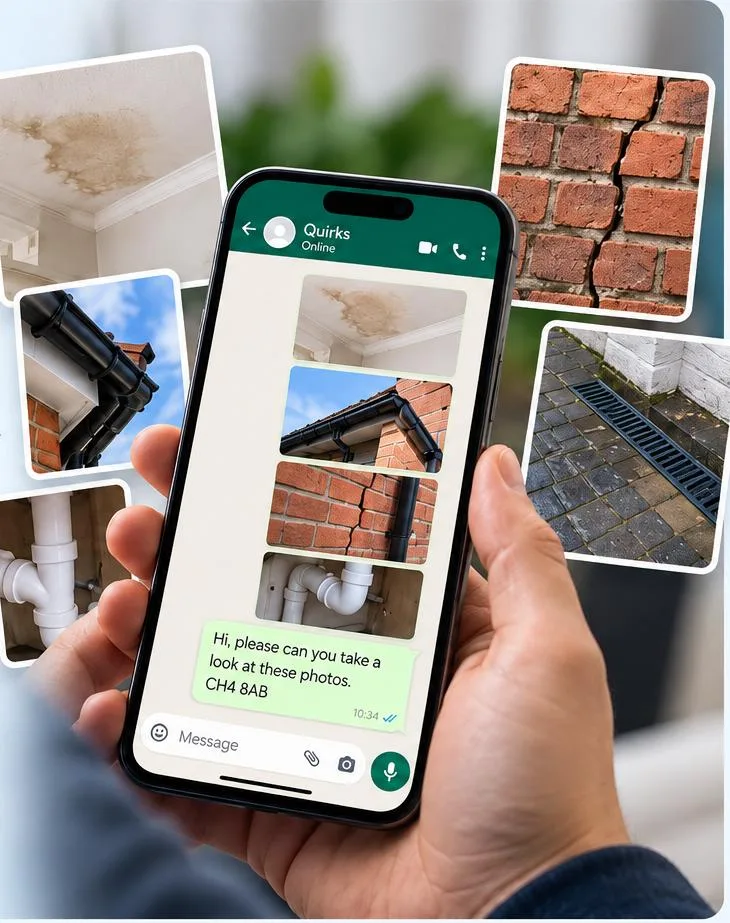
Customer sending Quirks photos of damp, gutters, cracked brickwork and a leaking pipe on WhatsApp

Request a written quotation

Send us your photographs and a few details and we’ll come back with a written quotation.

    So we can confirm we cover your area.


    JPG, PNG, HEIC, WEBP or PDF. One photograph per box.

    We use your details and photographs to deal with your enquiry — our privacy policy explains how.

    Prefer to send photos? Message us on WhatsApp

    CHIMNEY REPAIRS — SEND US PHOTOGRAPHS

    Worried about your chimney? Send us a photo.

    Send us photos of the stack and a short description on WhatsApp or by email. We’ll come back to you as soon as we can.

    Scan the code
    Powered by Joinchat