A Fast, Efficient and Friendly Building and Maintenance Service You Can Depend On.
Concrete and Solid Floors Across Flintshire

Damp Concrete Floor Help – Survey First
Survey first, then the right system for what the survey finds
Survey First
A FOD Certified Surveyor finds the cause before anything is specified.
The Right System
Liquid DPM, sheet membrane, epoxy resin or coating – chosen from the findings.
Written Quote
Findings and a written quote before any work is booked.
Flintshire is home ground: Quirks Property Maintenance Ltd is based in Ewloe, so a damp floor anywhere in the county is as local as our work gets. From the terraced villages that grew up around the collieries and steelworks to the units on Deeside Industrial Park, we diagnose and treat damp concrete and solid floors across Flintshire — survey first, then the right system for what the readings actually show.
Call 01244 638219 or send photos of the floor via WhatsApp for a quick assessment.
Three kinds of floor account for most of the damp we find in the county:
Terraces in the industrial villages. Homes in Buckley, Connah’s Quay, Flint and Holywell were often built with solid floors laid straight to the ground — no membrane, so ground moisture has always moved through them, and modern sealed coverings turn that quiet movement into a visible problem.
Estate housing from the 1950s–70s. These floors usually did get a membrane — an early one, and many are now at the end of their working life. Failure shows gradually: one damp corner, then a lifting covering, then the whole room.
Cottages and older village homes. Stone flags and quarry tiles bedded on earth or ash breathe moisture by design; sealing them under modern flooring traps it. These floors need individual assessment, not a standard product.
Which of the three you have — or which combination — is what the survey establishes. The readings decide the remedy; guessing is how floors end up treated twice.
The same discipline covers every scale of job.
FLINTSHIRE — HOUSE UNDER RENOVATION
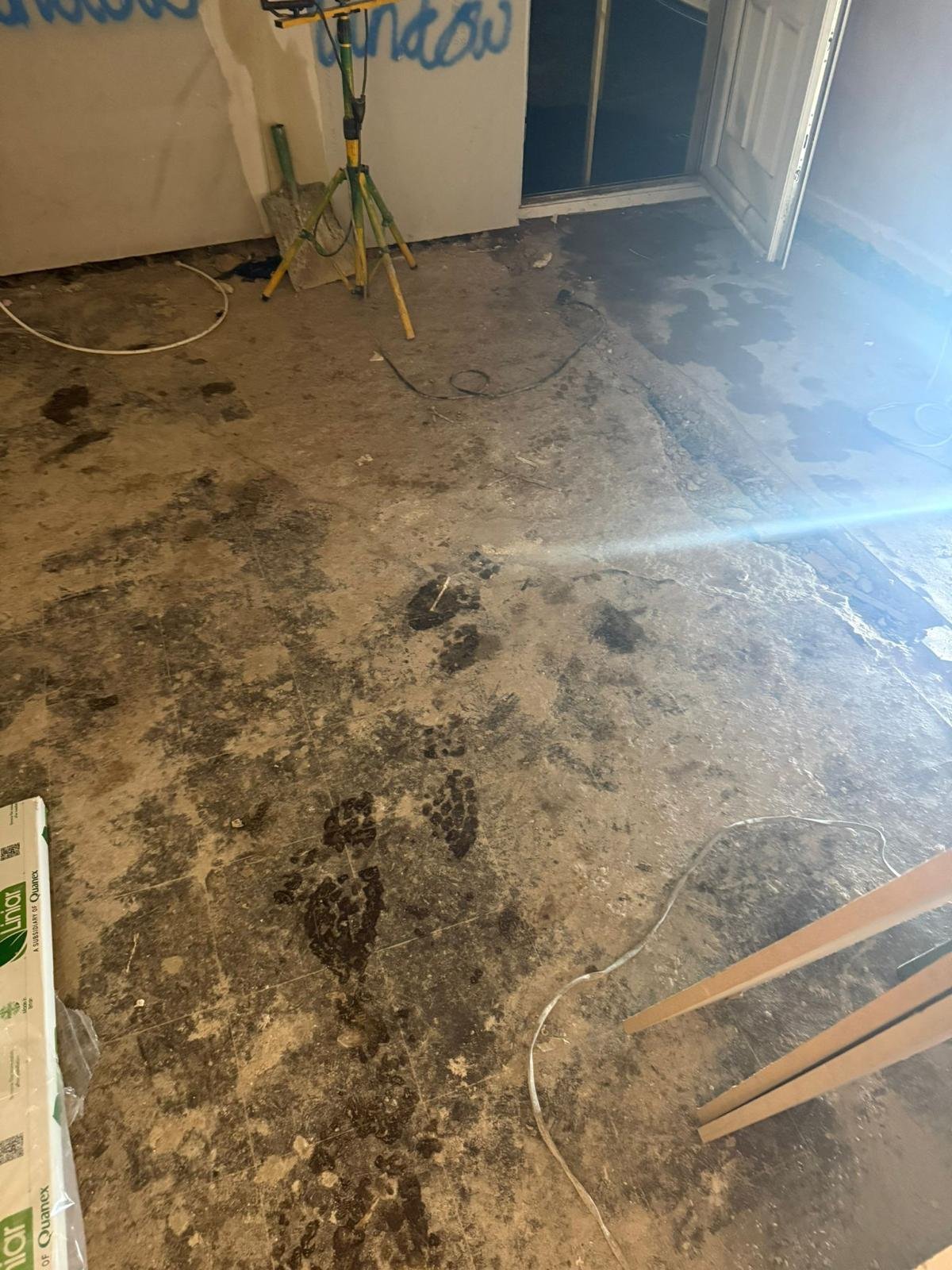
During the renovation of a house in Flintshire, the old floor coverings came up and the solid floors beneath were found to be damp. The slabs themselves were sound — flat, solid and worth keeping — but moisture was coming through them, and laying new coverings straight over that would have handed the problem to whatever floor finish went down next.
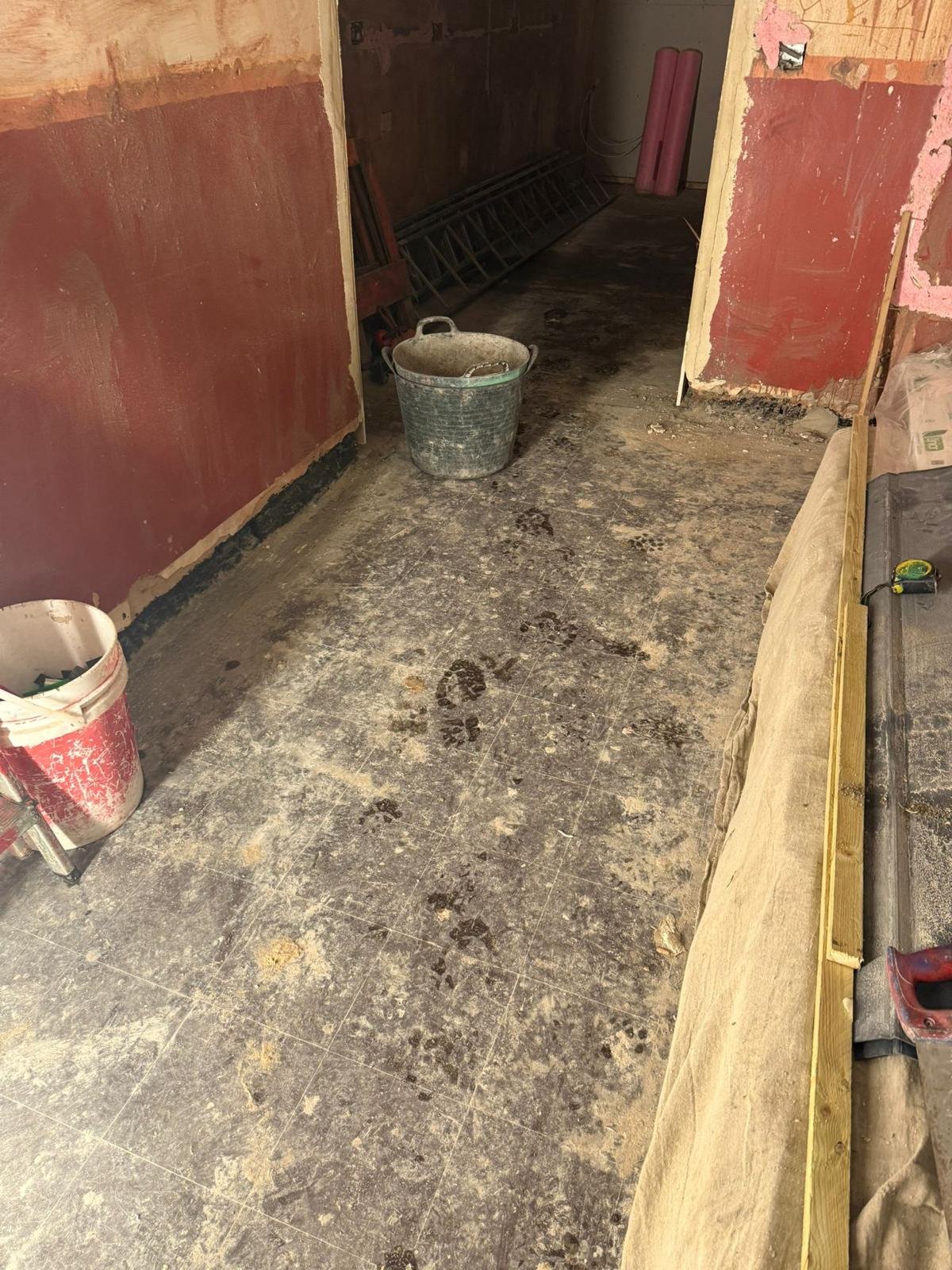
Not every damp solid floor needs breaking out. Where a slab is level, solid and free of movement, the fault is not the concrete — it is the absence of anything in it to stop ground moisture passing through. Digging out a slab in that condition throws away a perfectly good base and adds days of heavy work, spoil and mess to a renovation that is already under way.
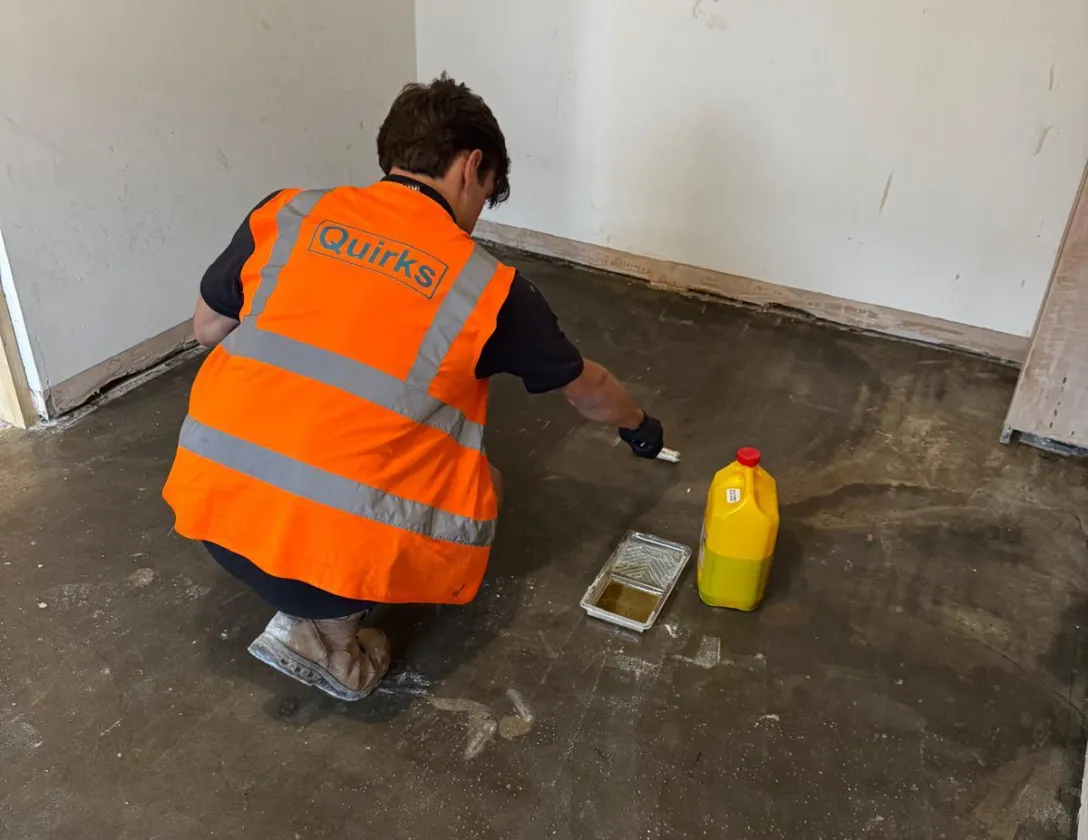
The answer here was a liquid-applied damp-proof membrane: the existing slabs were prepared and the membrane applied across them as a continuous coat, sealing the surface so ground moisture stays in the slab and out of everything above it. A liquid membrane follows the floor into corners and junctions and around door openings without joints or laps, which is exactly where a sheet system in an existing house is hardest to detail.
A 25mm screed was then laid over the membrane. The screed does two jobs: it protects the membrane from everything that happens on a renovation site and everything a household will do to the floor afterwards, and it hands back a smooth, level surface ready for any finish. And because the whole build-up is only the thickness of the screed, the floor levels through the house barely change — no raised thresholds, no trimmed doors, no step between rooms.
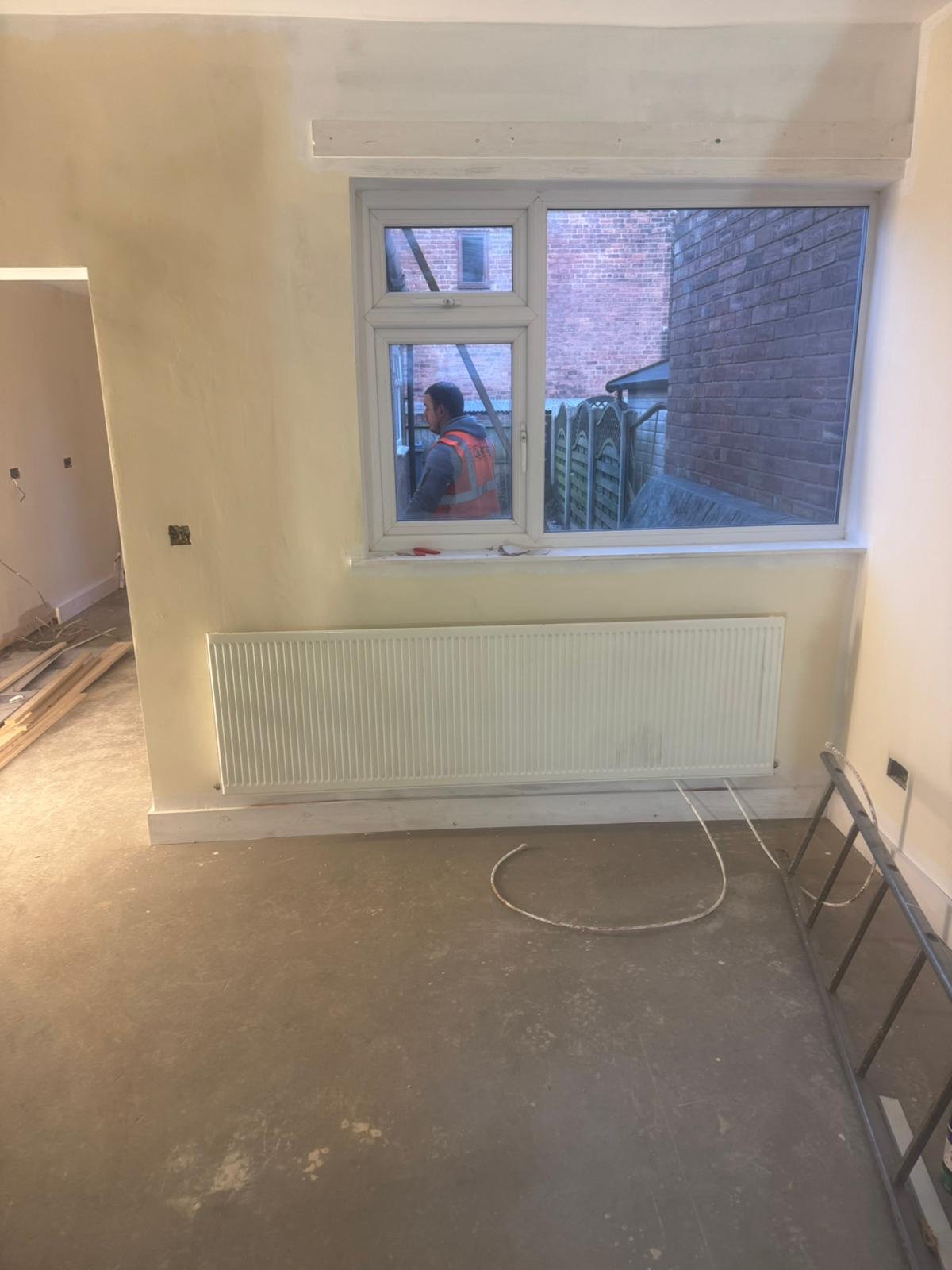
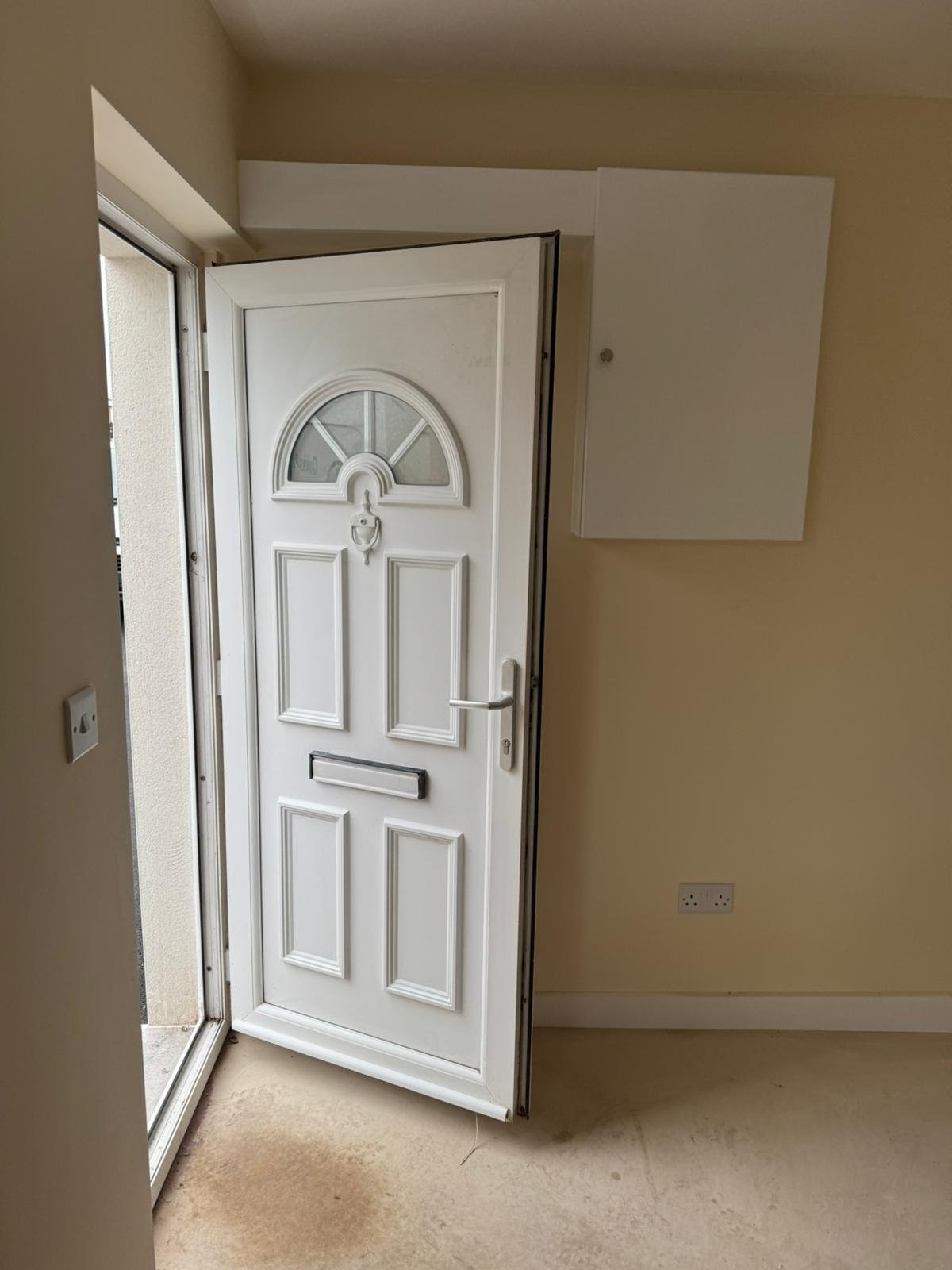
With the membrane sealed and the screed down, the renovation carried straight on over the top of it — the kitchen was fitted over the finished floor, and the screed runs level through the hallway to the front door. That is the point of doing it this way round: the damp is dealt with once, under everything, before the rooms are finished on top.
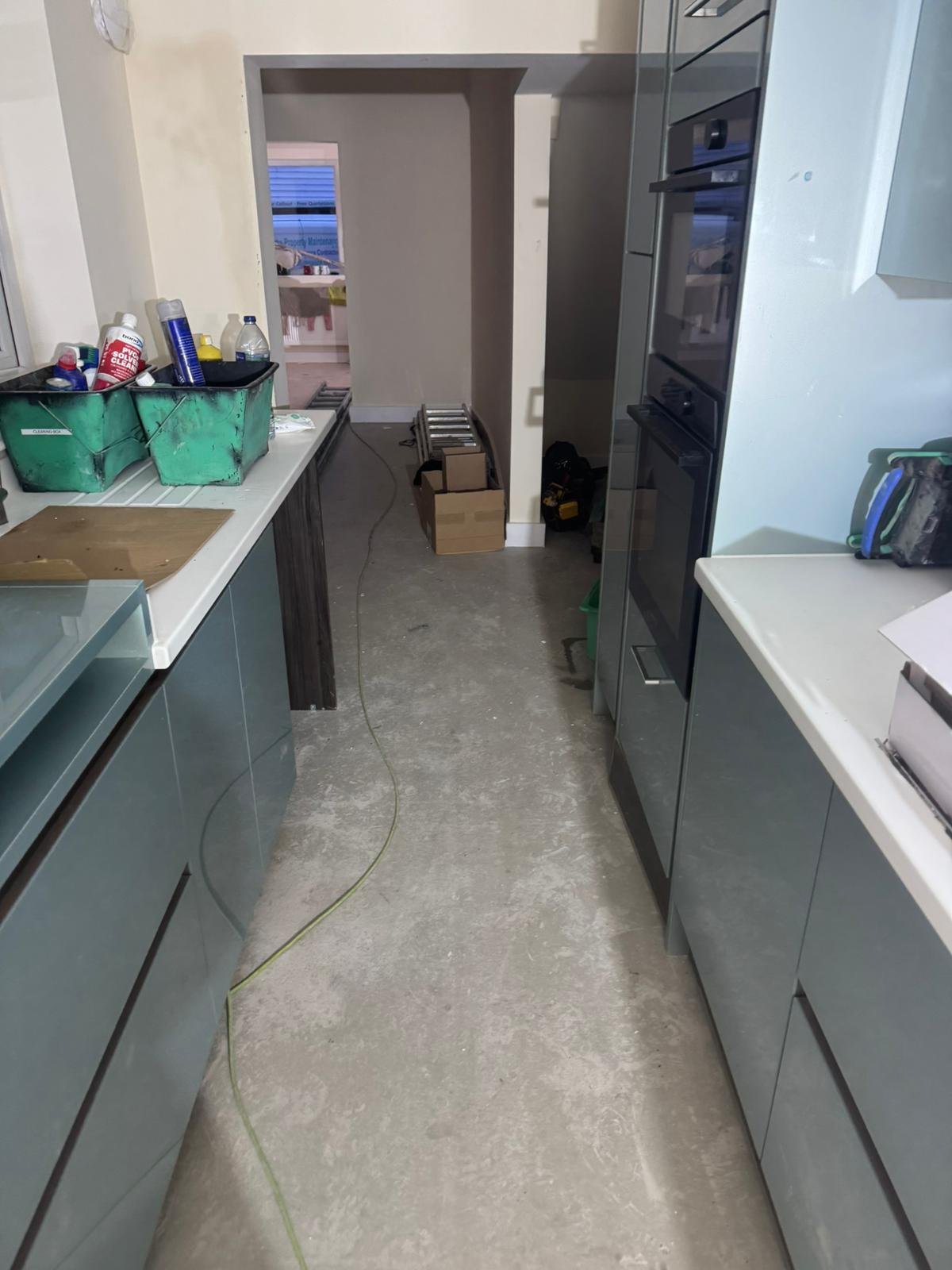
The house kept its original slabs and gained a continuous moisture barrier over every ground floor room, finished with a level 25mm screed ready for the new floor coverings — with no excavation, no spoil and no change to the floor levels.
| Issue | Damp found coming through the existing solid floors when the coverings were lifted during a renovation |
| Service | Damp floor treatment — liquid-applied damp-proof membrane and screed |
| Findings | Slabs sound, level and worth retaining, but with no effective barrier to ground moisture |
| Works | Existing slabs prepared; liquid damp-proof membrane applied as a continuous coat across the ground floor; 25mm screed laid over the membrane, level through the rooms and hallway |
| Property | House, under renovation |
| Location | Flintshire |
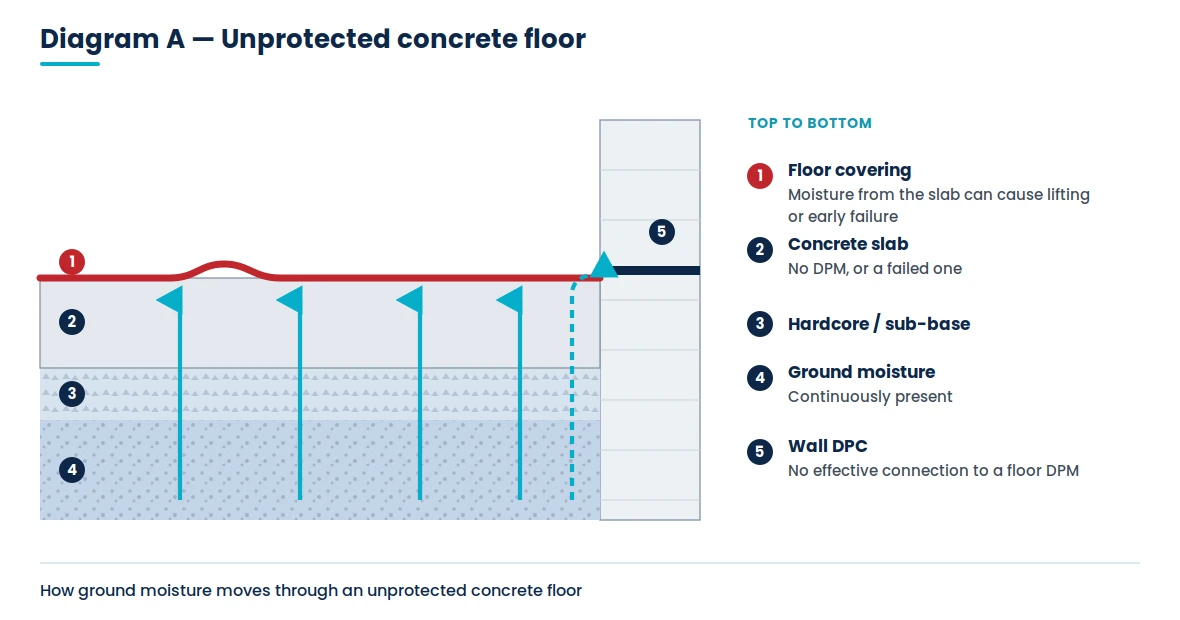
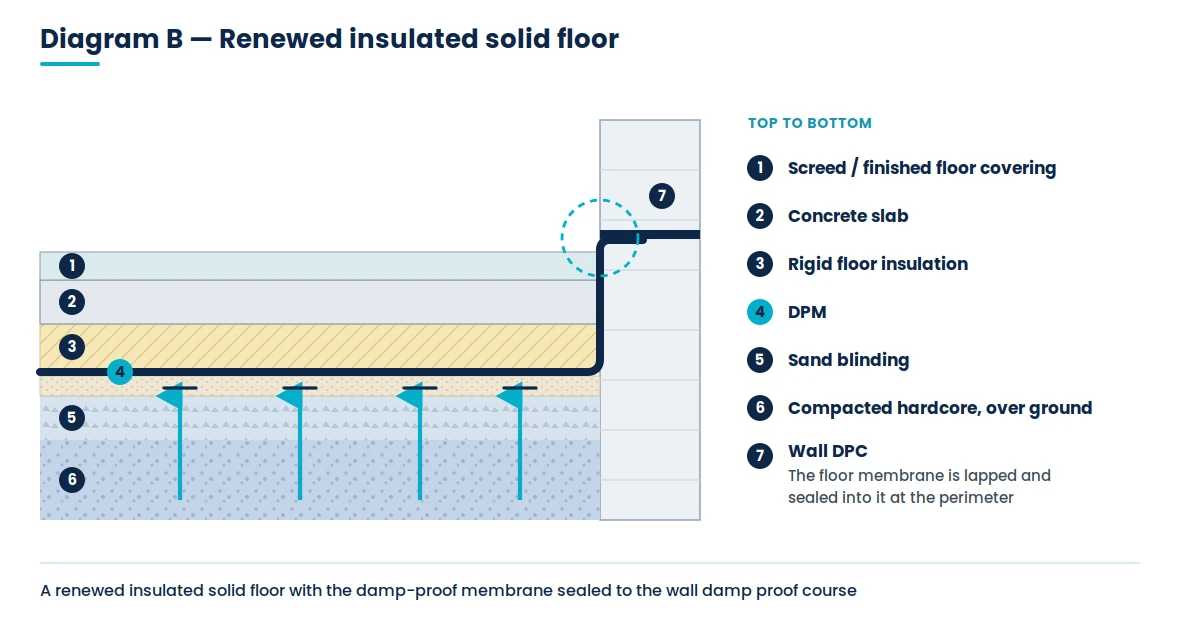
In homes, the range is liquid-applied DPM installation, damp proof floor coatings and epoxy resin systems applied to the prepared slab and sealed into the wall damp proof course — plus loose-laid sheet flooring membranes where a new floor deck is going over the slab, and cavity drain and tanking approaches where the findings support them. On Deeside Industrial Park and the county’s commercial units, epoxy systems rated for the floor’s actual traffic let the treatment double as the wearing surface, with cure times planned around the operation.
Every job starts with a damp survey by a FOD Certified Surveyor and ends with a fixed written quote before any work is booked. Damp in the walls is covered by our damp proofing services.
Flintshire is home ground — we are based in Ewloe and cover the whole county. The CH5–CH8 districts hold the village terraces, 1950s–70s estates and older cottages where we do most of our floor work, and the Deeside industrial estates add commercial slabs that take traffic.
The main damp floor treatments page covers the systems in depth, with dedicated pages for Chester and Wirral.
If a concrete floor in your Flintshire property is damp, contact Quirks Property Maintenance Ltd. A FOD Certified Surveyor will identify the cause and give you written findings and a fixed written quote before anything is booked.
Call 01244 638219 · Email info@quirksonline.co.uk · Send photos of the affected floor, the room and any lifted covering via WhatsApp — survey, written findings, fixed written quote.
The findings decide the specification.
Suspended timber floors are covered too: where the timber has failed we can replace the floor with an insulated, damp-proofed solid floor — see suspended timber floors: repair or replace — and where the floor is staying, our timber repairs, dry rot & wet rot page covers repair.
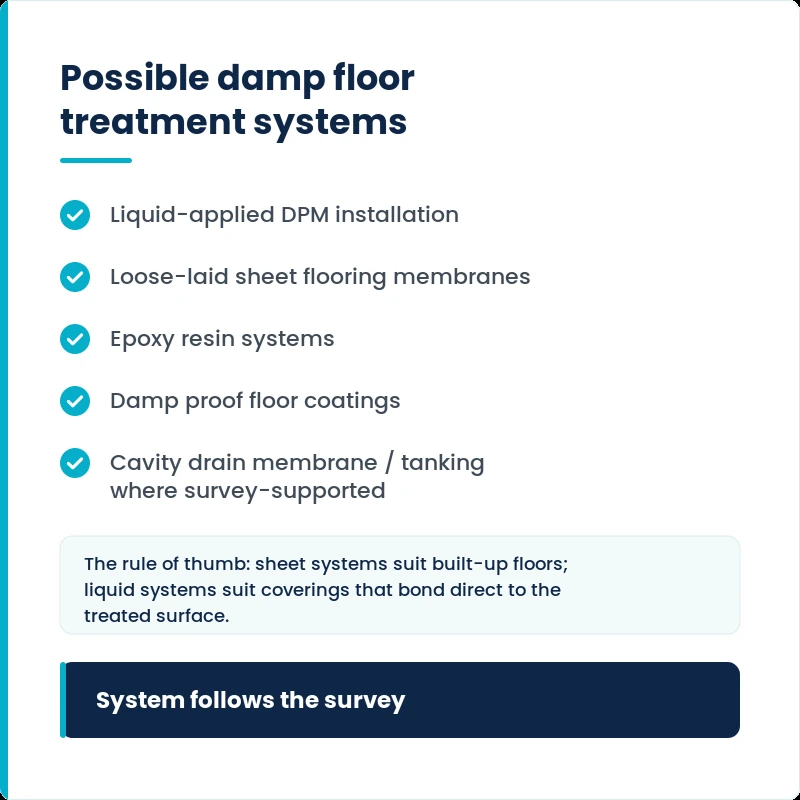
The system follows the diagnosis, never the other way round:
Liquid-applied DPM installation — a membrane applied to the prepared slab and sealed into the wall damp proof course, keeping doorway and stair levels unchanged.
Loose-laid sheet flooring membranes — laid over the slab with minimal preparation where a new floor deck is being built up, isolating it from the damp below.
Epoxy resin systems — where the treated floor also has to be the wearing surface, in garages and commercial units.
Damp proof floor coatings — lighter-duty floors and refurbishment work, on a properly prepared slab.
Cavity drain membrane and tanking systems — reserved for floors where the readings show persistent ground water pressure rather than simple rising moisture.
Send floor photos for a quick assessment
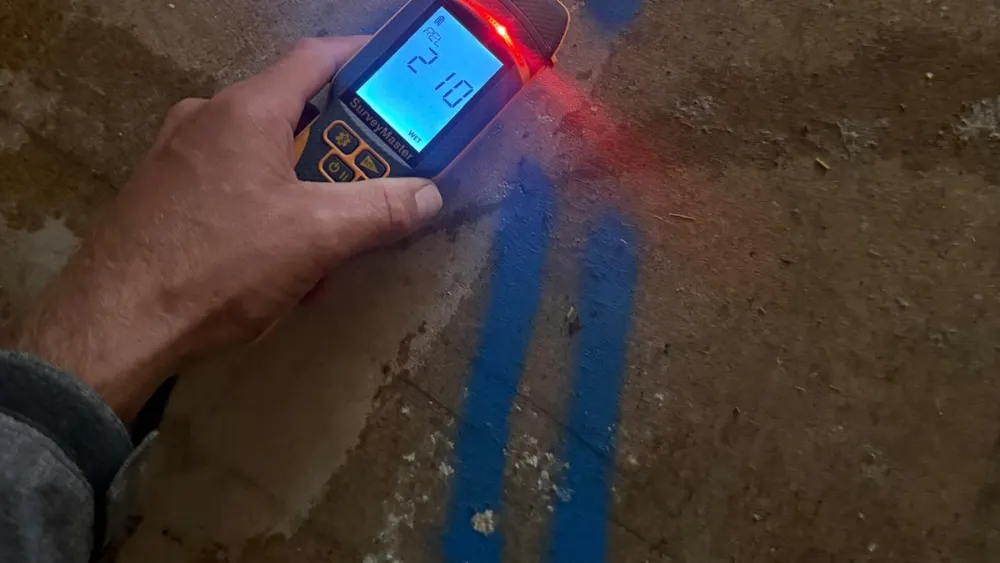
A FOD Certified Surveyor takes moisture readings, identifies the cause and puts the findings in writing.
Coverings up, surface prepared, any repairs to the slab and the wall junction made good.
The specified DPM, resin or coating system, tied into the wall DPC.
Screeds or finishes as specified, and the room handed back ready for its new floor covering.
Honest expectations: floor coverings come up and the room is out of use while the work is done. Applied systems need drying or curing time before anything is laid over them — rushing reinstatement is one of the commonest causes of failure, so we tell you the real timescales for the specified system before work starts, along with access needs and where furniture will have to go. How long the room is out of use depends on the system specified, its curing requirements and the condition of the slab — the expected timescale goes in writing with the quote.
Floor membranes and their standards are governed by Building Regulations Approved Document C — the official document is on gov.uk if you want the technical background.
Six details and we’ll come back to you. Or call 01244 638219.
We carry out damp floor treatments across Cheshire and North Wales, with dedicated local pages for Chester, the Wirral and Flintshire. We fully cover Ellesmere Port and Wrexham as well – same surveys, same systems, same team.
For damp problems in walls rather than floors, our damp proofing services and penetrating damp pages cover the rest of the picture.
Based in Ewloe, Flintshire – most of the region is a local call-out.
We combine correct damp diagnosis with straightforward reporting:
Members of the Federation of Damp (FOD); surveys carried out by FOD Certified Surveyors, with moisture readings taken on the slab.
Detailed, non-invasive inspections using specialist equipment where appropriate — clear, honest reporting with no guesswork
Over 20 years of industry experience across building repair and damp proofing.
Fully insured for your protection and complete peace of mind.
Approved contractors for PAM Ties and Safeguard Europe – see Safeguard’s own floor damp treatment guidance.
Findings in writing and a written quote before any work is booked.
★★★★★
Based on 100+ Google reviews
Memberships and certifications
A damp floor is rarely the only thing going on. These are the services that most often sit alongside a floor treatment – each one starting with the same survey-first approach.
We treat rising and penetrating damp in walls, using the method the survey findings support.
A FOD Certified Surveyor establishes the cause and puts the findings in writing before anything is specified.
Where the diagnosis points to condensation on a cold slab rather than ground moisture.
Water tracking in through walls, defects or ground levels rather than up through the floor.
For suspended timber floors, damp joists and rot – outside the concrete-floor scope of these pages.
We price the repairs a homebuyer’s survey has flagged, cause established first.
A survey settles it. Call us or send photos of the floor and we will tell you what we are looking at.
All of it. We are based in Ewloe, so Hawarden, Buckley, Mold, Connah’s Quay, Shotton, Queensferry, Flint, Holywell and the surrounding villages are all local work for us — and the survey-first process is the same wherever the floor is.
It almost certainly did. The problem is age: early membranes break down, and even a sound one fails in practice if screed or plaster bridges it at the room’s edges. If a floor from that era is showing damp, the readings tell us whether the membrane has failed, been bridged, or whether the moisture is condensation on a cold slab — each has a different remedy.
Yes — commercial and industrial floor work is a confirmed part of what we do, including on Deeside. Where a unit cannot close completely, we specify a system rated for its traffic and plan the work in phases, with realistic cure times agreed in writing before anything starts.
Yes. Units on Deeside Industrial Park and the older estates around Queensferry and Sandycroft have the same problem in a bigger footprint — a slab with no membrane, or a coating failing under traffic. Epoxy resin systems damp proof and finish the floor in one, and are the usual answer where the treated floor is also the wearing surface; the survey confirms the slab is sound enough to carry it. Commercial floors are priced the same way as houses: findings and a written quote first.
It depends what is being done. Replacing the floor construction — breaking out and rebuilding with a new membrane, insulation and slab — is controlled work and goes to Flintshire County Council Building Control, normally under a Building Notice. A surface-applied membrane or coating over an existing slab usually does not. We tell you which at survey, and where a notice is likely to be needed we help with the application and arrange the inspections — the route, the applicant and any fees are confirmed for each project, and Building Control makes the decision.
Houses of that age usually do, but the membranes were thin polythene and over that many years a membrane can deteriorate, be punctured by later work or be bridged when a floor was re-screeded, a kitchen extended or a conservatory added. So the answer is often yes, it has one, and it may no longer be doing its job. The survey confirms whether the membrane has failed, whether it is only bridged at the wall, or whether the moisture is condensation on a cold slab — three different problems with three different remedies.
Yes, with the survey deciding how. Flags laid on earth or lime were meant to breathe, and on the sloping sites around Halkyn, Brynford and the Clwydian villages ground water can be moving under them as well as rising through them. Where the flags can be lifted they can be relaid over a new build-up with a membrane; where ground water pressure is the finding, a cavity drain approach may be specified instead of a barrier. We say which applies in writing before any work is quoted, and where the honest answer is a new covering over a treated floor we say that too.
Yes, and it is the one part of a renovation that cannot be done afterwards without undoing the rest. Fitted units, tiles and laminate all seal the slab, so any moisture in it shows up under the new finish within a year or two. Have the survey done while the floor is exposed, treat the slab, allow the curing time the specified system needs, then fit out. We give the curing time in writing with the quote so it can be built into the programme.
If your concrete floor is damp – or you are not sure what is causing it – contact Quirks Property Maintenance Ltd. A FOD Certified Surveyor will find the cause and give you written findings and a written quote before any work is booked. Call 01244 638219 or email info@quirksonline.co.uk.
★★★★★
Based on 100+ Google reviews
In building repair & damp proofing
Fully insured for your complete peace of mind
Surveys by FOD Certified Surveyors
Six details and we’ll come back to you. Or call 01244 638219.