A Fast, Efficient and Friendly Building and Maintenance Service You Can Depend On.
Concrete and Solid Floors Across Chester and the Surrounding Villages

Damp Concrete Floor Help – Survey First
Survey first, then the right system for what the survey finds
Survey First
A FOD Certified Surveyor finds the cause before anything is specified.
The Right System
Liquid DPM, sheet membrane, epoxy resin or coating – chosen from the findings.
Written Quote
Findings and a written quote before any work is booked.
Damp coming up through a solid floor is one of the most common problems we survey in Chester — and in the city’s older housing it is rarely as simple as a missing membrane. Quirks Property Maintenance Ltd diagnoses and treats damp concrete and solid floors across Chester, from period terraces in the centre to modern estates on the edge of the city.
Call 01244 638219 or send photos of the floor via WhatsApp for a quick assessment.
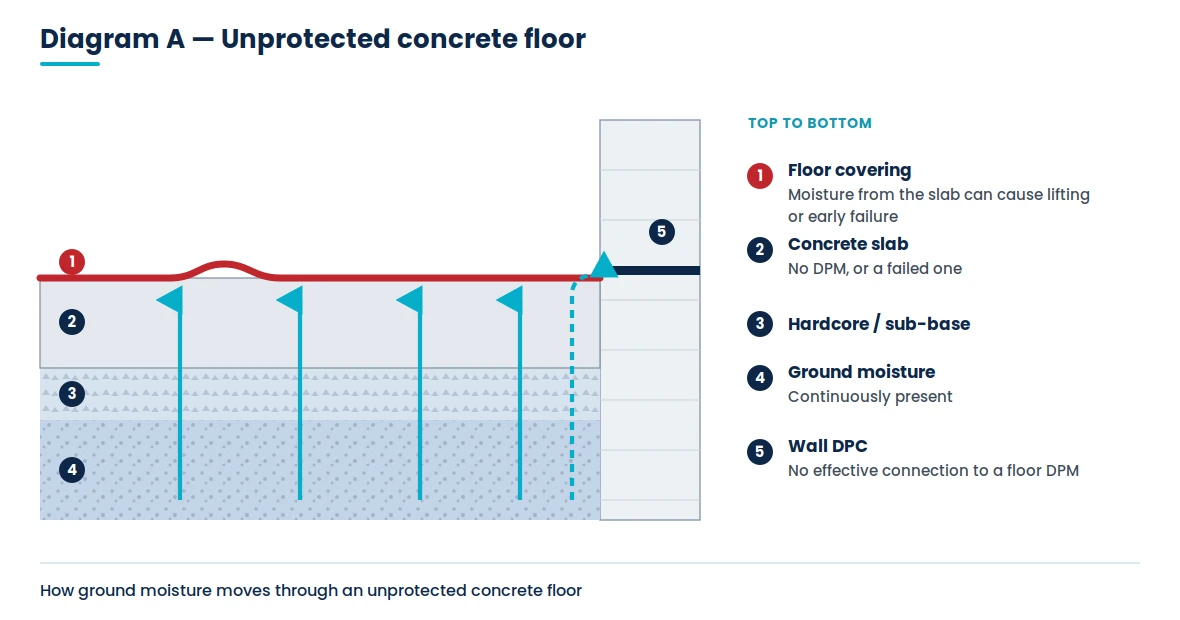
Chester’s housing stock is older than most of the region’s, and its floors show it. Solid floors in Victorian and Edwardian terraces were often laid with no damp proof membrane at all; quarry tiles and flagstones sit directly on the ground and breathe moisture into the room; and many suspended timber floors have been converted to solid concrete over the years — sometimes well, often without the membrane being tied into the wall damp proof course. Lay a modern vinyl, laminate or carpet over any of these and the moisture that used to evaporate harmlessly gets trapped, showing up as lifting coverings, musty smells and mould underneath.
None of that means an older Chester floor cannot be treated — it means the treatment has to respect how the building was put together, which starts with a proper diagnosis rather than a standard product.
CHESTER — HOUSE, GARDEN ROOM
The owner of a house in Chester asked Quirks Property Maintenance Ltd to look at the floor of a garden room where the boards had gone soft. The floor was a suspended timber construction, and once it was opened the reason was plain: the joists were rotten, and the void beneath them had no ventilation at all.
A suspended timber floor survives on the air moving underneath it. The void below the joists is meant to breathe through vents in the outside walls, carrying away the moisture that rises from the ground. Take the ventilation away and the void becomes a sealed damp box: the moisture has nowhere to go but into the timber, and joists that should last a century rot quietly from below while the room above looks fine.
By the time a floor like that feels springy or soft underfoot, the structure is already gone. Replacing the rotten joists like for like, without curing the void, only restarts the clock on the same failure.
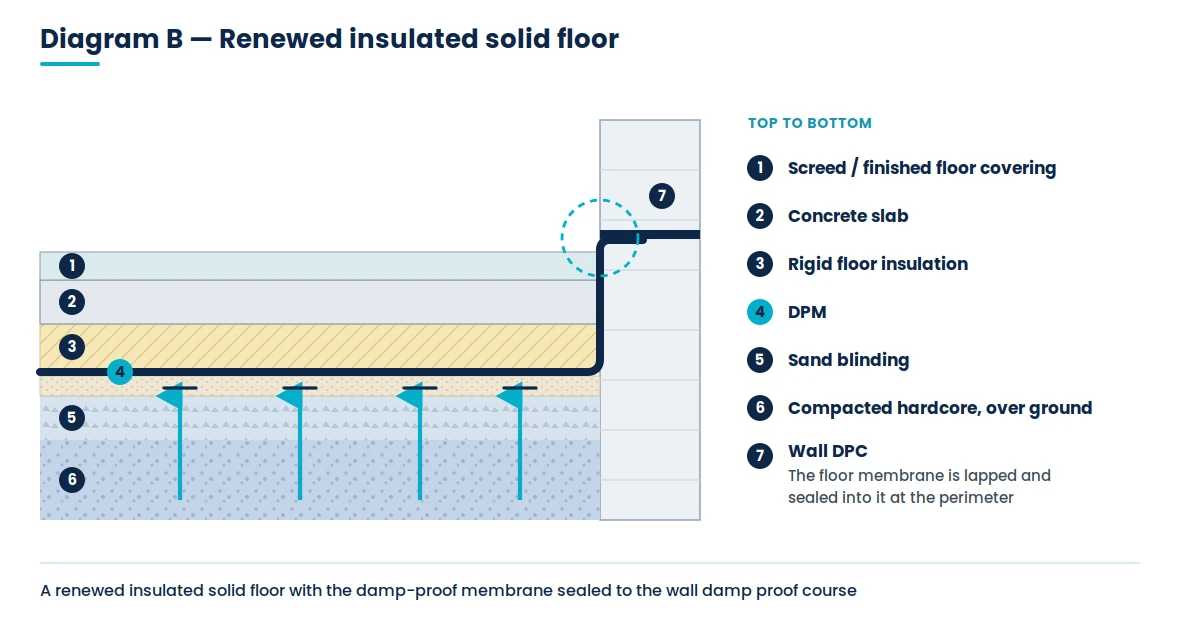
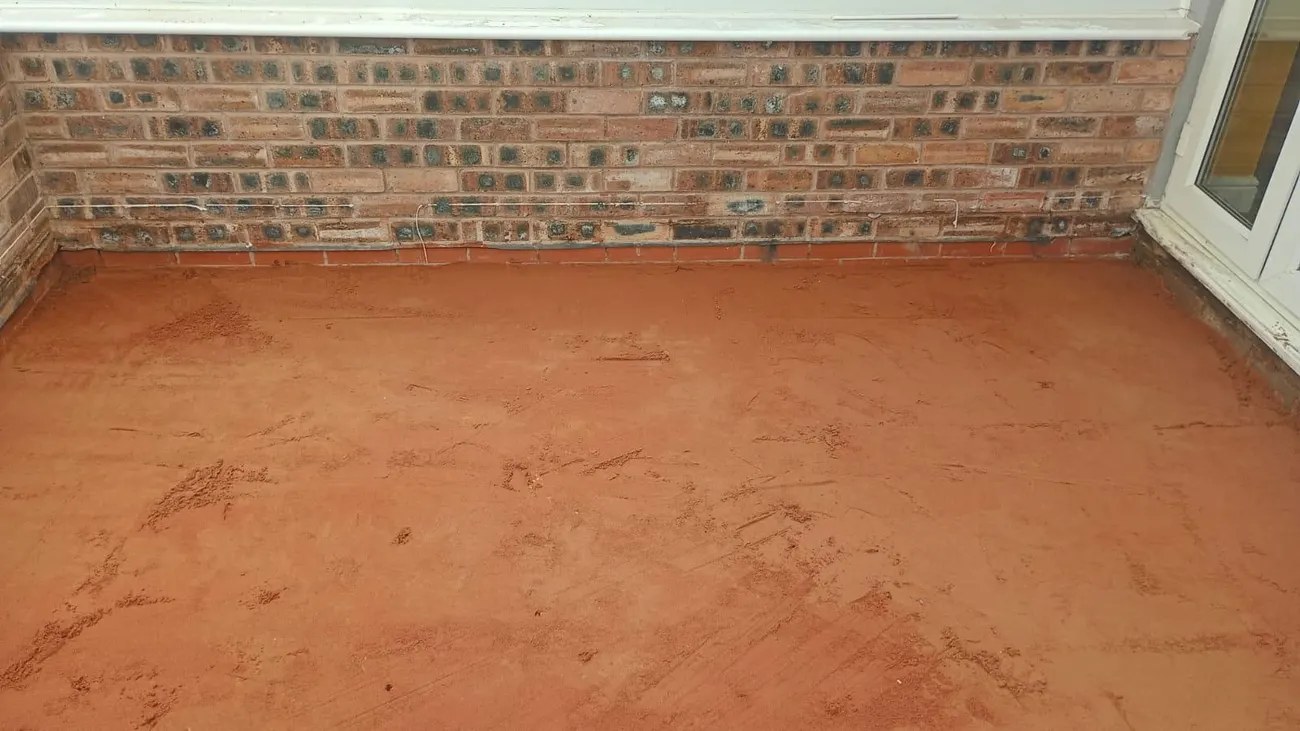
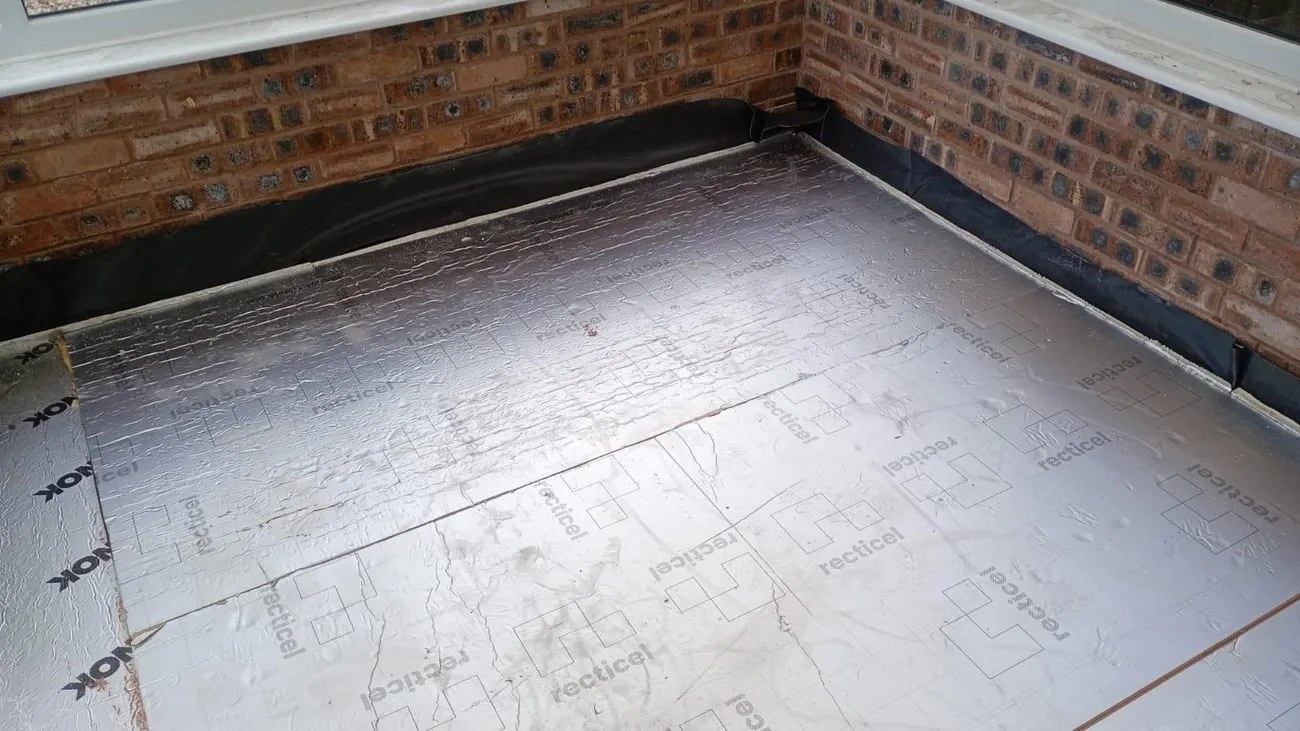
Rather than rebuild a timber floor over the same unventilated void, the floor was rebuilt as a ground-bearing construction with the damp designed out. The rotten floor and joists were stripped out, the base beneath prepared and blinded with sand, and a damp-proof membrane laid across the whole room and turned up at the walls — so the ground moisture that destroyed the old floor is sealed beneath the new one, with no void left to ventilate and no structural timber left in reach of it.
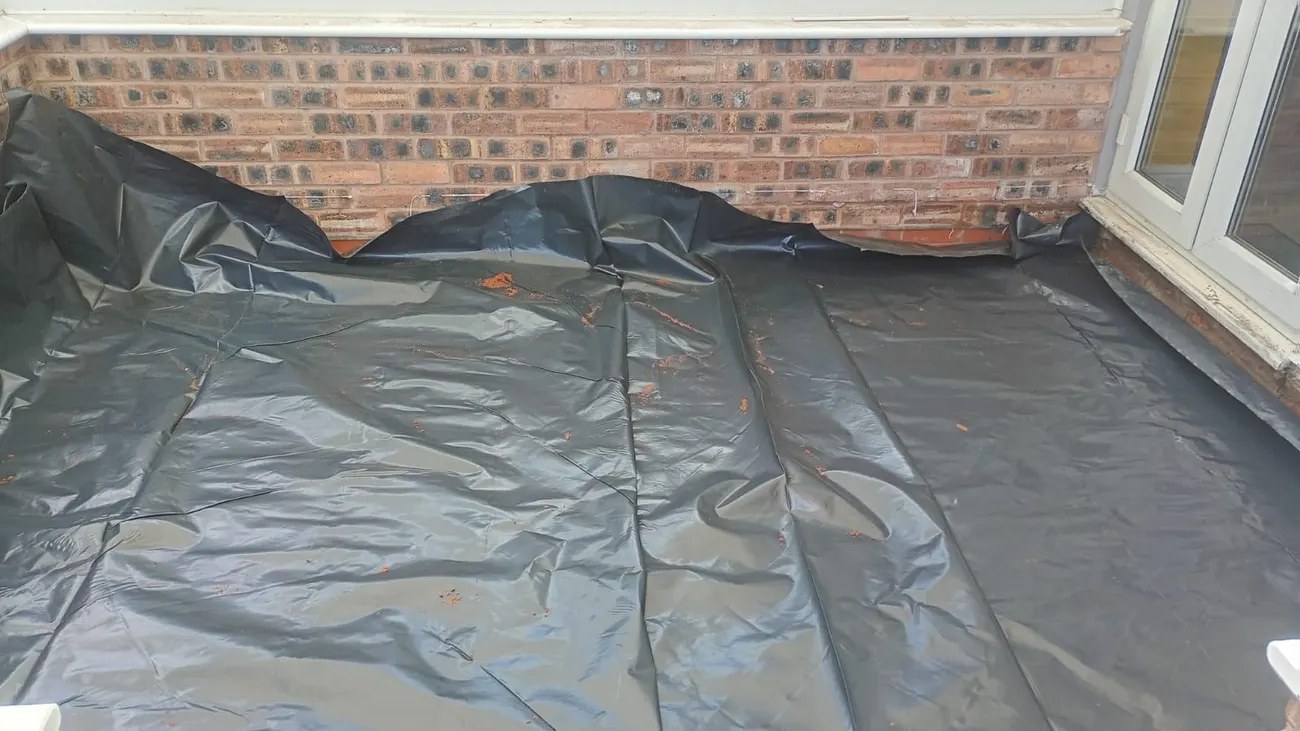
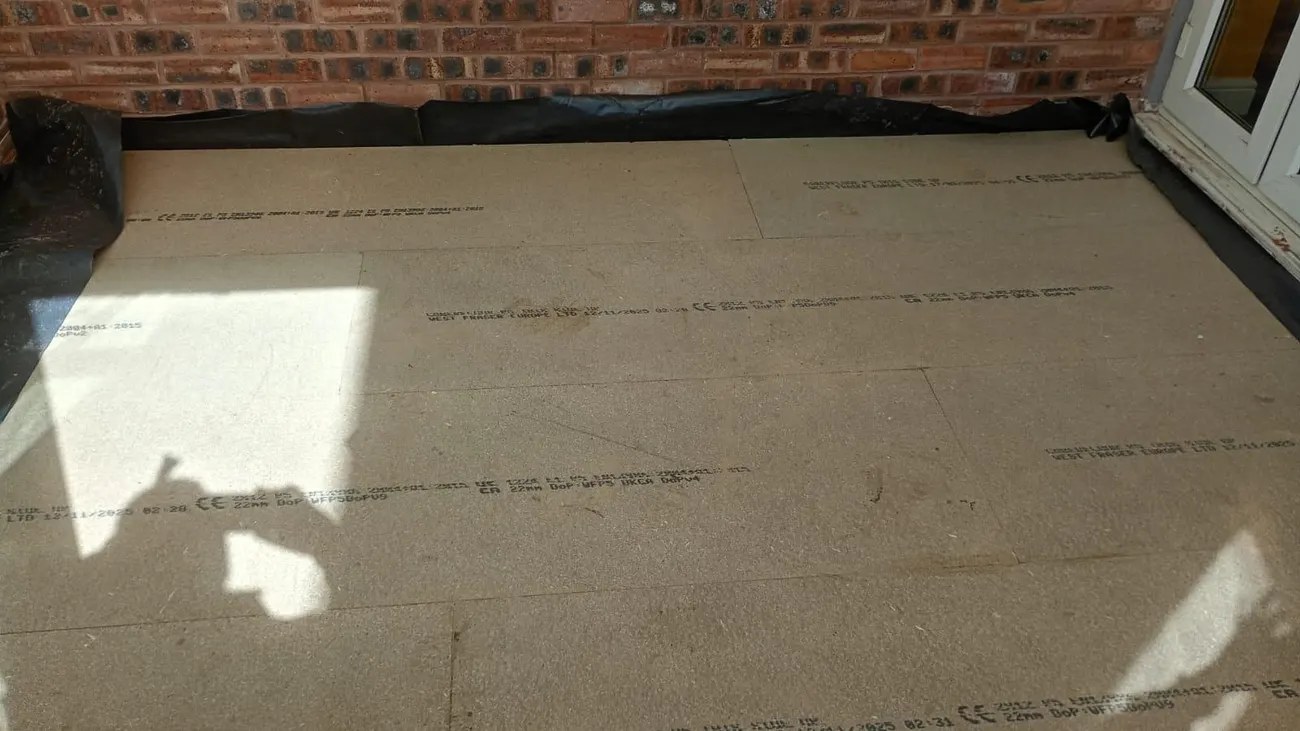
Over the membrane went rigid insulation boards, tightly jointed, and over those a floating deck of 22mm moisture-resistant flooring-grade chipboard. No concrete was poured. A dry build-up like this suits a room of this size: there is no wet trade in the house, no curing period, and the deck can be walked on and finished as soon as it is down. The result sits at the right level for the doors, insulated underfoot, with a moisture-resistant board as the working surface.
Replacing the structure of a ground floor is controlled work, so the job was carried out under a Building Notice, with the build-up inspected while it was open rather than judged from the finished surface. What is under a floor deck cannot be seen once the boards are down; the inspection record is the proof of it.
The garden room was left with a solid, insulated, damp-proofed floor in place of the rotten suspended one — the membrane sealed up at the walls, the deck ready for the owner’s choice of finish, and no timber left anywhere the ground moisture can reach it.
| Issue | Suspended timber floor failed in a garden room — joists rotten, with no ventilation to the void beneath |
| Service | Damp floor treatment — timber floor replaced with a solid damp-proofed construction |
| Findings | Rotten joists and floor structure over an unventilated void |
| Works | Rotten floor and joists stripped out; base prepared and sand-blinded; damp-proof membrane laid and turned up at the walls; rigid insulation; floating deck of 22mm moisture-resistant flooring-grade chipboard |
| Regulatory | Carried out under a Building Notice, with the build-up inspected while open |
| Property | House — garden room |
| Location | Chester |
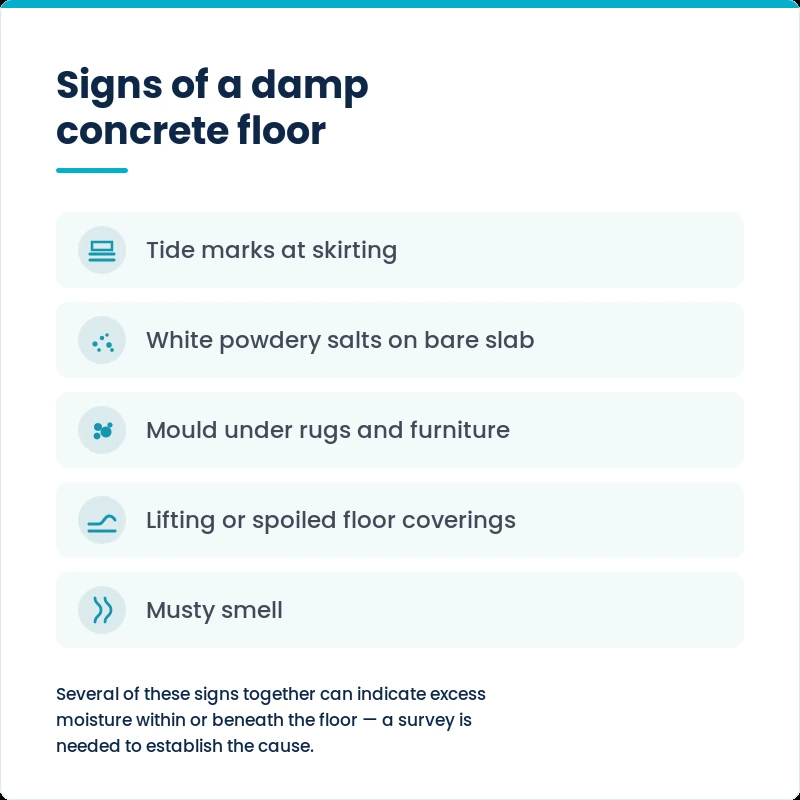
Older properties rarely have just one thing going on. Moisture at a floor edge can be a bridged membrane, a wall problem, or an old covering trapping condensation — and each needs a different fix. That is why every job starts with a damp survey by a FOD Certified Surveyor: moisture readings across the slab and wall bases, a written diagnosis, and a fixed written quote for the right remedy. Where the fault turns out to be in the walls, our damp proofing services cover it; where an external defect is driving it, see penetrating damp.
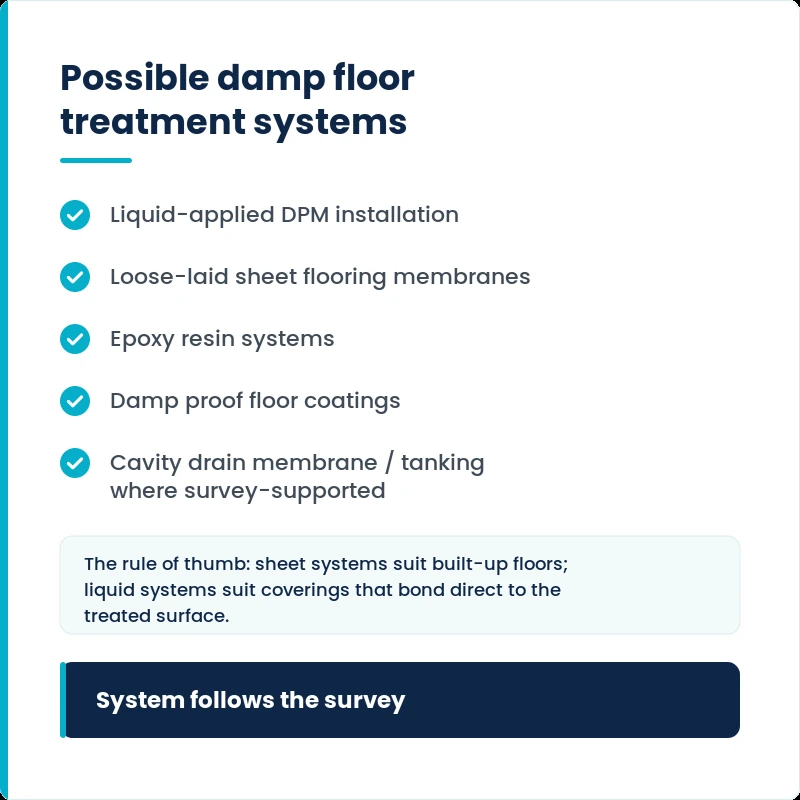
The systems are the same family we use everywhere — liquid-applied DPM installation, loose-laid sheet flooring membranes, epoxy resin systems, damp proof floor coatings, and cavity drain or tanking approaches where the survey supports them — but the specification decisions matter more in older buildings:
We cover the whole of Chester and the villages around it. The city’s CH1–CH4 districts hold most of the older solid floors we survey — Victorian and Edwardian terraces, converted suspended floors and pre-war semis — and the outlying villages add farmhouses and cottages on floors that were never given a membrane at all.
Our main damp floor treatments page covers the systems in depth, and we have dedicated pages for Wirral and Flintshire.
If a concrete floor in your Chester property is damp, contact Quirks Property Maintenance Ltd. A FOD Certified Surveyor will identify the cause and give you written findings and a fixed written quote before anything is booked.
Call 01244 638219 · Email info@quirksonline.co.uk · Send photos of the affected floor, the room and any lifted covering via WhatsApp — survey, written findings, fixed written quote.
The findings decide the specification.
Suspended timber floors are covered too: where the timber has failed we can replace the floor with an insulated, damp-proofed solid floor — see suspended timber floors: repair or replace — and where the floor is staying, our timber repairs, dry rot & wet rot page covers repair.
The system follows the diagnosis, never the other way round:
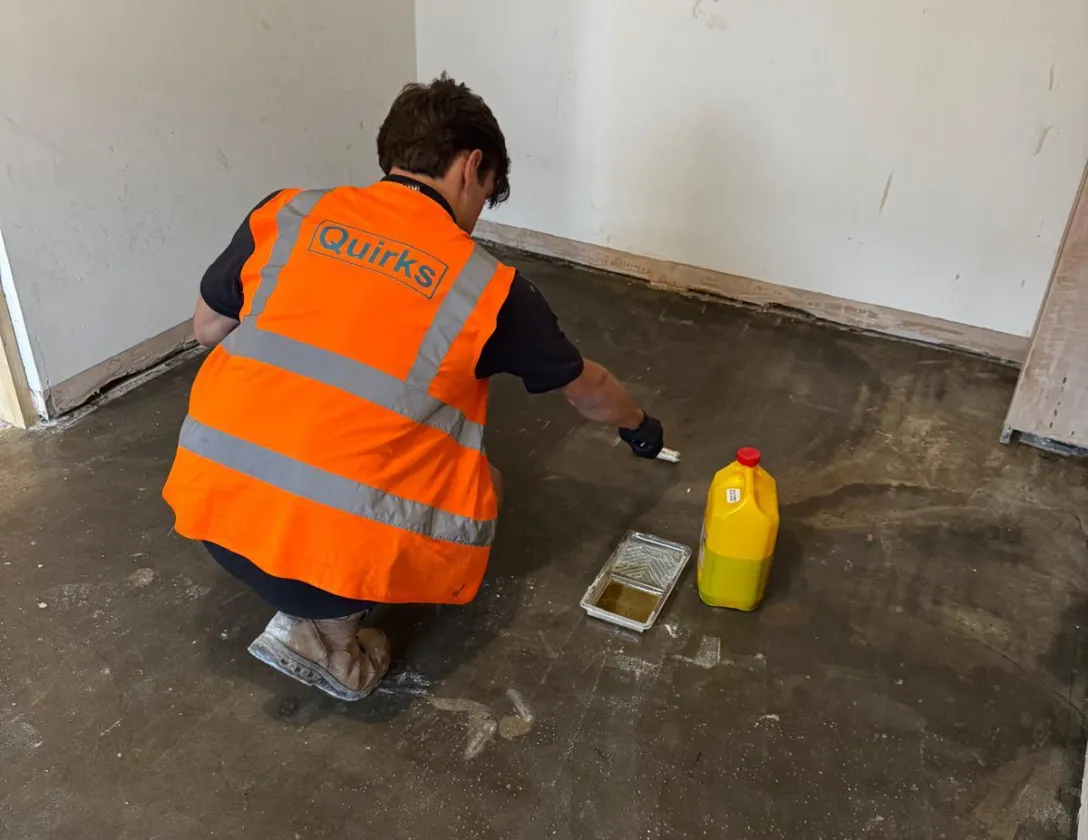
Liquid-applied DPM installation. A surface-applied membrane over the prepared slab, sealed to the wall DPC — the standard remedy where the original membrane is missing or failed and levels at doorways matter.
Loose-laid sheet flooring membranes. Where the floor covering will not bond directly to the slab, a sheet membrane laid over it isolates the new floor from the damp below — minimal preparation, workable even on a slab that is still drying out, with the new floor deck built on top.
Epoxy resin systems. Hard-wearing resin build-ups that damp proof and finish the floor in one — well suited to garages, workshops and commercial floors that take traffic.
Damp proof floor coatings. Thinner coating systems for lighter-duty floors and refurbishment work, applied to a properly prepared slab.
Cavity drain membrane and floor tanking systems. Where survey findings support them — typically persistent ground water pressure — a studded membrane or tanking approach manages the moisture rather than trying to block it.
Send floor photos for a quick assessment
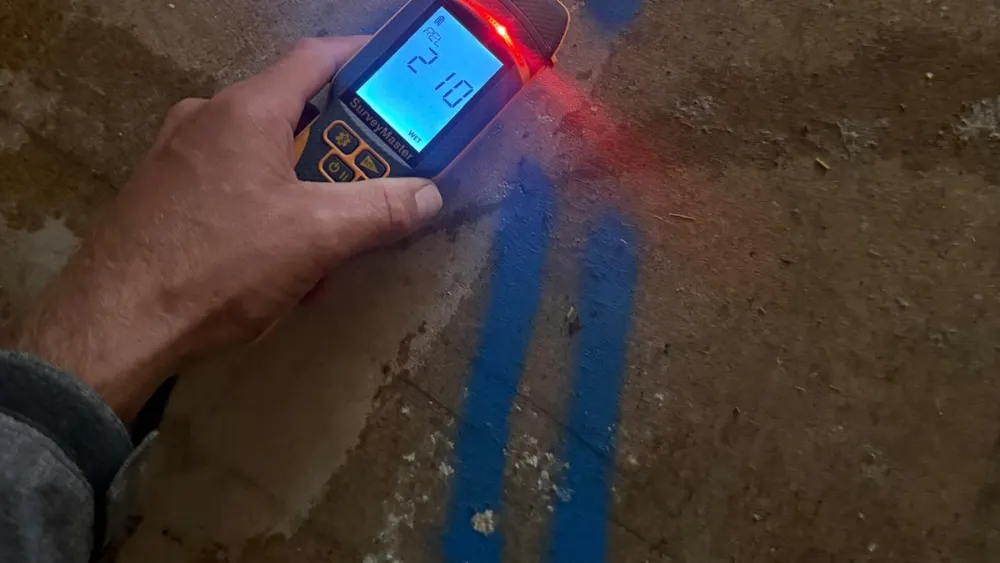
A FOD Certified Surveyor takes moisture readings, identifies the cause and puts the findings in writing.
Coverings up, surface prepared, any repairs to the slab and the wall junction made good.
The specified DPM, resin or coating system, tied into the wall DPC.
Screeds or finishes as specified, and the room handed back ready for its new floor covering.
Honest expectations: floor coverings come up and the room is out of use while the work is done. Applied systems need drying or curing time before anything is laid over them — rushing reinstatement is one of the commonest causes of failure, so we tell you the real timescales for the specified system before work starts, along with access needs and where furniture will have to go. How long the room is out of use depends on the system specified, its curing requirements and the condition of the slab — the expected timescale goes in writing with the quote.
Floor membranes and their standards are governed by Building Regulations Approved Document C — the official document is on gov.uk if you want the technical background.
Six details and we’ll come back to you. Or call 01244 638219.
We carry out damp floor treatments across Cheshire and North Wales, with dedicated local pages for Chester, the Wirral and Flintshire. We fully cover Ellesmere Port and Wrexham as well – same surveys, same systems, same team.
For damp problems in walls rather than floors, our damp proofing services and penetrating damp pages cover the rest of the picture.
Based in Ewloe, Flintshire – most of the region is a local call-out.
We combine correct damp diagnosis with straightforward reporting:
Members of the Federation of Damp (FOD); surveys carried out by FOD Certified Surveyors, with moisture readings taken on the slab.
Detailed, non-invasive inspections using specialist equipment where appropriate — clear, honest reporting with no guesswork
Over 20 years of industry experience across building repair and damp proofing.
Fully insured for your protection and complete peace of mind.
Approved contractors for PAM Ties and Safeguard Europe – see Safeguard’s own floor damp treatment guidance.
Findings in writing and a written quote before any work is booked.
★★★★★
Based on 100+ Google reviews
Memberships and certifications
A damp floor is rarely the only thing going on. These are the services that most often sit alongside a floor treatment – each one starting with the same survey-first approach.
We treat rising and penetrating damp in walls, using the method the survey findings support.
A FOD Certified Surveyor establishes the cause and puts the findings in writing before anything is specified.
Where the diagnosis points to condensation on a cold slab rather than ground moisture.
Water tracking in through walls, defects or ground levels rather than up through the floor.
For suspended timber floors, damp joists and rot – outside the concrete-floor scope of these pages.
We price the repairs a homebuyer’s survey has flagged, cause established first.
A survey settles it. Call us or send photos of the floor and we will tell you what we are looking at.
Usually, yes. Liquid-applied membranes and coating systems go onto the prepared existing slab and keep the original floor level, so most older Chester floors can be treated without breaking out the concrete. The survey confirms whether the slab is sound enough first — that is the deciding factor, not the age of the house.
The covering has to come up for the survey to read the slab properly and for any treatment to bond — a membrane applied over vinyl or adhesive residue will fail. We tell you before the survey what needs lifting, and preparation of the exposed slab is specified and included in the written quote. If lifting the covering reveals damage that was not visible at survey — a broken-up slab, or repairs beyond the quoted scope — we price that separately in writing before continuing, never as a surprise on the invoice.
Conservation-area rules are mostly about the outside of a building, so a floor treatment inside is not usually affected by them. A listed building is different: original floors — flagstones, quarry tiles, early boards — are part of what is listed, and lifting or altering them can need listed building consent from Cheshire West and Chester. Where a Chester property is listed we say so at survey and set the specification to what consent allows. A surface-applied membrane on a later concrete slab is a different case from lifting a historic floor.
Sometimes. If the floor and the tiles are sound, they can be lifted, a membrane installed and the tiles relaid — but the bed they were laid on usually has to go, so it is a rebuild rather than a repair, and not every floor survives lifting. The survey tells you which it is before you commit. Where relaying is not realistic we say so; a new covering over a treated slab is the honest answer for some floors.
Often the two are connected. In a terrace the floor meets the party walls and the front and back walls all round, and a membrane that was never tied into the wall damp proof course — or plaster carried down past it — lets moisture move between the two. The survey takes readings across the slab and the wall bases together, so you find out whether the floor is the source, the walls are, or the junction between them is. Where the walls are the problem, our damp proofing services cover it rather than a floor system.
Quite possibly. A lot of Chester ground floors were converted from suspended timber to solid concrete decades ago, and many of those conversions either had no membrane or had one that was not joined to the wall damp proof course. The slab itself may be perfectly sound, in which case a surface-applied membrane sealed to the wall DPC puts right what the conversion missed without breaking the floor out again. The survey tells you whether that is the case.
Yes. A garage slab with no membrane shows the same signs as a house floor — a slab that never dries, salts on the surface and stored items going mouldy — and it takes traffic, so a thin coating is rarely enough. Epoxy resin systems damp proof and finish the floor in one and stand up to being driven on; the survey confirms the slab is sound enough to carry the system first.
If your concrete floor is damp – or you are not sure what is causing it – contact Quirks Property Maintenance Ltd. A FOD Certified Surveyor will find the cause and give you written findings and a written quote before any work is booked. Call 01244 638219 or email info@quirksonline.co.uk.
★★★★★
Based on 100+ Google reviews
In building repair & damp proofing
Fully insured for your complete peace of mind
Surveys by FOD Certified Surveyors
Six details and we’ll come back to you. Or call 01244 638219.