


Damp Surveys in Flintshire
FOD Certified Damp Surveys for Homes, Landlords & Businesses Across Flintshire and Deeside
Quirks Property Maintenance Ltd is based in Ewloe, at the heart of Flintshire — so when you book a damp survey with us, you are dealing with a local firm that knows the county’s housing stock street by street. From stone-built cottages around Mold, Northop and Halkyn to the industrial-era terraces of
Connah’s Quay, Shotton and Flint, and the modern estates of Buckley, Broughton and Ewloe, we understand how each property type behaves when moisture gets in.
Every survey is carried out by a Federation of Damp (FOD) Certified Surveyor and results in a clear written report with photographs, moisture readings, a diagnosed cause and recommended next steps — delivered within 3 working days.
Quirks Property Maintenance Ltd is rated 5 stars on Google from over 100 customer reviews. We invite you to read our reviews on our Google Business Profile and compare our workmanship, communication and reliability with confidence.
Not sure which type of damp you have? Our main Damp Surveys page explains how we tell rising damp, penetrating damp and condensation apart.
📞 Book a Flintshire damp survey: 01244 638219 WhatsApp WhatsApp 07719 535523.
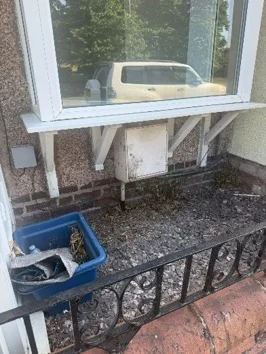
External ground levels above the damp-proof course (DPC) identified during a damp survey at a property in Flintshire, North Wales. High external ground levels can bridge the DPC and increase the risk of moisture penetrating the internal walls.
Why Flintshire Properties Suffer from Damp
Flintshire’s geography and building history create a distinctive set of damp risks:
• Solid stone walls and lime mortar. Older cottages and farmhouses around Mold, Northop, Gwernaffield, Halkyn and Rhosesmor were built with solid stone walls designed to breathe. Where these have been repointed in hard cement mortar or coated in modern masonry paint, moisture becomes trapped in the wall and shows internally as persistent damp patches and salt staining.
• Deeside’s industrial-era terraces. The Victorian and early-1900s terraces of Connah’s Quay, Shotton, Queensferry, Flint and Bagillt were built quickly for industrial workers, typically with solid brick walls, slate DPCs that are now well over a century old, and rear additions with poor ventilation — a common combination of rising damp, condensation and penetrating damp in a single property.
• High ground moisture near the Dee. Low-lying areas close to the Dee estuary — Sealand, Sandycroft, Queensferry, Saltney — sit on ground with a naturally high water table. Ground-floor damp and damp solid floors here are often mistaken for a failed DPC when the real issue is ground moisture and floor construction.
• Exposure and rainfall. Elevations facing the prevailing south-westerly weather off the Clwydian hills, and north-facing coastal frontages along the estuary from Flint to Greenfield, take significantly more wind-driven rain — accelerating pointing erosion and penetrating damp on exposed gables.
• Hillside run-off. Properties on sloping ground in villages such as Halkyn, Brynford, Pantymwyn and Mynydd Isa can suffer moisture entering below DPC level from ground water running against retaining or partially buried walls.
What Your Flintshire Damp Survey Includes
• Full internal visual assessment with pin and non-invasive moisture readings
• External inspection of pointing, render, rainwater goods, ground levels and DPC position
• Thermal imaging where beneficial — particularly useful in solid-wall stone properties
• Diagnosis of the damp type and its root cause, mapped room by room
• Written report with photographs within 3 working days
• Optional fixed-price remedial quotation where treatment is genuinely required
For Flintshire Landlords and Letting Agents
Rented homes in Wales must be fit for human habitation under the Renting Homes (Wales) Act 2016, and damp and mould are among the matters a landlord must address to meet that standard — the Welsh Government’s Renting Homes guidance sets out the framework. Our written damp reports give Flintshire landlords and agents documented, independent evidence of the cause of a damp or mould problem, the correct remedy, and confirmation once it is resolved — useful for tenant communications, insurers and, where necessary, disputes.
Where remedial or structural repair work following a survey falls within the scope of the Building Regulations, applications in the county are handled by Flintshire County Council Building Control. We can advise whether your remedial works require an application.
Why Choose Quirks for Your Flintshire Damp Survey?
• Local knowledge of Flintshire and Deeside properties
Areas We Cover in Flintshire
Related Services in Flintshire
• Penetrating Damp Investigation & Repairs — Flintshire
• Damp Proofing & Remedial Works
• Condensation & Mould Treatment
• Pre-Purchase Home Buyers Quote Service
• Landlord Maintenance Services
Case Studies - Flintshire
1. Flint – Living-Room Damp Traced to a Bridged Damp-Proof Course
Problem Reported
A homeowner in Flint asked Quirks to investigate damp affecting the living-room walls. The damp had not been dealt with previously, and the customer wanted a clear diagnosis of what was causing it before deciding on any work.
Survey Findings
Elevated moisture-meter readings were recorded to the living-room walls, with the highest readings at low level. The external inspection found ground levels at or above the existing damp-proof course, creating a bridge that allows moisture to enter the wall. As the condition of the existing damp-proof course could not be confirmed during a non-intrusive inspection, the survey recommended addressing the external ground levels alongside a new damp-proof course and internal membrane system.
Survey Outcome and Remedial Specification
The survey produced a detailed remedial specification covering:
• Reduction of the external ground levels along the affected wall to approximately 200–250mm below
the damp-proof course, with a weed-control membrane and clean limestone chippings, finished a
minimum of 150mm below the damp-proof course to prevent future bridging
• Removal of the damp-affected plaster — to approximately 1.2m on the affected walls and full height to
the chimney-breast wall — together with the existing skirting boards
• Injection of a new chemical damp-proof course using a high-performance silane/siloxane damp-proof cream
• A two-coat liquid damp-proof membrane below the new damp-proof course, extended onto the floor where accessible
to create a continuous moisture barrier
• Installation of a studded cavity-drain membrane, plasterboard and a two-coat skim-plaster finish to the treated walls
• New skirting boards, and reinstatement of the electrical fittings and radiator affected by the works
This provided the customer with a coordinated plan addressing the raised external ground levels causing the problem as well as the damp-affected internal finishes.
Survey content reviewed by Michael Quirk, Director and FOD Certified Damp Surveyor. The case study is based on a genuine Quirks inspection, moisture readings, photographs and written survey findings.
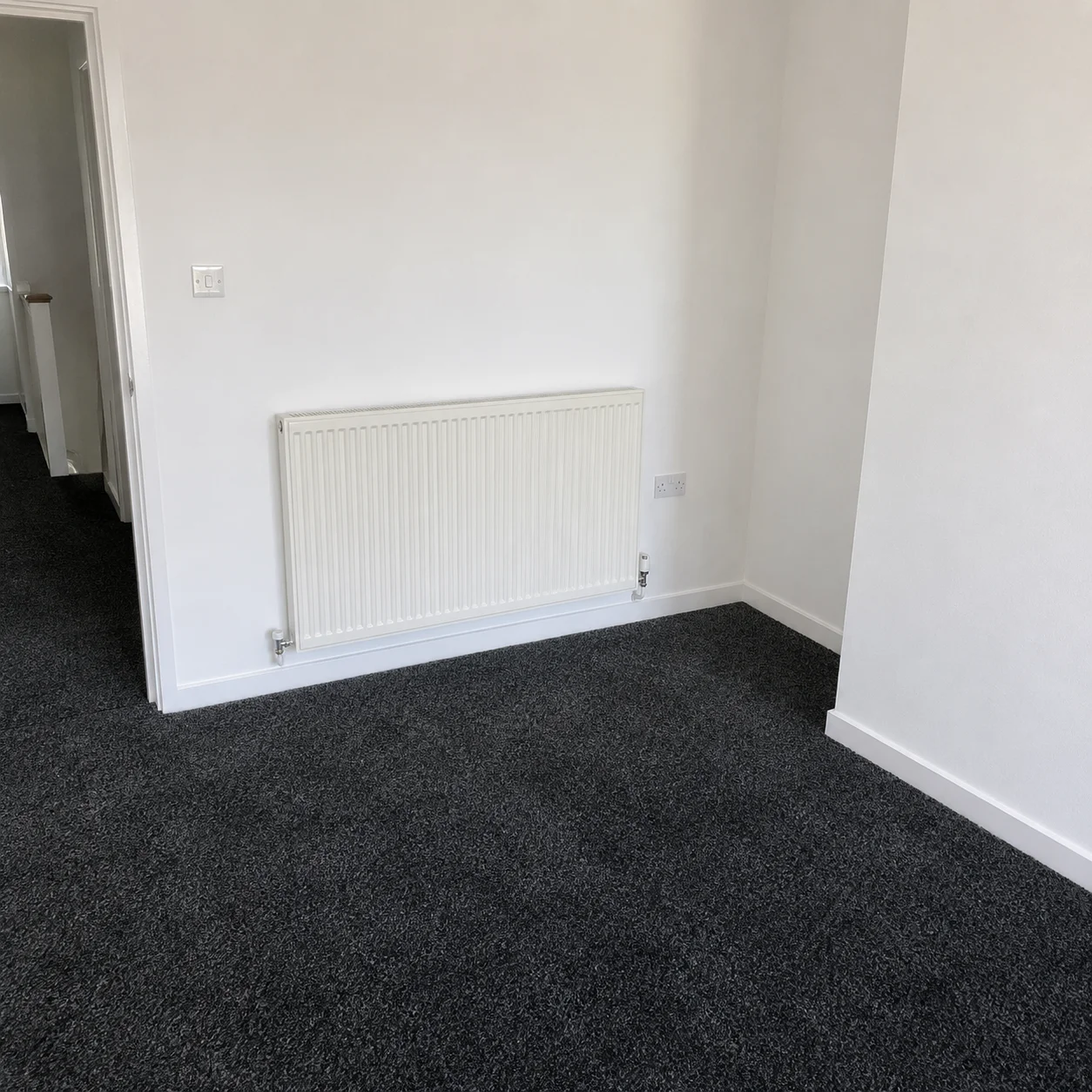
Damp survey in Flint, Flintshire, showing a newly renovated living room where elevated moisture readings were identified during a professional damp inspection.
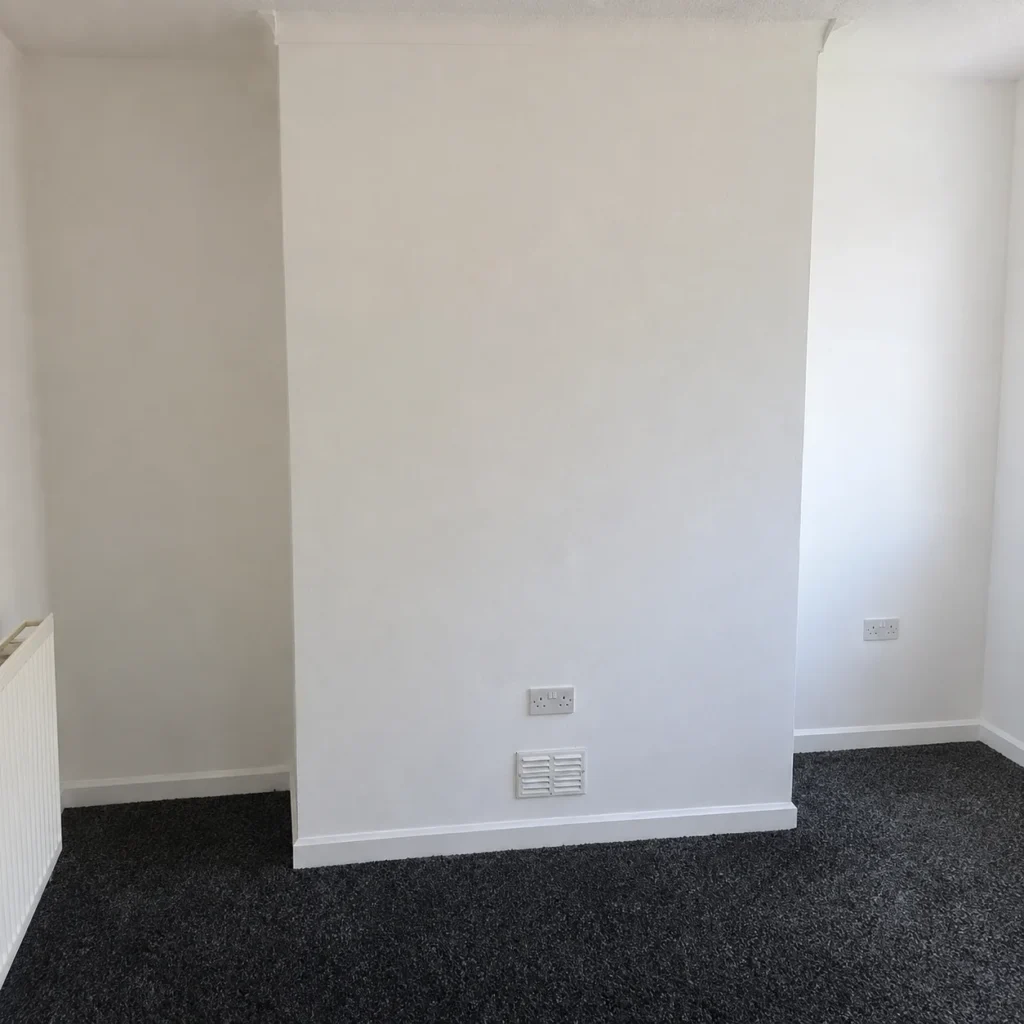
Professional damp survey at a recently renovated property in Flint, Flintshire, identifying hidden moisture behind newly finished internal walls.
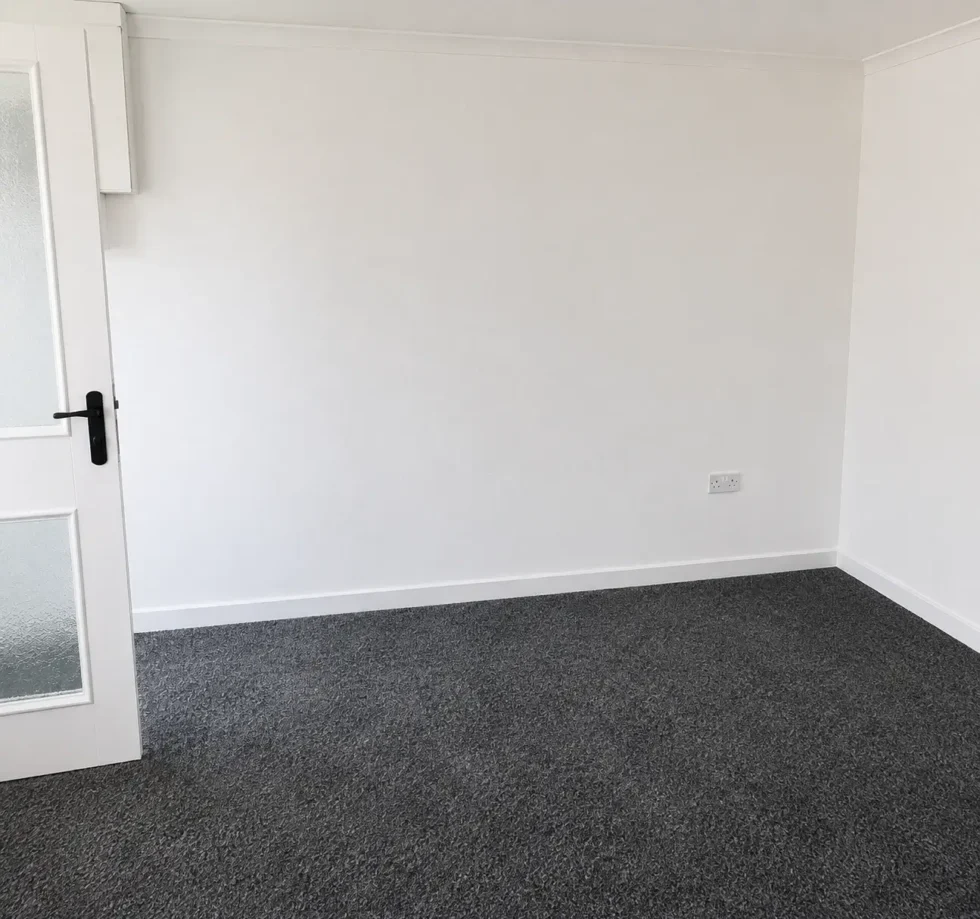
Damp inspection of a newly renovated home in Flint, Flintshire, where moisture testing identified an underlying damp problem despite recently completed decoration.
Frequently Asked Questions
Do you survey older stone cottages differently from modern houses?
Yes. Solid stone walls hold and release moisture very differently from cavity construction, and standard electrical moisture meters can mislead on stone and lime backgrounds. Our surveyors profile moisture at depth, check for cement pointing and impermeable coatings that trap water, and recommend breathable, stone-appropriate remedies where needed.
My house is in a low-lying area near the Dee — is damp inevitable?
No, but the diagnosis matters more. In areas such as Sealand, Sandycroft and Queensferry, ground moisture and floor construction are frequent culprits, and injecting a new DPC into a wall will not fix a damp solid floor. A survey establishes exactly where the moisture is entering before any money is spent.
I’m a landlord in Wales — will your report help me meet my legal obligations?
Our reports document the cause of the damp or mould, the recommended remedy and photographic evidence, in a format suitable for tenancy files, agents and insurers — practical support for meeting the fitness for human habitation requirements that apply to rented homes in Wales.
How quickly can you attend, and when will I get the report?
We are based in Ewloe, so Flintshire appointments are usually available quickly, subject to availability. Your written report follows within 3 working days of the survey.
What if the survey finds penetrating damp?
Your report will identify the entry point — pointing, render, gutters, roofline or chimney — and the correct repair. For detailed information on how we investigate and fix it, see our penetrating damp in Flintshire page.
Get Help Now in Flintshire
Book your Flintshire damp survey on ☎ 01244 638219 or ✉ info@quirksonline.co.uk— or see the full damp survey service on our main Damp Surveys page.
Send Photos via WhatsApp for a quick assessment.
Our Commitment
Long-lasting, professional solutions using proven industry methods

- Damp Surveys Services In Flintshire
- Damp Surveys Services In Chester
- Damp Surveys Services In Wirral
- Damp Surveys Services In Flintshire
- Damp Surveys Services In Chester
- Damp Surveys Services In Wirral