Specialist Building & Property Maintenance Services You Can Depend On.


- Home
- About
- Building Services
- Property Maintenance
- Structural Services
- Damp Services
- Fire Safety
- Emergency Repairs
- Trades
- Contact
Wall & Brick Crack Repair · Crack Stitching
Wall Crack & Brick Crack Repair — Crack Stitching, Cause First, Across Flintshire, Chester & the Wirral
Quirks Property Maintenance repairs cracks in walls and brickwork across Flintshire, Chester and the Wirral. Crack stitching with stainless steel helical bars is one of the repairs we carry out — but only once the cause of the cracking has been established, because a stitched crack with the cause still active is not a repair. Photographs are where we start: send them on WhatsApp or by email and we’ll come back to you — with a written quotation where they show enough, or to arrange a visit where they don’t.
Wall & Brick Crack Repair — Send Us Photographs
 5.0★★★★★100+ Google reviews
 20+years trading
 £5 millionpublic liability insurance in place
 Workmanship guarantee on completed worksOne contractor · all trades under one roof
Wall crack and brick crack repair — what we do
Cracks in walls are the most common structural worry a homeowner has, and the most misunderstood. Most are cosmetic. Some are the first sign of a lintel that has failed, a wall that has lost its tie to the floors, water getting into the fabric, or ground that is moving. The job is to tell one from the other before anything is repaired — and then to carry out the right repair, properly, with the making good included.
Quirks Property Maintenance Ltd is a multi-trade building contractor based in Ewloe, Flintshire. We find out what is causing cracks in walls and brickwork, carry out crack stitching, replace failed lintels, install restraint ties, rebuild and repoint damaged brickwork, deal with water ingress where it is part of the cause, and reinstate render, plaster and decoration afterwards — one contractor for the whole repair. Where the movement is significant or the cause is not clear, we recommend a structural engineer and carry out the works to the engineer’s specification; we do not offer engineering advice ourselves.
This page explains which cracks are worth sending us photographs of, what crack stitching is and is not, what causes masonry to crack, and what repairs may follow. The area pages for Flintshire, Chester and the Wirral cover the property types and cracking patterns we see locally.
Cosmetic or something more?
When a crack is worth a closer look
Hairline cracks in plaster, at the joints between plasterboard sheets, around new work as it dries, or in render as it weathers are usually cosmetic. They are filled, decorated and forgotten. Cracks that go through the masonry rather than the finish, that step diagonally along the mortar joints, that appear at the corners of openings, that are wider at one end than the other, or that reopen after filling are a different matter — not necessarily serious, but worth understanding before they are covered up again.
This page cannot diagnose your crack, and neither can a description on its own. What it can do is tell you which cracks are worth photographing and sending to us, so that the decision to repair — or not — is made on what is actually happening in the wall.
Cracks in walls worth sending us photos of
Most cracks in a house are cosmetic — hairline lines in plaster or render that come from drying out and normal seasonal movement. Some are not, and a description alone will not tell us which yours is. These are the cracks worth photographing and sending to us:
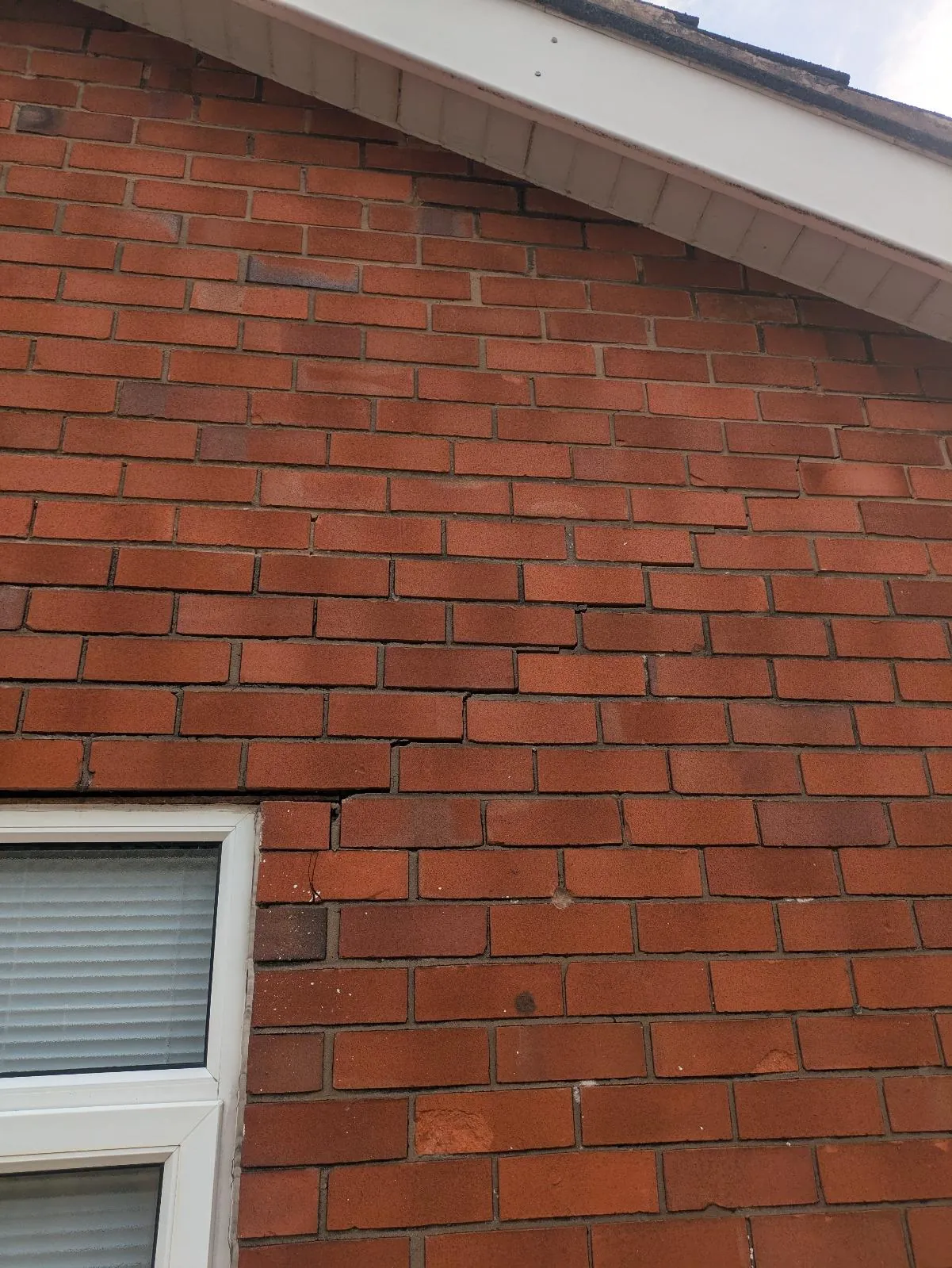
Cracking to external brickwork above a window
New, widening or recurring
A crack that has appeared recently, is getting wider, or comes back after it has been filled and decorated.
Stepped through the brickwork
A diagonal crack that follows the mortar joints in a staircase pattern, rather than a straight line through render or plaster.
At the corners of openings
Cracks running from the top corners of windows and doors, or brickwork dropping above an opening.
On both faces of a wall
A crack you can see inside and outside at the same point.
With other symptoms
Doors and windows that have started to stick, gaps opening at skirtings or ceilings, sloping floors.
After a change nearby
Cracking that followed a drainage problem, a leak, tree work, an extension or excavation next door, or an alteration inside the house.
Damp, salts or spalled bricks around it
Damp patches, white salt deposits or bricks blowing or flaking near the crack — signs that water has been getting in for a while.
Bulging or leaning
A wall that is no longer flat or plumb, a gable that has moved, or gaps opening between sections of wall.
None of these is a diagnosis. They are reasons to have the wall looked at properly, so that whatever is done next is the right thing.
The repair itself
What crack stitching is — how a cracked brick wall is repaired
Crack stitching repairs a crack in a masonry wall by tying the two sides of it back together. Slots are cut into the horizontal mortar joints at intervals up the height of the crack, typically extending well beyond it on both sides. The slots are cleaned and flushed, a polymer grout is injected, and stainless steel helical bars are pressed into the grout and covered with more of it. Once the grout has cured, the slots are repointed to match the wall.
The bars are helical — twisted — so that they bond along their whole length rather than relying on an anchor at each end. They carry the tensile load across the crack and spread it along the wall, so that any further slight movement is shared along the masonry instead of concentrated at the crack. On a brick wall the repair is virtually invisible once repointed; on a rendered or plastered wall it disappears entirely when the finish is made good.
Stitching suits many cracks in brick, block and stone walls, internally and externally, once the cause of the cracking has been dealt with — a dormant crack, in other words, rather than a live one that is still opening. It does not suit every crack, and it does not stop movement that is still going on — which is why the next section matters more than this one. Where it does suit, it is a targeted repair rather than a rebuild: the original brickwork stays, the work is measured in days, the disruption is small and the cost is a fraction of taking the wall down. On a lime-built wall the slots are repointed in lime, not cement.
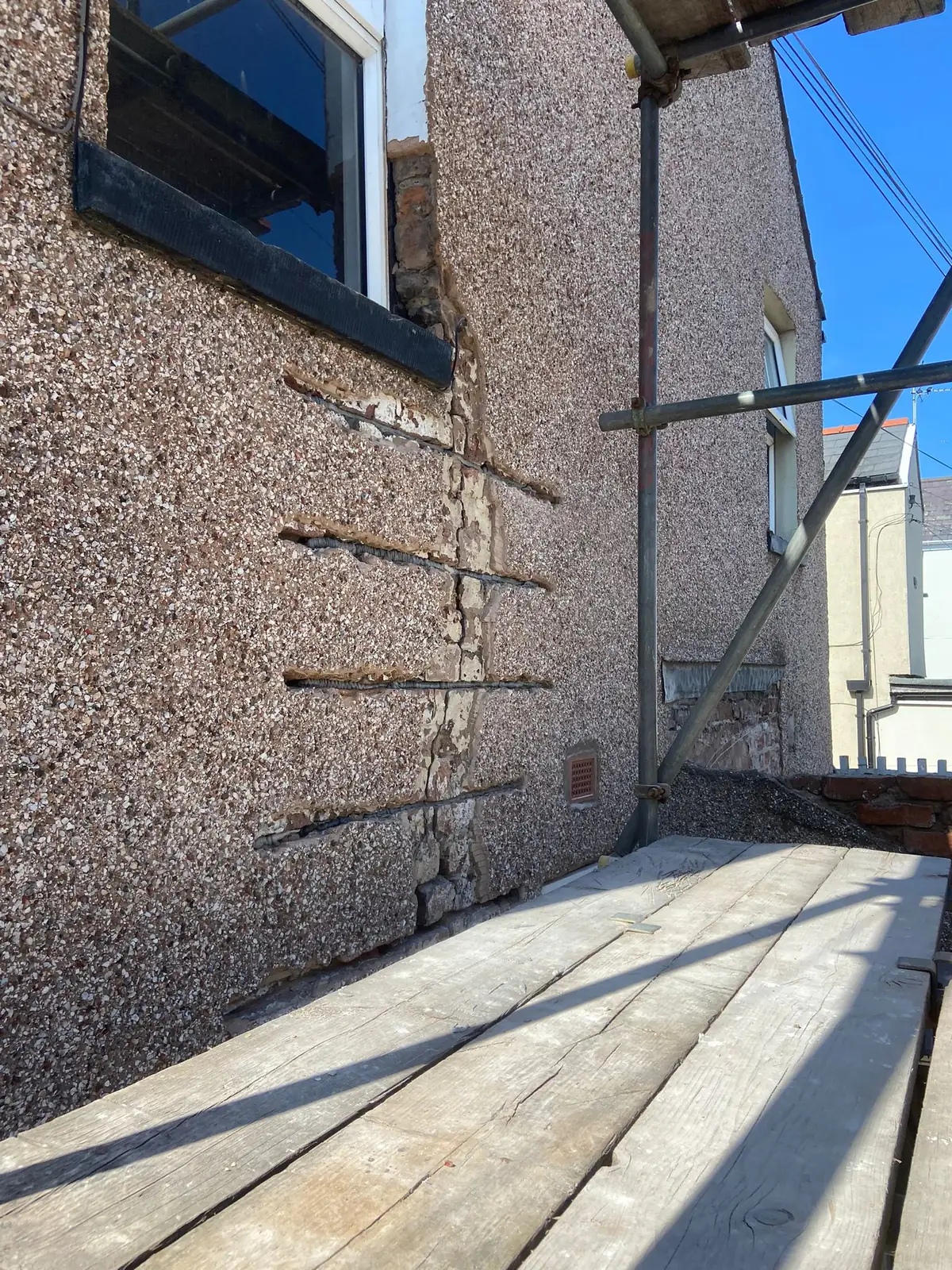
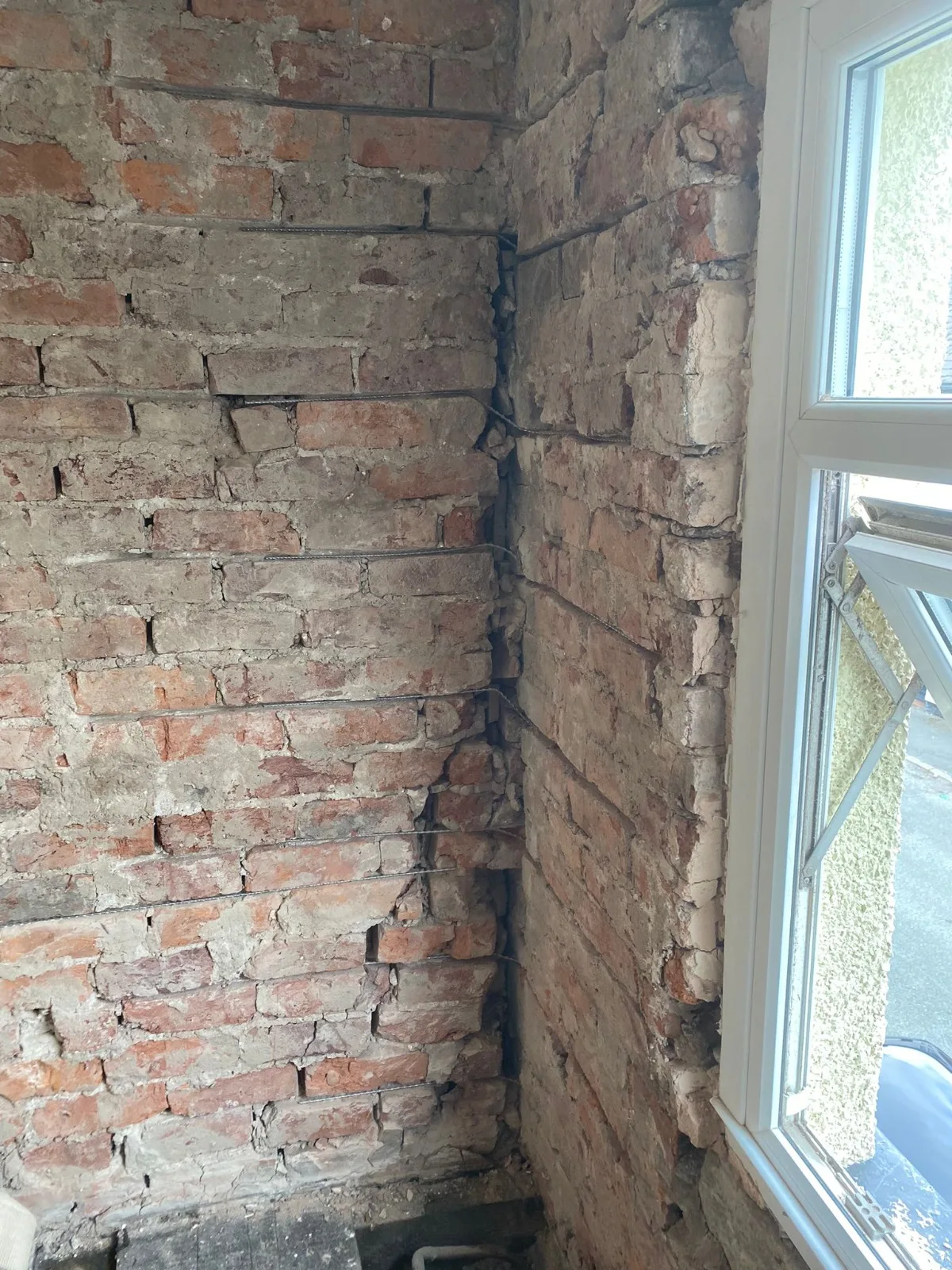
Helical reinforcement bars installed across cracking in an external rendered wall, prior to making good.
How helical bar crack stitching is carried out — manufacturer’s demonstration.
Why the cause comes first
Establishing the cause before any repair
A crack is a symptom. Stitch it while the cause is still active — a lintel still failing, a wall still unrestrained, ground still moving, water still getting in — and the wall will crack again, next to the stitching or through it. Establish the cause, deal with it, and then the stitching does what it should.
So we look at more than the crack: the wall type and its age, what is above and below the crack, the openings nearby and what supports them, whether the wall is tied to the floors and roof, the ground, drains and gullies around the house, trees, and what has changed recently — inside or next door. Photographs of the whole wall, not just the crack, show us a good deal of that; where they can’t, we’ll say so and arrange a visit. Sometimes the cause is obvious. Sometimes it is not, or the movement is significant, and in those cases we recommend a structural engineer.
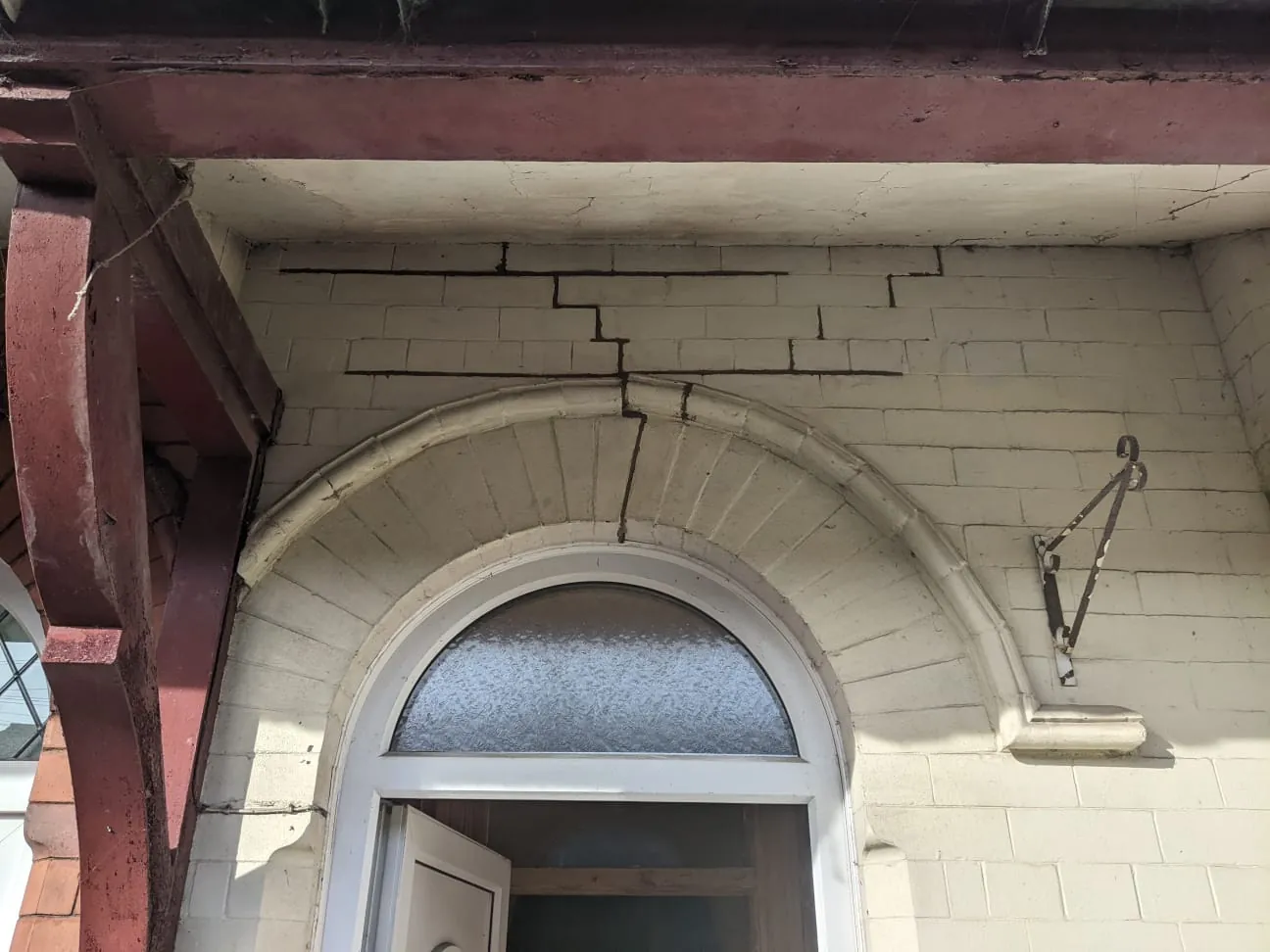
Cracking through a painted brick arch over a front door, stepping up into the brickwork above.
What makes masonry crack
Potential causes of cracking
Most structural cracking comes down to one of these, or a combination. Which one applies is what we establish first — with a structural engineer where one is needed. Our area has its own contributors: shrinkable clay in places, low-lying reclaimed ground on Deeside, former coal and lead workings in parts of Flintshire, old solid-wall housing in Chester and Birkenhead, and a wet, exposed coast. The area pages say more about each.
- Ground movement — Subsidence, heave or settlement — ground moving beneath part of the house, often shown by stepped diagonal cracks that are wider at the top or bottom.
- Thermal and seasonal movement — Masonry expands and contracts with temperature and moisture; long walls without movement joints, and walls restrained at one end, can crack as a result.
- Failed or corroded lintels — A lintel that has rusted, rotted or been overloaded lets the masonry above an opening drop, cracking from the corners of the window or door.
- Lack of lateral restraint — A wall that is not adequately tied to the floors or roof can bow or move outward, cracking at the junctions and across the face.
- Water ingress and drainage — Leaking pipes, failed pointing, and blocked or broken drains soften ground and saturate masonry, leading to both movement and deterioration.
- Masonry deterioration — Frost-damaged or spalled bricks, eroded mortar and hard cement pointing that stops the wall breathing all weaken the fabric.
- Previous alterations — A removed wall or chimney breast, an enlarged opening, or a support that was never adequate can leave the structure carrying load it was not designed for.
- Wall tie failure — In cavity walls, corroded ties can produce horizontal cracking along the bed joints, typically at regular courses.
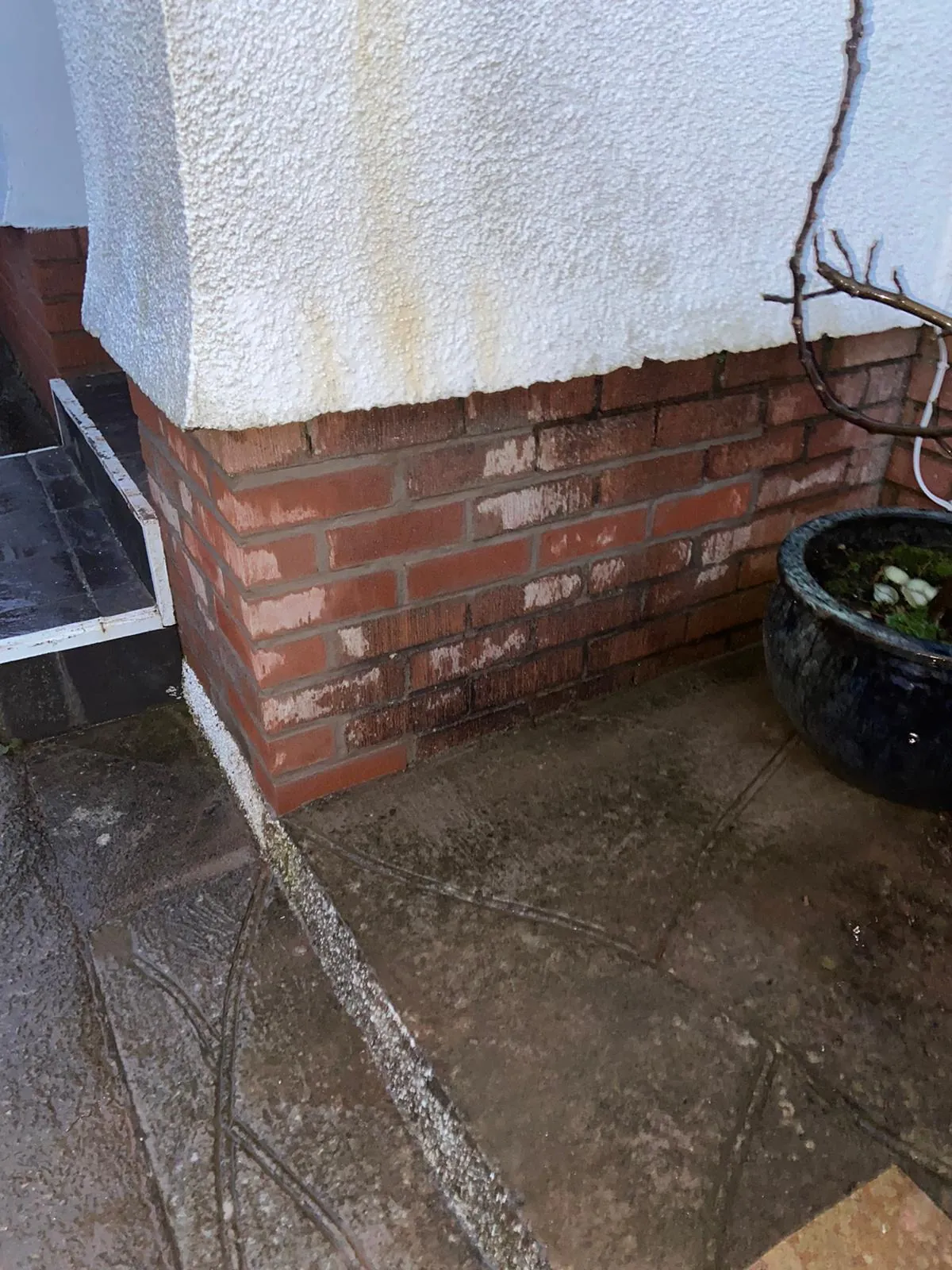
Brick repair following frost damage, with salt deposits and surface deterioration caused by repeated moisture penetration and freeze-thaw action.
What the repair may involve
Repair options for cracked walls
Once the cause is known, the repair is designed for it. Crack stitching is one element; depending on the finding it may sit alongside:
Local masonry repair
Cutting out and replacing spalled, cracked or frost-damaged bricks with matching units — see brick repair.
Repointing
Raking out failed or hard cement pointing and repointing in the right mortar, so the wall sheds water and moves as it should — see repointing.
Lintel repair or replacement
Propping the masonry, replacing the failed lintel with a new steel one and a cavity tray, and rebuilding the brickwork above — see lintel repair and replacement.
Lateral restraint
Restraint ties or straps fixed from the wall to the floor joists or roof structure, to the engineer’s design.
Drainage correction and damp management
Repairing the pipe, drain or pointing that has been letting water in, and treating the damp it has caused — see damp proofing.
Structural alterations
Where an earlier alteration left the structure under-supported, putting the support right — a beam, a pier, a padstone — see structural alterations.
Wall ties
On cavity walls where the ties have corroded, we replace the failed ties alongside stitching the horizontal cracking.
When an engineer is needed
Structural engineer involvement
We are a building contractor, not a firm of structural engineers, and we do not give engineering advice. What we do is recognise when it is needed. Where the movement is significant, progressive or affecting the structure, where the cause is not clear from what we can see, or where a lender, insurer or buyer will want an independent opinion, we recommend that you instruct a structural engineer. The engineer inspects, establishes the cause and specifies the repair; we then carry out the works to that specification and provide the photographic record of them.
Every case study on these pages ran that way: Quirks inspected, an engineer was instructed, the report set the repair and we built it. Where the specified work involves replacement lintels, new supports or restraint to the structure, our Building Regulations guidance explains what may be covered.
Five steps, one contractor
How a crack repair runs with Quirks
- 1Get in touch — Send photographs on WhatsApp, email us, use the form or call 01244 638219.
- 2Photos and written quotation — Send us photos on WhatsApp or by email. We look at them and send a written quotation. If the photos can’t show enough, we’ll arrange a visit. Where the movement is significant or the cause is unclear, we recommend a structural engineer and you instruct one.
- 3Repair works — Propping where needed, lintels or restraint if specified, cutting out and replacing damaged masonry, then the crack stitching itself.
- 4Making good — Repointing, re-rendering, replastering, skirtings or decoration — whatever the agreed scope includes.
- 5Sign-off and next steps — Building Control sign-off where its involvement was required, a before-and-after photographic record of the repair, and a plain-English note of what, if anything, to keep an eye on.
Helical bar crack stitching bedded into the mortar joints.
- 1Get in touch
- 2Photos and quotation
- 3Repair works
- 4Making good
- 5Sign-off
What drives the price
What wall crack and brick crack repair costs
We do not publish prices for crack repair, because the same-looking crack can be a half-day of stitching or a lintel replacement with scaffold. What decides the figure:
- Number and length of the cracks
- Wall type — brick, block, stone, rendered
- Access — ground level, ladder or scaffold
- Whether the cause needs its own work: lintels, restraint ties, drainage
- The extent of making good: pointing, render, plaster, decoration
- A structural engineer’s report, where one is needed, is instructed by you and priced separately
Every quotation sets out the scope of work in writing — the stitching, any other structural work and the making good — with one total price for the job. Most jobs we can price from photographs — send yours on WhatsApp or by email and we’ll come back with a written quotation.
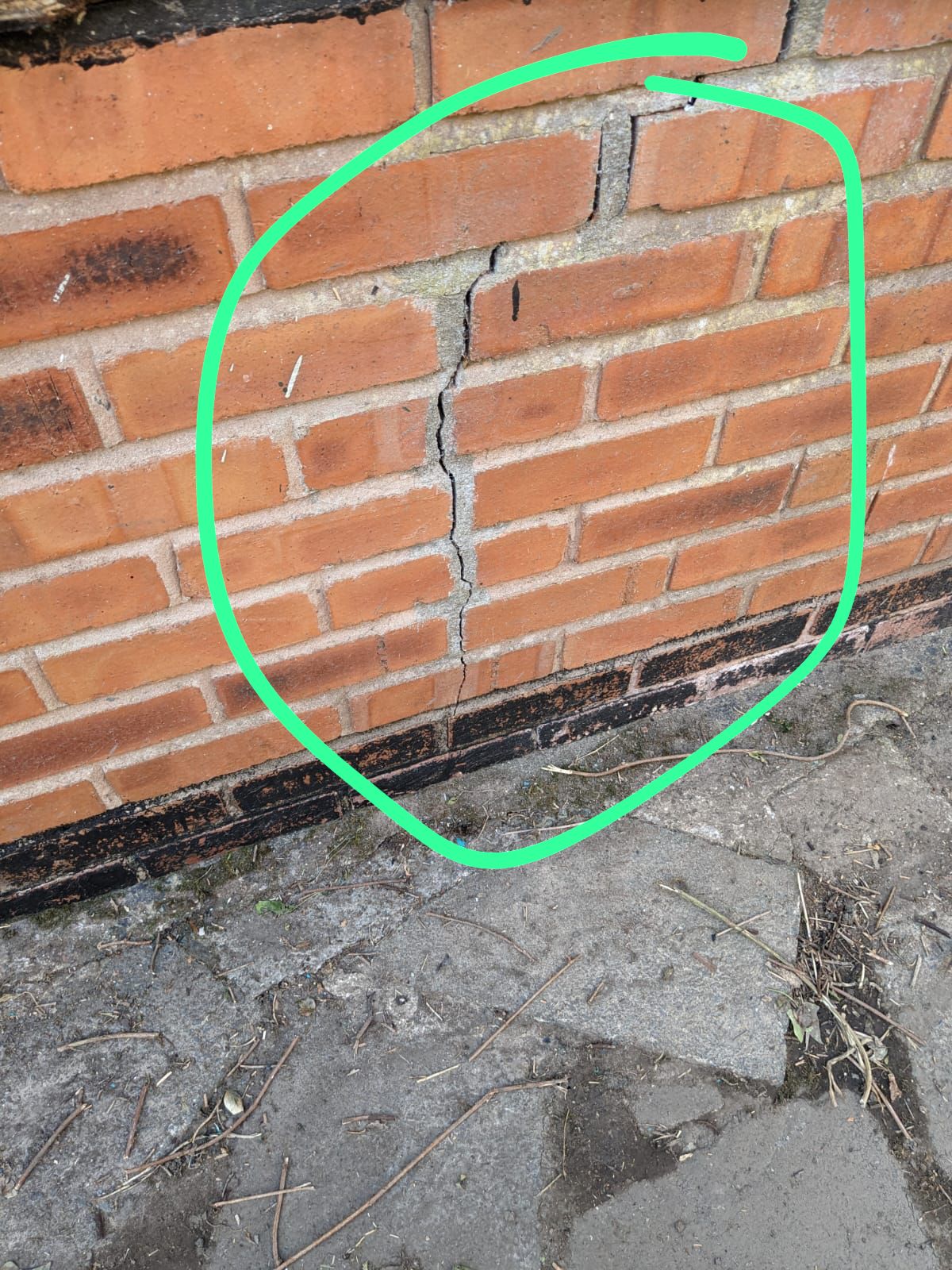
Vertical cracking through brickwork — the cause is assessed before the repair is priced.
Recent wall crack repair work
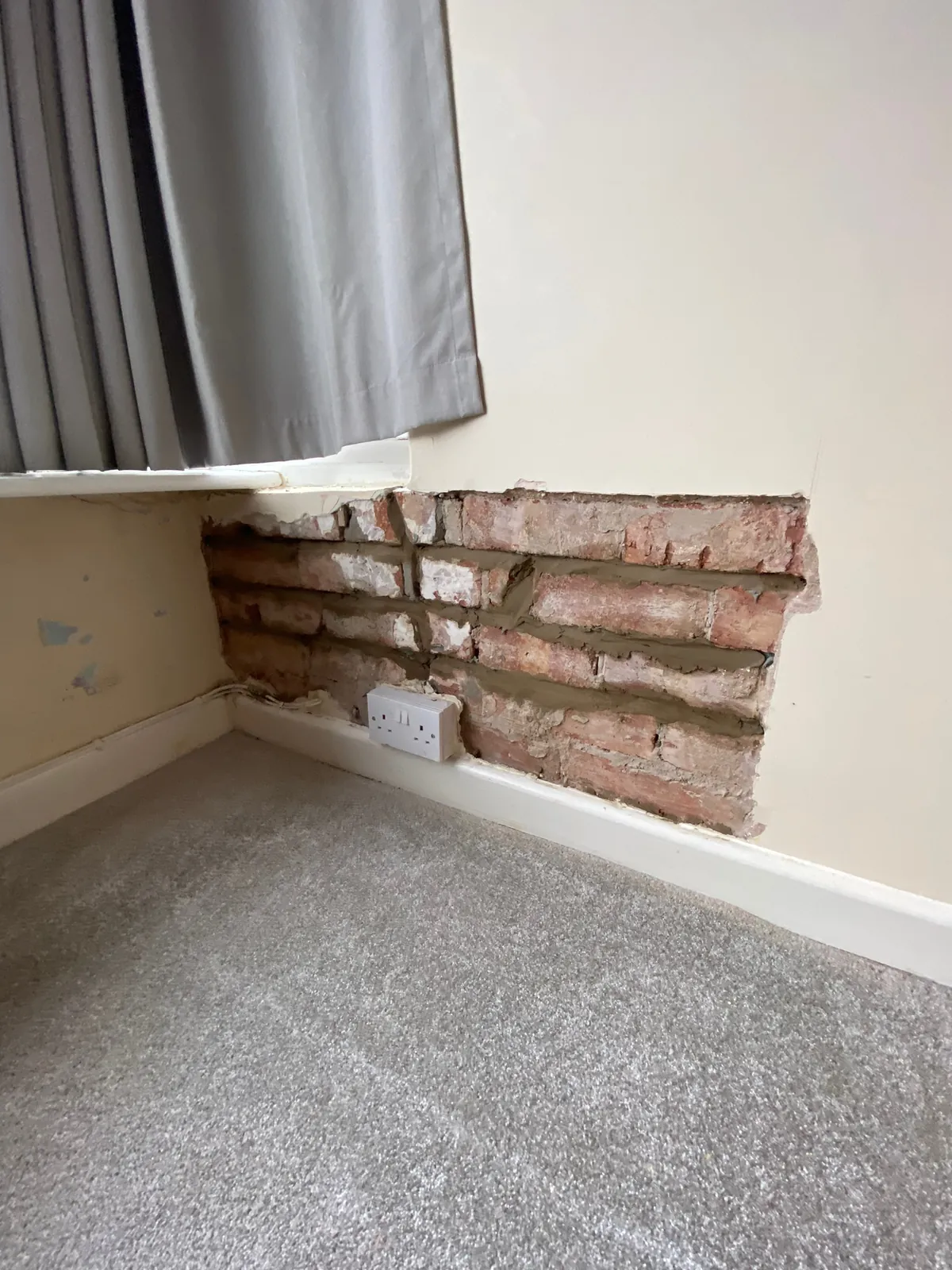
Flintshire — internal masonry wall
A crack that kept coming back through the plaster, however often it was filled. The engineer’s report put it down to thermal and seasonal movement; we stitched it with stainless steel helical bars, replastered and fitted new skirting.
Read the Flintshire write-up →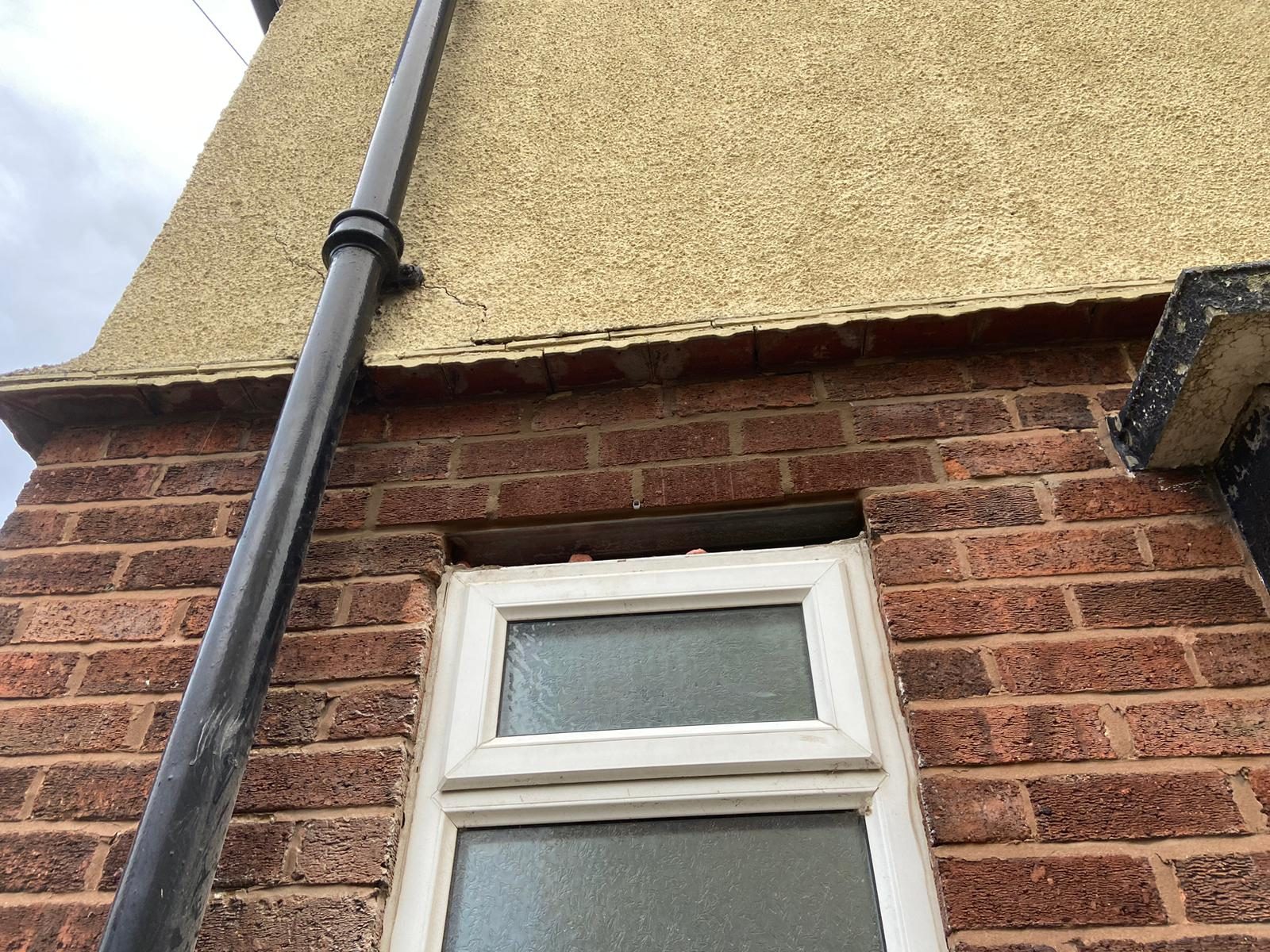
Chester — rendered semi-detached house
Cracking across the elevations and through the stairwell, which the engineer’s report traced to failed lintels. We fitted new steel lintels, rebuilt and stitched the brickwork and strapped the wall to the ceiling joists — the structural repairs only.
Read the Chester write-up →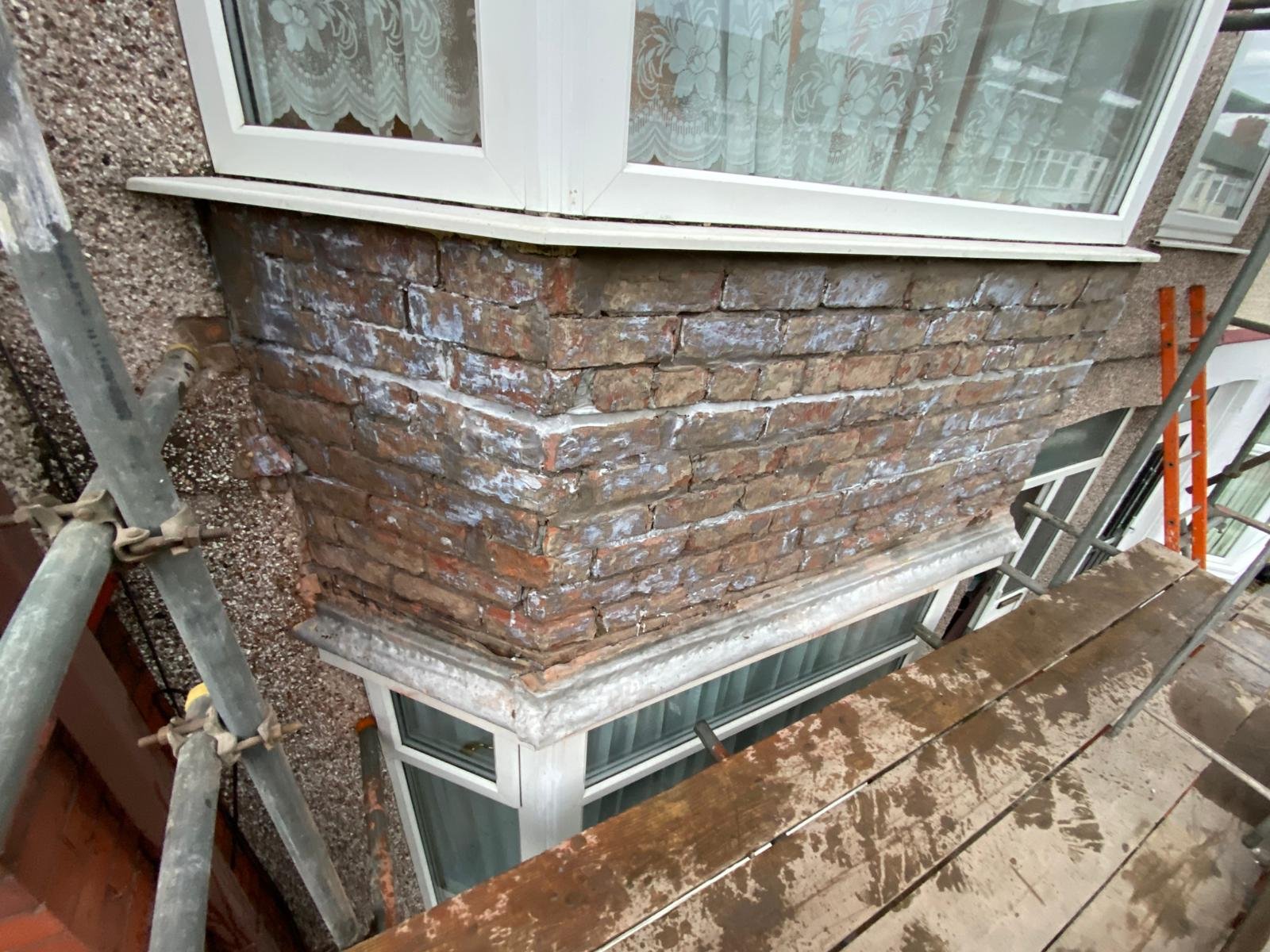
Wirral — rendered terrace, two-storey bay
A two-storey bay stitched with stainless steel helical bars and tied in with bow ties at floor level, to a structural engineer’s specification, then re-rendered and replastered.
Read the Wirral write-up →Where we repair cracked walls and brickwork
We are based in Ewloe, Flintshire, and cover Flintshire, Chester and the Wirral for wall crack and brick crack repair. Each area page covers the property types and cracking patterns we see there. We travel to all three; we do not have an office in each.
Flintshire
Rendered post-war estates on Deeside, older stone and brick in the hill and estuary towns — and our home county.
Learn more →Chester
Victorian and Edwardian solid-wall houses, conservation-area repairs and post-war cavity walls.
Learn more →Wirral
Inter-war semis with bay windows, rendered coastal housing and Birkenhead’s terraces.
Learn more →We’re never far away when you need us.
One Contractor. Complete Structural Repair Solutions.
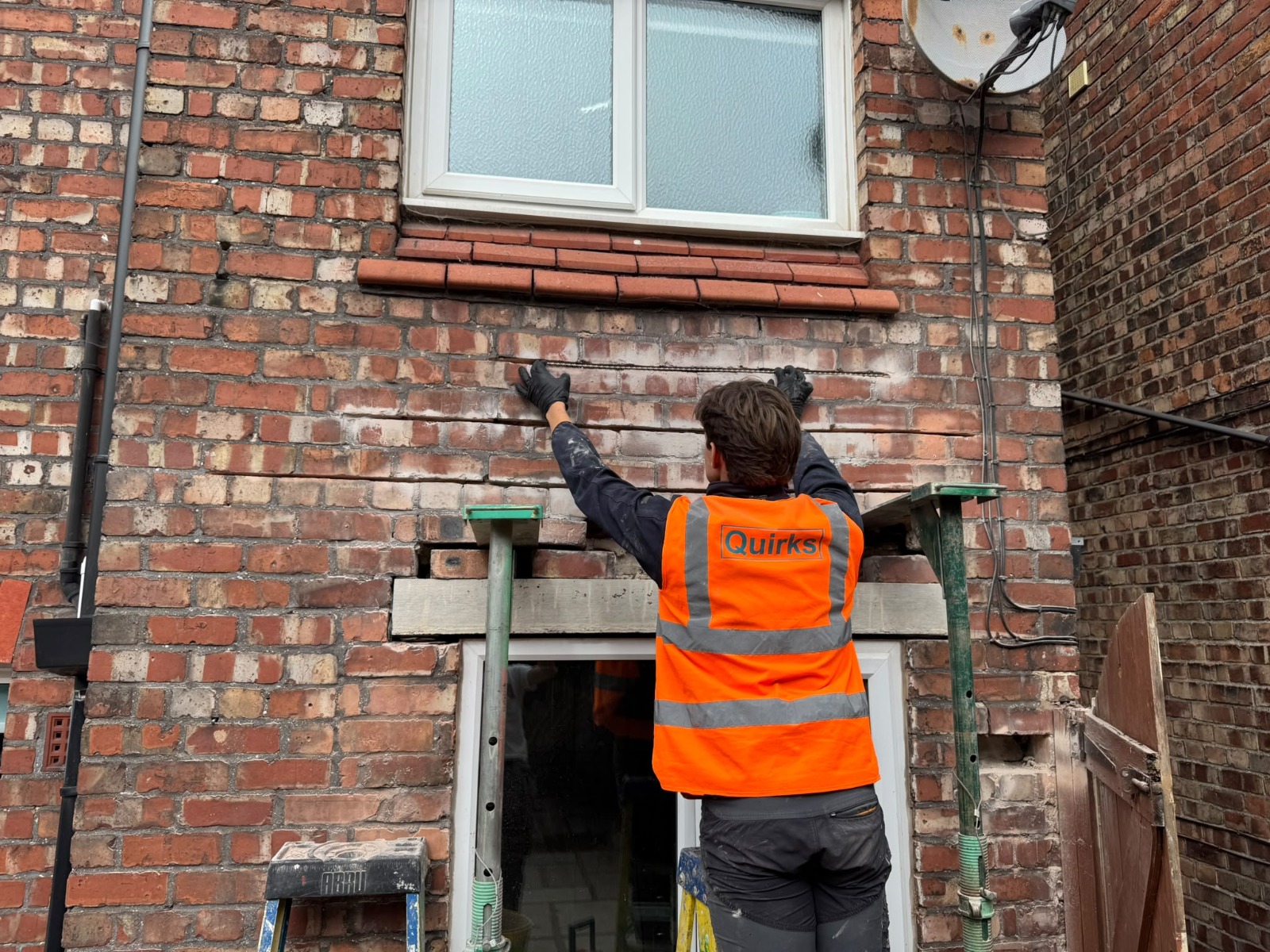
Structural Crack Repairs
We find out why the wall has cracked first, so the repair deals with the cause, not just the crack.
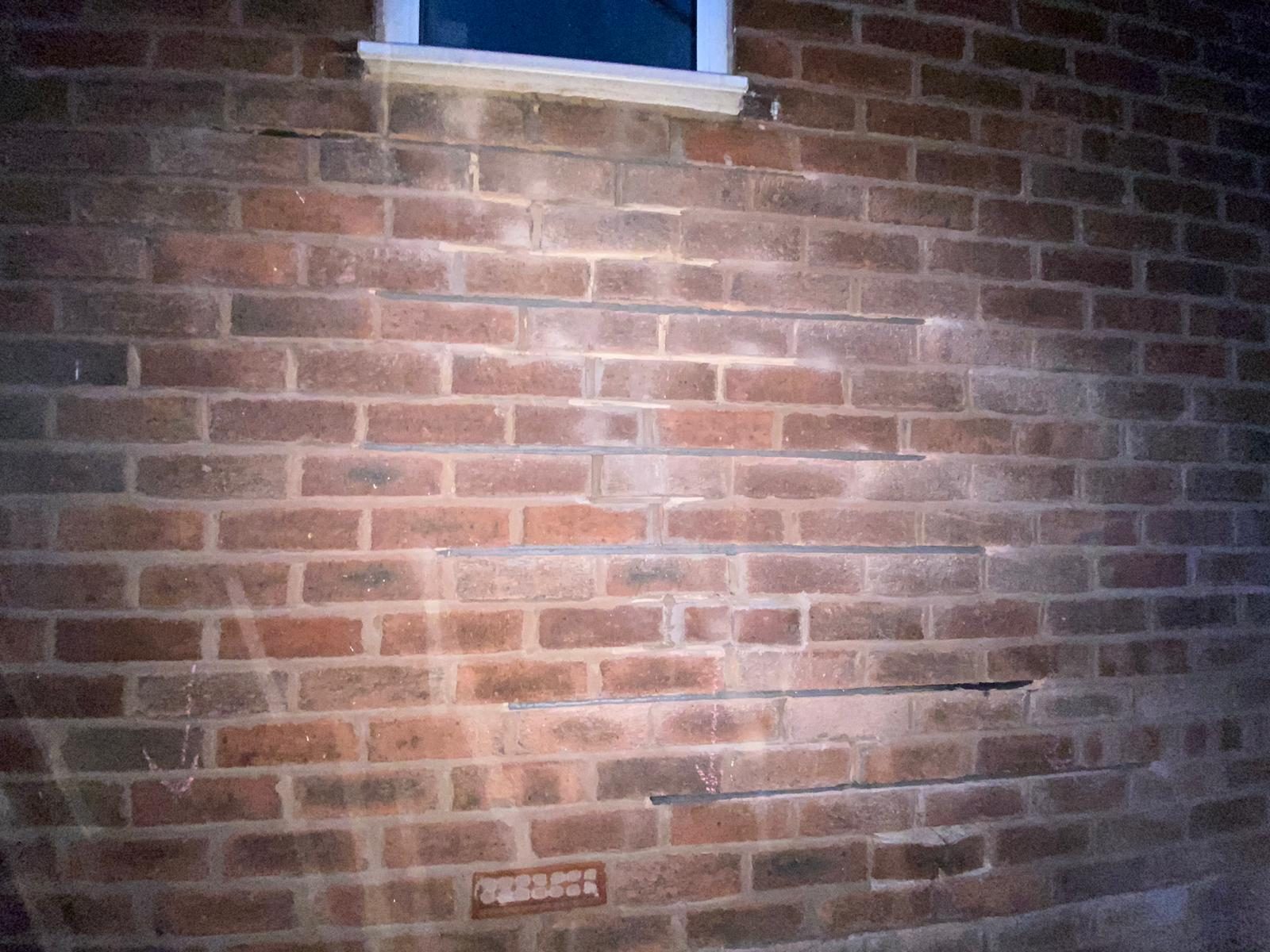
Helical Crack Stitching
Stainless steel helical bars, bedded in resin across the crack, tie the brickwork back together without taking the wall down.
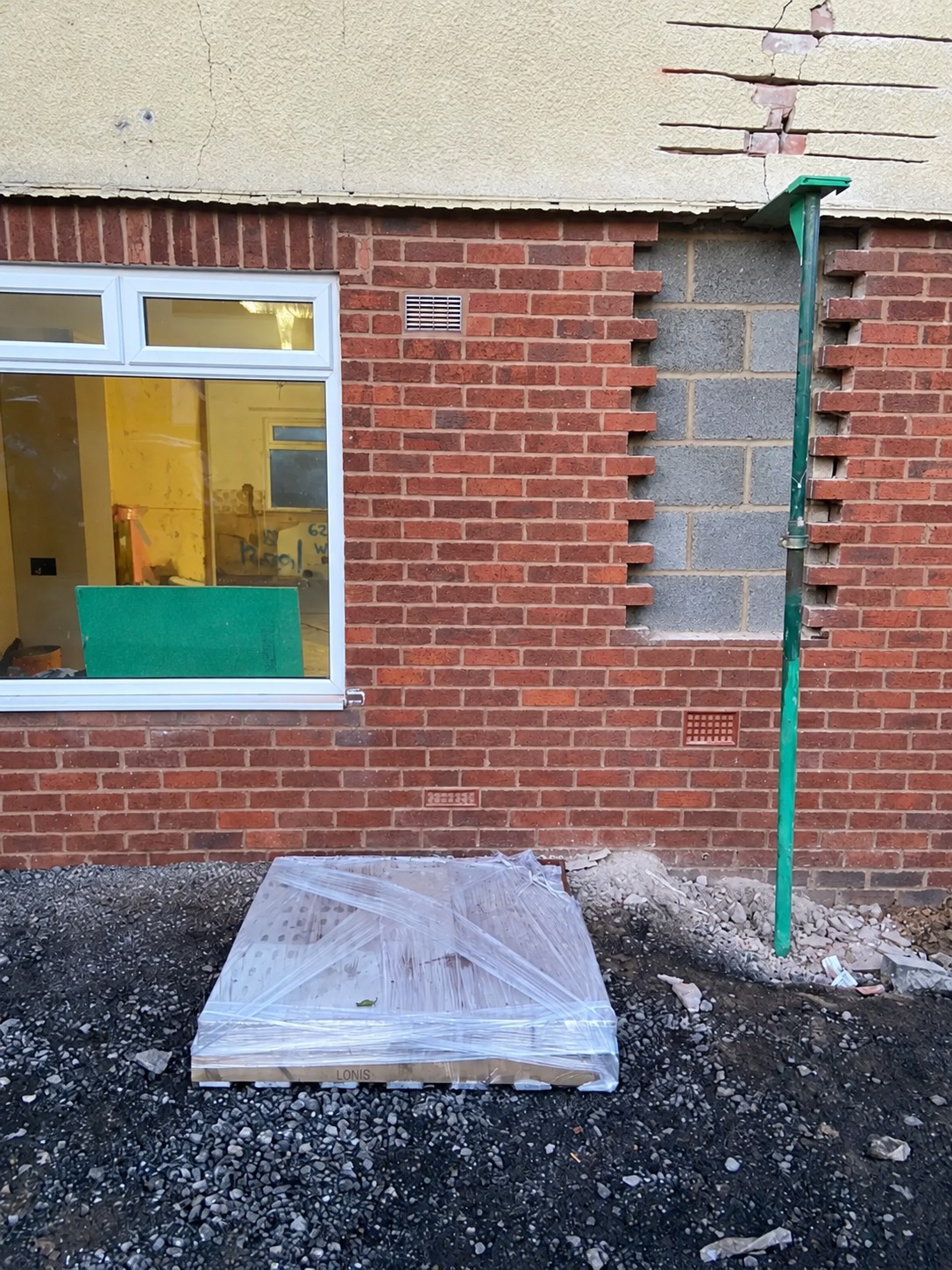
Brickwork & Masonry Repairs
Where bricks have broken or moved, we cut out the damaged section and rebuild it, toothed into the existing wall.
Complete Repair & Reinstatement
Once the structural work is done, we replaster, refit skirting and make good, ready for you to decorate.
- Photos and quotation
- ›
- Crack stitching
- ›
- Brickwork repairs
- ›
- Making good and finishing
Memberships and certifications










The questions we’re asked most
Frequently asked questions
What is crack stitching?
Will the crack come back after stitching?
Do I need a structural engineer?
Can I just fill the crack?
Is my house subsiding?
Does crack stitching need Building Regulations approval?
Will the repair show?
Do you repair cracks in brickwork as well as in render and plaster?
Will a crack repair affect my insurance or a sale?
Do you cover my area?
Related services for wall and brick crack repair
Structural alterations
Support and openings put right where a previous alteration left the structure short.
Learn more →Lintel repair and replacement
Failed lintels over windows and doors — a common cause of cracking above openings.
Learn more →Building Regulations
When notifiable work such as replacement lintels needs Building Control involvement.
Learn more →Got a crack you want looked at?
Send us photos for a written quotation — across Flintshire, Chester and the Wirral.
Photographs may not be enough to diagnose every problem and a site visit may still be needed — we’ll say so when we reply.
Structural crack repair by area