Specialist Building & Property Maintenance Services You Can Depend On.
Fire doors — Wirral
Quirks supplies and installs FD30 and FD30S fire doors across Wirral, in flats, HMOs, family homes and commercial buildings. Doors come from the Howdens range, fitted as complete door sets. Send photos of your doors on WhatsApp for a written quotation.
Fire doors — supplied, fitted and upgraded

In short: we supply FD30 and FD30S fire doors from the Howdens range and fit them as complete door sets across Wirral — homes, HMOs, flats, rented properties and commercial buildings. Most jobs are priced from photographs.
Local
Birkenhead, Wallasey and New Brighton have a lot of purpose-built blocks and older buildings divided into flats, and in those buildings it’s the flat entrance doors and communal corridor doors that do the real fire-safety work. We replace and upgrade these as complete door sets, and we can phase a block to keep disruption down.
Out in the family-home stock — Bebington, Heswall, West Kirby, Hoylake — the doors most often needed are the stairway doors that a loft conversion calls for and the door between the house and an integral garage.
Wirral’s blocks also sit under the Fire Safety (England) Regulations 2022: in residential buildings over 11 metres, communal fire doors must be checked every three months and flat entrance doors every year. Those checks are what find the dropped leaves, missing seals and dead closers — and we replace or upgrade whatever they flag, with records for the building’s file.

BROMBOROUGH, WIRRAL — FLAT ENTRANCE DOOR
A landlord’s letting agent asked us to look at the entrance door to a flat in a block in Bromborough. The door had been flagged at an inspection. It opens off a shared entrance area onto the flat, which puts it on the line between the home and the route everybody else in the block uses to get out. That is exactly the position where a fire door is expected, and the existing door was not one.
The existing door was a painted timber door with a wired-glass panel in the upper half, a standard letterplate, and no closer. It was hung in a plain timber frame. There was nothing wrong with it as a door: it opened, shut and locked. It had simply never been a fire door. A glazed panel does not make a door one. The rating belongs to a complete tested door set, leaf, frame, glazing, seals and ironmongery together, and this was an ordinary door.
A flat entrance door onto a shared area has a job beyond keeping the weather and the neighbours out. If a fire starts inside the flat, that door is what stops it reaching the stairs and corridors other residents escape through. An ordinary door gives no reliable time at all. This one needed replacing rather than upgrading, because there was no fire-rated leaf or frame to build on.
The floor of the shared entrance area was covered with self-adhesive protection before anything came out. We removed the existing leaf, frame and ironmongery together and prepared the opening for a new frame. Fitting a fire door leaf into an old non-fire-rated frame is a common shortcut and a poor one: a fire door is tested as a complete set, and the frame, seals and fixings are as much a part of the rating as the leaf.
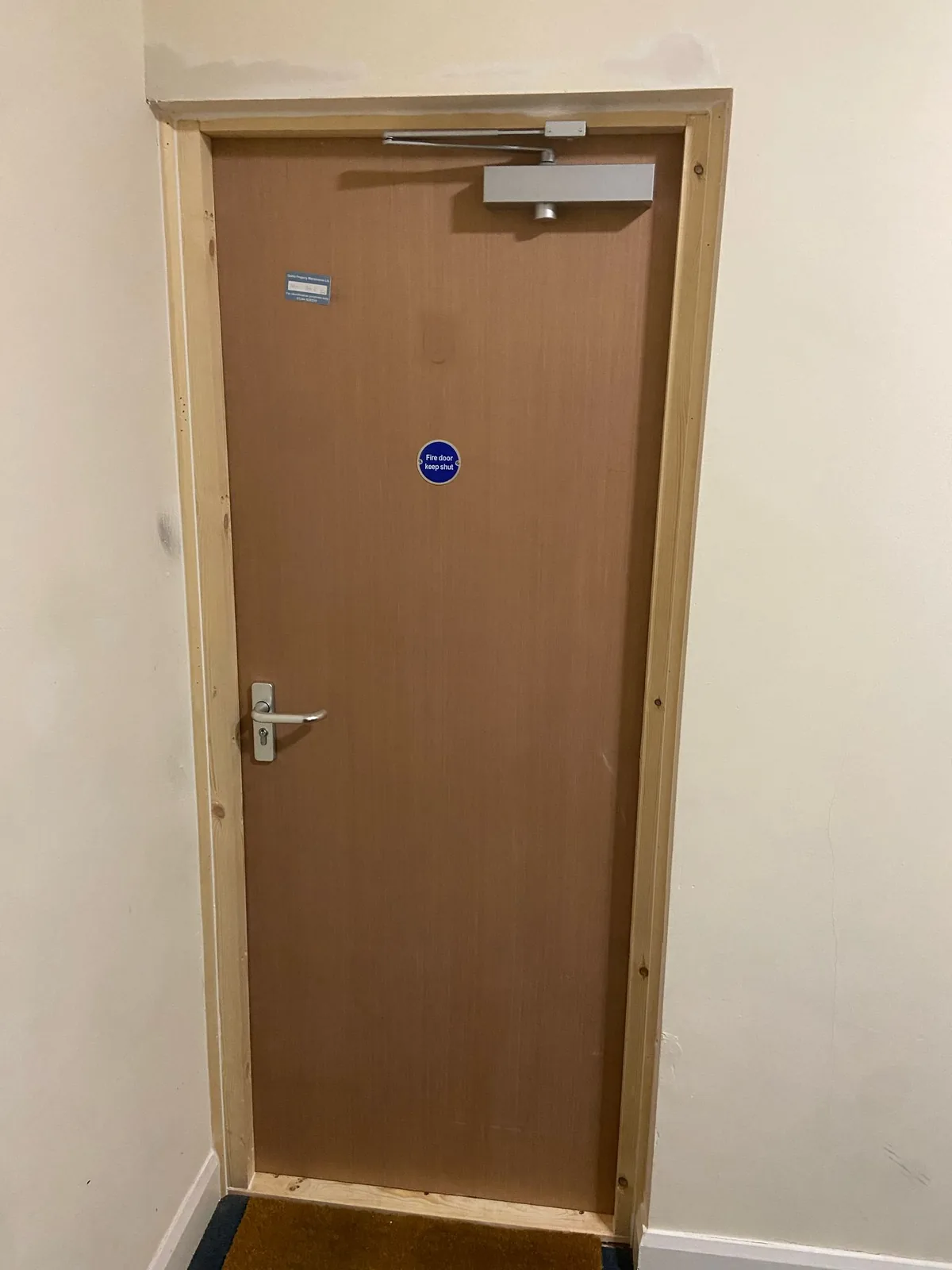
The new door set is a plywood-faced flush FD30 leaf in a matching FD30 frame, with intumescent and smoke seals in the frame. It was hung on three Grade 13 fire-rated hinges, fitted with an overhead self-closer, and given a fire-rated handle, lock and cylinder. One item went beyond the standard specification. A flat entrance door needs a letterplate, and a standard letterplate cut into a fire door is a hole straight through it. We fitted a fire-rated intumescent letterplate instead, which seals itself shut in heat so the opening does not undo the rating of the door around it. Architraves were fitted to both sides and the junctions sealed with fire-rated intumescent sealant to complete the fire stopping around the frame.
The completed door set was checked for gaps, alignment and operation. It self-closes from an open position and latches positively every time, which is the test that matters: a fire door that has to be pulled shut by hand is only a fire door when somebody remembers. The fire door keep shut sign was fitted to the face of the leaf, and the installation was photographed for the landlord’s records.
The door and frame were left undecorated by agreement, ready for the landlord to decorate once the timber has settled. The bare plywood and softwood in the photographs are the door as handed over, not a job cut short — decoration was excluded from the works from the outset. Everything that makes it a fire door was in place before we left.
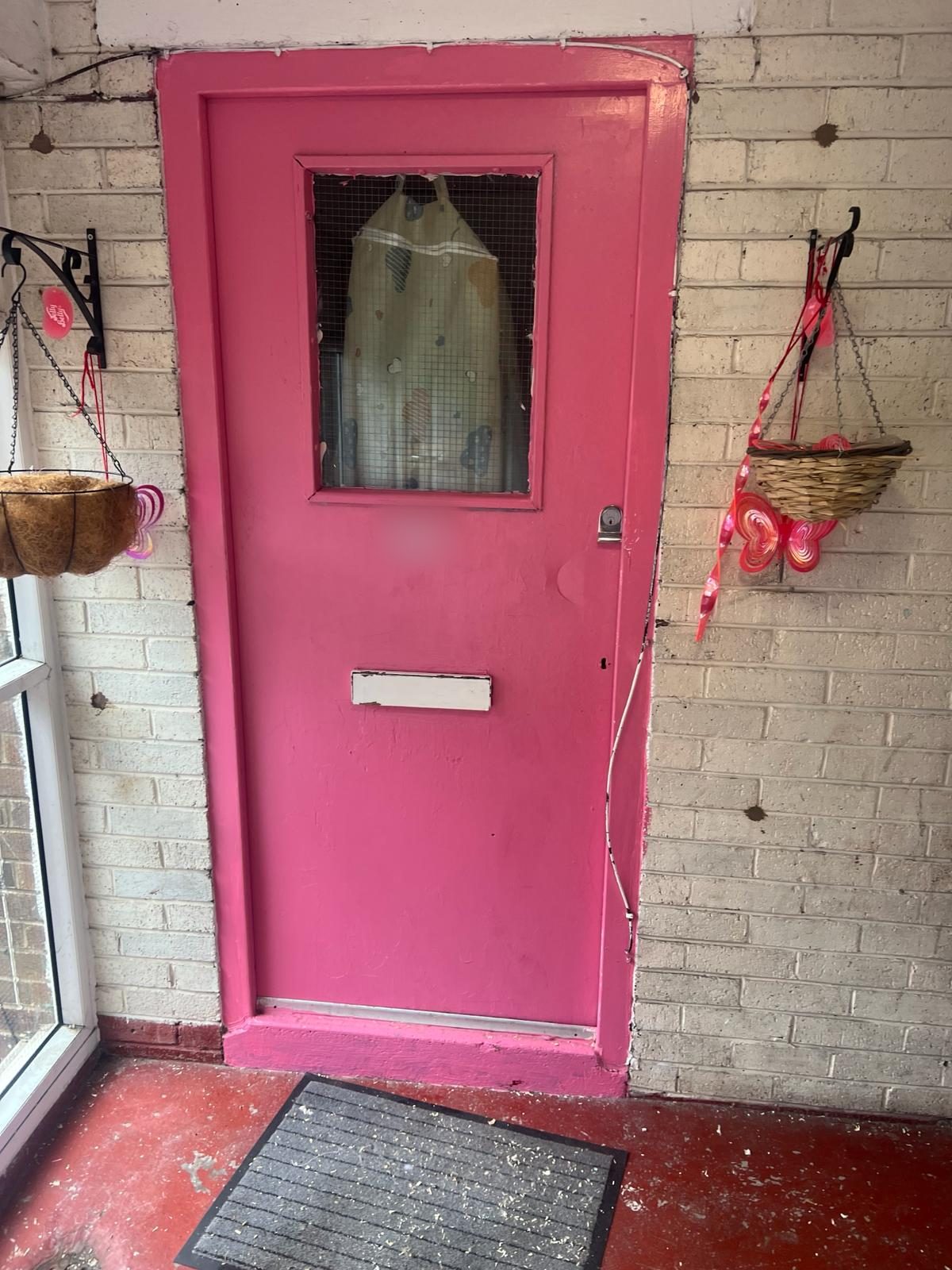
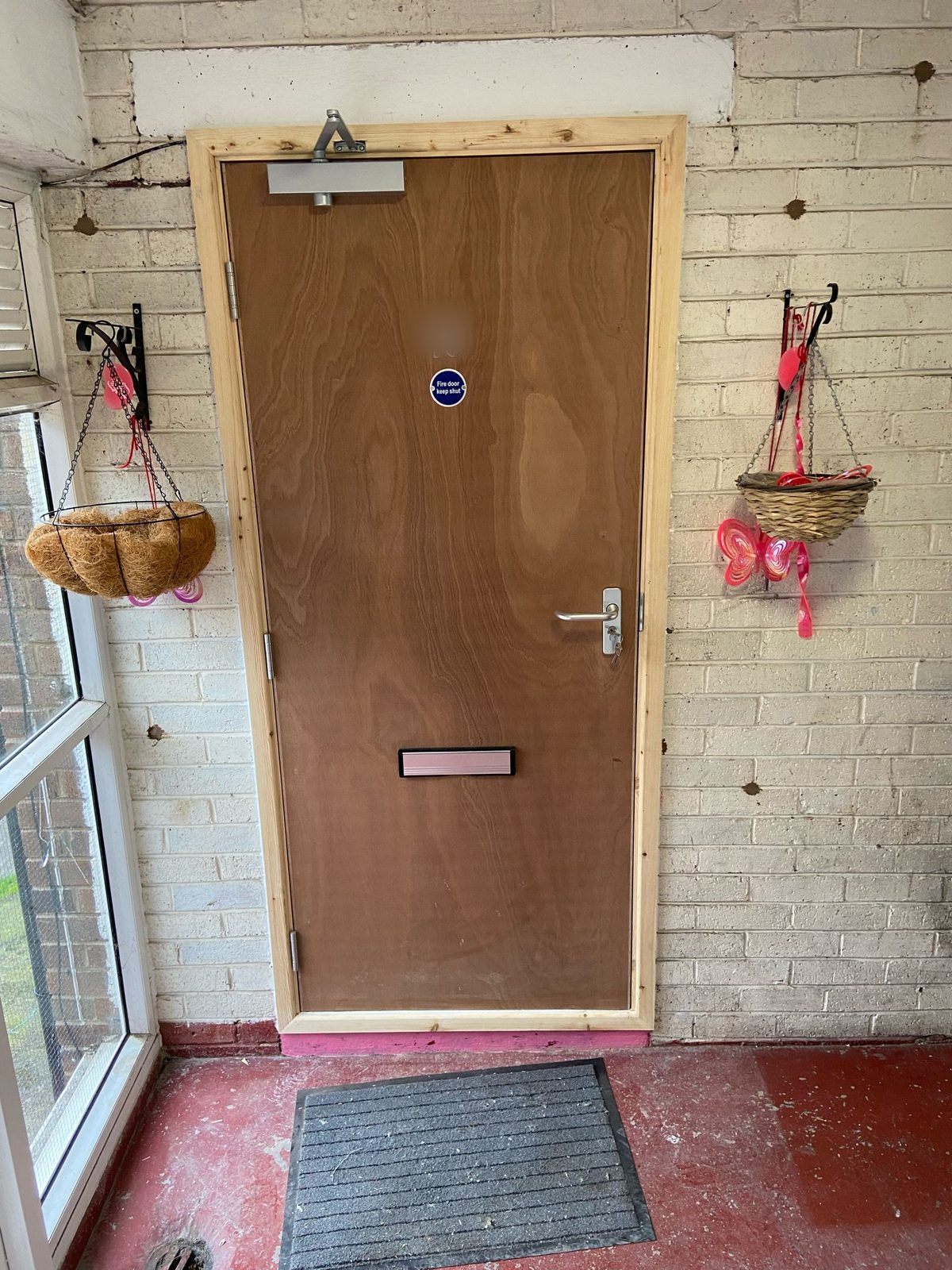
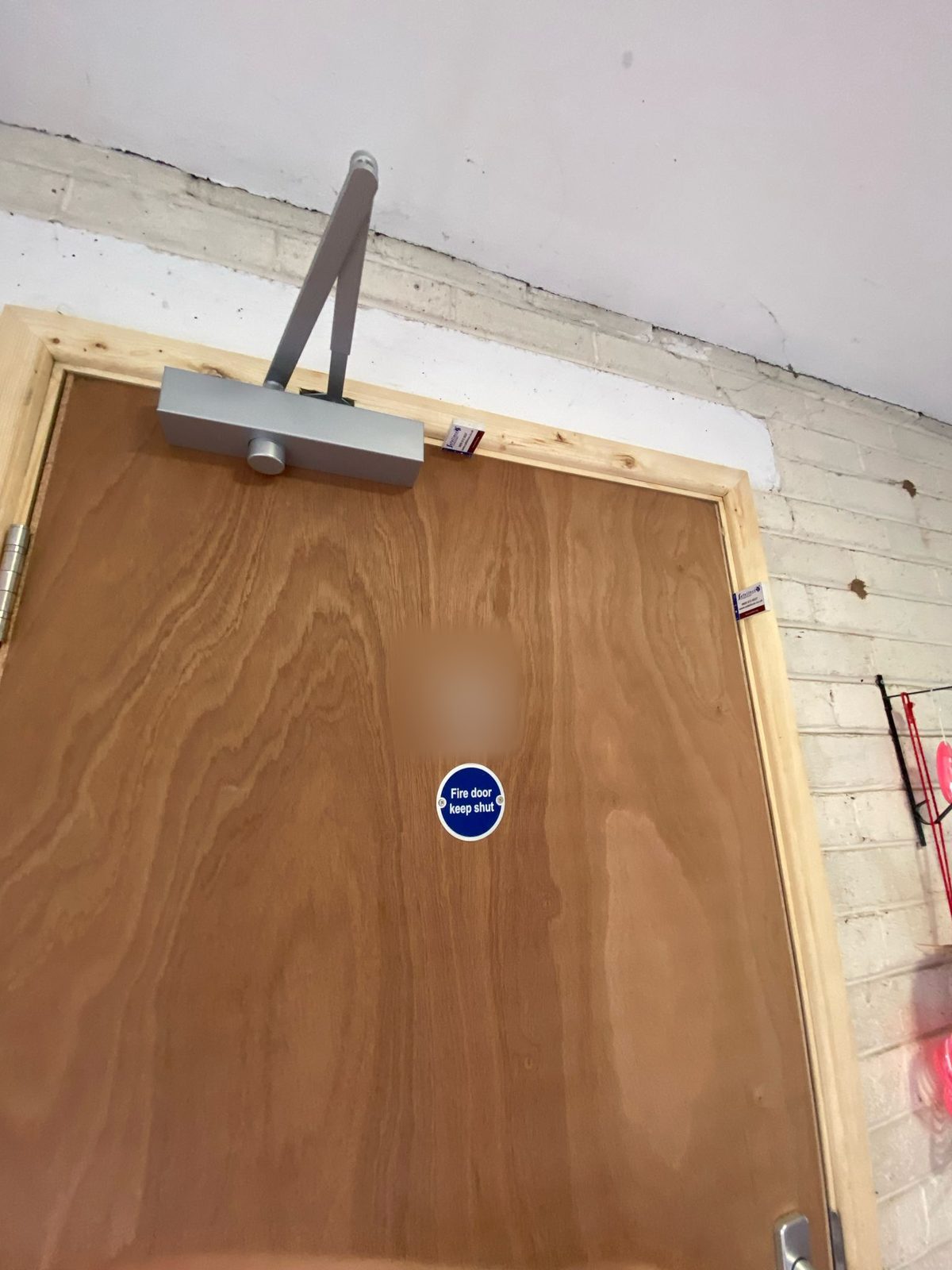
This case study covers the removal of one flat entrance door and frame and the supply and installation of one FD30 fire door set in its place. It does not cover decoration, any other door in the block, or any inspection of other doors at the property.
| Issue | A flat entrance door onto a shared entrance area that was not a fire door, flagged at an inspection |
| Property | Flat in a block of flats, Bromborough, Wirral — instructed by the landlord’s letting agent |
| Service | Fire door supply and installation |
| Findings | Existing door was an ordinary painted timber door with a wired-glass panel and no closer — no fire rating to upgrade |
| Recommendation | Replace the complete door set rather than fit a fire door leaf into the existing frame |
| Works | FD30 plywood flush leaf and FD30 frame with intumescent and smoke seals; three fire-rated hinges; overhead closer; fire-rated handle, lock and cylinder; fire-rated intumescent letterplate; architraves and perimeter fire stopping |
| Outcome | Tested on completion — self-closes and latches positively; signage fitted; photographic record supplied |
| Limitations | One door only. Left undecorated by agreement |
| Location | Bromborough, Wirral |
Five of the reviews our fire door customers have left on Google.
“Very pleased our fire doors were completed fast and professional from start to finish, measuring was straightforward and were helpful explaining payments and paperwork. The work was carried out with a clean work environment, would recommend.”
“Fire door fitted today by Ethan. Perfect job and such a friendly guy! Would definitely recommend Quirks.”
“The workmanship was excellent and completed as arranged. Professional throughout the process, highly recommended.”
“Ethan was professional throughout the service. Would highly recommend.”
“Nathan came to fit a fire door to my attic conversion. He was polite and very helpful … Very professional. Really happy with job and definitely recommend this company to any customer.”
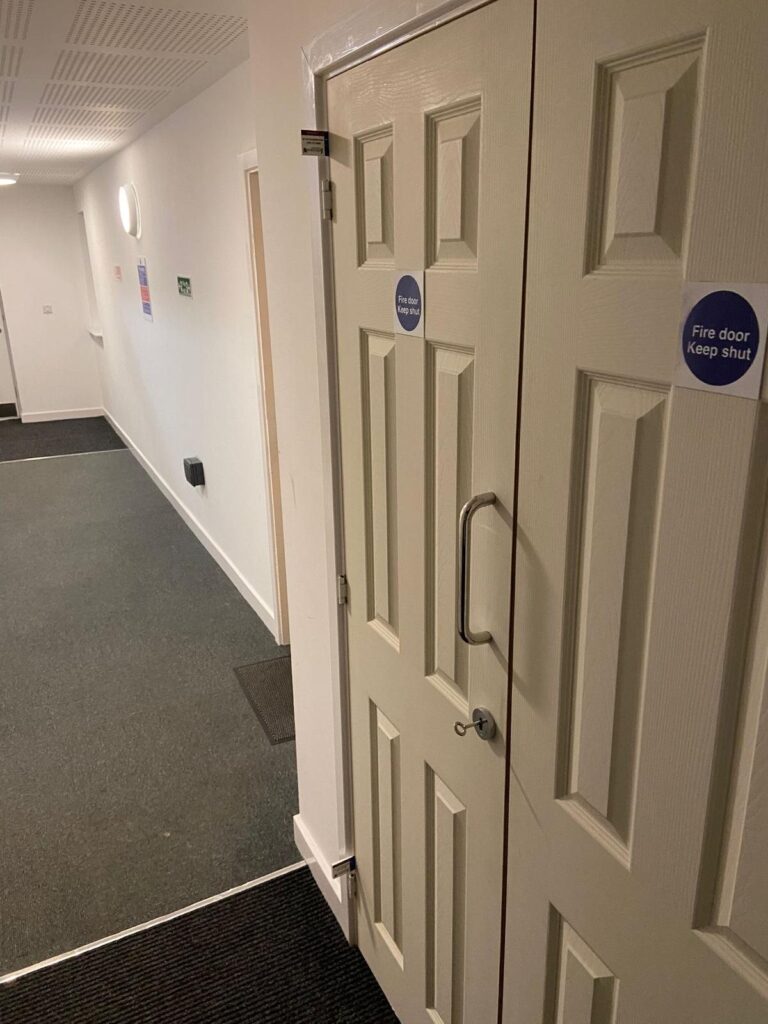
FD30 and FD30S doors from the Howdens internal fire door range — white moulded panelled, flush, glazed with certified fire glass, and oak veneer — fitted as complete door sets: leaf, compatible linings, intumescent and cold smoke seals, fire-rated hinges, latches, locks and closers, correct gaps and signage where required. We also upgrade suitable existing doors: seals, closers, hinges, locks and gaps brought up to standard.
If you’ve seen a door you like on the Howdens website or in a branch, send us the product name or a screenshot on WhatsApp. The full picture of the service — door styles, what a complete door set includes, and how we work with landlords and assessors — is on our fire door supply, installation and upgrades page.
To price from photographs we need both faces, the closing edge and the frame of each door. We agree the door style, sizes, glazing and ironmongery with you, measure up where a job needs it, check the gaps, seals, closer and latch on every door we hang, take the old doors away, and hand over the installation records and the manufacturer’s door data where required.

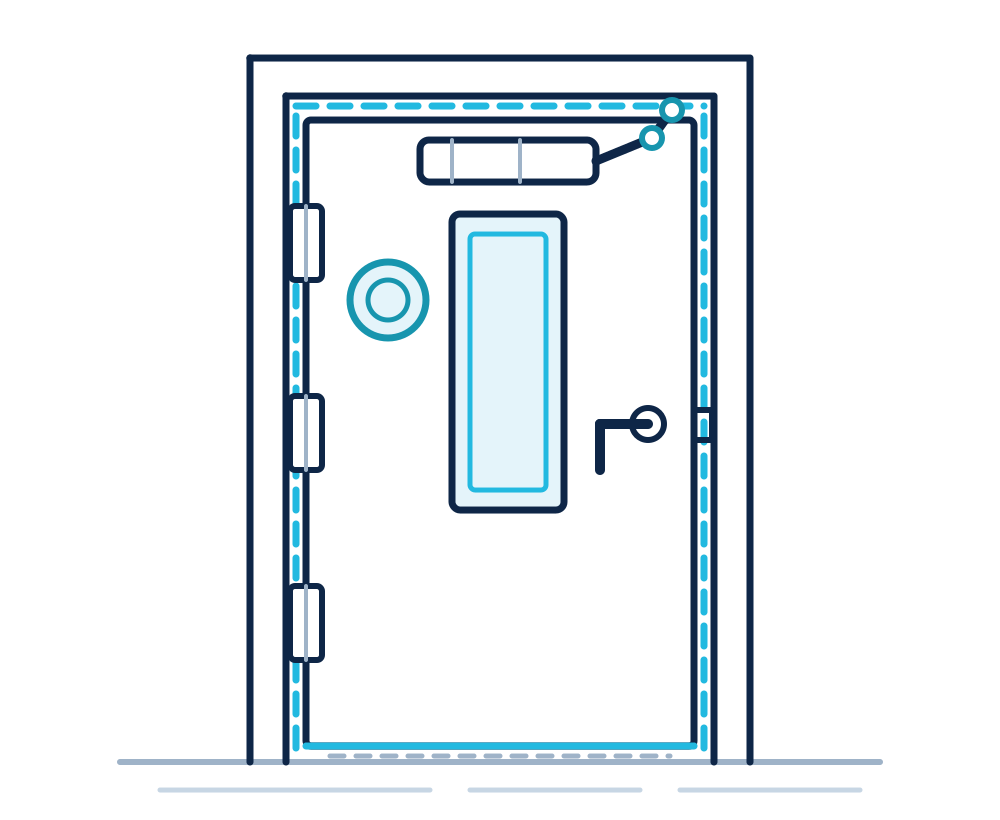
An FD30 door set is tested to hold back fire for thirty minutes. An FD30S set adds cold smoke seals, so it holds back smoke as well — and smoke is what closes an escape route first. The rating belongs to the whole set working together: the leaf, the frame, the seals, the hinges, the closer and the gaps between them. A good leaf on the wrong hinges, or with a gap the seals cannot close, is not a thirty-minute door.
A fire door is usually required:
Which doors in your building must be fire doors is set by the Building Regulations that applied when the work was done, by your fire risk assessment, or by your licence conditions. Not sure? Photos of the doors on WhatsApp are enough for us to say what you have.
Most of the doors we are asked to look at fail on the details rather than the leaf:
Seals, closers, hinges and gaps can usually be put right on a door that is otherwise sound. A damaged leaf, a door with nothing to show it is a fire door, or glazing that is not fire-rated means a complete door set. The quotation says which it is.
For a licensed HMO we fit the full package: FD30S doors to bedrooms and kitchens, closers on the escape route, intumescent and cold smoke seals throughout, thumb-turn locks where the licence asks for them, and fire doors to cupboards housing the electrics or the boiler where your assessment calls for it. One specification through the house, and one set of records for the licensing file.
For care homes, schools, offices and industrial units we fit flush and vision-panel FD30 doors to corridors, plant rooms and stores, and the work can be phased across a block or a portfolio so the building stays in use. Everything is worked to your fire risk assessment, your licence conditions or the managing agent’s schedule.
A lot of fire door work happens around people: residents in a care home, tenants in an HMO, pupils in a school. We plan it that way. Door sets are made up before the visit, so the work at each opening is taking the old set out and hanging the new one, not building a door in a busy corridor. The floor at each opening is protected first, the old door and its ironmongery leave with us, and each area is cleaned before we move to the next.
Where a building needs it the work is done in stages — a floor at a time, a block at a time, or in a school holiday — and you are told which doors are being done on which visit.
Not every flagged door needs replacing. A sound fire door that has dropped on its hinges, lost a seal or had its closer taken off can be brought back into service, and that is the cheaper job. What decides it is the leaf and the frame: a leaf that is split, warped, trimmed too far or cannot be shown to be a fire door is replaced; a frame that is not suitable for the rating, or not compatible with the seals and hinges, means a complete door set rather than a new leaf in an old frame.
The quotation says which it is — and where a door can be upgraded, that is what we price.
One contractor
Plywood-faced fire door with an overhead closer, lever handle and fire door keep shut sign in a new softwood frame
FD30 and FD30S doors from the Howdens range, hung as complete door sets — leaf, seals, ironmongery and closer.
Hinge side of a plywood-faced fire door at floor level, with a card gap gauge between the door and the new frame
Seals, closers, hinges, locks and gaps brought up to standard on suitable existing doors.
Oak-veneered flush fire door in a matching frame with an overhead closer, stainless pull handle and three hinges, in a white corridor
Bedroom and kitchen doors, closers and thumb-turn locks, aligned to your licence conditions and fire risk assessment.
Brass gap gauge held in the gap between a red fire door and its white frame during a fire door check
Door-by-door inspections with written reports, and maintenance visits that keep doors closing and sealing as they should.
It depends on how many doors, the style from the Howdens range, glazing, whether your frames can stay, and the ironmongery each door needs. Most jobs we can price from photographs — send yours on WhatsApp or by email and we’ll come back with a written quotation.
Yes. Each door is replaced as a complete door set, and we plan the work so that every flat has a secure, closing door at the end of each working day. We can work through a block in stages and keep records door by door for the building’s fire safety file.
Not usually. The door between a house and an integral garage is one of the most common faults flagged on homebuyer surveys, and in most homes it’s a straightforward FD30 door set fitted with the right seals and closer. Send a photo of both faces and the frame and we’ll quote it in writing.
Be careful — a flat entrance fire door only works as tested. Painting over the intumescent strips and smoke seals, drilling the leaf for a spy hole, letterbox or doorbell, or removing the self-closer can all stop the door doing its job, and changing the door usually needs your landlord’s or freeholder’s permission. If the door’s been altered or damaged, send us photos and we’ll tell you whether it needs repair or replacement.
An escape-route door normally has to close itself, and HMO licence conditions nearly always ask for closers on those doors. Elsewhere it depends on the building: your fire risk assessment or licence conditions say which doors, and a closer only counts if it shuts the door onto the latch from any position. Where one is fitted, it is adjusted as part of the door set.
Yes, as long as the glass is part of the tested door. Howdens supply FD30 doors with certified fire glass, from a narrow vision panel to a full glazed panel for a hallway that needs light. What you cannot do is cut a panel into a fire door afterwards: the glazing system is part of the rating, and an opening cut on site ends it.
Look for a label or a small coloured plug in the top edge or the hinge edge of the leaf, an intumescent strip set into the edge of the leaf or the frame, three hinges rather than two, and a closer. A leaf thicker than a standard internal door is a hint, not proof. With nothing to show it is a fire door, it cannot be treated as one, however solid it feels. Photos of the top edge and the closing edge usually settle it.
Written and reviewed by Michael Quirk, Director.
Tell us how many doors and where they are, and attach your photographs: both faces, the closing edge and the frame of each door.
Send us a photo
You don’t need to describe the problem down the phone. A photo tells us most of what we need.

Fire doors — send us photographs
Send photos of your doors on WhatsApp or by email and we’ll come back with a no-obligation written quotation. We come back to you as soon as we can.