Specialist Building & Property Maintenance Services You Can Depend On.
Emergency drain repairs — Flintshire & Deeside
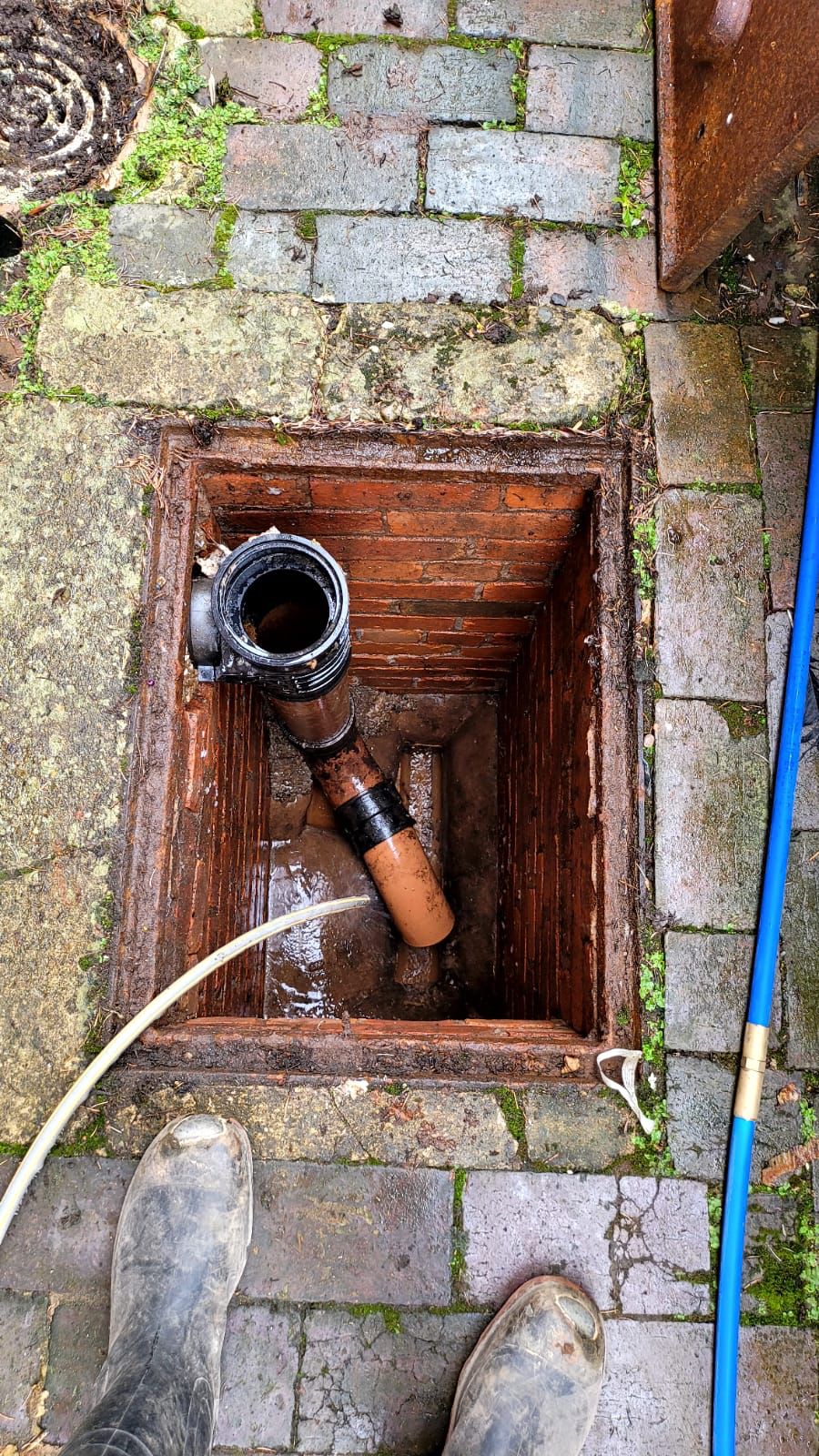
Quirks Property Maintenance Ltd is based in Ewloe, so Flintshire and Deeside are our home patch — the nearest we get to anywhere. Blocked drains, sewage backing up, overflowing gullies and collapsed runs in Connah’s Quay, Shotton, Queensferry, Buckley, Mold, Flint and Holywell are attended 24 hours a day with our own jetting unit and CCTV camera, and repaired, rebuilt and made good by the same building team. Part of our emergency drainage across North Wales, Cheshire and Wirral.
Emergency drainage — 24-hour call-out
Memberships and certifications



In short: Flintshire and Deeside drains cleared, surveyed with our own camera and repaired by one building contractor based in Ewloe — homes, landlords and commercial units, 24 hours a day.
Where there is any risk to life — flood water reaching sockets or electrics, a smell of gas anywhere near the drain, or ground that has given way — call the emergency services first, before you call us.
Then stop putting water into the system: no taps, washing machines or flushing while waste is backing up. Keep children and pets away from lifted covers, open excavations and standing waste water. If water is entering the building, move what you can and leave the electrics alone unless the consumer unit is safely clear of the water.
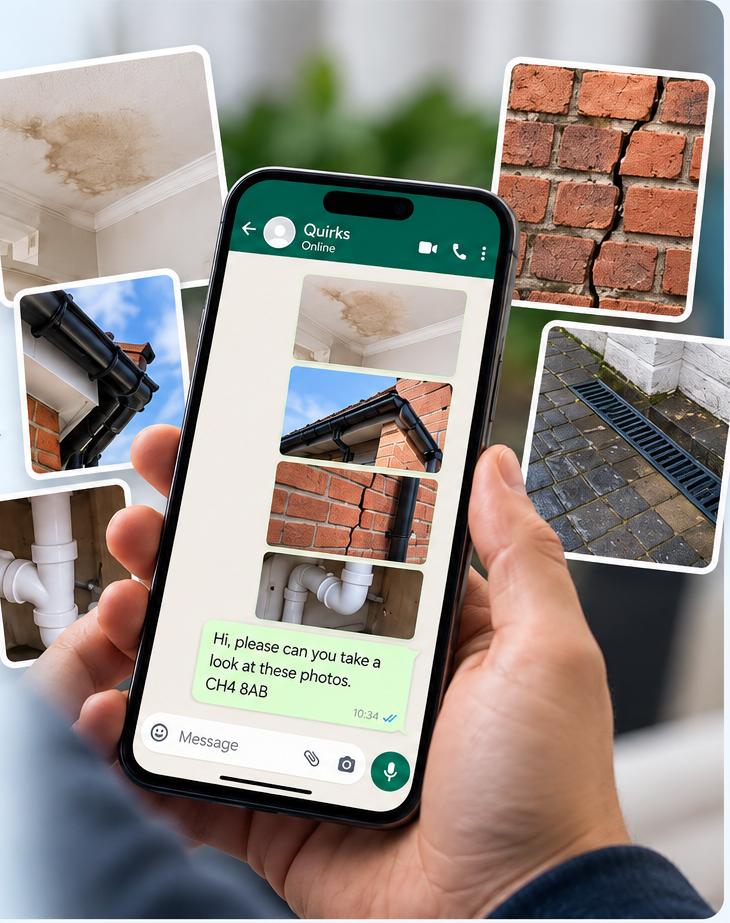
Then send us a photo of the drain, gully or manhole on WhatsApp or call 01244 638219. On the call-out the area is made as safe as conditions allow, the cause is found, temporary protection goes in where it is needed, and you get a written quotation for the permanent repair.
Local conditions
Deeside’s housing was built fast and in bulk. The 1930s to 1960s estates in Connah’s Quay, Shotton, Queensferry, Sandycroft and Garden City largely run on clay pipes laid with shallow falls to long shared runs, which can silt, scale and root as they age — a blockage in one house is often a symptom of a run that is struggling for the whole row. Mold, Flint and Holywell have older stone and brick stock on private runs of a similar age, and the hill villages above them sit on ground that can move. Location and age are never a diagnosis on their own — the camera survey is what tells you.
Then there is the commercial side. Deeside Industrial Park, Sandycroft, Manor Lane and the units along the A548 have yard gullies, interceptors and grease traps that stop production when they block — and because we are based in Ewloe, this is the closest ground we cover.
Whichever it is, we attend, clear, survey and tell you straight whether the fault is yours or Dŵr Cymru Welsh Water’s — and if it is yours, what it needs, in writing, before anything is dug up.

We cover the CH5 to CH8 postcode districts and the surrounding villages.
We also cover Wrexham, Chester and Ellesmere Port and the Wirral — and everything in between from our base in Ewloe.
FLINTSHIRE — SEMI-DETACHED HOUSE
A semi-detached house in Flintshire was having a bathroom built into a converted garage, and a bathroom needs a foul drain that a garage has never had. Nothing had failed here and nobody rang us in a hurry — this was planned work. It sits on this page because it shows the other half of drainage: a new connection built from scratch, with a chamber at each end, tested before it was buried, and signed off by Building Control.
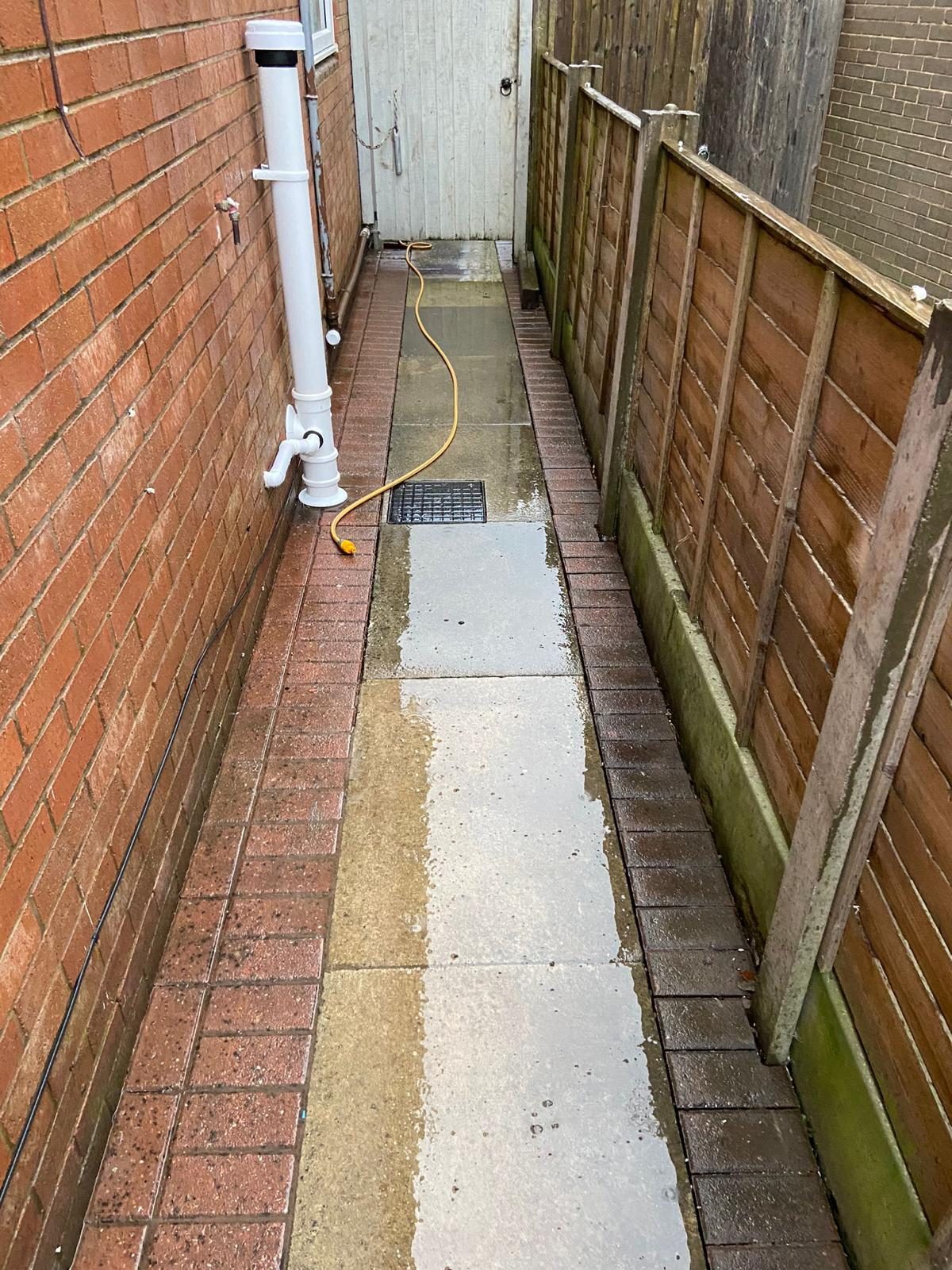
A garage is built to keep a car dry, not to be plumbed, so when one becomes a bathroom the drainage has to be brought to it. Here the new run went down the narrow side passage between the side wall and the boundary fence — a path of concrete slabs edged either side with brick paviours — to the existing drain at the rear.
The existing drain it had to join ran at the rear of the property, well below the level of the passage. That connection was the part of the job that mattered most, because a new run is only as good as the point where it meets the old one.
The slabs came up and a trench was taken down the length of the passage, between the brick paviours, which were largely left where they were. A new inspection chamber went in at the foot of where the stack would stand, where the bathroom’s pipework joins the drain, and the new run was laid from it down the passage to the rear.
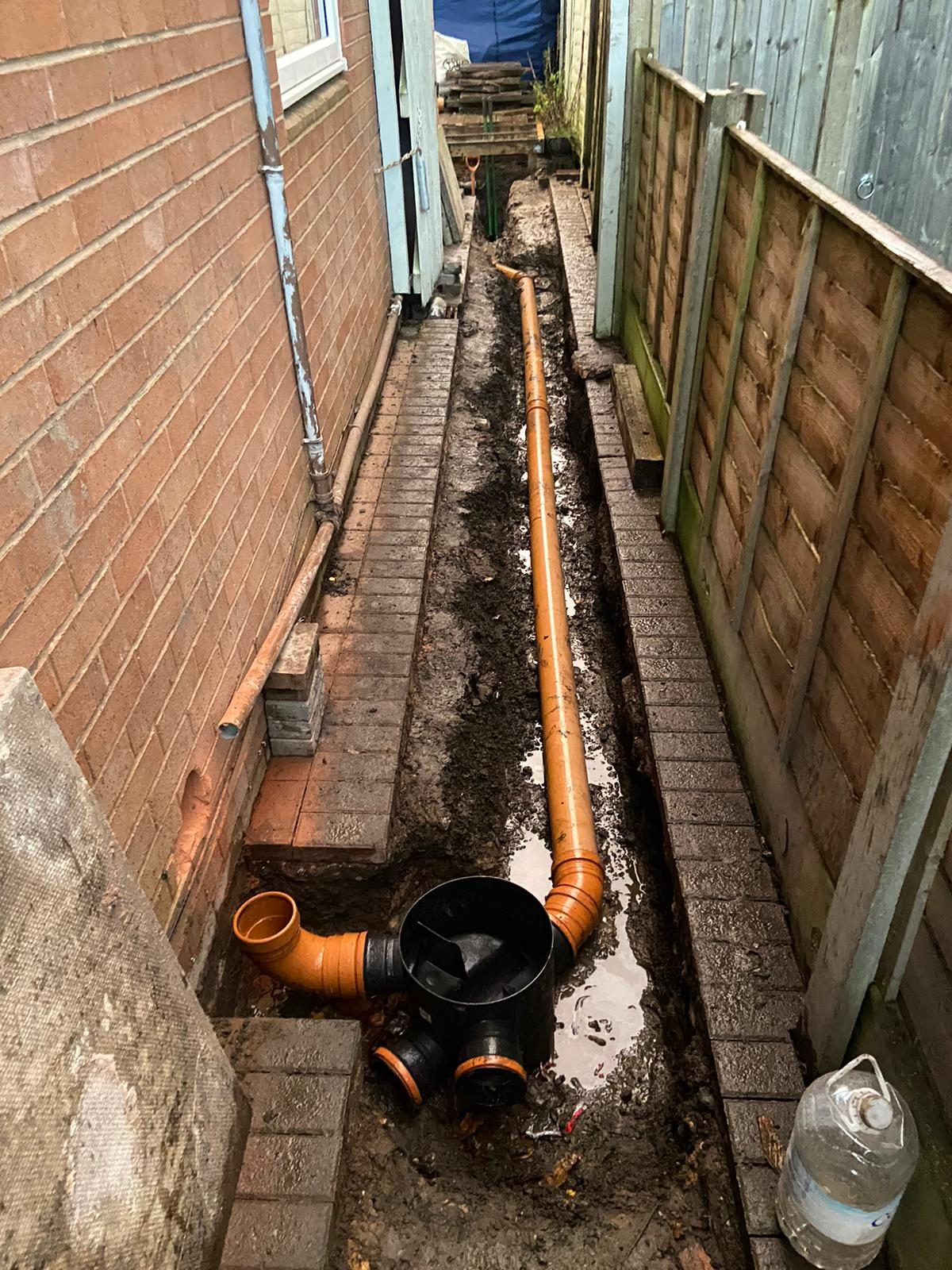
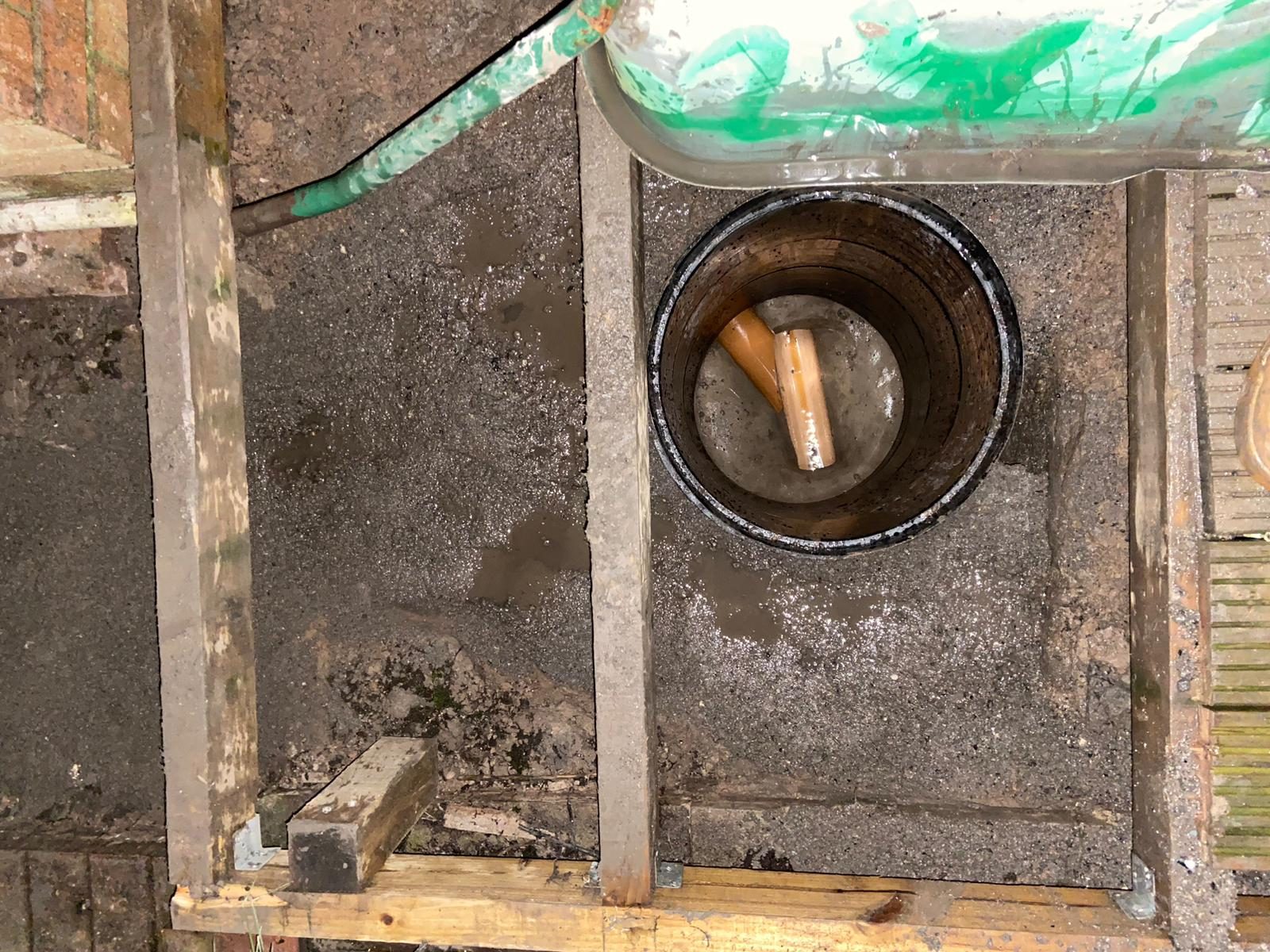
At the rear, rather than cutting the new run blind into the side of the old pipe, a new chamber was built on the existing drain and the new run brought into it, and the chamber was set in concrete. A connection made at a chamber can be reached, rodded and looked at for as long as the drain is in use; one made blind in the ground cannot be seen again without digging it up. The new run was tested before any of it was backfilled.
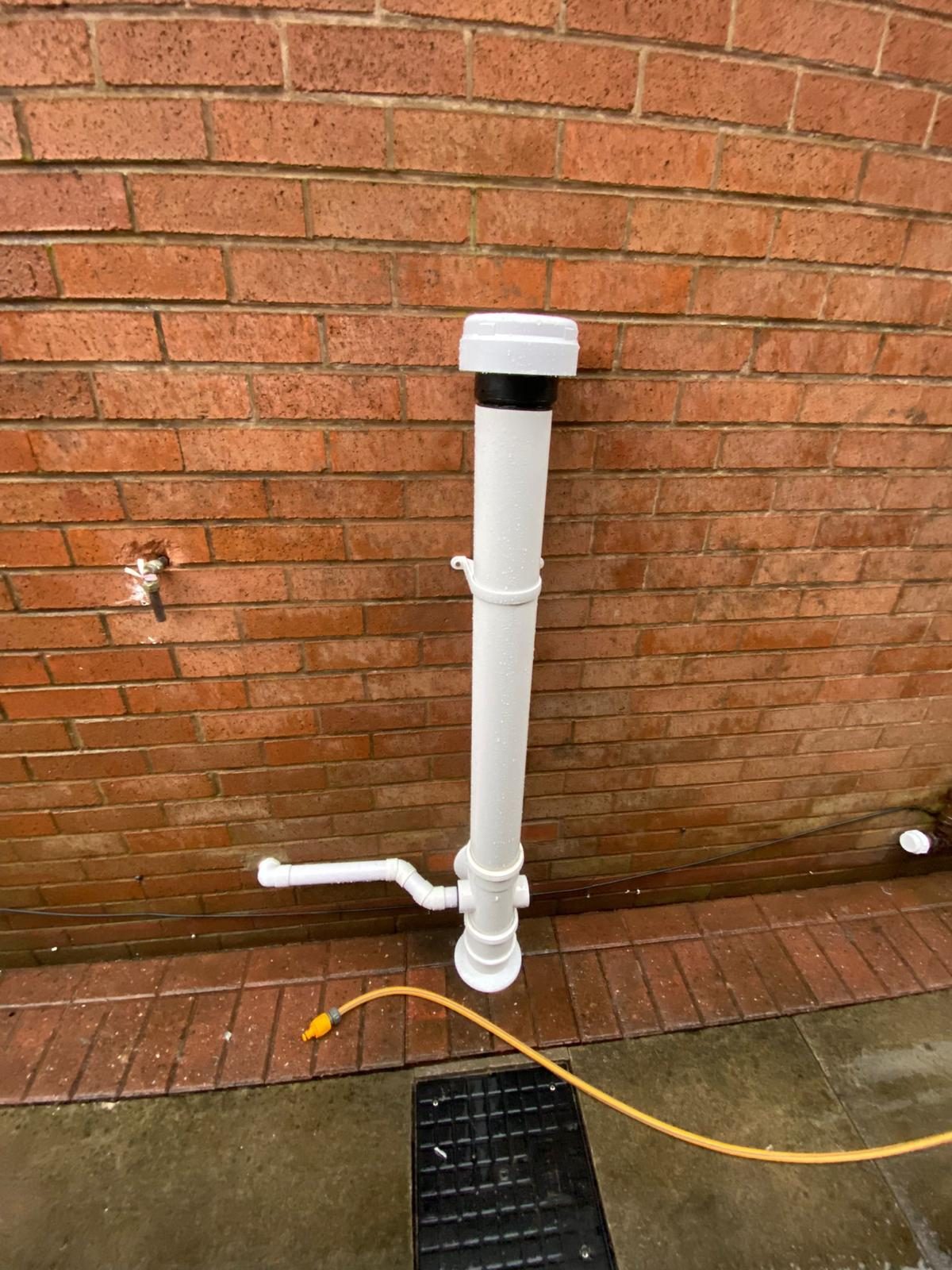
Above ground, the bathroom’s waste comes out through the wall into a short white stack capped with an air admittance valve, instead of a vent pipe run up the wall to the eaves. The valve opens to let air into the drain when water runs down it — which stops the water seals in the bathroom’s traps being pulled out — and closes again so that drain smells stay in the drain.
The drainage was signed off by Building Control, and the passage was slabbed back over the run with the new chamber’s cover set into the path. Once the slabs were down, the cover and the stack are about the only signs that a drain runs under the passage at all.
This case study covers the drainage only — the new run, the two chambers, the stack and its valve, the test and the reinstatement of the passage. It does not describe the garage conversion or the bathroom, and nothing is claimed about the existing drain beyond the point where the new chamber was built on it.
| Issue | A bathroom being built into a converted garage needed a new foul drainage connection |
| Service | New foul drainage connection — planned work, not an emergency call-out |
| Property | Semi-detached house |
| Works | New run down the side passage between two new chambers — one at the foot of a new external stack, one built on the existing drain at the rear and set in concrete; short stack with an air admittance valve; passage slabs relaid |
| Testing | New run tested before backfilling |
| Sign-off | Drainage signed off by Building Control |
| Location | Flintshire |
What we attend
Some drainage faults can wait for a convenient appointment. These cannot, because every hour makes the damage worse or the property unusable:
Waste water or sewage backing up into a toilet, bath, shower or sink
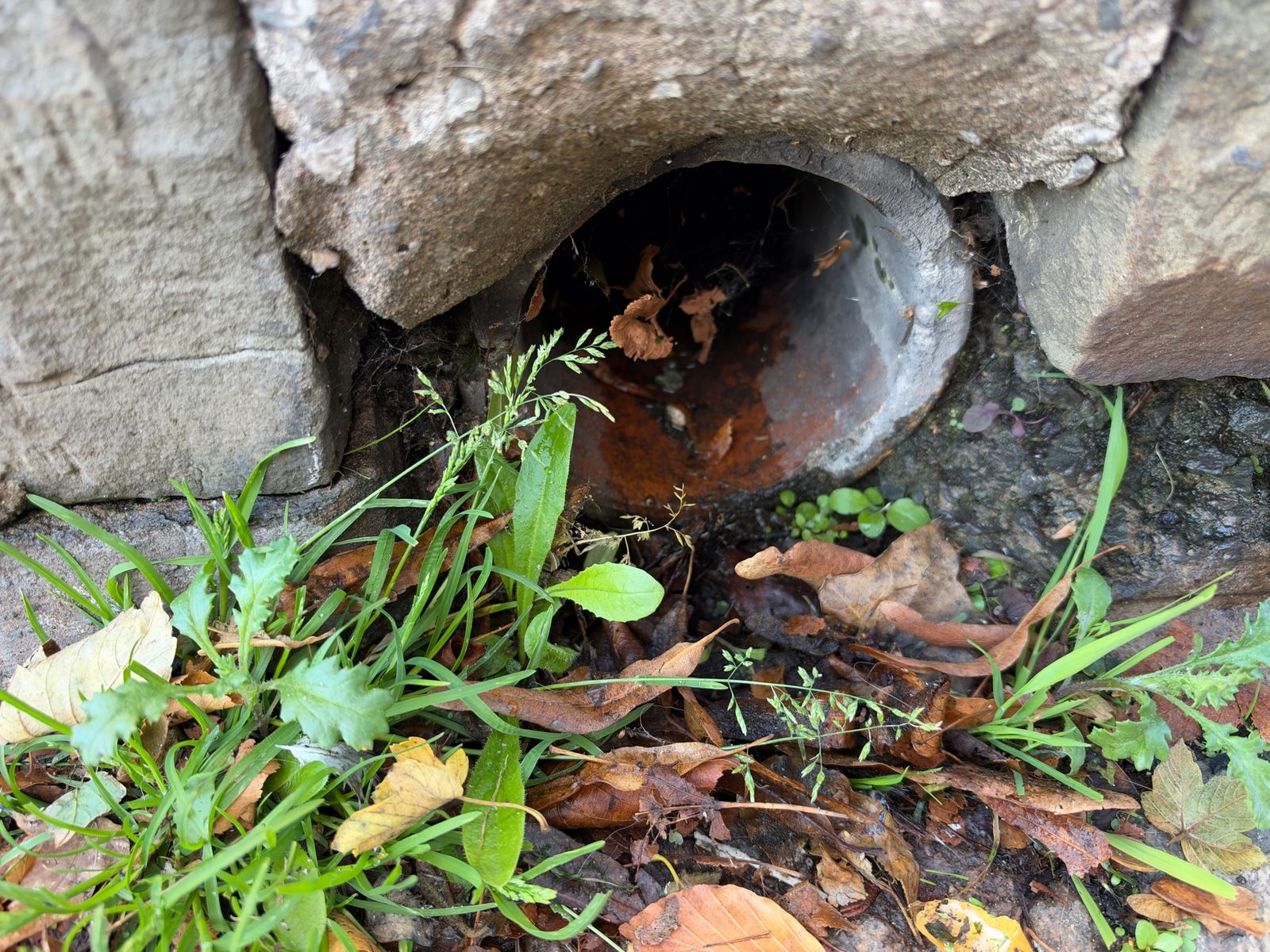
A drain, gully or manhole overflowing outside, especially in rain
Foul smells inside the building that get stronger near floors, walls or the kitchen
Ground sinking, a new hollow in a drive or lawn, or a wet patch that never dries — signs of a collapsed or leaking pipe
A commercial kitchen, care home, pub or unit that cannot operate until the drain is clear
A blocked drain in a rented property where the tenant has no working toilet
If any of those is happening now, send a photo on WhatsApp or call 01244 638219. We run a 24-hour call-out service, seven days a week.
Clearing a drain is the first step, not the whole job. Most call-outs follow the same five steps, carried out by our own operatives with our own equipment.
We identify the run, the manholes and the chambers, and work out which section is blocked, collapsed or leaking.
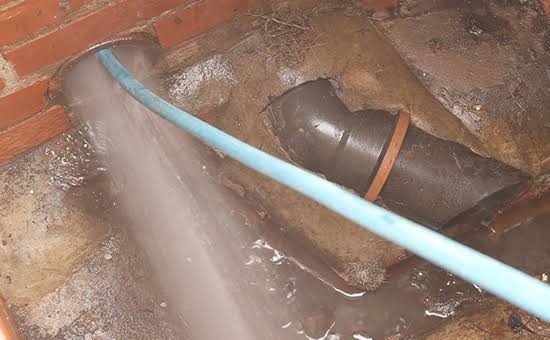
High-pressure water jetting clears blockages, fat, scale and roots to restore flow.
A CCTV drain survey shows why it blocked, such as cracks, root ingress or a collapsed section.
We excavate and replace failed sections, renew gullies and covers, and rebuild manholes where needed.
We reinstate the drive, path, lawn or floor and carry out a final check.
What that means in practice. Knowing whose pipe it is comes first, because a shared or public sewer is the water company’s to repair, not yours. We rod where a jetter cannot reach. Clearing gets the property back in use, but it does not tell you why the drain blocked — that is what the CCTV survey is for, and it also shows displaced joints or a fall that was never right. You see the footage. Repairs include manhole rebuilds and re-benching in brick and concrete, and the same team that opened the ground puts it back, so there is no waiting for another contractor.
Because Quirks is a multi-trade building contractor, the same team can take on the plastering, flooring, brickwork or decorating that a drain failure leaves behind — you are not left finding a second trade to finish the job.
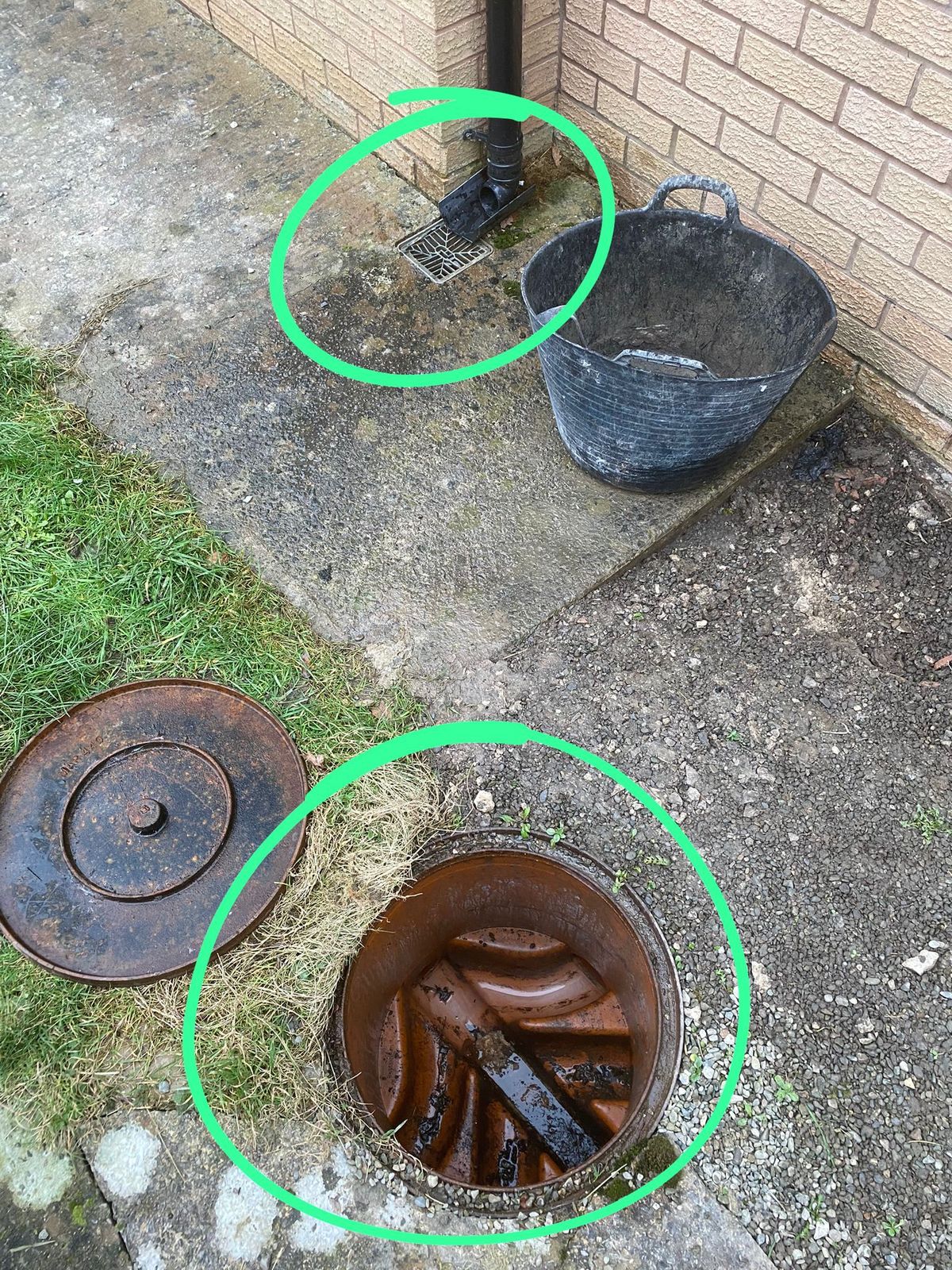
Blocked toilets and drains, overflowing gullies and manholes, smells you cannot trace — we attend, clear and survey, and keep you informed at every step, so you know what was found and what the drain actually needs.
A commercial kitchen, care home, pub or unit that cannot trade until the drain runs — plus yard gullies, interceptors and grease traps. We attend out of hours, work around your operation where access allows, and provide the survey report and invoice your accounts team or managing agent needs.
This is the question most people ask at two in the morning, and the answer decides who pays. Since 1 October 2011, in England and Wales, most drains that serve more than one property — and any drain beyond your property boundary — belong to the water company: Dŵr Cymru Welsh Water in Wales, United Utilities in Cheshire and the Wirral. The drain that serves only your property, inside your boundary, is yours.
In practice: a blockage in the pipe from your kitchen to your own manhole is yours to fix. A blockage in a shared run at the back of a terrace, or in the sewer under the road, is the water company’s — call them first. If you are not sure, send us a photo and tell us what you can see, and we will tell you which it is likely to be before anyone attends. Where the fault is on a public sewer we say so — we would rather point you to the water company than attend a job that is theirs.
Landlords are responsible for the private drains serving the properties they let. Leaseholders in flats should check the lease — shared drains within the building are usually the freeholder’s or management company’s.
Where the pipe changes name, and who is normally responsible for each part.
What each part means
The pipe from your house to your boundary, serving your property only.
The same run carrying on past your boundary. It still serves only your property, but it is no longer yours.
Once a neighbour’s drainage joins it, the combined pipe is a sewer — wherever it runs, including across a garden.
The main under the road that the sewers in the street run into.
Where the pipe runs is not what decides it — what decides it is how many properties it serves.
From the junction onwards the pipe serves more than one property — so it is a sewer, even though it runs through House A’s garden.
The drain serving only your property, inside your boundary — for example the pipe from your kitchen to your own manhole. Landlords are normally responsible for the private drains serving the properties they let.
Since 1 October 2011, in England and Wales, lateral drains and sewers were largely transferred to the water companies — including pipes that cross private ground and the public sewer under the road.
Not every cracked drain needs excavating. Where the survey shows a pipe that is cracked, root-damaged or leaking at the joints but still round and in line, a lining installed from inside the pipe can restore it without opening the ground — useful under extensions, driveways and commercial yards. Quirks does not install linings itself. Where the CCTV survey shows lining is the right repair, we arrange it through a specialist lining contractor and manage the job as part of the works, so you still deal with one company.
Where the pipe is collapsed, out of line or has lost its fall, lining is the wrong answer and we say so.
A pipe that is cracked, root-damaged or leaking at the joints but still round and in line can be relined from the inside, with no ground opened. A pipe that has collapsed, dropped out of line or lost its fall cannot — and we tell you so rather than sell a lining that will fail.
A blocked or collapsed drain is often an insurance matter as well as a repair. We provide the evidence an insurer asks for, and we work the way letting agents and landlords need us to work.
Damage to underground pipes is often covered by buildings insurance under accidental damage, and some policies cover the cost of finding the fault as well as repairing it. Check your policy or ask us — where required, we can provide the CCTV survey footage, photographs, reports and quotations to support a claim, and we can deal with the loss adjuster on the repair.
Take photographs before anything is moved, and tell your insurer before repair work starts, as most want to approve the cost first.
We attend emergency call-outs around the clock, keep the tenant informed on site, and invoice the agent with the report attached. If the drain turns out to be the water company’s, we tell the tenant who to ring and leave it there.

One contractor

Blockages, fat, scale and roots cleared with our own high-pressure jetting unit.
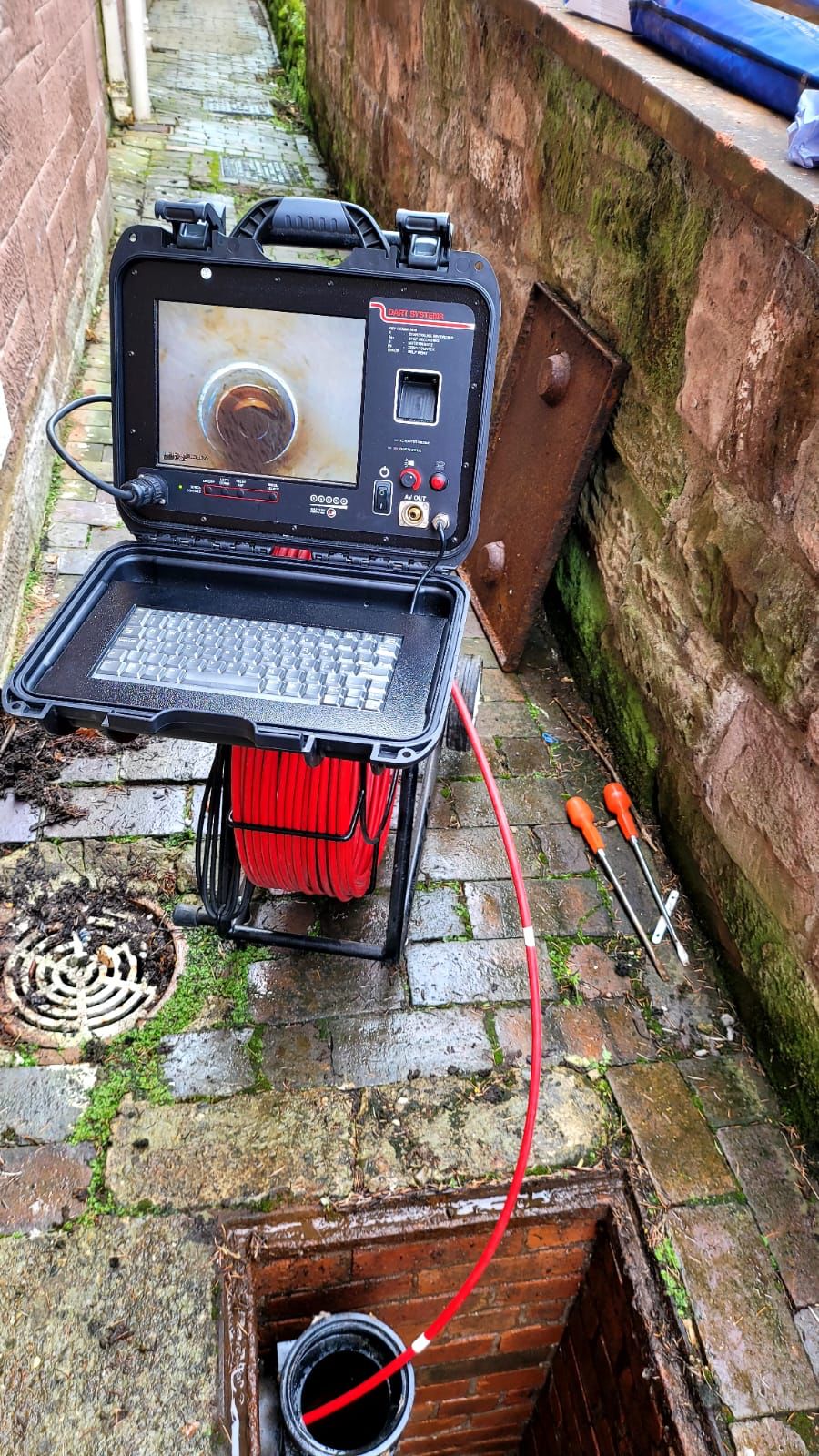
Our own camera shows why the drain failed — and you see the footage.
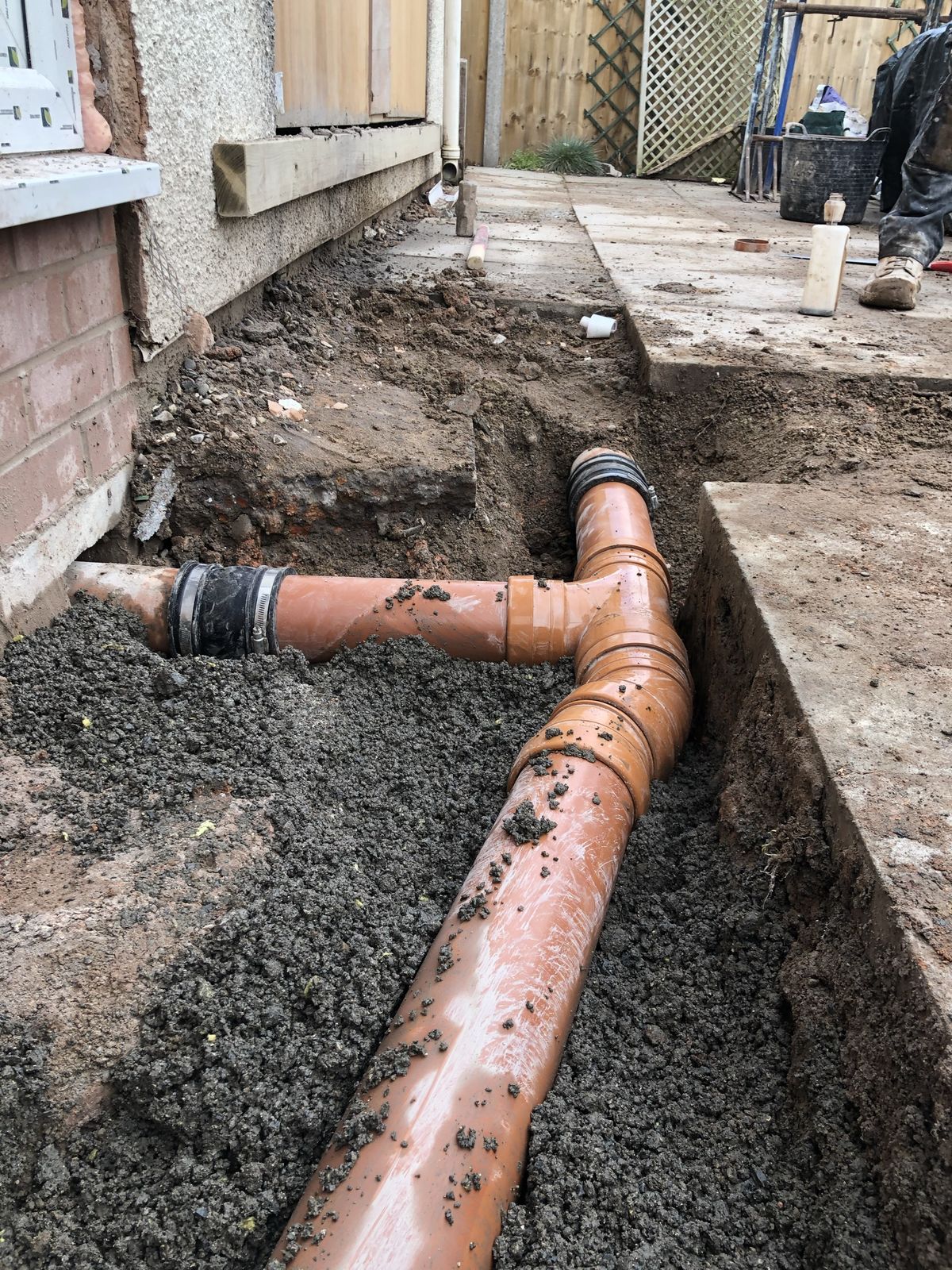
Failed sections dug out and replaced; new gullies and covers; lining arranged where the survey shows it is the better repair.
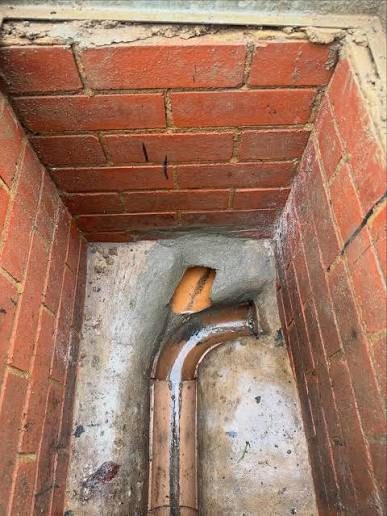
Chambers rebuilt and re-benched in brick and concrete; drives, paths and floors reinstated by the same team.
A blocked or collapsed drain rarely stops at the drain. Quirks is a building contractor, so the plumbing, damp, structural and flooding work a drain failure leaves behind is handled by the same team.
Water backing up into sinks, toilets or baths inside the property, and burst or leaking pipework, handled on the same call-out.
A leaking drain at a wall base keeps the brickwork wet. We treat the damp once the pipe behind it is repaired.
Ground washed out by a leaking pipe under a wall can crack it. We repair the drain and the structure together.
Where a drain failure has flooded a room or cellar, we pump out, strip back, dry and reinstate.
For properties off the mains, a new or rebuilt soakaway to take surface water away from the building.
Our team is on call 24 hours a day for blocked, collapsed and overflowing drains.
We are based in Ewloe, so Connah’s Quay, Shotton, Queensferry, Hawarden and the Industrial Park are the closest calls we have. We attend 24 hours a day and tell you honestly when you get in touch how soon we can be there — we do not promise a time we might not keep.
Yes. Blocked yard gullies, interceptors and grease traps are exactly the emergencies we attend for the Park, Sandycroft and Manor Lane at any hour. Send the unit address and a photo on WhatsApp.
Yes. A CCTV drain survey before exchange shows the condition of the private runs and whether anything is cracked, rooted or collapsed, with footage and a written report you can use in negotiation. It is one of the cheapest checks in a house purchase and one of the most often skipped.
If the blockage is in the private drain serving the property, it is the landlord’s responsibility to repair, though the cause may be down to misuse. If it is in a shared run or beyond the boundary it is Dŵr Cymru Welsh Water’s. We attend, tell you which, and invoice the agent with the report attached.
Yes — the whole of Flintshire, from Saltney and Broughton to Holywell and the coast, and Northop, Mold and Buckley in between.
Repair costs turn on depth, what the pipe runs under, whether a manhole or gully has to be rebuilt, and the reinstatement left behind. Most jobs we can price from photographs — send yours on WhatsApp or by email and we’ll come back with a written quotation.
Where the survey finds a collapsed section, root damage or a fault under a drive or floor, we give a written quotation for the repair before any excavation — nothing is dug up on a nod. What moves the price is depth, what the pipe runs under (lawn, block paving, concrete, a floor slab), whether a manhole or gully has to be rebuilt, and how much reinstatement the job leaves behind. No prices are published here because no two runs are the same; the written quotation is the price.
Send us a photo
You don’t need to describe the problem down the phone. A photo tells us most of what we need.

Send a photo of the drain, gully or manhole on WhatsApp and we will tell you what we think is wrong and what happens next — or call 01244 638219, 24 hours a day, seven days a week. Email: info@quirksonline.co.uk.
Emergency drainage — send us photographs
WhatsApp or email gets the quickest reply. We come back to you as soon as we can.
Photographs may not always be enough to diagnose a drainage fault, and a site visit may still be needed.
Written and reviewed by Michael Quirk, Director.


Need emergencydrain repairs?
Send us photos on WhatsAppfor a quick assessment and advice on the next steps.
Send Photos on WhatsAppWe use your details and photographs to deal with your enquiry — our privacy policy explains how.