Specialist Building & Property Maintenance Services You Can Depend On.


 5.0★★★★★Based on 100+ Google reviews
 20+years trading
 £5 millionpublic liability insurance in place
 Workmanship guarantee on completed worksOne contractorAll trades under one roof

CHESTER — DETACHED BUNGALOW
Recent brick repair project
Frost had got into the brick plinth around a detached bungalow in Chester, blowing the faces off bricks along the foot of the walls. The worst of them were cut out and replaced with new bricks picked to match, and some corners and sections were rebuilt.
Frost at the foot of the wall
A plinth is the part of a wall that stays wettest, closest to the ground. When water in the face of a brick freezes, it expands and pushes the face off. That is spalling, and once the hard outer face has gone, what is left underneath is open to the next frost.
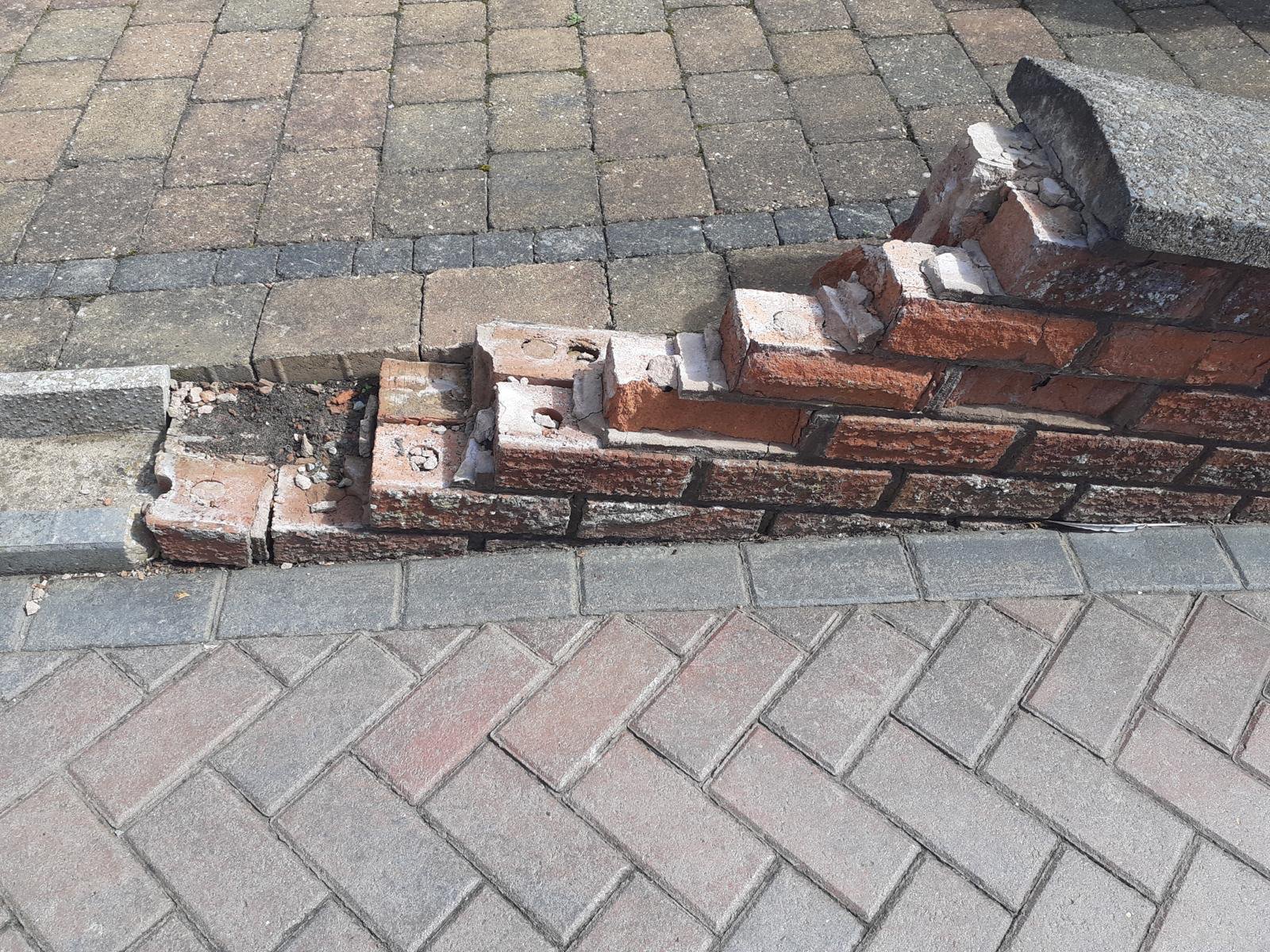
The customer sent us the photograph below of one corner of the plinth, taken before any work started.
Cut out in order
The worst-affected bricks were cut out and replaced with new ones. Some corners and sections were rebuilt.
Before the spalled bricks came out, each was numbered in the order it would be replaced, so that the new bricks follow the existing bond.
New bricks where the old had failed
The first photograph below is the corner the customer photographed, now rebuilt. The second is the front corner, with new bricks in its lower courses.
Only the worst sections were replaced; the rest of the plinth was left as it was. Against bricks that have been out in the weather for decades, new ones stand out at first and tone down as they age.
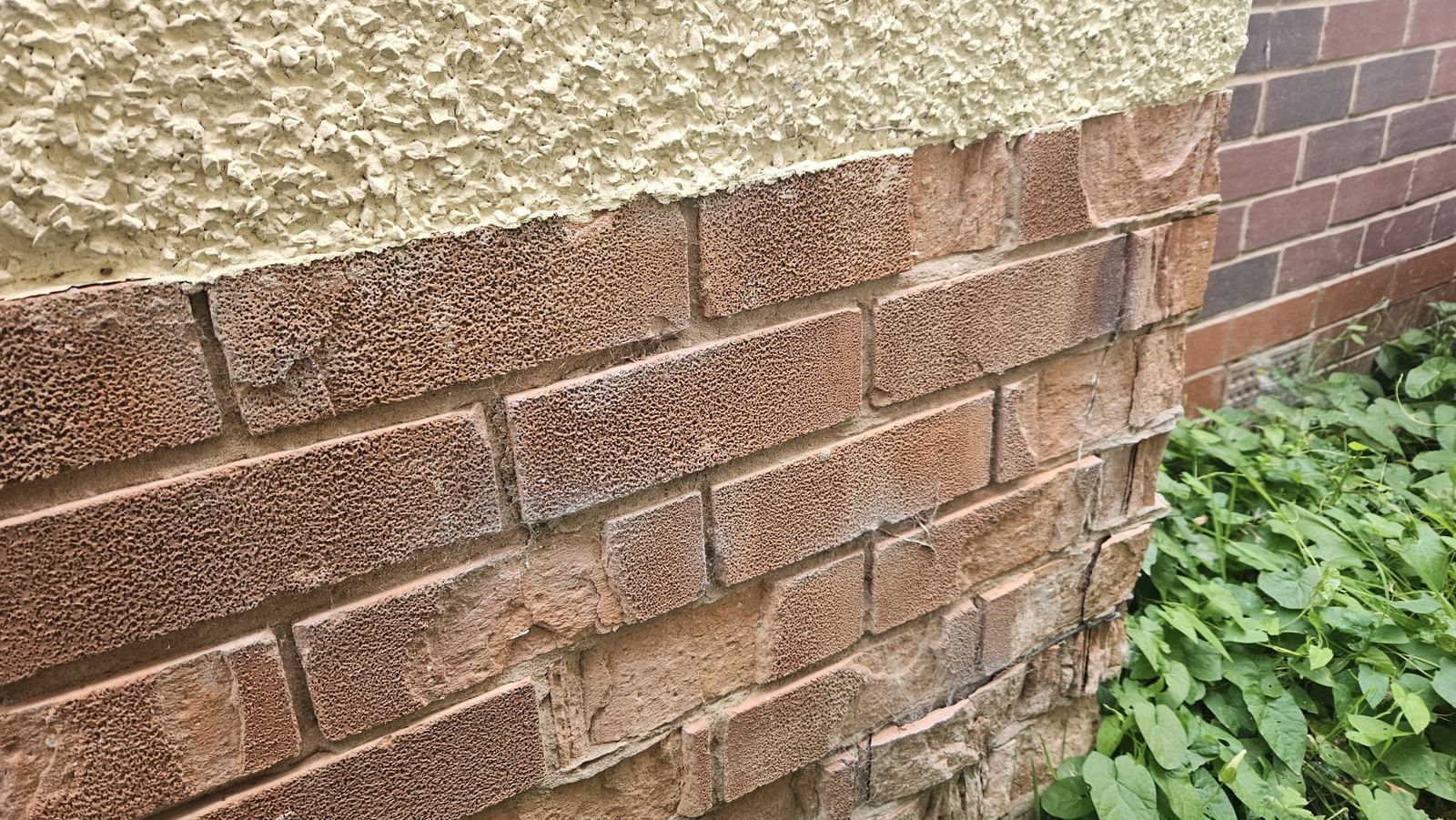
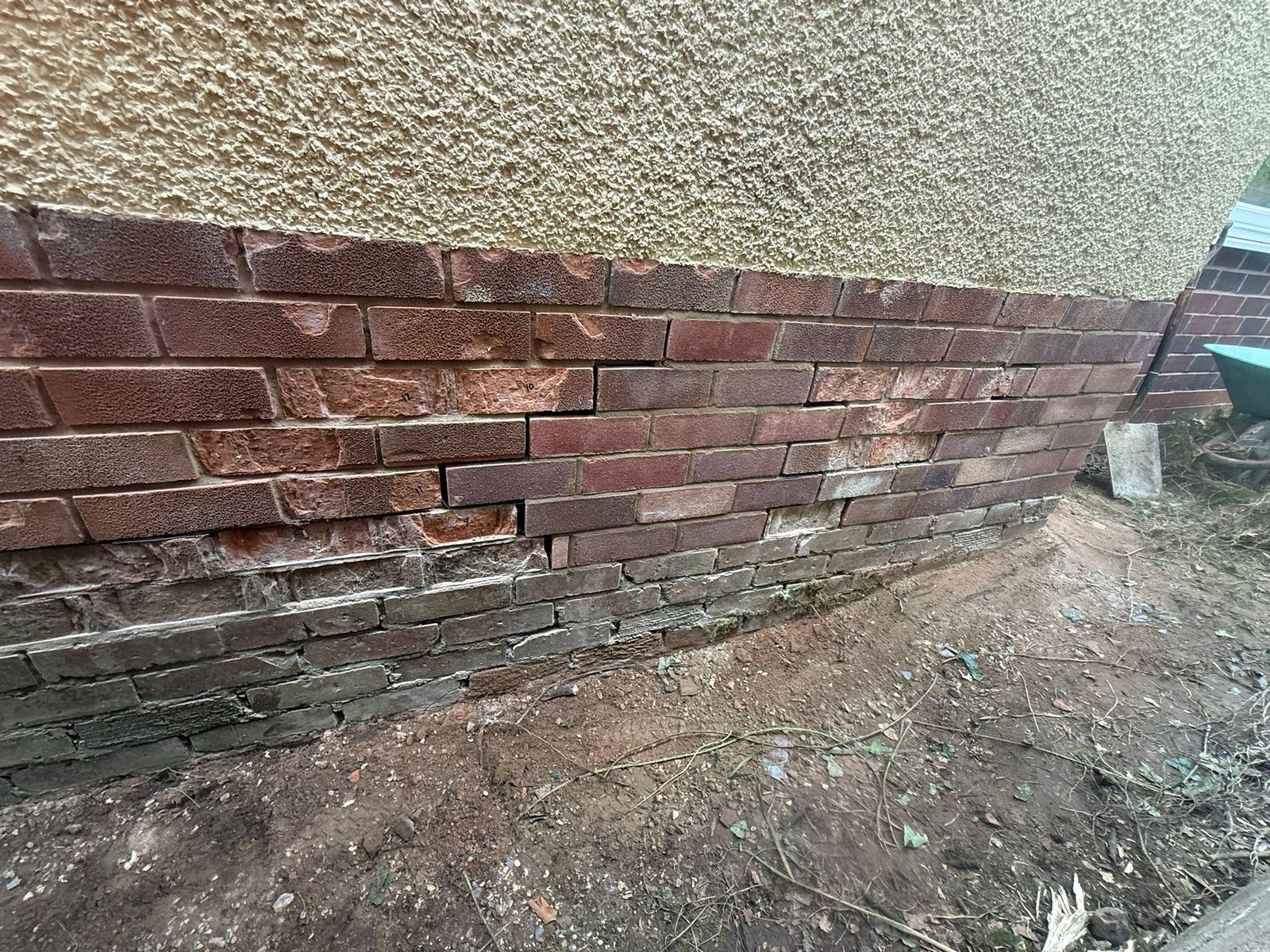
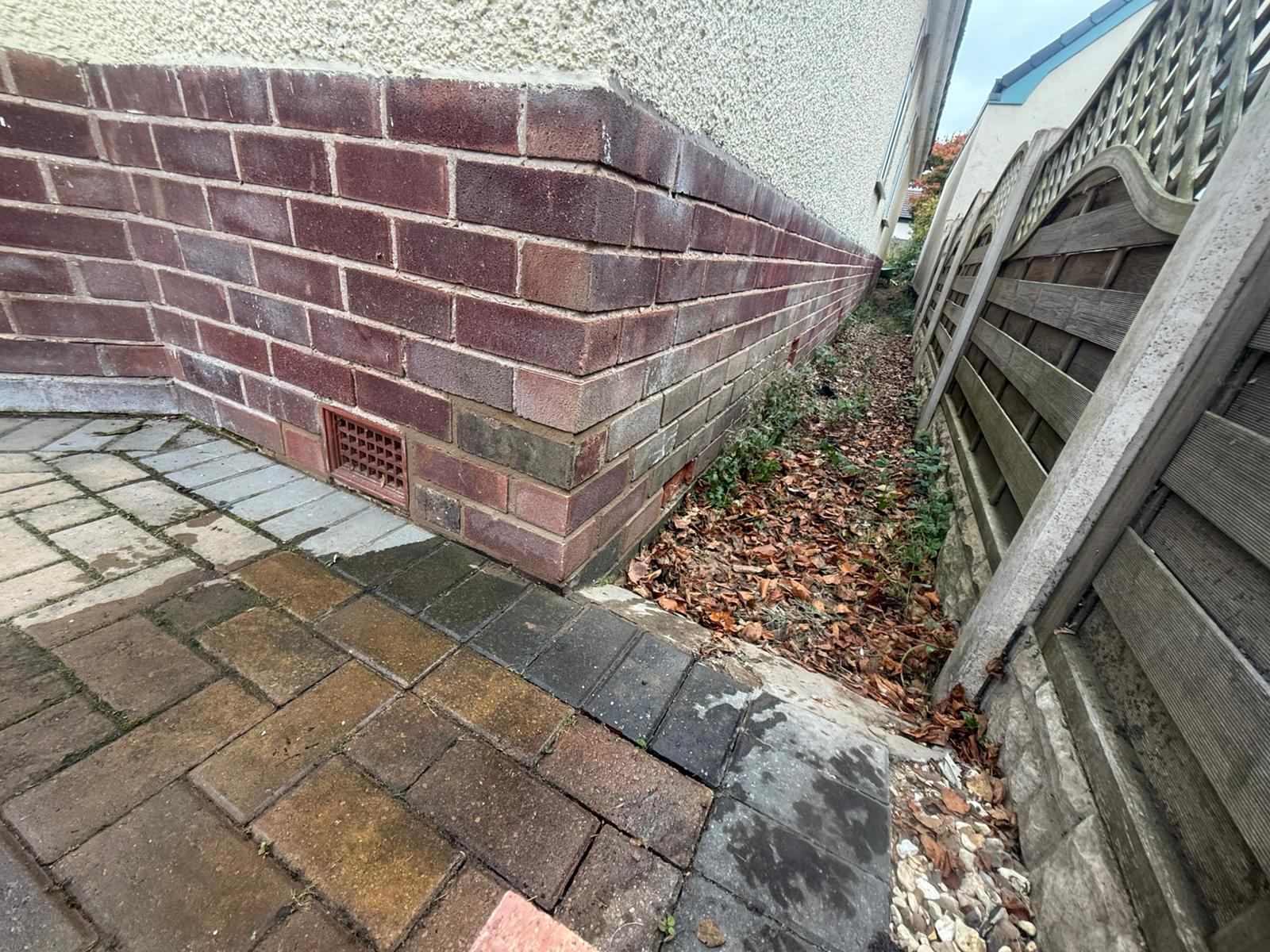
The work covered here is the plinth: the worst frost-damaged bricks replaced with new ones, and some corners and sections rebuilt. The render above it is not part of the job, and nor is anything else at the bungalow.
- Worst frost-damaged (spalled) bricks cut out
- Replaced with new bricks picked to match the plinth
- Some corners and sections rebuilt
- Bricks numbered and replaced in order, to keep the existing bond
- Worst sections only; the rest of the plinth left as it was
Project Information
| Location | Chester |
| Property | Detached bungalow |
| Where | The brick plinth below the render |
| Problem | Frost damage: brick faces blown off (spalling) |
| Before photograph | The customer's own, of one corner |
| Works | Spalled bricks cut out and replaced; some corners and sections rebuilt |
| Bricks | New, picked to match the plinth |
| Extent | The worst sections only |
What customers say about our brickwork
Four of the reviews our customers have left on Google.
★★★★★5.0 · 100+ Google reviews★★★★★“Really pleased with the work Quirks Property Maintenance did for me. They replaced two lintels above my windows following a recommendation from my surveyor, stitched the brickwork and repointed everything beautifully. They did a great job and left everything really tidy afterwards. They were also very helpful and kind throughout, and were always happy to explain what they were doing and answer my questions, which I really appreciated. The finished work looks great and I’d definitely recommend them.”
★★★★★“Effective, efficient and friendly service. Quirks carried out installation of a new steel lintel and step crack repair above my front door. They were methodical, explained the process to me at different stages and liaised with building control. They did a really great job!”
★★★★★“Fantastic service and a company we would highly recommend. We used Quirks to resolve a long standing damp problem in our old Victorian house. We have had a new roof, replaced guttering and soil pipes but the wall remained wet. They resolved the problem by repointing the outside wall. The team arrived just after 7 each morning and worked until dark. They cleaned up each day and were always friendly and helpful. We’ll definitely use their services again”
★★★★★“… blocking up an old dryer vent — you genuinely can’t tell where the old vent was, it looks great.”
Brick is hard-wearing, but it is not waterproof. Nearly every damaged brick we replace has the same history: water got into it, could not get out again, and froze. Ice takes up more room than water, so each hard frost prises a little more of the face away — bricklayers call it spalling. With the fired face gone, the softer inside of the brick takes in water faster still.
What puts the water there is usually one of a short list:
- A leaking gutter, downpipe or overflow soaking the same patch of wall
- Hard cement mortar on an older, softer brick — the joint stays sound, so the water leaves through the brick instead
- Ground levels, paving or soil banked up against the wall
- Missing or failed copings on garden walls, parapets and chimney stacks
- Pressure washing or sandblasting that has taken the fired face off the brick
- Impact — vehicles, gates, scaffolding and storm debris
Replacing the bricks without dealing with the cause only buys time. So the first thing we look for is where the water is coming from. Where we can put that right as well — a gutter, a coping, the pointing — we tell you, and price it in the same quotation.
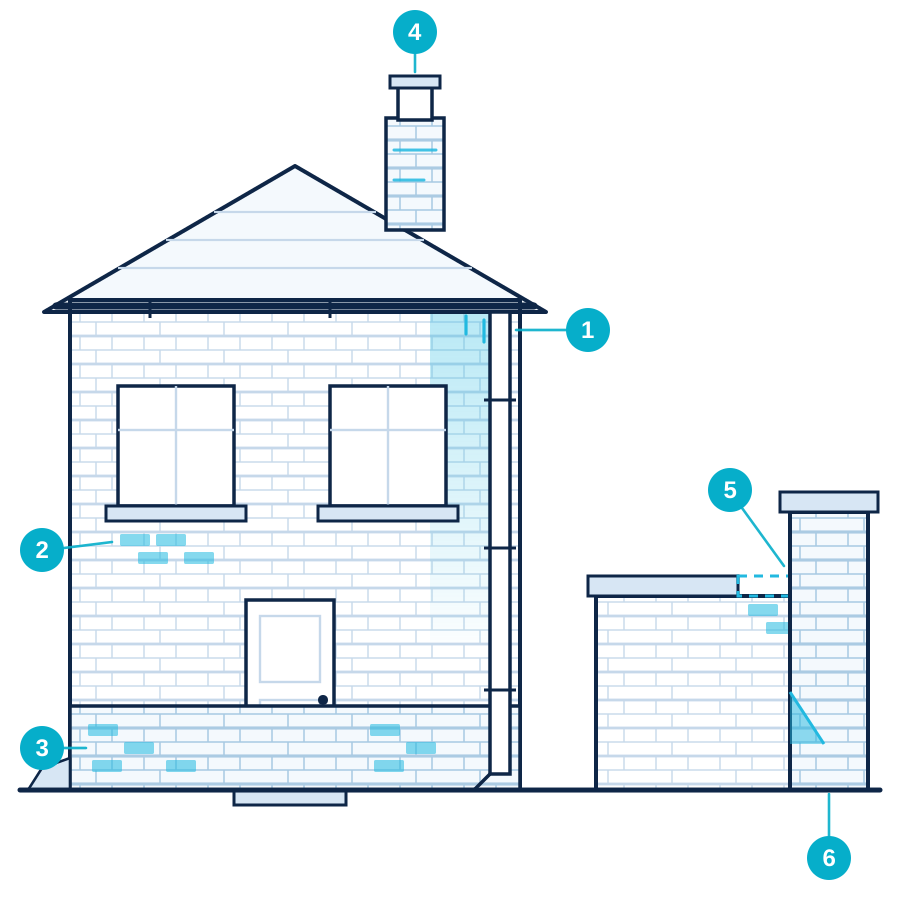
- Under a leaking gutter or downpipe
- Below window sills
- The first courses above the ground
- Chimney stacks and parapets
- Garden wall tops where the coping has gone
- Corners and gateposts in the path of vehicles
Brick repairs and small brickwork
Single replacement brick with fresh mortar round it in the base course of a wall
Damaged bricks replaced
Spalled, cracked and broken bricks cut out one at a time and replaced in the closest match we can find.
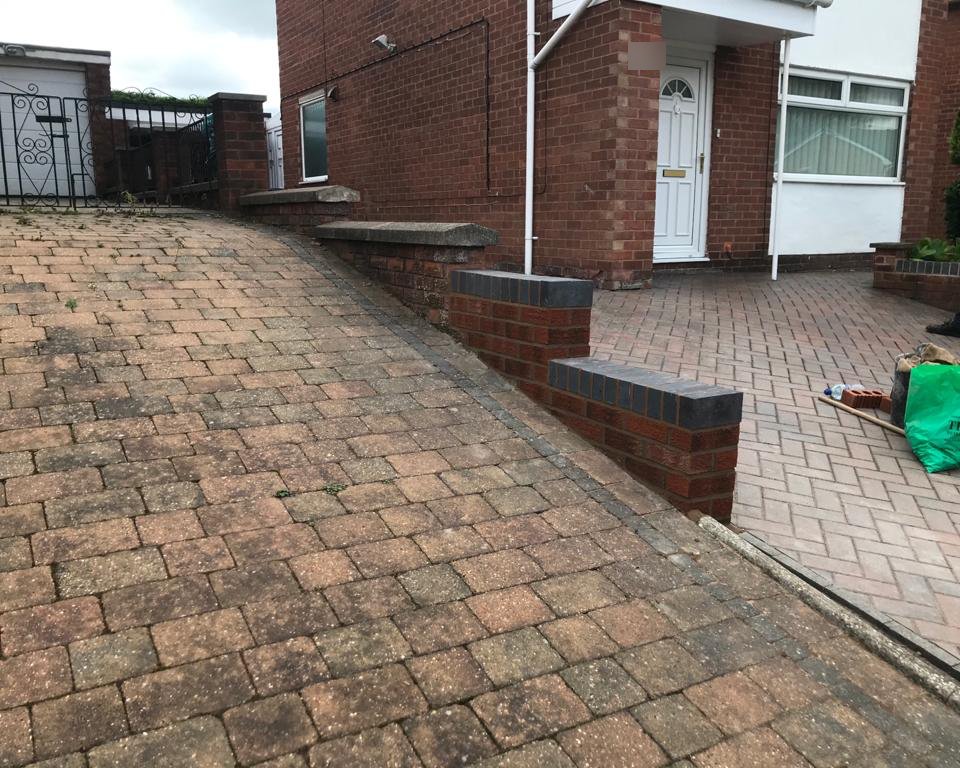
Brick pier at the corner of a front porch, rebuilt in matching brick with a concrete cap, standing on block paving
Failed sections rebuilt
Corners, piers and the brickwork under a sill or over an opening taken down to sound brick and rebuilt.
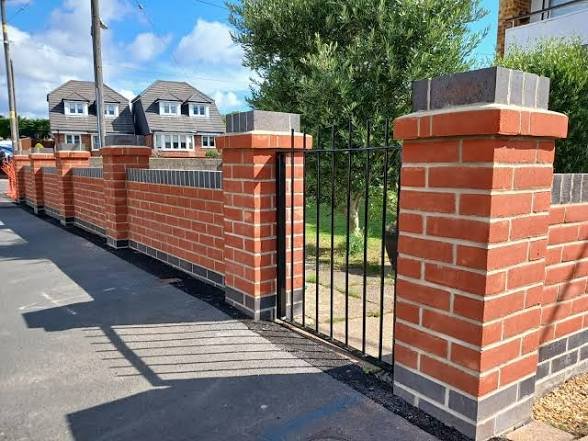
Red brick garden wall with a blue brick plinth and coping, and brick piers with stone caps along the pavement
Garden and boundary walls
Leaning, cracked and storm-damaged walls repaired or rebuilt, with new copings and piers where they are needed.
Opening in a red brick wall bricked up to sill height and finished with a soldier course, with a sheet covering the space above
Openings bricked up
Old vents, doorways, windows and garage door openings closed in brickwork to match the wall.
The method
How we repair brickwork
- The cause first. We look at why the brick failed — water, frost, the wrong mortar, movement or impact — before we decide what comes out.
- Cut out, not covered up. Damaged bricks are cut out one at a time, so the sound bricks around them stay where they are.
- The closest match. Replacement bricks are chosen for size, colour and texture — reclaimed where a new brick would stand out — and bedded in a mortar that suits the wall.
- Rebuilt where it has to be. Where a corner, a pier or a section has moved or been knocked out, we take it down to sound brickwork and rebuild it, toothed back into the wall on both sides.
- Pointed and left clean. New joints are finished to the profile of the old ones, the wall is brushed down and the waste goes with us.
- Where an exposed wall keeps taking in rain, we can finish the repair with a breathable rain-repellent treatment — one that lets the wall dry out, not a sealer.
Matching
Getting the match right
A brick repair is judged from the pavement. Three things decide whether it disappears into the wall or stands out for years.
- Size. Houses built before metric bricks came in, around 1970, were laid in imperial sizes, and in this part of the country those are usually taller than today’s 65 mm brick. A modern brick in an old wall throws the courses out, so older walls generally need reclaimed or imperial-sized replacements.
- Colour and texture. We take the match from the wall itself, not from a catalogue, and tell you before we start how close we expect to get. New bricks in an old wall rarely look identical on the first day; they tone in as they weather.
- Mortar. Older, softer bricks need a mortar that is weaker than they are, which usually means lime. Strong cement on soft brick is one of the commonest causes of the damage we are called to repair, so we do not repeat it.
Small brickwork
Garden walls, boundary walls and small brickwork
Not every brickwork job is a repair to the house. We also take on the small brickwork that is often hard to find a bricklayer for:
- Garden and boundary walls repaired, part-rebuilt or taken down and rebuilt
- New copings, pier caps and gateposts
- Brick steps
- Openings bricked up to match the wall around them
- Brickwork made good where a vent, a flue or a pipe has been taken out
What we do not do is build extensions or new houses. If the job is a wall, a pier, a set of steps or a repair, send us a photo. If it is an extension, we are not the right firm.
My house is listed or in a conservation area — can you still repair the brickwork?
Yes, but find out first whether consent is needed. Chester has hundreds of listed buildings and a number of conservation areas; whether a repair there needs consent is for the council’s conservation team to say. Where it does, we work to what is specified — reclaimed brick and lime mortar included.
The bricks under my bay window are flaking — is that a brick repair or something bigger?
Usually a brick repair. The courses under a sill take the water that runs off the window, so they are often the first to spall. We replace the damaged bricks and look at why the water is getting in — a cracked sill, an open joint, a missing drip. If the bay itself has cracked or dropped, that is a different job: see bay window repairs in Chester.
Do you cover Ellesmere Port and the villages around Chester?
Yes. Ellesmere Port, Great Sutton, Little Sutton and Whitby are all covered, along with Christleton, Waverton and the villages between Chester and the Welsh border.
A car has hit my garden wall or gatepost — what happens next?
Send us photographs of the damage from both sides. We give you a written quotation for taking down what is loose and rebuilding the wall or pier in the closest match of brick we can find, which you can pass to an insurer if a claim is being made. If the wall is unsafe in the meantime, read “If a wall is dangerous right now” on this page first.
How much does brick repair cost in Chester?
The number of bricks, how easily we can get at them and whether any of the wall has to come down all move the figure. Period brick in a conservation street is harder to match than a modern facing brick, and that shows in the price. Most jobs we can price from photographs — send yours on WhatsApp or by email and we’ll come back with a written quotation.
Written and reviewed by Michael Quirk, Director.