A Fast, Efficient and Friendly Building and Maintenance Service You Can Depend On.

- Home
- About
- Building Services
- Property Maintenance
- Structural Services
- Damp Services
- Fire Safety
- Emergency Repairs
- Trades
- Contact
Awaab’s Law
Awaab’s Law, Damp and Mould Responsibilities for Landlords in Wirral.
Damp and mould issues in rental properties must be addressed quickly, correctly, and in line with current legislation. With increased focus on landlord responsibilities under Awaab’s Law, the Landlord and Tenant Act 1985, and the Homes (Fitness for Human Habitation) Act 2018, it is essential that problems are not only treated, but properly resolved.
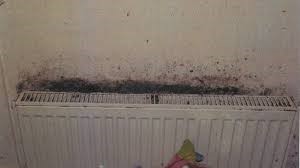
What is Awaab’s Law?
Awaab’s Law was introduced following the tragic death of Awaab Ishak, bringing national attention to the dangers of prolonged exposure to damp and mould.
The legislation reinforces the requirement for landlords and housing providers to investigate and resolve damp and mould issues within defined timeframes, ensuring properties remain safe and fit for human habitation.
Legal Timeframes Under Awaab’s Law
Awaab’s Law sets clear expectations for how quickly damp and mould issues must be addressed once reported.
Landlords are expected to:
Investigate damp and mould issues within 14 days
Carry out necessary repairs and mould treatment within a reasonable timeframe, often expected within 7 days depending on severity
Complete emergency repairs, such as leaks or water ingress, within 24 hours
These timeframes are designed to prevent issues from escalating and to protect the health of occupants.
Official Guidance
For full details on repair timeframes and landlord responsibilities under Awaab’s Law, you can refer to the Official Government Guidance Here:
This guidance outlines expected response times and reinforces the importance of addressing damp and mould issues promptly and effectively.
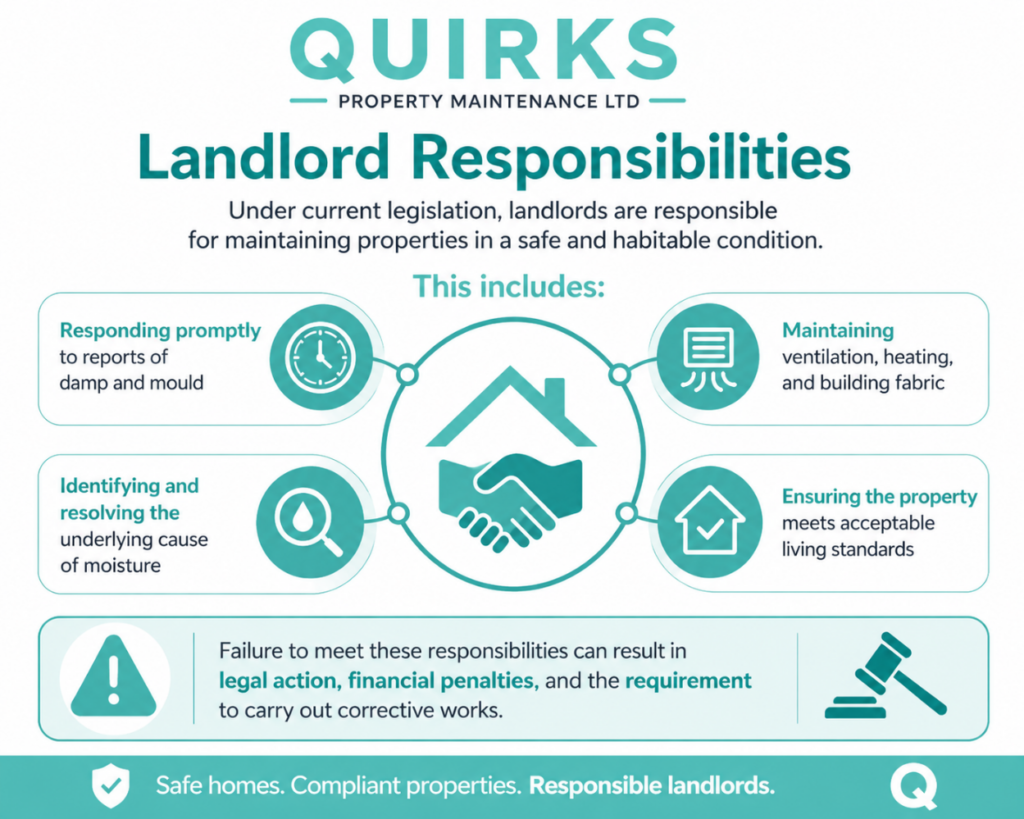
Landlord Responsibilities
Under current legislation, landlords are responsible for maintaining properties in a safe and habitable condition.
This includes:
Responding promptly to reports of damp and mould
Identifying and resolving the underlying cause of moisture
Maintaining ventilation, heating, and building fabric
Ensuring the property meets acceptable living standards
Failure to meet these responsibilities can result in legal action, financial penalties, and the requirement to carry out corrective works.
Why Damp and Mould Must Be Taken Seriously
Damp and mould are not simply cosmetic issues. If left untreated, they can lead to:
Damage to walls, ceilings, and structural timbers
Increased moisture levels within the property
Ongoing deterioration of the building fabric
Tenant complaints and disputes
Health risks, particularly for children, the elderly, and those with respiratory conditions
Health Risks of Damp and Mould
Exposure to damp and mould can have serious health implications, including:
Respiratory issues and breathing difficulties
Worsening of asthma and allergies
Poor indoor air quality
Increased stress and impact on mental wellbeing
This is why early identification and proper treatment are essential.
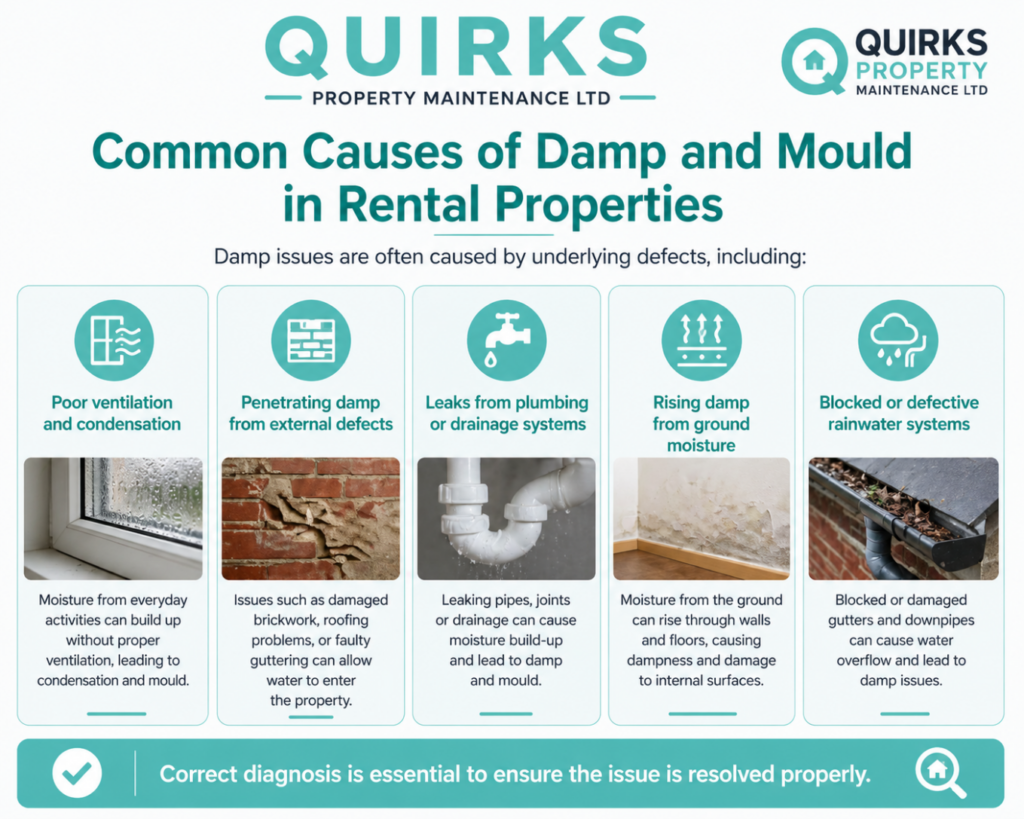
Common Causes of Damp and Mould in Rental Properties
Damp issues are often caused by underlying defects, including:
Poor ventilation and condensation
Penetrating damp from external defects such as brickwork, roofing, or guttering
Leaks from plumbing or drainage systems
Rising damp from ground moisture
Blocked or defective rainwater systems
Correct diagnosis is essential to ensure the issue is resolved properly.
Why Correct Diagnosis Matters
Misdiagnosing damp and mould can lead to ineffective repairs and ongoing issues.
For example, treating condensation as rising damp, or simply cleaning mould without addressing the source, will not resolve the problem long-term.
Understanding the difference between issues such as Condensation Damp, Penetrating Damp, and Rising Damp is essential to ensure the correct solution is applied.
At Quirks Property Maintenance Ltd, we focus on identifying the root cause before recommending a solution, ensuring the issue is resolved properly and does not return.
Our Approach to Damp and Mould
We take a structured and professional approach to resolving damp and mould issues:
Full inspection to identify the root cause
Assessment of ventilation, moisture levels, and building condition
Targeted repairs to address the source of the problem
Long-term solutions including ventilation improvements and moisture control
Associated repairs to floors, walls, and structural elements where required
Our focus is on providing lasting solutions, not temporary fixes.
Taking a Proactive Approach
The best way to manage damp and mould is to address issues early and prevent them from developing further.
Landlords are encouraged to:
Arrange a professional damp assessment
Maintain ventilation systems and airflow
Repair leaks and external defects promptly
Treat damp issues at the source
Keep open communication with tenants and act on reports quickly
A proactive approach protects both the property and its occupants while maintaining property value.
Consequences of Failing to Act
Failing to address damp and mould issues can lead to:
Increased property damage
Higher repair costs over time
Tenant complaints and disputes
Legal action or enforcement
Potential requirement to provide alternative accommodation in severe cases
Taking early action helps avoid these risks.
Decent Homes Standard (DHS)
All rental properties should meet acceptable living standards, ensuring they are safe, secure, and fit for human habitation.
Damp and mould issues that are not addressed can result in properties failing to meet these standards, placing responsibility on landlords to rectify the issue.
Can Tenants Take Legal Action?
Yes. If damp and mould issues are not addressed, tenants have the right to take legal action.
Landlords may be required to:
Carry out repairs
Pay compensation
Rectify underlying defects
Ensure the property meets required standards
This further highlights the importance of dealing with issues promptly and correctly.
Helping You Stay Compliant
At Quirks Property Maintenance Ltd, we help landlords meet their responsibilities by:
Identifying the root cause of damp and mould issues
Providing clear recommendations and solutions
Carrying out repairs to a high standard
Ensuring long-term results that prevent recurrence
We aim to help you stay compliant while protecting your property investment.
Related Services
Frequently Asked Questions – Landlords and Damp Issues
Do landlords have to fix mould?
Yes. Landlords are responsible for ensuring properties are safe and free from damp and mould issues that may affect health.
How quickly should damp be dealt with?
Issues should be investigated as soon as possible, with urgent problems addressed immediately.
Can mould just be cleaned off?
What is the most common cause of mould?
Can you work with landlords and agents?
Need Help with Damp or Mould in Your Property?
Important Note
Get in Touch
Send Photos via WhatsApp for a quick assessment.
Our Commitment
