Specialist Building & Property Maintenance Services You Can Depend On.
DAMP PROOFING — WREXHAM
Damp found at its source and put right across Wrexham and the villages around it — rising damp, penetrating damp, condensation and damp floors. The plastering and making good afterwards are done by our own team.
Federation of Damp


Key Takeaways
Survey first
Wrexham’s housing runs from Victorian and Edwardian brick terraces around the town centre and in the villages that grew up with the collieries, through inter-war and post-war semis, to modern estates. Each fails in its own way. A tide mark low on a terrace wall is far more often a damp-proof course bridged by a raised path, render carried down to the ground or a leaking downpipe than genuine rising damp — and injecting a wall that has none of those problems wastes money and leaves the damp where it was.
That is why we look at the wall inside and out, and at what is happening around it, before recommending any treatment.
What we find
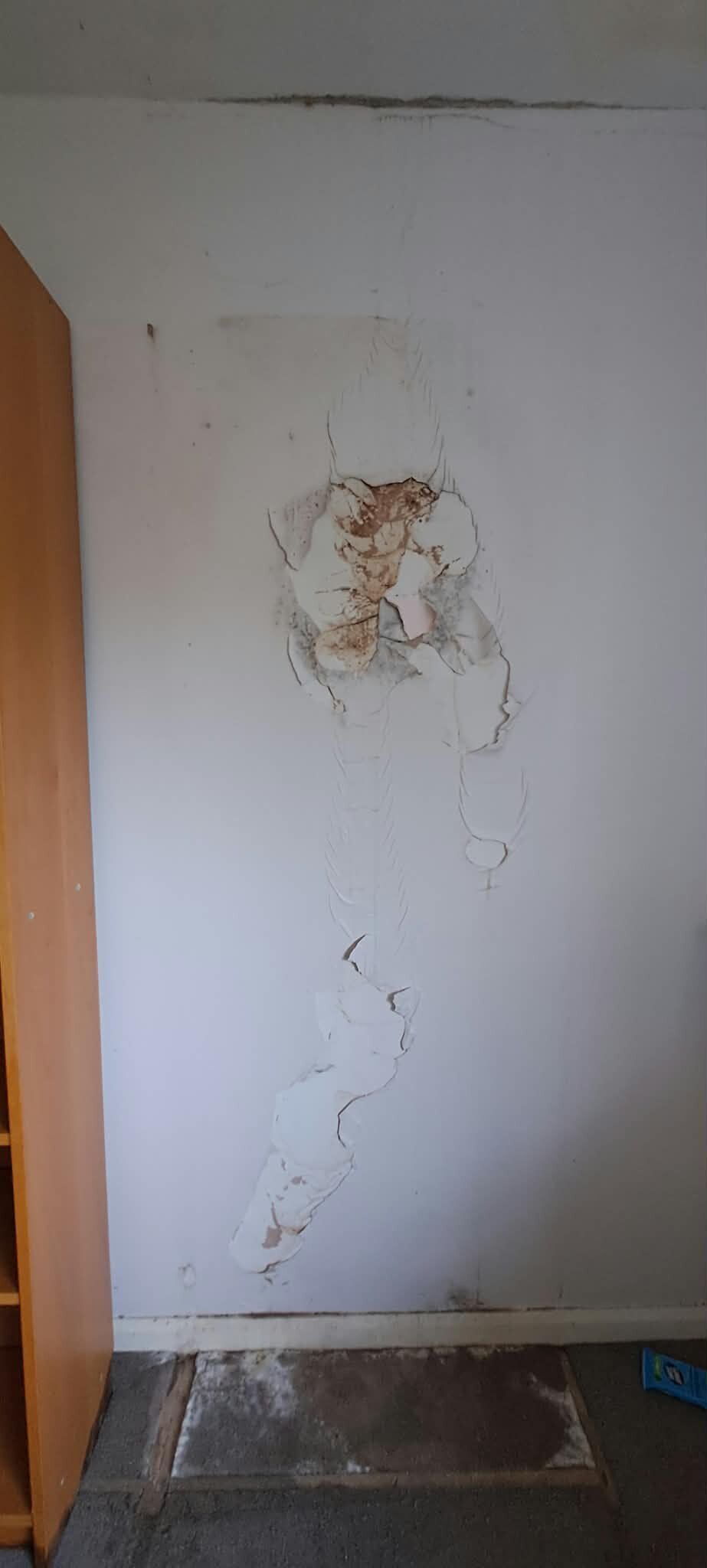
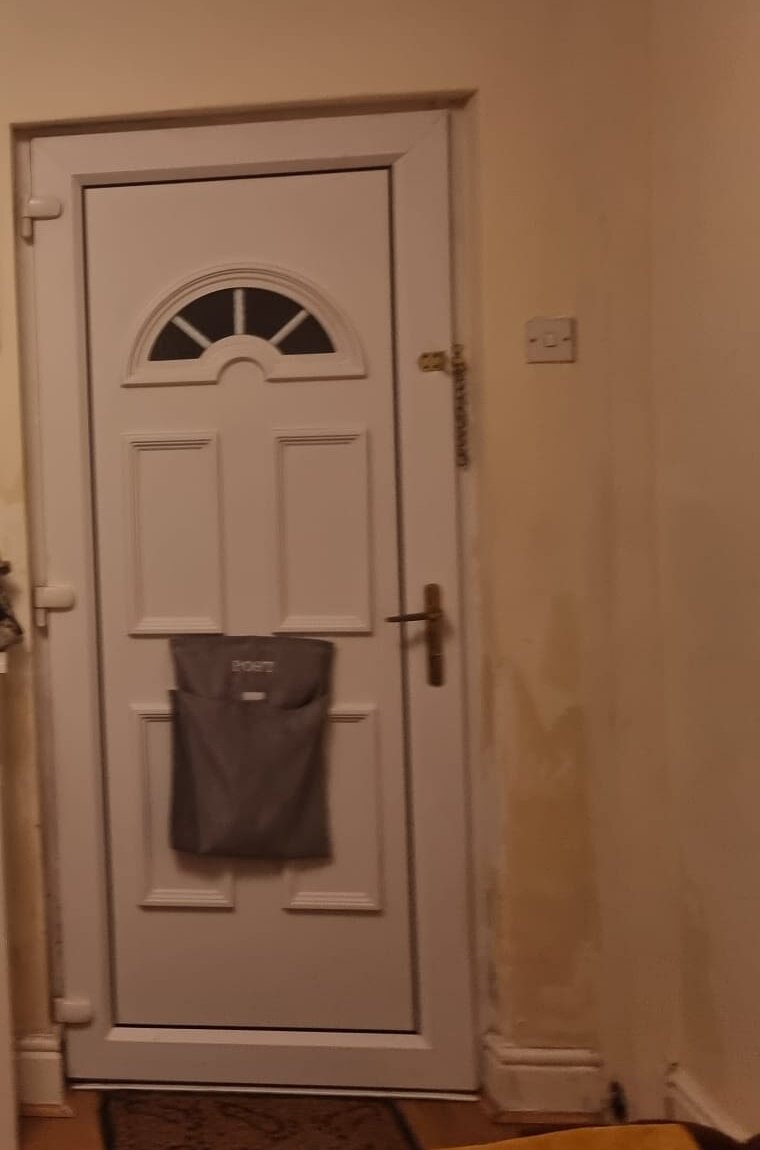
Genuine rising damp — ground moisture drawn up a wall with no working damp-proof course — does happen, mostly in older solid-walled property. It is confined to the lower part of ground-floor walls and usually brings salts with it. Where it is the cause, we install a remedial DPC, remove the salt-contaminated plaster and replaster.
Water getting in from outside: worn pointing, cracked render, a failed gutter or downpipe, a defective flashing or a chimney. It can show at any height and gets worse after rain. The repair is to the outside of the building first. See penetrating damp.
Moisture from inside the house settling on cold walls, window reveals and corners, usually with black mould. It is put right with ventilation and heating, not a damp-proof course. See condensation damp.
Why survey-led
What you see
Damp and black mould affect health, not just decoration. Mould releases spores that can trigger or worsen asthma, allergies, coughing and skin irritation, and the risk is highest for children, older people and anyone with a respiratory condition. Official health guidance advises treating damp and mould promptly rather than living with it — which is why we treat the cause rather than repaint the surface.
Five stages
Survey. An FOD Certified Surveyor inspects the property, inside and outside the wall.
Written report & quote. Clear findings and an honest recommendation — including telling you if no treatment is needed.
Outside repairs first. Defects outside the wall are put right before any work inside.
Treatment & making-good. Approved systems installed, then plastering and decoration by our own team.
Guarantee. Product and workmanship guarantees where applicable, with the documentation provided on completion.
What we do
Diagnosis and survey — a damp survey with a written report and an honest recommendation. See damp surveys.
Rising damp — remedial DPC, salt-contaminated plaster removed, renovating plaster, full skim.
Penetrating damp — pointing, render repair, gutter, roof and chimney repair to stop the water getting in.
Condensation and mould — extract ventilation and mould treatment.
Damp floors — membranes and floor systems for damp concrete floors. See damp floor treatments in Wrexham.
Making good — replastering and decoration by our own team.
Wrexham, Acton, Borras, Rhosddu, Hightown
LL11, LL12, LL13
Gresford, Marford, Rossett
LL12
Rhosllanerchrugog, Johnstown, Ruabon
LL14
Gwersyllt, Brymbo, Coedpoeth
LL11
Elsewhere around Wrexham? Send your photographs and your postcode and we’ll tell you whether we cover you.
We cover North Wales, Cheshire and Wirral from the Deeside and Chester districts out to mid-Cheshire.
Recent work
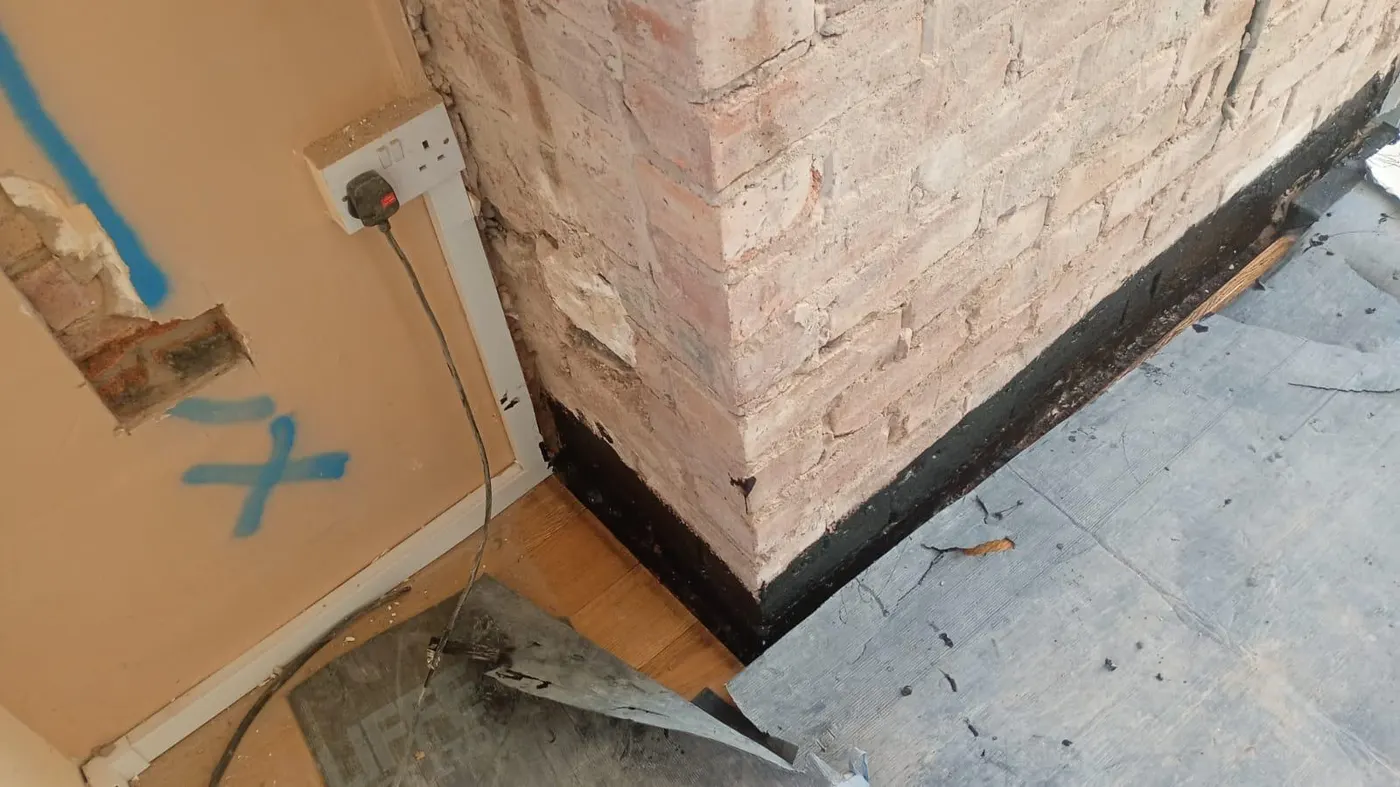
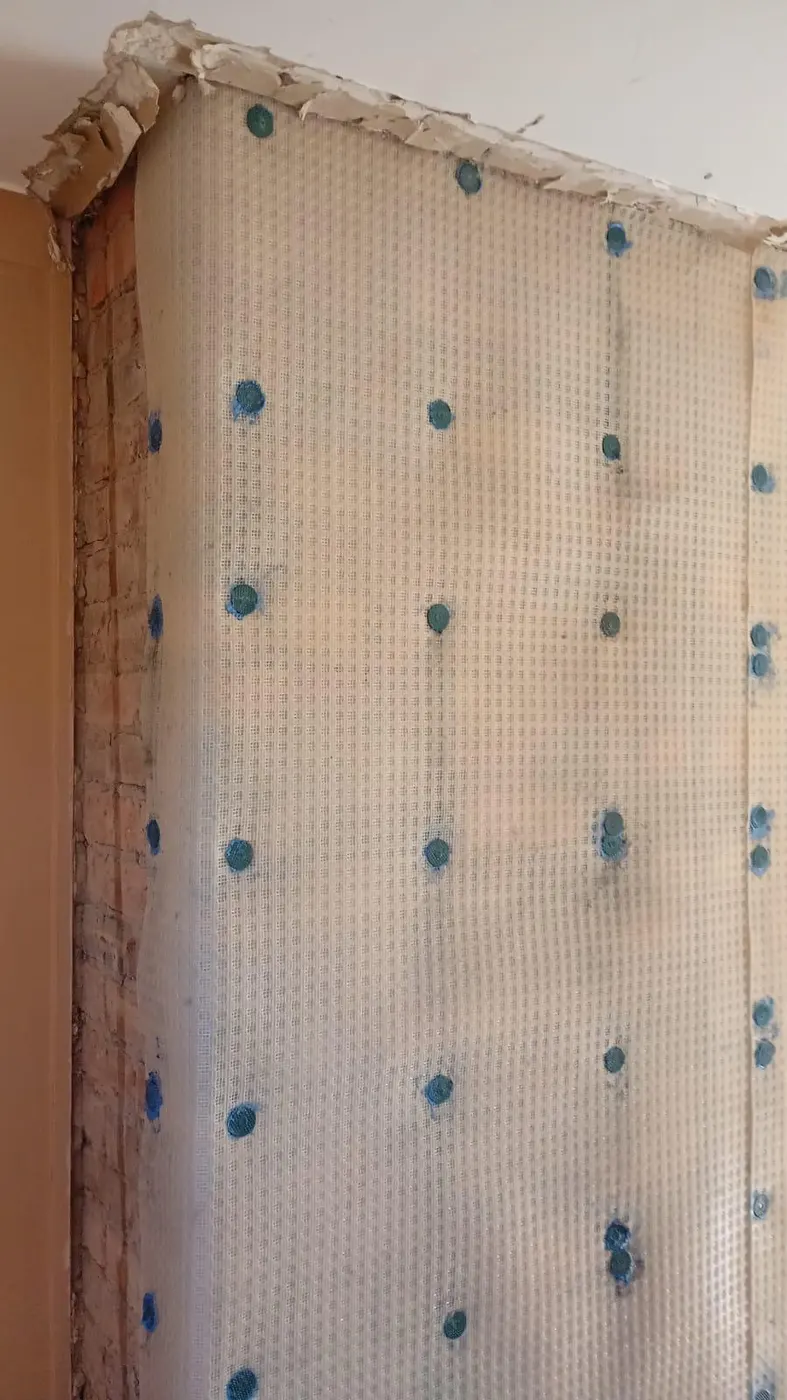
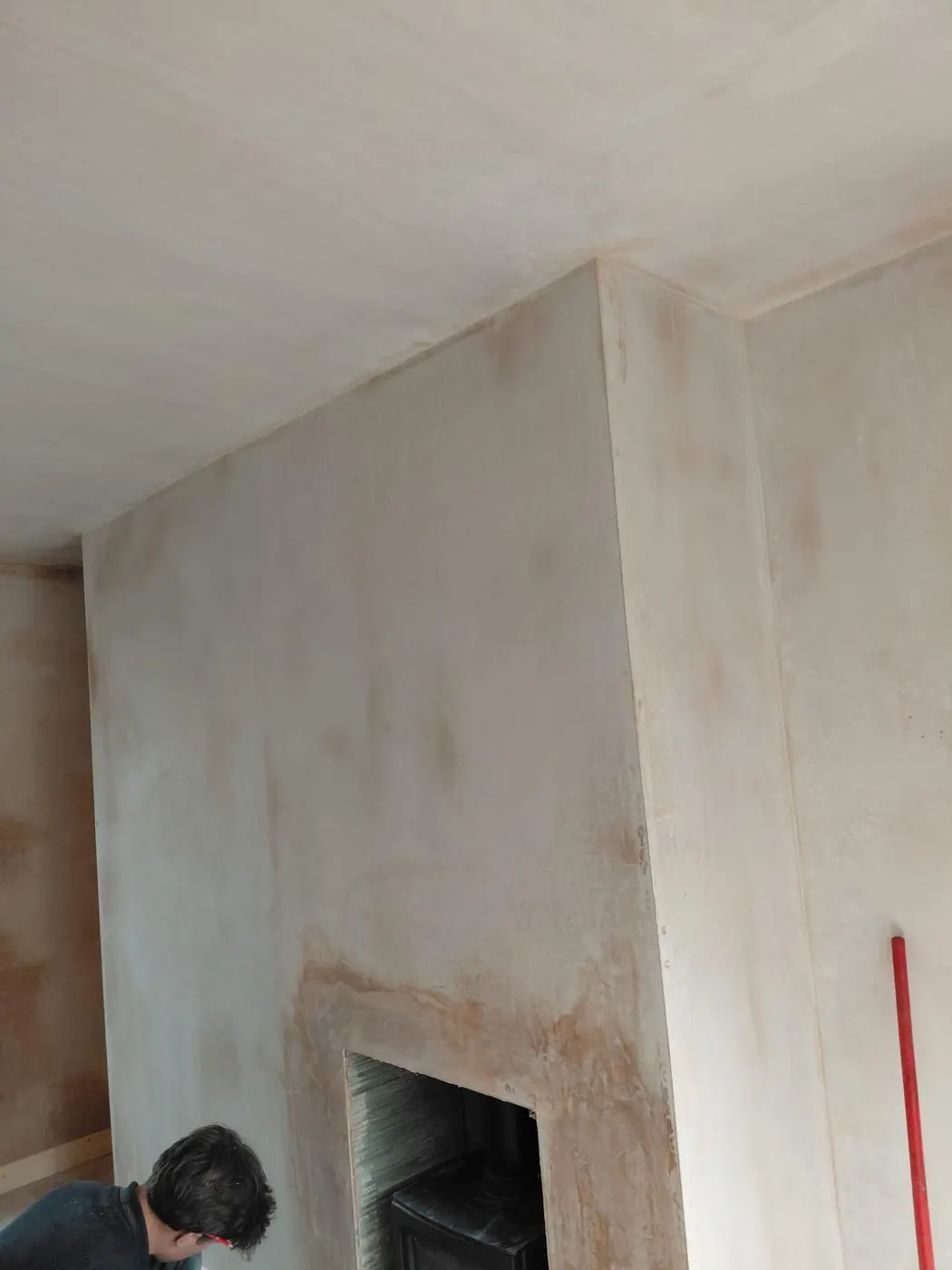
A homeowner in Wrexham asked Quirks to deal with damp affecting a chimney breast. The team stripped the affected plaster back to brick, applied a bitumen coating to the chimney base, fitted a studded damp-proof membrane across the chimney breast, and replastered ready for decoration.
Chimney breasts are a common source of damp in older property. Years of use leave hygroscopic salts in the masonry, and those salts draw moisture out of the air and back into the plaster — so the wall keeps showing damp even after the original source is dealt with. Replastering on its own does not hold, because the salts are still behind it. The answer is to isolate the contaminated masonry rather than cover it: a bitumen coating at the base, a studded membrane across the face, and fresh plaster on top of that.
The chimney itself was inspected as part of the survey and no active water ingress was found — the damp at the breast was put down to salt-contaminated masonry rather than water getting in.
The log burner was fitted by a HETAS-registered company. No appliance work was within Quirks’ scope; our work ended with the chimney breast reinstated and ready for that installation.
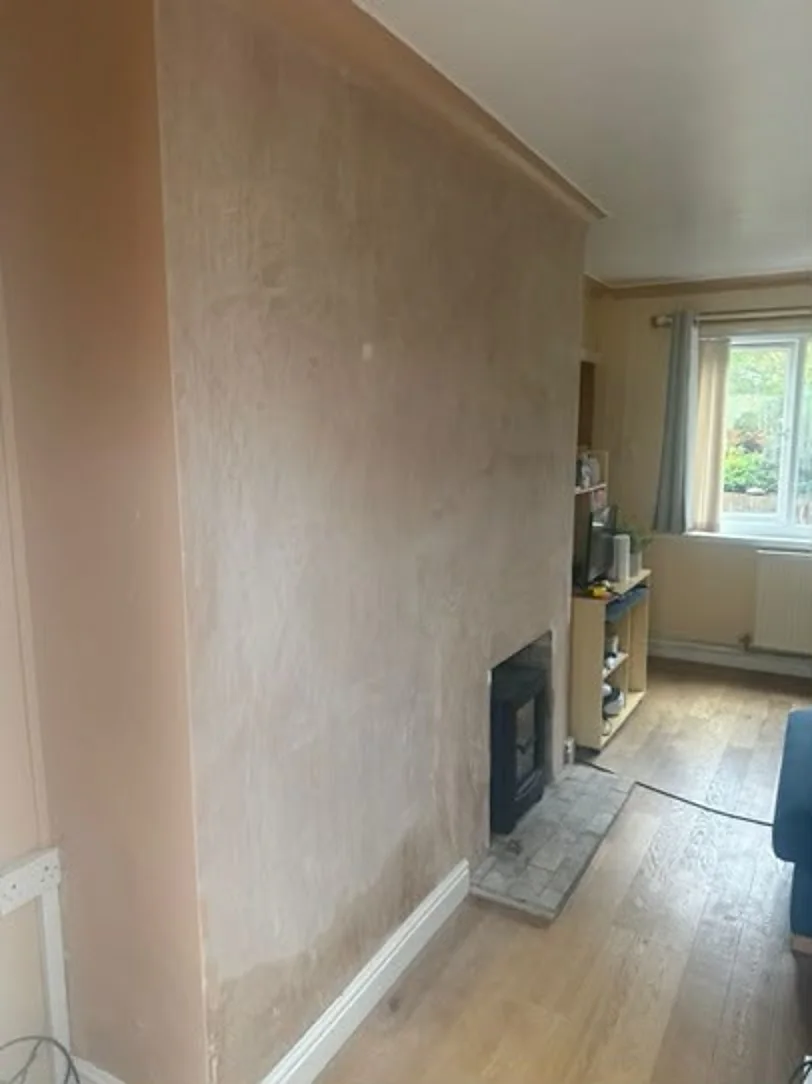


Decoration was completed by the customer.
| Location | Wrexham |
|---|---|
| Property type | Private house |
| Issue | Damp to a chimney breast, with salt-contaminated masonry drawing moisture back into the plaster |
| Service | Damp proofing — bitumen coating, studded damp-proof membrane and replastering |
| Outcome | Chimney breast isolated, replastered and ready for decoration |
★★★★★ 5.0 · 150+ Google reviews
“Michael and his team are worth more than 5 stars! We had a full living room, hallway, landing & stairs renovation (Damp proofing, electrics, plumbing, plastering and joinery). From start to finish they were fantastic! Everything was organised and ran like clockwork which took a massive stress off me and my wife. His employees are a credit to the company too, always polite, non stop working from the start of the day to the end and had a lot of pride in their work. Will definitely use Quirks again in a heartbeat! Jordan + Anastasia Wrexham”
Jordan Owen
“Fantastic service and a company we would highly recommend. We used Quirks to resolve a long standing damp problem in our old Victorian house. We have had a new roof, replaced guttering and soil pipes but the wall remained wet. They resolved the problem by repointing the outside wall. The team arrived just after 7 each morning and worked until dark. They cleaned up each day and were always friendly and helpful. We’ll definitely use their services again”
SB CB
“Great job. Efficient, polite, tidy workers. Very happy with the damp proofing and plastering. Highly recommend!”
Andrew Jaworski
Your questions
Less often than it is diagnosed. Most tide marks on older terraces turn out to be a bridged damp-proof course, raised ground levels or a failed gutter or downpipe. A survey tells you which, and often the fix is a repair rather than a chemical DPC.
Remedial work in Wrexham falls under Welsh Building Regulations rather than the English equivalent, and listed or conservation-area property may also need consent.
Where genuine rising damp is treated, salt-contaminated plaster usually has to come off and be replaced with a renovating plaster, because the old plaster holds the salts that keep drawing moisture. Where the cause is penetrating damp or condensation, often no replastering is needed at all.
Product and workmanship guarantees are provided where applicable, depending on the system installed and manufacturer terms. Where a guarantee applies, we provide the paperwork your solicitor will ask for.
Yes. We provide FOD-certified damp surveys with the written report lenders and solicitors need. If a flagged issue turns out to be minor or misdiagnosed, the report says so.
It depends on what is causing the damp, how much wall is affected, how much plaster has to come off and go back, and what needs repairing outside first. Treating a single wall is a very different job from a whole ground floor.
Damp proofing work is quoted after a damp survey, which is a paid service. Send your photos on WhatsApp or by email and we’ll advise the next steps.
Written and reviewed by Michael Quirk, Director.
How it works
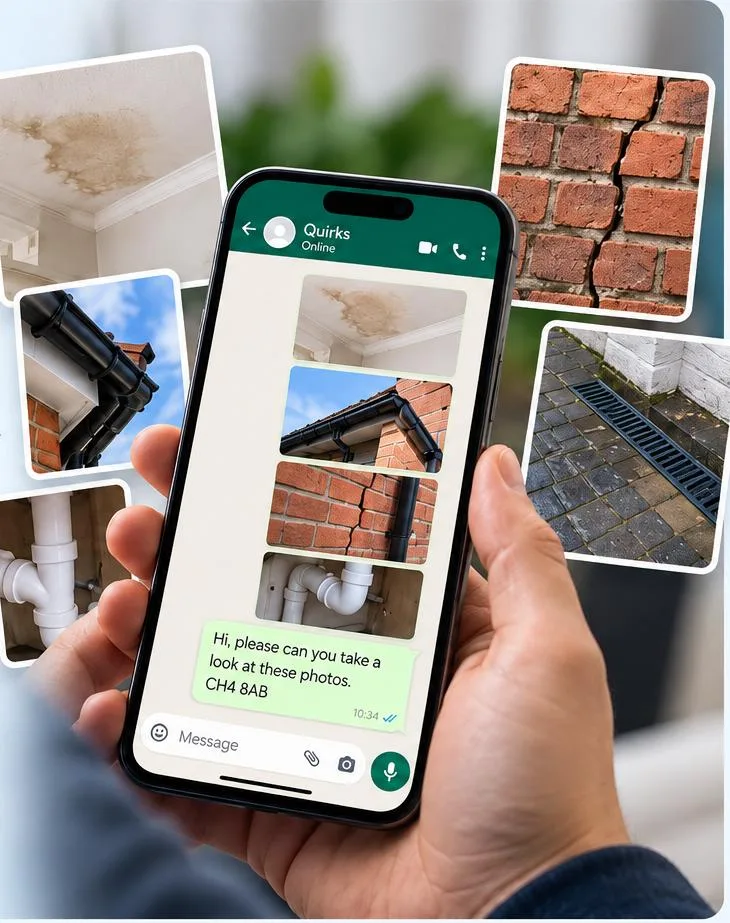
Send us photos on WhatsApp or by email and we’ll advise the next steps. Take them from the ground — never from a ladder. The damp patch close up, the whole wall it is on, and the same wall from outside, with any surveyor’s or mortgage valuer’s comments.
Photograph the damp close up, the whole wall, and the outside of the same wall
Send them on WhatsApp or by email with your postcode, and any surveyor’s or engineer’s report. If they don’t show enough, we’ll tell you what else we need
We look at what you have sent and what it points to
We advise the next step — usually a damp survey — and what it costs
Once you accept, we agree a start date

Send us your photographs and a few details and we’ll advise the next steps.