DAMP SURVEYS — CHESTER AND ELLESMERE PORT
Damp Surveys in Chester and Ellesmere Port
A survey by FOD Certified Surveyors for period, listed and solid-wall homes in Chester and Ellesmere Port, with the findings and recommendations in writing.
Federation of DampApproved Member · No. 20118


FOD certified damp survey
FOD Certified Damp Surveys for Chester Homes, Period Properties & Rental Stock
Chester’s housing is unlike anywhere else in the region: Georgian townhouses in the Garden Quarter, dense Victorian terraces in Hoole, Boughton, Handbridge and Newton, red sandstone plinths and boundary walls throughout the city, and a large stock of listed and conservation-area buildings where the wrong damp treatment can cause real harm. Diagnosing damp in Chester means understanding how these buildings were meant to work, and our surveys start there.
Quirks carries out evidence-based damp surveys across Chester and the surrounding villages for homeowners, buyers, landlords and letting agents. Every survey is undertaken by a Federation of Damp (FOD) Certified Surveyor and produces a written report with photographs, moisture readings and recommended next steps.
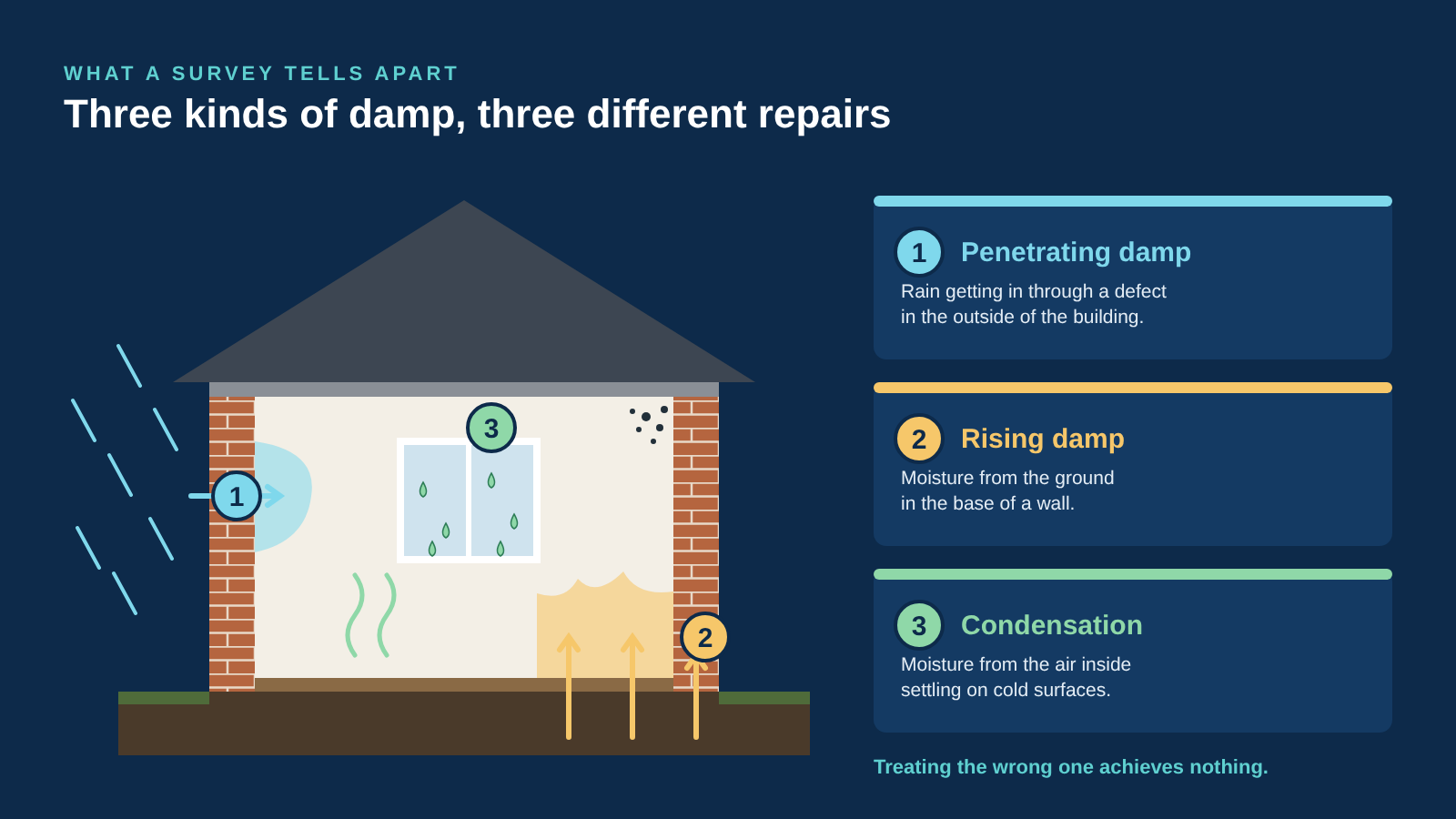
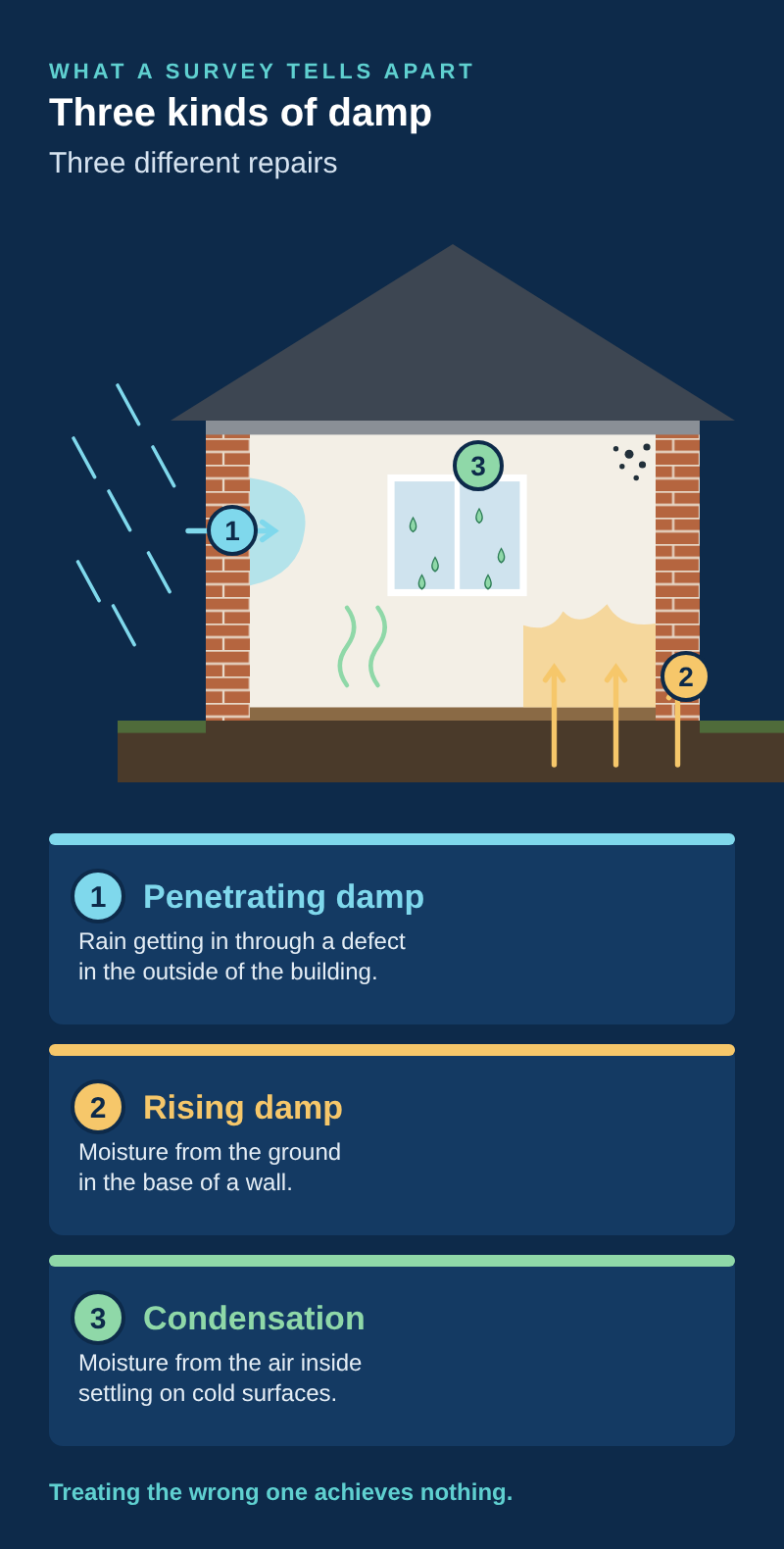
Not sure which type of damp you have? Our main Damp Surveys page explains how we tell rising damp, penetrating damp and condensation apart.
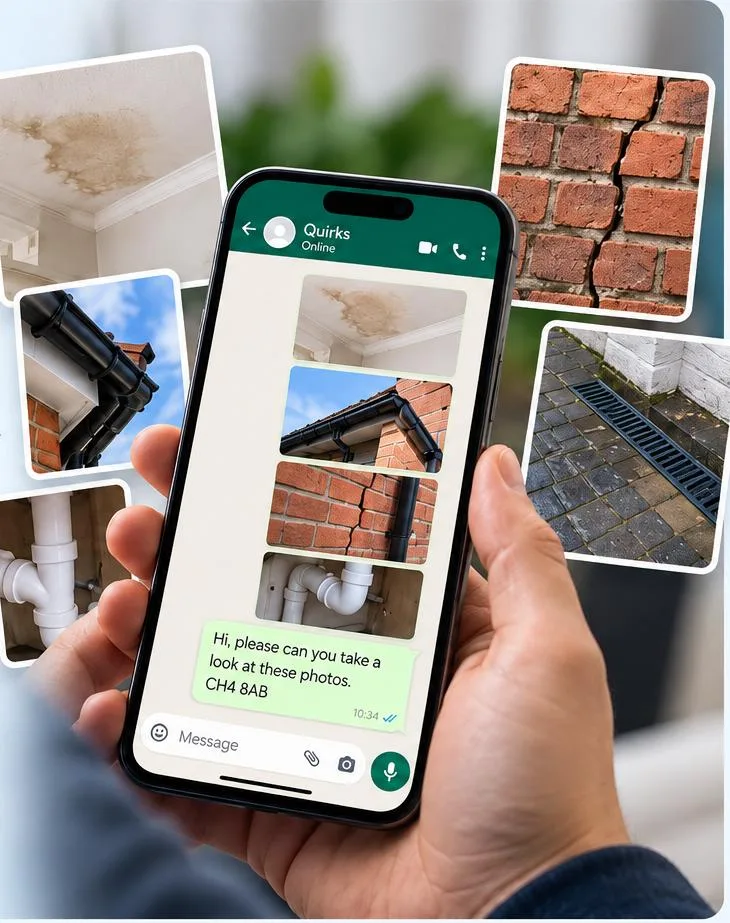
Send photos of the problem on WhatsApp or by email and we’ll tell you which survey is right. The fee is confirmed in writing before you book.
Why it happens here
Why Chester Properties Suffer from Damp
- Solid-wall Victorian terraces. Hoole, Boughton, Handbridge, Newton and the Garden Quarter are dominated by solid brick terraces with slate DPCs now over 120 years old. Cement repointing, modern gypsum plaster and impermeable paints applied over decades stop these walls breathing, trapping moisture that the original construction would have released.
- Porous red sandstone. Chester’s characteristic local sandstone is soft and absorbent. Sandstone plinths, cellar walls and boundary junctions readily wick ground moisture, producing damp readings at low level that are frequently — and wrongly — treated as a failed DPC.
- Cellars and basements. Many Georgian and Victorian properties in the city centre and Garden Quarter have cellars in regular use. Below-ground moisture and hydrostatic pressure need assessing properly before any conversion or storage decision.
- The River Dee and ground moisture. Lower-lying streets in Handbridge, Saltney and along the riverside sit on ground with elevated moisture levels, and properties near historically flood-affected areas can carry residual moisture in floors and lower walls long after any event.
- Listed buildings and conservation areas. Much of central Chester is protected. Remedial work on these buildings must use appropriate, breathable materials — and some standard damp proofing methods are simply unsuitable or may require consent. Our reports flag this before work is specified.
What Your Chester
Damp Survey Includes
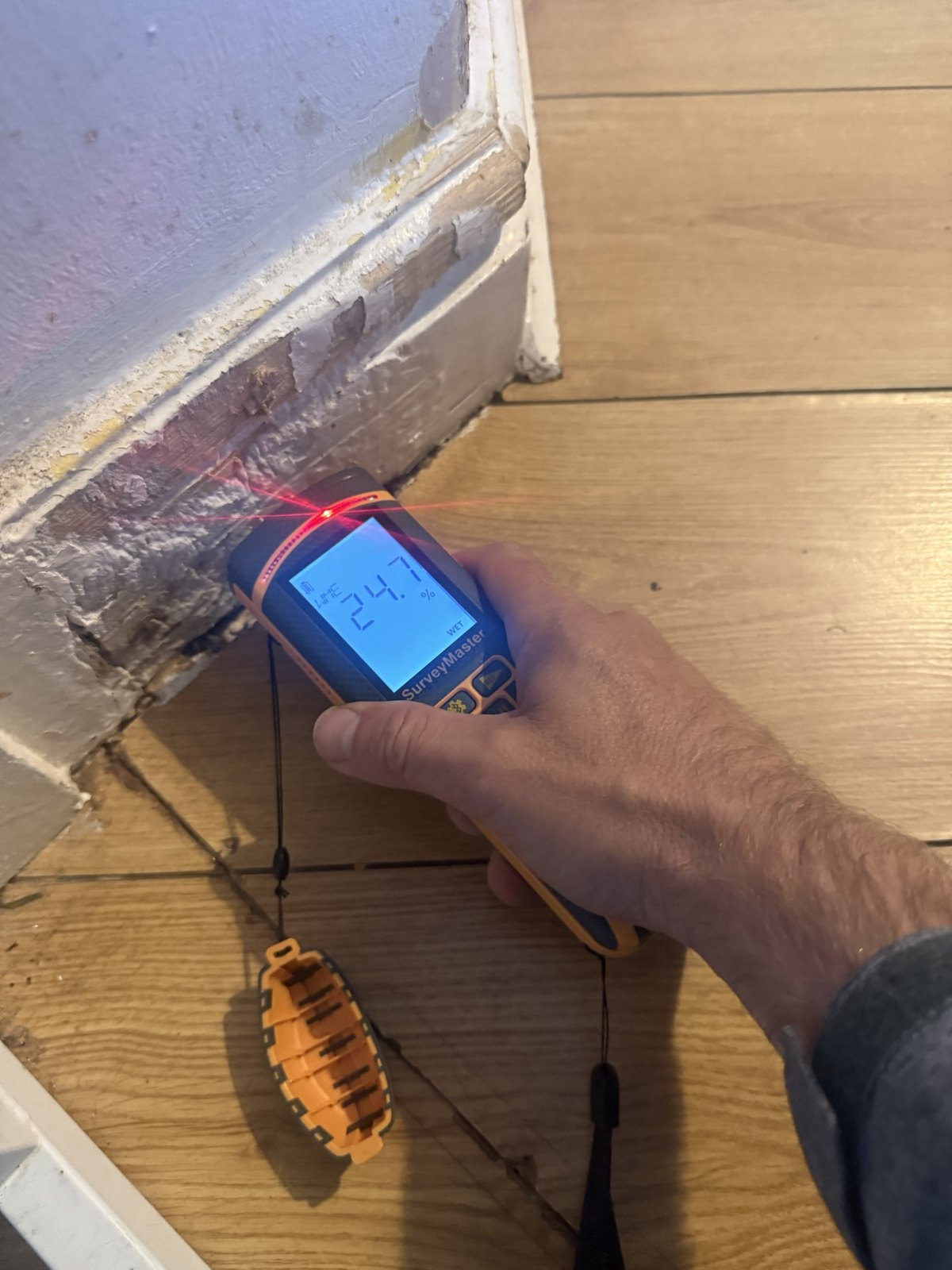
- Full internal assessment with pin and non-invasive moisture profiling
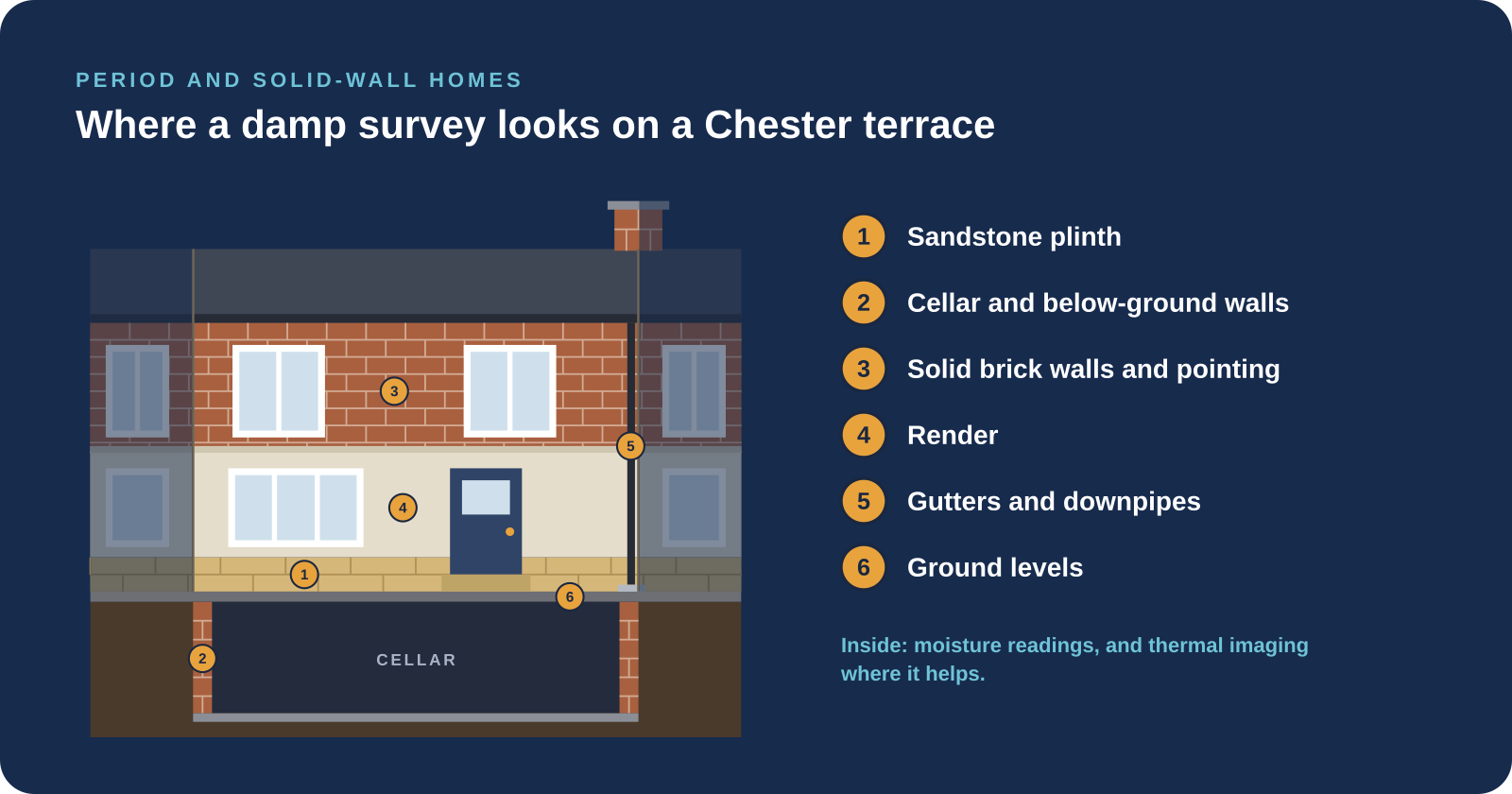
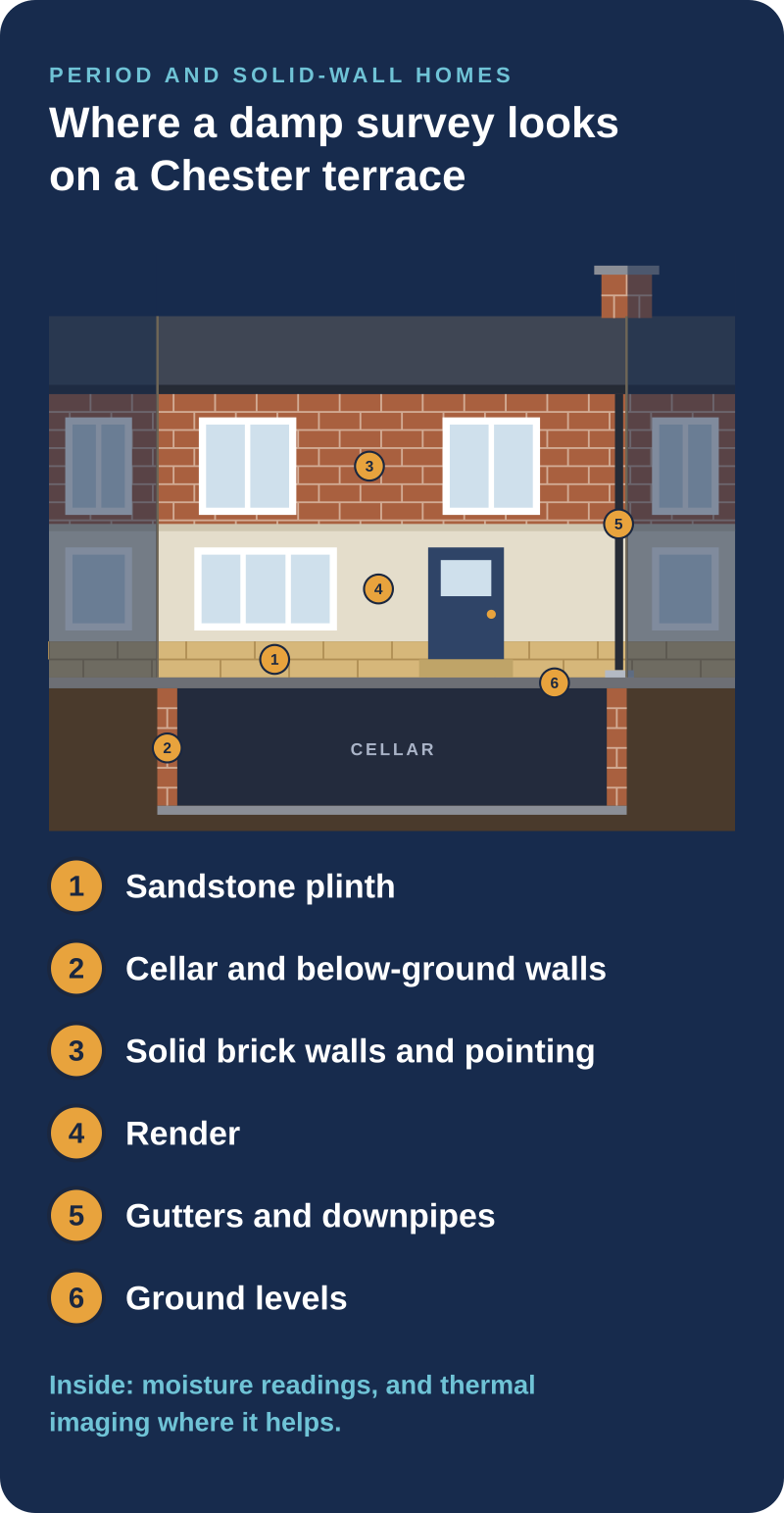
- External review of pointing, render, sandstone plinths, ground levels and rainwater goods
- Cellar and below-ground moisture assessment where applicable
- Thermal imaging where beneficial — effective for cold bridging in solid-wall terraces
- Diagnosis appropriate to period and listed buildings, including breathable-material recommendations
- Written report with photographs within 3 working days, plus an optional fixed-price remedial quotation


How a damp survey works


Who it is for
Who our Chester damp surveys are for

Homeowners and buyers
Damp Surveys for Chester Homeowners and Buyers
Damp in the house you live in, or in one you are buying. Chester’s period housing is highly sought after, and mortgage valuations on older terraces frequently carry damp-related retentions or conditions. A specialist pre-purchase damp survey sets out what was found and a quotation for the works, before you exchange. Buyers regularly use our reports to renegotiate, or simply to proceed with confidence. See our pre-purchase home buyers quote service.

Landlords
For Chester Landlords and Letting Agents
Our written report sets out the findings and the recommended repair, in a form suitable for your tenancy file.
Where remedial or structural work following a survey falls under the Building Regulations, applications in the city are handled by Cheshire West and Chester Council. We can advise whether your works require an application — and where listed building consent may also be needed.

Commercial premises
Commercial Damp Surveys in Chester
Damp surveys for shops, offices, care homes and schools. We survey the affected areas, and the written report sets out what was found and a quotation for the works. Our operatives are DBS checked. See commercial property maintenance.
Why Choose Quirks for Your Chester Damp Survey?
Chester contains a wide range of period, listed and conservation-area properties. Surveying damp in these buildings takes an understanding of solid-brick walls, sandstone plinths, traditional plaster, cellars and breathable construction materials.
Areas We Cover in Chester
We provide professional damp surveys throughout Chester and the surrounding villages, including:
Hoole, Boughton, Handbridge, Newton, Upton, Blacon, Saltney, Vicars Cross, Christleton, Huntington, Mickle Trafford, Saughall, Tarvin, Ellesmere Port, Little Sutton, Great Sutton and surrounding areas.
Postcode districts regularly covered include CH1, CH2, CH3, CH4, CH65 and CH66.
We cover North Wales, Cheshire and Wirral from the Deeside and Chester districts out to mid-Cheshire.
Chester — brick-built house
Recent damp survey in Chester
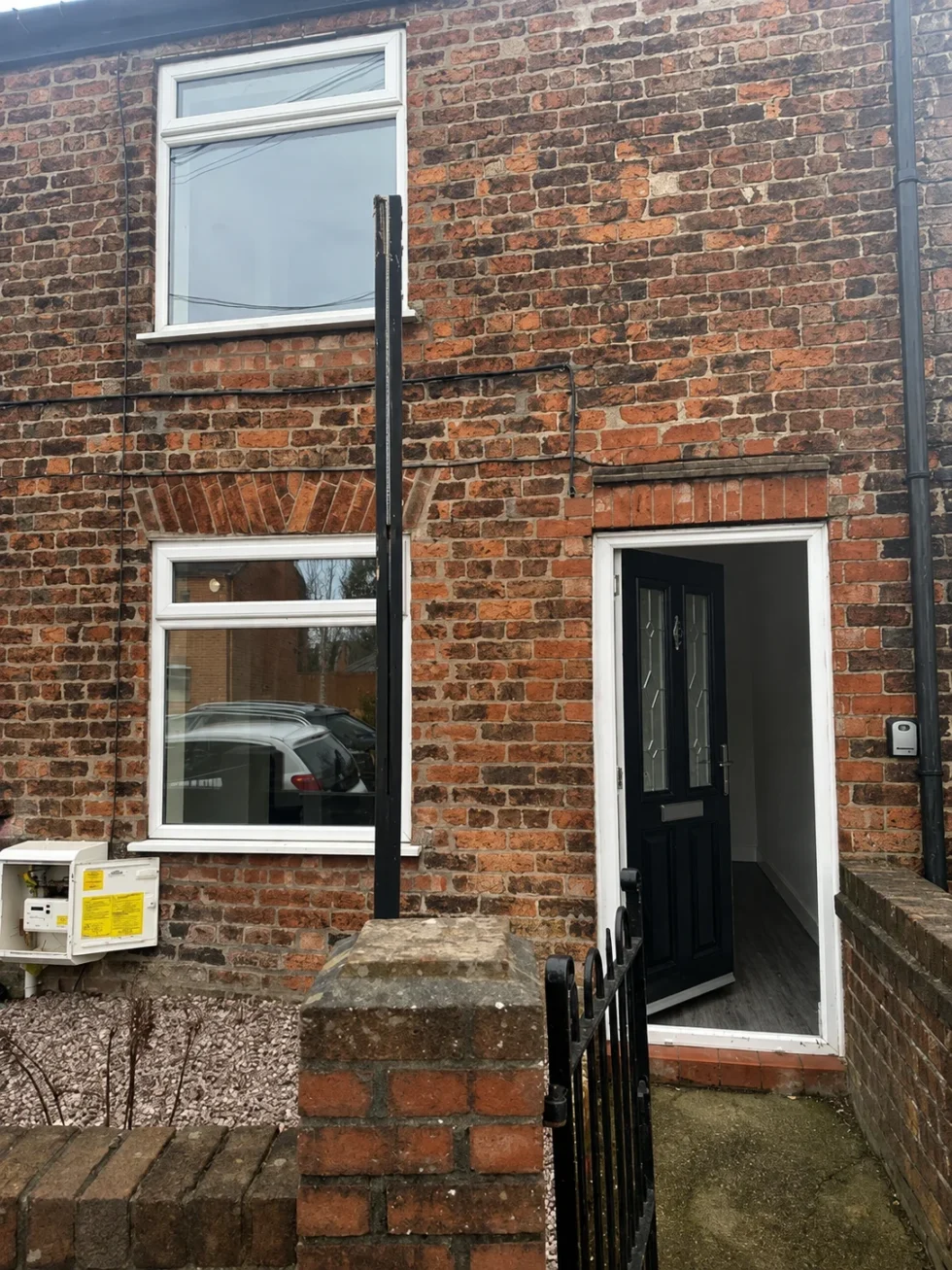
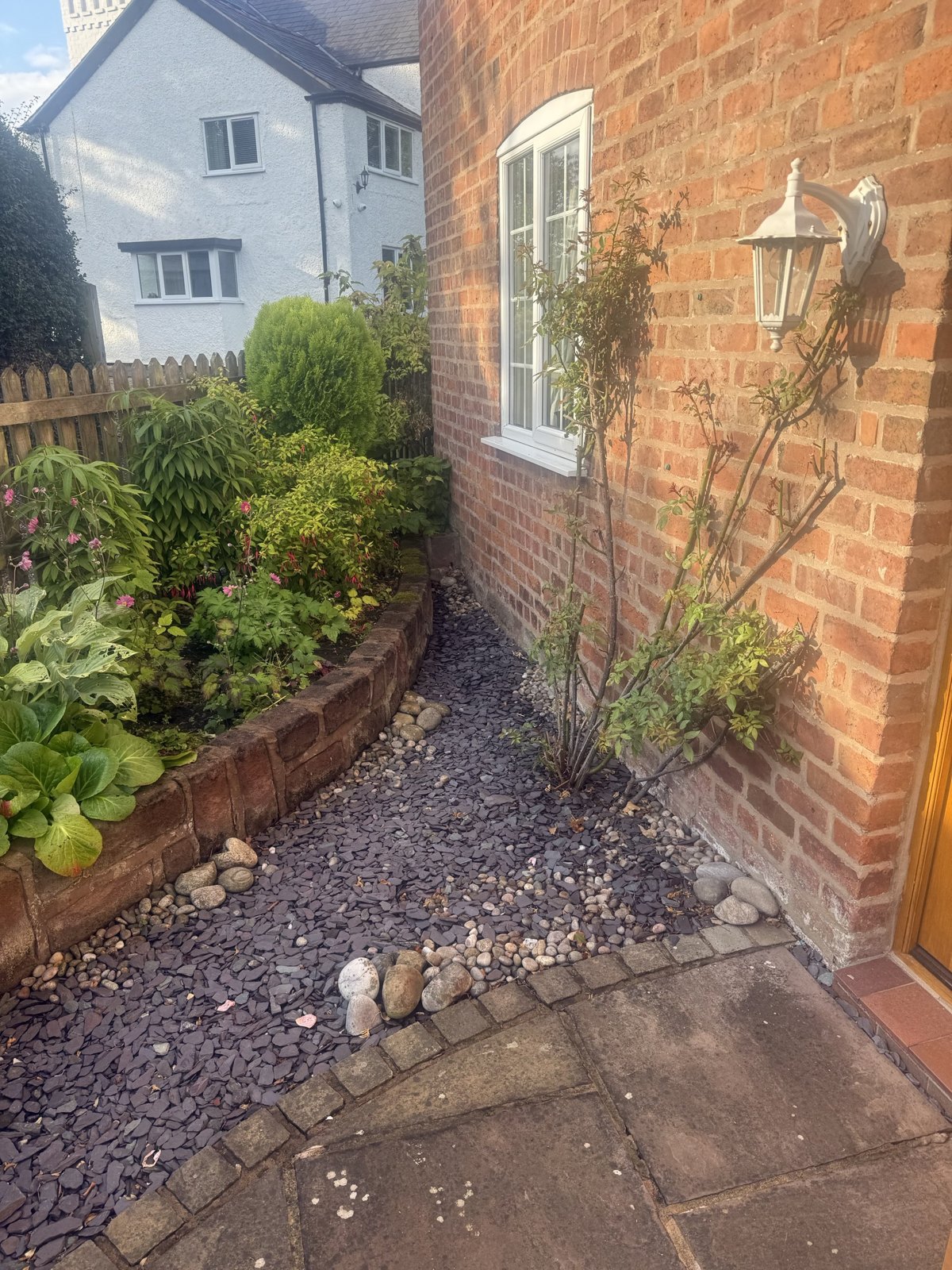
The owner of a brick-built house in Chester asked us to look at damp showing low down on the walls of three ground-floor rooms. The survey found the most likely cause outside, where the ground against the house had built up over time.

What was showing
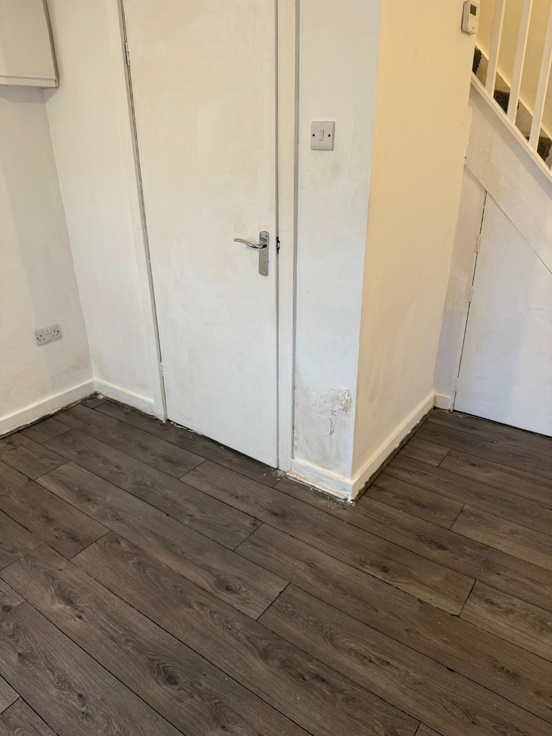
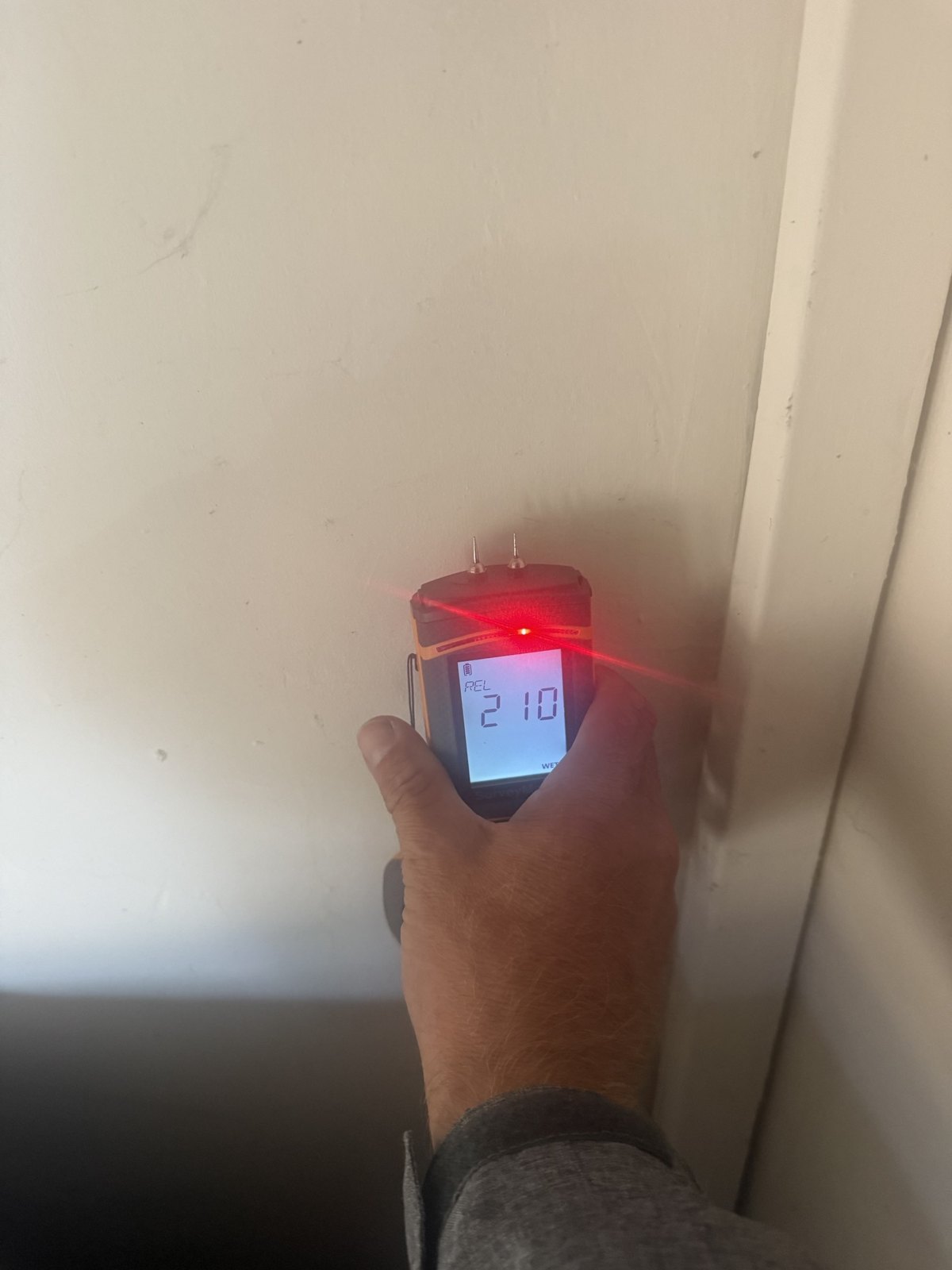
Damp was showing at low level in the dining room, the hallway and the living room.
Moisture meter readings were raised on the walls of all three rooms, with the highest readings low down. Readings are one part of the evidence, so the survey went on to the outside of the same walls.
What the survey found
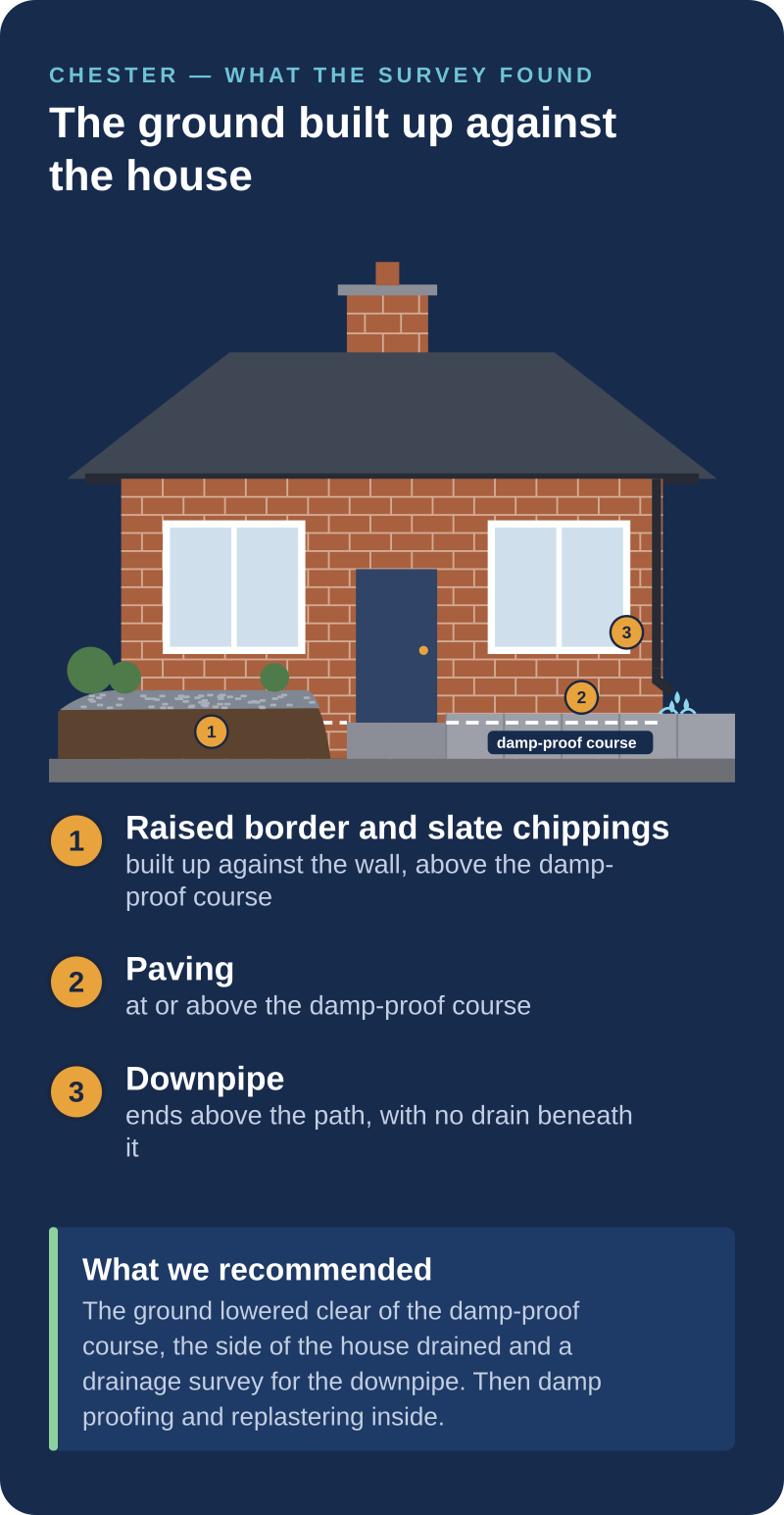
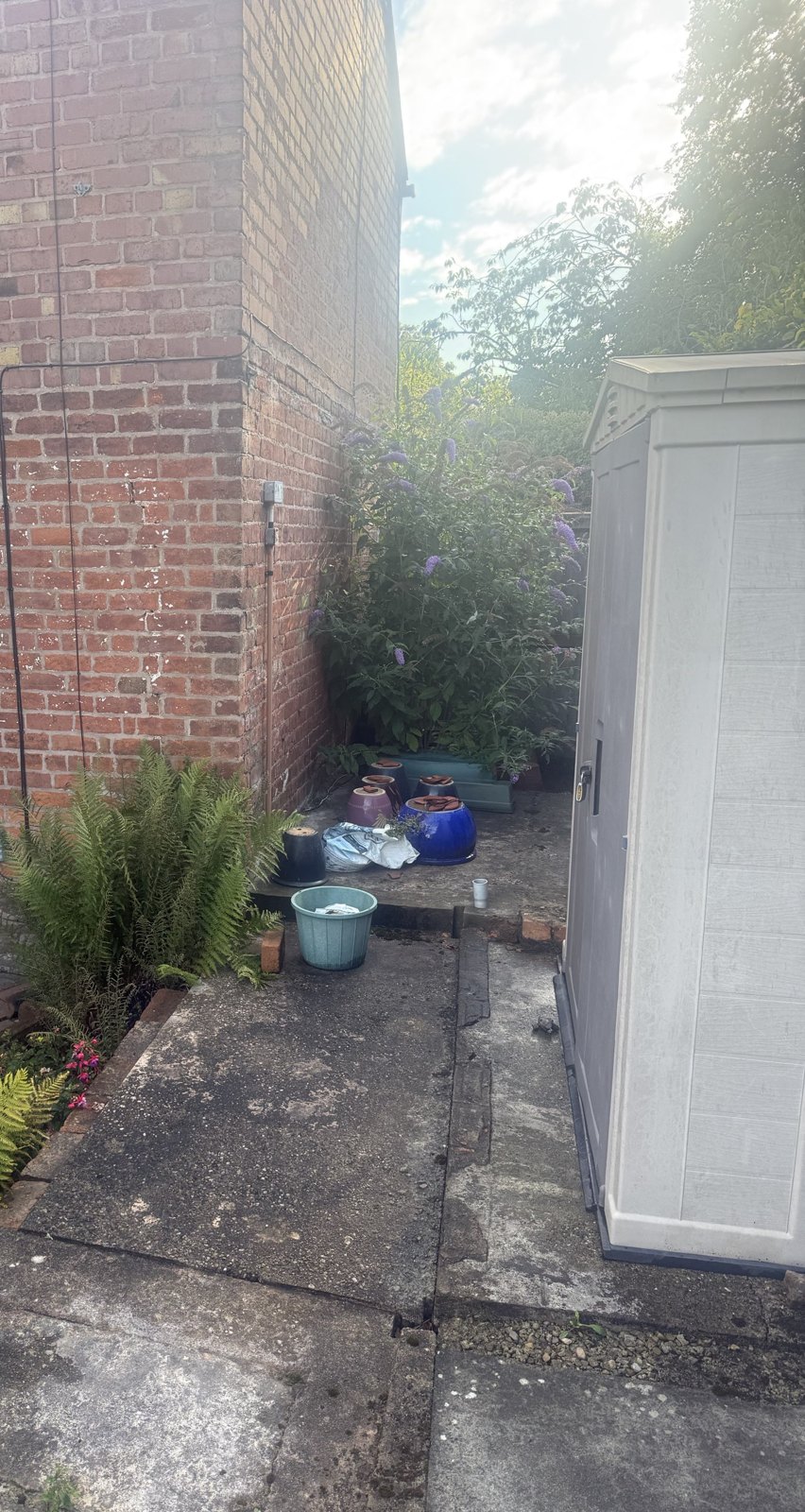
At the front and side of the house, planted borders, slate chippings and paving had been built up against the brickwork. The ground now sat at or above the damp-proof course, bridging it and letting moisture into the base of the walls.
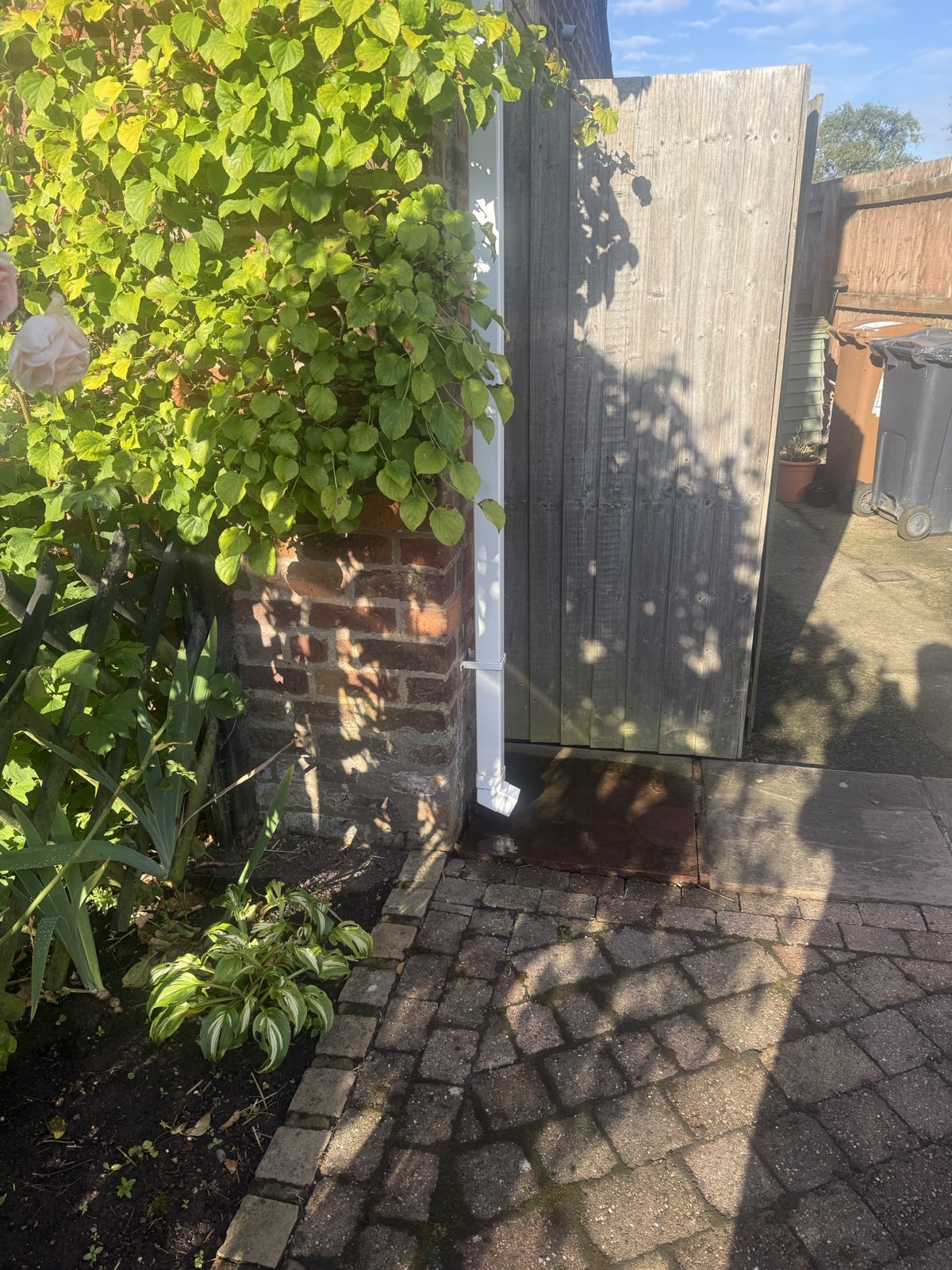
At the side of the house a rainwater downpipe ended above the path instead of running into a drain, putting more water down at the foot of the wall. The existing damp-proof course could not be seen without opening up, and the report said so.
What we recommended
The report dealt with the most likely cause first. It recommended lowering the ground along the affected walls so the damp-proof course sits clear, holding the planted border back, forming a drained trench along the side of the house, and a drainage survey to find the right connection for the downpipe.
It then set out the damp proofing and replastering for the affected walls inside, with the existing damp-proof course to be exposed and inspected once the ground was lowered.
This case study covers the survey and the written report.
What the survey covered
- Moisture meter readings to the dining room, hallway and living room walls
- Ground levels and the damp-proof course line checked at the front and side of the house
- Rainwater downpipes followed to where they discharge
- A written report with photographs, setting out the most likely cause
- Recommendations and a quotation for the works
Project Information
| Issue | Damp at low level in three ground-floor rooms |
|---|---|
| Service | Damp survey with written report and quotation |
| Findings | Ground levels at the front and side at or above the damp-proof course; a downpipe discharging onto the path |
| Recommended | Ground lowered clear of the damp-proof course; a drained trench; a drainage survey for the downpipe; damp proofing and replastering to the affected walls |
| Property | Brick-built house |
| Location | Chester |
What customers say
★★★★★ 5.0 · 150+ Google reviews
- ★★★★★
“Fantastic service and a company we would highly recommend. We used Quirks to resolve a long standing damp problem in our old Victorian house. We have had a new roof, replaced guttering and soil pipes but the wall remained wet. They resolved the problem by repointing the outside wall. The team arrived just after 7 each morning and worked until dark. They cleaned up each day and were always friendly and helpful. We’ll definitely use their services again”
SB CB
- ★★★★★
“Great job. Efficient, polite, tidy workers. Very happy with the damp proofing and plastering. Highly recommend!”
Andrew Jaworski
- ★★★★★
“The standard of workmanship we received from Quirks Property maintenance was second to none,Workmen arrived on the dot each day and thoroughly cleaned up each evening.If we should need any further work doing in the future, Quirks would certainly be our first choice. Cannot recommend this company highly enough and would not hesitate to recommend their work ethic.Very pleased with the results.Thanks Quirks.”
Sue Longworth
Your questions
Frequently Asked Questions
Can you survey listed buildings and homes in conservation areas?
Yes. Period and listed buildings are exactly where specialist diagnosis matters most, and our surveys are designed for them. Our recommendations favour breathable, conservation-appropriate materials and methods, and our reports flag where proposed remedial works may need listed building consent before anything is specified.
My mortgage valuation mentioned damp — what should I do?
Book a specialist damp survey before exchange. Valuation comments are usually based on a surface meter reading and say nothing about cause or cost. Our report sets out both, giving you evidence to renegotiate or proceed with confidence.
Is damp in a sandstone plinth the same as rising damp?
Not necessarily. Chester’s sandstone absorbs moisture readily and can give high readings at low level even where the DPC above is sound. Treating it as DPC failure wastes money — the survey distinguishes the two.
Do you assess cellars and basements?
Yes — including moisture mapping before cellar conversions, and diagnosis of existing below-ground damp in Georgian and Victorian cellars across the city centre, Garden Quarter and Handbridge.
What happens if the survey finds penetrating damp?
The report sets out where repairs are needed — pointing, flashing, render, gutters or chimney — and the repair we recommend. For detail on how we investigate and fix it locally, see penetrating damp.
Survey content reviewed by Michael Quirk, Director and FOD Certified Damp Surveyor.
How it works
Send us photos of your damp problem
Send us photos on WhatsApp or by email and we’ll advise the next steps. Take them from the ground — never from a ladder. The damp patch close up, the whole wall it is on, and the same wall from outside, with any surveyor’s or mortgage valuer’s comments.
Photograph the damp close up, the whole wall, and the outside of the same wall
Send them on WhatsApp or by email with your postcode, and any surveyor’s or engineer’s report. If they don’t show enough, we’ll tell you what else we need
We look at what you have sent and what it points to
We advise the next step — usually a damp survey — and what it costs
Once you accept, we agree a date for the survey

Request a quotation
Send us your photographs and a few details and we’ll advise the next steps.
DAMP SURVEYS — CHESTER & ELLESMERE PORT