Specialist Building & Property Maintenance Services You Can Depend On.


 5.0★★★★★Based on 150+ Google reviews
 Trading since2008
 £5 millionpublic liability insurance in place
 Workmanship guarantee on completed works
 One contractorAll trades under one roof










Why pointing fails on the Wirral
On the Wirral the wind comes off Liverpool Bay and the Dee, and it carries rain and salt with it. A wall that faces it is wet more often than it is dry. As the mortar dries, the salt comes out in the face of the joint and breaks it up from the inside. New Brighton, Wallasey, Hoylake and West Kirby take the worst of it, but exposed gables and chimneys well inland go the same way.
Much of the Wirral was built before cavity walls: Victorian and Edwardian terraces in Wallasey, Liscard and Birkenhead, larger houses in Oxton and Prenton, and sandstone in the older villages. These were built in lime. Where they have been patched in hard cement, the cement holds the water in and the brick or stone beside it starts to go.
Signs to look for
- Joints worn back or open on the side that faces the sea
- Mortar that crumbles to sand when you touch it
- Hard cement patches on an older brick or sandstone wall
- Brick or stone faces flaking beside the joints
- Cracked or loose brickwork over a window or door
- Damp inside on a gable or chimney breast wall
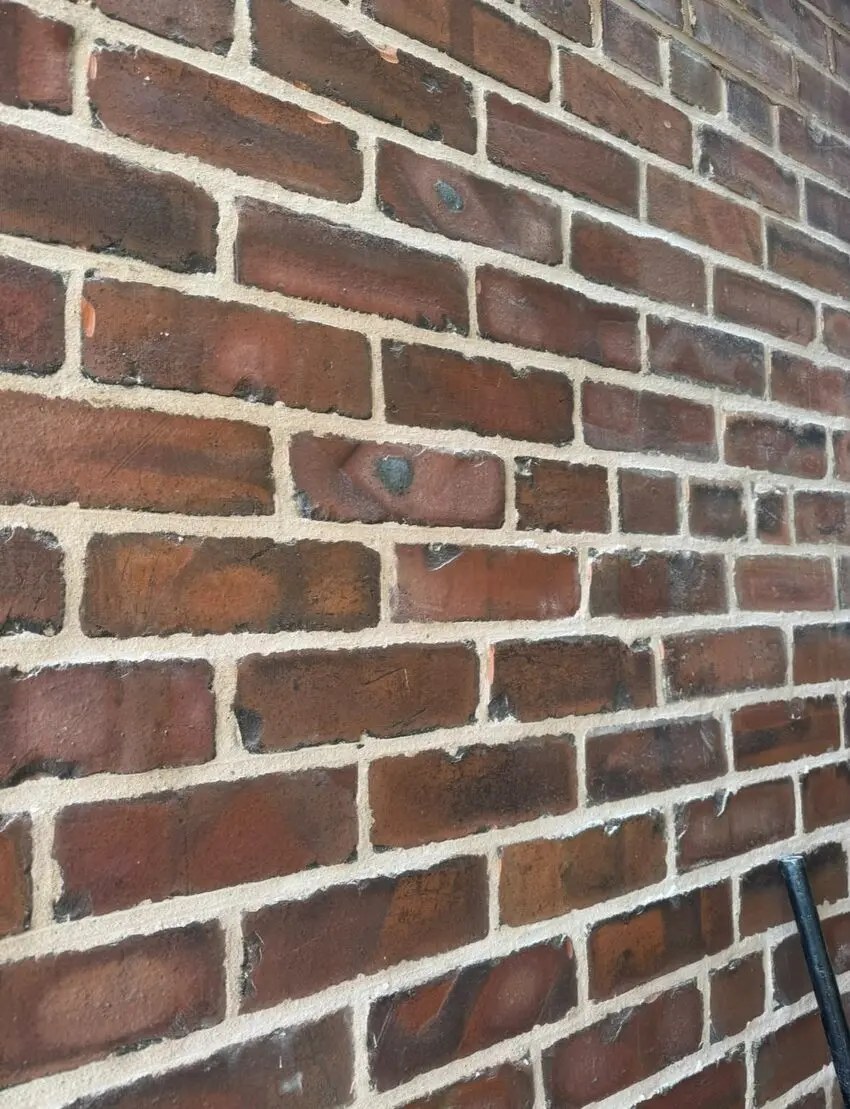
Wallasey, Wirral — older brick house
Recent repointing project in Wallasey
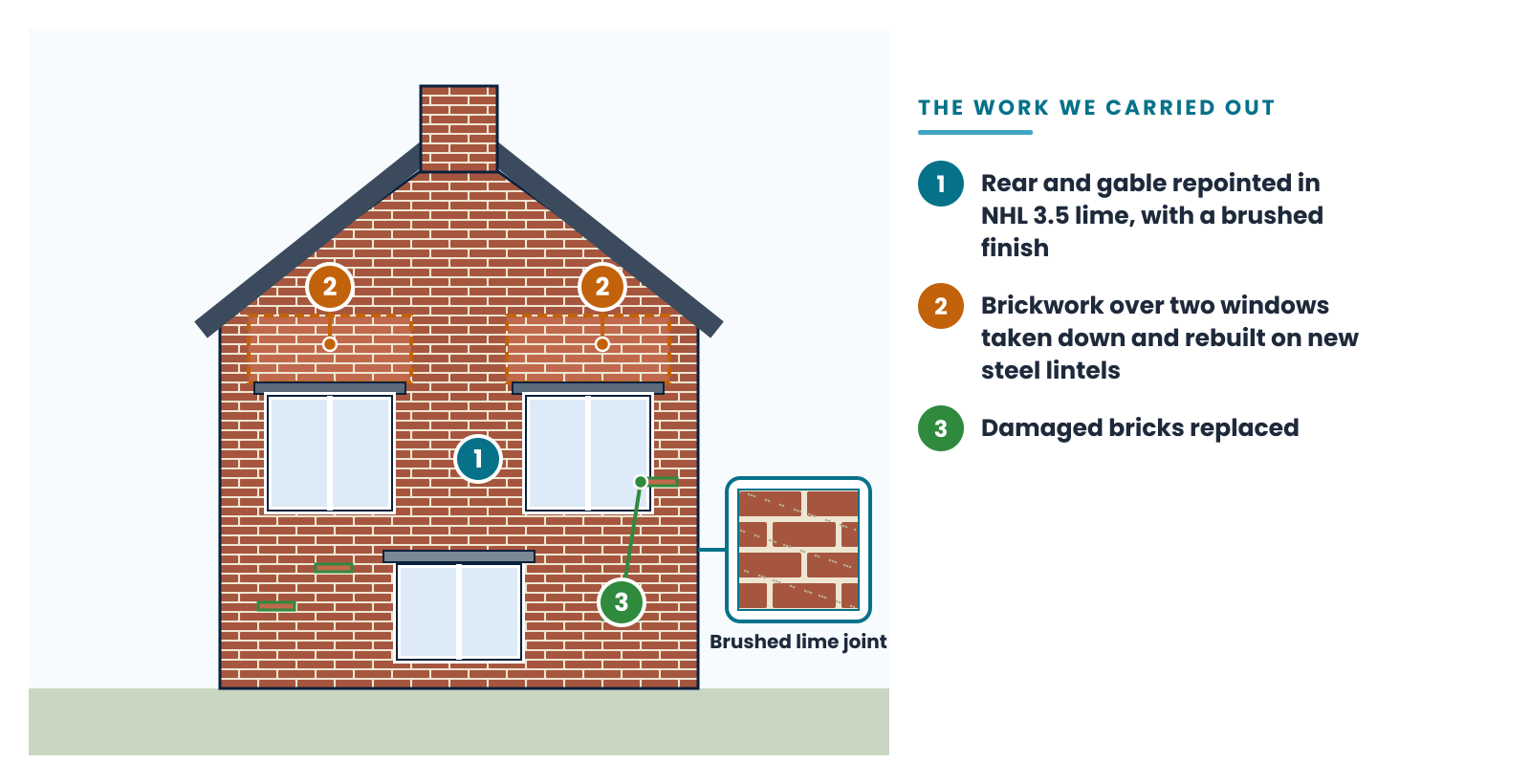
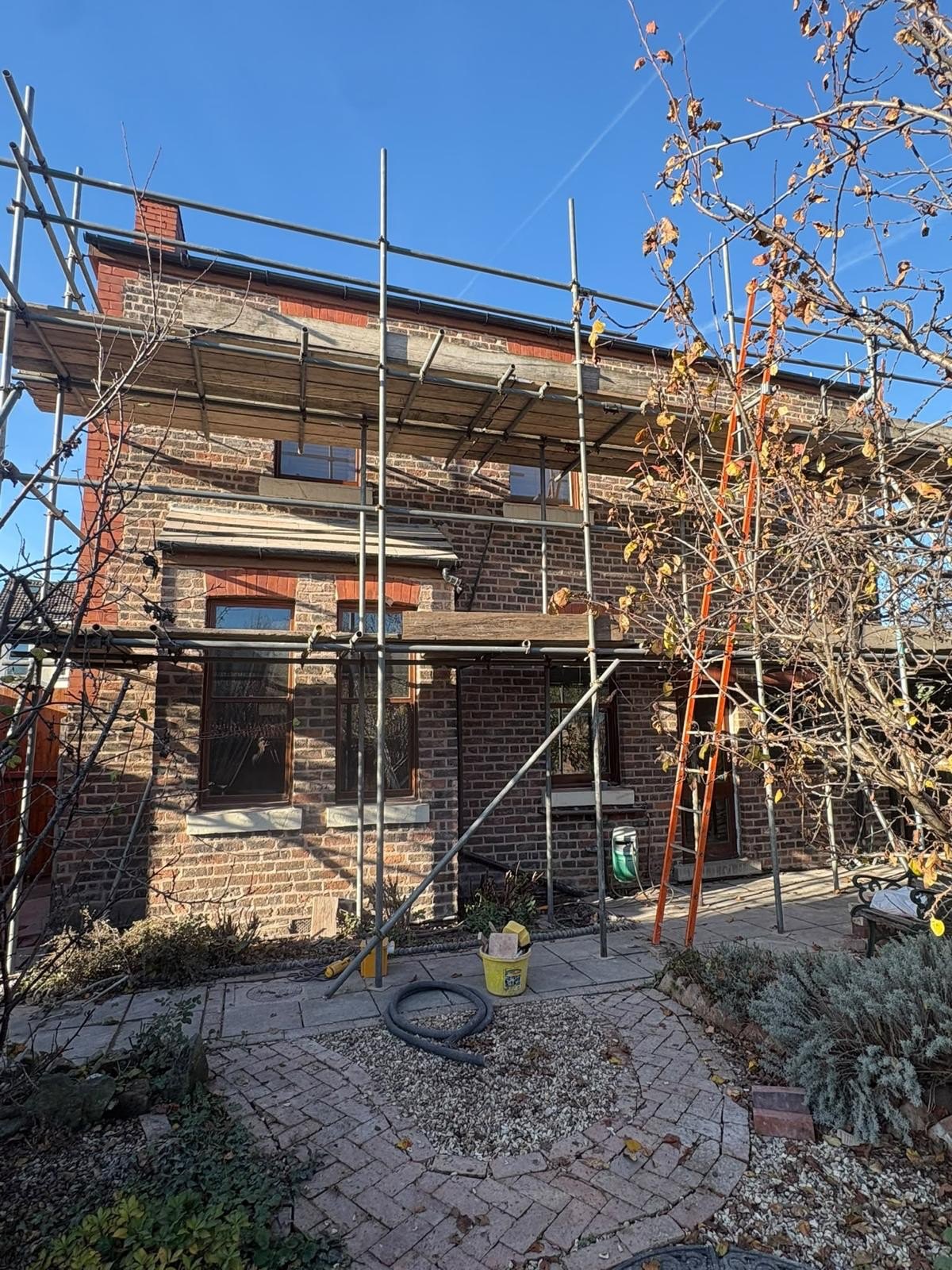
The back and the gable of this older brick house in Wallasey were repointed in lime mortar. Once the scaffold was up, the brickwork over two window openings was found not tied in, so it was taken out and rebuilt on new lintels before the pointing went on.
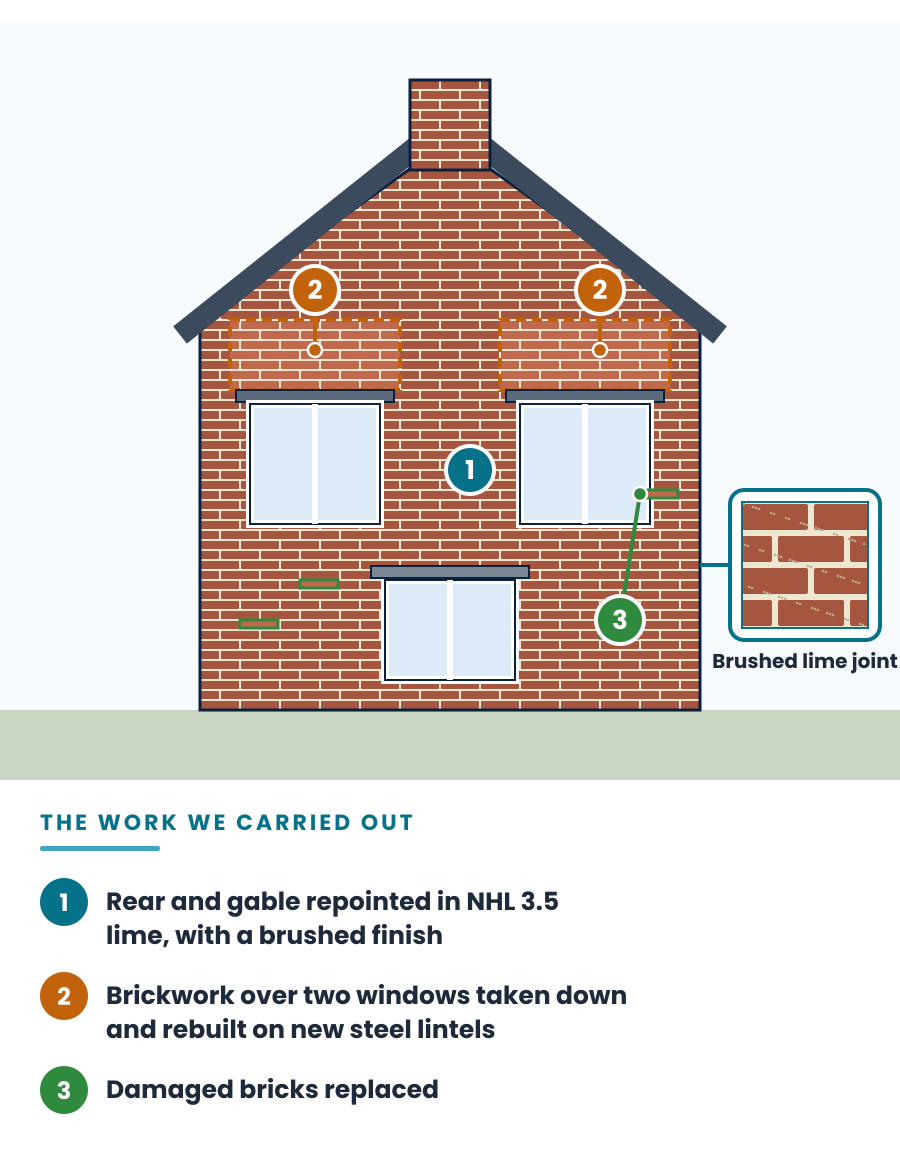
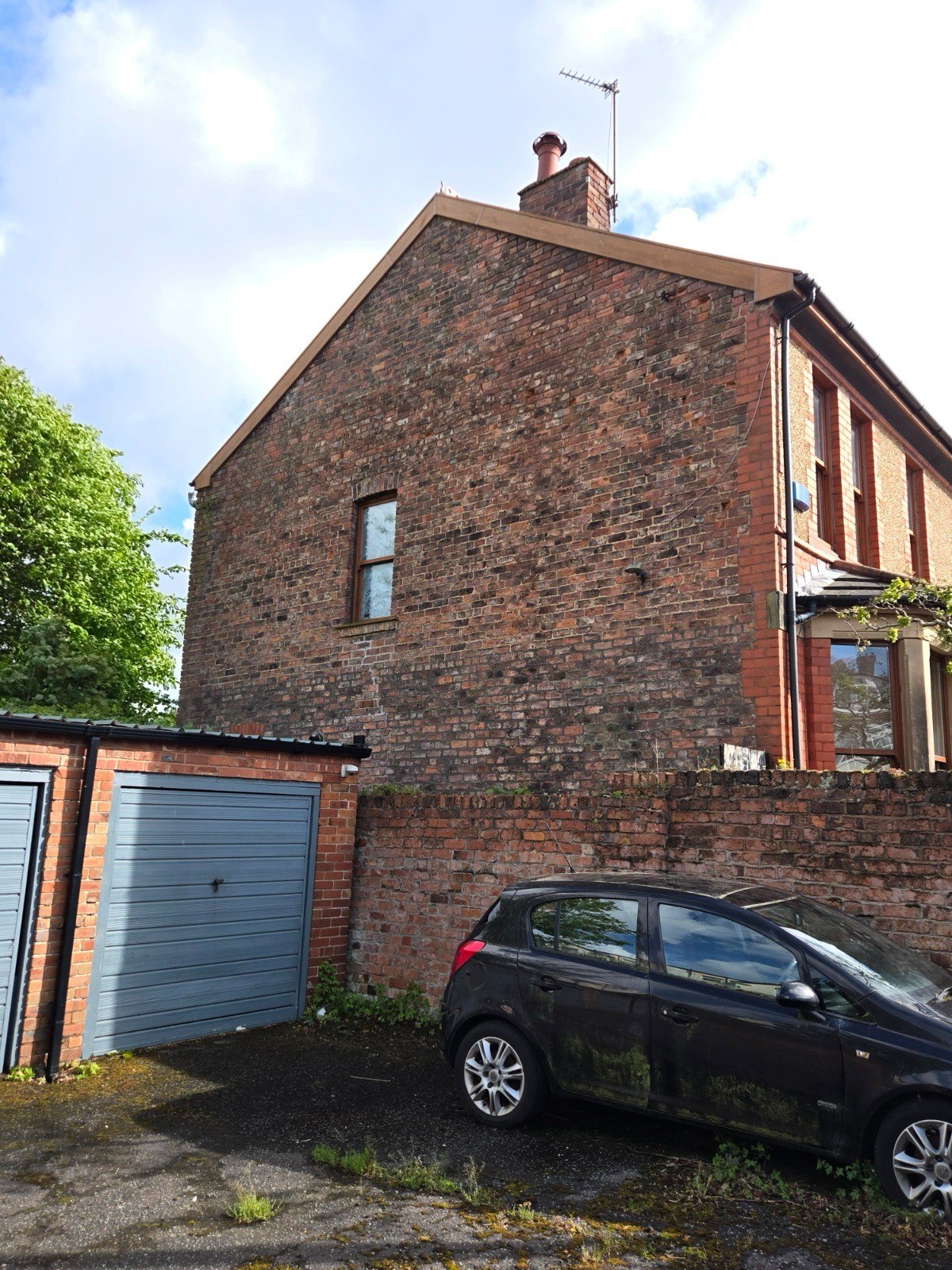
Worn joints to the back and the gable
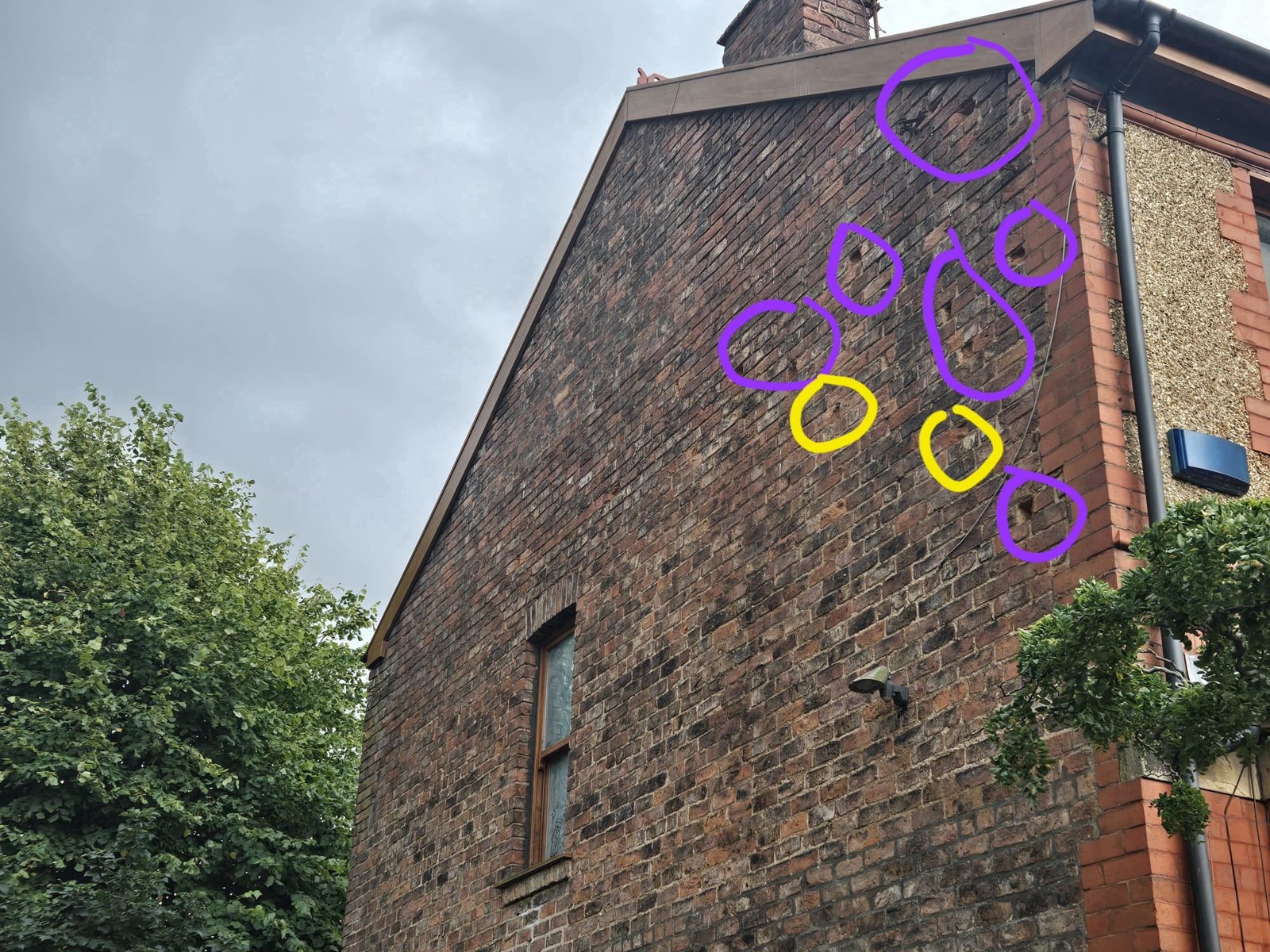
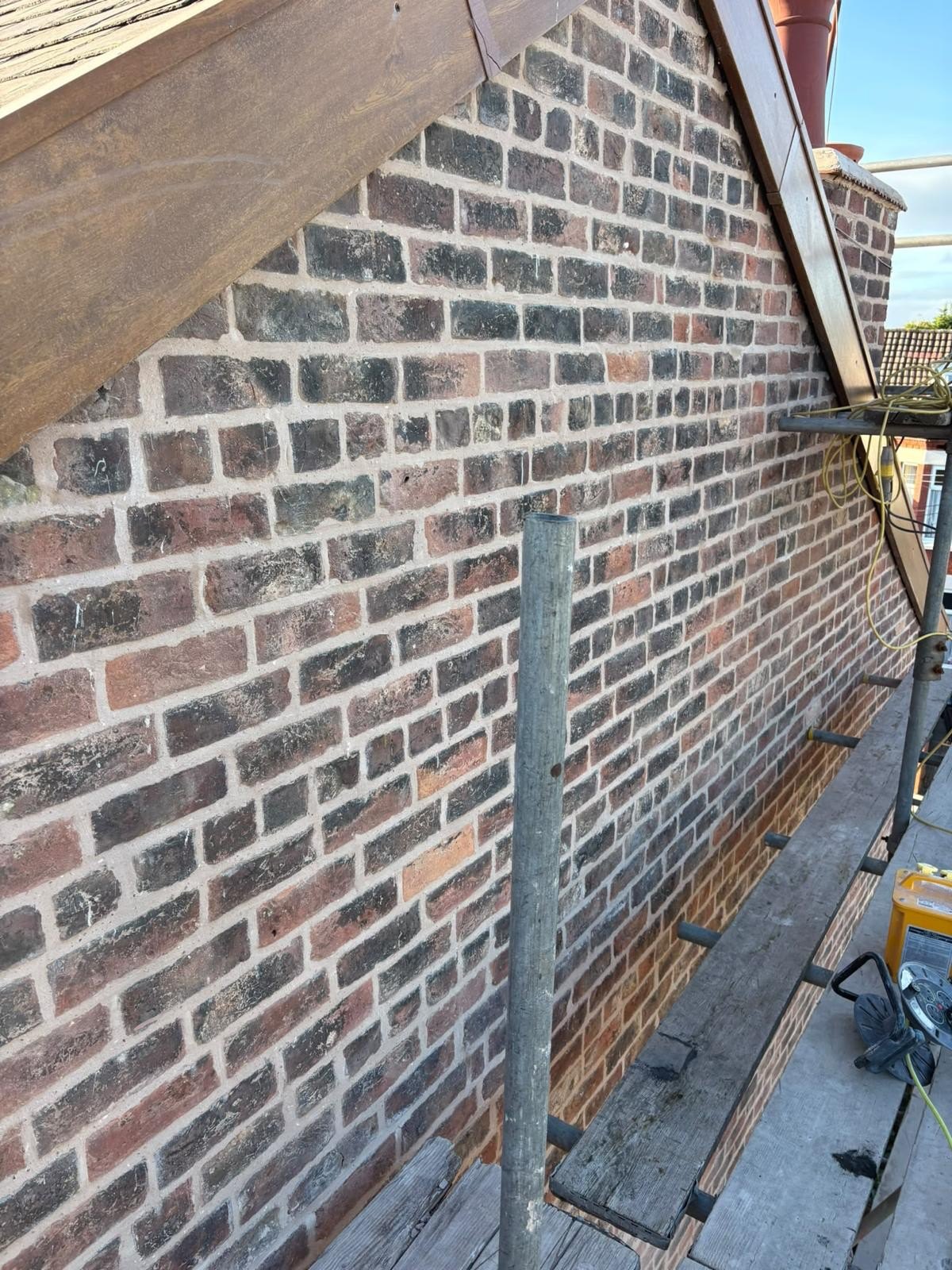
The joints on the rear and gable walls had worn back, and bricks on the gable had lost their faces. The owner’s photographs were marked up to show which areas and which bricks were in the quotation.
The marked-up gable photograph is one of those: each circle is a brick to come out.
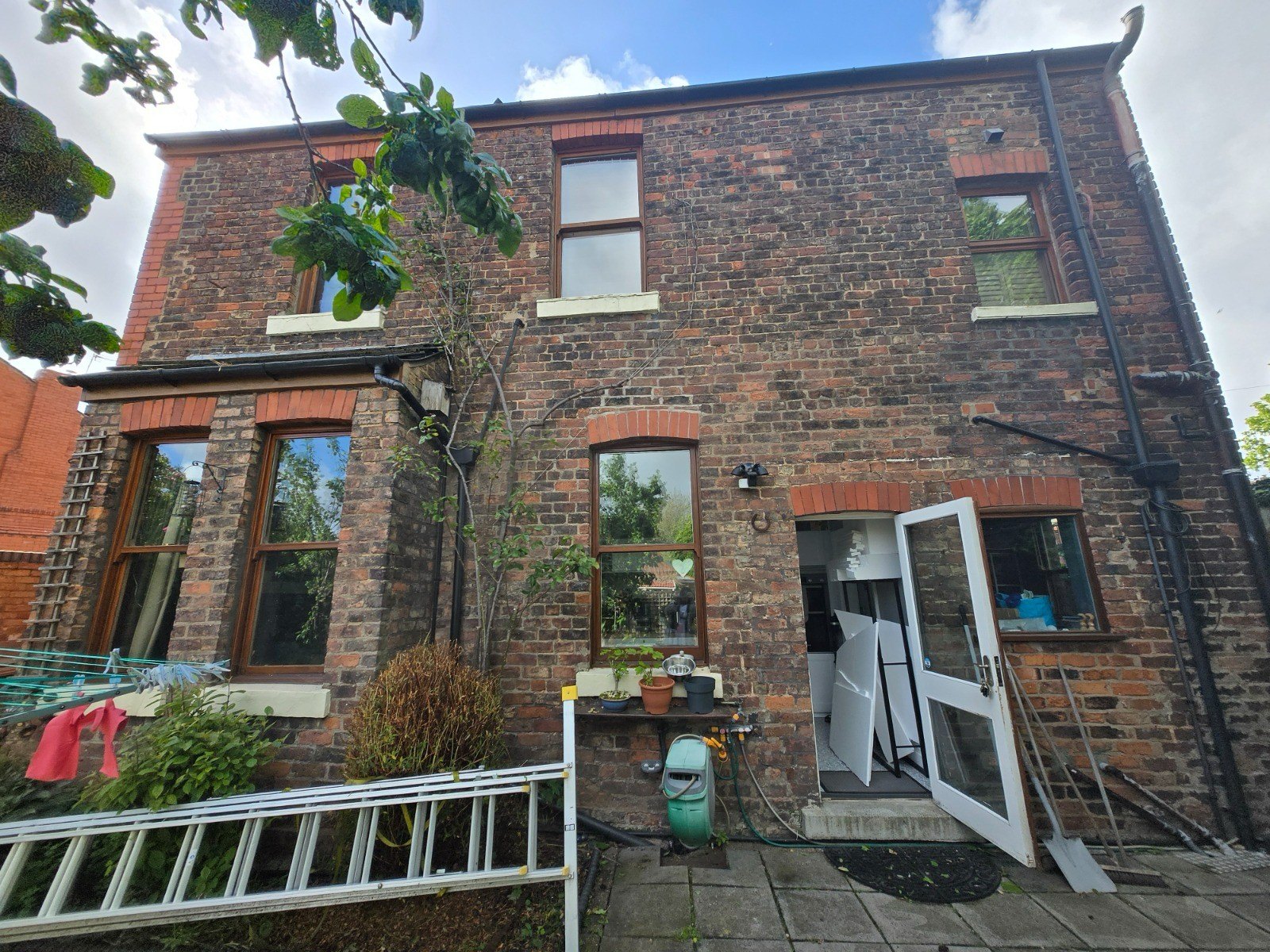
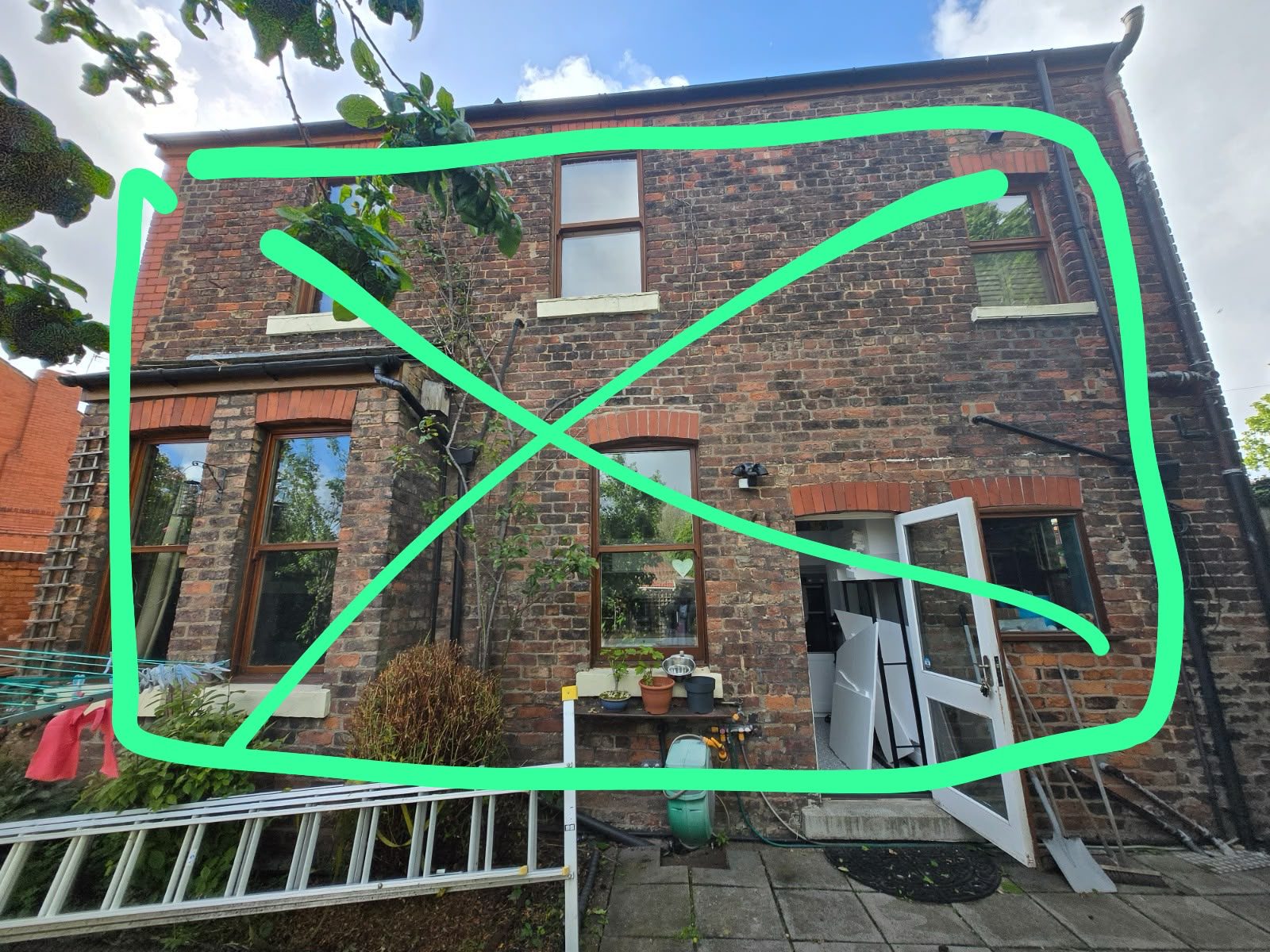
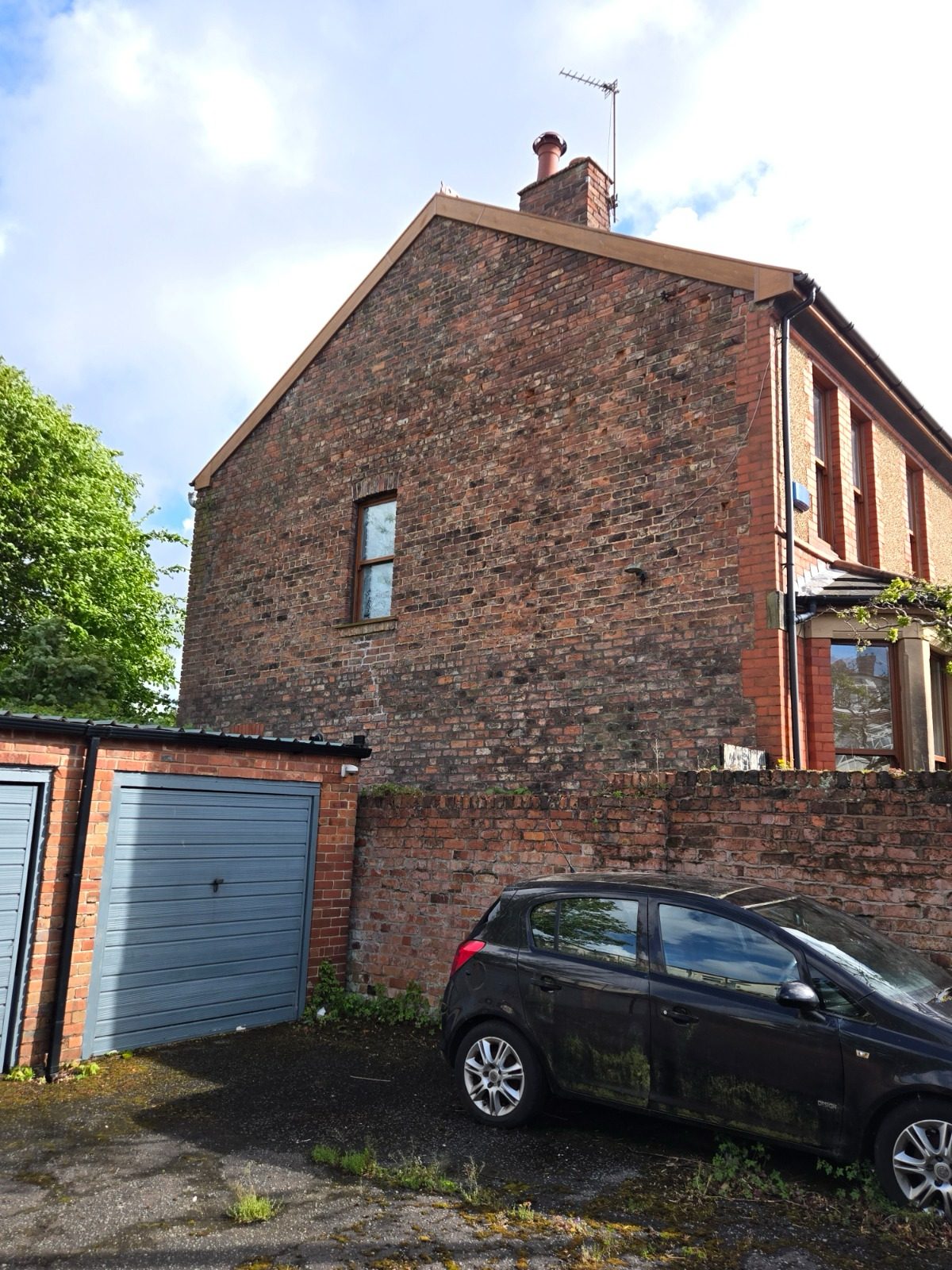
Found from the scaffold
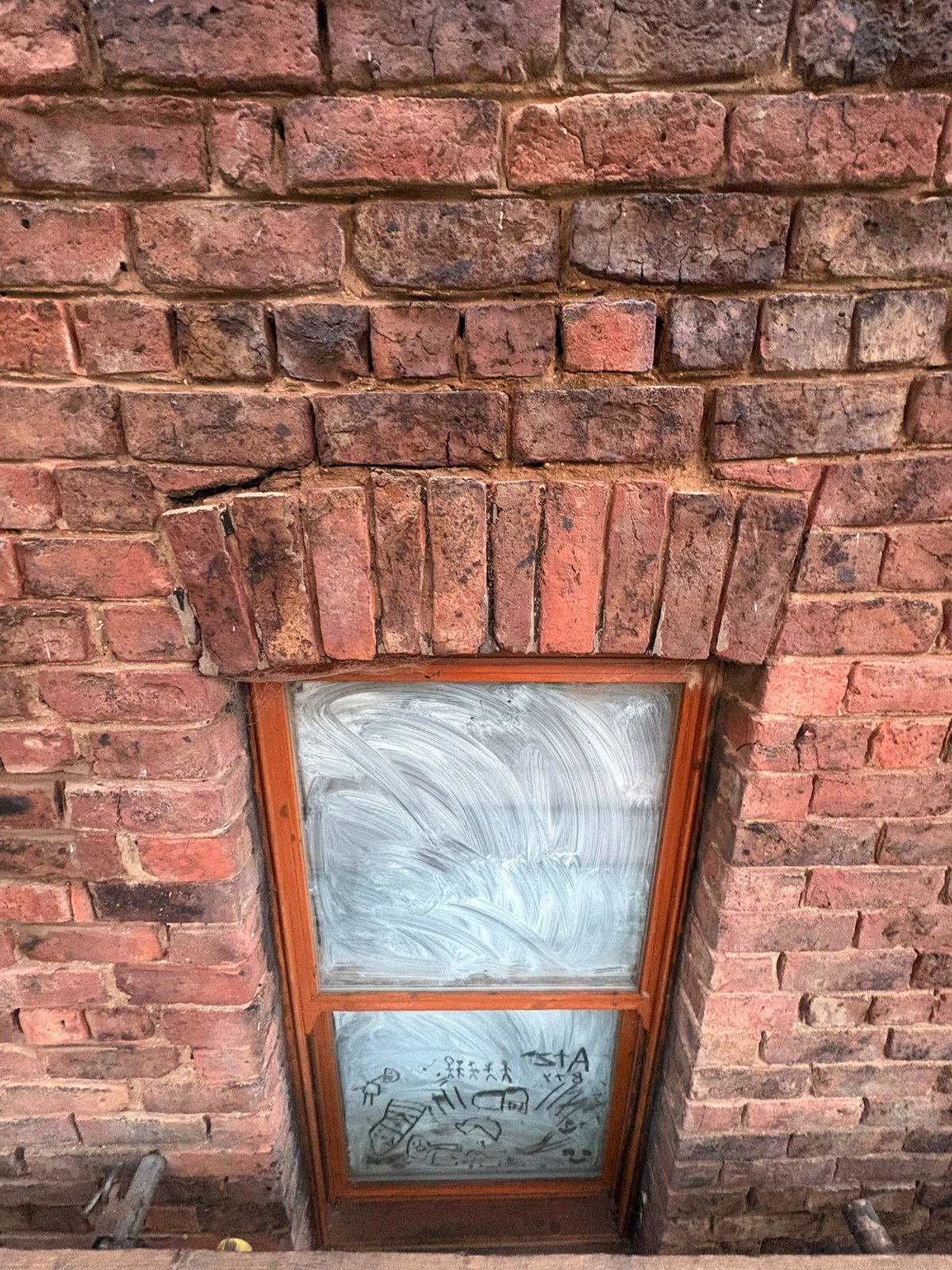
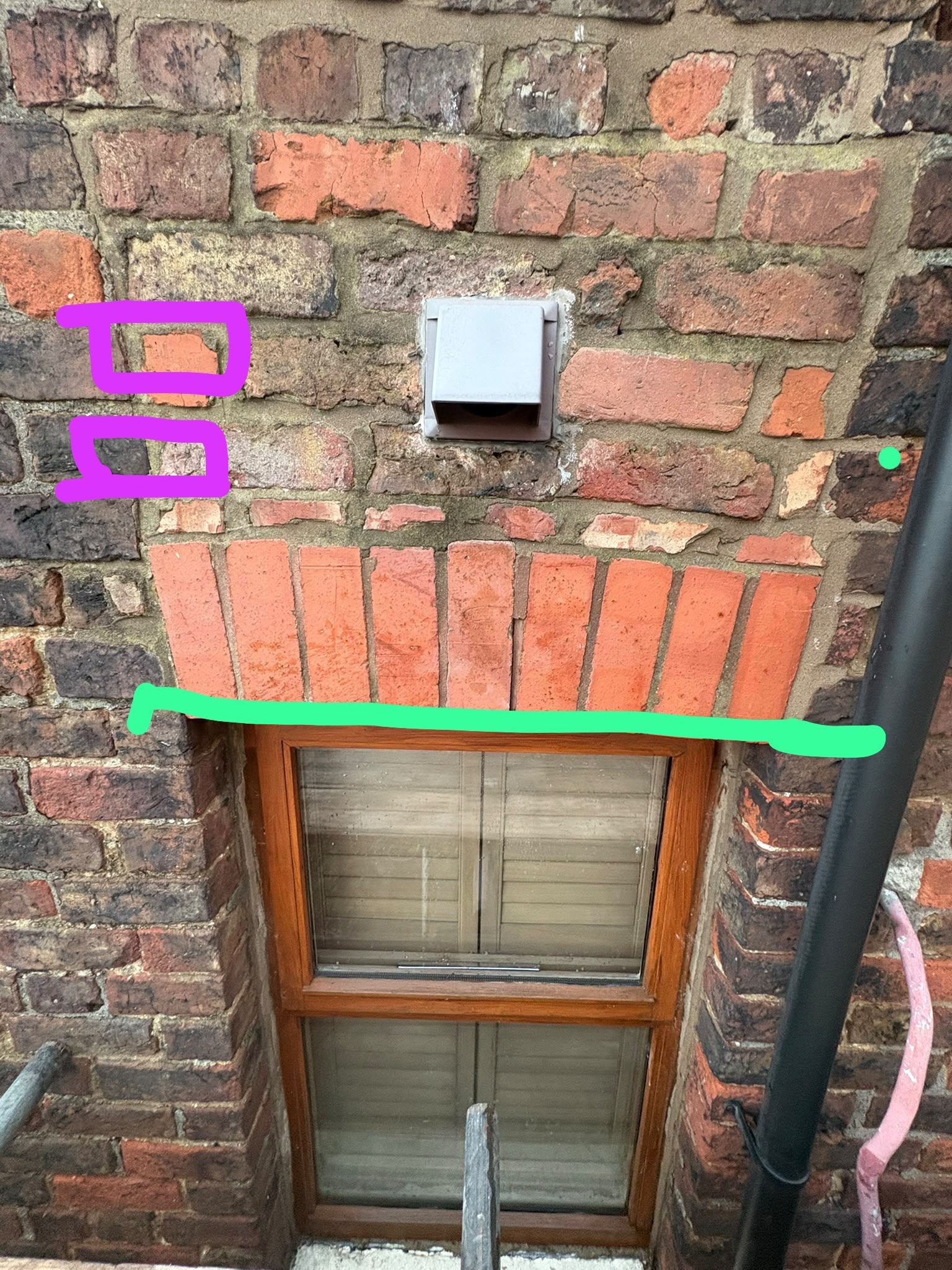
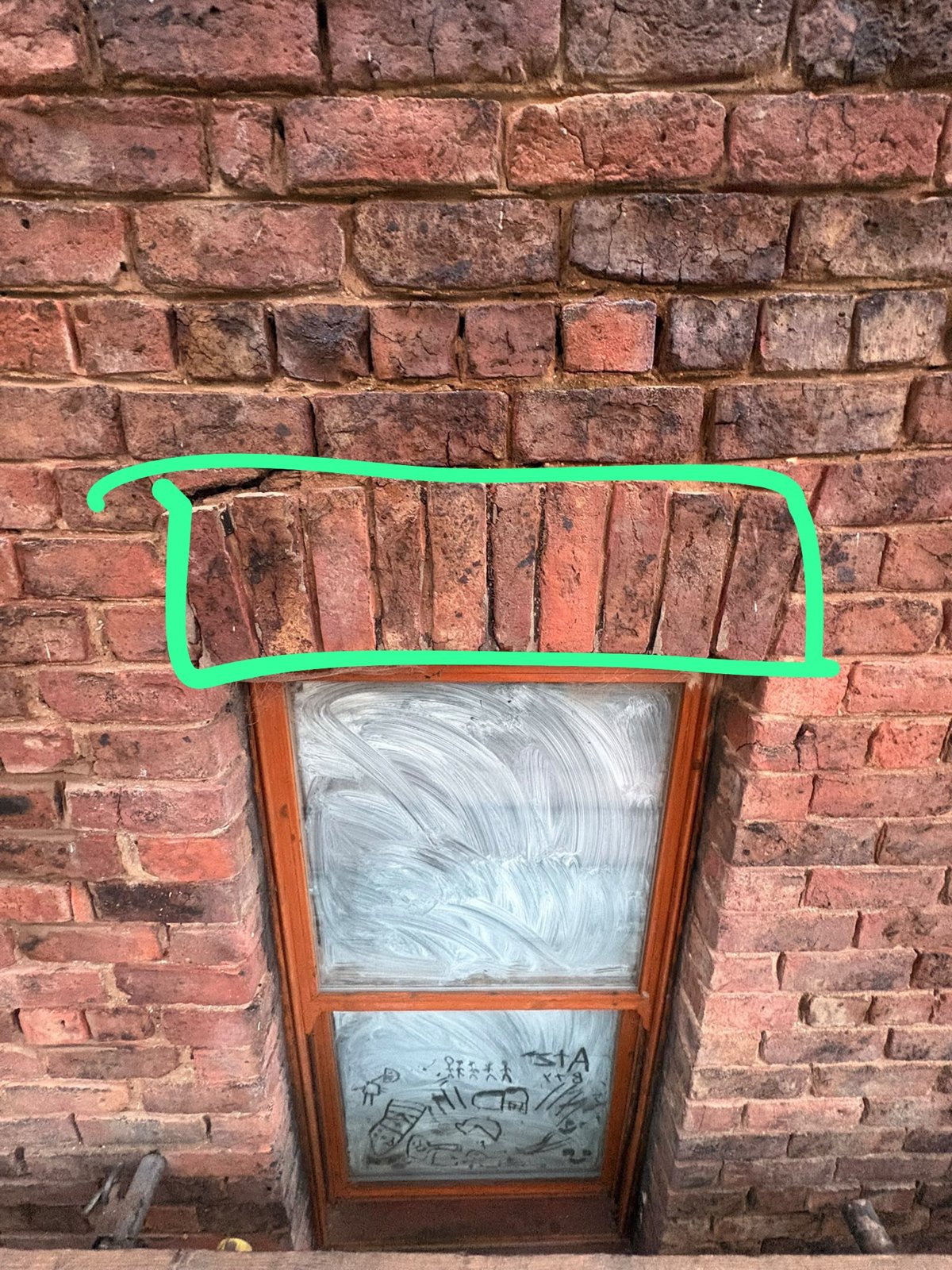
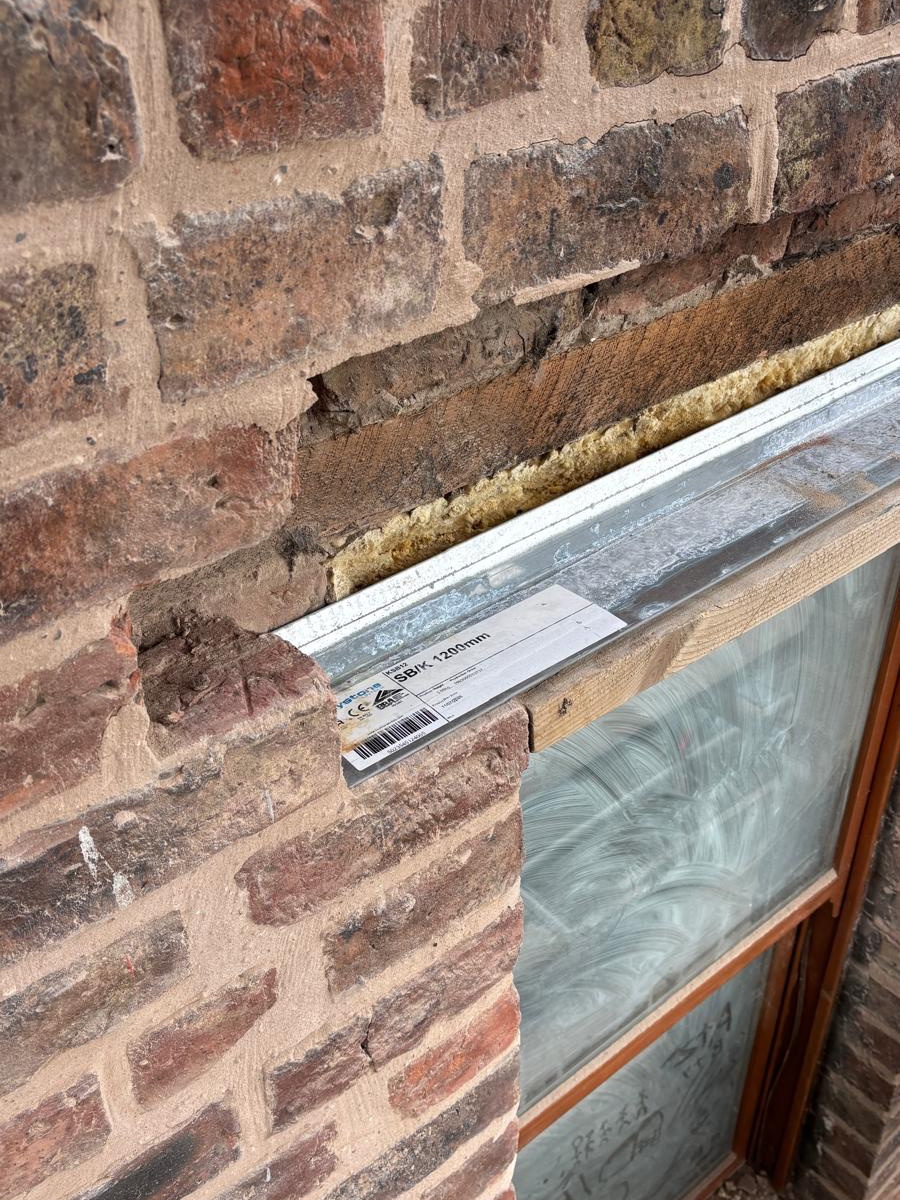
With the scaffold up, the brickwork over two of the window openings, one of them a bathroom window, was found not tied in and unsafe. It was photographed, the photographs were sent to the owner, and the extra work was priced on site before anything was touched.
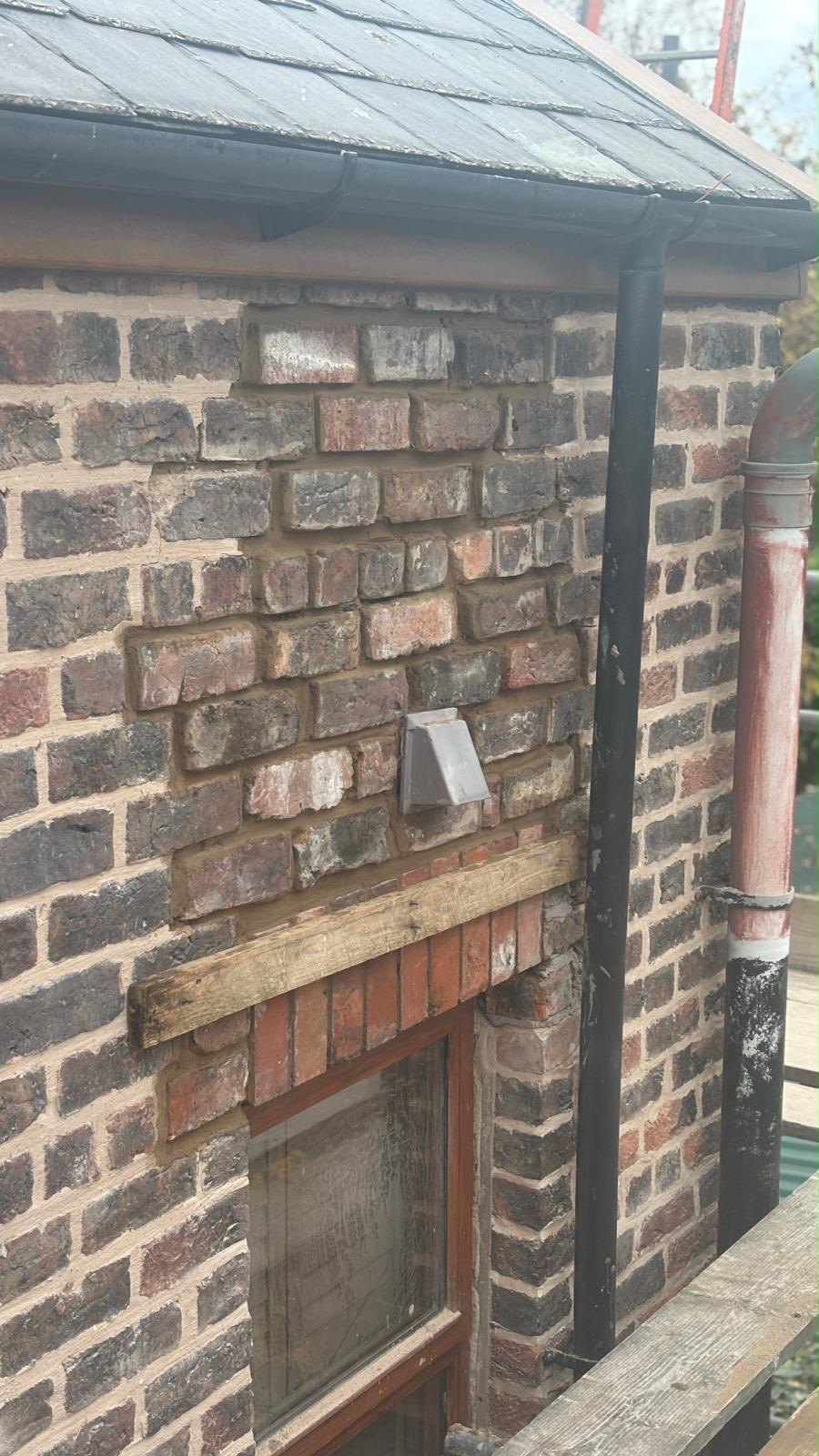
The loose brickwork was taken out, a new steel lintel fitted over each opening and the bricks rebuilt above it. Up to twenty bricks were cut out and replaced on the gable.
Repointed in lime, brushed finish
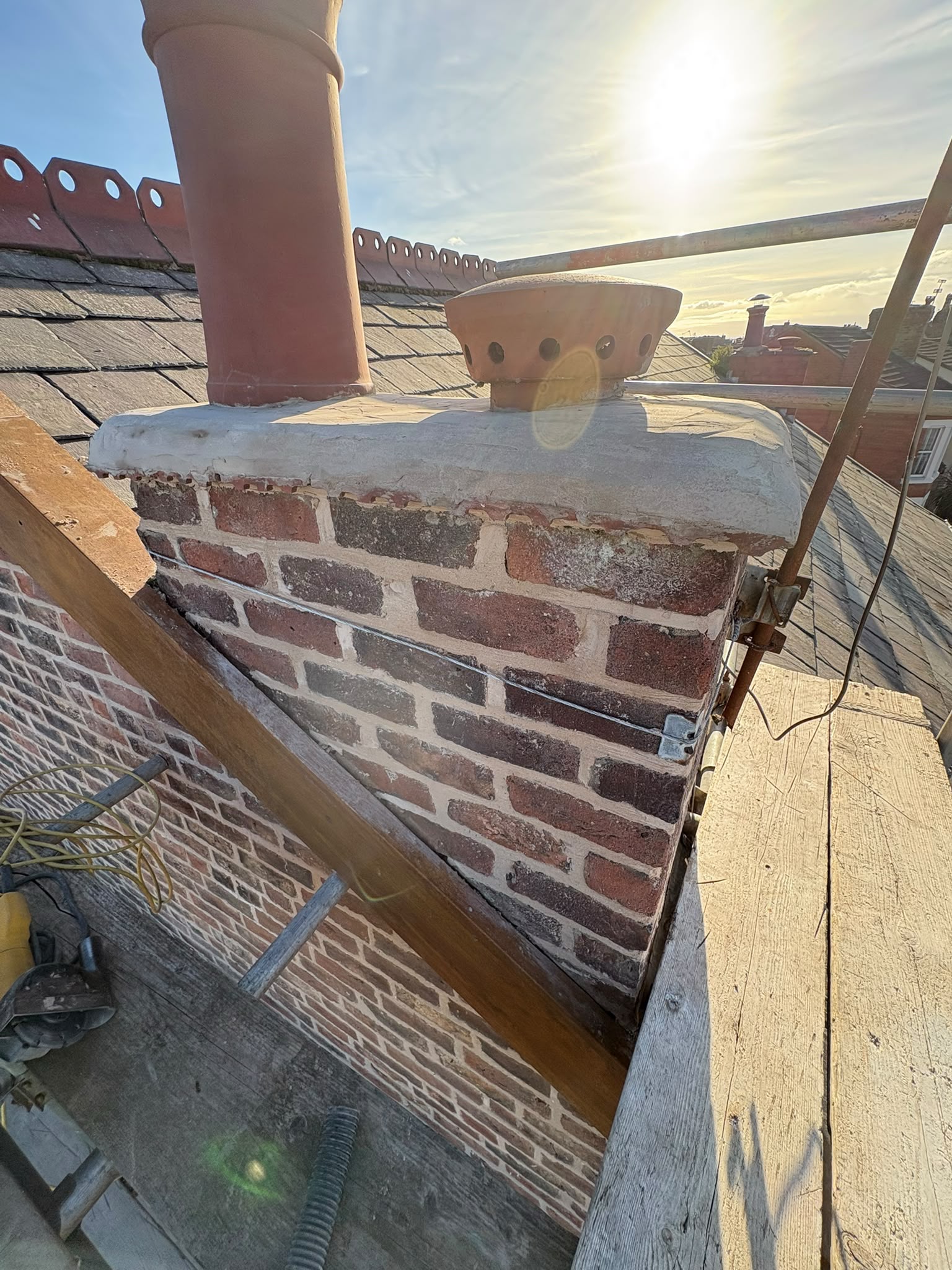
The joints were raked out to around 25mm and both walls repointed in NHL 3.5 hydraulic lime mortar, finished with a brushed joint to suit the age of the house.
The walls were cleaned down and the scaffold struck.
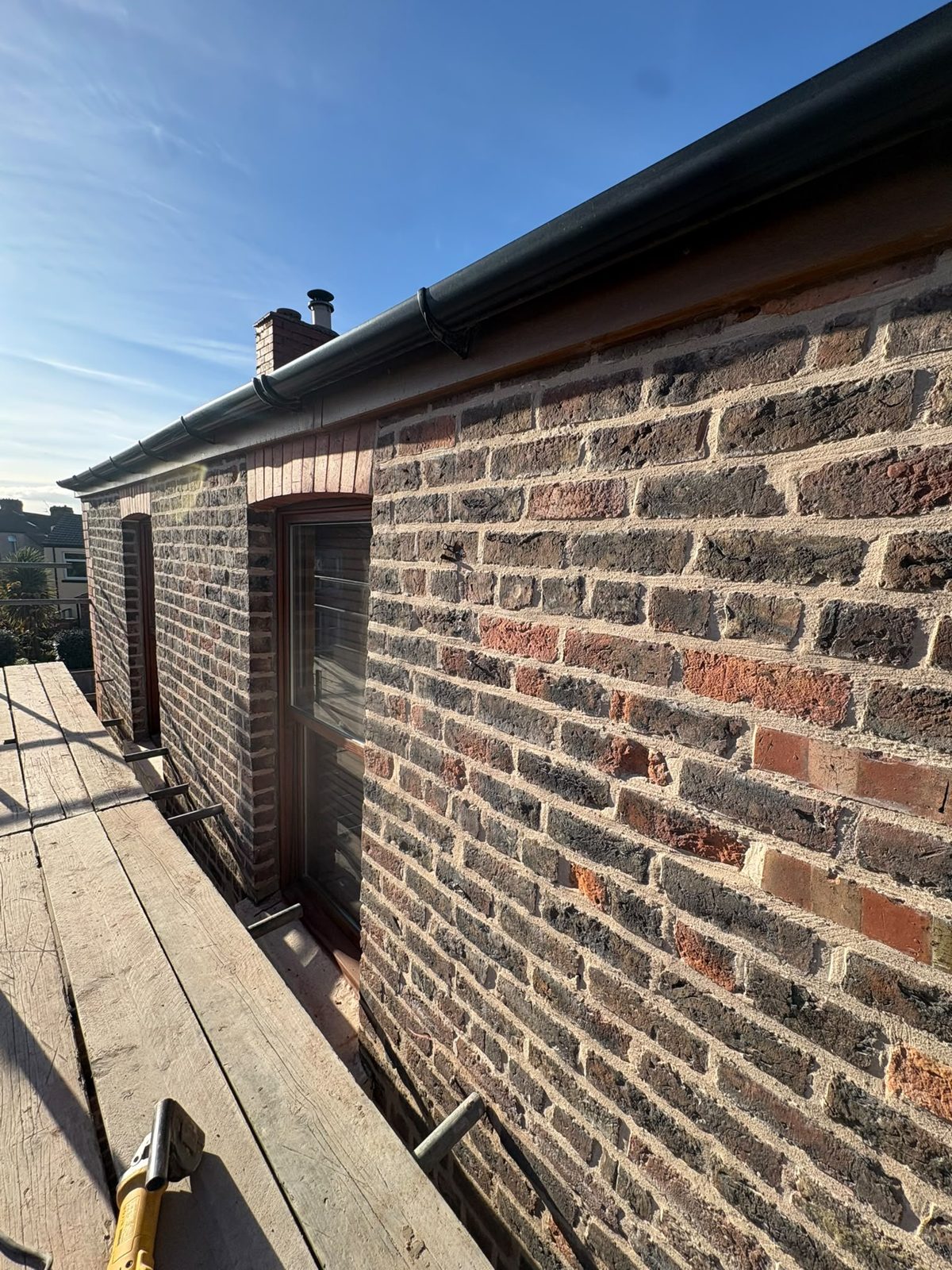
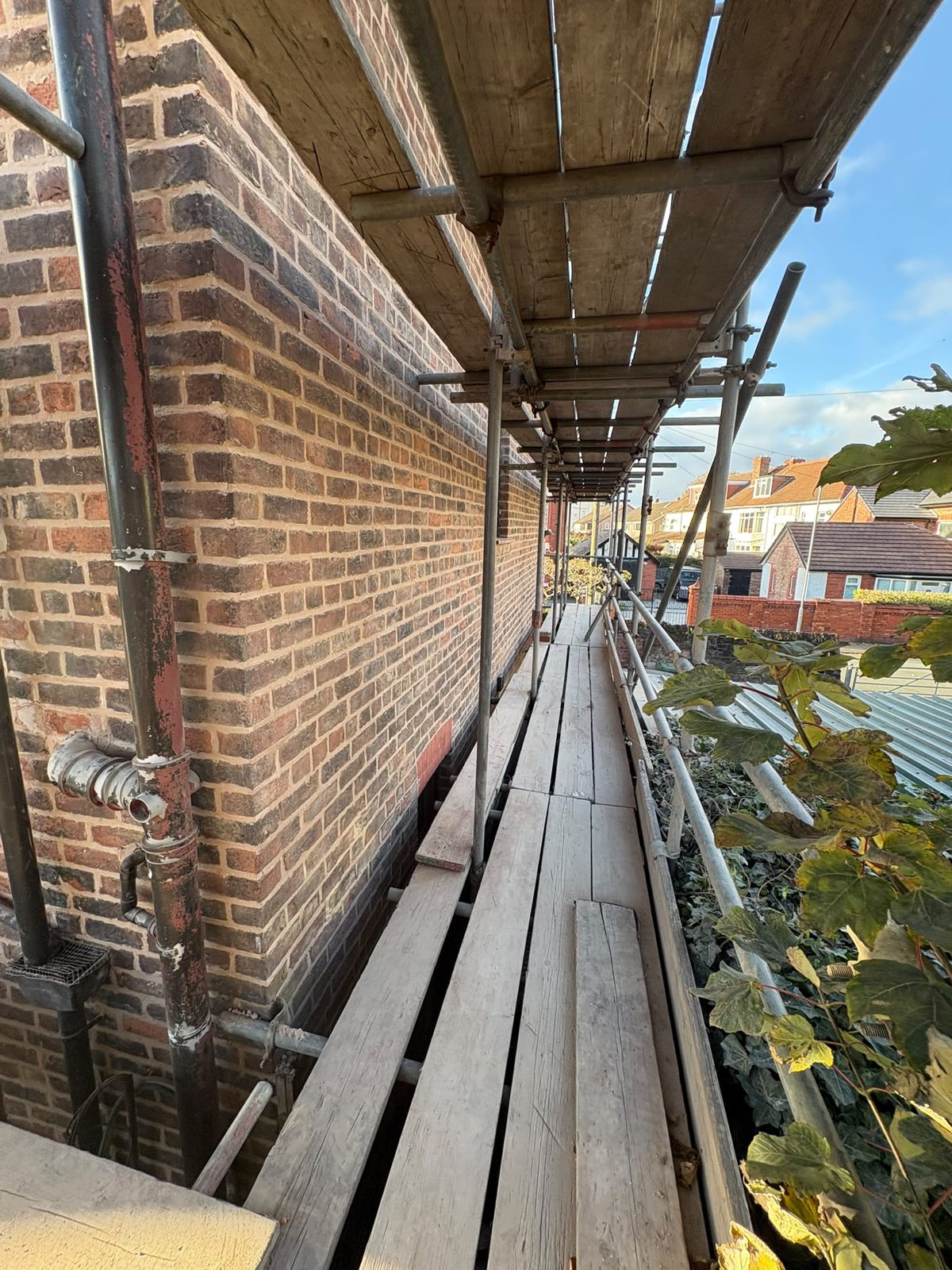
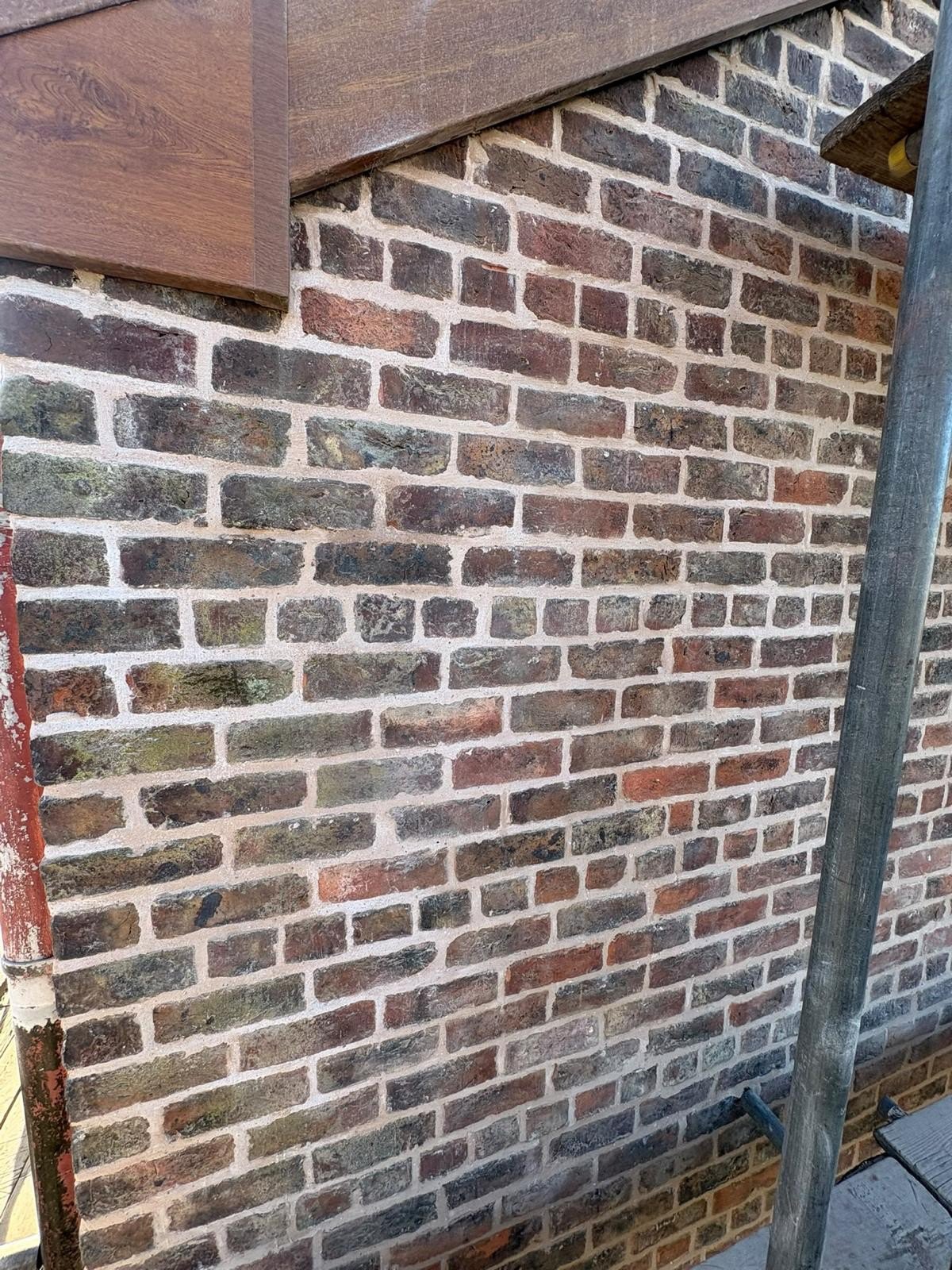
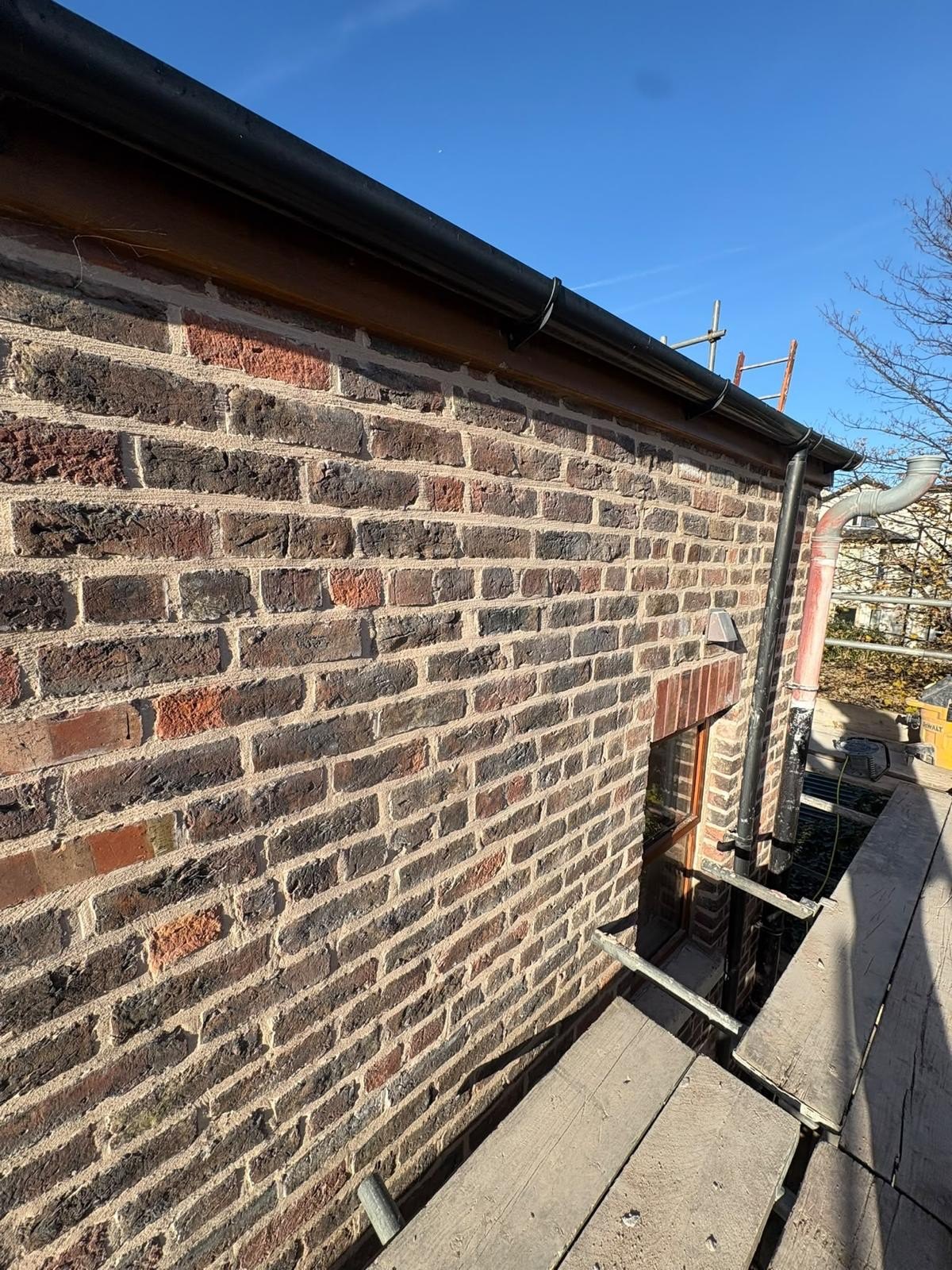
This write-up covers the rear and gable walls: the lime repointing, the brick replacements and the two window heads. The front of the house was not part of the work.
Scope list
- Rear and gable walls repointed in NHL 3.5 hydraulic lime mortar
- Joints raked out to around 25mm and finished with a brushed joint
- Up to twenty bricks cut out and replaced on the gable
- Brickwork over two window openings taken out and rebuilt on new steel lintels
- Extra work photographed and priced on site before it was done
- Scaffold supplied
| Location | Wallasey, Wirral |
|---|---|
| Property | Older brick house |
| Walls | Rear and gable |
| Mortar | NHL 3.5 hydraulic lime, brushed joint |
| Found on site | Brickwork over two window openings not tied in |
| Works | Lime repointing; brick replacements; two new lintels with the brickwork rebuilt above |
Lime or cement?
Lime mortar
Older houses with solid walls were built in lime. It is softer than the brick and lets the wall dry out through the joint, so the mortar takes the weathering and the brick does not. These walls are repointed in lime.
Cement mortar
Most houses with cavity walls were built in cement mortar, and are repointed in a mix to suit the brick and the age of the house.
Hard cement on a soft old wall is the mistake we see most. It holds water at the face and the brick starts to lose its face instead of the joint. Where a wall has been patched that way, the patches come out with the rest. We will tell you which mortar your wall needs when we quote, and why.
How we repoint a wall
Rake out
— failed mortar taken out to a sound base
Clean and dampen
— joints brushed out and the wall dampened
Repoint
— new mortar packed in and finished to the chosen joint
The old mortar is raked out to around 25mm, or deeper where that is what it takes to reach sound material. On older brick we use hand tools and low-vibration methods, because the edges of the bricks are soft and a heavy hand takes them off with the mortar. The joints are brushed clean and the wall dampened so it does not pull the water out of the new mortar before it has set.
The new mortar is packed firmly into the joints and finished to the profile agreed. Most walls above head height are worked from scaffold, which we supply, put up and take down.
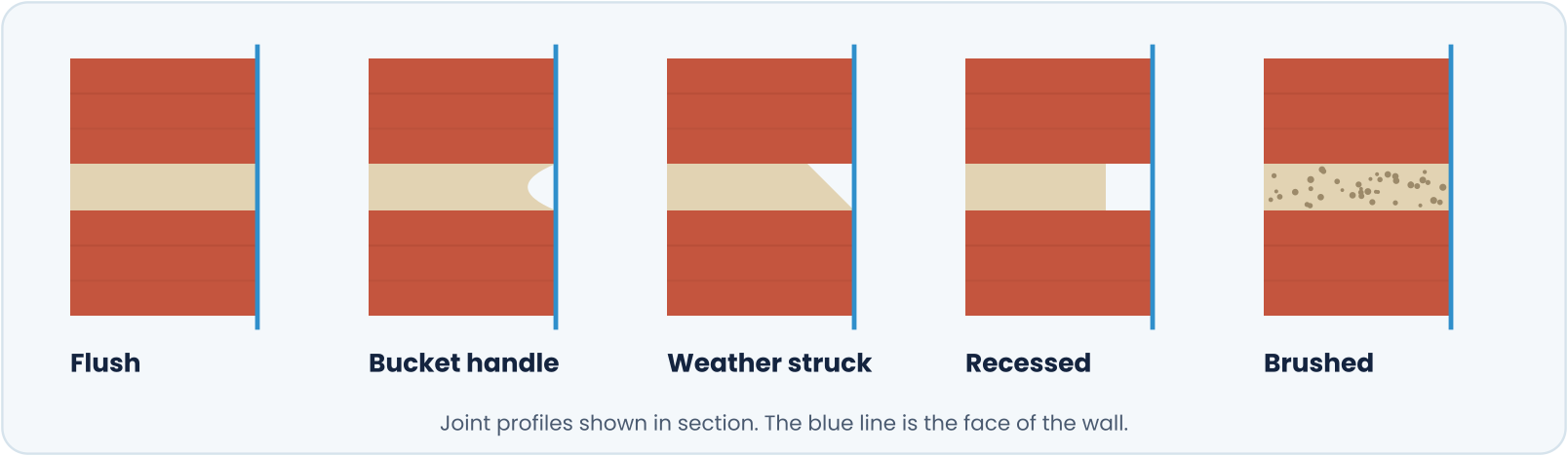
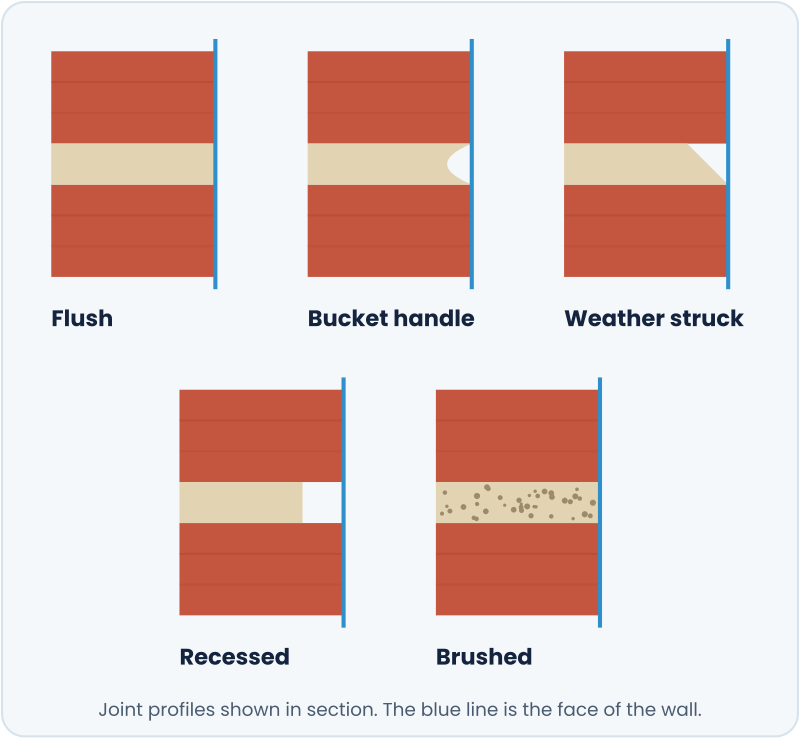
Pointing finishes
- Flush — finished level with the face of the brick
- Bucket handle — a shallow curve pressed into the joint
- Weather struck — sloped to throw the rain off the brick below
- Recessed — set back behind the face
- Brushed — a lime joint finished with a brush, for older walls
We match the finish already on the house unless you ask for something different.