Specialist Building & Property Maintenance Services You Can Depend On.

Home › Chimney damp

Chimney breast damp and chimney damp surveys

Chimney breast damp, staining and salt damage
North Wales, Cheshire and Wirral

Damp patches, brown staining and failing plaster on a chimney breast, including damp that has come back after the roof or the chimney has been repaired. The cause looked for, set out in writing and put right by one contractor, across North Wales, Cheshire and Wirral.

  • Damp and staining on chimney breasts
  • Chimney damp surveys with a written report
  • Free quotation from your photographs
 
 
WhatsApp or email gets the quickest reply. We come back to you as soon as we can.
Google5.0★★★★★Based on 150+ Google reviews
Trading since2008
£5 millionpublic liability insurance in place
Workmanship guarantee on completed works
One contractorAll trades under one roof

In short: a damp or stained chimney breast has several possible causes, and they look much the same on the wall. We look for the cause, set it out in writing and carry out the work, inside the house and on the stack. Send photographs: where they show enough, the quotation is free. Where the cause is not clear, or damp has come back after a repair, the right first step may be a paid chimney damp survey, and we tell you the fee before you book. Repairs to the stack itself are on our chimney repairs page.

One contractor

One contractor for the chimney breast, the stack and the room
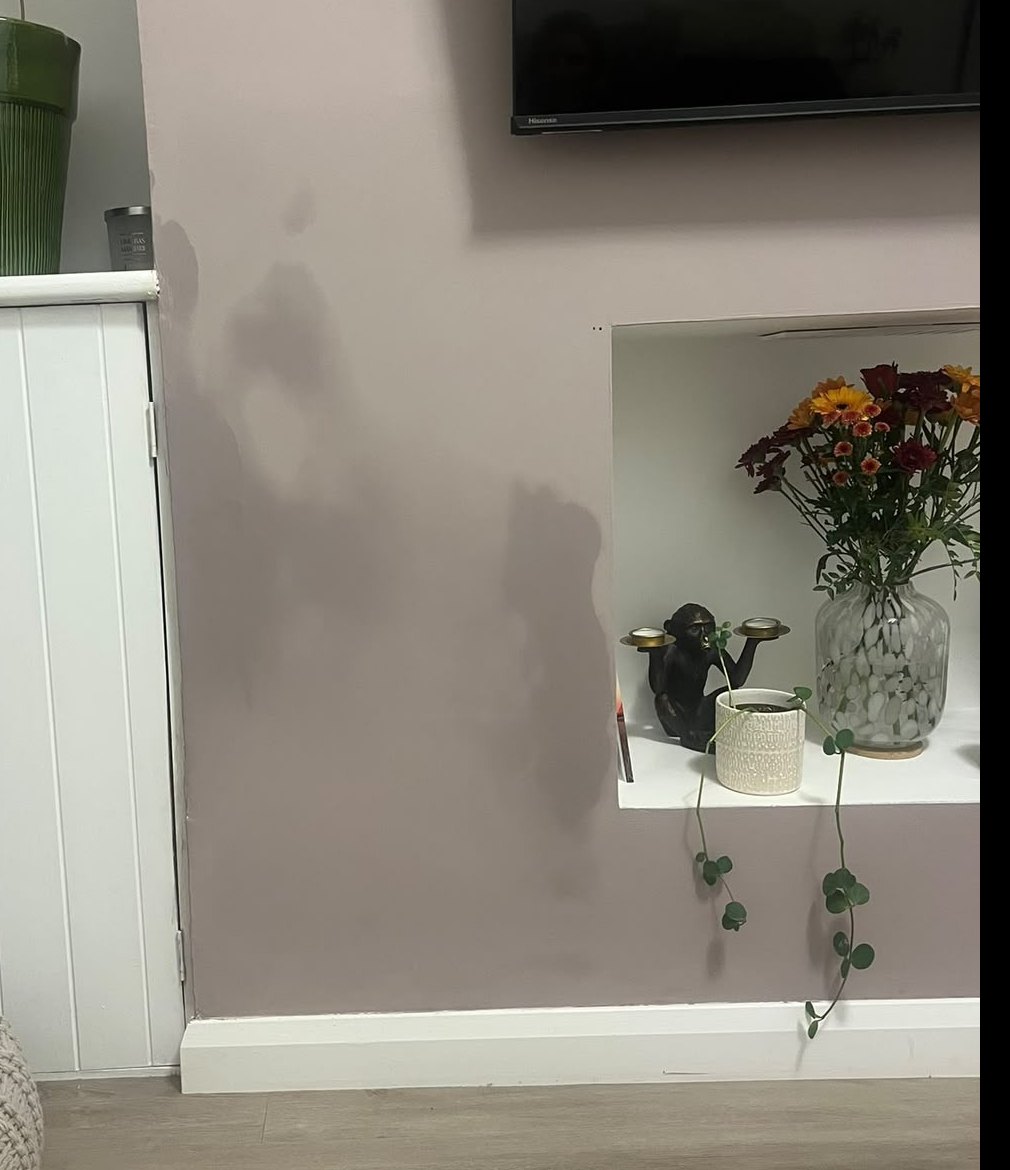
  • Dark damp patches across a chimney breast

    Damp

    The stains and damp patches a chimney leaves indoors.
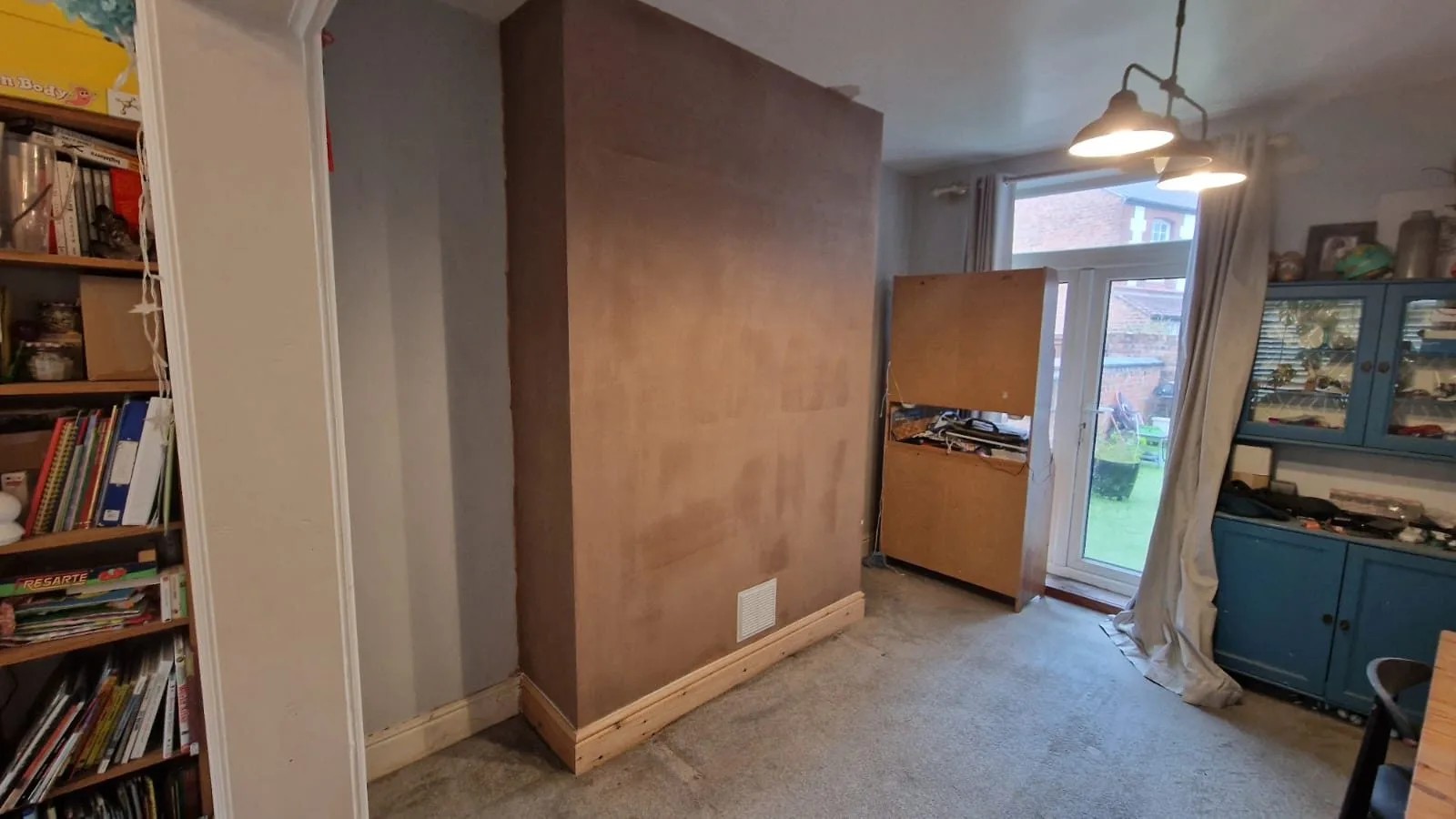
  • Chimney breast freshly plastered with new timber skirting and an air vent at the base

    Plastering

    Chimney breasts replastered and made good.
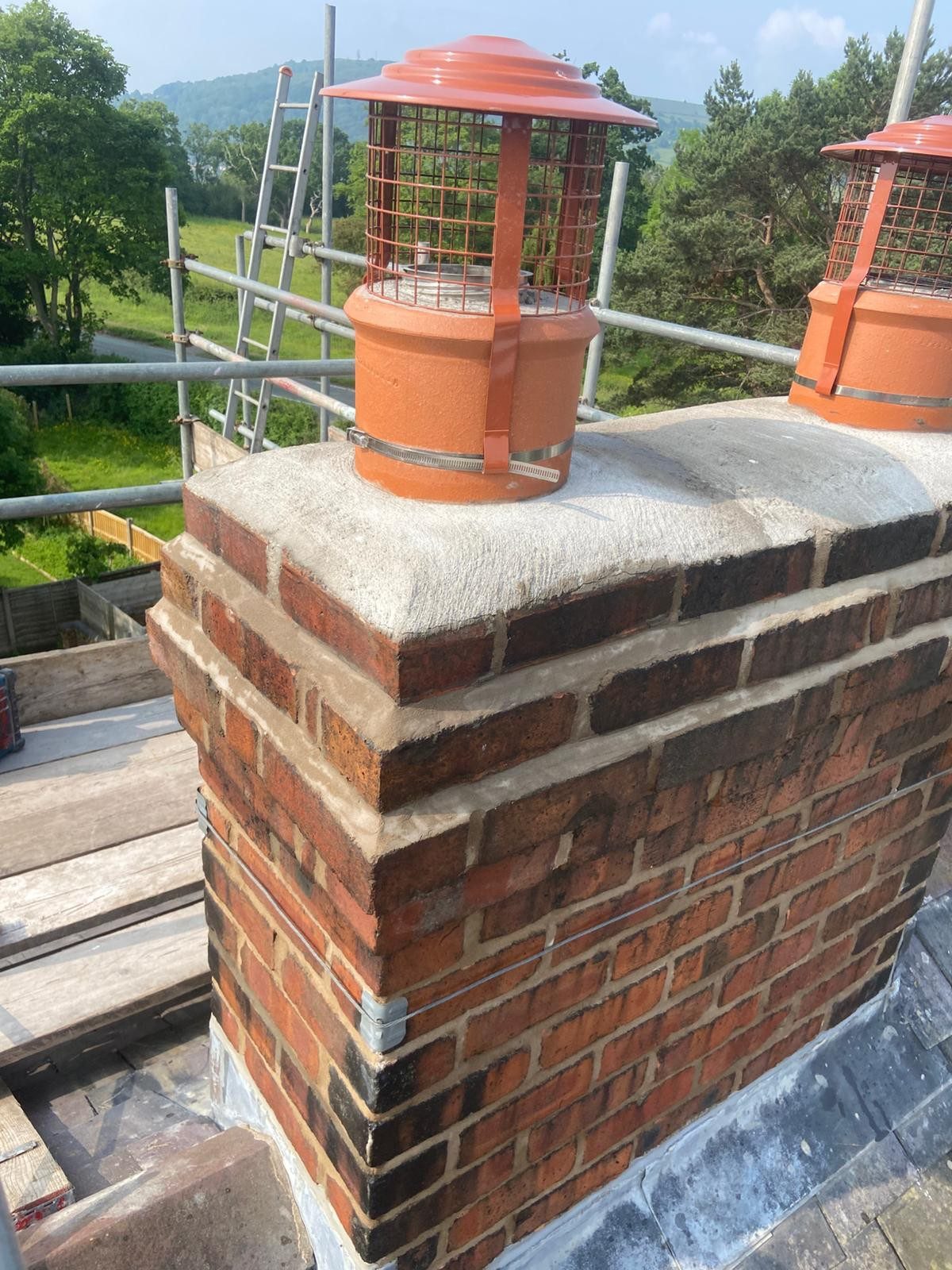
  • Brick chimney stack with new flaunching and two clay pots fitted with cowls, seen from the scaffold

    Brickwork and roofing

    The stack repaired where water is getting in.
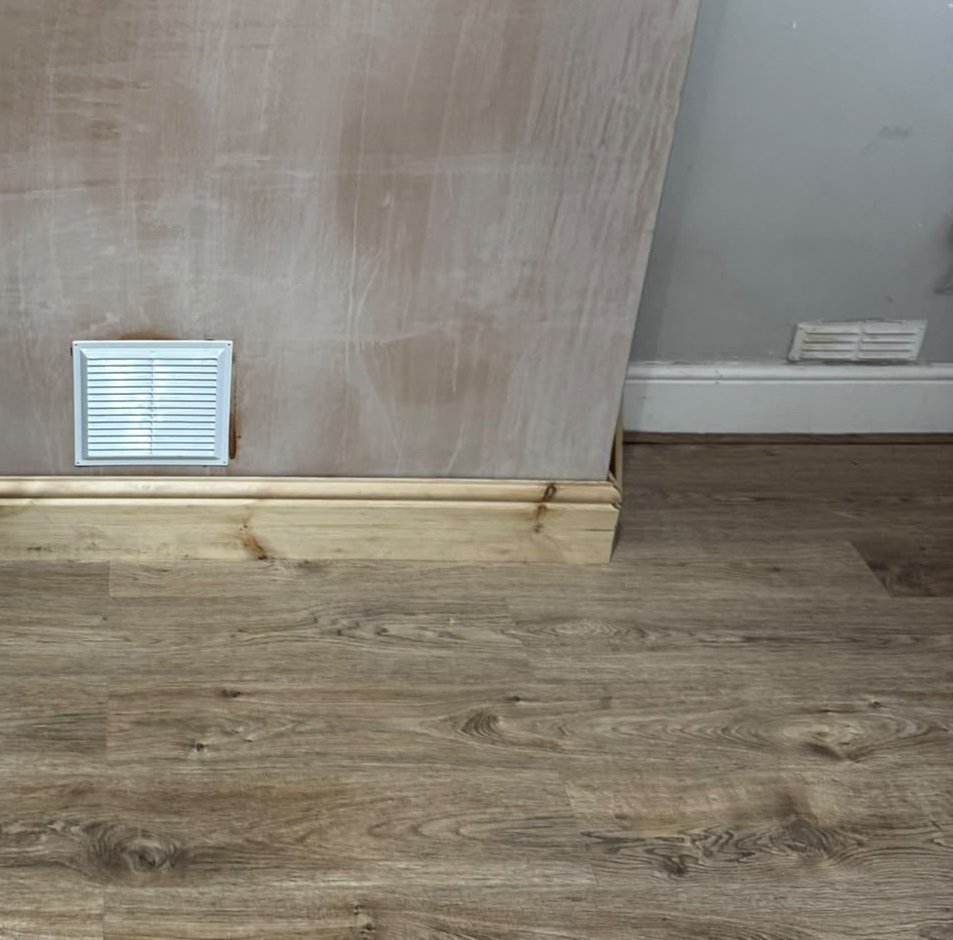
  • New skirting fitted beside a freshly plastered chimney breast

    Joinery

    Skirting boards refitted or replaced after the work.

On the chimney breast

Signs of chimney breast damp

Chimney damp shows indoors, and usually on the chimney breast itself or the wall and ceiling beside it.

  • A damp patch on the chimney breast that darkens after rain
  • Brown or yellow stains that come back through fresh paint
  • A patch that comes and goes with the weather, even when it has not rained
  • Paint blistering or flaking, or wallpaper lifting
  • Plaster that is soft, crumbling or sounds hollow
  • A white, powdery deposit on the surface
  • Staining at the top of a bedroom chimney breast, or on the ceiling next to it
  • Damp around a fireplace that has been closed up
  • A musty smell in the room or in a cupboard built beside the chimney

Any of these in a room upstairs, downstairs or in the loft is worth a photograph.
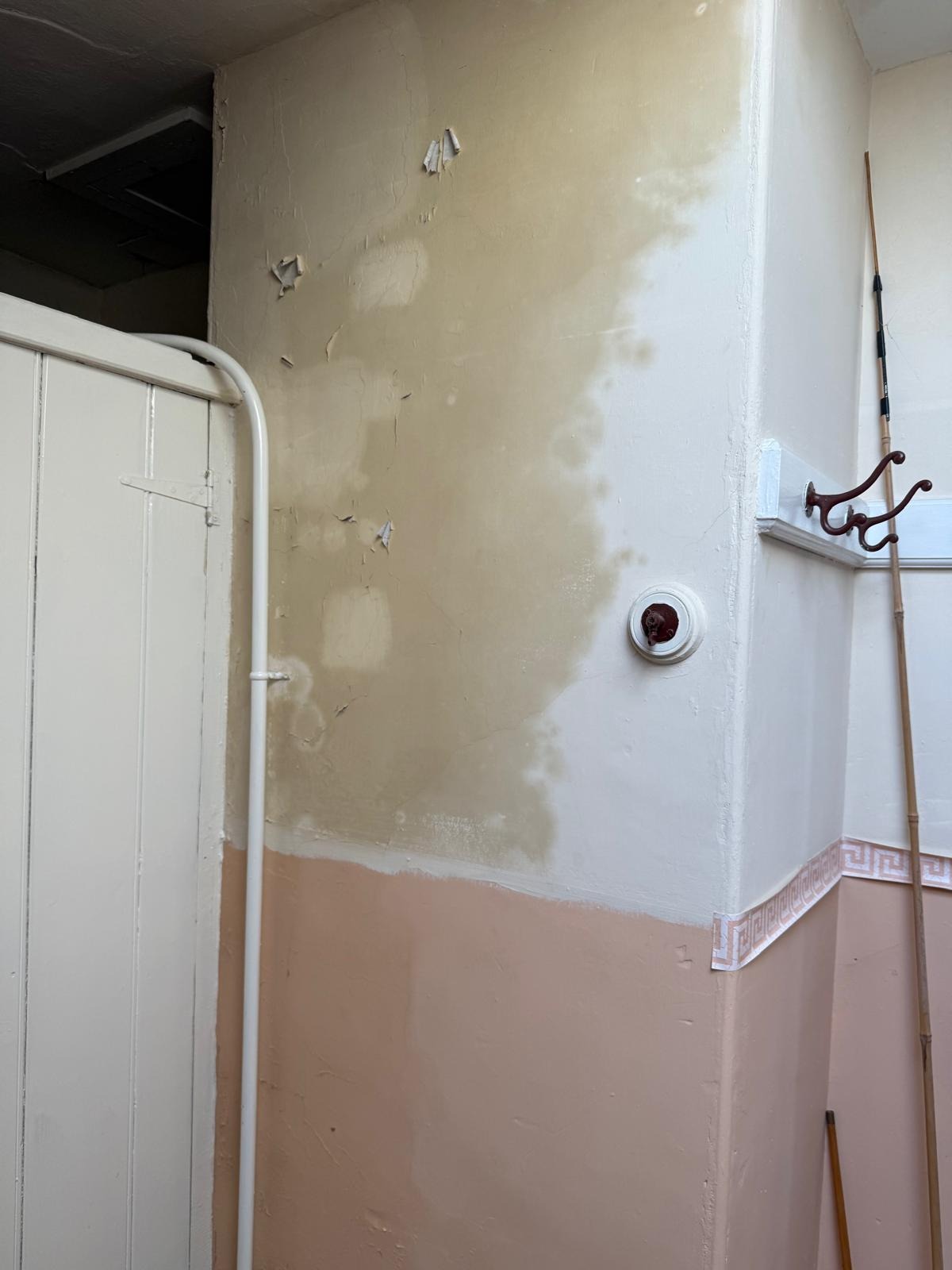
Brown staining and blistered paint spreading across the upper part of a chimney breast above a dado rail
Brown staining and blistering paint on a chimney breast.

The usual causes

Why a chimney breast gets damp
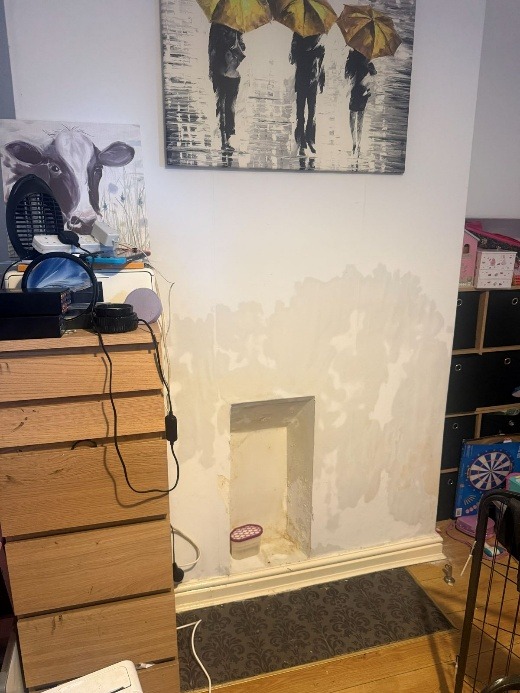
Patchy damp staining on a white chimney breast around a small closed-up fireplace opening
Staining around a closed-up fireplace.

There is rarely one neat answer, and two causes together are common.

  • Rain getting in at the stack

    The stack stands above the roof in all weather. Water can get in at the top, through the brickwork or where the stack meets the roof, and it often shows a floor or two below where it entered. The repairs are on our chimney repairs page.

  • Salts left by years of fires

    Coal and wood fires leave salts in the brickwork of a flue and in the plaster over it. These salts draw moisture out of the air in the room. The chimney breast can stain and feel damp with no water coming in from outside at all.

  • A flue closed off with no ventilation

    When a fireplace is closed up or a chimney is capped without a vent, air stops moving through the flue and moisture stays in it. It shows on the chimney breast. Closing a fireplace properly is covered on our fireplace removal and blocking up page.

  • Water from somewhere beside the chimney

    A defect in the roof, a gutter or a wall close to the stack can send water to the same place. Rain coming through a wall is covered under penetrating damp.

Where a flue serves a gas fire or a boiler, any work on the appliance is carried out by Gas Safe registered engineers.

After a repair

Still damp after the roofer has been?

Damp staining along the top of a bedroom chimney breast below the coving
Water stopped is not the same as dry.
Staining at the top of a bedroom chimney breast.

This is the most common reason people contact us about a chimney. The roof has been looked at, the stack has been repointed or the lead renewed, the stain has been painted over, and some months later it is back.

That does not have to mean the repair was done badly. A chimney breast can stay damp, or carry on staining, after sound work at roof level, for several reasons:

  • The water has been stopped, but what it left in the plaster has not been dealt with. Salts stay in the plaster and go on drawing moisture from the air.
  • A chimney has more than one way in. Putting one right does not show that the others are sound.
  • The wall is still drying. Brickwork that has been wet for years holds a lot of water and gives it up slowly.
  • The damp did not come from the roof in the first place.

On one Chester terrace we opened up, the chimney breast had been repaired three times before we were asked to look. The vent on it had been fixed to the plasterboard and led nowhere, so the flue behind had no ventilation at all. That job is written up on our landlord maintenance page.

These look alike on the wall and need different work. Another coat of paint, a stain block or a second visit to the roof are the usual next steps, and without knowing which of these applies they are often money spent twice.

Send us photographs of the staining and of the stack, and tell us what has been done and when. Where they show a clear cause, we quote from them, and the quotation is free. Where the cause is not clear, or damp has come back after a repair, we may recommend a paid chimney damp survey before anything else is paid for, and we tell you the fee before you book.

Paid survey

Chimney damp surveys
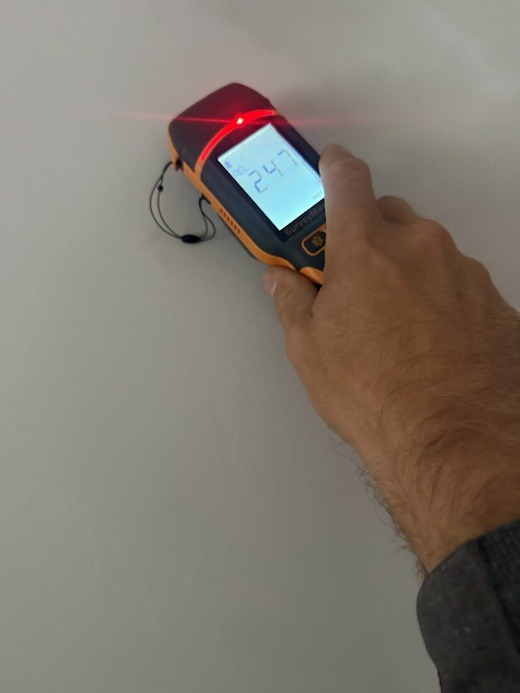
Hand holding a moisture meter against a painted chimney breast during a damp survey
A moisture reading being taken on a chimney breast. Readings are one part of the evidence, not a diagnosis on their own.

A chimney damp survey is a paid survey of the chimney breast and what surrounds it, carried out to find out why it is damp before money is spent on putting it right. The survey is chargeable, and we tell you the fee before you book.

Before we come, we ask a short set of questions: when the damp started, where it shows, whether it is worse after rain, and what work has already been done. On the day we inspect the affected chimney breasts and the walls and ceilings beside them, take moisture readings, check whether each flue is in use and how it is ventilated, look at the ventilation in the rooms, and view the chimney stack from the ground. The survey is non-invasive: nothing is opened up.

You then receive a written report with photographs. It sets out what we found, our opinion on the cause, the work we recommend and a quotation for it. It also says plainly what could not be confirmed without opening up or close access, such as the condition of the stack at roof level.

Moisture readings are one part of the evidence. We read them alongside what we can see of the building, and they are not a diagnosis on their own.

Not every chimney needs a survey. Where your photographs show enough, we quote from them, and the quotation is free. For damp elsewhere in the house, see damp surveys.
The work indoors

Putting chimney damp right

Once the cause is known, the work is usually in two places: on the stack, and on the chimney breast indoors. We carry out both.

  • Damp and salt-affected plaster taken off

    The affected plaster is taken off the chimney breast back to the brickwork, to the extent set out in the quotation. Painting or skimming over it leaves the salts where they are.

  • New plaster that keeps salts back

    The chimney breast is replastered in a salt-resistant system, or a studded membrane is fixed to the brickwork and finished in plasterboard and a plaster skim. Either way, salts left in the brickwork are kept away from the new surface. The wall is left ready for you to decorate once it has dried.

  • Closed-up flues ventilated

    Vents fitted to closed-up fireplaces and chimney breasts, so that air moves through a flue that is no longer used.

  • Repairs to the stack

    Where water is getting in at roof level, the stack is repaired from proper access by the same contractor. See chimney repairs.

Where a room is short of ventilation, we say so in the report, because damp air in the room makes any chimney breast worse. That side is covered under condensation damp.

Where we work

Chester and Ellesmere Port

The Victorian and Edwardian terraces of Hoole, Handbridge and Boughton were built with a fireplace in almost every room. Most of those fireplaces have long been closed up, which leaves a house with several unused flues behind its chimney breasts. Ellesmere Port and Great Sutton have more inter-war and post-war houses, where one or two flues were closed when the heating was changed.

Wirral

Stacks along the coast at Hoylake, West Kirby, Wallasey and New Brighton take wind-driven rain off Liverpool Bay and the Dee, so water through the stack is a common part of the picture. The older terraces and semis of Birkenhead, Bebington and Heswall have the same closed-up bedroom fireplaces as Chester.

Flintshire and Deeside

Along the estuary in Flint, Connah’s Quay, Shotton and Queensferry, and inland in Buckley and Mold, most older houses were heated by coal for generations. The higher ground towards Holywell has stone-built houses with thick chimney breasts that hold moisture for a long time.

Wrexham

Wrexham and the villages around it — Rhosllanerchrugog, Ruabon, Gresford — are largely brick terraces built for coal fires, with a stack to every house or pair. Many of those flues are no longer used.

Denbighshire and Conwy

The tall Victorian houses of Rhyl, Prestatyn, Colwyn Bay and Llandudno carry several flues to a stack and face sea weather. Inland, Ruthin, Denbigh and St Asaph have older stone and brick buildings with large chimney breasts.

Mid-Cheshire

In Northwich, Winsford, Tarporley and Knutsford we take on chimney damp along with our other damp work, in older brick houses and cottages where fireplaces have been closed.

North WalesNORTH WALESFLINTSHIREWrexhamWREXHAMChesterCHESTERWirralWIRRALEllesmere PortELLESMERE PORTConwyCONWYDenbighshireDENBIGHSHIRECheshireCHESHIREA55M53M56A483A494Boundaries © OpenStreetMap contributors

We cover North Wales, Cheshire and Wirral from the Deeside and Chester districts out to mid-Cheshire.

Areas we cover

  • Chester and Ellesmere Port — Chester, Hoole, Handbridge, Boughton, Ellesmere Port, Great SuttonCH1 to CH4, CH65 and CH66
  • Wirral — Birkenhead, Wallasey, Hoylake, West Kirby, Heswall, BebingtonCH41 to CH49, CH60 to CH63
  • Flintshire and Deeside — Deeside, Connah’s Quay, Flint, Buckley, Mold, HolywellCH5 to CH8
  • Wrexham — Wrexham, Gresford, Rhosllanerchrugog, RuabonLL11 to LL14
  • Denbighshire and Conwy — Rhyl, Prestatyn, Ruthin, Denbigh, St Asaph, Colwyn Bay, LlandudnoLL15 to LL19, LL28 to LL30
  • Mid-Cheshire — Northwich, Winsford, Tarporley, KnutsfordCW6 to CW9 and WA16

We deal with chimney damp across North Wales, Cheshire and Wirral. Send your photographs and your postcode and we will tell you whether we cover you.

What customers say

★★★★★ 5.0 · 150+ Google reviews

  • ★★★★★

    “Fantastic service and a company we would highly recommend. We used Quirks to resolve a long standing damp problem in our old Victorian house. We have had a new roof, replaced guttering and soil pipes but the wall remained wet. They resolved the problem by repointing the outside wall. The team arrived just after 7 each morning and worked until dark. They cleaned up each day and were always friendly and helpful. We’ll definitely use their services again”

    SB CB

  • ★★★★★

    “Great job. Efficient, polite, tidy workers. Very happy with the damp proofing and plastering. Highly recommend!”

    Andrew Jaworski

  • ★★★★★

    “Michael and his team are worth more than 5 stars! We had a full living room, hallway, landing & stairs renovation (Damp proofing, electrics, plumbing, plastering and joinery). From start to finish they were fantastic! Everything was organised and ran like clockwork which took a massive stress off me and my wife. His employees are a credit to the company too, always polite, non stop working from the start of the day to the end and had a lot of pride in their work. Will definitely use Quirks again in a heartbeat! Jordan + Anastasia Wrexham”

    Jordan Owen

Read all our reviews on Google

Your questions

Chimney damp: common questions

How much does it cost to fix chimney breast damp?

There is no standard figure, because the price follows the cause. What moves it most is whether the work is indoors, on the stack or both; how much plaster is affected and on how many floors; whether the stack needs scaffold; how many flues need ventilating; and what has to be made good afterwards.

Most jobs we can price from photographs — send yours on WhatsApp or by email and we’ll come back with a written quotation.

Why is my chimney breast damp?

Usually for one or more of four reasons: rain getting in at the stack, salts left in the brickwork by old fires, a closed-up flue with no ventilation, or water arriving from a defect close to the chimney. They look alike on the wall, which is why the cause has to be found before the repair is chosen.

Why is my chimney breast still damp after the roof was repaired?

A sound roof repair stops new water. It does not remove salts already in the plaster, it does not ventilate a closed flue, and it does not dry a wall that has been wet for years. It is also possible that the water was getting in somewhere else. Which of these applies is what a chimney damp survey is for.

The chimney has been repointed and the lead renewed. Why has the stain come back?

Most often because the plaster indoors is still holding salts, which draw moisture from the air and bring the stain back through new paint. It can also mean that water has another way in. Tell us what was done and when, and send photographs of the stain and the stack.

How long does a chimney breast take to dry out?

It varies with how wet the wall was, how thick it is and how the room is heated and ventilated, so we do not give a figure. Thick brickwork dries slowly. If a stain is still spreading well after a repair, do not wait on it: send us photographs.

What causes brown or yellow stains on a chimney breast?

Moisture passing through old soot and tar in the flue carries the colour to the surface. The stain tells you moisture is moving through the chimney breast. It does not tell you where the moisture is coming from.

Why does the damp patch come and go with the weather?

Rain getting in will darken a patch after wet weather. Salts in the plaster can do the same on a damp, still day with no rain at all. Both can be present together, which is one reason these patches are hard to read from the room.

Can I paint or plaster over a damp chimney breast?

You can, but it rarely lasts. Paint and ordinary plaster do nothing about the moisture or the salts behind them, and the stain usually returns. The cause is dealt with first, then the affected plaster is replaced with a system made for it.

Why has damp come through new plaster on my chimney breast?

Ordinary plaster on a chimney breast that still holds salts will draw them through. The new surface then stains and breaks down like the old one. Chimney breasts are replastered in a salt-resistant system or behind a membrane for that reason.

Does a blocked-up fireplace need a vent?

Yes, where the flue is no longer used. It needs air moving through it, with a vent at the bottom and a ventilated cap at the top. A flue that still serves a fire, stove or boiler is a different matter and must stay open. Closed tight at both ends, it holds moisture and the chimney breast turns damp.

Why is there a damp patch where a chimney breast was taken out?

Where a chimney breast has been removed from a room, what is left of the flue above and beside it can still carry moisture and salts into the wall. The patch often follows the shape of the old chimney. Send photographs of the wall and of the stack.

Could the damp be coming from next door’s chimney?

It can. Stacks and flues on terraced and semi-detached houses are often shared, and a defect or a closed flue on one side can show on the other. Work to a shared stack needs your neighbour’s agreement and may need formal written notice to them.

What is a chimney damp survey, and do I need one?

It is a paid survey of the chimney breast and what surrounds it, with a written report and photographs setting out the cause as we see it and the work we recommend. You may need one where the cause is not clear from photographs or damp has come back after a repair. The survey is chargeable, and we tell you the fee before you book. Where photographs show enough, we quote from them and the quotation is free.

Is damp on a chimney breast a problem when buying or renting?

It is common on home buyers’ surveys and is usually repairable once the cause is known. If you are buying, see our pre-purchase quotation service. For rented homes, see Awaab’s Law.

Survey content reviewed by Michael Quirk, Director and FOD Certified Damp Surveyor.

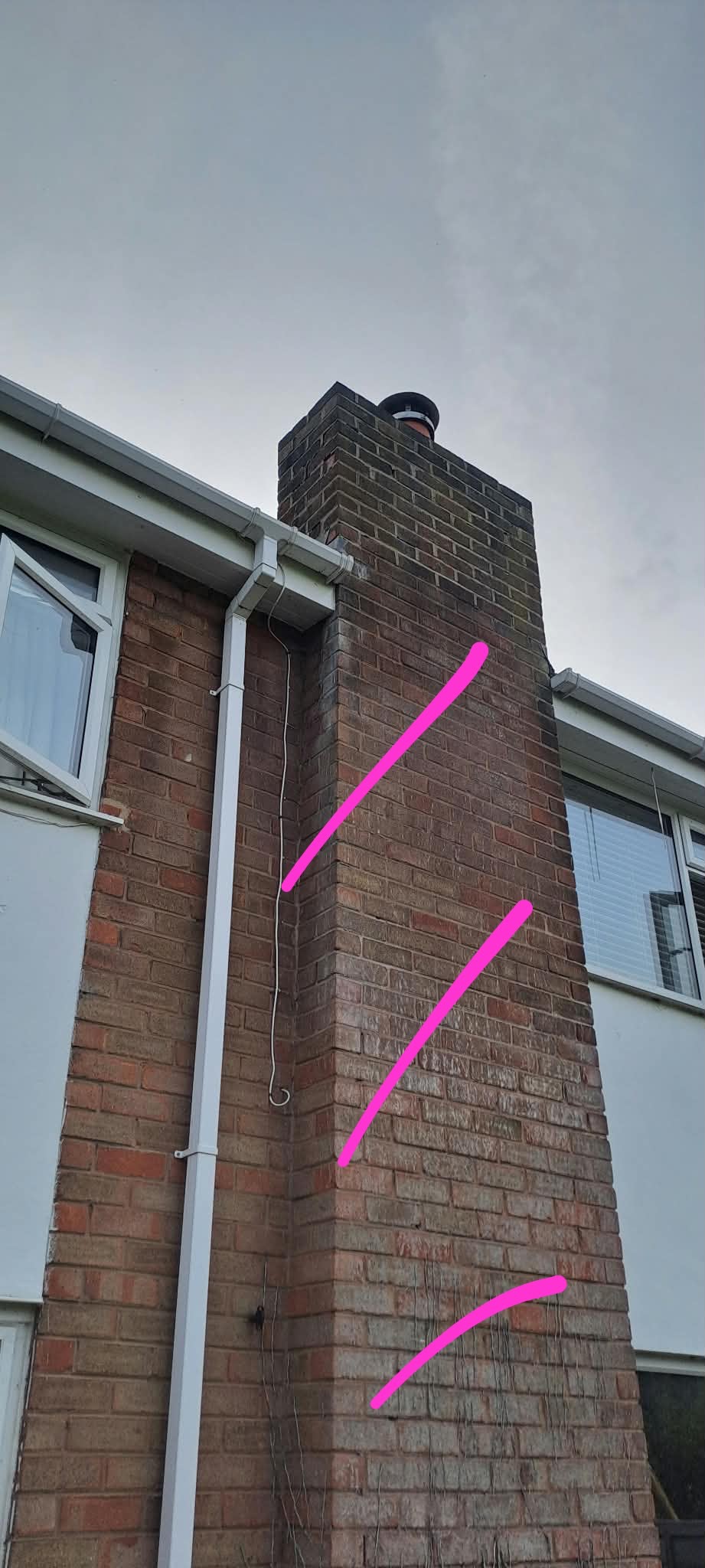
Tall brick chimney stack on the gable end of a house, with marks drawn on the brickwork

How it works

Send us a photo of your chimney breast

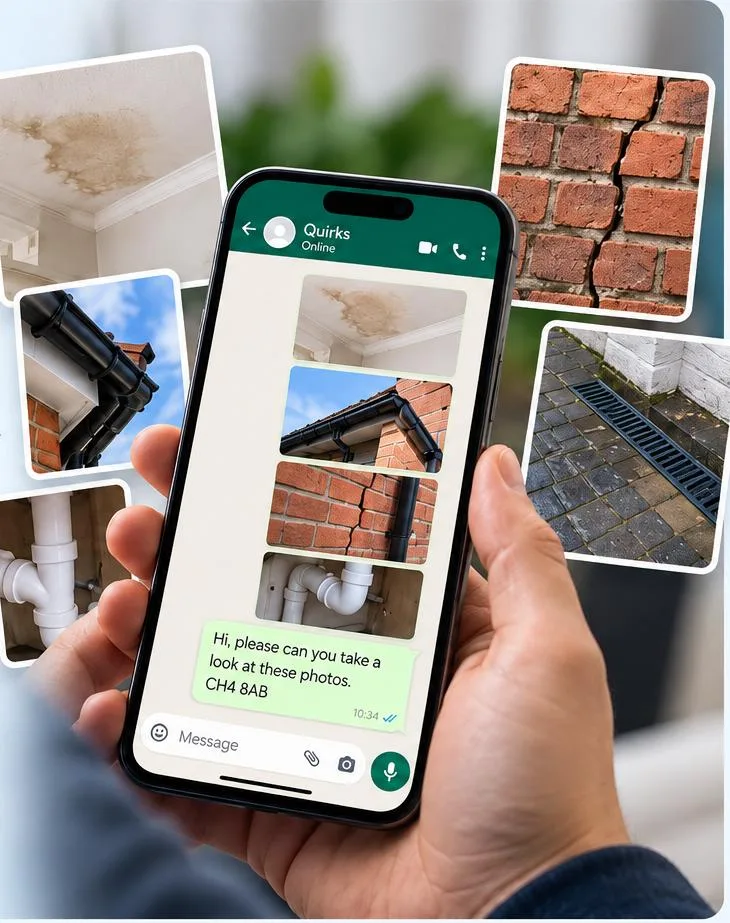
Send us photos on WhatsApp or by email for a free, no-obligation quotation. Photograph the damp or staining indoors, and the chimney stack from the ground — do not go up a ladder. Tell us whether anything has already been done to the roof or the chimney.

  1. 1Photograph the chimney breast, any staining nearby, and the stack from outside
  2. 2Send them on WhatsApp or by email with your postcode. If they don’t show enough, we’ll tell you what else we need
  3. 3We look at what you have sent and what has already been done
  4. 4You receive a written quotation, or our recommendation of a paid chimney damp survey where the cause is not clear
  5. 5Once you accept, we agree a start date
Send Photos on WhatsApp
Customer sending Quirks photos of damp, gutters, cracked brickwork and a leaking pipe on WhatsApp

Request a written quotation

Send us your photographs and a few details and we’ll come back with a written quotation.

    So we can confirm we cover your area.


    JPG, PNG, HEIC, WEBP or PDF. One photograph per box.

    We use your details and photographs to deal with your enquiry — our privacy policy explains how.

    Prefer to send photos? Message us on WhatsApp

    CHIMNEY BREAST DAMP — SEND US PHOTOGRAPHS

    Worried about your chimney breast? Send us a photo.

    Send us photos of the damp and of the stack on WhatsApp or by email, with a note of any work already done. We’ll come back to you as soon as we can.

    Scan the code
    Powered by Joinchat