Specialist Building & Property Maintenance Services You Can Depend On.
FIRE DOOR MAINTENANCE & REPAIRS — NORTH WALES, CHESHIRE AND WIRRAL
Fire door maintenance is the work that keeps a fire door able to do its job: the gaps brought back to size, the seals, hinges, closer and latch put right or replaced, the glazing and the signs checked, and a record kept of what was done. Quirks Property Maintenance Ltd repairs and maintains fire doors in blocks of flats, HMOs, shops, offices, schools and care homes across North Wales, Cheshire and the Wirral — one-off repairs after an inspection or a fire risk assessment, or planned visits on an agreed interval. Most jobs start with the door count and a few photographs.

In short: we put failed fire doors right — gaps, seals, hinges, closers, locks, glazing and signs — and come back on an agreed interval to keep them that way. Where a door is past repair, we fit a new FD30 or FD30S door set.
What fails
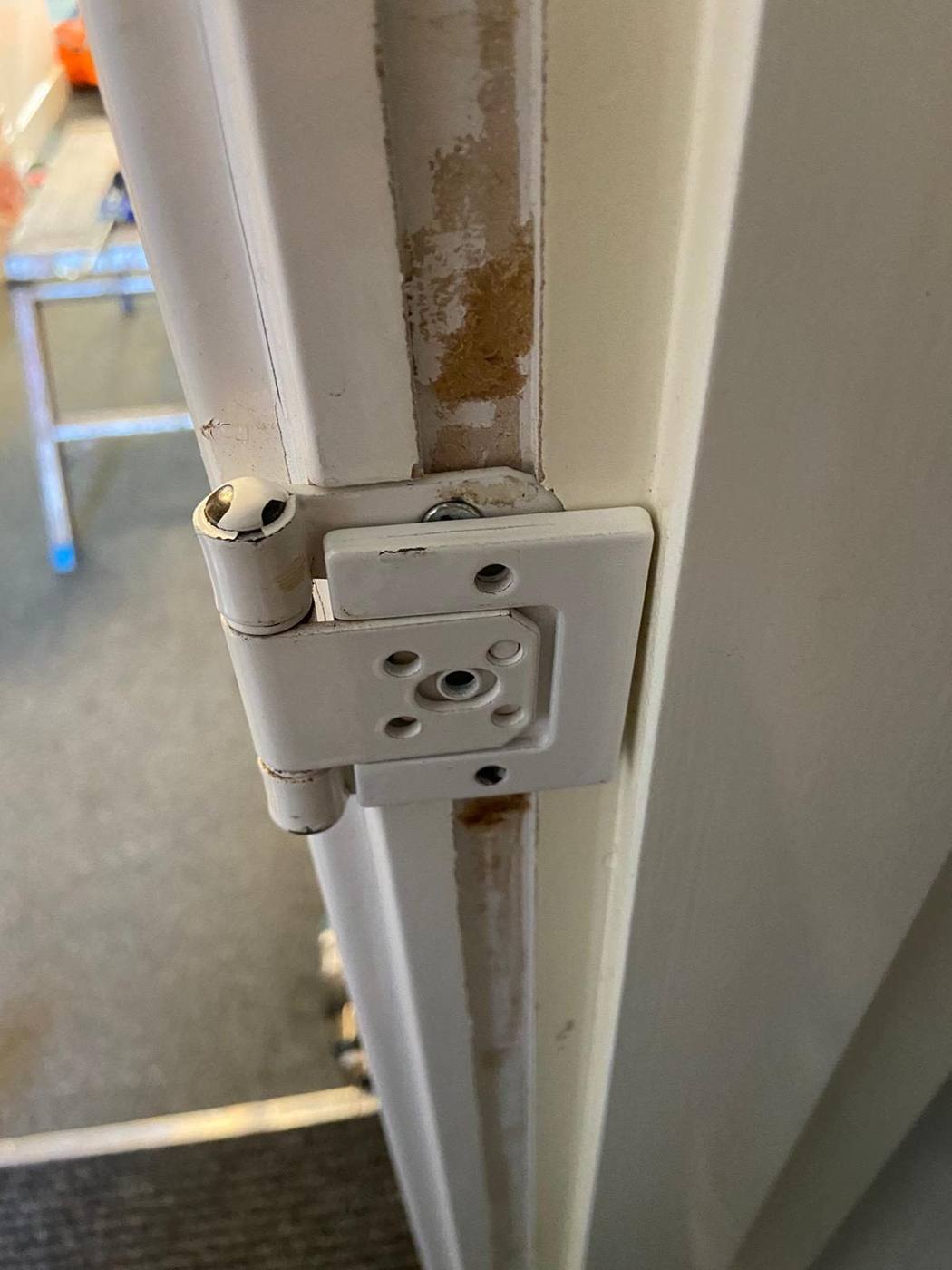
A fire door is a set of parts that only works when all of them do. Most of the doors we are asked to look at fail on the small things, not on the door leaf itself:
Any one of these fails a door on an inspection. Most of them can be put right in a visit.
The repairs
Every door is checked against the same list, and what has moved or failed is put right — on the day where the parts allow, on a return visit where something has to be ordered for that door:
A photograph of each finished door and a note of what was done, for your fire safety records.
What we do

Doors that failed an inspection or a fire risk assessment put right: gaps, seals, closers, hinges, locks, glazing and signs.
A return visit on an agreed interval, every door checked against the same list and what has moved put right, with a record for your file.

Every door inspected and graded, with a written report door by door that says what each one needs.

Where a door is past repair, or was never a fire door, a new FD30 or FD30S door set supplied and fitted.
We cover North Wales, Cheshire and Wirral — Chester, Flintshire and Deeside, Wrexham, the Wirral, Ellesmere Port and the North Wales coast.
★★★★★ 5.0 · 150+ Google reviews
“Very pleased our fire doors were completed fast and professional from start to finish , measuring was straightforward and were helpful explaining payments and paperwork. The work was carried out with a clean work environment would recommend . Craig y don hotel”
robert pellingtona year ago
“Quirk’s Property Management recently fitted a fire door at my property. The workmanship was excellent and completed as arranged. Professional throughout the process, highly recommended.”
Carl Howard3 years ago
“Recently had a new fire door and frame fitted by Quirks Nice job no mess, would definitely recommend”
william clothier3 years ago
“Great service, good workmanship and very tidy. Fitting of fire door”
Gareth Hughes2 years ago
The visit

Repair or replace
Most faults can be put right on the door you have. Some cannot, and we tell you which:
Where a door has to go, we supply and fit a new FD30 or FD30S door set. Where it can be kept, we keep it: a repair that brings the door back within its tolerances costs less than a new door set and leaves you with a door that matches the rest.

Where the leaf has gone, or there is no evidence it was ever a fire door, a new FD30 or FD30S door set is supplied and fitted.
The rules
Planned visits
A fire door that passed last year is not a fire door that passes this year. Doors on a busy corridor get kicked, wedged and repainted; closers drift; seals get knocked out. So for blocks of flats, HMOs, schools, care homes and workplaces we offer a planned visit on an agreed interval — every three months, six months or year, matched to what your fire risk assessment or the regulations ask for. Every door is checked against the same list on every visit, the small faults are put right on the day where the quotation covers them, and a record goes to you afterwards for the building’s file. A door that needs parts, or a replacement, is listed with a price, so nothing is done without your say-so.
Who it is for
Blocks of flats and HMOs: flat entrance doors, the doors on the communal stairs and corridors, plant rooms and bin stores — arranged with residents, with photographs and a record for the building’s file.
Shops, offices, pubs, workshops and industrial units: the doors your fire risk assessment flagged put right, arranged round your opening hours where it matters.
DBS-checked operatives, the work fitted round the day of the building, and risk assessments and method statements supplied where the site requires them.
Fire doors are one part of what we do for landlords and for commercial buildings.
One contractor
In most buildings fire door work is split across trades: one company inspects, another repairs, a third hangs the new doors, and a locksmith comes out when one is kicked in. We do all of it. Every door is inspected and graded by an inspector who holds the FireQual Level 3 fire door inspector qualification, and the repairs, the planned visits and the new door sets are carried out by operatives with FireQual and BWF fire door training. See fire door inspections for the survey and the door-by-door report, fire doors for new FD30 and FD30S door sets, fire exit doors for the final exit, and emergency door repairs when a door has been forced or will not close.
Why Quirks
Your questions
In England, a block of flats whose top floor is more than 11 metres above the ground has set routine checks: the communal fire doors at least every three months and the flat entrance doors at least once a year, on a best-endeavours basis. Everywhere else the law says the doors must be maintained, and your fire risk assessment says how often that means for your building — more often on a busy corridor. A planned maintenance visit on an agreed interval is how most buildings keep up with it.
Most of the time it can be repaired. Seals, hinges, closers, latches, locks, glazing beads and signs are all replaceable, a door can be re-hung to close the gaps, and a damaged lipping can be renewed. What cannot be repaired is a door that was never a fire door, or a leaf that is delaminated, split or cut down — and we tell you which is which before anything is ordered.
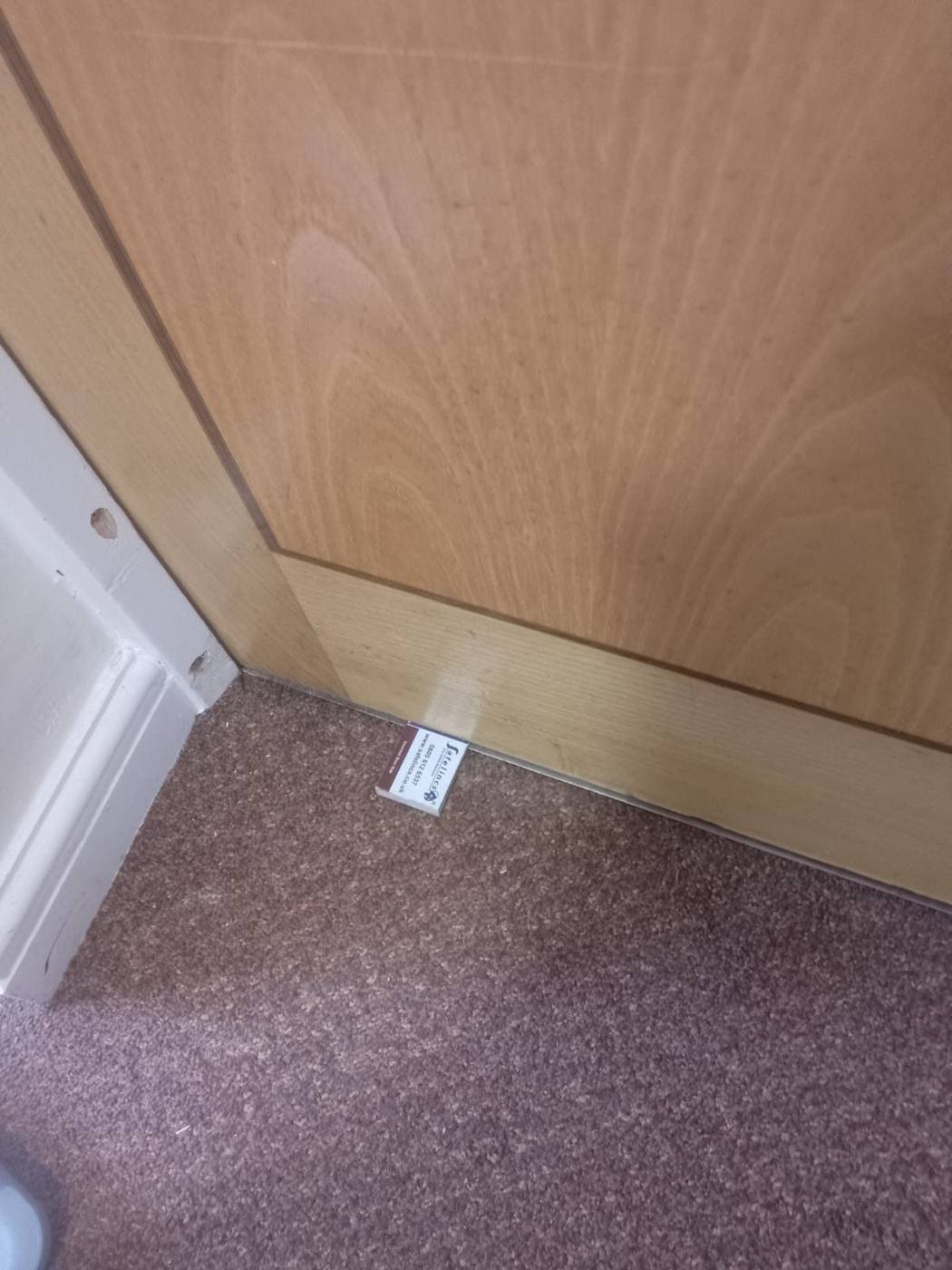
It depends on the door. Where the door has certification or the manufacturer’s evidence, the gaps at the top, the sides and under the door are the figures that evidence gives; for an older door with no evidence, the commonly used guidance figures for existing doors apply, and our report names them. We measure every gap with a gauge and say which ones are outside the tolerance for that door. A gap you can see daylight through is a gap smoke will find.
Yes. A fire door can be painted or varnished like any other door, as long as the intumescent and smoke seals are not painted over and the closer, hinges and latch are not clogged. We do not offer painting as a separate service; where seals have been painted over, we replace them.
Not if you already have a recent inspection report or a fire risk assessment that lists the faults — send it and we quote from it. If you have neither, an inspection first gives you the list door by door, and the quotation for the repairs comes with it.
Yes. The work is arranged with the managing agent and the residents, each door is done in one go so that nobody is left without a door, and a door is not left off or wedged open on a route people are using.
A door of solid construction that has nothing to prove it is a fire door — no label, plug or certificate, and no strips in its edge. It is graded as nominal rather than as a fire door of a known rating. On a flat entrance door or a protected stair that usually means a replacement; elsewhere it depends on what the fire risk assessment asks of that door.
Yes. Most closers only need adjusting so the door closes fully onto the latch without slamming. Where a closer is worn or was never rated for a fire door, we replace it. A hold-open device is fitted only where it releases when the alarm sounds; a wedge or a chain hooked over the handle is not a hold-open device.
A photograph of each finished door and a list of what was done and anything still outstanding. For a planned visit the same record comes after every visit, so the file shows the doors being checked and kept in order.
It depends on how many doors there are and what each one needs — the section below sets out what moves the price. Most jobs we can price from photographs — send yours on WhatsApp or by email and we’ll come back with a written quotation.
Cost
Two buildings with twenty doors each can be very different jobs, so a figure published here would be wrong for most of the people reading it. What moves the price is the number of doors; what each one needs — a seal and a closer adjustment is a different job from new hinges, a lock and glazing; whether parts have to be ordered for a particular door, because they have to match its rating; access, and whether the work has to fit round residents or opening hours; and how many doors turn out to be past repair. For a planned visit, the door count and the interval set the price. The written quotation gives the price and says which doors and which parts it covers.
Tell us how many doors and what is wrong with them, and attach a couple of photographs — one of a whole door in its frame and one close up of the edge or the fault.
How it works
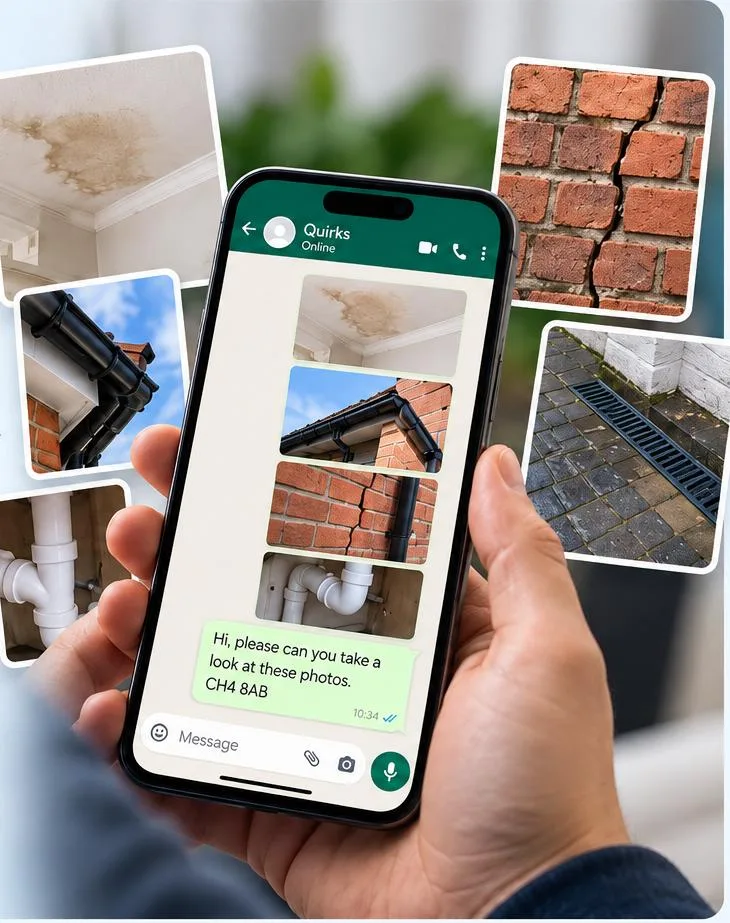
You don’t need to describe the problem down the phone. A photo tells us most of what we need.

FIRE DOOR MAINTENANCE — SEND US PHOTOGRAPHS
Send us photographs via WhatsApp or email, and our team will review your enquiry and respond as soon as possible.
Photographs help us assess your enquiry initially. An on-site inspection may be required to establish the condition and compliance of your fire doors.
Written and reviewed by Michael Quirk, Director.
